
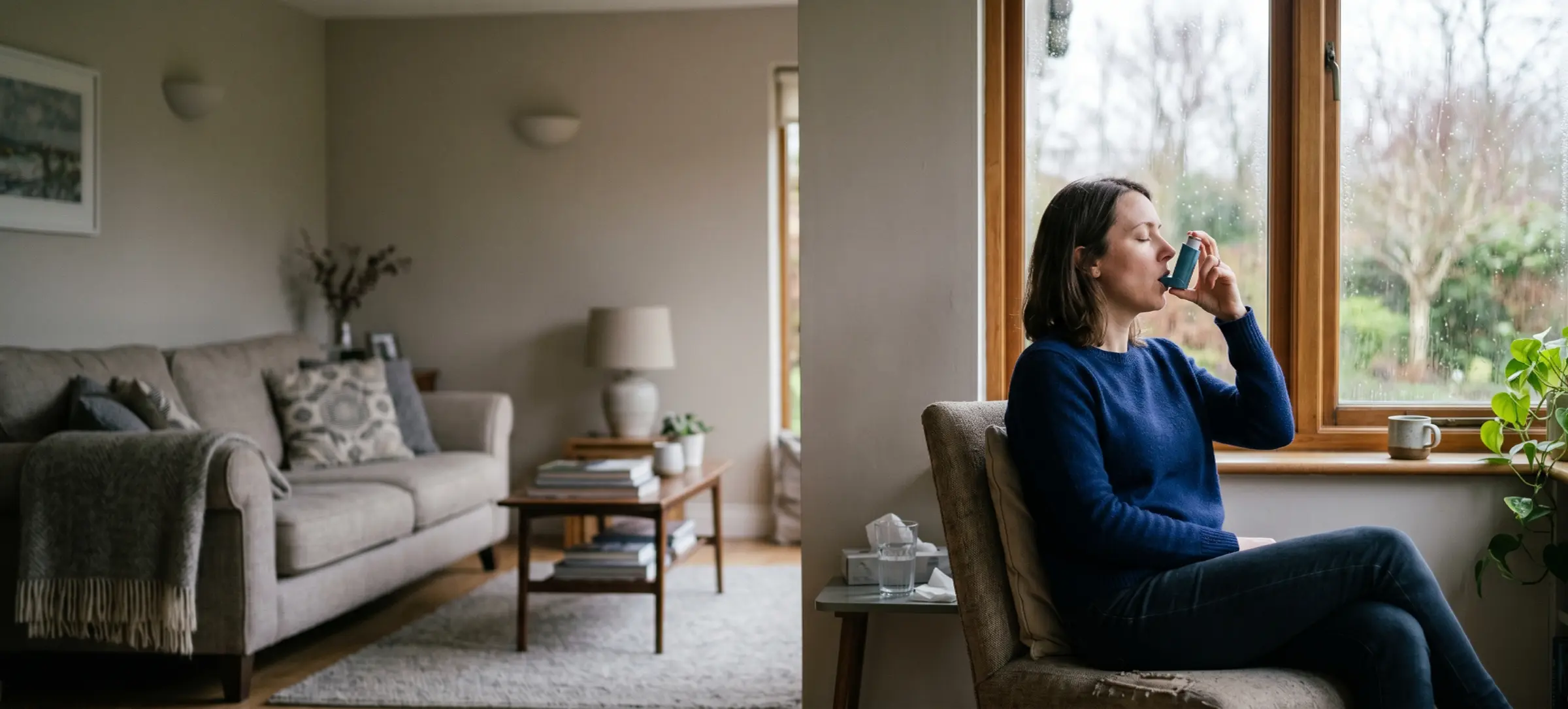

If you have asthma and you've found mold in your home, the question isn't just about property damage. It's about whether you're breathing in one of the most powerful asthma triggers found indoors. Mold is a microscopic fungus that produces airborne spores capable of triggering IgE-mediated airway inflammation in sensitized individuals, a mechanism documented by the Institute of Medicine (IOM 2004) and the World Health Organization (WHO 2009 Indoor Air Quality guidelines). The answer from decades of research is clear: mold worsens asthma, can trigger severe attacks, and in some people drives a cycle of declining lung function that standard medication alone won't break.
Key insights
- Proven asthma trigger. The Institute of Medicine found sufficient evidence to link indoor mold exposure to asthma symptoms in sensitized individuals. The EPA and CDC both classify mold as a significant indoor asthma trigger.
- Children face development risk. A 2025 meta-analysis found that mold in the home increases childhood asthma risk by approximately 50% based on case-control data. Evidence for new-onset asthma in adults remains more limited.
- Alternaria and Cladosporium are the most common indoor triggers. Aspergillus drives the most serious complications, including ABPA and SAFS.
- Humidity is the lever. Mold cannot grow in sustained environments below 50% relative humidity. Keeping indoor RH at 30%–50% is the single most effective long-term control measure.
- Remediation reduces attacks. Studies show that professionally addressing indoor mold and its moisture source reduces asthma exacerbations, ER visits, and symptom days, particularly in children.
- SAFS is underdiagnosed. Severe asthma with fungal sensitization (SAFS) affects a meaningful subset of people with difficult-to-control asthma who do not respond to standard high-dose corticosteroid therapy.
How mold triggers an asthma attack
Mold triggers asthma through two distinct mechanisms: allergic sensitization, in which the immune system produces IgE antibodies that cause airway inflammation on exposure to spores, and direct irritation, in which mold spores and their volatile compounds inflame airway tissue even without an allergic response. Understanding which mechanism applies affects both how the condition is diagnosed and which treatments will be effective.
 A healthy airway (left) compared to an airway during a mold-triggered asthma attack, showing inflammation, mucus buildup, and constriction.
The first and more common mechanism is allergic sensitization. Mold produces microscopic spores that float through indoor air and are inhaled into the airways. In people whose immune systems have become sensitized to mold, the immune system recognizes these spores as a threat and produces immunoglobulin E (IgE) antibodies. When those IgE antibodies encounter mold spores again, they trigger mast cells in the airway lining to release histamine and other inflammatory mediators. The airways swell, surrounding muscles contract, and excess mucus is produced. These are the physical events of an asthma attack.
The second mechanism is direct irritation. Mold spores and the volatile organic compounds (MVOCs) they release can inflame airway tissue even without a true allergic response. This irritant pathway matters because it means mold can worsen asthma in people who test negative for mold allergy. The mold exposure symptoms guide covers this irritant mechanism in more detail alongside other health effects.
Indoor mold is particularly dangerous for asthmatics because exposure is continuous. Unlike outdoor mold, which varies seasonally, mold growing inside a home releases spores into the breathing environment around the clock.
Does mold cause asthma to develop?
Yes, with an important distinction: the evidence that indoor mold causes asthma to develop is strong for children and more limited for adults, while the evidence that mold worsens existing asthma is consistent across both age groups. The critical difference is between new-onset asthma development and exacerbation of pre-existing disease.
 A 2025 meta-analysis found mold exposure in the home raises childhood asthma risk by roughly 50%, evidence that's notably stronger than what exists for new-onset asthma in adults.
For children, the evidence is substantial. The IOM's landmark 2004 report found sufficient evidence linking damp indoor environments to upper respiratory symptoms, coughing, wheezing, and asthma symptoms in sensitized individuals. A 2025 meta-analysis of 32 longitudinal studies found that mold in the home increases childhood asthma risk by approximately 53% based on case-control data and 15% based on cohort data. The European Respiratory Review concluded there was sufficient evidence for a causal relationship between visible indoor mold and the development of asthma in children.
For adults, the picture is less settled. Most major reviews, including the WHO 2009 Indoor Air Quality guidelines, found associations between damp buildings and worsening asthma in adults but classified the evidence for new asthma development in adults as limited or inconclusive, largely due to fewer long-term studies.
What the evidence consistently supports across age groups is this: if you already have asthma, indoor mold reliably makes it worse. Reducing mold exposure reduces asthma burden. That causal chain is well-established, which is why the EPA and CDC both recommend mold remediation as part of comprehensive asthma management. The broader health risk picture, including effects on non-asthmatic individuals and high-risk populations, is covered in the is mold dangerous guide.
Which mold species pose the greatest asthma risk
Aspergillus fumigatus, Alternaria alternata, and Cladosporium are the highest-risk species for people with asthma, with Aspergillus carrying the most serious potential for severe and difficult-to-treat disease. Not all indoor mold species carry equal risk, and the difference between them matters for both the urgency of remediation and the medical treatment required.
 Color alone can't tell these four apart; risk depends on how easily each becomes airborne and whether it triggers an IgE response, not what shade it happens to be.
Species risk is shaped by two factors: how easily the mold becomes airborne and whether it can trigger an IgE-mediated allergic response. Alternaria and Cladosporium produce large quantities of lightweight spores that circulate freely indoors. Aspergillus fumigatus is thermotolerant, meaning it can grow at body temperature and colonize the airways directly, making it the driver of the most serious mold-related asthma complications.
| Mold species | Where it grows | Asthma risk | Notes |
|---|---|---|---|
| Alternaria alternata | Bathroom, window frames, outdoor soil | High | Most common outdoor trigger; linked to severe asthma exacerbations and fatal attacks in sensitized individuals |
| Cladosporium | Window sills, damp textiles, basements | High | One of the most prevalent indoor and outdoor species; frequently implicated in seasonal asthma flares |
| Aspergillus fumigatus | HVAC systems, compost, damp insulation | Very high | Primary driver of ABPA and SAFS; grows at body temperature, enabling airway colonization |
| Penicillium | Wallpaper, carpeting, water-damaged building materials | Moderate-high | Produces mycotoxins; sensitization increases overall asthma severity |
| Stachybotrys chartarum | Chronically wet drywall and cellulose materials | Moderate | Produces trichothecene mycotoxins; less airborne than other species due to wet spores, but hazardous in disturbed environments |
Stachybotrys chartarum, while less commonly airborne than Alternaria or Cladosporium, warrants its own protocols when disturbed; the black mold removal guide covers those in detail.
Mold asthma symptoms: what to look for
Mold-triggered asthma produces the same core symptoms as other asthma triggers, including wheezing, chest tightness, shortness of breath, and coughing, but the pattern of when and where symptoms occur is the primary diagnostic signal that mold is the cause rather than another trigger.
 Mold-triggered asthma symptoms including chest tightness and wheezing often worsen at night or in the early morning, when prolonged indoor exposure is highest.
The primary respiratory symptoms are wheezing, chest tightness, shortness of breath, and coughing. These often worsen at night or in the early morning, which is characteristic of asthma in general. What distinguishes mold as the trigger is the environmental pattern: symptoms that reliably worsen in specific damp rooms, that improve when you spend time away from home, or that spike during late summer and fall when outdoor mold counts are highest.
Upper respiratory symptoms often accompany the asthma episode. Nasal congestion, itchy or watery eyes, sneezing, and a runny nose are common features, reflecting the allergic rhinitis that frequently travels with mold-triggered asthma. If your asthma symptoms are almost always accompanied by nasal symptoms, mold or another airborne allergen is a likely driver.
Several pattern-based questions can help you and your doctor identify mold as the cause:
- Do symptoms worsen in the basement, bathroom, or other humid rooms in your home?
- Do you wake up with chest tightness or wheezing more often than you do at other times of day?
- Did symptoms begin or worsen after a water leak, flooding event, or move to a new home? Mold after water damage can colonize wall cavities and subfloor within 48 hours of a moisture event, often in areas you cannot see.
- Do symptoms improve within a few days of leaving home for travel or a stay elsewhere?
- Are your worst asthma months consistently in late summer or fall (peak outdoor mold season)?
A consistent pattern of yes answers is a reasonable basis for requesting mold allergy testing. The signs of mold guide can help you identify whether mold is actually present in your home before scheduling a medical evaluation.
Serious mold-related asthma conditions
Mold exposure can cause two serious clinical conditions beyond standard allergic asthma: allergic bronchopulmonary aspergillosis (ABPA) and severe asthma with fungal sensitization (SAFS). Both are driven by Aspergillus and other fungal species, both are frequently missed in primary care, and both require specialist management that differs significantly from standard asthma treatment.
 Conditions like ABPA and SAFS involve severe, difficult-to-control asthma that does not respond to standard treatment and requires specialist management.
When mold exposure triggers severe asthma complications, the results can appear dramatically on medical imaging. One of the most serious conditions that can develop is allergic bronchopulmonary aspergillosis, where fungal spores colonize the airways and provoke an intense immune response.
Allergic bronchopulmonary aspergillosis (ABPA)
ABPA is an inflammatory condition of the lungs triggered by Aspergillus species. Unlike a simple allergic response, ABPA involves both an IgE-mediated allergic reaction and a cell-mediated immune response that causes the lung tissue itself to become inflamed. Over time, untreated ABPA can cause bronchiectasis, which is permanent widening and scarring of the airways, as well as mucus plugging and pulmonary infiltrates. Symptoms include worsening asthma that does not respond to usual treatment, coughing up thick brown or rust-colored mucus, low-grade fever, and fatigue. Diagnosis requires specific IgE testing for Aspergillus, total serum IgE measurement, chest imaging, and in some cases bronchoscopy. Treatment involves oral corticosteroids and often antifungal agents under specialist supervision.
Severe asthma with fungal sensitization (SAFS)
SAFS is a recognized asthma phenotype first described in the medical literature in 2006. It is defined by the presence of severe asthma, confirmed IgE sensitization to at least one of several fungal species (including Aspergillus, Cladosporium, Candida, Alternaria, and Penicillium), and the absence of ABPA. Patients with SAFS typically have difficult-to-control asthma that does not improve adequately with high-dose inhaled corticosteroids and long-acting bronchodilators. They tend to have reduced lung function, more frequent hospitalizations, and a higher risk of life-threatening asthma episodes compared to those without fungal sensitization. The Fungal Asthma Sensitization Trial (FAST), published in the American Journal of Respiratory and Critical Care Medicine, found that oral antifungal therapy with itraconazole produced meaningful quality-of-life improvements in approximately 60% of SAFS patients. Biologic therapies including omalizumab, mepolizumab, and benralizumab have also shown positive outcomes in SAFS patients in more recent studies.
If you have severe asthma that remains poorly controlled despite appropriate medication, ask your pulmonologist or allergist whether fungal sensitization testing has been performed.
Testing and diagnosis
Confirming mold as an asthma trigger requires both medical testing to identify immune sensitization and environmental assessment to locate the source. The two work in parallel: a positive allergy test without a found source leaves the exposure unresolved, and a found source without testing leaves the treatment unguided.
 Allergy skin prick testing and specific IgE blood tests are the primary tools for confirming mold sensitization as an asthma trigger.
On the medical side, allergy skin prick testing and specific serum IgE blood tests (ImmunoCAP testing) can confirm sensitization to individual mold species. These tests identify whether your immune system has produced IgE antibodies in response to specific molds. A positive result does not mean the mold is present in your home. It means your immune system is primed to react if you encounter it. For suspected ABPA or SAFS, additional testing includes total serum IgE, Aspergillus precipitins, and pulmonary function tests. Spirometry and peak flow monitoring help establish baseline lung function and track changes over time.
On the environmental side, the mold inspection process can identify whether mold is present in your home, where it is concentrated, and what species are involved. A certified inspector using moisture meters, infrared cameras, and air sampling can locate hidden mold in HVAC systems, wall cavities, and crawl spaces that visual inspection would miss. If you have confirmed mold allergy and ongoing asthma symptoms, professional inspection is a reasonable next step rather than waiting for visible mold to appear.
Mold testing by a laboratory can identify the specific species present in your home air. This is particularly relevant if you need to know whether Aspergillus or Alternaria, the highest-risk species, are elevated in your indoor environment.
Treatment and management
Managing mold-related asthma requires treating both the immune response and the environmental exposure that drives it. Standard asthma medications reduce symptoms but produce limited long-term improvement if mold remains in the home; the medical and environmental interventions are most effective when pursued together.
 Effective management of mold-related asthma requires both medication and environmental control. Keeping indoor humidity at 30%–50% inhibits mold growth at the source.
Medical management follows the same tiered approach as other asthma types but with mold-specific additions:
Inhaled corticosteroids (ICS) remain the foundation of daily asthma control for mold-sensitized individuals. They reduce baseline airway inflammation but do not prevent the acute IgE response to mold spore exposure.
Short-acting bronchodilators (SABAs) such as albuterol are the rescue medication for acute mold-triggered attacks. If you are using your rescue inhaler more than twice per week, your overall asthma control plan likely needs reassessment.
Intranasal corticosteroids help manage the allergic rhinitis component that frequently accompanies mold-triggered asthma, reducing nasal inflammation and the post-nasal drip that can worsen lower airway symptoms.
Allergen immunotherapy (allergy shots) for mold is available for some species, most notably Alternaria and Cladosporium. Evidence for mold immunotherapy is less robust than for pollen or dust mites, but it may reduce sensitivity in patients with documented mold allergy.
Biologic therapies including omalizumab (Xolair), mepolizumab (Nucala), and benralizumab (Fasenra) target specific components of the IgE and eosinophilic inflammatory cascade. These are indicated for moderate to severe persistent asthma that is not controlled with standard therapy and are particularly relevant for patients with SAFS.
Antifungal therapy with itraconazole may be prescribed for SAFS under specialist supervision. The FAST trial demonstrated significant quality-of-life improvements, though routine use remains a specialist decision given the drug interactions and side effect profile of azole antifungals.
Environmental remediation is an essential component of treatment, not an optional add-on. Research consistently shows that removing indoor mold and correcting the moisture source reduces asthma exacerbations, symptom days, and healthcare utilization. If you are unsure whether the mold in your home crosses the threshold requiring professional intervention, the when is mold remediation required guide walks through the EPA 10-square-foot threshold and the conditions that always require a professional. For people with asthma and confirmed indoor mold, professional mold remediation addresses the source in a way that self-cleaning typically cannot, particularly when mold has penetrated porous building materials.
How to reduce mold exposure at home
Reducing mold exposure at home centers on two priorities: controlling indoor humidity below 50% to prevent spore germination, and identifying and removing existing growth before it becomes a sustained source of airborne spores. The table below covers the most evidence-supported actions for both. For a full room-by-room prevention system covering every moisture source in the home, the mold prevention guide goes deeper on materials, dehumidifier sizing, and inspection routines.
 Mold under sinks is one of the most common and overlooked sources of indoor spore exposure. Regular inspection of high-moisture areas catches growth before it spreads.
The most powerful single lever is humidity control. Mold spore germination requires sustained moisture above 50% RH, which is why controlling indoor humidity prevents growth rather than just slowing it. A digital hygrometer ($10–$30) lets you monitor levels in real time; a portable dehumidifier handles problem rooms, while a whole-home unit integrated with the HVAC system is more effective for consistently humid climates.
| Action | Target | Frequency | Why it works |
|---|---|---|---|
| Keep indoor RH at 30%–50% | Whole home | Continuous monitoring | Mold cannot sustain growth below 50% RH; most spore germination requires sustained moisture |
| Use a HEPA air purifier in the bedroom | Bedroom | Replace filter per manufacturer schedule | Removes airborne spores where nighttime exposure is highest |
| Exhaust fans in bathrooms and kitchen | Bathroom, kitchen | Run during and 20 min after use | Removes moisture at the source before it condenses on surfaces |
| Fix leaks and drips immediately | Plumbing, roof, foundation | Within 24 hours of detection | Mold begins colonizing wet materials within 24–48 hours |
| HEPA vacuum carpets and upholstery | All soft surfaces | Weekly | Removes settled spores before they can be re-aerosolized |
| Inspect and service HVAC system annually | HVAC, ductwork | Annually, plus filter changes every 1–3 months | HVAC systems distribute spores throughout the home if contaminated |
| Remove and replace water-damaged materials | Drywall, insulation, carpet | Immediately after wetting | Porous materials that stay wet longer than 48 hours almost always develop mold |
| Check basements and crawl spaces seasonally | Below-grade areas | Quarterly | These areas accumulate humidity and organic material that support mold growth year-round |
For people who are mold-sensitized, staying out of the home during professional remediation work is important. Disturbing an established mold colony releases large quantities of spores into the air, and even in a contained work zone, the risk of a significant exposure event is real. Most people with asthma should plan to stay elsewhere for the duration of active work and for 24–48 hours afterward.
Information on the full scope of what remediation covers and what to expect during the process is available in the mold remediation cost breakdown and the what to expect guide.
If you are managing ongoing asthma that you believe is mold-related, bring the environmental information (inspection reports, mold test results, humidity logs) to your physician or allergist. The combination of confirmed environmental exposure and positive allergy testing creates the strongest case for targeted treatment adjustments, including the biologic therapies that address the fungal sensitization pathway directly.
Frequently asked questions
Can mold trigger an asthma attack?
Yes. Mold spores act as allergens that trigger the IgE immune response in sensitized individuals, causing airway inflammation, bronchospasm, and the characteristic symptoms of an asthma attack including wheezing, chest tightness, and shortness of breath. The irritant effects of mold MVOCs can also worsen asthma in people without confirmed mold allergy.
Does mold cause asthma to develop?
The evidence is strongest for children. A 2025 meta-analysis found that mold in the home increases childhood asthma risk by approximately 50% in case-control studies. For adults, major reviews including the IOM 2004 report and WHO 2009 guidelines found sufficient evidence for worsening of existing asthma but limited evidence for new-onset asthma development. The practical takeaway: if you have asthma, indoor mold reliably makes it worse.
What are mold asthma symptoms?
Mold-triggered asthma produces wheezing, chest tightness, shortness of breath, and coughing, often worsening at night. Upper respiratory symptoms (stuffy nose, watery eyes, sneezing) typically accompany the episode because mold drives both lower and upper airway inflammation simultaneously. If symptoms consistently improve after a few days away from home, mold is a likely driver worth testing for.
What is SAFS and how is it different from regular mold allergy?
SAFS (severe asthma with fungal sensitization) is a clinical phenotype defined by severe asthma plus confirmed IgE sensitization to fungal species, in the absence of ABPA. It is categorically different from standard mold allergy because the asthma is severe, responds poorly to conventional therapy, and may require biologic agents or antifungal treatment. Standard mold allergy involves asthma of any severity that is triggered by mold exposure but is otherwise responsive to typical inhaled corticosteroid regimens.
How do I know if mold is worsening my asthma?
Key signals include asthma symptoms that reliably worsen in specific damp rooms, symptoms that improve noticeably when away from home for a few days, flares that coincide with late summer/fall outdoor mold season, and asthma that became harder to control after a water damage event. Allergy skin prick testing or specific IgE blood testing can confirm sensitization.
What humidity level stops mold growth that triggers asthma?
The EPA and CDC recommend maintaining indoor relative humidity below 50%. The optimal range for both mold prevention and respiratory health is 30%–50% RH. A digital hygrometer (available for $10–$30) enables accurate ongoing monitoring, and a portable or whole-home dehumidifier can maintain target levels in humid climates or below-grade spaces.
Should I leave my home during mold remediation if I have asthma?
Yes. People with asthma should leave during active remediation work and stay away for 24–48 hours afterward. Disturbing mold colonies releases large numbers of spores into the air, and this can trigger severe attacks even with containment measures in place. People with confirmed mold sensitization or poorly controlled asthma are at highest risk during this period.
- CDC: Basic Facts About Mold
- CDC/NIOSH: Mold Health Problems
- EPA: How Does Mold Affect People with Asthma
- IOM: Damp Indoor Spaces and Health (2004)
- WHO: Guidelines for Indoor Air Quality: Dampness and Mold (2009)
- AAFA: Mold Allergy
- NIOSH: Dampness and Mold in Buildings
- Quansah et al. (2012): Residential Dampness and Asthma Risk (PubMed)
- FAST Study: Antifungal Treatment for SAFS (PubMed)
- European Respiratory Review: Indoor Mould, Asthma and Rhinitis
Sam Hickerson is the founder of RestoreAdvisor and writes consumer guides on mold remediation, water damage restoration, inspection, testing, and home recovery. His work focuses on helping homeowners understand costs, risks, and when to call a professional. He draws on guidance from the EPA, CDC, IICRC, and other authoritative sources to make complex home issues easier to navigate.