
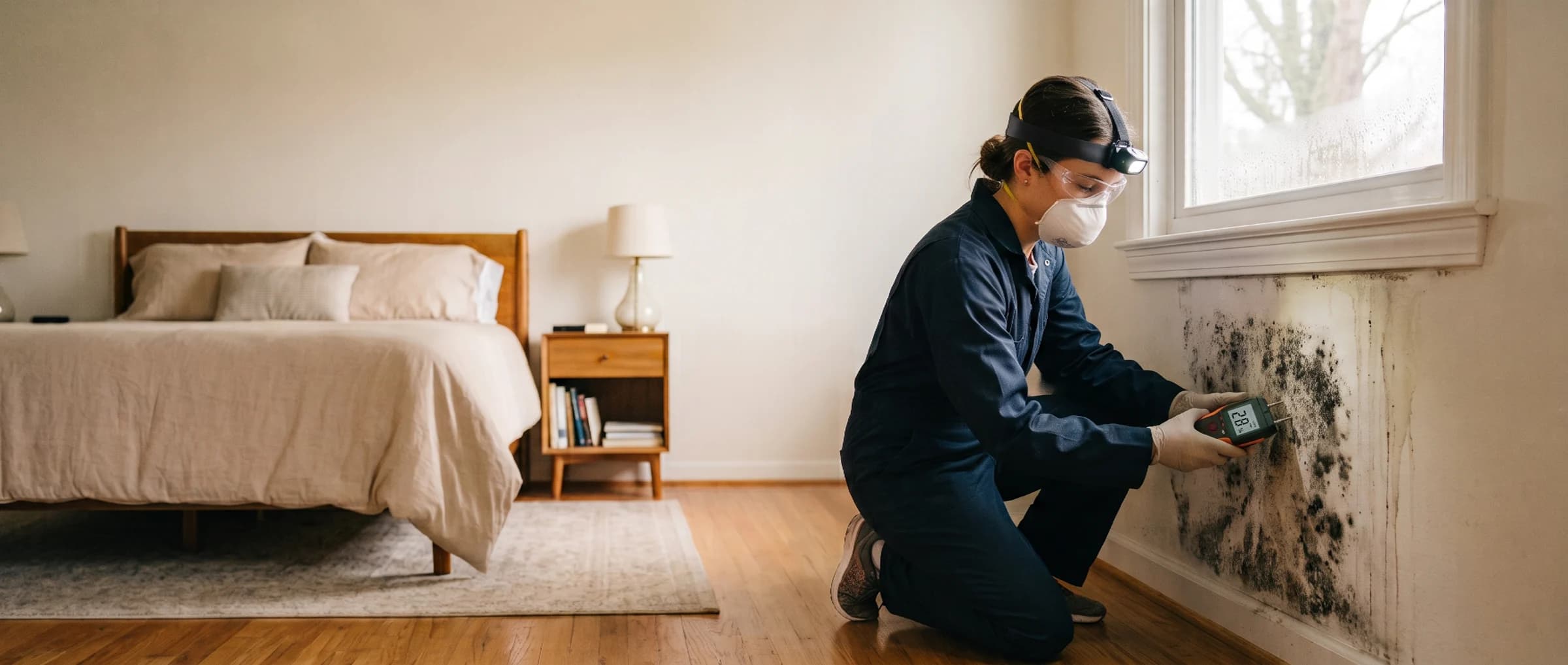

Mold remediation is the process of safely containing, removing, and preventing the return of mold inside a home or building. When done correctly, it addresses not just the visible growth but the hidden contamination inside walls and under flooring, the porous materials that cannot be salvaged, and the moisture source that made growth possible in the first place. According to the EPA, roughly 50% of U.S. homes have damp conditions capable of sustaining mold growth, and left unaddressed, active mold can reduce a home's resale value by 20%–37%. The CDC links mold-related fungal infections to approximately 7,300 deaths and 130,000 hospital stays annually in the U.S., with an estimated $19 billion in economic impact each year.
Most homeowners pay $1,500–$6,000 for professional remediation, though costs range widely depending on location, size, and severity. For a full breakdown of what drives that range, the mold remediation cost guide covers pricing by infestation size, location in the home, and material type.
Key insights
- Mold can begin growing within 24–48 hours of a water event. The window for preventing it entirely closes quickly once materials are wet.
- The EPA threshold for DIY cleanup is 10 square feet. Anything larger, hidden, or on porous materials warrants professional remediation.
- Roughly 50% of U.S. homes have mold-sustaining conditions, according to the EPA.
- Mold remediation and mold removal are not the same thing. Removal cleans what you can see. Remediation addresses the source, the hidden growth, and the contaminated materials.
- Clearance testing must be done by an independent party, not the contractor who did the work.
- Most homeowners insurance covers mold only from sudden covered events like a burst pipe, not from slow leaks, humidity, or flooding.
I just found mold: what to do right now
If you just found mold, the three immediate priorities are: do not disturb it, stop any active moisture source, and document the area with photos before touching anything. Disturbing mold without containment releases spores and spreads contamination; acting on these steps first limits the scope and cost of what comes next.
 The EPA sets 10 square feet as the threshold above which surface cleaning gives way to contained professional remediation.
Here is what to do before calling anyone:
- Do not disturb it. Touching, scrubbing, or spraying mold without containment releases millions of spores into the air and can spread contamination to previously unaffected areas of the home.
- Identify and stop any active moisture source. If there is a leaking pipe, dripping fixture, or standing water, address it immediately. Mold can begin colonizing within 24–48 hours of a moisture event, and an active source will undo any remediation.
- Turn off your HVAC system if mold is near any air supply or return vents. Running the system while mold is present circulates spores throughout the entire home.
- Do not paint over it or use bleach on porous surfaces like drywall. Bleach kills surface mold temporarily but does not penetrate porous materials. Growth underneath will continue and often returns worse within weeks.
- Document the affected area with photos before anything is moved or cleaned. This is important for insurance claims and for the contractor's assessment.
If the mold appeared within the last 24–72 hours following a water event, emergency mold removal takes priority over remediation. The window for drying materials before mold establishes is narrow, and acting fast can significantly reduce the scope and cost of what follows. The window for drying materials before mold establishes is narrow, and acting fast can significantly reduce the scope and cost of remediation.
What is mold remediation?
Mold remediation and mold removal are not the same thing. Removal means cleaning what you can see. Remediation addresses the complete problem: visible growth, hidden growth inside wall cavities and under flooring, contaminated porous materials that must be discarded, and the underlying moisture condition that allowed mold to establish.
Mold spores exist in virtually every home at low concentrations and are harmless under normal conditions. Problems develop when moisture rises due to a leak, flooding, high humidity, or poor ventilation. Spores land on damp surfaces and begin colonizing within 24–48 hours. NIOSH reports that nearly 47% of residential buildings show visible mold or detectable mold odor.
Without resolving the moisture source, mold will return regardless of how thoroughly the visible growth was cleaned. This is the most important distinction between professional remediation and a surface cleaning. Below that threshold, careful DIY mold removal is reasonable; above it, the risks of spreading contamination outweigh the cost savings.
Mold and water damage: understanding the timeline
Mold can begin growing within 24 to 48 hours of a water event, and the window for preventing it entirely closes quickly. Most significant mold problems trace back to a water event: a burst pipe, a slow leak behind a wall, a flooded basement, or a roof breach that went unnoticed. Understanding the timeline helps homeowners know how urgently they need to act.
| Time after water event | What is happening |
|---|---|
| 0–24 hours | Materials are wet but mold has not yet established. Professional drying within this window can prevent mold entirely. |
| 24–48 hours | Mold spores begin colonizing on damp surfaces. Drying is still possible but the risk of mold establishment is high. |
| 48–72 hours | Mold is likely present. Remediation rather than drying alone is now the appropriate response. |
| 1–2 weeks | Active mold growth. Porous materials are likely contaminated and will need to be removed, not dried. |
| 1 month or more | Mold has spread into wall cavities, insulation, and structural materials. Remediation scope and cost increase significantly. |
If your home has experienced flooding or significant water intrusion, water damage and mold follow a tight timeline; understanding when mitigation ends and remediation begins affects both cost and insurance coverage.
Signs you may need mold remediation
The most reliable signs you need mold remediation are a persistent musty odor, visible dark growth that returns after cleaning, unexplained respiratory symptoms that improve when you leave the home, and any recent history of flooding or unresolved water damage.
 Bubbling paint over drywall signals trapped moisture, the condition mold colonizes within 24 to 48 hours per EPA guidance.
Mold is not always visible. Many homeowners discover a significant problem only after it has been growing inside walls or under flooring for months. The following warning signs warrant professional evaluation.
- A persistent musty or earthy odor with no clear source, particularly in basements, crawl spaces, or rooms with a history of water intrusion. Mold often produces a detectable smell before any visible growth appears.
- Visible dark spots or discoloration on walls, ceilings, grout, or around window frames. Growth that returns after cleaning is a strong signal the source has not been resolved.
- Water stains, tide marks, soft spots in drywall, or discoloration on ceilings indicating past or ongoing moisture intrusion.
- Peeling paint, bubbling drywall, or warped flooring. These surface changes often indicate moisture trapped behind or beneath materials where mold is actively growing.
- Allergy or respiratory symptoms, including coughing, sneezing, nasal congestion, or eye irritation, that worsen at home and improve when you leave.
- A recent history of flooding, plumbing failures, or leaks that were not fully dried within 24–48 hours.
The factors that determine whether remediation is required include size, location, material type, and occupant health, and each is covered in detail. Costs vary by species; inspection costs depends on sample count, lab turnaround, and whether clearance testing is included.
How mold affects your health
Mold exposure can cause respiratory symptoms, allergic reactions, and in cases of prolonged or high-level exposure, serious conditions including hypersensitivity pneumonitis and invasive fungal infections.
Mold exposure affects people differently depending on the species involved, the concentration of spores, the duration of exposure, and individual health factors. Some people notice symptoms within days of exposure. Others in the same home experience no symptoms at all, which can make it harder to identify mold as the cause.
The most common symptoms of mold exposure include persistent coughing and sneezing, nasal and sinus congestion, eye irritation, skin rashes, and worsening of asthma or existing respiratory conditions. The CDC reports that mold contributes to an estimated 4.6 million asthma cases in the U.S. annually. Studies have shown that removing mold from a home reduces asthma symptoms by 25%–45%.
Certain groups face greater risk: children, the elderly, people with asthma or allergies, and anyone with a compromised immune system. Black mold (Stachybotrys chartarum) produces mycotoxins that can cause more severe neurological and respiratory effects with prolonged exposure, though any active mold growth in a living space should be treated as a health concern regardless of species.
Symptoms typically improve once mold is removed and the home is properly remediated. If anyone in your household is experiencing persistent respiratory symptoms without an obvious cause, professional mold testing is worth pursuing before seeking other explanations. Symptoms typically improve once mold is removed and the home is properly remediated. For a full breakdown of health risks by mold type, exposure level, and population group, that is covered separately.
Where mold grows in homes
Mold concentrates in areas with persistent moisture and limited airflow, most commonly bathrooms, basements, crawl spaces, attics, HVAC systems, and concealed spaces behind drywall. Knowing where to look helps homeowners catch problems before they spread.
 NIOSH found visible mold or detectable mold odor in nearly 47% of residential buildings, concentrated in these low-airflow zones.
Bathrooms
Showers, bathtubs, grout lines, and caulk seals are among the most common locations. Steam raises humidity rapidly, and without adequate ventilation, moisture settles on walls and ceilings. Mold frequently develops behind tiles and inside walls adjacent to showers where water has been slowly penetrating over time. Persistent bathroom mold behind tiles and inside adjacent walls is one of the most common calls for professional remediation.
Kitchens
Under-sink plumbing leaks, dishwasher connections, and the area behind refrigerators with water lines are the most common kitchen mold locations. Poor ventilation above the stove and condensation around windows above the sink also contribute. Mold in kitchens is often hidden inside cabinet bases before it becomes visible.
Basements and crawl spaces
High humidity, limited airflow, and frequent exposure to groundwater make these among the most common locations for significant mold growth. Crawl spaces are particularly prone because they are rarely inspected until a musty odor begins spreading into living areas above. Signs in basements and crawl spaces tend to be more severe because ground moisture is constant rather than intermittent.
Attics
Roof leaks, inadequate ventilation, and improperly vented bathroom or kitchen exhaust fans direct warm, humid air into the attic where it condenses on roof decking and rafters. Attic mold is often extensive by the time it is discovered because the space is rarely inspected.
HVAC systems and ductwork
Condensation inside air handling units and ductwork creates conditions where mold thrives. Once established in an HVAC system, spores are distributed throughout the entire home every time the system runs. If you suspect mold in your HVAC system, turn it off immediately to prevent further spread.
Behind drywall and under flooring
Mold commonly develops in concealed spaces following water damage from leaks, burst pipes, or flooding. Because the surface appears dry, growth can continue undetected for months. A musty smell in a room with no visible mold is often the first indication of a hidden problem. Professional moisture mapping and, in some cases, air sampling are the only reliable ways to detect it.
Common types of household mold
The most common household mold types are Cladosporium, Penicillium, Aspergillus, Alternaria, Chaetomium, Trichoderma, Fusarium, Aureobasidium, and Stachybotrys chartarum, with Fusarium and Stachybotrys posing the greatest health risks.
| Species | Common name | Typical appearance | Where it grows | Health risk |
|---|---|---|---|---|
| Cladosporium | Green mold | Olive-green to black | Fabrics, wood, HVAC vents | Low–Moderate |
| Penicillium | Blue/green mold | Blue, green, or white | Insulation, wallpaper, carpet | Moderate |
| Aspergillus | Common household mold | White, yellow, green, or black | Damp walls, fabric, food | Moderate |
| Alternaria | Shower mold | Dark gray or black | Bathrooms, under sinks | Low–Moderate |
| Aureobasidium | Wallpaper mold | Pink, brown, or black | Painted surfaces, behind wallpaper, window frames | Low–Moderate |
| Chaetomium | Water damage mold | White then blue-green | Water-damaged drywall, paper | Moderate–High |
| Trichoderma | Wood mold | White or cream | Wood framing, HVAC systems | Moderate |
| Fusarium | Pink mold | Pink, white, or red | Flooring, fabrics, near water leaks | High |
| Stachybotrys chartarum | Toxic black mold | Dark greenish-black; slimy | Water-damaged drywall, wood | High (mycotoxins) |
The only reliable way to confirm what you are dealing with is laboratory testing of a collected sample. If you are unsure whether what you see is mold or mildew, texture and growth pattern are the most reliable distinguishing factors.
The mold remediation process, step by step
Professional remediation follows a structured sequence designed to remove contamination safely and prevent it from spreading. Understanding each step helps homeowners evaluate whether a contractor is doing the job correctly.
 IICRC S520 requires containment and negative air pressure established before any affected material is disturbed, the step most often skipped by underbidding contractors.
1. Inspection and assessment
Trained technicians identify the moisture source and map the full extent of mold growth using moisture meters, thermal imaging cameras, and visual inspection of all accessible areas. This step defines the scope of work. Skipping a thorough assessment is one of the most common reasons mold returns after remediation. A professional mold inspection defines the scope of work before any remediation begins.
2. Containment
Before any mold is disturbed, affected areas are sealed off using heavy plastic sheeting and negative air pressure systems. Negative pressure prevents airborne spores from traveling to clean areas of the home during removal. Inadequate containment is a leading cause of cross-contamination. Ask any contractor specifically how they establish and maintain containment before hiring.
3. Air filtration
HEPA air scrubbers run continuously throughout the job, capturing airborne spores as small as 0.3 microns. Air filtration continues until post-remediation testing confirms spore levels have returned to acceptable levels.
4. Mold removal
Non-porous surfaces such as glass, metal, and sealed concrete are cleaned and treated with EPA-registered antimicrobial solutions. Porous materials, including drywall, insulation, carpet, and ceiling tiles that have been penetrated by mold, cannot be effectively cleaned and must be removed and properly disposed of. Attempting to clean porous materials rather than remove them is one of the most common causes of recurrence.
5. Cleaning and sanitizing
All remaining surfaces in the affected area are cleaned, sanitized, and treated to eliminate residual spores. Personal belongings including furniture and soft furnishings are cleaned or assessed for disposal where necessary.
6. Moisture source resolution
No remediation is complete without addressing the condition that caused the mold. Whether the source is a leaking pipe, inadequate ventilation, foundation water intrusion, or a roof leak, resolving the moisture problem is essential. Without this step, mold will return regardless of how thoroughly the visible growth was removed.
7. Restoration and verification
Structural materials that were removed, including drywall, insulation, flooring, and framing, are repaired or replaced. A final inspection and an independent post-remediation air quality test confirm the work was successful before the space is reopened. Post-remediation testing should always be performed by a party independent of the contractor who did the work.
Each step has specific equipment, material, and documentation requirements covered in the full remediation process. Knowing what to expect during remediation, from containment setup through clearance testing, helps homeowners evaluate whether a contractor is doing the job correctly.
How much does mold remediation cost?
Most homeowners pay between $1,500–$6,000 for mold remediation, with a national average around $2,400. Severe cases involving structural damage, large infestations, or HVAC contamination can reach $10,000–$30,000. Costs vary by square footage, location in the home, and the type of mold involved.
See our guide for mold remediation costs that breaks down costs by room, project size, mold type, and square footage.
Does homeowners insurance cover mold remediation?
Whether insurance covers mold remediation depends almost entirely on how the mold developed. Most standard homeowners insurance policies will cover mold remediation if the mold resulted directly from a covered peril, such as a sudden and accidental water discharge from a burst pipe or an appliance failure. If the cause is covered, the resulting mold damage is typically covered as well.
However, insurers routinely deny mold claims when the growth resulted from a long-term condition that the homeowner knew about or should have known about, including slow plumbing leaks, chronic high humidity, inadequate ventilation, or flooding. Flood-related mold is almost never covered under a standard homeowners policy because flooding itself requires separate flood insurance through FEMA's National Flood Insurance Program (NFIP) or a private insurer.
| Cause of mold | Typically covered? |
|---|---|
| Burst pipe or sudden appliance leak | Yes, if reported promptly |
| Slow undetected plumbing leak | Often denied (homeowner negligence) |
| Storm damage allowing water intrusion | Yes, if wind/hail is a covered peril |
| Flooding from outside the home | No (requires separate flood insurance) |
| Chronic humidity or condensation | No (maintenance issue) |
| HVAC condensation leak | Varies by policy and cause |
If you are filing a claim, document the affected area thoroughly with photos before any work begins and preserve any materials removed during remediation for the adjuster's inspection. Request a written scope of work from your contractor that clearly states the cause of the mold, as insurers use this to determine coverage. If a claim is denied, you have the right to request a written explanation and to dispute the decision.
A few practical notes on navigating the claims process:
- Report the damage to your insurer as soon as it is discovered. Delayed reporting can give an insurer grounds to reduce or deny a claim.
- Do not hire a remediation contractor before speaking with your insurer unless there is an immediate health or safety risk. Some policies require insurer approval of contractors or scopes of work before work begins.
- Some insurers offer optional mold coverage endorsements that extend protection to cases that would otherwise be excluded. Review your policy or ask your agent whether this endorsement is available and what it covers.
Renters and mold: who is responsible?
Landlords are generally responsible for mold remediation when it results from a structural issue or maintenance failure; tenants are responsible when mold results directly from their own behavior, such as failing to run exhaust fans, leaving windows open during rain, or not reporting a known leak.
Most states require landlords to maintain rental properties in a habitable condition, and active mold growth in living areas is widely recognized as a habitability issue. Many states have specific mold disclosure laws and landlord remediation obligations. If a landlord refuses to address a documented mold problem, tenants in most states have legal remedies including rent withholding, repair-and-deduct, or lease termination for breach of the habitability warranty.
If you are a renter dealing with mold:
- Document the mold with photos and written communication to your landlord. Always put repair requests in writing and keep copies.
- Report the problem promptly. Delayed reporting can shift some responsibility to the tenant if the landlord argues the problem worsened due to the tenant's failure to notify.
- Check your state's landlord-tenant laws. Several states, including California, Texas, and New York, have explicit mold remediation requirements for landlords.
- Renters insurance typically does not cover mold remediation to the building itself, but it may cover personal property that is damaged by mold resulting from a covered event.
DIY vs. professional mold remediation
The EPA draws the line at 10 square feet. Below that threshold, on a non-porous surface, a careful DIY cleanup is reasonable. Above it, or when mold has spread to drywall, insulation, carpet, or inside walls, professional remediation is the appropriate choice.
 The equipment gap tracks the EPA's 10 square foot line: below it, basic protection is sufficient; above it, HEPA filtration and negative pressure are required.
The equipment difference tells the story. DIY cleanup requires basic protective gear and a cleaning solution. Professional remediation requires HEPA air scrubbers to capture airborne spores, negative air pressure machines to prevent cross-contamination, full Tyvek suits, and proper containment. That gap in equipment reflects a gap in what each approach can actually accomplish.
| DIY | Professional | |
|---|---|---|
| Best for | Surface mold under 10 sq ft on non-porous materials | Anything larger, hidden, recurring, or on porous materials |
| Typical cost | $50–$300 | $1,500–$6,000+ |
| Identifies hidden mold | No | Yes |
| Addresses moisture source | Rarely | Yes |
| Equipment | Gloves, N95 mask, EPA-registered cleaner | HEPA scrubbers, negative air pressure, Tyvek suits, plastic containment |
| Risk of recurrence | Higher | Lower |
The biggest limitation of DIY remediation is not the cleaning itself but what it misses. Most homeowners cannot accurately determine how far mold has spread, and surface cleaning alone never resolves the underlying moisture problem. Disturbing mold without proper containment can release millions of spores into the air and spread contamination to areas that were previously clean.
How to choose a mold remediation company
Look for IICRC-AMRT certification, get at least three written quotes, and never hire the same company to both test for mold and perform the remediation. Those three rules eliminate most of the bad actors in the industry before you sign anything.
- Look for IICRC-AMRT certification. The Applied Microbial Remediation Technician credential from the Institute of Inspection, Cleaning and Restoration Certification is the industry standard. Some states including Florida, Texas, and New York also require state-specific mold remediation licenses. Ask to see credentials before hiring. Not all mold remediation certifications carry the same weight; the IICRC-AMRT and ACAC designations are the ones that require verified field experience and a proctored exam.
- Get at least three written quotes. Pricing varies significantly between contractors. Written quotes let you compare scope of work, not just price, and surface contractors who may be cutting steps to underbid.
- Separate testing from remediation. Never hire the same company to both test for mold and perform the remediation. This is a direct conflict of interest. Use an independent inspector for post-remediation clearance testing.
- Ask for a written scope of work before signing anything, detailing which areas will be treated, what materials will be removed, how containment will be established, and what restoration is included.
- Verify insurance. The company should carry general liability insurance and workers' compensation. Ask for proof before work begins.
- Be wary of low bids that skip steps. Containment setup, air filtration, proper disposal of contaminated materials, and post-remediation verification are not optional. They are what separates a professional job from one that will fail.
The process of choosing a mold remediation company involves more than price comparison: shortlisting, written scope of work, and insurance navigation all factor in.
When to call a professional
Professional mold remediation is required when the affected area exceeds 10 square feet, when mold is growing in porous materials or concealed spaces, or when anyone in the household has health vulnerabilities.
- Mold covers more than 10 square feet
- Mold is growing on or inside porous materials including drywall, insulation, carpet, or wood framing
- Mold keeps returning after cleaning
- Mold is located inside walls, ceilings, or the HVAC system
- The mold resulted from flooding, sewage backup, or a plumbing failure
- Anyone in the household has asthma, allergies, or a compromised immune system
- You can smell mold but cannot locate it visually
If any of these apply, the scope and health risks involved make professional remediation the right call. Attempting to clean the problem yourself at this stage risks spreading contamination and leaving the underlying cause unresolved.
Still weighing whether to call a professional? The when is mold remediation required guide walks through the decision criteria in detail.
Mold inspection and testing: what to expect
A mold inspection is a physical assessment of your property; mold testing is laboratory analysis of collected samples. Understanding the difference helps homeowners know what to ask for and what they will receive.
 Moisture meter readings, not visible staining, are what confirm whether a wall cavity is sustaining hidden growth.
A qualified inspector examines your home for visible mold, measures moisture levels in building materials, identifies conditions that are sustaining growth, and documents findings in a written report. Inspection alone typically costs $200–$600 depending on home size and location.
Mold testing goes further. Air or surface samples are collected and sent to an independent laboratory to identify the species present and measure spore concentrations relative to outdoor baseline levels. Testing is most useful when mold is suspected but not visible, when a species identification is needed for health reasons, or when insurance or real estate transactions require certified lab results. Testing typically adds $150–$400 to the cost of an inspection.
Post-remediation clearance testing is a separate step that should always follow professional remediation. It confirms that spore levels have returned to acceptable levels before the space is reoccupied. This test should be performed by an independent party, not the contractor who performed the remediation. Professional mold testing methods range from air sampling to ERMI, and how to interpret lab results depends heavily on the outdoor baseline collected the same day.
Mold prevention: keeping it from coming back
Once remediation is complete, controlling moisture is the only reliable way to prevent recurrence. The EPA recommends keeping indoor humidity at 30%–50%. A hygrometer, available for under $20 at most hardware stores, lets you monitor levels continuously.
- Fix leaks immediately. Mold can begin growing within 24–48 hours of a moisture event.
- Run bathroom and kitchen exhaust fans during and after cooking or showering, and ensure they vent to the exterior, not into the attic.
- Use a dehumidifier in basements and crawl spaces, especially during humid months.
- Inspect attic ventilation annually and check for roof damage or leaks after major storms.
- Have HVAC systems serviced and ductwork inspected every 3–5 years.
- Ensure gutters and downspouts direct water away from the foundation.
- Seal any foundation cracks and ensure the ground slopes away from the home to prevent water pooling against the structure.
Keeping humidity below 50% is the foundation, but long-term mold prevention requires addressing ventilation, drainage, and inspection schedules by room.
Frequently asked questions
Can mold make you sick?
Yes. Mold exposure can cause coughing, sneezing, nasal congestion, eye irritation, skin rashes, and worsened asthma, particularly in people with respiratory conditions or weakened immune systems. Symptoms typically improve once mold is removed and the home is properly remediated. Symptoms typically improve once mold is removed and the home is properly remediated.
What is the difference between mold removal and mold remediation?
Mold removal refers to cleaning visible mold from surfaces. Mold remediation is a comprehensive process that removes contaminated materials, resolves the underlying moisture source, and verifies the work with post-treatment testing. Removal treats the symptom. Remediation treats the cause.
What is black mold and is it more dangerous?
Black mold (Stachybotrys chartarum) produces mycotoxins and is associated with more serious health effects than many common mold types. It requires stricter containment and more intensive removal, which is why remediation costs 20%–50% more when it is confirmed. Any suspected black mold should be handled by a certified professional. Confirmed black mold removal requires lab confirmation, two-stage containment, and independent clearance testing before the space is reoccupied.
Does homeowners insurance cover mold?
It depends on the cause. Insurance typically covers mold that results from a sudden covered event like a burst pipe. It typically does not cover mold from slow leaks, chronic humidity, or flooding. Flooding requires separate flood insurance. Always report damage promptly and document thoroughly before any work begins.
Who is responsible for mold in a rental property?
Landlords are generally responsible when mold results from a structural issue or maintenance failure. Tenants may bear responsibility when mold results from their own behavior, such as failing to report a known leak or not using ventilation. Most states recognize active mold growth as a habitability issue. Tenants should document the problem in writing and report it promptly.
How do I know if mold is behind my walls?
The most common indicators are a persistent musty smell in a room with no visible mold, unexplained allergy symptoms that improve when you leave the home, or a history of water intrusion in that area. Professional inspection using moisture meters and thermal imaging can confirm whether mold is present inside wall cavities without tearing them open. Visual, odor, and health indicators that point to hidden mold are covered in detail under signs of mold.
Can a DIY mold test kit tell me what I need to know?
No. Consumer kits ($20–$100) detect the presence of spores but cannot tell you whether concentrations are elevated, where the source is, or which species is present. Because mold spores exist naturally in virtually every indoor environment, most consumer air tests return a positive result regardless of whether there is a real problem. For any genuine concern beyond obvious surface mold, a professional inspection provides the actionable information a consumer kit cannot.
Will mold come back after remediation?
Not if the underlying moisture source is fully resolved. If mold returns after a professional job, it almost always means a moisture problem was missed or has reappeared. Common causes include a new leak, continued high humidity from inadequate ventilation, or a foundation issue that was not addressed during the original remediation.
Do I need to leave my home during remediation?
For small, well-contained projects, temporary relocation is often not required. For larger infestations, mold in central living areas, or black mold cases, temporary relocation is typically recommended. Removing mold disturbs spores and releases them into the air, and even with proper containment, air quality in adjacent areas is temporarily affected. Your contractor should advise you based on the specific scope of work.
How do I verify the remediation was done correctly?
Post-remediation verification involves independent air sampling and surface testing to confirm spore levels have returned to normal. This should be performed by a party independent of the contractor who did the work. Ask whether clearance testing is included in the quote, and consider hiring an independent industrial hygienist if it is not. Ask whether clearance testing is included in the quote, and consider hiring an independent industrial hygienist if it is not.
- U.S. Environmental Protection Agency (EPA): A Brief Guide to Mold, Moisture, and Your Home
- Centers for Disease Control and Prevention (CDC): Mold
- National Institute for Occupational Safety and Health (NIOSH): Dampness and Mold in Buildings
- Institute of Inspection, Cleaning and Restoration Certification (IICRC): Applied Microbial Remediation Technician (AMRT) Standard
- FEMA National Flood Insurance Program (NFIP): Flood Insurance
Sam Hickerson is the founder of RestoreAdvisor and writes consumer guides on mold remediation, water damage restoration, inspection, testing, and home recovery. His work focuses on helping homeowners understand costs, risks, and when to call a professional. He draws on guidance from the EPA, CDC, IICRC, and other authoritative sources to make complex home issues easier to navigate.