
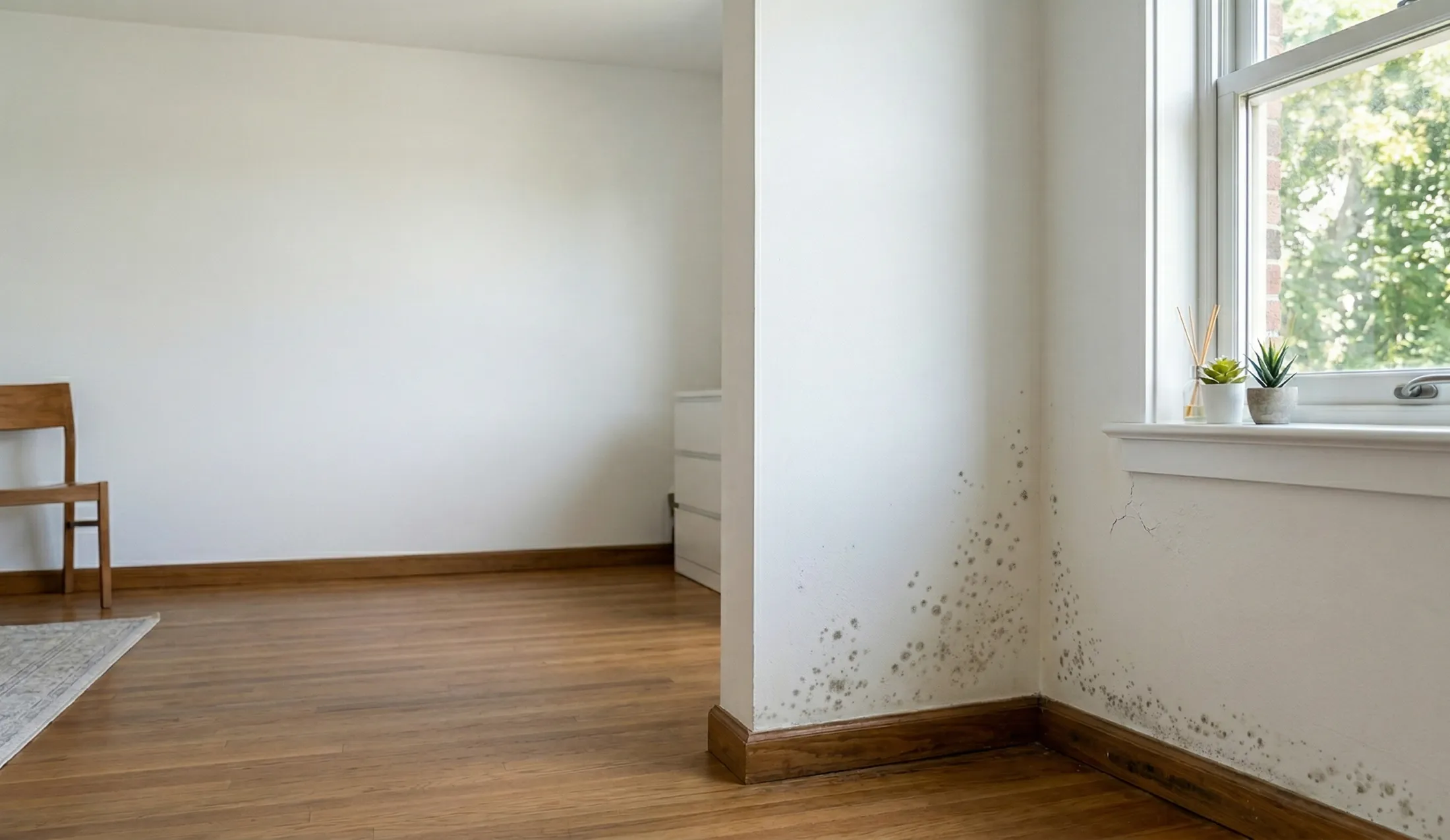

Finding mold in your home raises an immediate question: do you need to call a professional, or can you handle it yourself? The answer depends on four factors: the size of the affected area, where the mold is located, whether anyone in your household has health vulnerabilities, and whether the underlying moisture source has been identified and fixed. The U.S. Environmental Protection Agency and the ANSI/IICRC S520 Standard for Professional Mold Remediation both establish that the decision turns on contamination size, material type, moisture source, and occupant health status, not on mold color, smell alone, or visual severity.
This guide walks through every scenario and gives you a clear framework for deciding between DIY cleanup and professional remediation. If you are still identifying whether mold is actually present, start with signs of mold before returning here.
Key insights
- The EPA threshold is 10 square feet. Visible mold growth larger than a 3-foot by 3-foot area requires professional remediation, not DIY cleanup.
- Size is not the only factor. Location, moisture source, household health vulnerabilities, and whether mold is hidden all affect whether a professional is required.
- Color does not determine danger. The CDC and NIOSH both state that mold color alone does not indicate how hazardous a colony is. Any indoor mold requires removal.
- Mold can grow within 24–48 hours. After any water event, the EPA establishes this as the window before mold colonization begins on wet materials.
- High-risk households apply a stricter standard. Anyone with asthma, COPD, allergies, or a compromised immune system should not be present during any mold cleanup, and professional intervention is warranted at lower thresholds.
- Painting over mold is not remediation. The EPA specifically warns against covering mold without removal; the colony continues growing underneath and the problem worsens.
The EPA's 10-square-foot rule: where the line is drawn
The U.S. Environmental Protection Agency provides the most widely cited guideline for homeowners: if visible mold growth covers more than 10 square feet (roughly a 3-foot by 3-foot patch), you should hire a certified professional. Below that threshold, most healthy adults can safely clean surface mold on non-porous materials themselves. The full guidance is published in the EPA's mold cleanup guidelines.
 The 10 square foot line isn't just a size cutoff; it's the point where the EPA requires containment barriers and HEPA filtration that DIY cleanup can't replicate.
That threshold is not arbitrary. Larger mold colonies release far more spores when disturbed. Without professional containment equipment, DIY cleanup at that scale risks spreading contamination to unaffected parts of your home. The EPA's remediation guidelines require containment barriers, HEPA air filtration, and negative air pressure for colonies exceeding 10 square feet.
One critical caveat: visible mold rarely tells the full story. A patch on a wall often indicates a much larger colony hidden inside the wall cavity. If you suspect the mold extends beyond what you can see, professional assessment is appropriate regardless of visible size.
EPA mold infestation levels and recommended actions:
| Infestation level | Visible area | Recommended action |
|---|---|---|
| Level 1 - Small | Under 10 sq ft | DIY cleanup acceptable for a healthy adult with N95 respirator, goggles, and gloves. No containment required. |
| Level 2 - Medium | 10-100 sq ft | Professional assessment strongly recommended. Containment and limited PPE required. |
| Level 3 - Large | Over 100 sq ft | Full professional remediation required. HEPA filtration and negative air pressure are mandatory. |
Quick self-assessment: do you need professional remediation?
This nine-question checklist identifies whether your situation requires professional remediation. A single yes answer is sufficient to warrant calling a certified contractor rather than attempting DIY cleanup.
- Is the visible mold area larger than 10 square feet (approximately 3 feet by 3 feet)?
- Do you smell a persistent musty odor but cannot find the source?
- Has the mold returned after you previously cleaned it?
- Is mold growing near or inside your HVAC system, air vents, or ductwork?
- Is the mold on a porous surface such as drywall, wood framing, insulation, or carpet?
- Does anyone in your household have asthma, COPD, allergies, or a compromised immune system?
- Have household members developed respiratory or allergy symptoms that improve when away from home?
- Have you been unable to identify the moisture source?
- Are you preparing to sell your home?
If you answered no to all of the above, careful DIY cleanup on visible surface mold using proper protective equipment may be appropriate. If you are unsure about the extent of mold behind a surface, a professional mold inspection is a practical first step before any decision, covering what the process involves, what tools professionals use, and what to expect.
Signs you need professional mold remediation
Professional mold remediation is required when mold returns after cleaning, follows a water event, produces a musty odor without visible growth, involves HVAC systems, affects structural materials, or when occupants are experiencing health symptoms.
 Bubbling paint like this over a baseboard usually means moisture has been trapped long enough for growth to establish beneath the surface, not just on it.
Beyond size alone, these situations call for professional remediation regardless of how much mold you can see.
Mold returned after you cleaned it
Recurrence almost always means the moisture source was not fully resolved, or that mold is established in a location the initial cleanup could not reach. A professional will locate the moisture pathway and remediate from the source.
Mold followed a water event
Flooding, a burst pipe, or a roof leak that soaked porous materials such as drywall, insulation, or subfloor creates conditions for widespread hidden growth. The EPA notes that materials dried within 24-48 hours usually will not develop mold; if that window has passed, professional remediation is the safer route. Mold after water damage covers timelines and what to expect in full.
Musty odor without visible mold
NIOSH has found that musty odors without an identifiable visual source reliably indicate hidden mold growth, often behind walls, above ceiling tiles, or underneath flooring. Professionals use moisture meters and infrared cameras to locate it without destructive opening of walls.
Mold is in or near your HVAC system
Mold inside ductwork, near air handlers, or at supply and return vents is serious. A running HVAC system distributes spores to every room. This situation always requires a professional, and the HVAC system should not be operated until the problem is resolved. The full scope of HVAC mold, including which components are affected and when replacement is required, goes well beyond standard surface remediation.
Anyone in the household has symptoms
According to the CDC, mold exposure can cause a stuffy nose, sore throat, coughing or wheezing, burning eyes, and skin rash. Symptoms that improve when you leave home and worsen when you return are a meaningful indicator. The full range of health risks is covered under is mold dangerous.
Structural materials are involved
When mold has penetrated drywall, wood framing, insulation, or subfloor, those materials typically must be removed and replaced. This requires containment, proper disposal, and reconstruction that exceeds surface cleaning.
You cannot identify the moisture source
Removing mold without fixing the moisture problem guarantees it will return. If you have not found and corrected a leak, condensation issue, or ventilation problem, professional assessment should precede any cleanup.
When DIY cleanup is appropriate
DIY mold cleanup is appropriate when the affected area is under 10 square feet, the mold is on a non-porous surface, the moisture source has been fixed, and no one in the household has health vulnerabilities.
 This scenario only qualifies as DIY if the moisture source has already been fixed; cleaning an active leak's mold without that step guarantees recurrence.
Small-scale surface mold on non-porous materials is a legitimate DIY job when all of the following conditions apply. For step-by-step instructions, see DIY mold removal.
- The total affected area is under 10 square feet
- Mold is on a non-porous surface such as tile, glass, metal, or sealed countertops
- The mold is visible and accessible, not suspected inside walls, ducts, or below flooring
- You have identified and fixed the moisture source
- No one in the household has asthma, severe allergies, or a compromised immune system
- You do not suspect a toxigenic species such as Stachybotrys chartarum
For non-porous surfaces, scrubbing with detergent and water followed by thorough drying is effective. The CDC notes that bleach kills surface mold on non-porous materials but is not appropriate for porous surfaces such as wood or drywall, where the water content in bleach can encourage deeper growth.
The condensation and chronic humidity problem
Chronic condensation and poor ventilation are responsible for a significant portion of residential mold problems because they feed mold growth for months without any single triggering event, making the moisture source harder to identify and fix. The EPA recommends keeping indoor humidity below 50% at all times, and NIOSH research confirms that correcting moisture sources is more effective at preventing health problems than any cleanup effort alone.
Common culprits include bathrooms without exhaust fans that vent outdoors, kitchens without hood ventilation, single-pane windows that accumulate condensation during cold months, crawlspaces without vapor barriers, and basements with poor air circulation. In these cases, there is rarely a dramatic leak to point to, just slow, sustained moisture that never fully dries.
If you notice recurring mold in the same area after cleaning, condensation regularly forming on walls or windows, or a humidity level in your home consistently above 50%, you likely have a chronic moisture condition. Professional remediation of the visible mold is necessary, but it must be paired with a plan to address the underlying ventilation or moisture problem. Treating the mold without fixing the humidity is guaranteed to fail.
Research by NIOSH on dampness and mold in buildings confirms that correcting moisture sources is more effective at preventing health problems than any cleanup effort alone. An inexpensive hygrometer can monitor your home's humidity level.
Mold color does not determine danger
The color of mold does not determine how dangerous it is. The CDC and NIOSH both state clearly that any mold growing indoors requires removal regardless of species or color. One of the most common misconceptions homeowners have is that only black mold requires professional attention, which leads people to dismiss green, white, or gray mold as harmless, often delaying remediation until the problem is significantly worse.
 All three colors shown here require the same remediation threshold; the CDC and NIOSH are explicit that color alone never indicates which is more hazardous.
Common indoor molds include Cladosporium (green to black), Penicillium (blue-green), Aspergillus (various colors), and Stachybotrys chartarum (the true black mold, which is dark green to black and requires chronic moisture). All of these can trigger respiratory symptoms, allergic reactions, and other health effects in sensitive individuals.
The National Institute of Environmental Health Sciences notes that any mold growing indoors indicates a moisture problem that should be fixed, regardless of species. You cannot identify a mold species reliably by color alone. For information specific to darker or black-colored mold, black mold removal covers the protocols in full.
The practical takeaway: do not dismiss non-black mold as something you can safely ignore. The remediation threshold is the same regardless of color.
High-risk households: stricter thresholds apply
If anyone in your household has asthma, COPD, severe allergies, or a compromised immune system, the threshold for calling a professional is lower than the standard EPA guideline, and some should not be in the home at all during remediation. This group also includes infants, young children, elderly adults, and pregnant women.
Research published by NIOSH found that once respiratory symptoms develop from mold exposure, they may not resolve quickly even after successful remediation. Early professional intervention, followed by post-remediation clearance testing, limits long-term health consequences for vulnerable household members.
Do not paint or caulk over mold
Painting or caulking over mold does not solve the problem. The colony continues to grow beneath the surface, paint will peel, and moisture trapped under the surface layer can accelerate the spread. The EPA specifically warns against this approach.
NIOSH research has shown that superficial repairs, such as replacing a ceiling tile or painting over a water stain without addressing the moisture source, result in recurring and worsening damage over time. If you sell a home with covered-over mold, you also risk legal exposure for non-disclosure.
The surface must be cleaned, dried, and the moisture source must be fixed before any cosmetic repair. Skipping these steps hides the problem temporarily and makes professional remediation significantly more expensive later.
How much does mold remediation cost?
Most homeowners pay between $1,500 and $6,000 for professional mold remediation, with costs ranging from $500 for small surface jobs to $30,000 or more for whole-house or severe infestations. Remediation cost depends primarily on the size of the affected area, location, and whether structural materials must be removed.
Typical mold remediation cost by project size:
| Project size | Cost range | What is typically included |
|---|---|---|
| Small (under 10 sq ft) | $500 - $1,500 | Surface cleaning, antimicrobial treatment, basic containment |
| Medium (10-100 sq ft) | $800 - $4,000 | Containment, material removal (drywall, insulation), HEPA filtration |
| Large (100-300 sq ft) | $2,500 - $9,000 | Full containment, material removal, HEPA filtration |
| Very large (300-1,000 sq ft) | $6,000 - $20,000 | Full remediation, structural material removal, industrial drying |
| Whole-house or severe (1,000+ sq ft) | $15,000 - $30,000+ | Extensive structural work, HVAC treatment, full restoration |
| HVAC system contamination | $3,000 - $10,000 | Duct cleaning, air handler treatment, filtration replacement |
Get at least three quotes from IICRC-certified contractors for any project over $1,000. Mold inspection costs $300-$1,000 and should be completed before hiring a remediator on larger jobs. For full pricing by area and project type, see mold remediation cost.
Does homeowners insurance cover mold remediation?
Whether your insurance covers mold remediation depends on what caused the mold. Most standard homeowners policies cover sudden and accidental water events such as a burst pipe, a roof leak from a storm, or an appliance malfunction. Mold that results from these covered events is typically included in the claim.
Mold caused by long-term neglect, slow leaks left unrepaired, or chronic humidity and ventilation failures is almost never covered. Insurers treat these as preventable maintenance failures. If the adjuster determines the mold resulted from a condition that existed over an extended period, the claim is likely denied.
After any covered water event, act within 24-48 hours to begin drying, document everything with dated photos and written records, and notify your insurer promptly. The faster you respond, the stronger your claim and the less likely the insurer will apply gradual damage exclusions.
What renters need to know
Renters are generally entitled to mold-free living conditions under the implied warranty of habitability, with landlords responsible for remediation when mold results from building problems such as a leaking roof, plumbing failures, or inadequate ventilation rather than tenant behavior.
If the mold resulted from the tenant's own behavior, such as leaving windows open during heavy rain, blocking ventilation, or ignoring a leak and not reporting it, the tenant may bear some or all of the cost.
Regardless of cause, the critical first step for renters is to notify your landlord in writing as soon as mold or moisture is discovered. Written notice creates a legal record. If the landlord does not respond within a reasonable time, you may have the right to contact local housing or code enforcement authorities, and in some states, to pursue rent withholding or repair-and-deduct remedies.
Do not attempt to remediate mold in a rental unit beyond minor surface cleaning without your landlord's knowledge and written agreement. Doing so can complicate your legal position if a dispute arises. Document everything: photographs with timestamps, written communications, and copies of any repair requests.
 A pre-listing moisture reading like this is what lets sellers document remediation before a buyer's inspector finds the problem first.
Mold and selling your home
Sellers are legally required to disclose known mold in most states, and remediating before listing is almost always the better strategy than negotiating credits or losing a sale during inspection.
In most states, sellers are legally required to disclose known mold problems to prospective buyers. Some states, including California and New York, have explicit requirements; others address it through general material defect disclosure rules. Failing to disclose known mold can result in a buyer rescinding the sale, suing for remediation costs, or pursuing additional damages. The legal cost of non-disclosure consistently exceeds the cost of remediation.
Remediation before listing is typically the better strategy. A sale with documented professional remediation, receipts, and a clearance certificate is significantly easier to close than one where the buyer discovers mold during inspection and begins negotiating credits or demanding remediation as a condition of sale.
If you remediate before selling, keep all receipts, contractor documentation, and any post-remediation clearance reports. These documents demonstrate to buyers that the problem was properly addressed and reduce future liability.
Frequently asked questions
Can I just clean mold myself and skip calling a professional?
Yes, for small patches of surface mold under 10 square feet on non-porous materials, DIY cleanup is generally acceptable for healthy adults. Use an N95 respirator, goggles, and gloves. Fix the moisture source before cleaning. If mold returns, is suspected inside walls, or affects porous materials, professional remediation is the right step.
How do I know if mold is hiding behind my walls?
The most reliable indicators are a persistent musty odor without visible mold, discoloration or bubbling paint, and prior water damage in that area. A professional with a moisture meter or thermal imaging camera can detect elevated moisture behind wall surfaces without cutting them open. If drywall feels soft or spongy, that is also a strong indicator of hidden moisture and likely mold.
Is all black mold dangerous? What about other colors?
Not all black-colored mold is the toxigenic Stachybotrys chartarum, and non-black mold species can also cause health effects. The CDC and NIOSH both state that mold color alone does not determine danger level. Any mold growing indoors should be treated as a problem requiring removal, regardless of color. If you want species-level identification, a certified industrial hygienist can test a sample.
How fast does mold grow after a water event?
Under the right conditions, mold can begin growing within 24-48 hours after a water event, according to the EPA. Temperature and the type of material affected influence how fast a colony establishes. This is why drying affected areas quickly is critical; waiting several days before addressing water intrusion almost always leads to mold growth.
Should I test my air before or after remediation?
Air testing before remediation is generally unnecessary when visible mold is already present; the EPA notes that sampling does not change the answer when you can already see the problem. Air testing is most valuable as a post-remediation clearance check. For large jobs, insist this clearance is done by a separate inspector from the remediator. Mold testing covers what different test types reveal and when each is warranted.
My landlord is not responding to my mold complaint. What can I do?
Notify your landlord in writing first, if you have not already. Written notice creates the legal record you need. If there is no response within a reasonable period, you can file a complaint with your local housing or code enforcement authority. Depending on your state, you may also have the right to withhold rent, pursue a repair-and-deduct remedy, or terminate your lease for uninhabitable conditions. Consult a tenant rights organization or attorney in your state for specific guidance.
Do I need to disclose past mold if I am selling my home?
In most states, you are required to disclose known mold problems, including ones that have been previously remediated. Disclosure rules vary by state, but the general principle is that material defects affecting health or safety must be disclosed. Keep documentation of any remediation work done, including receipts and clearance reports, to demonstrate the issue was properly resolved.
What does professional mold remediation involve?
Professional mold remediation follows a structured sequence: a certified technician locates all moisture sources, seals off the affected area with plastic barriers and negative air pressure, removes contaminated porous materials, cleans and treats remaining surfaces with HEPA vacuums and antimicrobial products, and confirms success with a post-clearance air test. Each step is covered in full under mold remediation.
How long does professional mold remediation take?
Small to medium jobs typically take 1-5 days. Large projects involving structural removal and drying may take 1-2 weeks or longer. Ask your contractor for a specific timeline in writing before work begins. A full phase-by-phase breakdown by job size and location is covered under how long does mold remediation take.
How do I find a reputable mold remediation contractor?
Look for IICRC AMRT certification, a written scope of work that specifies containment method and materials to be removed, and independent post-remediation clearance testing not performed by the same company. Never pay in full before clearance testing confirms the work is complete. A full vetting process with bid comparison and red flags is covered under how to choose a mold remediation company.
How do I prevent mold from coming back after remediation?
Moisture control is the only reliable prevention. Fix all leaks, maintain indoor humidity below 50%, use exhaust fans in bathrooms and kitchens that vent to the outside, and address any future water events within 24-48 hours. Remediation that did not identify and resolve the moisture source will almost always result in recurrence.
- U.S. Environmental Protection Agency. Mold Cleanup in Your Home.
- U.S. Environmental Protection Agency. A Brief Guide to Mold, Moisture, and Your Home.
- Centers for Disease Control and Prevention. Mold: Health Effects and Symptoms.
- Centers for Disease Control and Prevention. Mold Cleanup Guidelines.
- National Institute for Occupational Safety and Health (NIOSH). Mold, Testing, and Remediation.
- National Institute for Occupational Safety and Health (NIOSH). Dampness and Mold in Buildings.
- National Institute of Environmental Health Sciences. Mold.
- NIOSH. Park J-H and Cox-Ganser JM. Dampness and Mold Assessment Tool (DMAT)
- Institute of Inspection, Cleaning and Restoration Certification (IICRC). S520 Standard for Professional Mold Remediation.
Sam Hickerson is the founder of RestoreAdvisor and writes consumer guides on mold remediation, water damage restoration, inspection, testing, and home recovery. His work focuses on helping homeowners understand costs, risks, and when to call a professional. He draws on guidance from the EPA, CDC, IICRC, and other authoritative sources to make complex home issues easier to navigate.