
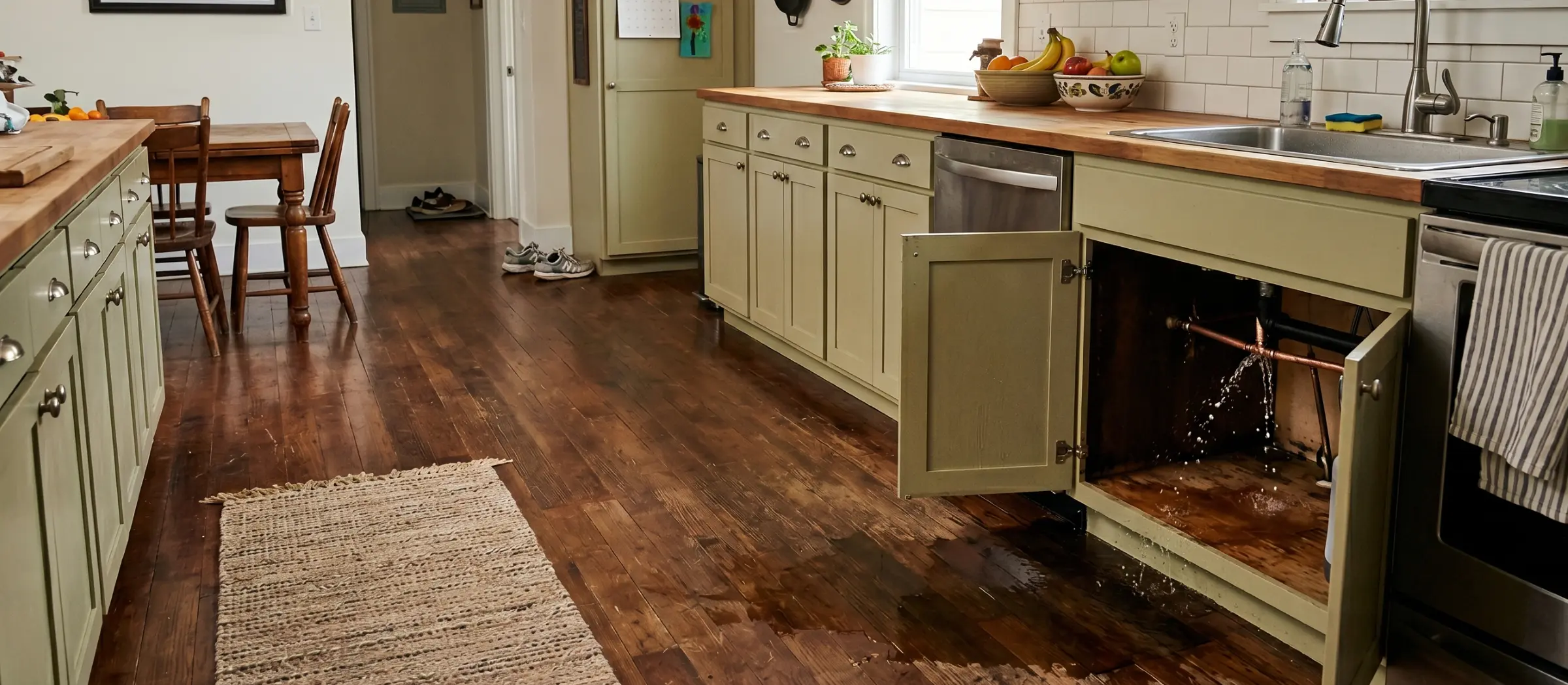

If you've just dealt with a burst pipe, the water damage is obvious. Whether mold follows isn't automatic, and it mostly comes down to what you do in the next 24 to 48 hours, not how bad the flooding looked or how big the pipe was.
Mold from a burst pipe is fungal growth that establishes on building materials after sudden water release from a failed plumbing line, governed by the same drying standards the EPA applies to any indoor water event. This covers where water tends to hide longer than people expect, the order of calls to make (plumber, then drying, then remediator if needed), and what separates a job you can dry out yourself from one that needs professional equipment.
Key insights
- 24 to 48 hours is the window that matters. Per EPA guidance, materials dried within this timeframe usually do not develop mold; materials wet longer than that usually do.
- Hidden cavities dry slower than open rooms. Wall cavities, subflooring, and ceiling cavities can hold moisture for weeks even when the surface feels dry to the touch.
- The plumber goes first. Drying or repair work started before the source is fixed risks re-soaking the same materials.
- Insurance coverage often hinges on speed, not size. Sudden, accidental pipe failures are typically covered; mold from a leak that was ignored for weeks often is not.
- Small, surface-level jobs are frequently DIY-appropriate. The EPA's 10-square-foot threshold is the practical line between a weekend project and a job that needs a contractor.
- Pipe material and location change the risk profile. A slab leak under a concrete floor behaves very differently than a supply line break inside a kitchen cabinet.
Will a burst pipe always cause mold?
No, a burst pipe does not automatically cause mold. Mold requires moisture to persist on a surface for an extended period, and the Centers for Disease Control and EPA both point to the same general window: materials that are thoroughly dried within roughly 24 to 48 hours of getting wet typically do not develop mold growth, while materials left damp longer usually do.
 Pitting corrosion eats through the pipe wall from the inside, so a leak this small can run for weeks before the staining or a musty smell ever reaches the room side of the wall.
What changes the outcome is not the pipe itself but what happens immediately after. A burst supply line in an open, ventilated room that gets mopped up and dried with fans within a day behaves completely differently from the same break inside a wall cavity that nobody notices for a week. The volume of water matters less than how long it stays trapped against a surface that can absorb and hold it, like drywall paper, wood subflooring, or carpet padding.
Pipe material changes how the failure happens, which in turn changes how much warning you get. Copper lines typically develop pinhole leaks from pitting corrosion that can drip for weeks before anyone notices, while PEX and PVC tend to fail at fittings and connections rather than splitting along their length, giving a faster, more obvious release. Galvanized steel, common in homes built before the 1960s, corrodes from the inside out and often fails at a joint with little advance warning. A full, sudden burst is sometimes the better outcome of the two, since it gets noticed and addressed immediately, and the resulting mold after water damage is often less extensive than what a slow, undetected leak produces over weeks.
How fast does mold grow after a burst pipe?
Mold can begin colonizing wet materials in as little as 24 to 48 hours under typical indoor conditions, and that timeline does not pause just because a homeowner is busy dealing with a plumber or an insurance adjuster. Spores that are already present in nearly every home (a normal part of the indoor and outdoor environment) need only moisture and an organic surface to germinate. Drywall paper, wood framing, and dust-coated surfaces all qualify.
 Once colonies cluster and spread like this, the growth has typically passed the point where surface cleaning resolves it, since mold reaching this density usually means the gypsum core and paper backing are both affected.
Temperature and humidity shift the timeline slightly in either direction, but the room itself rarely tells the whole story. A bathroom or kitchen running warm and humid from daily use accelerates the early stages, while a cold basement may buy a few extra hours, though neither condition changes the fundamental rule that drying time, not room type, determines the outcome.
| Time since water exposure | What is happening |
|---|---|
| 0–24 hours | Standing water is present; materials are saturated but mold has not yet established |
| 24–48 hours | The window EPA guidance treats as the cutoff; spores can begin to germinate on damp materials |
| 48 hours–7 days | Visible colonies often become noticeable on porous surfaces still holding moisture |
| 7+ days | Growth can spread beyond the original wet area, especially inside wall cavities with no airflow |
The timeline shortens in warm, humid conditions and lengthens slightly in cold, dry ones, but it should never be treated as a buffer to wait and see what happens. Professional moisture assessment under the IICRC S520 standard relies on meter readings rather than how long it has been since the leak, precisely because the visible timeline and the actual moisture content of a material can tell two different stories.
Where mold hides after a burst pipe
Mold after a burst pipe most often hides in wall cavities, subflooring, cabinet bases, and ceiling assemblies, since water from a break travels along the path of least resistance and gravity rather than staying at the point where the pipe actually failed. The visible damage point is frequently not where the worst risk ends up.
 The sharp line between dry and saturated insulation marks how far water actually traveled inside the cavity, which is often several feet below or beyond the point where the leak first entered the wall.
Wall cavities behind the break
When a pipe inside a wall fails, water runs down inside the stud bay before it ever shows on the drywall surface. The stain that eventually appears is frequently several feet below the actual break, and the insulation and back side of the drywall inside that cavity can stay wet for weeks with no visible sign from the room side.
Subfloor beneath the leak
Water under a sink, washing machine, or toilet supply line soaks straight down through flooring seams into the subfloor. Tile and vinyl can trap that moisture underneath, which is why a floor that looks and feels dry on top can still be holding water below.
Cabinet bases and toe kicks
Kitchen and bathroom cabinets sit directly over many supply lines, so a slow connection failure often soaks the particleboard cabinet base long before water reaches the visible floor, and the wood underneath stays hidden behind the cabinet face the entire time. This is one of the most commonly missed spots during a quick cleanup.
Ceiling cavities below an upper-floor break
If the burst pipe is on a second floor or in an attic, water travels down through the ceiling assembly of the floor below, often pooling in the cavity before it ever drips through. A stain that finally appears is usually a sign the space above has already been wet for some time.
Baseboards along the travel path
Water spreads outward along the floor far past the room where the pipe failed, and baseboards act like a wick, drawing moisture up into the wall and ceiling cavities behind them at every point they touch.
Beneath a slab foundation
A slab leak develops when a supply line embedded in or under a concrete foundation fails, and the water has nowhere to go but up through the slab itself or sideways under interior walls. There is rarely a single visible source point, instead you typically see a warm or damp patch on the floor, a spike in the water bill, or flooring that lifts or warps in one area, all of which can take weeks to become noticeable since the leak is buried.
A slab leak has no cavity to open and dry, since the leak sits under the structure itself rather than inside it. A plumber typically needs to either reroute the line above the slab or tunnel underneath to access the break, and any mold that develops on flooring or baseboards above the leak is a secondary problem that gets addressed only after the water source is located and stopped.
What to do in the first 24 hours
The first 24 hours after a burst pipe call for shutting off the water, cutting power to any wet electrical zones, documenting the damage, extracting standing water, and starting mechanical drying, in that order. Skipping ahead to repairs before the area is fully dry is one of the most common reasons mold shows up weeks later even after a fast initial response.
 Extracting standing water before running fans or a dehumidifier matters, since airflow across a wet floor before the bulk of the water is gone mostly just spreads moisture into the surrounding air.
1. Shut off the water
Close the main shutoff valve immediately rather than trying to isolate just the affected fixture, unless you are certain which valve controls only that line.
2. Cut power to wet areas
If water reached outlets, switch plates, or an electrical panel, shut off the breaker for that zone before anyone enters standing water.
3. Document before you touch anything
Photograph and video the water's extent and any visible source damage. This step takes minutes and matters significantly if you end up filing an insurance claim.
4. Remove standing water
Extract pooled water with a wet vacuum, mop, or pump as quickly as possible. Every hour standing water sits is an hour it has to soak deeper into porous materials.
5. Move and elevate belongings
Pull furniture, rugs, and stored items off wet flooring so air can reach the floor surface and the item itself from multiple sides.
6. Start mechanical drying within hours, not days
Run fans and a dehumidifier continuously in the affected area. Household fans alone often cannot reach the interior of a wall cavity or subfloor within the EPA's 24-to-48-hour drying window, which is the main reason professional equipment becomes necessary on larger jobs.
Should you call a plumber or a mold remediation company first?
Call the plumber first, every time, regardless of how much water damage already occurred. A mold remediation company cannot effectively dry or treat an area that is still being supplied with new moisture, and a mold inspection performed while the leak is still active will not produce a reliable scope of work, since the source needs to be stopped before anyone can measure how much damage actually resulted from it. A homeowner who calls a remediation company first sometimes ends up paying for drying equipment twice, once before the leak is actually stopped and again after, because the first round of work gets undone by continued leaking.
If the water came from a slow, hidden leak rather than a dramatic burst, the same order still applies, the only difference is that the moisture source may take longer to pinpoint. The contamination classification most contractors use to scope a job like this comes from the same water-category system used for water damage more broadly, applied once the leak itself is fixed.
Can you dry it out yourself, or do you need a professional?
You can often handle the drying and any minor mold cleanup yourself if you act within the first 24 to 48 hours, the affected area is on an open, accessible surface, and any visible mold covers less than about 10 square feet, the threshold the EPA uses to separate a DIY job from one that needs a contractor. Anything beyond that threshold, or hidden behind a surface you cannot directly access, shifts the odds toward needing professional equipment.
 This wall looks and feels completely dry, yet the meter reads 48.2 percent, well above the roughly 17 to 19 percent threshold that signals trouble, which is exactly why a visual check alone is not reliable.
Several factors push a burst pipe situation out of DIY territory even when the visible water seemed manageable. Water that reached inside a wall cavity, under flooring, or into a ceiling assembly is difficult to fully dry with household fans, since you cannot see or directly access the wet material to confirm it is dry. A moisture meter reading, not a visual or touch check, is the only reliable way to confirm a wall cavity or subfloor has actually dried out.
Materials stayed wet longer than 48 hours
Once that window passes, the odds of mold having already started increase substantially, even if nothing is visible yet.
Water reached a wall cavity, subfloor, or ceiling cavity
These spaces are difficult to verify dry without a moisture meter and difficult to treat without opening the assembly.
Visible mold covers more than roughly 10 square feet
This is the point where professional mold remediation becomes the more reliable path than surface cleaning, since larger areas typically require containment that household cleaning cannot provide.
A household member is high-risk
Infants, elderly residents, and anyone with asthma, a compromised immune system, or chronic respiratory conditions benefit from a lower threshold for calling a professional.
The source was sewage-contaminated or came from outside
Contaminated water carries additional health risks that change the cleanup approach entirely and should not be handled as a standard DIY job.
If your situation falls outside DIY territory, look closely for the visual and odor signs of mold before deciding whether a professional assessment is warranted, since the extent of what you can actually see often understates what is happening underneath.
What does it cost to remove mold from a burst pipe?
Mold removal cost after a burst pipe ranges from about $500 for a small, early-caught surface job to $15,000 or more for cases involving wall cavities, subflooring, or ceiling assemblies that stayed wet for an extended period. The driving factor is almost always how long the materials were wet and how much demolition is required to access and treat the affected area, not the size of the original pipe failure.
 Once a wall cavity is opened to this extent, the job has moved well past the surface-cleaning range and into the territory that requires insulation replacement, framing treatment, and reconstruction.
Two jobs with the same square footage of visible mold can land at very different price points depending on what is behind the surface. A contractor who has to open a wall to access a stud bay, replace insulation, and run containment will quote well above a surface-only job, even when the mold patch itself looks similar in size on day one, which is why mold remediation cost varies so much even within a single city.
| Scenario | Typical cost range |
|---|---|
| Small surface area, caught within 48 hours | $500–$1,500 |
| Cabinet base or limited subfloor section | $1,500–$3,500 |
| Wall cavity opened for treatment, one room | $3,000–$7,000 |
| Multiple rooms or a ceiling cavity affected | $6,000–$15,000+ |
| Whole-home or extended undetected leak | $15,000–$30,000+ |
These figures cover remediation and material removal specifically. They do not include the plumbing repair itself or reconstruction costs like new drywall, flooring, or cabinetry, which are typically billed separately. A job that gets reopened because mold comes back after the first round of work usually costs more in total than doing the drying thoroughly the first time, since materials that already failed once tend to fail again faster.
Does insurance cover mold from a burst pipe?
Homeowners insurance often covers mold from a burst pipe, but the coverage hinges on whether the failure was sudden and accidental rather than the result of a slow leak that went unaddressed. Most standard HO-3 policies cover sudden and accidental water discharge from plumbing, which is exactly what a burst pipe typically is, but that same policy usually excludes damage tied to neglect, deferred maintenance, or a leak that was allowed to continue for an extended period.
This distinction matters more for burst pipes than almost any other mold cause, because the same physical event (water from a failed pipe) can be classified two completely different ways depending on the timeline. A pipe that bursts suddenly during a freeze and is reported and addressed promptly is the textbook example of a covered loss. A slow pinhole leak that was visible or smelled musty for months before the pipe finally failed completely is far more likely to be treated as a maintenance issue, especially if an adjuster can show evidence of prior moisture damage.
Most policies also carry a mold-specific coverage sublimit, separate from the broader water damage coverage, which can leave a gap if remediation costs exceed that capped amount. Documenting the timeline of the leak, including when it was first noticed and when the plumber was called, gives an adjuster the evidence needed to classify it as sudden rather than negligent, the same distinction that governs insurance coverage for mold caused by any plumbing failure.
How to prevent mold the next time a pipe fails
The most effective way to prevent mold after a future pipe failure is knowing your main water shutoff valve location in advance and insulating exposed pipes before winter, since pipes can and eventually do fail regardless of maintenance and the response time after a failure matters more than preventing the failure itself.
 Foam insulation sleeves like this are inexpensive and take only minutes per pipe section, which makes them one of the few prevention steps with no real reason to skip in an unheated crawl space or attic.
The actions below split into two categories: a few one-time setup steps that reduce how often a pipe fails in the first place, and a few ongoing habits that shrink the response window when one inevitably does. Both matter, but the ongoing habits tend to make the bigger difference in whether a future failure turns into a repair or a remediation job.
| Action | Frequency | Why it works |
|---|---|---|
| Know your main shutoff valve location | Once, then verify annually | Cuts response time from minutes to seconds during an active leak |
| Insulate exposed pipes in unheated spaces | Before winter each year | Reduces freeze-related bursts, the leading cause of sudden pipe failure |
| Install a water leak sensor near high-risk fixtures | One-time setup | Alerts you to moisture before it spreads, especially useful for hidden leaks |
| Check supply lines on appliances | Every 6 months | Aging rubber supply lines are a common source of slow, undetected leaks |
| Keep indoor humidity below 60% | Ongoing | Reduces how readily mold establishes if a leak does occur |
A full room-by-room mold prevention system is worth building out if you want a complete moisture-control plan beyond plumbing-specific risks, since pipes are only one of several moisture sources a home faces over time.
Frequently asked questions
How long after a burst pipe does mold start growing?
Mold can begin colonizing wet building materials within 24 to 48 hours, per EPA guidance. Materials that stay damp longer than that window are likely to develop mold even if the surface looks dry.
Can I dry out a burst pipe area myself without getting mold?
Yes, if you act within the first 24 to 48 hours and the affected area is small, open, and on a hard or semi-porous surface. Standing water that reached carpet padding, drywall interiors, or wall cavities is much harder to fully dry without commercial equipment.
Do I need a plumber or a mold remediation company first?
Call the plumber first. A remediator cannot dry or treat an area that is still actively leaking, and any drying or repair work done before the pipe is fixed risks getting wet again from the same source.
Does homeowners insurance cover mold from a burst pipe?
Often yes for the sudden portion of the loss, since most HO-3 policies cover sudden and accidental water discharge. Coverage typically narrows or disappears if the pipe was leaking slowly for weeks before it failed, since that shifts the cause toward negligence or lack of maintenance.
Can mold grow inside a wall from a burst pipe even if the wall looks dry?
Yes. Drywall and the wood framing behind it can hold moisture for weeks after the surface feels dry to the touch, which is why a moisture meter reading matters more than a visual check after any pipe failure inside a wall cavity.
What does it cost to remove mold caused by a burst pipe?
Small, surface-level jobs caught early typically run $500 to $1,500. Jobs involving wall cavities, subflooring, or ceiling cavities that stayed wet for days commonly run $3,000 to $15,000 or more once material removal and reconstruction are included.
Is mold from a burst pipe more dangerous than other types of mold?
Not inherently. The mold species that grow after a burst pipe (commonly Cladosporium, Aspergillus, and Penicillium) are the same species found after most other water events. The bigger risk factor is how long the materials stayed wet and how much of the structure was affected.
Sam Hickerson is the founder of RestoreAdvisor and writes consumer guides on mold remediation, water damage restoration, inspection, testing, and home recovery. His work focuses on helping homeowners understand costs, risks, and when to call a professional. He draws on guidance from the EPA, CDC, IICRC, and other authoritative sources to make complex home issues easier to navigate.