
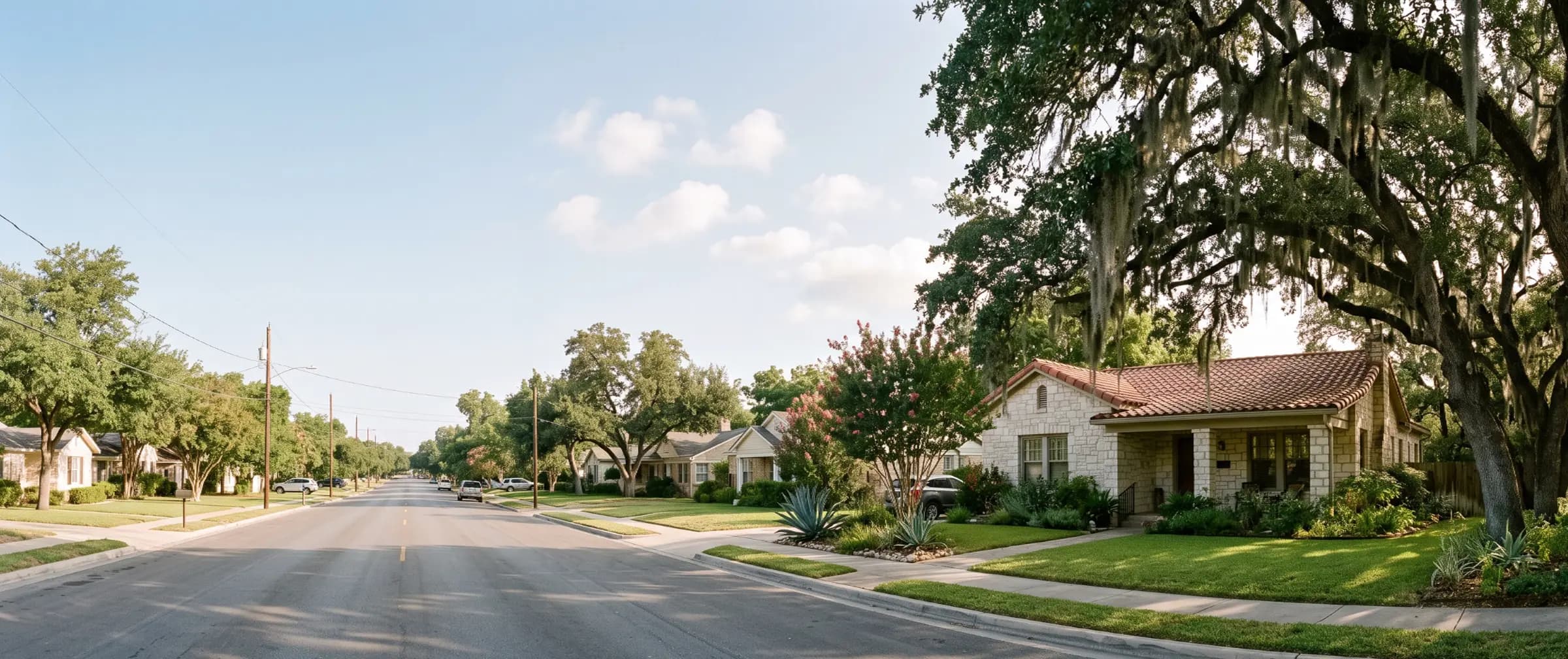

San Antonio homeowners searching for mold help are usually dealing with one of two situations: standing water from a flash flood that hit overnight, or a musty smell that's been building for weeks in a home that's decades old. Mold remediation here costs $1,500 to $6,500 for most residential jobs, and the path to fixing it looks different depending on which of those two situations you're in. Flash flood risk, local pricing, and Texas licensing rules each shape that decision differently, and knowing which one applies to your situation is what determines whether you're looking at a same-day extraction job or a multi-day licensed remediation.
Mold remediation is the licensed, protocol-driven process of removing fungal growth from a structure and correcting the moisture source that caused it, governed in Texas by the Texas Mold Assessment and Remediation Rules and by the ANSI/IICRC S520 standard for professional practice. In Bexar County, that process has to account for a risk profile built around fast-moving floodwater and a housing stock where a meaningful share of homes predate modern moisture-control building codes.
Key insights
- San Antonio's core risk driver is flash flooding, not hurricane exposure. The city sits in what meteorologists call Flash Flood Alley, and the June 12, 2025 flood killed 13 people in a single overnight event.
- Typical remediation costs run $1,500 to $6,500. Flood-driven jobs involving drywall, flooring, and HVAC components regularly exceed $10,000.
- Texas requires licensing once a hired contractor's job reaches 25 contiguous square feet. A homeowner performing the work themselves on their own property is exempt regardless of size, but a hired contractor is not.
- Standard homeowners insurance excludes flood-caused mold. Flood damage requires separate NFIP coverage, and most Texas HO policies carry a mold sublimit even for covered causes.
- Mold begins growing within 24 to 48 hours of water exposure. Homes near a documented low water crossing need extraction to start the same day water recedes.
- Pre-1960s homes in the urban core carry risk independent of flooding. Aging plumbing, original roof decking, and retrofit HVAC systems in neighborhoods like King William and Monte Vista add a second, unrelated risk pathway.
Why San Antonio mold risk is a flood story, not a humidity story
San Antonio's defining mold risk factor is water that arrives fast and all at once, not humidity that builds up slowly. The city sits at the eastern edge of the Balcones Escarpment, a line of limestone hills where warm Gulf air rises, cools, and dumps intense rainfall over ground that's mostly shallow soil on top of rock. That combination is why meteorologists call this stretch of Central Texas Flash Flood Alley, and why San Antonio's flood history reads differently than a hurricane-driven coastal market.
 A San Antonio low water crossing can flood within minutes during a Flash Flood Alley rain event. Once water reaches a home, the 24 to 48 hour window before mold establishes in wet materials starts on contact, not after the water recedes.
The city's worst flood on record hit in September 1921, when remnants of a tropical storm dropped roughly 18 inches of rain over the northern part of the city in a single night, sent a wall of water through downtown, and killed at least several dozen people while burying parts of downtown under close to 10 feet of water. A 1998 flood tied to two Pacific hurricanes and a stalled front dropped record rainfall across the region and killed 31 people statewide. More recently, an overnight flash flood on June 12, 2025 swept cars into a rain-swollen creek near an interstate access road and killed 13 people, a reminder that this risk is current rather than historical.
Below the level of catastrophic flooding, the everyday version of this risk shows up at low water crossings, where Salado Creek on the city's east side and Leon Creek on the west side account for several of the ten most rescue-prone roadway crossings the San Antonio Fire Department has tracked over the past decade, according to flood-risk monitoring maintained by the San Antonio River Authority. Both creeks run past residential neighborhoods where floodwater can back up into yards and low-lying foundations during a heavy storm even without a named disaster.
A second, unrelated risk factor comes from San Antonio's long cooling season rather than its rainfall. NWS climate normals for the city put the average above 115 days a year with highs over 90°F, and air conditioning systems here run at or near capacity for roughly eight months, which means condensate drain lines, HVAC-adjacent drywall, and attic ductwork are under sustained moisture stress independent of any flood event. Homes with older or undersized systems are the ones most likely to develop mold from this pathway rather than from storm water.
| Risk driver | What causes it | Where it shows up |
|---|---|---|
| Flash flooding | Balcones Escarpment rainfall intensity over shallow, rocky soil | Homes near Salado Creek, Leon Creek, San Pedro Creek, and documented low water crossings |
| Aging housing stock | Original plumbing, roofing, and retrofit HVAC in pre-1960s homes | King William, Monte Vista, Tobin Hill, Dignowity Hill |
| Long AC season | 115+ days above 90°F and roughly eight months of near-continuous cooling | Condensate lines, attic ductwork, and HVAC-adjacent drywall citywide |
A home that has already taken on floodwater or a slab leak usually isn't a judgment call. The EPA's 10 square foot threshold marks the point where do-it-yourself cleanup is no longer recommended, and that threshold gets crossed quickly once water has traveled across a floor or up a wall. The signs that mean professional mold remediation is required rather than continued cleaning are the same regardless of the water's source.
What to do in the first 24 to 48 hours after a flood
In the first 24 to 48 hours after a flood, shut off power to wet areas, extract standing water, and start mechanical drying immediately, since that window determines whether the job stays a simple drying project or turns into a full mold remediation job. Acting in the right order during that window is what keeps a flash flood or a low water crossing overflow from turning into a much larger bill.
 Materials that are still wet after 24 hours have a sharply higher chance of needing full replacement instead of drying and treatment. Extraction should start the same day water recedes, not after an adjuster inspects the property.
Shut off power to affected areas
Cut electricity to any room that took on water before doing anything else, since standing water and live wiring are the more immediate danger even before mold becomes a concern.
Document the water line and damage
Photograph and video the high-water mark, wet flooring, and any visible damage before extraction begins, since this record supports both an insurance claim and a future disclosure if the home is ever sold.
Identify the source
Confirm whether the water came from rising floodwater, a nearby creek overflow, or an internal failure like a burst pipe, since that distinction determines which insurance policy applies and whether the loss falls under NFIP flood coverage or a standard homeowners claim.
Start extraction and air movement immediately
Remove standing water and get fans and dehumidifiers running the same day water recedes rather than waiting for an adjuster, since the 24 to 48 hour mold growth window doesn't pause for paperwork.
Contact your insurer with the source already identified
Reporting the cause up front, rather than leaving it to be determined later, speeds up the process of figuring out whether flood coverage, homeowners coverage, or both apply to the loss.
Schedule a licensed mold assessment within the first week
Even if drying appears successful, a licensed assessor can confirm whether hidden moisture remains behind walls or under flooring before the space is closed back up or repainted.
Once floodwater does reach a home, the standard timeline for mold after water damage still applies: growth typically begins within 24 to 48 hours, which is why the steps above need to start the same day water recedes rather than waiting on an adjuster.
What mold remediation costs in San Antonio
San Antonio mold remediation runs $1,500 to $6,500 for a typical residential job, close to the national mold remediation cost of $1,500 to $6,000. Small, contained jobs under 10 square feet can come in around $500 to $1,500, while flood-driven or whole-room jobs that require drywall removal, flooring replacement, and HVAC decontamination commonly reach $8,000 to $15,000 or more.
 A reading well above the 20 percent threshold for porous framing means the wood needs replacement rather than drying alone, which is why flood-driven jobs in San Antonio run toward the higher end of the cost range.
Two local factors push costs above the national midpoint more often than in a drier climate. First, San Antonio's flash flood risk means a larger share of local jobs involve saturated drywall, insulation, and flooring rather than a contained surface patch, which raises material replacement costs. Second, the city's long cooling season means HVAC components are more frequently part of the remediation scope, since ductwork and coils that stay wet for even a day during a flood event or a slab leak often need cleaning or replacement alongside the structural work.
| Project scope | Typical San Antonio cost | Local cost drivers |
|---|---|---|
| Small, contained (under 10 sq ft) | $500–$1,500 | Bathroom grout, single closet, isolated ceiling stain |
| Moderate (one room) | $1,500–$4,000 | Bedroom or bathroom after a slow leak, no flood involvement |
| Major flood-related | $4,000–$10,000+ | Multiple rooms, saturated flooring and drywall from flash flood or crossing overflow |
| Whole-home with HVAC | $8,000–$25,000 | Ductwork replacement, slab-related moisture, extended containment |
Cost also varies by the room or system involved, since a mold inspection often reveals that some locations are far harder to access and more likely to have reached porous material than others.
Pre-1960s homes in the urban core add a further wrinkle, since original plumbing runs and retrofit HVAC closets are often harder to access than the same systems in newer construction, which pushes labor time and cost upward even on a project of identical square footage.
| Location | Typical cost | Why |
|---|---|---|
| Bathroom | $500–$2,500 | Condensation or a slow plumbing leak, usually contained to grout and drywall |
| Kitchen | $500–$2,500 | Under-sink leaks and appliance condensate lines |
| Attic / HVAC closet | $1,500–$6,000 | Confined access to ductwork and coils in retrofit systems common in older homes |
| Flooded living space | $4,000–$12,000+ | Saturated flooring, baseboards, and drywall after a flash flood or crossing overflow |
San Antonio's cost per square foot for remediation runs $10 to $25, in line with the national range, with the higher end reserved for jobs requiring full containment or extensive demolition. Pricing can run 10 to 20 percent above baseline in the weeks immediately following a widely reported flood event, when demand for licensed crews spikes faster than supply. Clearance testing, the lab-confirmed step that verifies a job is actually complete, is typically billed as its own line item at $200 to $600 rather than folded into the remediation price.
Standalone inspection costs in San Antonio typically run $300 to $700, separate from the remediation itself.
Texas mold licensing and how to verify a contractor
Texas requires a hired contractor to hold a state license once a mold job reaches 25 contiguous square feet or larger, a threshold higher than the EPA's general 10 square foot guidance for when professional help is recommended. A homeowner performing the work themselves on their own single-family property is exempt from licensing at any size, since the state's owner exemption has no square footage cap for self-performed work. That gap matters in practice: a homeowner could legally clean a 40 square foot area themselves with no license at all, while EPA and CDC guidance already recommends against DIY cleanup above 10 square feet on health grounds. Legal permission and health guidance aren't the same thing, and a homeowner deciding for themselves should weigh the health guidance at least as heavily as the legal minimum once the area crosses 10 square feet.
 A Texas Mold Remediation Contractor license and a separate Mold Assessment Consultant license should come from two different companies, not one, since state law prohibits the same firm from writing the protocol and performing the cleanup.
The law, known as the Texas Mold Assessment and Remediation Rules, requires a strict separation between the two roles involved in a project. A licensed Mold Assessment Consultant inspects the property, writes the remediation protocol, and later certifies that the work passed clearance. A separately licensed Mold Remediation Contractor then performs the physical work according to that protocol. The same company cannot legally serve as both the assessor and the remediator on one project, a safeguard meant to prevent a contractor from inflating the scope of work they were hired to perform.
Before signing anything, work through a short verification sequence rather than taking a company's word for its license status.
Search the TDLR license database
Look the company up directly through the Texas Department of Licensing and Regulation license search rather than relying on a license number printed on an invoice or a truck.
Confirm the license type matches the work being quoted
A Mold Remediation Contractor license covers the physical work; a Mold Assessment Consultant license covers inspection and clearance testing. A company quoting both roles for the same project is quoting something Texas law doesn't allow.
Confirm the assessor and remediator are separate companies
Ask directly whether the same business will write the protocol and also perform the removal work, since state law prohibits that overlap on any project above the 25 square foot threshold.
Ask for the completed Form MDR-1 once the job is done
Form MDR-1, the certificate documenting completed remediation under state rules, matters later for insurance claims or resale, and a licensed contractor should provide it without being asked twice.
The complete Texas TDLR licensing rules, including the Consumer Mold Information Sheet and Form MDR-1, apply the same way across every Texas city, not just San Antonio.
A secondary credential worth checking once TDLR licensing is confirmed is IICRC AMRT certification, which reflects training in the ANSI/IICRC S520 standard that governs remediation practice nationally. It is not a substitute for the state license itself.
What to ask before you hire a San Antonio mold contractor
Before hiring, verify the license, understand the scope, and confirm how the job ends, since those three stages catch most of the problems that turn a mold job into a dispute. These three stages mirror the broader how to choose a mold remediation company approach, adapted here to the licensing questions specific to Texas.
 A credible contractor walks through what changed the moment a wall is opened, rather than letting the scope grow silently once work is already underway.
Two answers matter more than they first appear: whether mold in HVAC systems is part of the containment plan when flooding or a leak reached a supply or return line, and whether the same company both writes the protocol and signs off on its own clearance test.
| Question to ask | Why it matters |
|---|---|
| Do you hold an active Texas Mold Remediation Contractor license, and will a separate, unaffiliated Mold Assessment Consultant write the protocol and confirm clearance? | A contractor willing to skip the independent assessment on a project over 25 square feet is offering to break state law |
| What happens if you find more damage once a wall is opened? | San Antonio's flood-driven jobs frequently reveal wet insulation or subfloor damage that wasn't visible during the walkthrough |
| Is HVAC ductwork included in the containment plan if flooding or a leak reached a supply or return line? | Mold spreads through the whole house if HVAC isn't addressed as part of the same job |
| Who performs the post-remediation clearance test? | It should be the same licensed assessor who wrote the original protocol, not the remediation crew grading its own work |
| Will I receive the completed Form MDR-1 in writing once clearance passes? | That document becomes important later if the home is sold or an insurance claim is filed |
Mold species common in San Antonio homes
The species found most often in San Antonio homes track two separate moisture pathways: chronic humidity and HVAC condensation on one hand, and sudden flood or leak events on the other. Cladosporium and Aspergillus/Penicillium appear across nearly every job regardless of cause, since both genera thrive in the ordinary humidity range of a Texas summer. Stachybotrys chartarum, the species associated with sustained water saturation, shows up disproportionately in flood-affected homes and in older properties with a history of slow plumbing leaks rather than in newly built homes on the city's northern edge.
 Color and texture alone cannot reliably tell Cladosporium apart from Stachybotrys, which is why a lab sample rather than a visual read determines whether a job needs professional containment.
Confirming which species is actually present matters most when a homeowner is deciding between DIY cleanup and a licensed contractor, since color and texture alone cannot reliably distinguish Stachybotrys from a less concerning species without lab confirmation. Air or surface sampling through a licensed assessor, the core of professional mold testing, settles that question before remediation begins, and the resulting report often becomes the documentation an insurer or a future buyer asks to see.
| Species | Common locations | Typical cause | DIY or pro |
|---|---|---|---|
| Cladosporium | HVAC ducts, window sills, bathroom grout | Ordinary humidity and condensation | DIY under 10 sq ft |
| Aspergillus / Penicillium | Attic insulation, AC closets, drywall | Long AC season condensate and minor leaks | DIY under 10 sq ft |
| Stachybotrys chartarum | Flood-saturated drywall, flooring, wall cavities | Sustained saturation from flooding or slow leaks | Professional required |
| Chaetomium | Water-damaged drywall paper facing | Sustained moisture after a flood or roof leak | Professional required |
Exposure risk isn't uniform: health risks from mold exposure vary by species and by how long a household has been exposed, and the presence of Stachybotrys or Chaetomium in a flood-affected home is one of the clearer signals that the job belongs with a licensed contractor rather than a homeowner armed with bleach and a scrub brush.
The species split also tracks how long water sat before drying began. Cladosporium and Aspergillus/Penicillium establish within days on materials that dry out relatively quickly, which is why they're the dominant genera found in routine condensation and HVAC-related jobs across the city. Stachybotrys and Chaetomium, by contrast, need sustained saturation over a longer window, so their presence in a lab report is often a signal that materials stayed wet for several days rather than being extracted and dried promptly, whether that delay came from an undetected slab leak or from a homeowner waiting on an insurance adjuster before starting cleanup.
Mold risk by San Antonio neighborhood
San Antonio's neighborhood-level mold risk splits along two lines that don't always overlap: proximity to a flood-prone creek corridor like Salado Creek or Leon Creek, and the age of the housing stock itself. A home can carry serious risk from either factor alone, from both at once, or from neither, which is why a citywide average tells a homeowner very little about what their specific address is actually facing.
 Pier-and-beam foundations common in San Antonio's pre-1930s neighborhoods leave crawl space moisture with a direct path into original wood framing that never had a modern vapor barrier installed.
That split changes what's worth investing in first. A homeowner in a creek corridor gets more protective value from flood alerts and drainage fixes at the property line, while a homeowner in a pre-1960s inner-city home gets more value from a roofing and plumbing inspection regardless of how far the property sits from the nearest creek.
| Neighborhood or area | Primary risk factor | Homeowner notes |
|---|---|---|
| King William / Southtown | 1880s–1910s construction near the San Antonio River | Original wood framing and pier-and-beam foundations are common; low elevation adds flood exposure |
| Monte Vista / Beacon Hill | 1890s–1930s homes near San Pedro Creek drainage | Aging plumbing and retrofit HVAC systems in mansion-era housing stock |
| Dignowity Hill / Government Hill | Pre-1930s East Side homes near Salado Creek tributaries | Original roof decking and older window flashing on century-old structures |
| Alamo Heights / Olmos Park / Terrell Hills | 1920s–1950s homes near the Olmos Creek basin | Mature tree canopy adds roof debris and gutter blockage risk |
| East Side near Salado Creek (District 2 corridor) | Frequent low water crossing overflow | Old Seguin Road at Salado Creek is one of the city's most rescue-prone crossings |
| West Side near Leon Creek (Babcock Road corridor) | Frequent low water crossing overflow | Hollyhock Road crossing has a documented rescue history during heavy storms |
| Stone Oak / North Central (post-1604 growth) | Newer slab construction with long AC season demand | Lower flood exposure but higher HVAC condensate load from near-continuous cooling |
Homes in the first four categories carry risk tied to age and construction more than to any single storm event, while the two creek-corridor entries carry risk that spikes specifically during heavy rainfall regardless of the home's age. Newer construction toward the city's northern edge trades flood exposure for a different problem: systems that run harder and longer against San Antonio's extended cooling season, where the first signs of mold usually show up near HVAC closets rather than baseboards.
Does insurance cover mold in San Antonio?
Standard Texas homeowners insurance covers mold only when it results from a sudden, named peril the policy already covers, such as a burst pipe, not from flooding or gradual leaks. A typical Texas HO-A or HO-B policy carries language excluding damage caused by flood, and separately imposes a mold sublimit, often in the $5,000 to $10,000 range, even on claims where the underlying cause is covered.
 Photographing the water line yourself before an adjuster arrives gives you an independent record, since a claim denial is easiest to overturn when the moisture source was documented before it was fixed.
That distinction matters enormously in a Flash Flood Alley market. Mold that develops because floodwater entered a home during a flash flood event is not a homeowners insurance claim at all. It falls under the National Flood Insurance Program, which requires a separate flood policy purchased in advance, since flood damage is categorically excluded from standard homeowners coverage regardless of where the flooding originated. Homeowners who assume their regular policy covers flood-driven mold often discover the gap only after the damage has already occurred.
Documentation decides most disputed claims. Photograph the water line and any visible damage before extraction begins, keep the moisture readings a licensed assessor takes during inspection, and hold onto the clearance report once remediation is complete. An adjuster who cannot verify the moisture source or confirm the remediation was actually finished has an easy basis to delay or deny payment, and that gap is usually easier to prevent than to argue about after the fact.
If a claim on a covered cause gets denied anyway, a few specific steps keep the dispute moving rather than stalling out.
Request the adjuster's written basis for denial
Texas insurers have to give a specific reason for denying a claim rather than a general reference to a policy exclusion, and that written basis is the starting point for any dispute.
File a complaint with the Texas Department of Insurance
TDI investigates how a claim was handled and can intervene when an insurer appears to have misapplied a policy exclusion, though it cannot force a specific payout on its own.
Hire a public adjuster on a larger contested claim
A public adjuster works for the policyholder rather than the insurer, and the cost is usually worth it once the dispute involves tens of thousands of dollars rather than a few hundred.
Consult an attorney before the appraisal deadline passes
Most Texas homeowners policies set a window for invoking the appraisal process written into the policy itself, and missing that window can forfeit the right to a neutral third-party valuation of the loss.
For mold caused by a covered event like a sudden pipe failure, insurance coverage for mold explains the full claims process, sublimit amounts, and available endorsement options, which apply the same way in San Antonio as anywhere else in Texas.
Buying or selling a home in San Antonio with mold history
Texas law requires sellers to disclose known mold on the state Seller's Disclosure Notice, and a home with a documented history of flooding or prior remediation typically needs supporting paperwork showing the work was completed and cleared under state rules. Buyers evaluating a home in a flood-prone corridor should ask specifically whether the property has ever taken on water from a nearby creek or a low water crossing overflow, since that history may not always surface through a standard visual inspection if the remediation was done well.
An independent mold inspection, performed by a licensed assessor who has no financial stake in any remediation work that follows, gives a buyer a documented baseline at the point of sale. If the inspection comes back clean, that record establishes that any mold found later developed after the purchase. If it comes back elevated, the buyer has grounds to negotiate remediation or a price adjustment before closing rather than after. What counts as known versus constructive knowledge for a seller is the key distinction in disclosing mold when selling a house.
Mold in a San Antonio rental
Texas renters dealing with mold have the right to request repairs in writing, and in limited circumstances can pursue a repair-and-deduct remedy if a landlord fails to address a condition affecting health or safety within a reasonable time after proper notice. The process carries strict requirements around how notice is delivered and how long a landlord has to respond before a tenant can act, and getting those steps wrong can forfeit the remedy entirely.
Renters in flood-prone corridors face an additional wrinkle: mold that follows a flash flood event is often treated differently than mold from an ordinary maintenance failure, since flood damage falls outside what a landlord's own insurance may cover. Notice requirements and escalation options when a landlord refuses to act are detailed under tenant rights specific to Texas.
Mold in San Antonio's military housing
Military families in San Antonio's privatized on-base housing follow a different complaint process than civilian renters, routed through the base housing office rather than through Texas landlord-tenant law. Joint Base San Antonio, spanning Lackland, Randolph, and Fort Sam Houston, is one of the largest military communities in the country, and its family housing is managed by private companies under long-term contracts rather than directly by the Air Force.
 A permanent change of station move gives a family very little time to document a unit's condition before the truck arrives, which is exactly the narrow window when contested mold damage claims tend to originate.
That structure has produced a documented mold history. Balfour Beatty Communities, which manages roughly 800 homes at JBSA-Lackland under a contract running through 2058, faced a 2019 investigation into falsified maintenance records alongside resident complaints of recurring mold, and Hunt Military Communities, which manages housing at Randolph and Laughlin, was named in a federal lawsuit the same year alleging pervasive mold and other uninhabitable conditions across multiple bases.
A resident dealing with suspected mold in privatized housing should submit a written work order through the property management company first, then escalate to the installation's Military Housing Office if the response is inadequate, and file a complaint with the Air Force Inspector General if the housing office does not resolve it. Because assignments are transient, documenting unit condition with photos at both move-in and move-out protects a family from being held responsible for pre-existing damage during a permanent change of station turnover.
Preventing mold in a San Antonio home
Prevention in San Antonio means addressing both of the city's risk pathways at once: keeping floodwater and rainwater managed at the property line, and keeping indoor humidity in check through an unusually long cooling season. The two call for different fixes, drainage and grading work address the flood side while HVAC maintenance addresses the humidity side, and a home exposed to only one of the two pathways doesn't need to invest heavily in the other.
 Original roof decking on century-old homes has had far more time to develop small gaps than a modern roof, and a gap that lets rain into the attic can seed mold before any ceiling stain becomes visible.
Grade the yard away from the foundation
Standing water against a slab foundation after heavy rain is one of the most common paths mold takes into a home that never flooded from a creek at all.
Service HVAC condensate lines quarterly
Given San Antonio's roughly eight-month cooling season, a clogged condensate line has far more opportunity to overflow onto drywall or into an attic space than it would in a milder climate, and a twice-a-year schedule leaves too much of that season uncovered.
Sign up for low water crossing alerts if you live near one
Advance warning through a local flood alert system gives a homeowner near Salado Creek or Leon Creek time to move belongings and shut off utilities before water reaches the structure, not just time to avoid the road.
Inspect roofing and flashing on pre-1960s homes annually
Original roof decking in neighborhoods like King William and Dignowity Hill has had a century to develop small failures that a modern roof wouldn't have.
Extract and dry within 24 hours of any water intrusion
Whether the source is a flash flood, a slab leak, or an overflowing gutter, getting air moving across wet materials within the first day is the single biggest factor in whether a homeowner ends up with a $500 job or a $5,000 one.
Frequently asked questions
How much does mold remediation cost in San Antonio?
Most San Antonio jobs run $1,500 to $6,500. Small bathroom or closet jobs start around $500 to $1,500. Whole-room jobs following a flash flood or a slab leak typically run $3,000 to $10,000 or more once drywall, flooring, and HVAC components are involved.
Does homeowners insurance cover mold in San Antonio?
Sometimes, depending on the cause. A standard Texas HO-A or HO-B policy typically covers mold that results from a sudden, covered event such as a burst pipe, but excludes mold from flooding, slow leaks, or long-term humidity. Flood-caused mold falls under a separate NFIP flood policy, not your homeowners policy.
Do I need a license to remove mold in Texas?
Yes, once you hire someone else and the job reaches 25 contiguous square feet. A homeowner performing the work themselves on their own property is exempt from licensing regardless of square footage; that exemption just doesn't extend to a contractor you hire.
How fast does mold grow after a flood in San Antonio?
Within 24 to 48 hours on wet drywall, carpet, and wood, per EPA and CDC guidance. Homes flooded during a flash flood event or a low water crossing overflow need extraction and drying to begin the same day the water recedes to stay ahead of that window.
Is my neighborhood at higher risk for mold in San Antonio?
It depends on both the housing stock and the drainage nearby. Homes close to Salado Creek, Leon Creek, San Pedro Creek, or a documented low water crossing carry flood-driven risk, while pre-1960s homes in the urban core carry risk from aging plumbing and roof systems regardless of creek proximity.
Can I remediate mold myself in Texas?
Yes, on your own property, at any size, as long as you're doing the work yourself under the state's homeowner exemption. Hiring someone else to do that same work requires a licensed contractor once the job reaches 25 contiguous square feet.
How long does mold remediation take in San Antonio?
Most residential jobs take 3 to 7 days from containment through clearance testing. Flood-related jobs often take longer because the drying phase cannot be shortened, and San Antonio's high summer humidity can extend the drying window by a day or two compared to a drier season.
What should I do first if a low water crossing flooded my home?
Shut off electricity to affected areas, document the water line with photos, and start extraction and air movement immediately rather than waiting for an adjuster. Materials that stay wet past the 24 to 48 hour window are far more likely to need full replacement instead of drying and treatment.
Do sellers have to disclose mold when selling a house in San Antonio?
Yes. Texas requires sellers to disclose known mold on the Seller's Disclosure Notice, and prior remediation work typically needs to be documented with Form MDR-1 showing the work was completed under state rules.
What rights do renters have if their apartment has mold in San Antonio?
Texas renters can request repairs in writing and, in some cases, pursue repair-and-deduct remedies if a landlord fails to address a condition that materially affects health or safety, though the process has strict notice and timing requirements.
Does the Edwards Aquifer or local limestone affect mold risk in San Antonio?
Indirectly. The limestone and thin soils that feed the Edwards Aquifer are also what makes the region prone to fast runoff during heavy rain, which is the flooding mechanism behind much of the city's mold risk rather than the aquifer itself.
Does San Antonio's dry reputation mean lower mold risk than Houston or coastal cities?
No, not meaningfully. San Antonio's humid subtropical climate keeps morning humidity above 80 percent for much of the year, and the city's flash flood risk and long HVAC season create moisture problems that are just as real as those in wetter coastal markets, even if the annual rainfall total is lower.
What's the difference between mold testing and mold remediation in Texas?
Testing identifies and measures mold, while remediation removes it. Under Texas law, these have to be separate services performed by separately licensed parties on any job over 25 contiguous square feet, so the same company legally cannot both test your home and then perform the removal work.
Does mold remediation cost more after a federally declared flood disaster in San Antonio?
Often, yes. Demand for licensed remediation crews rises sharply in the weeks after a major flood event, and jobs involving widespread saturated drywall and flooring typically run toward the higher end of the local cost range, sometimes with a temporary surge in labor pricing until demand eases.
Sam Hickerson is the founder of RestoreAdvisor and writes consumer guides on mold remediation, water damage restoration, inspection, testing, and home recovery. His work focuses on helping homeowners understand costs, risks, and when to call a professional. He draws on guidance from the EPA, CDC, IICRC, and other authoritative sources to make complex home issues easier to navigate.