
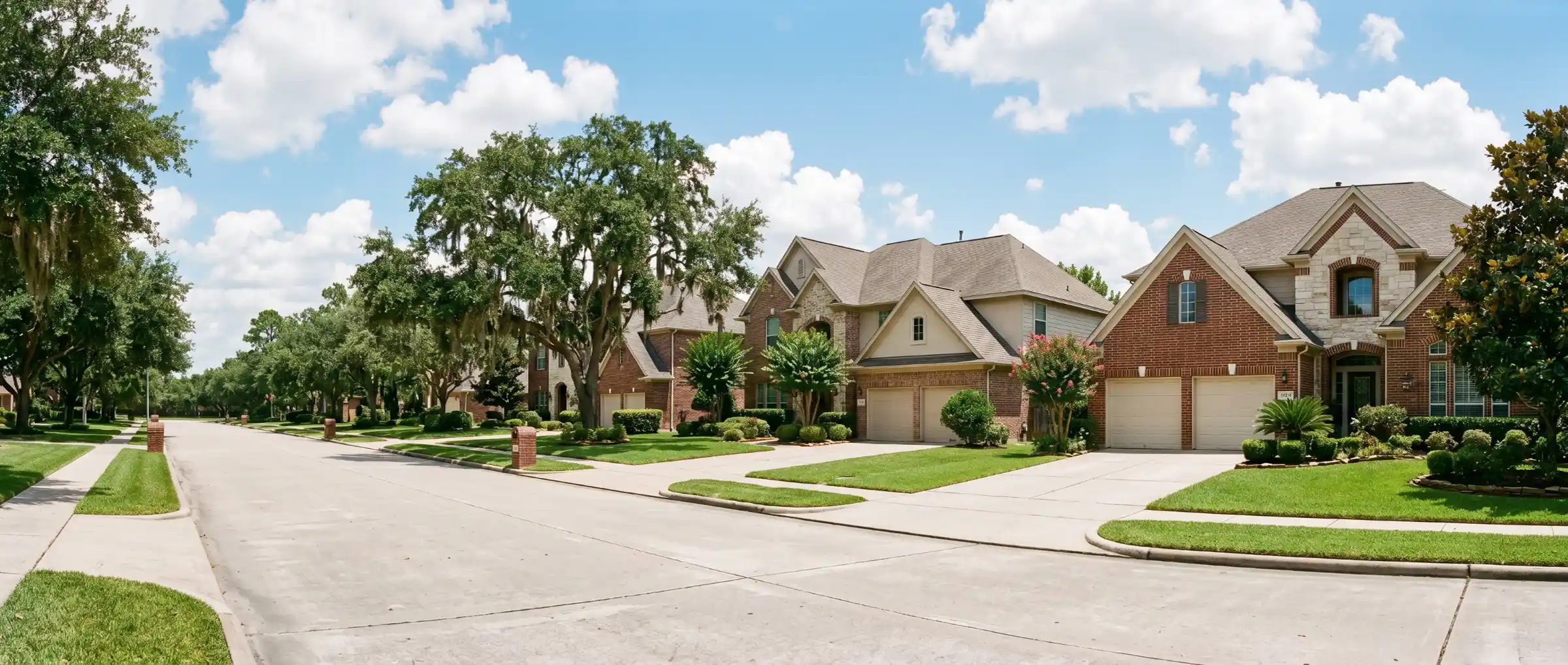

Houston sits in one of the most mold-prone regions in the United States. The Gulf Coast climate delivers more than 50 inches of rain annually, outdoor humidity that averages above 75% for most of the year, a hurricane season that runs June through November, and a legacy of major flooding events that have left unremediated moisture inside tens of thousands of homes.
Mold remediation in Houston is the professional process of identifying, containing, and removing mold growth from residential properties, governed in Texas by the Mold Assessment and Remediation Rules (TMARR) administered by the Texas Department of Licensing and Regulation (TDLR) and conducted per the ANSI/IICRC S520 standard.
Key insights
- Extreme baseline humidity. Houston averages outdoor relative humidity above 75% year-round, with overnight readings frequently exceeding 90% from May through October. Mold spores germinate at 60% and grow rapidly above 70%.
- Harvey set a measurable benchmark. Hurricane Harvey inundated more than 154,000 structures with over 50 inches of rainfall in four days. CDC MMWR research found that invasive mold infection rates at Houston hospitals rose approximately 48% in the year following Harvey compared to the prior year.
- Texas licensing requirements apply. Texas TDLR licensing is required once a hired contractor's job reaches 25 or more contiguous square feet, including on single-family homes. A homeowner performing the work themselves on their own property is exempt regardless of size, but a hired contractor is not. The assessor and remediator must always be separate entities.
- Typical local cost range. Most Houston mid-range jobs run $1,500–$4,500. Post-flood whole-home projects can reach $8,000–$25,000 or more.
- Clearance testing is a separate cost. A licensed mold assessor must verify the job is complete. That service, performed by a different company than the one doing remediation, typically adds $200–$600 to the total.
- HVAC systems are a major local risk factor. Houston homes run air conditioning nine or more months per year. Clogged condensate drains and poorly maintained evaporator coils are among the most common hidden mold sources in the region.
What mold remediation costs in Houston
Most Houston mold remediation jobs cost between $1,500 and $4,500, running below the national average of roughly $3,500 for mid-range projects due to Houston's lower labor costs. That said, the city's flood history and persistent humidity mean projects here often involve more material removal and longer drying times than comparable jobs in drier markets, which pushes larger jobs toward the higher end of the range. The national cost framework and per-square-foot mechanics are covered in mold remediation cost.
 Wall cavity jobs like this one sit at the higher end of Houston's per-square-foot range, since the city's flood history makes this access type disproportionately common here.
Per-square-foot rates in Houston generally fall in the $10–$25 range for active remediation work. Straightforward surface jobs on non-porous materials come in at the lower end. Jobs requiring wall cavity access, structural material removal, or HVAC work push toward $20–$25 or above. After major flooding events, contractor demand across the metro can drive prices 20%–40% higher than these baseline figures.
| Project scope | Houston typical range | Common drivers in this market |
|---|---|---|
| Small (under 10 sq ft) | $500–$1,200 | Bathroom tile, grout, or single-room surface mold |
| Moderate (10–50 sq ft) | $1,200–$3,500 | Single bathroom, partial wall cavity, attic corner |
| Large (50–150 sq ft) | $3,500–$6,500 | Multi-room, post-storm attic, post-flood drywall removal |
| Whole-home or HVAC | $6,500–$15,000+ | Post-Harvey or post-flood full remediation; duct cleaning included |
Location within the home is one of the strongest cost drivers in Houston specifically. HVAC and post-flood wall cavity jobs are disproportionately common here compared to drier markets, and both sit at the higher end of the cost range due to the access and material removal they require. Clearance testing by a separate licensed assessor adds $200–$600 to every project, and all costs exclude post-remediation reconstruction.
| Room / location | Houston range | Why it is common here |
|---|---|---|
| Bathroom | $500–$2,000 | Poor ventilation in pre-1990 construction; persistent steam humidity |
| Attic | $1,000–$5,000 | Roof damage from frequent storms; inadequate ridge venting in older homes |
| HVAC system / ducts | $1,500–$4,000 | Drain pan overflow and condensation buildup during 9+ months of annual A/C use |
| Wall cavities (post-flood) | $3,000–$8,000 | Flood intrusion from Harvey and later events; hidden growth after inadequate drying |
| Crawl space | $1,500–$4,000 | Ground moisture and missing or degraded vapor barriers in older neighborhoods |
| Full home (post-flood) | $8,000–$25,000+ | Comprehensive remediation in Harris County flood zone properties |
A mold inspection is a separate line item typically costing $300–$600 in the Houston area. Under Texas law the company writing your protocol cannot be the same company performing the cleanup. For national cost comparisons and per-square-foot mechanics, the full breakdown is in the mold remediation cost article.
Why Harvey changed Houston's mold risk permanently
Hurricane Harvey did not just flood Houston. It created a mold legacy that is still active in 2026. More than 154,000 structures were inundated with over 50 inches of rainfall in four days in August 2017. Research published in the CDC's MMWR found that invasive mold infection rates at Houston hospitals rose approximately 48% in the year following Harvey compared to the prior year, a direct consequence of flood-related mold exposure in homes that were not properly dried and remediated. Many of those homes were dried quickly, cosmetically repaired, and sold without full remediation documentation. They are still in the housing stock today.
 Rainfall like this pushes overnight humidity past 90% for much of the year, which is why Houston's outdoor baseline sits inside the mold growth zone for half the calendar.
75 percent humidity year-round and a nine-month cooling season
NOAA data puts Houston's average annual rainfall above 50 inches, with outdoor relative humidity consistently above 75% and overnight readings frequently exceeding 90% from May through October. Mold spores germinate at humidity above 60% and grow rapidly above 70%. Houston's outdoor baseline is, for half the year, already in the mold growth zone. Any moisture that reaches a wall cavity, attic, or HVAC system stays hospitable to mold far longer than it would in a drier climate. Houston homes run air conditioning for nine or more months per year, meaning HVAC condensate drain failures and evaporator coil contamination operate under sustained load for most of the calendar year.
Addicks, Barker, and the reservoir release zone
Harvey's damage was not distributed evenly across Harris County. The controlled releases from Addicks and Barker reservoirs specifically inundated western Houston and Katy neighborhoods that had not flooded before and were not in FEMA flood zones. Homes in these corridors flooded not from direct rainfall but from a deliberate, days-long release that kept structures saturated far longer than a typical storm event. That prolonged saturation is precisely the condition that produces Stachybotrys and Chaetomium, the most difficult species to remediate, and those species have been documented in post-Harvey wall cavity work throughout the affected corridors for years after the event.
The Harvey flip problem: homes sold without MDR-1
Texas law requires sellers to provide a Certificate of Mold Remediation (Form MDR-1) for any professionally remediated work performed in the past five years. After Harvey, a significant volume of damaged homes were acquired by investors, cosmetically repaired, and resold, sometimes within months of the storm, without licensed remediation and without an MDR-1. The five-year MDR-1 window has now passed for Harvey properties, meaning those homes can change hands again without any documentation requirement. If you are buying a home in a Harvey-affected neighborhood and the seller cannot produce an MDR-1 or demonstrate the property was not inundated, treat it as a high-priority inspection target.
Nine months of A/C and the condensate drain cycle
NIOSH research on dampness and mold in buildings identifies HVAC systems as a primary hidden mold source in humid climates. Houston's near-continuous cooling season means air handlers, evaporator coils, and condensate drain pans are under sustained moisture load for most of the calendar year. A clogged drain line overflows into the air handler unit and can saturate surrounding drywall within 48–72 hours without any visible sign until mold is already established inside the wall cavity.
How Houston's construction eras affect mold risk
| Era | Neighborhoods | Primary vulnerabilities |
|---|---|---|
| Pre-1950s | Heights, Montrose, Midtown, Fifth Ward, Eastwood | Pier-and-beam with absent or degraded vapor barriers; cast-iron plumbing prone to slow seepage at joints; gable-only attic ventilation inadequate for Houston humidity |
| 1950s–1970s | Meyerland, Bellaire, Westbury, Sharpstown, Clear Lake | Slab edges and expansion joints wick ground moisture into wall bottom plates; no weather-resistive barrier between sheathing and cladding; single-pane aluminum windows collect condensation; original ductwork in unconditioned attics |
| 1980s–1990s | Sugar Land, Katy, early Woodlands, Pearland | Paper-faced drywall throughout including bathrooms; undersized ridge venting without adequate soffit intake; HVAC systems at or past design life |
| 2000s–2010s | Cypress, League City, Friendswood, newer Katy, Pearland | Tight envelopes trap indoor moisture when HVAC is undersized or short-cycles; stucco and fiber cement cladding can hide moisture intrusion against sheathing for months |
Houston homes still showing Harvey mold in 2026
Nine years after Harvey, homes in the reservoir release zones and bayou-adjacent corridors of Harris County still present post-flood mold to licensed assessors on a regular basis. This is not a historical footnote. It is an active due diligence problem for anyone buying, selling, or renovating in these neighborhoods. Standard flood disclosure forms cover only the seller's ownership period, which means a home purchased from a post-Harvey flipper in 2018 can be resold today with no disclosure obligation attached to the original flood event.
 A tide line like this can sit behind fresh paint for years; the seller's disclosure only covers their own ownership period, not what happened before they bought.
Pull the Harris County flood history before the inspection contingency expires
Ask your agent to pull the property's Harris County Appraisal District history and cross-reference it with FEMA flood map data and publicly available Harvey inundation mapping. A home sold in 2018 by a post-Harvey flipper may show no flooding on the seller's disclosure because the current seller never experienced it personally. The disclosure covers only the seller's ownership period. Harris County Flood Control District maintains inundation data from Harvey that is publicly searchable by address.
Request Form MDR-1 or its absence tells you something
Texas law required sellers to provide a Certificate of Mold Remediation (Form MDR-1) for any professionally remediated work performed in the past five years. For Harvey-era properties, that five-year window has closed. If a home shows water damage history or prior remediation disclosures but the seller cannot produce an MDR-1, that does not necessarily mean mold was not remediated, but it does mean there is no documented proof that it was done correctly. On any home with flood history and no MDR-1, treat the inspection as confirmatory rather than exploratory.
Order a licensed mold assessment, not just a home inspection
A standard home inspection is not a mold assessment. Home inspectors look for visible moisture and structural issues but are not licensed mold assessors and are not equipped to detect hidden growth inside wall cavities. On any home with flood history, a separate inspection by a licensed Mold Assessment Consultant using moisture meters and mold testing air sampling is worth the $300–$600 cost. Problems found before closing are negotiating leverage. Problems found after closing are your expense.
Know what delayed Harvey mold looks like
Homes that were dried quickly or superficially after flooding often show no visible mold for one to three years. Warning signs that emerge later include persistent musty odors in specific rooms or closets, recurring allergy or respiratory symptoms that improve when you leave the home, soft or discolored baseboards at the original flood line, and paint or wallboard that bubbles at the wall-floor junction. If you are in a home now and recognizing these patterns, see signs of mold for a full indicator list.
What Houston mold inspectors found after Harvey and Imelda
The most common species found in Houston homes include Cladosporium, the most frequent in local air samples year-round, along with Aspergillus, Penicillium, Stachybotrys chartarum, and Chaetomium. What distinguishes Houston from most markets is what post-Harvey and post-Imelda remediation projects specifically documented: elevated rates of Stachybotrys and Chaetomium in wall cavities that were inadequately dried, both species requiring the kind of prolonged saturation that days-long inundation delivers. Visual identification is unreliable for any species; air or surface sampling by a licensed laboratory is required for confirmation. For health risks by species and population, see is mold dangerous?.
The Addicks and Barker reservoir release zones produced a specific pattern: wall cavity Stachybotrys in homes that appeared cosmetically repaired but had never been opened to the studs. Inspectors working these neighborhoods years after Harvey found active mold behind drywall that had been painted over, baseboards that concealed a tide line, and HVAC systems that had been running recirculated air through contaminated cavities for months. That pattern still shows up in Harvey-era properties sold and resold without documentation.
Texas mold licensing law: TDLR, TMARR, and Form MDR-1
Texas is one of a handful of states with a dedicated mold licensing law. The Texas Mold Assessment and Remediation Rules (TMARR), administered by the Texas Department of Licensing and Regulation (TDLR), set minimum standards for who can legally perform mold-related work on certain property types. Houston homeowners need to understand three specific things this law produces that Florida's DBPR system does not: a five-day advance notification requirement before covered work begins, a specific completion certificate (Form MDR-1) that is required for insurance claims and home sales, and a Consumer Mold Information Sheet that must be provided before any work starts.
 This assessment has to come from a different licensed entity than whoever performs the remediation; Texas law prohibits the same company from doing both.
When TDLR licensing is required
Under TDLR rules, a hired contractor must be licensed once a project reaches 25 or more contiguous square feet, and this applies to single-family homes, not just multi-unit rental properties. The only exemption at that size is for an owner performing the work on their own residential property themselves, which Texas law permits regardless of square footage. Hiring someone else to do that same job removes the exemption. Verify the TDLR license and confirm $1 million in commercial general liability insurance before signing anything. Texas sets the licensing threshold at 25 square feet, higher than Florida's 10-square-foot threshold, which means more small self-performed jobs fall outside licensing here than in Florida, but that gap closes as soon as you bring in outside help.
The MAC and MRC separation requirement
Texas law prohibits the same company or individual from performing both the mold assessment and the mold remediation on the same project. A licensed Mold Assessment Consultant (MAC) must inspect the property and produce a written remediation protocol before work begins. A separate licensed Mold Remediation Contractor (MRC) performs the actual cleanup following that protocol. The remediator must notify TDLR at least five business days before starting on covered projects. After the job, the MRC must provide a Certificate of Mold Remediation (Form MDR-1), signed by both the MAC and MRC, within 10 days of completion. Texas law also requires the contractor to provide a Consumer Mold Information Sheet before any work begins.
Texas mold license types
When reviewing a contractor's credentials, these are the license types you will encounter. A legitimate remediation project will involve at minimum a licensed MAC and a licensed MRC from separate companies.
| Texas mold license | Role in your project |
|---|---|
| Mold Assessment Consultant (MAC) | Conducts inspection, writes remediation protocol, interprets lab results |
| Mold Assessment Technician (MAT) | Assists MAC; cannot independently write protocols or interpret results |
| Mold Remediation Contractor (MRC) | Manages cleanup crew; 40-hour state training plus exam required |
| Mold Remediation Worker (MRW) | Performs physical mold removal under MRC supervision |
| Mold Remediation Company | Entity license; must maintain a Texas office and carry $1M liability insurance |
Verify any contractor's current license and check for complaints at tdlr.texas.gov. Senate Bill 1255 (signed June 2025, effective September 1, 2025) made changes to individual worker licensing requirements under the Occupations Code; check TDLR for the most current rules. For a full explanation of what each certification covers, see IICRC certifications.
How to verify a Houston contractor before hurricane season
The best time to verify contractor credentials in Houston is before a storm, not after. Post-event demand consistently draws unlicensed operators into affected neighborhoods. After Harvey, the pattern was door-to-door solicitation in flooded corridors, combined assessment-and-remediation offers that violate Texas law, and no MDR-1 at completion. The TDLR verification process takes five minutes and is the only reliable filter before any contract is signed.
 A five minute TDLR lookup like this is the only reliable filter against the door-to-door solicitation that spikes in flooded corridors after every named storm.
Go to the TDLR license search at tdlr.texas.gov and enter the contractor's name or license number. Confirm the license type matches the role (MRC for remediation supervisor, MAC for assessor), confirm active status, confirm two separate license numbers for two separate entities, and check for open complaints or disciplinary history. Work through how to choose a mold remediation company for the full bid comparison framework.
| Question to ask | What a credible answer looks like |
|---|---|
| What is your TDLR license number and type? | Provides the number immediately; you can verify it yourself at tdlr.texas.gov |
| Who is handling the assessment and who is doing the remediation? | Two separate licensed entities; the same company cannot legally do both on the same project |
| Can I see the written remediation protocol before work starts? | Yes, immediately; Texas law requires this to be in your hands before work begins |
| What containment methods will you use? | Physical barriers, negative air pressure, HEPA air scrubbers; IICRC S520-compliant protocols |
| Do you notify TDLR before starting? | Yes, at least five business days in advance on covered projects (emergencies excepted) |
| Will I receive a Certificate of Mold Remediation (Form MDR-1)? | Yes, within 10 days of completion; required for insurance claims and home sales |
| What does your insurance cover and can I see the certificate? | At minimum $1 million commercial general liability; ask to see the actual certificate |
Mold insurance in Houston: the HO-A and NFIP gap
Texas HO-A policies cover mold only when it results from a sudden, accidental, covered peril such as a burst pipe or appliance failure. They exclude mold from flooding, chronic humidity, and gradual leaks. For Houston homeowners this is not a theoretical gap. Harvey, Imelda, and every other named storm that has flooded Harris County properties falls under NFIP flood insurance, not HO-A, and the two claims processes are entirely different. Many Texas homeowners discovered after Harvey that their standard policy excluded the very cause that had damaged their home.
The practical consequences are significant. Many Texas HO-A policies cap mold coverage at $5,000–$10,000 even when the cause is covered, far below the cost of a significant post-flood remediation job. Form MDR-1 is required to close any insurance claim tied to professional remediation and may be required by a buyer's lender at resale. The NFIP's 30-day waiting period means flood coverage purchased after a storm watch is issued is useless for that event. For the full coverage framework including NFIP details, endorsements, and what to do if a claim is denied, see mold insurance coverage.
Selling a home with Harvey history in Texas
Texas law requires sellers to disclose mold remediation history and provide Form MDR-1 for any professionally remediated work performed within the past five years. For Harvey properties, the five-year MDR-1 window closed in 2022. A seller who completed licensed remediation after Harvey is no longer required to provide the MDR-1, but buyers' agents and lenders in flood-aware neighborhoods increasingly request current mold assessments on any property with documented inundation history regardless of when it occurred.
A clean current assessment from a licensed MAC can actually strengthen a Harvey-era sale by demonstrating the property is mold-free today. A gap in documentation combined with visible water damage history raises questions that slow or complicate closing. Concealing prior mold issues that a buyer's inspector later discovers creates significant legal exposure under Texas property code.
Preventing mold in Houston's Gulf Coast climate
Effective mold prevention in Houston requires mechanical humidity control targeting below 50% indoors, aggressive HVAC maintenance calibrated to a nine-month cooling season, roof and attic inspection after every named storm, and a 48-hour response protocol after any flooding. Houston's outdoor humidity baseline exceeds the mold growth threshold for half the year, meaning passive ventilation strategies that work in drier climates provide no meaningful protection here.
 A reading at 62% like this one is well above the 50% target that Houston's outdoor dewpoints make necessary, not just the 60% ceiling that works in drier climates.
Below 50 percent indoors, every month of the year
EPA guidelines target indoor humidity below 60% to inhibit mold growth. In Houston, targeting below 50% is the practical standard because outdoor dewpoints push indoor humidity well above that threshold whenever doors or windows are opened or building envelope gaps allow infiltration. A whole-home dehumidifier integrated with the HVAC system is the most effective single investment. Portable units can address specific rooms but cannot keep pace with the overall moisture load during the May through September peak. Monitor humidity in at-risk rooms with a calibrated hygrometer and treat readings above 55% as an actionable signal, not a background condition.
Nine months of run time means quarterly drain line maintenance
Replace air filters every 1–3 months, leaning toward monthly during May through September. Clear the condensate drain line every quarter with a diluted bleach flush; in Houston's heat, algae blockages form faster than in cooler climates. Inspect the evaporator coil every 2–3 years, since coil mold spreads spores throughout the home on every cycle. After any power outage longer than 24 hours, check the drain pan for standing water before restarting the system. An HVAC system that has been off during summer humidity is a condensation risk on restart.
Inspect the attic and roof after every named storm
Houston's storm frequency means minor roof damage is common. A small penetration allows moisture into the attic, where mold can establish within days in summer heat. Ensure attic ventilation meets the minimum standard of 1 square foot of net free ventilation area per 150 square feet of attic floor. Many older Houston homes fall short of that threshold. After any storm with sustained winds above 35 mph, inspect the attic for wet insulation, water staining on sheathing, and soft spots in plywood before assuming the roof is intact.
48 hours is the limit after any flooding
Mold can begin colonizing wet organic materials within 24–48 hours. After any flooding, the correct sequence is water extraction first, then mechanical drying, then mold assessment. Bleach applied to a wet surface does not prevent growth inside the material. If drywall, insulation, or carpet padding cannot be dried to acceptable moisture content within 48 hours, physical removal is the correct call. The full response timeline and insurance pathway are covered in mold after water damage.
Mold growth covering more than 10 square feet, any growth inside wall cavities or HVAC systems, or recurring growth after previous cleaning all indicate the problem has moved beyond prevention and into when mold remediation is required territory.
Mold risk across the greater Houston metro
Mold risk in the Houston metro is not uniformly distributed. Harvey, Imelda, and prior flood events have created distinct high-risk corridors based on reservoir proximity, bayou adjacency, and construction era. Understanding which risk category applies to a specific neighborhood helps a buyer or homeowner know what an inspector should target and why certain areas of a home are more likely to harbor hidden mold.
 Risk across a metro this size isn't uniform; reservoir proximity, bayou adjacency, and construction era matter more than a single citywide average would suggest.
The distinction between FEMA flood zone properties and non-flood-zone properties broke down completely during Harvey. Addicks and Barker reservoir releases flooded neighborhoods that had never flooded before and carried no flood zone designation. Cross-referencing Harvey inundation mapping against current FEMA maps is the only reliable way to assess actual flood exposure for a specific address.
| Area | Primary risk factor | Notes for homeowners |
|---|---|---|
| Katy / West Houston | Addicks and Barker reservoir releases during Harvey; slow-draining clay soils | Significant unremediated post-Harvey mold remains in some homes purchased after 2017; FEMA flood zone status is not a reliable indicator of Harvey exposure in this corridor |
| Heights / Montrose / Midtown | Older housing stock with original vapor barriers and inadequate attic ventilation | Bungalows and craftsman homes are particularly susceptible to attic and wall cavity mold; cast-iron plumbing seepage is a slow but persistent moisture source |
| The Woodlands / Spring | Heavy tree canopy creates localized humidity; older homes with inadequate ridge venting | Attic mold is common; roof inspections after any significant storm are especially important; newer sections have tighter envelopes that trap humidity when HVAC underperforms |
| Sugar Land / Missouri City | Brazos River and Buffalo Bayou flood exposure | Crawl space encapsulation is increasingly common as a follow-up to remediation in this area; Brazos flooding differs from bayou flooding in duration and debris load |
| Pearland / Friendswood | Low elevation; severe flooding during Harvey and Tropical Storm Allison | High proportion of slab-on-grade homes; wall cavity mold is the most common post-flood finding; Allison and Harvey created compounding moisture histories in some properties |
| Humble / Kingwood | San Jacinto River and Lake Houston flooding in Harvey | Kingwood was among the hardest-hit neighborhoods; post-flood professional inspection is still recommended for homes not previously assessed; river flooding produces Category 2 and 3 water with different remediation protocols |
| Pasadena / Deer Park | Proximity to ship channel; above-average humidity from water adjacency | Older housing stock; flat roofs on some commercial conversions create additional risk; industrial proximity can complicate air sampling interpretation |
Frequently asked questions
How much does mold remediation cost in Houston?
Most Houston homeowners pay between $1,500 and $4,500 for a mid-range remediation job. Small surface-area jobs under 10 sq ft can cost $500–$1,200. Large jobs involving wall cavity access, attic work, or post-flood material removal can run $6,500–$15,000 or more. Houston labor rates run slightly below the national average, but the city's climate and flood history mean jobs here often involve more material removal than comparable projects elsewhere.
Does Texas require a license for mold remediation?
Yes, once a hired contractor's job reaches 25 or more contiguous square feet, and this applies to single-family homes as well as multi-unit properties. The exemption for smaller jobs and for owner-performed work doesn't extend to a contractor you hire. Always ask for the contractor's TDLR license number and verify it at tdlr.texas.gov before signing.
Can the same company do the inspection and the remediation in Texas?
No. Texas law prohibits the same company or individual from performing both the mold assessment and the mold remediation on the same project. A licensed Mold Assessment Consultant must produce a written protocol before work starts, and a separate licensed Mold Remediation Contractor must perform the cleanup. This separation protects consumers from conflicts of interest.
How soon after flooding should I have my home inspected for mold?
Immediately, if you have not already done so. Mold can begin colonizing wet materials within 24–48 hours of flooding, and hidden wall cavity mold can persist for years before producing visible signs or symptoms. If your home flooded at any point and was not opened to the studs, mechanically dried, and inspected by a licensed mold assessor, a professional inspection is the appropriate next step. Musty odors that return after cleaning and worsening indoor allergy symptoms are common indicators of hidden mold in post-flood Houston homes.
Will my homeowners insurance cover mold remediation in Houston?
It depends on the cause. Texas HO-A policies typically cover mold resulting from a sudden covered peril such as a burst pipe. They do not cover mold from flooding, which requires separate NFIP flood insurance, chronic humidity, or gradual leaks. Many Texas policies also cap mold coverage at $5,000–$10,000 even when the cause is covered. Document the moisture source before remediation begins and keep the Certificate of Mold Remediation you are owed at job completion.
Why does mold keep coming back in my Houston home?
Recurring mold means the moisture source was not fully resolved. In Houston, the high outdoor humidity baseline means you cannot simply open windows to dry a home. Any remediation job should be followed by a moisture assessment and, if warranted, mechanical dehumidification or ventilation improvements. If your HVAC drain pan or attic venting are contributing to the problem, fixing only the remediated area without correcting those systems will result in regrowth.
What is a Certificate of Mold Remediation and why do I need it?
Form MDR-1 is a Texas-specific document signed by both the licensed mold assessor and the licensed remediator. It certifies the property was remediated to TDLR standards. You need it to support insurance claims, and buyers' agents and lenders will frequently request it when you sell a home with a remediation history. Ask for confirmation that it is included before you sign any contract.
Is DIY mold removal legal in Houston?
Texas law allows homeowners to remediate mold in their own single-family homes without a license. Whether it is the right call depends on the scope. EPA guidance recommends calling a professional for mold areas exceeding 10 square feet. In Houston's climate, surface mold on bathroom tile may be manageable, but mold found inside a wall cavity after water intrusion is not a DIY situation. For a step-by-step approach to smaller jobs, see DIY mold removal.
How do I know if mold is hiding in my walls?
A persistent musty odor that returns after surface cleaning is the most reliable early indicator. Professional inspectors use moisture meters, borescopes, and thermal imaging cameras to locate moisture and mold inside wall cavities without demolition. If your home flooded and was not fully opened and dried, or if you notice recurring odors or worsening allergy symptoms indoors, schedule a professional inspection rather than waiting for visible growth to appear.
Does the age of my Houston home affect mold risk?
Yes, significantly. Pre-1950s pier-and-beam homes in neighborhoods like the Heights and Montrose typically lack vapor barriers and have cast-iron plumbing prone to slow seepage at joints. Homes from the 1950s through 1970s on slab foundations can wick ground moisture through slab edges and expansion joints into wall bottom plates. Homes from the 1980s and 1990s used paper-faced drywall throughout and often have undersized attic ventilation relative to square footage. Newer homes from the 2000s onward have tighter building envelopes that trap indoor moisture when HVAC systems are undersized or poorly commissioned. Each era has distinct vulnerabilities a licensed assessor should specifically target during inspection.
How do I choose a mold remediation company in Houston?
Verify the TDLR license at tdlr.texas.gov, confirm that a separate company will handle the assessment and the remediation, ask to see the written remediation protocol before work begins, and confirm you will receive a Certificate of Mold Remediation (Form MDR-1) after completion.
- EPA: Mold Cleanup in Your Home
- CDC MMWR: Hurricane-associated mold exposures after Hurricane Harvey
- NIOSH: Dampness and Mold in Buildings
- IICRC S520: Standard for Professional Mold Remediation
- TDLR: Mold Assessors and Remediators
- Texas Attorney General: Mold Remediation
- Harris County Flood Control District
Sam Hickerson is the founder of RestoreAdvisor and writes consumer guides on mold remediation, water damage restoration, inspection, testing, and home recovery. His work focuses on helping homeowners understand costs, risks, and when to call a professional. He draws on guidance from the EPA, CDC, IICRC, and other authoritative sources to make complex home issues easier to navigate.