
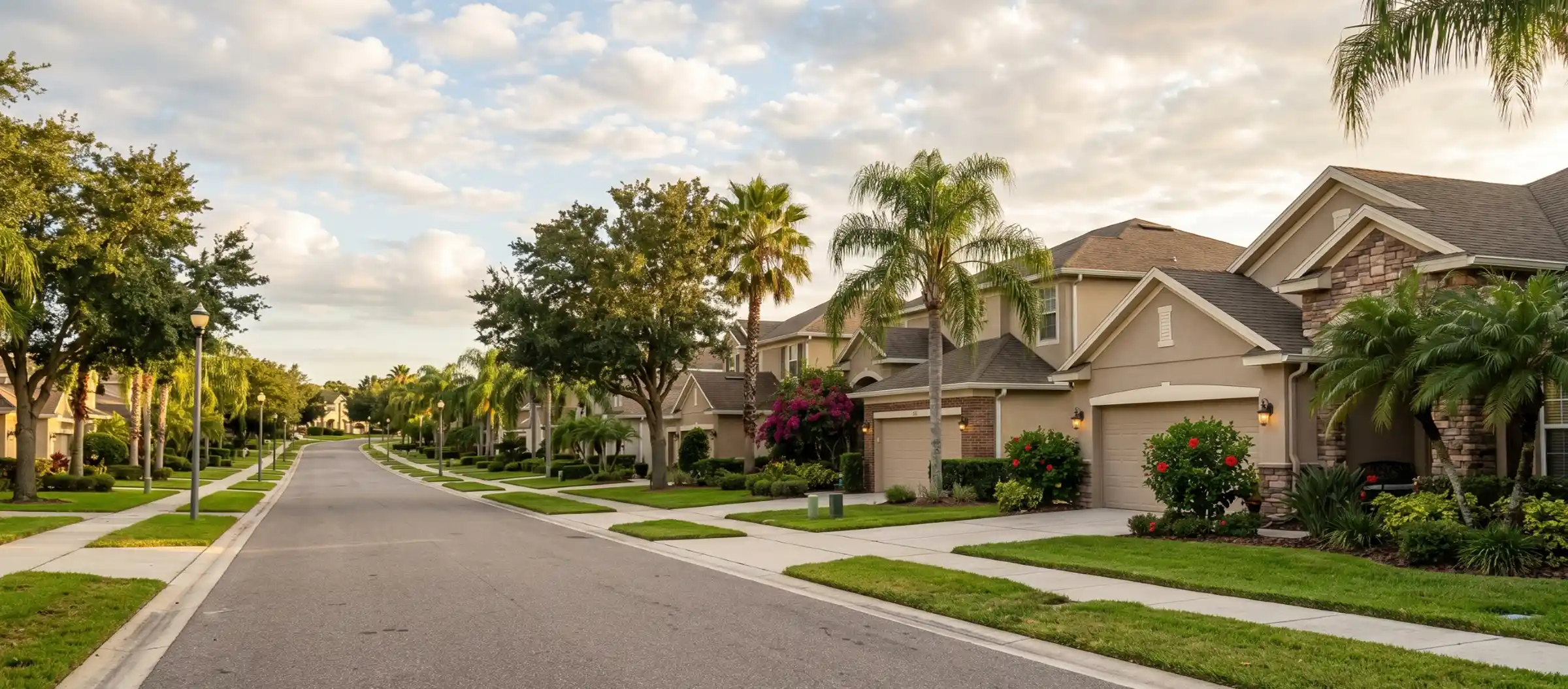

Tampa averages over 50 inches of rainfall per year, with summer humidity regularly exceeding 80 percent during a rainy season that runs June through September. The Tampa Bay area sits at or near sea level across much of Hillsborough, Pinellas, and Pasco counties, making it among the most flood-vulnerable metro areas in the United States. Back-to-back Hurricanes Helene and Milton in 2024 left thousands of inadequately dried structures across the region where mold remediation is still an active need.
Tampa's mold remediation market operates under the same Florida Chapter 468 two-license requirement as the rest of the state, but the 2024 back-to-back hurricane season created conditions that make credential verification here more urgent than anywhere else in Florida. Thousands of properties were minimally dried and resold before professional remediation was completed, and the post-disaster contractor surge brought unlicensed operators into Hillsborough and Pinellas counties faster than homeowners had any way to filter them out.
Key insights
- 2024 hurricanes left a hidden mold backlog. Helene and Milton struck within 13 days of each other in 2024, delivering 6–8 feet of surge in coastal areas and flooding thousands of homes before the first had dried. Many were resold before professional remediation was completed.
- Sea level city, 50 inches of rain, 80% summer humidity. Mold germinates at 60 percent relative humidity, and Tampa's outdoor baseline exceeds that threshold for most of the year, including the nominally dry winter months.
- Florida requires two separate licensed individuals. The assessor and remediator must be different people. After the 2024 storms, unlicensed operators solicited work across Hillsborough and Pinellas counties offering illegal combined-scope packages.
- Mid-range jobs run $1,600–$4,800. Post-storm surge pricing adds 20–40% above that. Post-surge whole-home projects can reach $15,000–$25,000, well above the $10,000 mold sublimit on most Florida policies.
- Clearance testing is a separate cost. It runs $250–$600 and must be performed by the licensed assessor, not the remediator, for the clearance to be legally valid in Florida.
- Algae-blocked drain lines are Tampa's top non-storm mold source. HVAC systems run 10–11 months annually, and Tampa's heat accelerates drain line blockages. A clogged drain in August can saturate an air handler and surrounding drywall within hours.
What mold remediation costs in Tampa
Most residential mold remediation jobs in Tampa run $1,600–$4,800 for mid-range work, modestly above the national average of roughly $3,500. Florida labor rates, post-storm demand, and the prevalence of post-flood whole-home scopes following Hurricanes Helene and Milton push local prices higher than what homeowners might expect from national cost benchmarks. After a major storm event, contractor surge pricing in Hillsborough and Pinellas counties can add 20–40% above those baselines.
 Post-storm surge pricing can add 20 to 40% on top of Tampa's already above-average rates, which is why locking in a vetted contractor before hurricane season matters more here than in most markets.
On a per-square-foot basis, Tampa remediation runs $10–$25, with accessible surface jobs at the lower end and HVAC system work, wall cavity remediation after flooding, or jobs in older bungalow construction with difficult access toward the upper end. Getting a vetted contractor relationship in place before storm season significantly reduces post-storm exposure to inflated pricing and unlicensed operators. For national cost context and what drives pricing at each scope level, the full detail is in mold remediation cost.
| Project scope | Typical Tampa range | Common drivers in this market |
|---|---|---|
| Small (under 10 sq ft) | $500–$1,200 | Bathroom tile grout, HVAC condensation spots |
| Moderate (10–50 sq ft) | $1,200–$3,500 | Bedroom wall cavity, bathroom ceiling |
| Large (50–150 sq ft) | $3,500–$6,500 | Attic, post-flood wall sections |
| Whole-home or HVAC | $6,500–$15,000+ | Full envelope failure, duct contamination |
| Post-flood whole-home | $8,000–$25,000+ | Hurricane or storm surge inundation |
Location within the home is one of the strongest cost drivers. HVAC jobs and post-flood wall cavity remediation are disproportionately common in Tampa because of the city's near-continuous air conditioning season and its hurricane exposure.
| Location | Tampa cost range | Why it is common here |
|---|---|---|
| Bathroom | $500–$2,000 | Ventilation failures in pre-1990s housing stock, high ambient humidity |
| Attic | $1,000–$5,000 | Hurricane roof damage, inadequate ridge venting in older homes |
| HVAC system / ducts | $1,500–$4,000 | 10–11 months of A/C use, drain pan overflow, evaporator coil contamination |
| Wall cavities post-flood | $3,000–$8,000 | Helene and Milton storm surge, Hillsborough River overflow, drainage failures |
| Crawl space | $1,500–$4,000 | High water table, ground moisture, degraded vapor barriers in older stock |
| Garage | $500–$2,500 | Tropical downpours, poor drainage on slab-on-grade properties |
A standalone mold inspection in Tampa runs $300–$500 and is a separate cost from remediation. Florida law requires the licensed mold assessor who inspects to be a different licensed individual from the remediator who cleans.
Why Tampa Bay has one of the highest mold risks in Florida
Tampa's mold risk comes from four compounding factors operating at once: a subtropical Gulf Coast climate that keeps humidity above mold germination thresholds for most of the year, a recent storm history that left a significant hidden mold burden across the metro, near-continuous HVAC operation that generates condensation risk year-round, and a housing stock that spans from 1910s bungalows with no vapor barriers to tight modern construction that traps indoor humidity when mechanical systems underperform.
 A pan this stained tells the story of a system that ran 10 to 11 months a year without the winter rest that extends coil life in cooler climates, which is why Tampa's replacement intervals run shorter than the national average.
Fifty inches of rain and 80 percent humidity, six months a year
Tampa receives over 50 inches of rainfall per year, with the wet season running June through September and afternoon thunderstorms that routinely saturate building exteriors within minutes. According to the National Weather Service Tampa Bay office, humidity during the rainy season regularly exceeds 80 percent. Mold spores germinate at 60 percent relative humidity and grow rapidly above 70 percent; Tampa's outdoor ambient exceeds that threshold for the bulk of the year, including during the nominally drier winter months when nighttime humidity on exterior-facing walls and in attic spaces remains high enough to sustain growth. Florida scores the highest of any state on the national Mold Index, and Tampa's combination of rainfall volume, ambient humidity, and minimal winter temperature drop makes it one of the most persistent mold environments in the state.
Three storms in eight weeks: Debby, Helene, and Milton
Hurricanes Helene and Milton struck the Tampa Bay region 13 days apart in September and October 2024. Helene produced 6–8 feet of storm surge in coastal areas including Shore Acres, Snell Isles, Treasure Island, and Madeira Beach in Pinellas County. Milton made landfall near Siesta Key as a Category 3 storm and flooded inland Hillsborough County neighborhoods including Forest Hills and areas along the Hillsborough River that had never flooded before. Hurricane Debby had already hit parts of the region in August 2024, making it an unprecedented triple-storm sequence within a single season. Any home that did not receive professional water extraction and structural drying within 48 hours of each event is a strong candidate for hidden mold in wall cavities, under flooring, and in attic spaces, and many were resold before that work was done.
Year-round A/C and the algae drain problem
Tampa HVAC systems run approximately 10–11 months per year, longer than virtually any other major U.S. market outside South Florida. That operating length matters because drain lines in Tampa's warm, humid conditions grow algae blockages far faster than in drier climates, and a clogged drain line in August, with outdoor dewpoints near 75 degrees Fahrenheit, can saturate an air handler cabinet and surrounding drywall within hours. NIOSH research identifies HVAC systems as a primary indoor mold vector in high-humidity climates, and in Tampa the compounding factor is not just humidity but the sheer number of hours the system runs, generating condensate and debris accumulation every month of the year.
Five decades of Tampa construction, five distinct vulnerabilities
Tampa's residential stock ranges from early 20th-century Craftsman bungalows in Seminole Heights and Hyde Park to mid-century concrete block and ranch homes in Carrollwood and Temple Terrace, to post-1995 construction in New Tampa, Wesley Chapel, and Riverview. Each era carries distinct mold vulnerabilities covered in the section below.
How Tampa's construction eras affect mold risk
Tampa's four main construction eras each introduced different moisture vulnerabilities that remain active today. The era a home was built in is one of the strongest predictors of where mold will appear and what remediation will involve.
| Era | Neighborhoods | Primary vulnerabilities |
|---|---|---|
| Pre-1950s | Seminole Heights, Hyde Park, Tampa Heights, Ybor City, Palma Ceia | Craftsman bungalows with pier-and-beam or early slab foundations; absent or degraded vapor barriers under raised floors; original single-pane wood-frame windows; gable-only attic ventilation inadequate for Tampa humidity; original plumbing prone to slow seepage at cast-iron joints |
| 1950s–1970s | Carrollwood (early sections), Temple Terrace, Town-N-Country, South Tampa (mid-era), Westshore | Concrete block construction without exterior moisture barriers; slab edges that wick ground moisture into wall bottom plates; original ductwork in unconditioned attics or wall chases; no secondary moisture protection at window and door openings; original HVAC systems long past design life |
| 1980s–early 1990s | Northdale, Citrus Park, Brandon (early sections), Riverview (early sections) | Paper-faced drywall throughout including bathrooms; undersized ridge venting without adequate soffit intake; HVAC systems at or approaching end of design life; pre-code construction without hurricane straps, allowing roof movement that creates hidden moisture entry points |
| Post-1995 | New Tampa, Wesley Chapel, Riverview (newer sections), Apollo Beach, Land O' Lakes | Tight building envelopes that trap indoor moisture when HVAC is undersized or short-cycles; stucco cladding over OSB sheathing that can conceal moisture intrusion for weeks before interior signs appear; engineered lumber and OSB sheathing that absorbs and holds moisture more readily than solid lumber; Florida Energy Code-compliant air sealing without balanced mechanical ventilation creates neutral or positive pressure that draws humid outdoor air through any envelope gap |
Buying or selling a Tampa home after 2024
Tampa's 2024 storm season created a unique property market problem: a wave of investor acquisitions in flood-affected neighborhoods, minimal drying, and rapid resale, often within weeks of the storm events. Buyers who purchased in Shore Acres, Forest Hills, or bayou-adjacent Pinellas County corridors without a licensed mold assessment may now own homes with active wall cavity contamination and no documentation of prior remediation.
 A baseboard check like this one matters more in Tampa than most markets, since a 2024-era flip can legally omit flood history the current seller never personally experienced.
Check the flood history, FEMA zone, and 2024 storm damage
Florida Statute §689.25 requires sellers to disclose flooding history, but disclosure covers the seller's ownership period only. An investor who acquired a Shore Acres or Forest Hills property after the 2024 storms, dried it minimally, and relisted may have no legal obligation to disclose prior flooding they did not personally experience. Pull the Hillsborough County Property Appraiser history, cross-reference with the FEMA flood map portal, and specifically review whether the property is in a Special Flood Hazard Area. For properties in low-lying coastal or bayou-adjacent areas of Pinellas County, check the county's storm surge inundation mapping to understand the property's 2024 exposure level.
Request documentation of any prior remediation
Florida has no property-linked remediation registry, which means documentation gaps are common and the burden falls entirely on the buyer to request it. For any Tampa property that sustained damage in 2024, ask specifically for the written remediation protocol, post-clearance air sampling results signed by the licensed assessor, and contractor invoices showing individual DBPR license numbers. A seller who cannot produce those three documents after a documented storm event is not necessarily hiding something, but you have no basis for assuming the work was done correctly. For homes resold within 12 months of Helene or Milton, treat any documentation gap as a significant red flag rather than a minor administrative issue.
Order an independent mold inspection before closing
The inspection contingency in a standard purchase contract does not cover mold. A licensed home inspector is not a licensed mold assessor under Florida law and is not trained or equipped to detect mold inside wall cavities, under flooring, or in HVAC systems. For any Tampa property with a 2024 storm history, order a separate DBPR-licensed Mold Assessor inspection before the inspection contingency expires, not after closing. At $300–$500, it is the cheapest insurance available on a post-surge property where remediation scope can reach $15,000–$25,000.
Selling a home with mold history in Tampa
Under Florida's Johnson v. Davis disclosure duty and Florida Statute §475.278, sellers and their listing agents must disclose all known material defects including mold, prior remediation, and recurring moisture conditions. Concealment creates exposure to fraud claims and rescission. What matters more in Tampa's post-2024 market is documentation: buyers and their agents now routinely request written clearance reports on any property near a storm surge zone or bayou. A gap in clearance documentation on a home that visibly flooded in 2024 is a red flag that sophisticated buyers and their lenders will not overlook. The full disclosure statute framework including agent obligations under §475.278 is covered in our Florida mold licensing law overview.
Understand delayed-onset mold warning signs
Mold from inadequate post-flood drying does not always appear immediately. In Tampa's warm, humid conditions, colonization inside wall cavities can remain below the detection threshold for weeks or months while continuing to spread. The signs that something was missed are often subtle: a room that smells different from the rest of the house, baseboards that feel soft or show faint discoloration at knee height, paint that has lifted slightly at the wall-floor junction, or allergy symptoms that clear up when you spend a few days away from the property. On any property with a 2024 storm history, these signs should be treated as probable mold, not possible mold, until a licensed assessor says otherwise.
What mold inspectors are finding in Tampa homes after 2024
The five mold species most commonly found in Tampa homes are Cladosporium, Aspergillus, Penicillium, Stachybotrys chartarum, and Chaetomium, with Cladosporium the most prevalent in local air samples year-round. What has shifted since the 2024 storm season is the distribution: licensed assessors working post-storm remediation projects in Hillsborough and Pinellas counties are reporting higher rates of Stachybotrys and Chaetomium than in a typical year, reflecting the scale of sustained saturation that Helene and Milton delivered.
Tampa's air sampling reports almost always list Aspergillus and Penicillium under one combined Asp/Pen line rather than separately, not because the two behave the same way but because no inspector can tell them apart without lab culturing. What the combined listing does confirm is location: these are the genera that show up around air handlers, plumbing penetrations, and bathroom ceilings, wherever Tampa's near-continuous A/C season produces condensate. Stachybotrys chartarum requires the kind of prolonged saturation that 2024's back-to-back storm surges delivered, and it is now the species of greatest concern in wall cavities and structural wood throughout the affected coastal corridors of Hillsborough and Pinellas counties. Chaetomium, which produces a distinctive musty odor and indicates deeply water-damaged cellulose materials, appears consistently in post-flood remediation projects in Tampa Bay, particularly in homes where 2024 storm surge was not addressed with professional extraction and drying within the critical 48-hour window. Visual identification cannot reliably distinguish any of these species; confirming species requires mold testing by a licensed assessor, and the results should drive the remediation protocol.
How to hire a licensed mold contractor in Tampa
Florida requires two separately licensed individuals for any mold project over 10 square feet: a DBPR-licensed Mold Assessor who writes the protocol and performs clearance testing, and a DBPR-licensed Mold Remediator who performs the physical work. The same individual cannot legally hold both roles on the same project within 12 months, and a clearance letter signed by the remediator rather than the assessor is not valid under Florida law. For patches under 10 square feet on non-porous surfaces, no license is required and homeowners can follow DIY mold removal protocols.
 Documentation reviewed at a doorstep like this should include two separate DBPR license numbers, not one; the same individual legally cannot perform both assessment and remediation on the same property.
After the 2024 hurricane season, unlicensed operators appeared quickly in affected neighborhoods across Hillsborough and Pinellas counties. They solicited work door-to-door, offered combined assessment-and-remediation packages that violate Florida law, and left homeowners without valid clearance documentation. Verifying credentials before signing is the only reliable filter.
Verify the DBPR license before anyone enters your home
Verifying a license takes less than five minutes at the Florida DBPR license search. Search the contractor's name under Mold-Related Services, confirm the license type matches the role they are performing, confirm active status, and confirm the assessor and remediator are different individuals. Check for open complaints or disciplinary actions, because an active suspension is disqualifying regardless of anything the contractor tells you.
Beyond state licensing, IICRC certifications such as the Applied Microbial Remediation Technician credential (AMRT) provide additional evidence of professional training that complements DBPR licensing. For areas under 10 square feet on non-porous surfaces, licensed contractors are not required and homeowners can follow DIY mold removal protocols on non-porous surfaces. The full Florida DBPR statutory framework including the 12-month prohibition and written protocol requirements is covered in depth in the Florida mold licensing law section.
Questions to ask before signing anything
| Question | What a credible answer sounds like |
|---|---|
| What is your DBPR license number and type? | Gives you a specific number you can verify in under five minutes at myfloridalicense.com, not a company license but an individual license |
| Who is doing the assessment and who is doing the remediation? | Names two different licensed individuals; anyone claiming to do both is in violation of Florida law |
| Can I see the written remediation protocol before work starts? | Hands you a written document before a single tool comes out: scope, containment method, cleaning agents, and clearance standard all specified in writing |
| What containment methods will you use? | Describes plastic sheeting barriers, negative air pressure, and HEPA air scrubbers; a vague answer about "sealing off the area" is a red flag |
| Will I receive a written clearance report from the assessor? | Confirms the licensed assessor, not the remediator, will conduct air sampling after completion and issue a written report |
| What does your liability insurance cover? | Produces a current certificate on request; hesitation or a promise to email it later is a red flag |
| Have you worked on post-storm jobs in Hillsborough or Pinellas County? | Describes specific experience with storm surge wall cavity work, not just standard bathroom or attic remediation |
Before signing anything, work through how to choose a mold remediation company to compare bids side by side, verify scope of work requirements, and identify red flags before committing.
Mold insurance in Tampa: what the 2024 storms revealed
Tampa's 2024 storm season exposed a gap that catches many homeowners off guard: standard Florida homeowners insurance covers mold from sudden covered perils like burst pipes or roof leaks, but excludes storm surge and flooding, which is exactly what drove the most widespread mold damage in Hillsborough and Pinellas counties after Helene and Milton. Most Florida policies cap mold coverage at $10,000, which falls well short of a post-surge whole-home scope that can reach $15,000–$25,000 in this market.
Flood-related mold requires a separate NFIP flood insurance policy, and the NFIP's 30-day waiting period makes purchasing after a storm warning useless for that event. Homeowners in FEMA flood zones should also know that NFIP policies do not automatically cover mold remediation costs separately from structural damage, and the documentation process matters. Navigating an NFIP claim, cause-by-cause coverage questions, and denial disputes are all covered in mold insurance coverage.
Preventing mold in Tampa
Tampa's mold prevention story is driven by three things no other Florida market shares at the same scale: an HVAC system that runs 10–11 months annually, a 2024 storm season that left thousands of inadequately dried structures still cycling moisture through wall cavities, and a dominant stucco-over-OSB construction method that conceals moisture intrusion for weeks before a homeowner sees any interior sign of it.
 A check like this needs to extend past the shingles to the stucco face itself, since hairline cracks there let water wick behind the cladding with no visible sign until interior drywall is already wet.
Flush condensate drain lines every three months: Tampa's HVAC never fully rests
Tampa HVAC systems run 10–11 months per year, longer than virtually any other major U.S. market. That operating length means algae blockages form in condensate drain lines multiple times per season rather than once, and a blocked drain in August, with outdoor dewpoints near 75 degrees Fahrenheit, can saturate an air handler cabinet and surrounding drywall within hours. Flush drain lines with diluted bleach or enzyme cleaner every 3–4 months, change filters every 30–60 days, and schedule annual professional coil cleaning with antimicrobial drain pan treatment. Add a secondary drain pan with a float switch if your air handler is in an attic. Evaporator coil replacement intervals run shorter in Tampa than the 15-year national average because the system never gets the winter rest that extends coil life in cooler markets.
Inspect stucco cladding for hairline cracks after every storm, not just the roof
Tampa's dominant exterior is stucco over OSB sheathing, and this combination has a specific failure mode: hairline cracks in the stucco face allow water to wick behind the cladding and saturate the OSB underneath. Because stucco is opaque and the gap between cladding and sheathing is sealed, this moisture has no visible pathway until interior drywall is already wet. The EPA identifies hidden moisture intrusion as a primary driver of wall cavity mold. After any storm with sustained winds above 35 mph, walk the full exterior perimeter at eye level looking for new cracks at window corners, control joints, and around penetrations. Probe any suspect area with a moisture meter before assuming the cladding is intact. Seal cracks with elastomeric caulk within 48 hours of discovery.
After the 2024 storms: treat any property with surge history as an active mold risk
Helene and Milton delivered 6–8 feet of surge in coastal Hillsborough and Pinellas County neighborhoods, and many affected properties were minimally dried and resold before professional remediation was completed. If you purchased a property in Shore Acres, Forest Hills, Madeira Beach, or any bayou-adjacent corridor after September 2024, treat the home as an active mold risk until a licensed mold assessor has cleared it, regardless of how the property was represented at closing. Inspect slab edges, wall bottom plates, and HVAC systems specifically, as these are the locations where post-surge mold establishes before visible ceiling or wall staining appears. For mold after water damage from surge events, the 48-hour drying window applies from the moment water receded, not from when you first accessed the property.
Keep indoor humidity below 50 percent through Tampa's wet season with mechanical help
The CDC: Basic Facts About Mold identifies sustained humidity above 60 percent as the threshold for mold growth on building materials. In Tampa, a standard HVAC system in cooling mode may not achieve the 50 percent target during June through September when Gulf Coast outdoor dewpoints are consistently high. A whole-home dehumidifier sized to your square footage, combined with a calibrated hygrometer in at-risk rooms, is the most reliable supplement. Keep interior doors open so conditioned air circulates to below-grade spaces and interior rooms that do not have direct supply vents.
Mold remediation across the greater Tampa Bay area
Tampa Bay's mold risk is not uniform: coastal Pinellas County neighborhoods face direct storm surge from the Gulf and bay, low-lying inland neighborhoods like Forest Hills flood from retention pond overflow, and older construction corridors in Hillsborough carry chronic ground moisture risk regardless of storm exposure. Hillsborough, Pinellas, and Pasco counties all have neighborhoods with distinct risk profiles that affect both the likelihood of mold growth and what remediation will cost.
 FEMA flood zone lines mean less here than they do in most metros; Forest Hills flooded from retention pond overflow during Milton despite carrying no flood zone designation at all.
Flood zone maps alone are not a reliable guide to risk in Tampa Bay. Shore Acres flooded to 6–8 feet from bay surge; Forest Hills flooded from retention pond overflow during Milton with no FEMA flood zone designation at all. Understanding a neighborhood's actual exposure requires cross-referencing FEMA maps with county-level 2024 storm damage data. Health risks from mold vary by species and household, and the clinical picture by population is covered in is mold dangerous.
| Area | Primary risk factor | Notes for homeowners |
|---|---|---|
| South Tampa / Hyde Park | Bayshore proximity, older housing stock, low elevation in parts | Victorian-era and 1920s–1940s bungalows with pier-and-beam construction; absent vapor barriers and original ventilation systems; Davis Islands particularly vulnerable to bay surge; Bayshore Beautiful corridor requires careful pre-purchase mold assessment |
| Seminole Heights / Tampa Heights | Pre-WWII bungalow stock, Hillsborough River proximity, poor drainage | 1910s–1930s Craftsman homes with original foundations and plumbing; Hillsborough River overflowed during Milton; renovation work in this neighborhood frequently exposes latent mold behind original drywall and plaster |
| New Tampa / Wesley Chapel / Land O' Lakes | Tight post-1995 envelope construction, high water table, rapid development | Newer stucco homes where moisture intrusion conceals behind cladding for months; high water table in Wesley Chapel means slab moisture is a baseline issue; HVAC short-cycling in undersized systems for square footage is endemic |
| Brandon / Riverview / Apollo Beach | Mix of eras, Apollo Beach bay exposure, inland flooding | Apollo Beach sits on Old Tampa Bay with direct surge exposure; Riverview has both pre-1990s and post-2000s stock; retention pond overflow during heavy rainfall affects neighborhoods throughout Brandon |
| Shore Acres / St. Petersburg (Pinellas) | Direct Tampa Bay storm surge, repeatedly flooded in 2024 | Shore Acres took among the worst surge damage in the 2024 storm events; homes here should be treated as high-priority for post-flood mold assessment regardless of whether visible damage was repaired; Snell Isles and Venetian Isles carry similar risk |
| Clearwater / Dunedin / Safety Harbor (Pinellas) | Intracoastal and Gulf exposure, older waterfront stock | Clearwater Beach and island communities face Gulf surge; older CBS construction in Safety Harbor and Dunedin carries the same slab edge and vapor barrier vulnerabilities as mid-century Tampa stock; Intracoastal Waterway creates tidal flooding risk for a wide residential corridor |
| Pasco County / Port Richey / New Port Richey | Gulf coast surge, older housing, lower income market | Port Richey and New Port Richey experienced significant surge during Helene; housing stock is older with higher rates of deferred maintenance; post-storm unlicensed contractor activity was particularly prevalent in this corridor after 2024 |
Frequently asked questions
How much does mold remediation cost in Tampa?
Most Tampa mid-range residential jobs run $1,600–$4,800. Small jobs under 10 sq ft start around $500–$1,200. Large post-flood or whole-home projects reach $8,000–$25,000 or more. After the 2024 hurricane season, contractor demand regularly pushed prices 20–40% above those baselines in Hillsborough and Pinellas counties.
Does Florida require a license for mold remediation in Tampa?
Yes. Florida Chapter 468, Part XVI requires a DBPR-issued license for any mold-related work on areas greater than 10 square feet. Separate licenses are required for assessment and remediation. Both must hold active individual licenses verifiable at myfloridalicense.com under Mold-Related Services.
Can the same company do the mold inspection and remediation in Tampa?
No. Florida Statute §468.8419 prohibits the same individual from performing both assessment and remediation on the same property within 12 months. After the 2024 storms, combined-scope offers from a single operator were one of the most common warning signs of an unlicensed contractor. A clearance report signed by the remediator, rather than the assessor, is not legally valid and will not satisfy a lender or insurance adjuster.
How soon after flooding should I have my Tampa home inspected for mold?
Within 24–48 hours. At Tampa's ambient temperature and humidity, mold begins colonizing saturated building materials in as little as 24 hours. Every day of delay after 48 hours increases remediation scope, cost, and health exposure significantly. Homeowners dealing with mold after water damage need to move on extraction and structural drying before mold colonization becomes entrenched.
Will my homeowners insurance cover mold remediation in Tampa?
Possibly. Florida policies cover mold from a sudden covered peril like a burst pipe or roof leak, subject to a mold sublimit that typically runs $10,000. Storm surge and flood-related mold require separate NFIP flood insurance. The NFIP's 30-day waiting period means purchasing after a storm warning is too late to cover that event.
Why does mold keep coming back in my Tampa home?
Recurring mold means the moisture source was never fixed. In Tampa the most common causes are algae-blocked condensate drain lines that were cleared once but not maintained on a 3–4 month schedule, envelope penetrations that admitted humid Gulf Coast air during storm events, and slab edge wicking in mid-century concrete block construction that no surface treatment will resolve. If recurrence followed a 2024 storm, the original drying was likely inadequate and wall cavities still hold elevated moisture content.
What is a written remediation protocol and why do I need it?
A written remediation protocol is a document the licensed mold assessor produces before any work begins, specifying scope, containment method, cleaning agents, and clearance standards. In Tampa's post-2024 market, where unlicensed operators solicited work without protocols after Helene and Milton, it is also your primary protection against paying for work that cannot be verified or disputed. Florida law requires one before any licensed remediation starts.
Is DIY mold removal legal in Tampa?
Yes, for areas under 10 square feet on non-porous surfaces. Florida law requires a licensed contractor for anything larger. In Tampa, the more important question is whether the moisture source is identified and fixed: surface cleaning a bathroom tile without addressing the condensate drain or ventilation failure that caused it will produce recurrence within weeks. The EPA's 10-square-foot rule and contamination level classifications that determine when mold remediation is required apply here as they do anywhere in the country.
How do I know if mold is hiding in my walls after a hurricane?
A persistent musty odor concentrated in one room is the most reliable early indicator, especially when combined with soft or discolored baseboards along exterior walls or bubbling paint at wall-floor junctions. Respiratory symptoms that improve when you leave the home point in the same direction. A licensed mold assessor with a moisture meter and thermal imaging camera can confirm hidden growth without destructive testing.
How do I choose a mold remediation company in Tampa?
Verify an active DBPR Mold Remediator license at myfloridalicense.com, confirm the assessor and remediator are separately licensed individuals, request a written remediation protocol before signing, and check for IICRC AMRT certification as a secondary credential. Running through the full list of questions to ask a mold remediation company before the first call will filter out unlicensed operators before they ever set foot in your home.
Do I need a mold inspection when buying a home in Tampa after the 2024 storms?
Yes. Properties in Shore Acres, Forest Hills, Seminole Heights, South Tampa, and waterfront Pinellas County communities warrant pre-purchase mold assessment as routine due diligence. A standard home inspection is not a licensed mold assessment and will not detect mold inside wall cavities, HVAC systems, or under flooring.
Does a Florida seller have to disclose mold in Tampa?
Yes. Under Johnson v. Davis (1985), Florida sellers must disclose all known material defects including mold and prior remediation. Listing agents carry the same obligation under Florida Statute §475.278. Concealment creates exposure to fraud claims and rescission of the sale.
Does the age of my Tampa home affect mold risk?
Yes, significantly. Pre-1950s bungalows in Seminole Heights and Hyde Park often have absent vapor barriers, original ventilation, and original plumbing. Mid-century concrete block homes in Carrollwood and Temple Terrace have slab edges prone to ground moisture wicking. Newer construction in New Tampa and Wesley Chapel faces tight-envelope humidity trapping when HVAC systems underperform.
Sam Hickerson is the founder of RestoreAdvisor and writes consumer guides on mold remediation, water damage restoration, inspection, testing, and home recovery. His work focuses on helping homeowners understand costs, risks, and when to call a professional. He draws on guidance from the EPA, CDC, IICRC, and other authoritative sources to make complex home issues easier to navigate.