
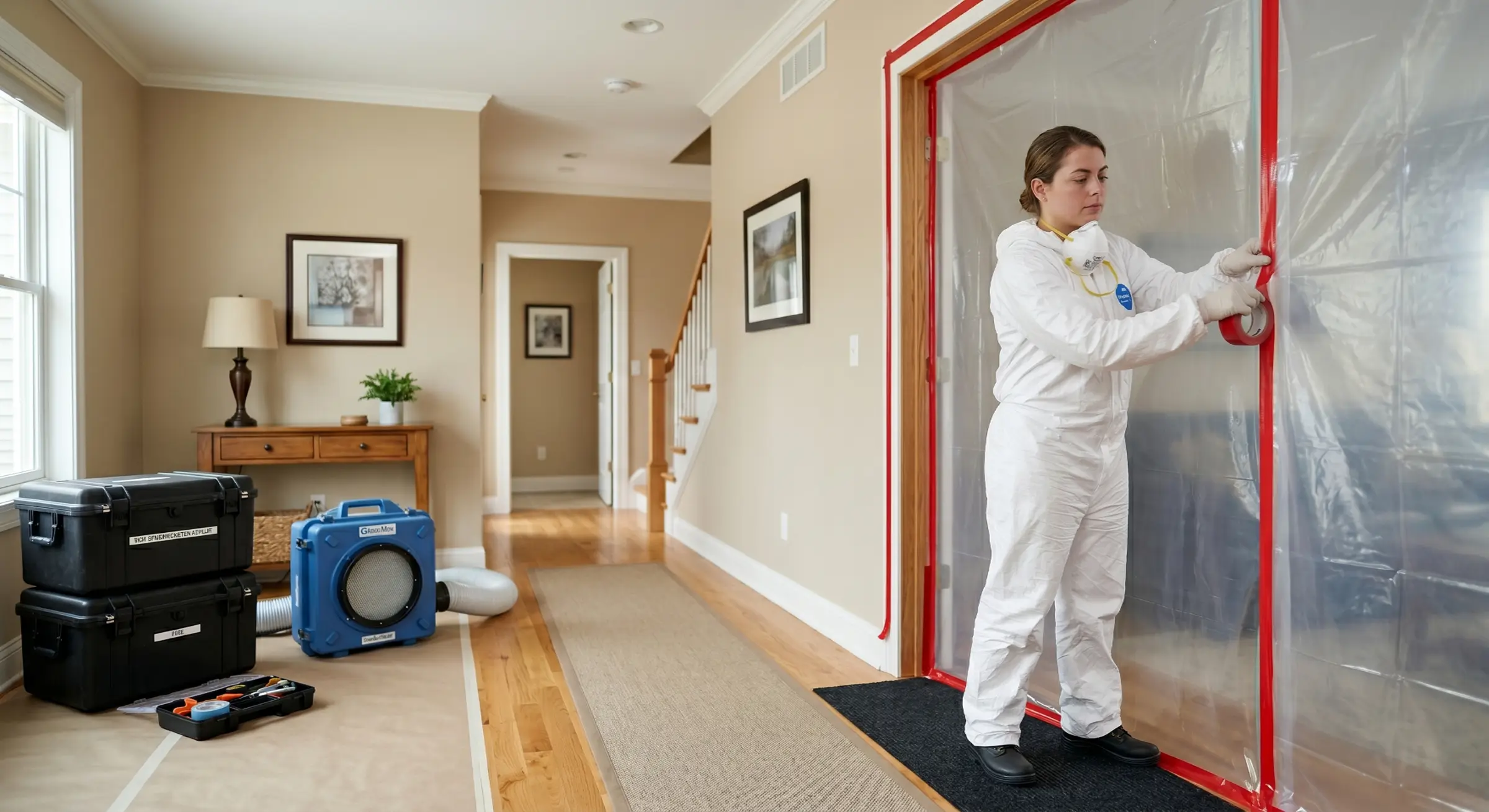

If you just found out you need mold remediation, the process probably sounds more alarming than it is. Crews in protective suits, sealed-off rooms, chemicals, equipment running for days. It can feel overwhelming before it even starts. The reality is more manageable: most residential jobs take one to three days of active work, the disruption is predictable and temporary, and knowing what to expect at each stage makes the whole experience significantly easier to get through.
The professional process of mold remediation involves containing, physically removing, treating, and verifying the elimination of mold contamination in a home, following standards set by the EPA and the IICRC. This guide walks you through every phase: what happens before crews arrive, what they actually do inside your home, how long it takes, and what to watch for, so you are not guessing at any point in the process.
Key insights
- Active work takes 1–5 days. Most residential jobs finish in one to three days of physical removal and cleaning, plus 24–72 hours of post-work drying before clearance testing can begin.
- Day one is containment, not removal. Crews spend the first day sealing the work zone with plastic sheeting and establishing negative air pressure. Mold removal typically starts on day two.
- Fix the moisture source first. Remediation will not hold if the leak, humidity problem, or water intrusion that caused the mold is still active. This must be resolved before crews arrive.
- Clearance testing must be independent. The company that does the remediation should not be the same company that certifies the job is complete. Use a separate certified inspector.
- Mold can return if moisture returns. A properly completed remediation does not cause recurrence on its own. If mold comes back, a new moisture source is the reason.
Should you stay or leave during remediation?
Whether you need to temporarily relocate depends on the size of the job, the location of the mold, and the health profile of your household. The CDC and NIOSH both identify individuals with asthma, allergies, and compromised immune systems as higher-risk during active remediation, and for these households relocation is not optional.
 A direct occupancy recommendation should come out of a walkthrough like this; if the contractor doesn't raise it unprompted, ask before they leave.
For small, isolated jobs such as a single bathroom wall or a contained area in a crawl space, staying in the home is generally acceptable as long as containment is properly established and you stay out of the work zone. If you are still unsure whether your situation requires a professional at all, the when mold remediation is required decision criteria covers the EPA thresholds and contamination level classifications. The containment barrier and negative air pressure are designed specifically to protect other areas of the house.
For large-scale remediation involving multiple rooms, structural material removal, or HVAC systems, most contractors will recommend temporary relocation during active work days. Returning to the home each evening is often fine once equipment is staged and running, but spending hours in the home while active demolition and cleaning are underway creates unnecessary exposure risk.
Anyone in the household with asthma, allergies, a chronic respiratory condition, a weakened immune system, or who is pregnant should not be present during active remediation regardless of job size. The CDC and NIOSH both recognize these populations as higher-risk for mold-related health effects. Whether mold is dangerous depends significantly on who is in the household.
Your contractor should give you a direct recommendation about occupancy before work begins. If they do not bring it up, ask them directly.
What happens before the crew arrives
Before remediation begins, two things must happen: the moisture source must be fixed, and a certified inspector must complete a formal assessment so the contractor has a written scope of work to follow. Per IICRC S520, no physical mold removal should begin without a documented scope based on an independent assessment. Both steps must be in place before work starts.
 This step matters most for the insurance claim, not the contractor; it's your own record independent of whatever documentation the crew provides later.
The inspection step is critical, and it should be done by a different company than the one doing the remediation. This separation prevents a conflict of interest and ensures the scope is based on an objective assessment. If you have not yet had an independent mold inspection, that step comes first. The inspector identifies contaminated areas, documents moisture readings, and often collects air samples. Their report forms the basis of the remediation plan.
Once you select a contractor and approve the scope of work, the company will schedule a start date. Before the crew arrives, there are several things you need to do:
Fix active water leaks first. Mold remediation will not hold if the moisture source is still present. A repaired pipe leak, patched roof, or corrected grading issue must be in place before remediation begins. If the source is not addressed, mold returns.
Clear access paths. Crews bring large equipment including HEPA air scrubbers, negative air machines, plastic sheeting on rolls, and debris bags. They need a clear path from the entry point to the work zone. Move vehicles from the driveway and garage. Remove furniture or rugs that block hallways.
Remove pets, plants, and food. Pets should leave the home for the duration of active work. Plants are sensitive to the antimicrobial agents used during remediation. Food in kitchens adjacent to work areas should be sealed or moved, especially if ductwork is involved in the remediation zone.
Move or cover personal belongings near the work zone. Furniture, clothing, bedding, and soft goods in rooms adjacent to the contaminated area can absorb airborne spores if containment is breached. Move items out of adjacent rooms where possible. For items that cannot be moved, cover them with plastic sheeting before crews arrive. Any soft goods (clothing, upholstered furniture, bedding) that were inside the contamination zone may need professional cleaning or disposal depending on exposure level. Ask your contractor about this before the job starts.
Shut off the HVAC system. Running forced air during containment setup or active mold removal can pull spores from the work zone into ductwork, spreading contamination to clean areas of the house. Your contractor will confirm this, but plan to shut the system down before day one.
Photograph everything. Take your own photos and video of all visible mold and water damage before any work begins. This documentation supports your insurance claim and gives you a clear before-and-after record.
Day one: what crews do when they arrive
On the first day, the remediation crew typically does not remove any mold. Day one is dedicated to scope verification, containment setup, and getting negative air pressure established. The IICRC S520 standard requires all three to be in place before any contaminated materials are disturbed.
 Nothing gets removed on this first visit; per IICRC S520, containment and negative air pressure have to be fully established before any material is disturbed.
When the crew arrives, the lead technician will walk through the affected areas to verify the scope matches what they see on site. If they find additional contamination beyond what was documented in the inspection, they should communicate that to you before expanding the work and before costs change.
Containment comes next. This is the most visible and most important step on day one. Crews seal off the affected area using 6-mil polyethylene plastic sheeting, which is taped to walls, floors, and ceilings to form a complete barrier. HVAC vents and returns within the work zone are sealed. Doorways get zipper-entry barriers, which allow crew access without breaking containment.
Inside the sealed zone, the crew installs one or more negative air machines. These devices pull air out of the containment area and exhaust it outside through flexible ducting that runs through a window or exterior wall. Running at negative pressure means any airborne spores released during the work are drawn out of the space rather than into the rest of your home.
HEPA air scrubbers are also staged at this point. These units filter and recirculate air inside the containment zone throughout the project. Depending on job size, you may see one or several of these units running continuously.
At the end of day one, the containment is in place, the equipment is running, and the area is fully sealed. Actual mold removal typically begins on day two once conditions inside the containment have stabilized.
Active remediation: what is happening inside the work zone
The core remediation work follows the IICRC S520 standard, which prioritizes physical source removal over chemical treatment alone. Understanding what that means helps you evaluate whether a contractor is doing the job correctly.
Porous materials are removed, not cleaned. Drywall, insulation, carpet, ceiling tiles, and similar materials that are infiltrated with mold cannot be effectively cleaned. They are cut out, bagged inside the containment zone, and removed from the home. This is normal and expected on any job involving walls, ceilings, or floors with significant growth. If a contractor tells you they can clean drywall rather than remove it, that is a red flag worth questioning. Note that certain mold species, particularly Stachybotrys (black mold), require even stricter containment and removal protocols than standard remediation. The protocols for black mold removal are more stringent than standard remediation and affect both cost and scope.
 Exposed studs like these get cleaned in place; the drywall that was covering them gets bagged and removed rather than treated, since porous materials can't be effectively cleaned once mold has penetrated.
Non-porous surfaces are cleaned and treated. Concrete block, metal framing, tile, and wood framing that has not been structurally compromised can be cleaned. Crews use wire brushing or sanding where needed, followed by HEPA vacuuming to capture loose spores, then damp-wiping with an EPA-registered antimicrobial solution. The antimicrobial needs dwell time to be effective, so this is not a quick spray-and-wipe process.
HEPA vacuuming covers every surface. All surfaces in the containment zone, including floors, remaining walls, and any structural framing left exposed, are HEPA vacuumed. Standard shop vacs do not capture mold spores at the particle sizes that matter. HEPA filtration is required.
Debris is bagged inside the containment. All removed materials go into sealed plastic bags before being carried through the house. A reputable crew will not haul open bags of moldy drywall through your living room. If you see unsealed debris being transported through clean areas of the house, that is a problem to flag immediately.
Air scrubbers run continuously. The negative air machines and HEPA scrubbers run throughout all active work and often continue running for 24 hours or more after physical remediation is complete, to capture any spores that remain suspended in the air.
Noise, odors, and disruption levels to expect
Mold remediation is disruptive in predictable ways: continuous machine noise from air scrubbers and negative air machines, demolition sounds during drywall removal, chemical odors from EPA-registered antimicrobials, and restricted access to parts of your home. Knowing what to expect from each phase prevents unnecessary alarm during active work.
Noise. Air scrubbers and negative air machines run continuously and generate significant noise, comparable to a commercial fan or dehumidifier running at high speed. If the work zone is adjacent to living spaces you plan to use during remediation, expect background noise throughout the workday and sometimes overnight if equipment is left running.
 A standard shop vac in this same hallway wouldn't capture spores at this particle size; HEPA filtration isn't optional equipment here.
Demolition sounds. On jobs involving drywall removal, expect the sounds of cutting, prying, and hammering during active removal phases. This is typically concentrated to the middle portion of the project.
Chemical odors. Antimicrobial agents have a distinct chemical smell. Most products used by professional crews are EPA-registered and safe when containment is in place, but the odor will be noticeable, especially near the work zone. It typically dissipates within 24–48 hours after treatment once ventilation resumes.
Dust and plastic sheeting everywhere. The visual signature of an active remediation job is plastic sheeting on walls, floors, and doorways. If work involves drywall cutting, there will be dust on the crew, their equipment, and the staging area outside containment. Crews are responsible for keeping debris contained, but expect the home to look like a construction site during active work.
Limited access to parts of your home. Depending on where the mold is located, you may lose use of a bathroom, basement, bedroom, or entire floor during remediation. Confirm with your contractor which areas will be off-limits and for how long before work begins so you can plan accordingly.
How long does each phase take?
Most residential mold remediation projects take 1–5 days of active work, plus 24–72 hours of post-remediation drying before clearance testing can begin, a sequence defined by IICRC S520 drying standards and lab turnaround times. The duration of each phase depends on contamination size, the materials affected, and how much structural work is involved.
| Phase | Typical duration | Notes |
|---|---|---|
| Inspection and assessment | 1–2 hours | Done before remediation begins, usually by a separate company |
| Containment setup | 2–4 hours | Day one; longer for multi-room jobs |
| Active mold removal and cleaning | 1–3 days | Depends on affected square footage and materials |
| Post-remediation drying | 24–72 hours | Equipment runs after physical work is complete |
| Clearance testing | 1–2 hours on-site | Air and surface samples collected by independent inspector |
| Lab results | 24–48 hours | Samples sent to a certified lab for analysis |
| Clearance report issued | Same day as results | Project is officially complete once report is issued |
For a typical single-room job under 50 square feet, total active work time is often one to two days. Larger jobs covering 50–200 square feet of affected material typically run two to four days. Jobs involving structural framing, subfloor removal, or attic or crawl space work can extend beyond a week. What those jobs cost per square foot and by scope level is broken out in the mold remediation cost data by scenario.
The calendar time from day one to receiving your clearance report is usually 5–10 days for average-sized jobs when accounting for drying time and lab turnaround.
After the crew leaves: drying, clearance testing, and reconstruction
The crew packing up and leaving is not the end of the project. Per IICRC S520, a job is not complete until an independent clearance test confirms spore counts are within acceptable ranges. What happens in the 24–72 hours after crews leave determines whether that test passes.
Drying and ventilation. After physical removal and treatment are complete, moisture levels in the work zone need to return to normal before containment can be removed and clearance testing can proceed. Crews may leave dehumidifiers and air movers running for 24–72 hours. Do not remove this equipment or open containment on your own. Humidity levels need to be verified with a moisture meter before the space is considered ready for testing.
 Clearance testing can't proceed until a reading like this confirms the space has dried, typically 24 to 72 hours after physical work wraps.
Clearance testing. This is the step that officially closes the job. An independent certified mold inspector, not the same company that did the remediation, collects air samples and surface samples from the treated area and submits them to a certified laboratory. Results typically come back within 24–48 hours. If spore counts are within acceptable ranges and surface samples show no active growth, a clearance report is issued. Spore count thresholds and what a passing clearance looks like are explained in the mold testing methodology section.
Using a separate company for clearance testing is important. A remediation contractor who offers to do their own post-clearance testing has a financial incentive to pass the job. An independent inspector does not. If the contractor insists on handling clearance themselves, that is worth pushing back on.
What happens if clearance fails. If the clearance report shows elevated spore counts or surface contamination, the contractor performs additional remediation before retesting. A reputable scope of work will include re-remediation if clearance does not pass on the first attempt. Confirm this is in writing before you sign the contract.
Reconstruction. Once clearance is confirmed, the structural work begins. Drywall is replaced, insulation is reinstalled, framing is primed and painted, and any flooring that was removed is restored. Reconstruction is typically performed by a separate contractor or a different division of the remediation company, and it is usually billed separately from the remediation itself. Budget for this in your total project cost estimate alongside the remediation itself.
Your documentation package. At the end of the project you should have: the original inspection report with moisture readings and photo documentation, the remediation scope of work and contract, before-and-after photos from the crew, the clearance test report from the independent inspector, and receipts for all work performed. The mold remediation checklist organizes these items by phase so nothing gets missed. Keep these records: they are often required for insurance reimbursement, and they will be requested if you sell the home.
Red flags to watch for during and after remediation
The six most important red flags during mold remediation are: no containment setup before removal begins, spraying without physically removing porous materials, absence of HEPA-filtered equipment, the contractor offering to perform their own clearance testing, high-pressure sales tactics, and a musty odor that does not clear within 72 hours after work ends. Any one of these signals a problem worth addressing immediately.
 A re-remediation clause for failed clearance should be visible somewhere in this contract before signature, not added after a first test comes back elevated.
No containment setup. If a crew begins removing mold-affected materials without first establishing a sealed containment zone with a zipper entry and negative air pressure, they are not following IICRC standards. Disturbing mold without containment spreads spores throughout the home.
Spraying without removing. A contractor who primarily relies on spraying a biocide or antimicrobial agent without physically removing porous contaminated materials is not remediating the problem. Biocide treatment alone does not remove the mold or its structural damage. The EPA mold cleanup guidance and IICRC S520 both explicitly emphasize source removal over chemical treatment.
No HEPA filtration. Air scrubbers and vacuums used during mold remediation must use HEPA filtration. Standard equipment does not capture the fine particulate sizes that matter. Ask the crew to confirm HEPA equipment is in use and verify their mold remediation certifications before work begins.
Offering to do their own clearance testing. As noted above, clearance should be performed by an independent party. A contractor who wants to certify their own work has an obvious conflict of interest.
Pressure to sign quickly or not get a second opinion. High-pressure sales tactics are a significant warning sign in this industry. Legitimate remediation contractors give you time to review the scope, ask questions, and compare proposals. Credential verification, bid comparison, and what a written scope must include are all part of how to choose a mold remediation company.
Mold smell that does not clear after 48–72 hours. Once remediation is complete and the area has dried, the musty odor should be gone. A persistent musty smell is worth reporting to your contractor immediately. It can indicate inadequate removal, residual moisture, or mold that was not captured in the original scope.
Will mold come back? Properly completed remediation does not cause recurrence on its own. Mold spores are always present in indoor air at low levels and cannot be fully eliminated. What remediation eliminates is the active colony and the conditions that allowed it to grow. If the moisture source was genuinely fixed and clearance testing passed, the treated area should remain clean. If mold returns in the same location, a new or ongoing moisture problem is the cause, not a failure of the original remediation.
A note on documentation and insurance
If your mold problem is connected to a covered event such as a burst pipe or roof leak, document everything from day one. Photograph all visible damage before any work begins. Keep written records of all contractor communications. Submit a written notice to your insurer as soon as possible. Insurers often cover mold remediation when it results from a covered peril but deny claims when insufficient documentation exists. The pathway from a water damage event to a mold insurance claim is covered in mold after water damage.
Frequently asked questions
The questions below cover the situations homeowners most commonly face during and after mold remediation: occupancy decisions, HVAC protocols, clearance testing, and what a failed clearance means under IICRC S520.
Will my house smell after mold remediation?
Yes, temporarily. Antimicrobial agents have a chemical odor that typically dissipates within 24–48 hours once ventilation resumes. A musty smell should be gone once drying is complete. If a musty odor lingers more than a few days after crews leave, that is worth flagging with your contractor because it can indicate residual moisture or mold that was missed.
Can I run my HVAC system during mold remediation?
No. Contractors will ask you to shut off your HVAC system during active remediation. Running forced air while containment is open can pull spores into ductwork and spread contamination throughout the house. If HVAC components are part of the affected area, they may need to be inspected and cleaned separately before the system is restarted.
What happens if clearance testing fails?
The contractor performs additional remediation, typically a second round of HEPA vacuuming, antimicrobial treatment, and surface cleaning, then waits for conditions to stabilize before retesting. A failed first clearance is not unusual on large or complex jobs. Reputable contractors include re-remediation in their scope if initial testing does not pass. Confirm this in writing before work begins. Before signing any contract, work through the questions to ask a mold remediation company, which includes what a credible answer looks like for each.
Who should do the clearance testing after remediation?
Clearance testing should be performed by a different company than the one that did the remediation. Using an independent certified mold inspector for post-remediation verification removes the conflict of interest and produces a report that carries more weight with insurance carriers, future buyers, and your own peace of mind.
Can mold come back after remediation?
Yes, if the underlying moisture source is not permanently fixed. Mold remediation removes existing contamination, but mold spores are always present in indoor air at low levels. If humidity rises above 60% again or a new leak develops in the same area, mold can return. A properly completed remediation that addresses the moisture source and achieves a passing clearance test typically does not result in recurrence in the treated area.
Is the air safe to breathe during mold remediation?
Inside the containment zone, no. That is why containment and negative air pressure exist: to keep the work area isolated from the rest of the home. Outside the containment zone, air quality should remain acceptable for healthy adults when proper containment is established. Anyone with asthma, allergies, a chronic respiratory condition, or a weakened immune system should not spend extended time in the home during active remediation, regardless of containment quality.
Sam Hickerson is the founder of RestoreAdvisor and writes consumer guides on mold remediation, water damage restoration, inspection, testing, and home recovery. His work focuses on helping homeowners understand costs, risks, and when to call a professional. He draws on guidance from the EPA, CDC, IICRC, and other authoritative sources to make complex home issues easier to navigate.