
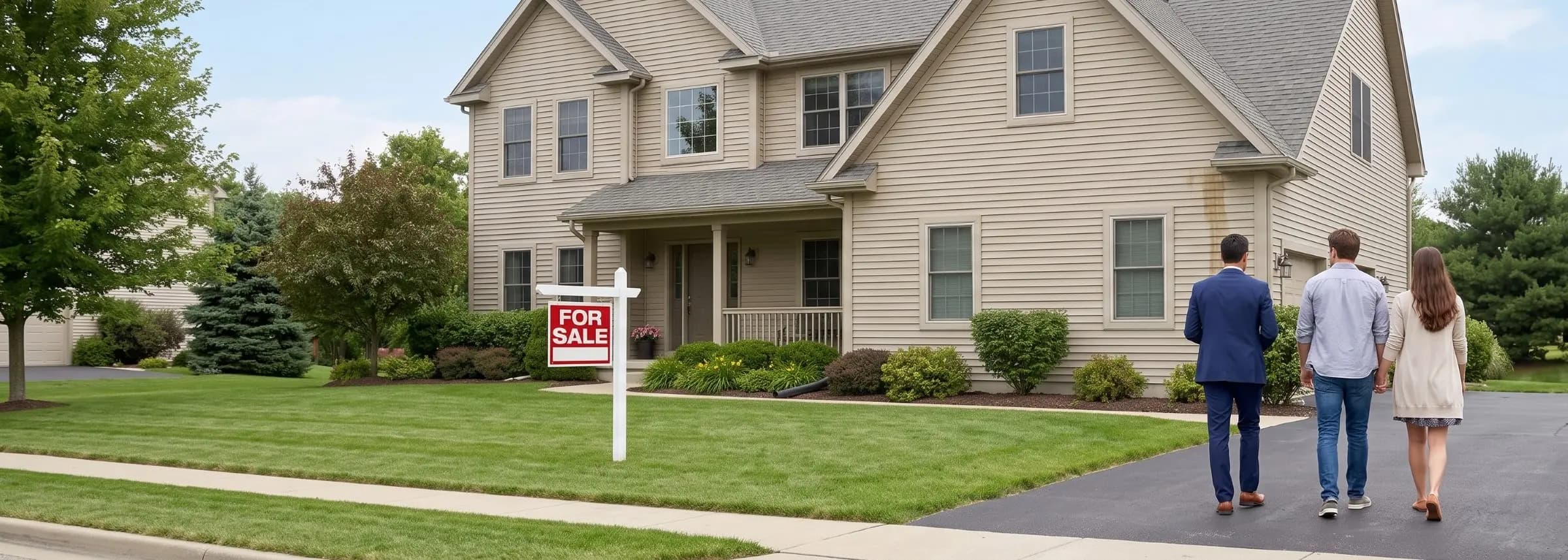

You found a house you actually want, and then the seller's disclosure form mentions a flooded basement, a neighbor brings up a burst pipe from a few winters back, or a musty smell in the lower level makes you stop and ask questions. That single fact does not have to end the deal. Water damage in a house's past is common, and in most cases it is knowable, and the difference between a safe purchase and an expensive mistake comes down to what you check before your contingency period runs out.
Water damage and freezing account for roughly one in four homeowners insurance claims nationally, the second most common cause of loss after wind and hail, according to the Insurance Information Institute, so a house with some kind of water event somewhere in its history is closer to the norm than the exception. Professional water damage restoration follows the ANSI/IICRC S500 standard, which classifies water intrusion by contamination level and by how far it spread, and that same classification language shows up on inspection reports, insurance claims, and contractor invoices tied to a house's water history. A single documented pipe failure that was extracted and dried within 48 hours and repaired by a licensed plumber carries far less risk than a repeated sewage backup with no invoice on file, even though both might appear as one line on a disclosure form.
Key insights
- Claims follow the address, not the seller. A CLUE report shows up to seven years of insurance claims tied to the property, and that history transfers to you at closing.
- Two prior water claims is a threshold. Multiple past water damage claims on one property can make the home difficult or expensive to insure, regardless of whether the damage was repaired.
- Inspections are visual by default. A standard home inspection is non-invasive, so moisture meter testing inside walls or under flooring usually has to be requested separately.
- Financing has its own bar. FHA and VA appraisals require visible mold, active leaks, and water damage evidence to be resolved before the loan can close.
- Documentation matters more than the event. A water event with a paid invoice, a permit where required, and confirmed dry moisture readings carries far less risk than one with no paper trail.
- Disclosure applies even after repair. Sellers in nearly every state must disclose known water damage on the property disclosure form even once it has been fixed.
Is past water damage a dealbreaker
No, a documented water damage history is not automatically a reason to walk away from a house. What matters is the water's contamination level, how long it sat before anyone addressed it, and whether the underlying cause was actually corrected rather than just covered up.
 A crack sealed with epoxy or polyurethane injection stops water at that specific point, but it does not fix the hydrostatic pressure or grading problem that caused it in the first place.
Under the water damage categories system, a clean supply line failure that was extracted and dried within a day or two carries far less risk than a Category 3 sewage backup or a basement that has flooded more than once. The event itself is only half the picture. A homeowner who called a restoration company the same day, kept the invoice, and had the drying verified with moisture readings has effectively closed the loop, while a homeowner who painted over a stain and never opened the wall has left the question unanswered.
Three questions do most of the work in deciding whether to move forward: what actually caused the water, was that cause fixed rather than just the visible damage, and is there paperwork proving both. If you can answer all three with confidence, the house is usually no riskier than any other resale. If you cannot answer any of them, that gap itself is the risk, and it belongs in your offer and your inspection plan rather than in a decision to walk away on instinct.
What sellers are required to tell you
Sellers must disclose known water damage on a state disclosure form in nearly every state, even after the problem has already been repaired. Most forms ask directly whether the property has ever had water intrusion, flooding, or a related insurance claim.
 A seller's written answer on a disclosure form still has to be honest, even when a repair is invisible by the time a buyer walks through.
A seller who checks that box still has to disclose water damage when selling even if the repair looks flawless today, and the disclosure standard generally covers what the seller knew or reasonably should have known, not just what a buyer happened to notice during a showing. That "should have known" language is where a lot of ambiguity lives: a seller who lived through a leak but genuinely believes it was fully resolved is on different legal footing than one who painted over an active stain the week before listing.
Disclosure has real gaps you should plan around. A foreclosure, an estate sale, or a transfer between family members is often exempt from the standard disclosure requirement in many states, and a two-owners-back event may never appear on the current seller's form at all since they were never told about it either. That is exactly why disclosure is a starting point rather than the full picture, and why a claims history search and an inspection still matter even when the paperwork looks clean.
Pulling a CLUE report on the house
A CLUE report is the most reliable record of a property's actual insurance claims, and it can surface a water loss a disclosure form leaves out entirely. CLUE stands for Comprehensive Loss Underwriting Exchange, maintained by LexisNexis on behalf of insurers nationwide, and it ties to the property address rather than the current owner, showing up to seven years of claims, including the type of loss, the date, and the amount paid.
 A CLUE report is tied to the property, not the current owner, so a buyer typically needs the seller's own request or a signed authorization to see it before closing.
You cannot request a CLUE report on a house you do not yet own, so the practical move is asking the seller to pull their own copy or sign an authorization that lets your agent request one before closing, a process explained in more detail by NAR. Reading the report is mostly about pattern: a single water claim from six years ago followed by clean years afterward reads nothing like two or three claims spaced months apart in the same part of the house, since the second pattern usually means the underlying cause, a grading problem, a failing sump pump, an old supply line, was never actually fixed, and insurers read it exactly the same way when they price a new policy on the property.
| Source | What it shows | Where it falls short |
|---|---|---|
| Seller's disclosure | What the current owner knew or admits to | Depends on honesty and memory; often silent on events before their ownership |
| CLUE report | Actual insurance claims tied to the address, up to 7 years | Only covers filed claims, not events an owner paid for out of pocket |
| Home inspection | A visual snapshot of the property's current condition | Non-invasive by default; will not confirm what is happening behind a wall |
What a home inspection will not catch
A standard home inspection is a visual, non-invasive walkthrough, and it typically will not include moisture meter testing inside walls, under flooring, or in a finished basement unless you ask for it in advance. A home inspection is defined by InterNACHI's Standard of Practice as a non-invasive examination of accessible areas, which means an inspector is not required to move furniture, pull back carpet, or open a wall cavity to confirm what cannot be seen.
 A standard inspection is visual and non-invasive, so a wall like this one passes unless a moisture meter is used to check what the flashlight cannot show.
That scope has real consequences for a house with a water damage history. A painted-over stain, a freshly replaced section of flooring, or drywall installed after a basement flood can all look completely normal to a visual walkthrough while hiding a subfloor or wall cavity that never fully dried, and the inspector has no obligation to look further than what is visible.
For anything beyond a single, clearly resolved event, a second opinion from a water damage restoration technician is worth the cost. Ask in advance whether moisture meter readings are part of the inspector's standard scope, and if not, bring in a restoration company to take spot readings, and where warranted a thermal imaging scan, in the specific area flagged by the disclosure or the claims history.
Signs of past water damage to check
A musty smell, discoloration near a baseboard or ceiling corner, and a section of flooring that feels softer or springier than the rest of the room are the fastest signs of past water damage to catch during a single showing. None of them require special equipment, just a slower walkthrough than most buyers give a house they already like.
A few tells are specific to houses that have had past water problems repaired. A section of trim or flooring that looks noticeably newer than the rest of the room, a patch of texture on a ceiling that does not quite match its surroundings, and a ring-shaped stain around a light fixture or vent point to a spot fix rather than a full repair, the same signs of water damage that would show up on a house with no disclosure at all. Efflorescence, the white, chalky mineral deposit that forms on a foundation wall as water evaporates through it, is worth photographing and asking about directly if you see it in a basement or crawl space.
Basements and foundations need scrutiny
Basements and foundations carry the highest risk of a water event repeating, because the underlying cause, grading, hydrostatic pressure, an aging sump pump, or a cracked foundation wall, usually still exists even after the visible water is gone. Efflorescence, a foundation crack wider than a hairline, or a sump pump that runs constantly are all worth asking about directly rather than assuming they were fully resolved.
 Efflorescence like this white mineral streak forms as water evaporates through the foundation wall, and it points to hydrostatic pressure or grading that a sump pump manages rather than fixes.
Confirmed foundation water damage from hydrostatic pressure or poor grading tends to recur on the same seasonal schedule that caused it in the first place, so ask when the last wet season occurred and whether the seller made any grading, drainage, or waterproofing changes afterward. A single wet season since the fix is not the same as several, and that gap matters more than whether the crack itself looks sealed today.
A finished basement adds a layer of difficulty here, since drywall and flooring can hide a wall cavity that was only ever partially dried before it was closed back up. If a basement flood is documented anywhere in the disclosure or the CLUE report and the space is now finished, that combination is one of the clearest reasons to request moisture testing rather than relying on a visual inspection alone.
If the home relies on a sump pump to keep the basement dry, find out when it was last tested and whether it has a battery backup, since sump pump failure during a single power outage is one of the most common reasons a previously dry basement floods again. A pump with no backup power is only as reliable as the electrical grid during the exact kind of storm that would otherwise flood the space it protects.
Flood zone history and future flood risk
A house does not need to have flooded to carry flood risk, and FEMA periodically updates its flood zone maps, so a property that was not in a mapped flood zone when it was built can be reclassified into a higher-risk zone years later. That reclassification affects both future insurance requirements and resale value, independent of anything that has actually happened to the house.
 FEMA remaps flood zones over time, so a house built to today's elevation standard can still land in a higher-risk zone years later even without a flood of its own.
Ask specifically about flood insurance history separate from a standard homeowners policy, since standard policies exclude flooding entirely and a seller's homeowners claims history will not show a flood loss covered by the National Flood Insurance Program. A seller can honestly report zero homeowners claims while having filed a separate flood claim that never touches the record you are looking at.
If the property sits in or near a mapped flood zone, request the seller's flood insurance premium, since a sharp jump in that number from one policy year to the next often signals a remapping or a prior claim that changed how the carrier underwrites the address. Homes several miles apart can carry sharply different premiums for this exact reason even when neither one has ever flooded.
A house with a documented history tied specifically to flooding from a nearby waterway carries different long-term risk than one with a single burst pipe, since a pipe failure is a maintenance event while proximity to a flood-prone area is a permanent feature of the lot itself. That distinction belongs in how you weigh the property overall, not just in whether the past repair itself was done correctly.
Confirming the repair was done right
The strongest evidence that a past water event will not repeat is a paid invoice from a licensed contractor, a permit where the repair required one, and moisture readings confirming the affected materials were fully dry before anything was closed back up. Absence of any of that paperwork is itself informative, since it usually means no one ever verified the space was dry.
Ask whether the technician who handled the drying carried water damage restoration certifications such as IICRC's WRT, since that credential is what separates a documented, verified dry-out from a contractor who patched the visible damage and moved on. A permit pulled for plumbing, electrical, or structural work also means a local inspector signed off on the repair meeting code, which is a layer of verification a private contractor's own invoice cannot provide on its own.
If the seller cannot produce any documentation for a water event they have disclosed, that gap is worth pricing into your offer as if the repair had not happened at all, since you have no way to confirm otherwise. The same logic applies to a repair mentioned only in conversation, since a verbal account from a seller carries none of the weight a dated invoice does.
Questions to ask the seller directly
What caused the water, when it happened, and whether there is an invoice proving it was fixed are the three questions that matter most, and a seller with nothing to hide will usually answer all three without pushback. Put them in writing rather than asking only in a walkthrough conversation, so the answers become part of your own record instead of something you have to recall later.
 A specific, written answer about what caused a past leak and when carries far more weight than a verbal assurance that "it's all fixed now."
What caused the water, exactly?
A vague answer, such as "some water got in," usually means the seller either does not know the cause or would rather not say. A specific answer, such as a named appliance or a burst pipe, points to a defined and typically fixable cause.
When did it happen, and how long did the water sit before anyone addressed it?
A same-day or next-day response cuts the mold and structural risk sharply compared with a leak that went unnoticed for days or weeks.
Do you have the invoice or receipt for the repair?
An invoice from a licensed plumber or a certified restoration company is the closest thing to proof that the drying was actually verified rather than assumed.
Was an insurance claim filed for this event?
A "no" here is worth checking against a CLUE report rather than taking at face value, since some homeowners pay out of pocket specifically to avoid a claim appearing on the record.
Has anything changed since then, such as grading, a sump pump, or a pipe replacement?
A cause that was never physically addressed is likely to produce the same result again under the same conditions.
Has this happened more than once?
A single, promptly resolved event calls for far less scrutiny than a recurring pattern, even when the seller volunteers only the most recent one.
If the seller already hired a company to handle the repair, questions to ask a water damage restoration company gives you a way to check whether that company's own process, from the first call through the final moisture reading, actually held up. The same list works just as well pointed backward at someone else's repair as it does for your own, since the questions that separate a legitimate job from a rushed one do not change based on who is asking them.
Mold risk from a past water event
Mold can begin growing within 24 to 48 hours of a water event under favorable conditions, so a past leak or flood that was not dried within that window may have already established mold behind a wall or under flooring the seller never reopened. That risk exists even on a house whose water damage was otherwise fully and properly repaired, since drying the structure and clearing an existing mold colony are two different jobs.
 Mold can establish itself within 24 to 48 hours behind a wall that was never fully dried, so a musty smell with no visible stain is often the more reliable warning sign here.
A musty odor with no visible stain is one of the more common signs that mold is present without an obvious water source pointing to it, which is exactly the kind of finding that justifies a dedicated mold inspection rather than relying on the general home inspection to catch it. Certain populations face higher stakes from an undisclosed mold problem than others, and the CDC notes that mold exposure poses a greater health risk for infants, older adults, and anyone with asthma or a compromised immune system.
The distinction between water damage restoration and mold remediation matters here, since a house can pass a standard inspection for structural water damage and still carry an undisclosed mold problem, because the two are governed by separate IICRC standards and are often inspected and billed separately. If anyone in your household is an infant, an older adult, or someone with asthma or a weakened immune system, that alone is a reasonable justification for a mold-specific inspection on a house with any documented water history.
Structural risk from water damage
Water damage becomes a structural concern once it has soaked framing, subfloor, or foundation materials long enough to cause rot, decay, or a weakened load path, and that risk climbs sharply once anything has been left wet for more than a few days. A single, promptly dried event rarely reaches this stage.
If an inspection turns up a sagging floor, a door that no longer closes properly, or visible cracking in framing near a documented water event, bring in a structural engineer rather than relying on the general home inspector's opinion. Real structural water damage of this kind is one of the few water-related findings that can actually change the math on a purchase, since repair costs scale quickly once framing or foundation members are involved rather than just finish materials.
How water damage affects your insurance
A property's past water damage claims can raise your premium, add exclusions, or in some cases lead an insurer to decline the property entirely, and this can happen before you even reach closing. That risk exists whether or not the underlying damage was ever repaired, because the claims themselves are what an insurer sees first.
 A quote request during your contingency period, not after closing, is the only point where a high premium or a flat refusal can still change your decision.
Get quotes from two or three carriers during your inspection period rather than waiting until after you own the house, since homeowners insurance covers water damage under a sudden-and-accidental standard that varies in how strictly each carrier applies it to a property with prior claims. A quote that comes back higher than expected, or a flat refusal, is information you can still act on while you are under contract.
Ask the seller for their own policy paperwork if the CLUE report shows any water claims, since the exact wording of an exclusion or a surcharge tells you more than the claim listing by itself. A water damage exclusion added after a past claim carries forward with the policy history if you keep the same carrier at closing.
If more than one insurer declines to quote the address or offers coverage only with a water damage exclusion, that is underwriting information you have no other practical way to obtain, and it should carry real weight in your decision, according to NAIC guidance on how insurers evaluate risk. An exclusion added at the point of sale means any future water event tied to that specific cause is yours to pay for in full.
How it affects financing and appraisal
FHA and VA loans require visible mold, an active leak, or clear water damage evidence found during the appraisal to be resolved before the loan can close, and that requirement can add weeks to your timeline even on an otherwise straightforward purchase. Conventional loans using standard appraisal forms carry a similar, though sometimes less strictly enforced, requirement to flag conditions that could affect livability or structural soundness.
Under HUD's Single Family Housing Policy Handbook, an FHA appraiser is required to note defective conditions such as active leaks or visible water damage, and the lender must then decide whether repairs happen before closing or through an escrow holdback where funds are set aside until the work is done afterward. Either path changes your closing date, so if the seller has already disclosed a water event, ask your lender early how their specific loan program would treat any repair the appraiser flags.
What as-is means for buyers
Selling a house as-is means the seller will not make repairs or negotiate over the property's condition, not that you lose your right to inspect it or that the seller can withhold what they already know. Those are two different things, and conflating them is one of the more common mistakes buyers make on a house with a disclosed water event.
In most states, an as-is clause does not override the seller's disclosure obligation, so a seller still has to answer honestly about known past water damage even while declining to fix anything found afterward. Your inspection contingency, if your contract includes one, generally still lets you renegotiate or walk away based on what the inspection turns up, since as-is limits what the seller will do about a finding rather than your ability to act on it.
An as-is listing also does not exempt the house from FHA or VA minimum property requirements if you are using one of those loan types, since the lender's requirement to resolve visible mold or an active leak before closing applies to the property itself regardless of how the listing is worded. If a seller insists on as-is specifically to avoid that kind of repair, a conventional loan or a larger down payment is often the more realistic path to actually closing on the house.
What to do before you make an offer
Getting the disclosure and the CLUE report in hand before you book the inspection, then getting insurance quotes before your contingency period ends, are the two steps buyers most often do out of order. Working through the five steps below in sequence keeps you from missing one while your contingency clock is running, since skipping ahead usually means redoing work later under time pressure.
 A written repair estimate turns "the water damage concerns me" into a specific number you can put in front of the seller before you sign anything.
1. Get the disclosure in writing and ask follow-up questions
Read the seller's disclosure form line by line, then put any follow-up questions about a water event in writing so the answers become part of the paper trail rather than a verbal assurance from your agent.
2. Request the CLUE report or an authorization to pull it
Ask the seller to provide their own CLUE report or sign an authorization letting your agent request one before closing, and treat any resistance to that request as worth investigating further.
3. Book an inspection and ask specifically about moisture testing
Confirm with the inspector in advance whether moisture meter readings are included in the standard scope, and add them as a paid extra in any room tied to a disclosed or suspected water event.
4. Get insurance quotes before your contingency period ends
Call two or three carriers for a quote while you still have time to renegotiate the contract or exit it if coverage turns out to be expensive, limited, or unavailable.
5. Price the repair and decide
Use a written restoration estimate, not a guess, to decide whether to ask the seller to complete repairs before closing, negotiate a credit, or walk away.
Negotiating price, repairs, or credits
Once you know the water damage's cause and cost, you have three realistic options: ask the seller to complete the repair before closing, negotiate a credit or price reduction equal to a written estimate, and use that same number as leverage even if you decide to walk away. A specific dollar figure moves a negotiation far more effectively than a general concern about "water damage."
 A specific number from a written estimate, not a general concern about water damage, is what actually moves a seller toward a credit or a completed repair.
A written estimate benchmarked against typical water damage restoration cost figures gives you a number to negotiate from rather than an assumption. Get that estimate from a restoration company or contractor, not from the listing agent, since an independent number holds up better if the negotiation reaches a formal repair addendum.
| Scope of repair | Typical cost range |
|---|---|
| Drywall patch and repaint after a resolved leak | $300–$1,500 |
| Flooring replacement in one affected room | $1,000–$6,000 |
| Basement waterproofing and drainage correction | $3,000–$15,000 |
| Foundation crack repair with an engineering review | $2,000–$15,000 |
| Mold remediation add-on if drying was incomplete | $1,500–$6,000 |
Sellers on a competitive listing are often more willing to complete a repair before closing than to reduce price, since a completed repair does not affect their net proceeds the way a credit does. If the repair is something you would rather control yourself, such as choosing your own contractor for basement waterproofing, a price reduction or closing credit is usually the better ask than requesting the seller handle it.
A $4,200 estimate for basement waterproofing, for example, converts a vague concern into a specific ask: a $4,200 price reduction, a $4,200 credit toward closing costs, or a seller-completed repair verified before you close, any of which nets you the same real outcome. Price whichever form the fix takes from the estimate itself, not from a round number that simply sounds fair to both sides.
The history follows you when you sell
Buying the house does not erase its water damage history, and if you ever sell it yourself, the same CLUE report and the same disclosure obligation apply to you that you are using to evaluate the current seller now. A future buyer's agent can request that same report the way you are trying to today, and whatever you learn about this event is also what you will eventually have to put in writing on your own disclosure form.
Any insurance claim you file during your own ownership, including one for the exact issue you are researching right now, adds to the same seven-year record a future buyer will pull. If you ever file a water damage insurance claim for a new or recurring event, weigh a smaller repair paid out of pocket against a filed claim the same way this seller's history is making you weigh theirs.
Keeping your own paperwork, invoices, permits, and moisture readings from the day a repair happens puts you in a stronger position than the current seller may be in right now. It is far easier to assemble that record while the work is underway than to reconstruct it years later for your own buyer.
Red flags worth walking away from
Recurring water claims in the same part of the house, an insurer that will not quote the property, and a seller who won't authorize a CLUE report release are the clearest signs the risk is bigger than a single repair line item. Most water-damaged houses are still reasonable purchases once the cause is understood and documented, but these signals are worth treating as a reason to slow down.
 A pattern of unresolved signals, not any single one, is usually what should change the decision here, not a hunch on the porch steps.
Recurring water damage claims
More than one water-related claim in the same part of the house usually means the underlying cause was never fixed the first time.
Category 3 water with no clean documentation
A past sewage backup or contaminated flood event needs a certified remediation invoice, not just a repainted wall and a verbal explanation.
Unpermitted major repair
A significant plumbing, water heater, or foundation repair with no permit on file means no local inspector ever verified the work met code.
A finished basement over a documented flood
Finishing work completed after a flood can trap moisture behind new drywall rather than confirm the space dried out first.
An insurer that declines to quote the property
If more than one carrier will not write a policy on the address, that is underwriting data about the property you cannot get any other way.
A seller who will not authorize a CLUE report release
A legitimate, fully resolved event is easy to document. Reluctance to let you see the claims history is informative on its own.
What if you find damage after closing
Yes, you generally still have legal options if a seller failed to disclose known water damage before you closed, though the path and the odds depend heavily on what you can prove the seller actually knew. Most states give buyers a limited window, often two to four years, to bring a claim for non-disclosure or misrepresentation, and that window typically starts running from the date of discovery or the date of closing depending on the state.
 A real estate attorney, not the agent who handled the sale, is the one who can actually weigh your state's statute of limitations against what you found.
The core legal question is whether the seller knew about the damage and failed to disclose it, not simply whether the damage exists. A repair invoice sitting in the seller's own records, a prior insurance claim that turns up on a CLUE report you request after closing, or a neighbor's account of a past flood are the kinds of evidence that turn a suspicion into a case, while a seller's honest belief that a years-old repair had fully resolved the issue is a much harder claim to win.
If you file your own insurance claim for damage discovered after closing and the carrier denies it by citing a pre-existing condition, that denial does not have to be the final word. The same documentation you are gathering against the seller, a dated photo, a contractor's assessment, a moisture reading, is often exactly what supports a denied water damage insurance claim on appeal, since both arguments rest on the same underlying timeline of when the damage actually occurred.
A real estate attorney, not your original agent, is the right first call, since an agent can usually speak to typical repair costs but not to whether your state's statute of limitations or your specific facts support a legal claim. Many attorneys will review the disclosure form and your inspection report for a flat consultation fee before you commit to anything more expensive, which is a reasonable first step before weighing the cost of pursuing the seller against the cost of simply making the repair yourself.
Frequently asked questions
Should I buy a house that had water damage?
Yes, in most cases the water damage itself is not automatically disqualifying, as long as the cause was corrected and the repair is backed by a paid invoice, a permit where one was required, and moisture readings confirming the affected materials dried fully before they were closed back up.
Can I get a CLUE report before I own the house?
No, not directly. You cannot pull a property's CLUE report until you own it, but you can ask the seller to request their own copy or sign an authorization letting you see it before closing.
Does a repaired water damage claim still affect my insurance rate?
Yes, it still counts. A CLUE report lists claims for up to seven years regardless of whether the underlying damage was fixed, and insurers weigh that history when pricing a new policy.
Will a home inspector test for hidden moisture behind walls?
Not automatically, no. Standard home inspections are visual and non-invasive, so most inspectors will not run a moisture meter inside a wall or under flooring unless you ask for that specifically.
What does a musty smell with no visible stain usually mean?
It usually means trapped moisture. A musty odor with no visible stain often points to dampness inside a wall cavity, subfloor, or crawl space that never fully dried out.
Can I back out of buying a house because of water damage found during inspection?
Yes, typically. If your contract includes an inspection contingency, you can usually renegotiate, request repairs, or cancel the contract based on what the inspection turns up, within the window the contingency allows.
Does flood zone reclassification affect a house that never flooded?
Yes, it can. FEMA periodically remaps flood zones, and a property can move into a higher-risk zone years after it was built even if it has no flood history of its own.
Is a house with a fixed foundation crack and past water intrusion a bad investment?
Not necessarily, no. A properly repaired crack with engineering documentation and no recurrence across multiple wet seasons carries far less risk than the same crack with no paperwork behind it.
Do I need a separate mold inspection in addition to a home inspection?
Only sometimes, yes. A separate mold inspection earns its cost when the disclosure, the CLUE report, or a musty smell suggests water sat for more than a day or two without documented drying.
How much does it cost to fix water damage found during a home purchase?
It depends heavily on scope. Minor drywall and flooring repairs can run a few hundred dollars, while a basement or foundation issue with structural involvement can run into the tens of thousands.
Does buying a house as-is mean I cannot negotiate over water damage?
No, not necessarily. An as-is sale means the seller will not make repairs themselves, but in most states it does not remove your inspection contingency or erase the seller's obligation to have disclosed what they already knew.
Will a water damage history I take on now affect me when I sell later?
Yes, it will. Any claim tied to the property, including one you file yourself after buying, becomes part of the same claims record and the same disclosure obligation a future buyer will check.
Can I sue a seller for not disclosing water damage after closing?
Yes, in many cases, if you can show the seller knew about the damage and failed to disclose it, though most states set a limited window, often two to four years, to bring that kind of claim.
- IICRC S500
- NAR: CLUE Reports Explained
- HUD: FHA Single Family Housing Policy Handbook
- EPA: Mold Cleanup in Your Home
- CDC: Basic Facts About Mold
- NAIC: A Consumer's Guide to Home Insurance
- InterNACHI Standards of Practice
- FEMA: National Flood Insurance Program
- This Old House: Water Damage Statistics (citing Insurance Information Institute data)
Sam Hickerson is the founder of RestoreAdvisor and writes consumer guides on mold remediation, water damage restoration, inspection, testing, and home recovery. His work focuses on helping homeowners understand costs, risks, and when to call a professional. He draws on guidance from the EPA, CDC, IICRC, and other authoritative sources to make complex home issues easier to navigate.