
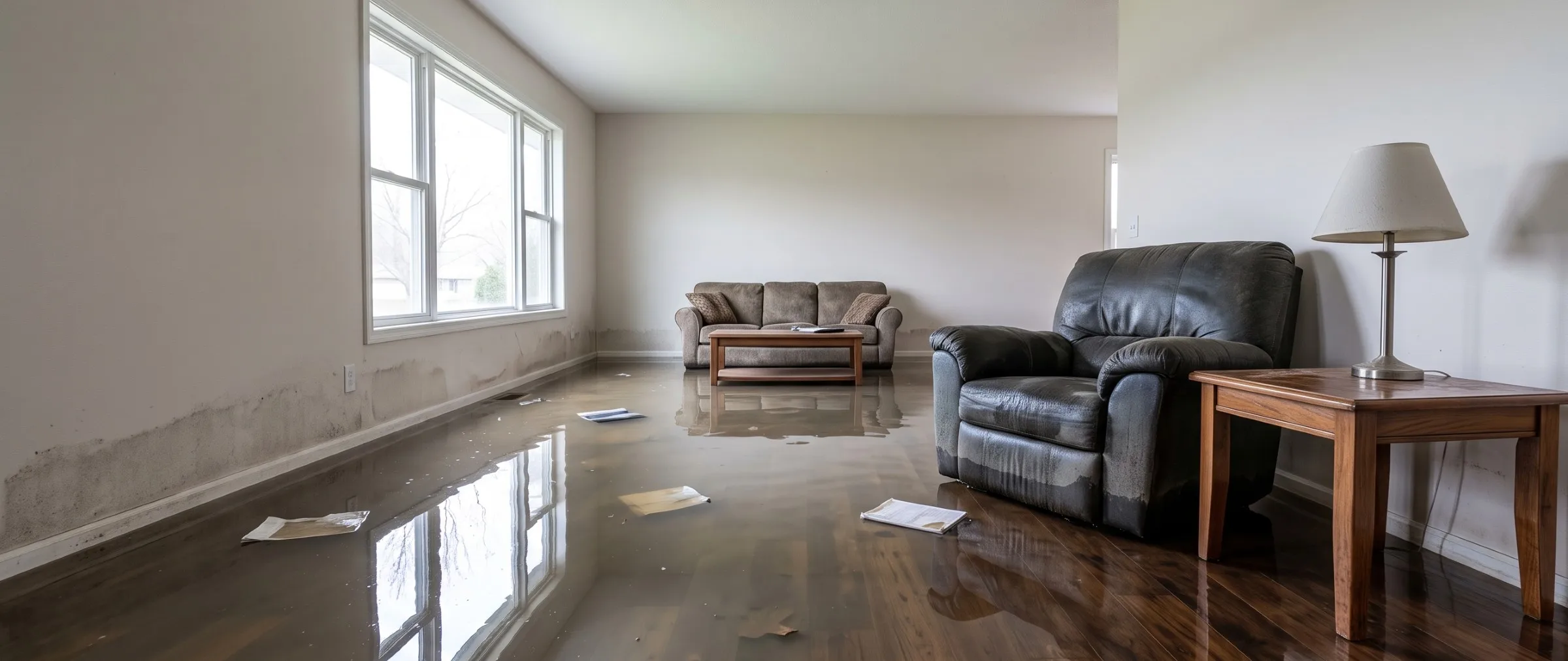

A soaked couch or a water-stained dresser doesn't automatically belong at the curb. Whether it survives comes down to three things: what it's made of, what kind of water reached it, and how long it sat wet before you found it. The same water damage restoration process that dries out walls and flooring applies to furniture too, though solid wood, leather, particleboard, and upholstered fabric respond to water differently enough that the right call for one piece can be the wrong call for the one sitting next to it.
Water damage restoration, governed by the ANSI/IICRC S500 standard, treats furniture and other contents as a separate track from the structure itself. A dresser or sofa gets assessed, dried, and either cleaned or discarded using the same water category and exposure-time rules a restoration company applies to walls and flooring. Under that standard, clean water reaching solid wood or leather for a short time is usually salvageable, while contaminated water reaching fabric, foam, or particleboard for more than a day or two typically is not.
Key insights
- Material matters more than damage looks. Solid wood and leather often survive a brief soak; particleboard, MDF, and upholstered foam rarely do.
- The 24 to 48 hour window is real. Mold can establish inside cushions and joints in that timeframe even when the outside looks dry.
- Water source decides the outcome for fabric. Clean water on upholstery can often be cleaned; contaminated water almost always means replacement.
- Fast drying backfires on wood. Direct sun or heat pulls moisture out too quickly and causes cracking or warping instead of preventing it.
- Professional restoration usually costs less than replacing. Cleaning or refinishing a piece typically runs a fraction of what a new equivalent costs.
- Mattresses are the exception to almost every rule here. Even mattresses that dry out are generally replaced rather than reused.
What determines if it can be saved
Three factors decide the outcome: the material the piece is made from, the category of water that reached it, and how long it stayed wet. Furniture built from solid wood or genuine leather tolerates brief exposure to clean water far better than furniture built from particleboard, fabric, or foam.
 A reading this high, well above the 17 percent threshold that signals trapped moisture, means the wood needs more drying time before any repair or refinishing work begins.
The ceiling on what's worth trying to save is set by water damage categories. Category 1 clean water, from a source like a supply line, gives porous furniture the best odds of a full recovery once it's dried. Category 2 water carries some contamination and lowers those odds for fabric and cushioning. Category 3 water, from sources like flooding or a sewage backup, is grossly contaminated, and porous furniture that's absorbed it is generally not salvageable regardless of how it's cleaned.
| Water category | What it means for furniture |
|---|---|
| Category 1 (clean) | Solid wood, leather, and upholstery all have a realistic chance if dried within 24 to 48 hours |
| Category 2 (gray) | Wood and leather often survive; fabric and foam need professional cleaning to have a chance |
| Category 3 (black) | Porous materials, including upholstery and particleboard, should be treated as unsalvageable |
Time works against every material, but not at the same speed. Wood can sometimes tolerate a few days of dampness before the damage becomes permanent, while upholstery foam starts trapping moisture that supports mold growth within roughly a day, a timeframe consistent with the EPA's guidance on flood cleanup and mold risk.
What to do right now
Move furniture out of standing water, separate anything that comes apart, and start airflow immediately rather than waiting to see if it dries on its own. Work through the steps in order, and don't skip photographing everything even if the piece looks like an obvious loss.
 Steady airflow at room temperature pulls moisture out evenly, while a heater or direct sun dries the surface faster than the interior, which is what causes cracking and warping.
Confirm it's safe to touch
If water is still actively spreading or reaching an outlet, that's an emergency water event, not a furniture problem yet. Address the source and any electrical risk first, since standing water near a live outlet is a shock hazard covered directly by OSHA's flood response guidance.
Move it out of standing water
Lift furniture off wet flooring using blocks, foil, or anything else that gets the legs above the water line, and pull cushions and drawers away from the source. If there are several inches of standing water in the room, professional water extraction needs to happen before you can even assess what's salvageable, since every extra hour in standing water lowers the odds regardless.
Start drying immediately with airflow, not heat
Open windows, run fans, and add a dehumidifier if one is available. Skip direct sunlight, hair dryers, and space heaters near wood or veneer, since fast drying pulls moisture out unevenly and causes cracking or warping rather than preventing it.
Photograph it before you clean anything
Take wide shots of the room and close-ups of each damaged item before you wipe anything down or move it further. This record is what an insurer will expect later, and the same habits used for documenting water damage for insurance apply just as much to a chair or a couch as they do to a wall.
Decide DIY or professional based on the water and the item
Clean water on a low-value piece is usually fine to dry and clean yourself. Contaminated water, a piece you can't replace, or anything still damp after two days is worth a professional opinion before you decide to throw it out.
What not to do with wet furniture
Don't dry wet furniture with direct sun or heat, don't force a swollen drawer or joint, and don't close a still-damp piece back up in an enclosed room. Each of these habits does more damage to wet furniture than the water exposure itself, and each is easy to avoid once you know to watch for it.
Don't dry it in direct sun or with a heater
Fast heat pulls moisture out unevenly, which is what causes wood to crack and warp and leather to stiffen, not the water exposure itself. Airflow at room temperature works faster over the full drying period than a hair dryer or a sunny driveway.
Don't force a swollen drawer, door, or joint
Swollen wood needs time, not pressure. Forcing a stuck piece open usually splits the wood or breaks the joint, turning a drying problem into a repair problem.
Don't close a damp piece back up in an enclosed room
A closet, a covered porch, or a room with the windows shut traps moisture right back against the furniture. Give it open airflow until it's confirmed dry, not just dry to the touch.
Don't ignore a musty smell that doesn't fade
A smell that lingers after a few days of drying usually means moisture is still trapped somewhere the surface can't reach. Treating the odor as cosmetic instead of a warning sign is how hidden mold gets missed.
Don't reach for bleach on wood or leather
Bleach can strip a wood finish and dry out or discolor leather, causing more damage than the water itself did. A mild detergent solution, or a cleaner made for the specific material, is the safer default for anything other than a truly non-porous, unfinished surface.
Signs it's already too far gone
A piece that's swollen, delaminating, or holding a musty smell after drying has usually crossed the line from salvageable to a replacement decision. Furniture that touched sewage backup or standing floodwater carries an added risk: contamination that isn't visible even after the item looks and smells normal again.
 Once the adhesive layer under veneer breaks down like this, the bond will not reset even after the piece dries, which is the clearest sign that drying alone will not save it.
Not every sign carries the same weight for every material. A swollen edge on solid wood is often fixable with sanding and a refinish, while sagging cushions or a musty smell that survives a full dry-out are a much stronger signal that the item is done.
| Sign | Where it shows up | What it usually means |
|---|---|---|
| Swelling or warping | Wood tables, dressers, cabinet doors | The wood absorbed water faster than it can release it |
| Delamination | Veneer edges, particleboard shelving | The adhesive layer has broken down and won't reset |
| Persistent musty odor | Cushions, upholstery seams, drawer interiors | Moisture is trapped somewhere the surface can't reach |
| Sagging or spongy cushions | Sofas, chairs, ottomans | Foam has absorbed water and lost its structure |
| Visible mold or dark spotting | Fabric seams, wood joints, drawer bottoms | Growth has already established, not just moisture |
| Discoloration that won't lift | Wood finish, light-colored fabric | The stain has reached below the surface layer |
If a piece shows more than one of these signs at once, or if it sat in flooding or standing water for more than a day, the safer assumption is that professional water extraction came too late to save it. A quick moisture meter check against a dry reference point on an unaffected piece nearby will usually confirm what your eyes are already telling you: a reading under 15% generally means the material is dry, while anything above 17% signals moisture that's still trapped somewhere.
Can solid wood furniture be saved
Solid wood furniture usually can be saved if it touched clean water and dried within 24 to 48 hours. Veneer, particleboard, and MDF pieces have much lower odds, since the water breaks down the glue or fiberboard core rather than just soaking a surface that can be sanded and refinished.
The drying method matters as much as the timeline. Move the piece to a room with steady airflow and moderate temperature, away from direct sun, radiators, or space heaters. Remove drawers and doors so trapped moisture can escape from the inside as well as the surface, and don't force anything that's swollen shut, since that usually splits the wood rather than freeing it. Once it's fully dry, light water rings and cloudy spots often respond to a wood cleaner or a careful, even sanding pass, while stains that have reached the grain typically need a professional refinish.
Solid wood pieces stored in a basement or another below-grade space carry an extra risk: they're often the last items anyone checks after a leak, and the slow-drying conditions common to basement water damage apply just as much to furniture as they do to flooring and framing. Pulling a piece a few inches away from an exterior wall and checking its underside and back panel during any basement inspection catches swelling well before it reaches the visible surface.
Upholstered furniture and cushions
Upholstered furniture survives water damage mainly when the water was clean and the cushions dried within 24 to 48 hours. Foam and batting hold moisture the way a sponge does, so a couch that feels dry on the surface can still be wet several inches inside, growing mold that a surface hand check won't catch.
 Standing a cushion on edge lets trapped water drain out instead of pooling at the base, which is why a cushion left lying flat often stays wet days longer than one propped upright.
Start by unzipping every removable cover and pulling cushions apart from their inserts. Fabric that's still clean can often be laundered separately from the foam, which needs its own airflow, ideally standing on edge rather than lying flat, so water can drain rather than pool at the bottom. A couch that touched floodwater is a different case: the EPA's guidance on flood cleanup treats anything porous that's absorbed contaminated water as unsalvageable, and upholstery foam is about as porous as household materials get. If the piece is a family heirloom or an expensive reupholstering candidate, a professional content-restoration cleaner can run an ozone or ultrasonic treatment that a home wash cycle can't replicate, but that's a cost-versus-sentiment decision rather than a guarantee of success.
Leather furniture
Leather resists water better than fabric because it's less porous, but it isn't waterproof. A soaked leather piece that dries too quickly or sits wet too long will crack, stiffen, or develop mold in the stitching and seams, even though the surface itself repelled most of the water.
Blot standing moisture with a clean towel rather than rubbing, which can push water further into the seams. Let the piece air dry slowly, away from direct heat, and hold off on any leather conditioner until it's completely dry, since conditioning damp leather traps moisture underneath the treatment. Once dry, a light coat of leather conditioner usually restores flexibility that stiffened during the drying process. Leather that stayed wet for more than 48 hours, or that touched contaminated water, is more likely to need professional cleaning than a home fix, since mold in leather stitching is difficult to remove without specialized products.
Mattresses
Most mattresses don't survive water damage and should be replaced rather than dried. The foam and fiber layers inside a mattress trap moisture the same way an upholstered cushion does, but a mattress presses against your body for hours every night, which turns lingering mold or bacteria into a direct health exposure rather than just a musty smell in a spare room.
 A quilted surface can look only lightly stained while the foam layers beneath stay soaked for days, which is why a mattress that seems to dry out on top is still replaced rather than kept.
The one exception worth checking is a mattress that only got wet on the very top, through a small spill or a brief leak, and was protected by a waterproof cover or pad. In that narrow case, drying the surface quickly and confirming it with a moisture meter can be enough. Anything soaked through, contaminated by floodwater or a sewage event, or still damp after a day is a replacement, not a project.
Metal furniture
Metal furniture generally survives water exposure better than wood or fabric, since the material itself doesn't swell, warp, or absorb moisture the way porous materials do. The real risk is corrosion: bare or scratched metal that stays wet starts rusting within a day or two, and rust that reaches a structural joint or weld can weaken the piece permanently.
A quick towel-dry followed by full air exposure is usually enough for finished metal, powder-coated patio furniture, chrome, or painted steel. Bare or scratched metal benefits from a light coat of oil or a rust-inhibiting spray once it's dry, since even brief exposure to moisture can start surface rust on exposed steel or iron.
Filing cabinets, metal bed frames, and patio furniture stored in a garage or a shed carry the same water risk as anything else kept in one of the more vulnerable rooms in a house, and the slow-drying conditions common to a garage apply to whatever metal sits inside it. A metal-frame chair or sofa with upholstered cushions is really two separate problems: dry and inspect the frame for rust, and dry the cushions the way any other upholstered piece is dried.
Antique or high-value furniture
A piece with real monetary or sentimental value deserves a different response, even when the material and water exposure look the same as an ordinary item. What would normally be a straightforward replace decision on a low-cost piece is worth a second opinion when the item is irreplaceable.
Before drying or cleaning anything of real value, photograph its current condition and, if there's any doubt about worth, get a professional appraisal or condition assessment first. Attempting a DIY dry-out or sanding an antique finish can permanently destroy value that a specialist would have preserved, even on a piece that technically survives the water.
A furniture conservator, not a standard content-restoration cleaner, is the right call for anything with historical or collector value. Conservators work to preserve an original finish and patina rather than refinish it, which is the opposite instinct a general restoration cleanup follows, and if the item is insured separately under a scheduled personal property rider rather than your policy's general contents limit, that coverage often requires its own appraisal and a conservator's assessment before a claim is paid.
If an insurer contests what a high-value piece was actually worth rather than whether the loss itself is covered, that's a valuation dispute rather than a coverage denial, though it follows much of the same appeal process used for any denied water damage insurance claim. A pre-loss appraisal, photo, or receipt is the strongest evidence for holding your number.
DIY vs. professional restoration
Clean water, a piece you're comfortable losing, and a same-day response point toward doing it yourself. Contaminated water, a piece with real value, or moisture that's still present after two days point toward calling in a professional.
 Ultrasonic cleaning reaches contamination trapped deep in foam and fabric fibers that a home wash cycle cannot, which is the main reason a contaminated piece is worth a professional opinion before it gets thrown out.
A quick way to sort a borderline case is a phone call. Most restoration companies with a content-restoration division will do a free phone assessment based on photos and a description of what happened, which is often enough to rule DIY in or out before spending a weekend on something that was never going to dry.
| Factor | DIY makes sense | Call a professional |
|---|---|---|
| Water category | Category 1, clean water | Category 2 or 3, any contamination |
| Item value | Low replacement cost or no sentimental value | Heirloom, high-end, or hard to replace |
| Drying progress | Dry to the touch within 24 to 48 hours | Still damp, odor, or visible mold after two days |
| Scope | A single piece or two | A whole room of contents after a larger loss |
For a larger loss, drying furniture isn't usually a standalone job. It's one piece of the contents step in the broader water damage restoration process, where a restoration company packs out affected belongings, cleans or discards them by category, and coordinates the return of anything salvageable once the structural drying is finished.
Who to call for water damaged furniture
A content-restoration specialist, not a general handyman, is the right call for furniture that's beyond a simple home dry-out. Many restoration companies run a dedicated contents division that handles ultrasonic cleaning, ozone treatment for odor, and climate-controlled storage while the rest of a home dries out.
For a single piece, an upholsterer or a furniture-repair specialist can often clean and reassemble a couch or refinish a wood surface without the overhead of a full restoration company. For anything tied to a larger water event, the same credentials that matter when choosing a water damage restoration company also apply to whoever handles the contents: IICRC certification and content-restoration experience specifically, since drying a wall and drying a couch cushion aren't the same skill set even within the same company.
Removing musty odor from furniture
A musty smell that remains after a piece is fully dry means moisture, mold, or bacteria are still present somewhere the drying process didn't reach. Confirm the piece is actually dry with a moisture meter before treating the odor, since masking a smell on furniture that's still damp only delays finding the real problem.
 Baking soda absorbs surface odor sitting in the fabric fibers, but it does nothing for a smell coming from foam underneath, which is why a lingering odor after this step usually points to trapped moisture rather than a stain that needs more scrubbing.
The right deodorizing method depends on the material, since what works on wood can damage upholstery and what works on fabric does nothing for leather. Treating the whole piece the same way regardless of what it's made of is one of the more common reasons a smell keeps coming back after it seemed to clear.
| Material | Deodorizing method |
|---|---|
| Wood | Wipe with a mild detergent or wood soap, then air it out for a few hours; avoid prolonged direct sun on a finished piece |
| Upholstery (fabric) | Sprinkle baking soda, let it sit overnight, then vacuum, or mist with diluted white vinegar and let it air dry |
| Leather | Wipe down with a leather cleaner made for the material, then condition once it's completely dry |
| Cushion foam and padding | Rarely worth treating on its own; if the odor is inside the foam rather than the fabric, replacing the insert is usually cheaper than repeated deodorizing |
An odor that survives two or three rounds of cleaning almost always means moisture is still trapped, not that the smell itself is stubborn. At that point, a moisture meter check or a professional inspection is worth more than another deodorizing attempt, since covering a smell doesn't stop whatever is causing it from spreading.
Cost to restore vs. replace
Restoring a single piece typically costs well under half of what a comparable new item costs, though the exact figure depends heavily on the material and the extent of the damage. A basic cleaning and deodorizing service runs on the low end, while structural repairs like reupholstering or wood refinishing cost more.
 A quote that separates cleaning from repair work, rather than one lump sum, makes it easier to check whether restoring a piece actually beats what a comparable replacement would cost.
That gap between restoring and replacing is why most insurers and restoration companies default to restoring rather than replacing whenever the material allows it. A wood or leather piece is almost always the cheaper save, while heavily soaked upholstery or a mattress is usually the exception where replacement wins out on cost as well as safety.
| Service | Typical cost | Notes |
|---|---|---|
| Cleaning and deodorizing a couch or chair | $75-$500 | Best fit for clean water with no structural damage |
| Wood refinishing | $200-$1,200 | Depends on size and whether the piece needs stripping |
| Reupholstering a sofa | $500-$2,500+ | Fabric choice and frame condition both affect the price |
| Leather cleaning and conditioning | $150-$600 | Higher end applies to full sofas rather than single chairs |
| Whole-home content pack-out and cleaning | $1.20-$1.50 per sq ft | Billed by volume for larger losses rather than per item |
These figures track with published national restoration cost data and generally fall well below replacement cost for anything beyond low-end furniture, which is why most water damage restoration cost estimates for a larger loss include a contents-cleaning line item rather than assuming everything gets thrown out. That line item is typically priced separately from structural repairs, so a quote that skips it is worth asking about rather than assuming furniture was already factored in.
Does insurance cover it
Yes, in most cases, when the water damage was sudden and accidental, such as a burst pipe or an appliance failure. Personal property coverage on a standard homeowners policy typically pays to clean, restore, or replace furniture damaged this way, up to your policy's contents limit, following the same sudden-and-accidental standard that governs homeowners insurance and water damage more broadly.
Gradual damage from a long-ignored leak is a different story, and insurers commonly deny coverage for furniture that was slowly ruined by something a homeowner should have caught earlier. According to the National Association of Insurance Commissioners, personal property coverage is typically set as a percentage of a policy's dwelling coverage rather than a fixed dollar figure, so the actual limit varies by policy.
Photograph every damaged item before you discard it, note its approximate age and purchase price, and keep any receipts you can find. Discarding furniture before it's documented is one of the more common mistakes homeowners make, and it's harder to recover value for an item the adjuster never saw.
Preventing water damage to furniture
Furniture placed away from likely water sources and elevated off vulnerable flooring survives far more incidents than furniture left in the path of the next leak. A few habits lower the odds of dealing with this again.
 A few inches of clearance keeps furniture legs above the shallow water level that a minor basement leak typically produces, which is usually enough to prevent the damage before it starts.
Elevate furniture in flood-prone rooms
Basements, crawl spaces, and ground-floor rooms in flood zones benefit from furniture risers or moisture-resistant furniture legs, since even a shallow flood reaches the bottom few inches first.
Keep upholstery and wood away from exterior walls
Condensation on an exterior wall can dampen fabric and wood over time without an obvious leak ever occurring, so leaving a few inches of clearance behind a piece helps it dry between minor moisture events.
Use a waterproof mattress protector
A protector catches most spills and slow leaks before they reach the foam layers underneath, which is the single easiest way to prevent a mattress from becoming a replacement decision.
Act on spills the same day
A spill that's blotted and dried within a few hours rarely causes lasting damage, while the same spill left overnight has time to soak into padding, wood joints, or the subfloor beneath.
Keep indoor humidity in a reasonable range
The CDC recommends keeping indoor humidity between 30% and 50% to discourage mold growth, a range that protects furniture as much as it protects walls and flooring in a persistently damp room.
Frequently asked questions
Can water damaged furniture be saved?
Yes, in many cases. Solid wood and leather furniture that touched clean water and dried within 24 to 48 hours usually survives. Upholstered pieces and particleboard furniture have much lower odds, especially if the water was contaminated or the item sat wet for several days.
How long can furniture sit in water before it's ruined?
Around 24 to 48 hours, per the EPA's guidance on mold risk after water exposure, but that clock starts when the water actually reached the piece, not when you happened to find it. A puddle that sat behind a couch for two days before anyone noticed already used up most or all of that window before drying even began.
Should I throw away a wet couch or try to save it?
It depends on the water source and how deep the moisture went. A couch that touched a small amount of clean water and dried within a day can often be saved with professional cleaning. A couch soaked through by floodwater, sewage backup, or several inches of standing water is rarely worth saving.
Does mold on furniture always mean it's ruined?
Not always, but it changes what happens next. Surface mold on a solid wood or leather piece can sometimes be cleaned and treated. Mold inside upholstery foam or cushion filling is much harder to remove completely, and most restoration companies recommend replacement once it's established there.
Can a water damaged mattress be dried and reused?
Generally no. Even with fans and a dehumidifier running, a full mattress is thick enough that airflow rarely reaches the core before mold sets up inside it, which is why replacement is the standard recommendation rather than the multi-day drying attempt most other furniture would get.
Is leather furniture ruined by water?
Not necessarily. Finished, sealed leather holds up far better than unfinished or aniline leather, which absorbs water almost like fabric does and is much more likely to stain or stiffen permanently from the same exposure a sealed piece would shrug off.
Can water stains be removed from wood furniture?
Often, yes. Light surface stains from moisture usually respond to gentle sanding, wood cleaner, or a heat-and-moisture trick that draws the trapped water out of the finish. Deep stains that have reached the wood grain typically need professional refinishing rather than a home remedy.
Will homeowners insurance pay to replace water damaged furniture?
Usually, if the water damage was sudden and accidental, such as a burst pipe or an appliance failure. Personal property coverage on a standard homeowners policy typically pays for furniture damaged this way, up to your policy's contents limit, but gradual damage from a long-ignored leak is commonly excluded. Photographing each item before you discard it, the same habit that matters when filing a water damage insurance claim, also affects how much you actually recover.
How much does it cost to restore water damaged furniture?
Restoring a single upholstered piece typically runs $75 to $500 for cleaning and deodorizing, while full reupholstering or wood refinishing can run $500 to $2,500 or more per item. A whole-house content pack-out and cleaning after a larger loss is usually billed by volume or square footage rather than per item.
Can particleboard or MDF furniture be saved after water damage?
Rarely. Particleboard and medium-density fiberboard swell and crumble once the adhesive binding the wood fibers together breaks down, and that process usually starts within hours of exposure. Replacement is almost always more practical than trying to dry or repair these materials.
Should I throw away furniture after a sewage backup?
Yes, if the furniture is upholstered, made of particleboard, or otherwise porous. Category 3 water from a sewage backup carries contaminants that soak into porous materials and can't be reliably cleaned out, even after the item looks and smells fine again.
How do I know if my furniture has mold I can't see?
A musty odor that doesn't fade after drying, a cushion that feels heavier or damper than the rest of the piece, or discoloration along seams and the underside of frames are the most common signs. Check the welt cord and the underside of cushions specifically, since mold often establishes along a hidden seam well before it reaches anywhere a normal glance would catch.
Sam Hickerson is the founder of RestoreAdvisor and writes consumer guides on mold remediation, water damage restoration, inspection, testing, and home recovery. His work focuses on helping homeowners understand costs, risks, and when to call a professional. He draws on guidance from the EPA, CDC, IICRC, and other authoritative sources to make complex home issues easier to navigate.