
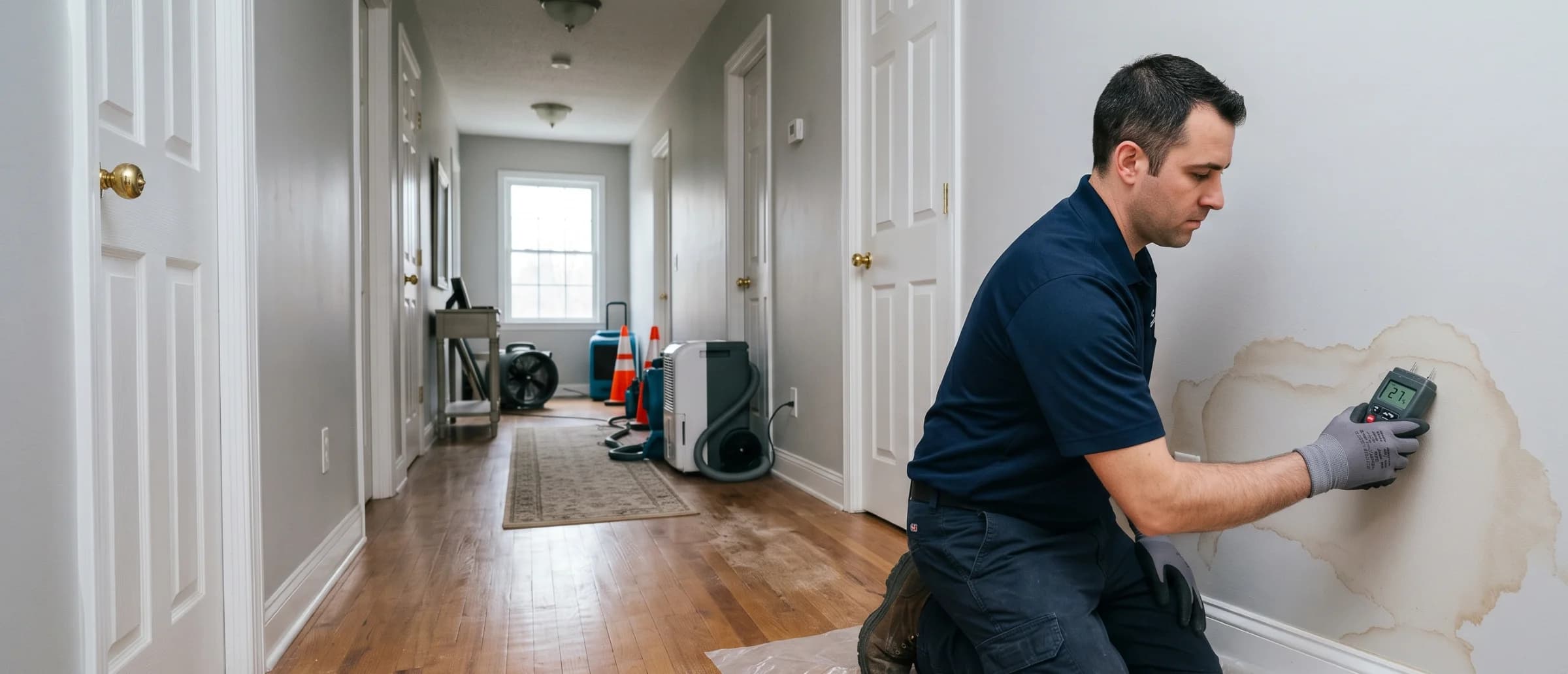

Whether the water's already been shut off or a crew is on the way, there's one question on your mind: how many days is this going to take. The answer depends on how much water is involved, what it touched, and how fast extraction starts, but real ranges exist for every stage from the first pass with a pump to the final coat of paint. Those ranges shift by severity, the specific material involved, indoor humidity, and how fast insurance signs off, and knowing which of those applies to your situation is what actually lets you plan around the disruption instead of guessing at it.
Water damage restoration is the process of extracting water, drying and stabilizing a structure, and repairing what the water damaged, following procedures set by the ANSI/IICRC S500 standard, the reference restoration companies use nationwide. That process sets the outer boundary for how fast a job can move: three to seven days of active drying, then one to three weeks of repairs and reconstruction if materials were removed, with severe or delayed cases stretching past a month.
Key insights
- Drying alone typically runs 3 to 7 days with commercial equipment running continuously; repairs following demolition add another 1 to 3 weeks.
- The IICRC S500 points to a 24 to 48 hour window before mold becomes a realistic risk on wet materials, which is why extraction speed affects total timeline more than any other single factor.
- Hardwood floors can take 7 to 10 days to dry, while carpet and padding often dry in 2 to 3 days but get replaced instead of dried.
- High indoor humidity can stretch a 3 day drying job into a week or more, since materials cannot release moisture into air that is already saturated.
- Minor, single-room water damage often wraps up in under a week, while a flooded basement or whole-house event can run 4 to 8 weeks including reconstruction.
- Insurance approval timing, not the drying equipment, is the most common reason a project runs longer than the technical minimum.
The typical timeline by severity
Water damage restoration takes anywhere from three days for a small, contained leak to several months for a flooded home requiring full reconstruction. The single biggest driver of that range is how much water was involved and how many materials it touched before extraction began.
 Water reaching both the wall and the flooring in the same area typically pushes a job from the 2 to 4 day range into the 1 to 2 week range, since two separate materials now need independent drying confirmation.
That range mirrors the same stages every water damage restoration job moves through, extraction, drying, and repair, just compressed or stretched depending on severity. A quick bathroom overflow only needs the first two of those stages; a flooded basement needs all three, often with materials removed and rebuilt before the job is considered finished.
| Scenario | Drying time | Total project time |
|---|---|---|
| Small clean-water leak, one room | 24–48 hours | 2–4 days |
| Moderate leak, multiple materials wet | 3–5 days | 1–2 weeks |
| Category 2 or 3 water, contained | 3–7 days | 2–3 weeks |
| Flooded basement | 1–2 weeks | 4–8 weeks |
| Whole-house flood or storm damage | 2–4 weeks | 2–6 months |
How long does water damage take to dry
Drying time depends on the material, not a single number that applies to a whole house. Carpet and padding dry fastest, while concrete and solid hardwood can take weeks to release trapped moisture even after the surface feels dry.
 Concrete and framing take the longest because moisture has to migrate out from the core of the material, not just off its surface, which is why a moisture meter reading matters more than a fixed number of days.
A moisture meter reading, not a visual check, is what actually confirms a material is dry. Surfaces frequently feel and look dry days before the water trapped inside a wall cavity, subfloor, or slab has fully released, which is why a technician's readings matter more than how a room looks or smells.
| Material | Drying time | Notes |
|---|---|---|
| Carpet and padding | 2–3 days | Padding is rarely worth drying; most companies replace it instead |
| Drywall | 3–5 days | Wicks moisture upward, and cuts are common past the 24–48 hour window |
| Hardwood flooring | 7–10 days | Rushing this stage causes cupping and warping |
| Subfloor and framing | 1–3 weeks | Structural members release moisture slowly even after surfaces test dry |
| Concrete | 2–6 weeks | Moisture migrates outward from the core long after the surface reads dry |
| Insulation | Not dried, replaced | Fiberglass and cellulose trap water and get removed rather than dried in place |
What determines your restoration timeline
Five factors decide where a project falls in that range: the water's contamination level, how much of the structure it reached, how fast extraction started, how much material has to be replaced rather than dried in place, and how busy restoration companies are when the damage happens.
 A thermal scan often shows moisture has traveled well past the visible stain line, which is why square footage and material spread, not just the size of the wet patch you can see, drives the drying timeline.
Water category
Category matters more than most homeowners expect, since the water damage categories system separates a clean supply-line break from contaminated sewage backup. Category 3 water requires more aggressive extraction, antimicrobial treatment, and sometimes tear-out of porous materials that Category 1 water would only need to dry.
Water damage class
Equipment count and monitoring schedule come from the water damage classes system, a rating from 1 to 4 based on how much moisture the materials absorbed. A Class 1 loss can run one air mover in a corner; a Class 4 loss involving concrete or hardwood often needs specialty low-grain-refrigerant dehumidifiers running for weeks.
Square footage and material spread
Water travels along the path of least resistance, not the shape of the room it started in. A single soaked drywall panel dries in days; the same water traveling under three rooms of flooring multiplies both the drying time and the number of materials that need monitoring. A leak that starts on an upper floor and travels down through a ceiling into the level below adds another layer entirely, since two separate structures now need extraction, drying, and monitoring instead of one.
Response time
The gap between when water appears and when extraction starts often matters more than the water volume itself. Water sitting for six hours behaves differently than the same volume removed within the first hour, since standing time increases how deep moisture travels into subfloors and wall cavities.
Seasonal and regional demand
A restoration company's own workload affects how fast they can get to you, independent of how simple your job is. During storm season, a regional freeze event, or right after area-wide flooding, response time can stretch from a few hours to a day or more as companies work through a backlog, which pushes the entire timeline back before extraction even starts.
How humidity and climate affect drying time
Indoor humidity controls how fast materials can release moisture into the air, and it can add days to a drying timeline that equipment alone cannot fix. Materials dry by evaporating water into surrounding air, so once that air is already saturated, evaporation slows or stops regardless of how many air movers are running.
 A 68 percent indoor reading is well above the CDC's 50 percent target for active drying, the gap equipment has to close before materials can release moisture at a normal rate.
The EPA notes mold can begin growing on wet materials within 24 to 48 hours, which is the practical reason drying speed matters more than almost any other variable in the timeline. The CDC recommends keeping indoor humidity below 50 percent during active drying, a target commercial dehumidifiers reach far faster than open windows or box fans, which can pull in more humid outside air and slow the process down.
Homes in humid regions can see a three day drying job stretch to a week or more during summer months, while the same job in a drier climate finishes closer to the low end of the range. This is one of the few timeline factors a restoration company adjusts for on the fly, since dehumidifier capacity and air mover placement both scale up when ambient humidity works against the equipment.
Restoration phases and how long each one takes
Water damage restoration moves through three broad stages: emergency mitigation, structural drying, and repairs, each with its own timeline rather than one continuous countdown. Mitigation and extraction typically finish within the first day, drying runs three to seven days after that, and repairs begin only once every material tests dry.
Every phase of the water damage restoration process carries its own equipment and its own technician visit, from the first inspection through the final moisture check. From a pure timing standpoint, the drying phase is the one homeowners wait through the longest, since repairs cannot start on a wall or floor until it has been confirmed dry by moisture meter, not by how it looks.
How insurance approval affects your timeline
Insurance approval can add anywhere from a few days to three weeks onto a restoration timeline, independent of how fast the physical drying and repair work goes. Adjuster scheduling, documentation requirements, and how the claim is structured all affect when a company gets the green light to move from mitigation into repairs.
Minor claims where mitigation is clearly covered often get verbal authorization within a day or two, letting extraction and drying start immediately. Larger losses usually require an on-site adjuster inspection before repair work is approved, and coordinating that visit around the adjuster's schedule is a common source of delay that has nothing to do with the restoration company's own speed. Confirming water damage restoration cost and scope in writing before work begins helps prevent a second round of approval later in the job.
DIY vs. professional restoration time
DIY water damage cleanup typically takes at least twice as long as professional restoration, largely because homeowners lack the extraction and dehumidification equipment that lets a crew work multiple rooms at once. A wet-dry vacuum and a rented dehumidifier can remove standing water, but they move a fraction of the air and water volume that truck-mounted extraction and commercial dehumidifiers handle in the same hour.
The bigger risk with DIY timing is confirmation, not the drying itself. Professional crews use moisture meters to verify a material has reached its dry standard before closing up a wall or reinstalling flooring; without that measurement, a homeowner can reasonably believe a space is dry and seal in moisture that surfaces again as a problem weeks later. For anything beyond a small, contained Category 1 leak, the time saved by hiring a company with the right water damage restoration certifications usually outweighs the cost of doing it manually.
How to speed up your restoration timeline
The fastest way to shorten a restoration timeline is to start extraction within the first few hours and hire a company that begins work immediately rather than scheduling an inspection days out. A handful of decisions in the first 24 hours affect the total project length more than anything that happens later.
 Clearing the space before equipment setup, rather than after, is one of the few timeline variables a homeowner controls directly, since technicians cannot place air movers or check moisture behind furniture that hasn't been moved.
Call for extraction immediately
Every hour water sits before extraction starts increases how far it travels into subfloors, wall cavities, and framing, which adds days to the drying phase regardless of the water volume.
Move belongings and furniture out of the wet area
Clearing the space lets air movers and dehumidifiers work without obstruction and gives technicians full access to check moisture under and behind items that would otherwise need to be moved mid-job.
Confirm scope and category on the first visit
Getting the water category and class documented at the first inspection, rather than waiting for a follow-up visit, lets the crew order the right equipment count immediately instead of adjusting mid-week.
Ask about daily monitoring, not just daily equipment checks
A company that takes moisture readings every day and adjusts equipment placement finishes drying faster than one that drops equipment off and returns only at the end of the estimated timeline, one of several practical items worth confirming from the questions to ask a water damage restoration company list.
Have your insurance information ready at the first visit
Providing policy details and a claim number upfront lets the company start direct communication with your adjuster immediately, which shortens the approval gap between mitigation and repairs.
Vetting a company ahead of time, using the same criteria for choosing the best water damage restoration company, removes the search-and-compare step entirely when an emergency actually occurs.
When restoration takes longer than expected
Restoration runs longer than the initial estimate when hidden moisture, a category reclassification, or a stalled insurance claim gets discovered mid-job rather than on day one. None of these are signs of a mismanaged project, they are the normal reasons a written estimate is a starting range rather than a guarantee.
 Staining visible inside the cavity but not on the painted surface is the most common reason a written estimate expands mid-job, since the wall looked contained until this cut confirmed otherwise.
The most common cause is moisture the initial inspection could not see, water that traveled further under flooring or behind cabinetry than the visible signs of water damage suggested. Mold discovered mid-drying also extends the timeline, since remediation has to happen before the space can be closed back up.
Homeowners who understand what to expect during water damage restoration day to day are usually better positioned to catch these delays early and ask the right questions before they add extra weeks.
Frequently asked questions
Can water damage restoration take longer than a month?
Yes, restoration can take longer than a month when a flood affects a large area, structural materials like concrete or framing need extended drying, or reconstruction requires ordering custom materials. Whole-house flooding and severe Category 3 losses are the scenarios most likely to stretch past 30 days.
Is 3 to 5 days enough time to dry water damage completely?
Three to five days is enough for a contained, minor leak affecting standard materials like drywall and carpet padding, but not for hardwood floors, concrete, or water that traveled into wall cavities. Drying is confirmed by moisture meter readings, not a fixed number of days.
How long do dehumidifiers need to run during restoration?
Three to seven days is the typical run time for commercial dehumidifiers during active drying, longer for concrete, hardwood, or Category 3 losses. Equipment stays in place until moisture readings confirm materials have reached a dry standard, not on a fixed schedule.
Can I speed up drying myself before the crew arrives?
Yes, running fans and a dehumidifier before a crew arrives can help, as long as the water source has already been stopped and the area is safe to enter. Household equipment moves far less air and moisture than commercial units, so this slows deterioration rather than replacing the professional drying phase.
How long does insurance typically take to approve water damage repairs?
A few days to three weeks, depending on claim size. Minor claims with clear coverage often get verbal authorization within a day or two, while larger losses requiring an adjuster inspection can take one to three weeks. Documentation and a clear scope of work at the first visit shorten that window.
How long does it take to restore a fully flooded basement?
One to two weeks to dry and four to eight weeks total once repairs and reconstruction are included. Basements often take longer than other rooms because concrete floors and framing release trapped moisture slowly, even after the air in the space tests dry.
Will the restoration crew be at my house every day until the job is done?
No, crews are typically on-site for extraction and setup on the first one to two days, then return periodically, often daily, to check moisture readings and adjust equipment rather than staying continuously. Equipment runs around the clock between visits, which is why the space stays occupied by machines even when no one is working in it. Between visits, you can track each stage against the water damage restoration checklist if you want a visual reference for what should be happening.
Does the timeline start when the water appears or when the crew arrives?
When the crew starts extraction, not when the water first appeared. A quoted range like "3 to 7 days to dry" describes the drying phase once professional equipment is running, so the hours or days between the water event and the first technician visit sit outside that estimate and should be added on top of it.
Why did my restoration company's estimate change after the first few days?
Moisture readings revealing water traveled further than the initial visual inspection, most commonly. A material like drywall or subfloor testing wet past the point where drying makes sense compared to replacement is the second most common reason. A revised estimate mid-job measures actual moisture rather than signaling a poorly done original inspection.
Sam Hickerson is the founder of RestoreAdvisor and writes consumer guides on mold remediation, water damage restoration, inspection, testing, and home recovery. His work focuses on helping homeowners understand costs, risks, and when to call a professional. He draws on guidance from the EPA, CDC, IICRC, and other authoritative sources to make complex home issues easier to navigate.