
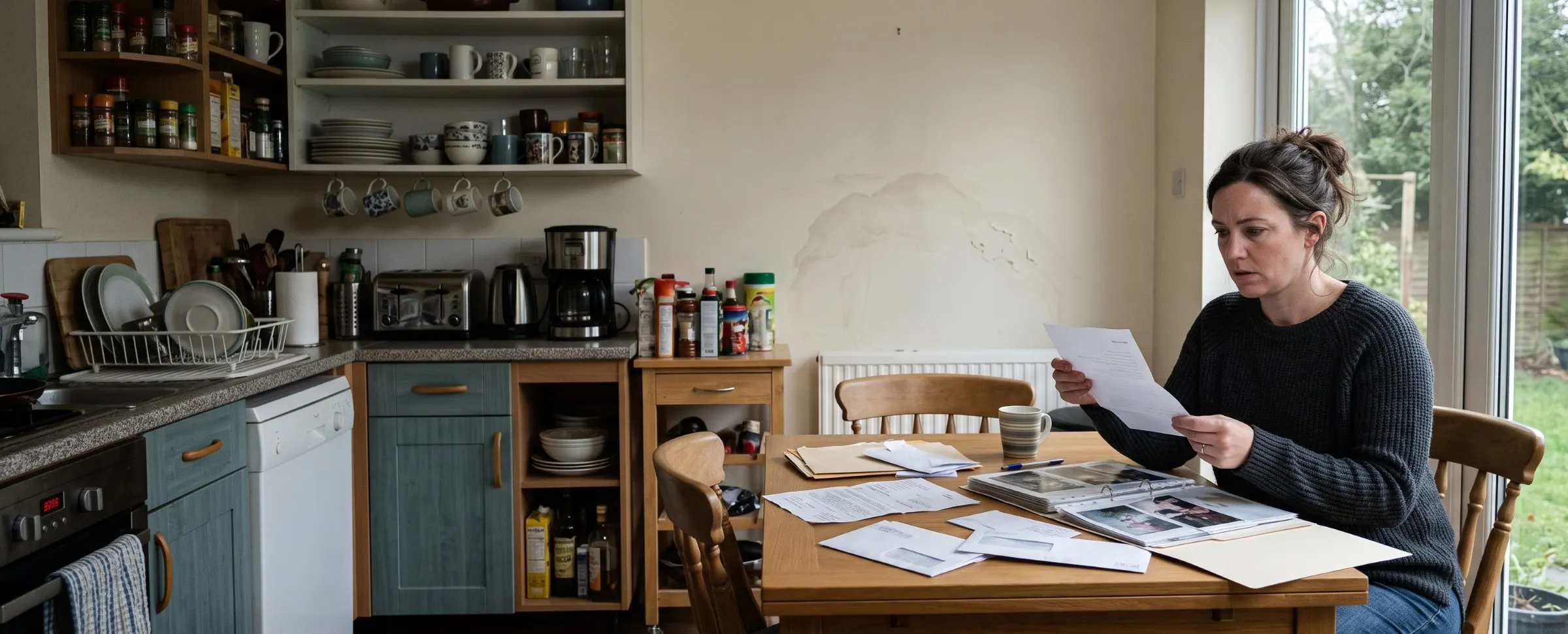

A water damage insurance claim denial is a written decision from your insurer stating that a loss isn't covered under your policy, and every state requires that decision to cite the specific provision or exclusion it relies on. The underlying water damage restoration itself gets classified by category and class under IICRC S500 for extraction and drying purposes, but that classification has no bearing on whether your policy covers the loss; coverage turns on a separate question, what caused the water and how quickly it happened. Identifying the exact provision named in your denial letter is the first real step toward challenging it, whether that ends in an internal appeal, a state complaint, or litigation.
Water damage claims run into disputes more often than many other property claims because the central question, whether the loss was sudden or gradual, isn't always obvious from a single inspection. A burst pipe leaves clear evidence of a sudden failure, while a slow leak inside a wall cavity can produce the same visible staining as water damage that started months earlier, so two adjusters looking at identical damage can reach opposite conclusions about what actually happened.
Key insights
- A denial has to cite a policy provision. Insurers are required to state a specific reason, and that citation is what you respond to in an appeal.
- Gradual damage is the most common reason. Standard homeowners policies cover sudden, accidental water events, not slow leaks or long-term seepage.
- You usually have 30 to 60 days to appeal. The exact window is set by your policy and state, and it's stated in the denial letter itself.
- A denial and a low settlement are different disputes. A denial argues nothing is owed; a low settlement argues the amount is wrong, and the two use different challenge processes.
- A state insurance department complaint is free. Every state has a department that investigates unfair claim handling at no cost to the policyholder.
- Most denials are resolved without a lawsuit. An internal appeal, a second written estimate, or a state complaint settles the majority of disputes before litigation becomes necessary.
Why insurers deny water damage claims
Insurance companies deny water damage claims when they determine the loss falls outside what the policy promises to pay, whether that's because the cause is excluded, the timeline doesn't fit the sudden-and-accidental standard, or the paperwork doesn't support the claimed scope. A denial isn't automatically final. Many are reversed once the policyholder corrects a factual error, supplies missing documentation, or points the insurer to language in its own policy that the adjuster overlooked.
 An adjuster weighs the policy's coverage terms against its exclusions before issuing a written decision, and that review can take weeks.
The determination usually comes from a claims adjuster weighing the policy's insuring agreement against its list of exclusions, sometimes with input from an independent engineer or industrial hygienist brought in for a disputed cause. That review runs on the insurer's own timeline, so a denial can arrive weeks after the initial inspection if the adjuster is waiting on that added opinion before deciding.
A reservation of rights is not a denial
A reservation of rights letter tells you the insurer is still investigating your claim and names the specific policy language it might later use to deny or limit it, but it isn't a final coverage decision. Many homeowners mistake this letter for a denial and either give up too early or miss the actual denial that follows later, since the reservation letter doesn't start an appeal clock on its own.
Keep cooperating with the investigation and documenting the loss as usual while a reservation of rights is active, since the insurer hasn't ruled against you yet. Watch specifically for a follow-up letter that states a coverage determination in plain terms, approved, denied, or partially denied, since that's the document that actually triggers your appeal deadline.
Common reasons claims get denied
Insurers most often deny water damage claims over eight recurring issues: gradual damage classification, a named policy exclusion, late reporting, failure to mitigate, insufficient documentation, pre-existing damage, a lapsed or vacant-property condition, and a misclassified category or class. Each requires a different kind of response, so identifying which one your denial letter cites narrows down the right next step considerably.
 Gradual damage, like a fitting that corrodes over months rather than bursting, is the single most common reason insurers cite when denying a claim.
Gradual damage classification
Standard homeowners insurance covers water damage that's sudden and accidental, such as a burst supply line, but not damage the insurer determines built up over weeks or months. A burst pipe that fails suddenly and a slow, corroded fitting that leaked for months get classified differently even though both are pipe failures.
A named policy exclusion
Standard policies exclude flooding, groundwater seepage, and sewage backup unless you purchased separate coverage or an endorsement for that specific cause. If the denial cites one of these exclusions, the question isn't whether the water damaged your home, it's whether that particular water source was ever insured in the first place.
Late reporting
Most policies require notifying the insurer within a reasonable time of discovering the loss, and a multi-week delay gives the insurer grounds to argue the damage worsened because of the wait rather than the original event. Some states set a specific reporting window by statute, often 60 days, while others rely on the policy's own "prompt notice" language without naming a fixed number.
Failure to mitigate
Policyholders have a duty to take reasonable steps to prevent further damage once a leak is discovered, including shutting off the water source and starting extraction. An insurer can deny or reduce a payout if it finds standing water was left unaddressed for days with no explanation.
Insufficient documentation
A claim built on a verbal description with no photos, moisture readings, or written estimate gives an adjuster little to approve. This is the most correctable reason on this list, since it's fixed by resubmitting with better records rather than disputing a coverage decision.
Pre-existing damage
If an inspection finds staining, rot, or moisture readings consistent with a loss that predates your current policy or a recent renewal, the insurer may argue the damage isn't new and therefore isn't a covered event under the current term. A prior home inspection report, a seller's disclosure statement, or a neighbor's account of a long-standing leak often becomes the exact evidence an insurer points to for this determination.
A lapsed or vacant-property condition
Many policies suspend or limit coverage if a home sits vacant beyond a set number of consecutive days, commonly 30 or 60, since an unoccupied home has no one to catch a leak early. A vacancy endorsement, purchased separately, can extend that window for a property between tenants or under renovation.
Misclassified category or class
An adjuster's assignment of water damage categories or water damage classes can shift what the insurer will pay for, since materials handling and drying scope both follow that classification. If your restoration company's on-site assessment contradicts the adjuster's remote or brief in-person determination, that gap is often the actual source of a reduced payout.
Full denial vs. partial denial
A full denial means the insurer says nothing on the claim is covered. A partial denial approves part of the loss while rejecting the rest under a separate provision, and it requires a different response than a full denial does.
Partial denials follow a handful of recurring patterns:
- The structure is approved, but contents or belongings are excluded, or the reverse.
- One cause on the same loss is covered while a second, unrelated cause found during the same inspection is denied.
- The water damage repairs are approved, but any resulting mold remediation is capped or denied under a separate, smaller sublimit.
Responding to a partial denial only requires disputing the rejected portion, not the entire claim. Accepting payment on the approved part generally doesn't waive your right to appeal the rest, but confirm this directly with your adjuster or in writing before signing any release, since some settlement documents include broader waiver language than the payout itself suggests.
Examination under oath
An examination under oath, or EUO, is a formal, recorded, sworn statement the insurer can require as a condition of coverage before it pays or denies a claim. Most homeowners policies include this right under the "Duties After Loss" or "Conditions" section rather than as a hidden clause, and refusing to sit for a properly requested EUO can itself become grounds for denial.
 An examination under oath is recorded and can be used later, which is why it's treated differently from a routine call with an adjuster.
An EUO is a different event from a routine early phone call with an adjuster. It's typically conducted by an attorney representing the insurer, your answers are transcribed and can be used against you later, and you're entitled to have your own attorney present. Answer only what's asked, stick to facts you're certain of, and correct the record afterward in writing if you realize you misspoke, rather than guessing your way through a question in the moment.
Insurers also have the right to send their own inspector, engineer, or industrial hygienist to examine the damage independently of your restoration company's assessment. Be present for that inspection when possible, or have a representative from your restoration company there in your place, and request a copy of the resulting report once it's complete. That report often becomes the basis for the insurer's coverage or valuation decision, including which water damage class it assigns to the loss, so knowing what it actually says matters more than assuming it matches what you were told on-site.
When a denial might be the right call
Not every denial is wrong, and a small number hold up because the loss genuinely falls outside what the policy promises. A denial is more likely to be accurate when the damage shows years of visible staining or deterioration with no reported event, when the cause is a named exclusion you knowingly went without coverage for, or when no documentation exists to support the claimed cause or timeline at all.
Honest signs point in that direction: discolored insulation and rotted framing consistent with years of exposure rather than a single incident, a leak you or a previous owner already knew about and never reported, or a cause, like groundwater seepage or a lapsed vacancy period, that the policy has always excluded. None of these signs make a challenge pointless on their own, since insurers do get classifications wrong even in cases that look bad at first glance, but they're worth weighing honestly before spending weeks on an appeal that a second opinion is unlikely to change.
What to do right now after a denial
Start by reading the denial letter for the exact provision cited, then decide whether the dispute is about coverage or about dollar amount before choosing your next step. Move quickly, since most internal appeal windows run 30 to 60 days from the date of the letter.
 The exact provision cited in the denial letter determines whether an appeal, an appraisal, or a state complaint is the right next step.
1. Read the denial letter line by line.
Identify the exact policy provision or exclusion the insurer cites, not just the general reason given over the phone.
2. Request a written explanation if you only got a verbal denial.
Ask your adjuster or the claims department to send the denial in writing, since a verbal denial has no citation you can respond to.
3. Pull your policy and find the cited section.
Read the exact language of the exclusion or condition the insurer referenced, since insurers sometimes cite the wrong provision or misapply it.
4. Gather documentation that addresses the stated reason.
Photos, receipts, moisture logs, and a professional opinion tied to the insurer's stated reason are the same four things a water damage restoration checklist tracks from the first day of a job, not just during a dispute.
5. Decide your next step before the deadline passes.
Choose between an internal appeal, an independent appraisal, or a state complaint based on whether the dispute is about coverage or about dollar amount, then submit before the deadline in your denial letter.
How to write and submit an appeal
An appeal is a written, point-by-point response to the specific reason the insurer gave, submitted to the same claims department that issued the denial. It works because it forces a second reviewer to weigh evidence the first decision may not have had.
 An appeal that addresses the insurer's cited reason directly, rather than restating the original claim, is what gives a second reviewer something new to weigh.
Address the cited provision directly rather than restating the original claim in different words. If the denial says the damage was gradual, your appeal needs to show why the timeline supports a sudden event, not simply repeat that the pipe leaked. Include anything new: a plumber's written opinion on cause and timing, updated photos, moisture logs from your restoration company, or a corrected fact the adjuster had wrong. Reference the exact policy section by number, since this signals you've read the language the insurer is relying on rather than arguing in general terms.
Keep a copy of everything you send and note the date. This becomes part of your record if the appeal itself is denied and you move to a state complaint or a supplemental review. If you haven't already gone through the standard steps of filing a water damage insurance claim, confirm you completed each one correctly, since a gap in the original filing sometimes turns out to be the real cause of the denial.
A typical successful appeal looks something like this: an $8,000 claim tied to a burst pipe gets denied as gradual damage, the homeowner submits an appeal with a dated plumber's invoice showing the fitting failed suddenly rather than corroding over months, and the insurer reverses course but upholds a smaller $1,500 portion tied to pre-existing flooring wear the plumber's report didn't address. The appeal doesn't have to win everything to be worth filing, since even a partial reversal on a well-documented point is real money back.
Getting a second opinion
A written estimate from a second, independently certified restoration company is often the fastest way to challenge a denial or reduced payout tied to scope or classification. This works especially well when the insurer's adjuster made a brief or remote assessment that a hands-on inspection contradicts.
Ask the second company for a full written scope, including category and class determination, moisture readings, and an itemized cost breakdown, not just a verbal opinion. This document carries weight with an adjuster or appraiser precisely because it's independent of both your original contractor and the insurer's own inspector. When choosing a water damage restoration company for this second opinion, confirm IICRC certification and ask whether they've handled insurance disputes before, since that experience shapes how usable their estimate is in an appeal.
Compare the two estimates against a realistic benchmark before you submit anything. National water damage restoration cost ranges won't settle a dispute on their own, but they help you spot an estimate that's obviously out of line in either direction before you rely on it.
The appraisal clause
The appraisal clause is a provision in most homeowners policies that resolves disagreements over the dollar amount of a covered loss, separate from whether the loss is covered at all. It applies when both sides agree the water damage is covered but disagree on what it costs to fix.
Each side selects its own appraiser, and the two appraisers select a neutral umpire if they can't agree on a number themselves. The umpire's decision, or the point where the two appraisers agree, becomes binding on the dollar amount. This process only settles valuation, so it isn't the right tool for a straight coverage denial where the insurer says nothing is owed at all; that dispute goes through the appeal and complaint process instead. A public adjuster can represent you through an appraisal, and the questions to ask a water damage restoration company before hiring one for this role include how many appraisals they've handled and what they charge.
Filing a state insurance complaint
Every state has an insurance department that investigates complaints about unfair claim handling, including wrongful denials, at no cost to the policyholder. This is worth doing when your internal appeal fails or the insurer isn't responding within a reasonable time.
You'll typically need your policy number, the denial letter, your appeal correspondence, and a written timeline of events. According to the NAIC's guidance on filing a complaint, most state departments accept complaints online, by mail, or by phone, and they can investigate delays, denials, and unfair settlement practices as part of their regulatory authority over insurers licensed in that state. A complaint doesn't guarantee a reversal, but it does put your file in front of a regulator, and insurers generally respond to these inquiries more thoroughly than they respond to a second phone call from the policyholder alone.
When a denial may be bad faith
Bad faith describes an insurer's unreasonable delay, denial, or investigation of a claim it should have paid under the policy's own terms. It's a distinct legal concept from an ordinary, defensible coverage dispute, and not every denial rises to that level.
Signs worth flagging to an attorney include repeated requests for the same documentation you already sent, a denial that cites a provision unrelated to your actual loss, or an inspection so brief it couldn't have supported the stated conclusion. A denial that leaves water damage unaddressed for weeks can also let the loss escalate into structural water damage, which raises both the dollar amount at stake and the argument that the insurer's delay caused avoidable harm.
State regulators track unfair claims-handling patterns as part of their oversight role, and NAIC materials on homeowners insurance outline the general standards insurers are expected to meet when investigating and settling a claim. Bad faith claims are handled separately from a standard appeal or state complaint, typically through an attorney, since proving unreasonable conduct requires a different kind of evidence than proving coverage.
Suing your insurer
A lawsuit against your insurer is generally the last step, used after an internal appeal and a state complaint haven't resolved the dispute. Most homeowners policies set their own suit-limitation deadline in a clause titled "Suit Against Us" or "Legal Action Against Us," and that contractual deadline is often shorter than your state's general statute of limitations for a breach of contract.
 Most homeowners only reach this step after an internal appeal and a state complaint haven't resolved the dispute.
The clock typically starts on the date of loss rather than the date of denial, though some states pause, or toll, that period while a proof of loss is under active review; Illinois does this under 215 ILCS 5/143.1, which stops the clock from the date you file a proof of loss until the insurer issues a decision. Texas law sets a two-year floor for these clauses under Civil Practice and Remedies Code Section 16.070, and Florida shortened its own deadline from five years to two for policies issued or renewed after March 2023. Exact figures vary by policy issue date and by state, so confirm the actual clause in your own declarations page before relying on any single number.
| State | Typical deadline to sue | What starts the clock |
|---|---|---|
| California | About 1 year | Date of loss |
| Texas | 2 years | Date of loss, per the policy's suit-against-us clause |
| Florida | 2 years on policies issued or renewed after March 2023; 5 years on older policies | Date of loss |
| Illinois | 1 to 2 years, paused while a proof of loss is under review | Date of loss, with the review period excluded |
| Pennsylvania | Often 1 year | Date of loss, per the policy's suit-against-us clause |
| All other states | Commonly 1 to 2 years | Varies; check your policy's suit-against-us clause and your state's minimum |
An attorney experienced in insurance disputes can evaluate whether your case is worth pursuing based on the dollar amount at stake, the strength of your documentation, and whether the insurer's conduct looks like an ordinary dispute or something closer to bad faith. Litigation takes months at minimum and carries its own costs, so most homeowners only reach this point after the earlier, faster, and free options haven't worked.
Does disputing affect your renewal
Filing an appeal or a state insurance department complaint is a protected right and doesn't, by itself, affect your policy's renewal. A claim itself, whether it's paid, partially paid, or denied, can still factor into a future renewal or premium decision, since insurers price and renew based on claims history rather than on whether you disputed an outcome.
A denied claim can still appear on a CLUE report as a claim inquiry even with no payout attached, and insurers weigh claim frequency as much as claim size when they set renewal terms. Filing a state complaint specifically, however, is exactly the kind of activity unfair claims practices laws exist to protect, and an insurer retaliating against a policyholder for exercising that right is itself grounds for a further complaint. A legitimately owed claim is worth pursuing regardless of renewal worry, since the alternative, letting a valid denial stand to avoid a hypothetical rate increase, gives up money you're owed to avoid a risk that isn't guaranteed to materialize.
Denied NFIP flood claims
A denied National Flood Insurance Program claim follows a separate appeal process from a standard homeowners policy, since flooding is covered under a federal program rather than your private insurer's own terms. NFIP policyholders can request the insurer's Standard Flood Insurance Policy file, submit a written appeal directly to the program, or request an appraisal for a valuation-only dispute, similar to the private-policy process but run through federal rather than state channels.
Keep the proof-of-loss deadline in mind throughout this process, since FEMA's National Flood Insurance Program sets a strict window for submitting that document, and missing it can complicate an appeal even when the underlying denial was questionable. That deadline is typically 60 days from the date of loss, and insurers rarely grant extensions without a documented reason such as a federal disaster declaration covering the area.
Preventing another denial
Documentation habits built now make the next claim, if there ever is one, far less likely to run into the same dispute. Photograph and log any water event immediately, keep receipts and written estimates for every repair, and report a new loss the same day you find it rather than waiting to see if it resolves on its own.
 Confirming the right endorsements are in place, and building a documentation habit, catches most of the gaps a denial would otherwise expose later.
Reviewing your policy before a loss happens catches gaps a denial would otherwise expose after the fact. Confirm whether sewer backup, water backup, and flood coverage are included or need to be added as separate endorsements, and ask your agent to walk through the vacancy and maintenance clauses specifically, since these are two of the conditions homeowners overlook most often until a denial cites them.
Frequently asked questions
Can you appeal a denied water damage claim?
Yes. Most insurers have a formal internal appeal process, and you can also request an independent appraisal, file a complaint with your state insurance department, or hire a public adjuster or attorney if the internal appeal fails.
How long do you have to appeal a denied water damage claim?
Many insurers give 30 to 60 days from the date of the denial letter to request an internal appeal, though the exact window depends on your policy and state. Check the denial letter itself, since it usually states the deadline directly.
What percentage of denied insurance claims are overturned on appeal?
There's no single national figure, since insurers don't publish appeal outcome rates and results vary by carrier, state, and cause of loss. A well-documented appeal that corrects a factual or coverage error has a meaningfully better chance than one that simply restates the original claim.
Do I need a lawyer to appeal a water damage claim denial?
No, not for a standard internal appeal or a state insurance department complaint. An attorney becomes worth considering if the insurer denies the appeal too, the payout gap is large, or you suspect bad faith handling.
What is a public adjuster and do I need one?
A public adjuster is a licensed professional who represents your interests, not the insurer's, in valuing and negotiating a claim. They typically charge 10% to 20% of the settlement, a fee some states cap by law after a declared disaster, so they're most worth the cost on a large or contested loss, not a small, clearly covered one.
Can an insurance company deny a claim after already approving it?
Yes, an insurer can reverse an earlier approval if it later finds evidence contradicting the original decision, such as a policy exclusion it missed or new information about the cause of loss. That reversal follows the same appeal and complaint options as a first-time denial.
What is the difference between a claim denial and a low settlement offer?
A denial means the insurer says nothing is owed under the policy. A low settlement means the insurer agrees the loss is covered but disputes the dollar amount, which is a valuation dispute handled through the appraisal clause rather than a coverage appeal.
Can I switch restoration companies if my claim was denied over the scope of work?
Yes. If the denial or a reduced payout stems from a dispute over what the job actually required, a second written estimate from a different certified company is often the fastest way to challenge the insurer's scope determination.
What happens if my water damage claim denial involves mold?
Most homeowners policies cap mold coverage at a set dollar sublimit regardless of the underlying water claim's outcome, so a mold-related denial or partial payout often needs to be evaluated against that separate limit rather than the general water damage coverage. For renters, that same mold dispute usually runs through the landlord's policy rather than a renter's own HO-4 coverage, a distinction that plays out differently for water damage in a rental.
Sam Hickerson is the founder of RestoreAdvisor and writes consumer guides on mold remediation, water damage restoration, inspection, testing, and home recovery. His work focuses on helping homeowners understand costs, risks, and when to call a professional. He draws on guidance from the EPA, CDC, IICRC, and other authoritative sources to make complex home issues easier to navigate.