
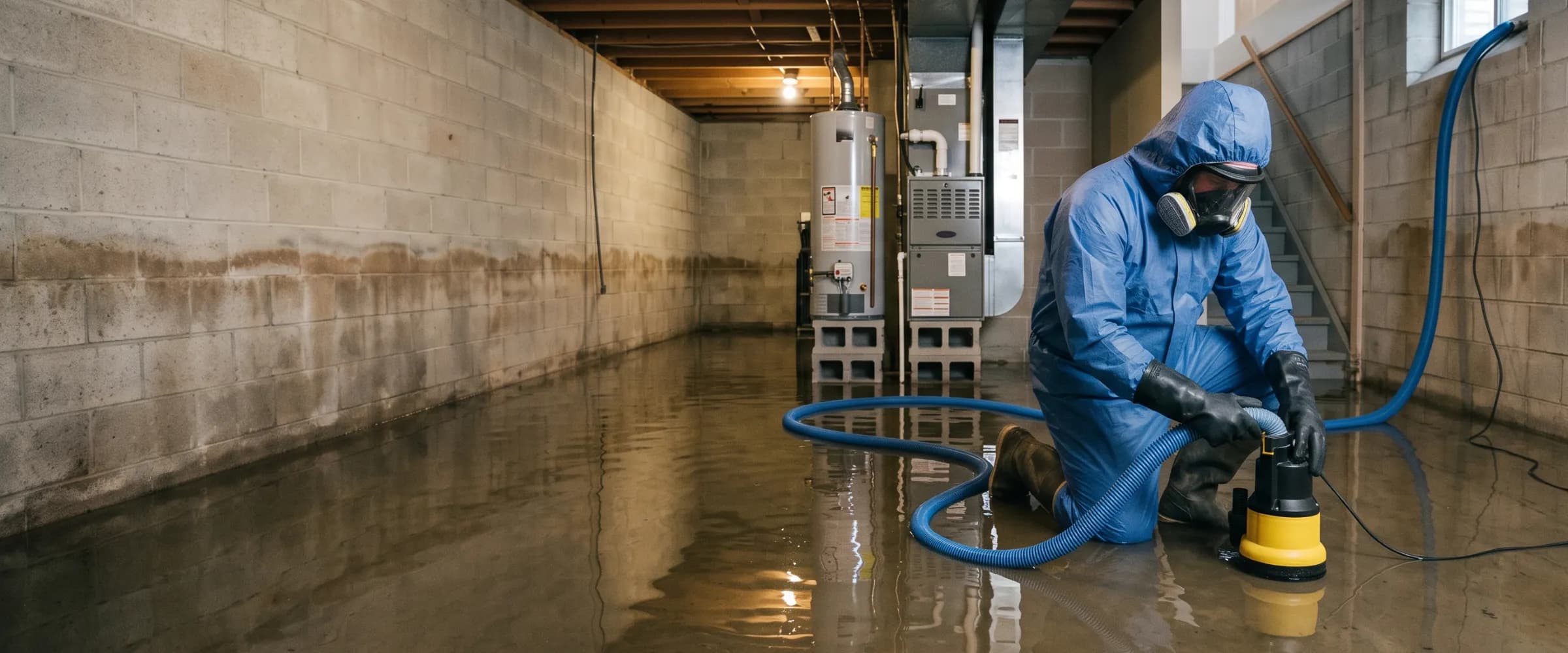

A backed-up drain or an overflowing toilet is stressful enough on its own, and finding out the water is sewage rather than clean water can make it feel like more than you're equipped to handle. It's a serious situation, but a manageable one, and the response is more procedural than most people expect once you know the order to follow.
Sewage backup cleanup deals with wastewater that has reentered a home through a drain, toilet, or floor drain instead of draining away as designed. Under IICRC S500, that water defaults to Category 3, the "black water" classification that governs how contaminated materials must be handled, dried, or removed rather than simply cleaned in place.
The order those calls happen in, and whether homeowners insurance actually pays for any of this, are the two things that catch people off guard most after a sewage backup. Sewage is one of several distinct causes under the broader umbrella of water damage restoration, alongside burst pipes, roof leaks, and storms, each with its own classification and response despite sharing similar extraction and drying phases.
Key insights
- Category 3 by default. IICRC S500 classifies sewage backup water as Category 3, the black water tier that requires the most protective handling of any water damage cause.
- Typical cost. Professional sewage backup cleanup runs $2,000 to $10,000 for a contained job, with severe multi-room events reaching $50,000 or more.
- Standard insurance usually excludes it. A sewer or drain backup typically isn't covered under a standard homeowners policy unless a water backup endorsement was purchased separately.
- Most backups start with a blockage, not a leak. Tree roots, grease buildup, and aging pipe joints cause the majority of residential sewer backups.
- Several slow drains at once is the earliest warning sign. A single slow drain is usually a local clog. Multiple fixtures draining slowly at the same time usually points to a main line problem.
- Sewer overflows are more common than most homeowners assume. The EPA estimates 23,000 to 75,000 sanitary sewer overflows happen in the U.S. each year, not counting backups that stay contained inside individual homes.
What to do right now
Keep people and pets out of the affected area, stop using water fixtures throughout the house, and call a plumber and a certified restoration company right away. Sewage carries real health risk from direct contact and airborne exposure, so acting in that order matters more here than with a clean-water spill.
 Every fixture in the house, not just the one backing up, shares the same drain line, so running any faucet adds volume the system can't clear.
1. Keep people and pets out of the affected area
Close the door to the room or basement where sewage is present. Children and pets are more vulnerable to the bacteria and pathogens in sewage than adults, and neither reliably avoids touching or licking a contaminated surface on their own.
2. Stop using water throughout the house
Hold off on flushing toilets, running the dishwasher, doing laundry, or using any faucet until the blockage clears. Every gallon you add competes for space in a system that's already failing to drain, and it often pushes more sewage toward the lowest point in the house.
3. Cut power to the area if it's at risk
If standing water is anywhere near outlets, a water heater, or a breaker panel, shut off power to that circuit or the main panel from a dry, elevated location. Gloves and boots protect against contamination but don't insulate against a live circuit, so treat any doubt as a reason to shut the power off rather than test it.
4. Photograph the damage before you touch anything
Wide shots of the room plus close-ups of the waterline on walls, cabinets, and flooring give you a documented record before extraction starts, which matters for both your insurance claim and the contractor's scope of work.
5. Call a plumber and a certified restoration company
A plumber addresses the blockage causing the backup. A restoration company handles extraction, disinfection, and drying. Both calls typically happen within the same hour, not sequentially.
If sewage is actively flowing rather than pooling from a single overflow, treat it as a true emergency and follow the faster emergency water damage restoration sequence, which prioritizes safety triage over the general order above. Once the active flow stops, the steps here pick back up where that sequence leaves off.
What not to do
Don't run a household vacuum over standing sewage, use fans before extraction is complete, or keep flushing fixtures to see if a blockage clears. Each of those spreads contamination rather than solving it, and all three are instincts that make sense for a spill of clean water but work against you once sewage is involved.
 Sewage residue clings to cardboard even after the standing water recedes, so surface contact alone can transmit bacteria without any visible wetness.
Don't run a household vacuum over standing sewage
A standard wet/dry vacuum isn't built for contaminated water and creates both an electrocution risk and a way to aerosolize pathogens into the air you're breathing.
Don't use fans to dry the area before extraction is complete
Airflow across standing or recently removed sewage spreads contaminated droplets well beyond the original spill area, including into rooms that were never affected.
Don't keep flushing toilets or running drains to see if it clears
Testing a backed-up system by running more water through it almost always makes the backup worse rather than confirming it's resolved.
Don't touch sewage-contaminated items with bare skin
Cuts, scrapes, and even intact skin exposed to raw sewage carry infection risk. Gloves and, ideally, boots are the minimum barrier before touching anything in the affected area.
Don't wait on the insurance company before starting mitigation
Photograph the damage first, then begin extraction. Delaying cleanup to wait for an adjuster typically increases both the health risk and the final repair cost, and most policies expect reasonable, prompt mitigation regardless of claim status.
Even a small, contained spill still needs full extraction before any drying begins. The full ordered sequence, including the documentation and drying steps that come after the immediate response, is laid out in the water damage restoration checklist.
Is it actually sewage, or is my basement just wet?
Not all basement water is sewage. Groundwater seepage, storm runoff, and sump pump failure can all put water on a basement floor without any wastewater contamination, and telling the two apart determines whether the fix is a plumber and Category 3 precautions or just a dehumidifier.
 Clean groundwater seepage typically runs clear, so cloudy or discolored standing water is a strong early signal that the source is contaminated rather than a plumbing or foundation leak.
The distinction matters most for how you protect yourself while investigating, not just for the eventual fix. Treat unidentified basement water as contaminated until you've confirmed otherwise, since misjudging seepage for sewage costs very little, but misjudging sewage for seepage means skipping protective gear you actually need.
| Signal | Sewage backup | Groundwater seepage |
|---|---|---|
| Odor | Strong sewer or rotten-egg smell | Musty, earthy, or no smell at all |
| Water color | Gray to brown, sometimes with visible solids | Clear to slightly cloudy |
| Where it enters | Comes up through a drain, toilet, or floor drain | Seeps in through foundation cracks, walls, or window wells |
| Timing | Often follows flushing a toilet or running a fixture elsewhere in the house | Usually follows heavy rain or snowmelt |
A single signal rarely tells the whole story. A strong sewer odor with otherwise clear water, or foul-smelling water with no drain backup in sight, is reason enough to treat the event as sewage until a professional confirms otherwise.
The classification consequence is worth knowing too. A sump pump failure typically starts at Category 1 or 2 since it's groundwater rather than wastewater, while a genuine sewage backup starts at Category 3 regardless of how it looks, and that difference is what determines PPE, disposal, and cost from the first visit on.
Who to call and in what order
Start with a plumber if the backup is isolated to your own fixtures, since clearing the blockage stops new sewage from entering while cleanup gets underway. If multiple homes on your street report the same problem at the same time, the blockage is more likely in the municipal main, and your city's public works or sewer utility department is who to call instead of a plumber.
 A plumber stops the source, a restoration company handles extraction and drying, and the insurer opens a claim, three separate calls that typically happen within the same hour rather than one after another.
Locating your home's sewer cleanout before the plumber arrives speeds up the job. It's typically a capped pipe near the foundation, in the basement floor, or just outside the house, and having it clear and accessible saves the plumber from searching for it while sewage continues to sit.
Once the source is stopped or identified, call a restoration company that handles Category 3 water specifically rather than a general cleaning service. Confirm the technician holds at least a WRT credential before work begins, a detail choosing the best water damage restoration company walks through in full, including how to verify it.
Call your insurer next, ideally the same day, even if you're unsure whether the backup is covered. Getting a claim number started early doesn't commit you to filing if the endorsement turns out not to apply, and it protects your timeline if it does.
Ask whether the technician carries certification beyond the entry-level WRT, since Category 3 contamination control benefits from the additional training that credentials like AMRT provide, explained in water damage restoration certifications. A company that can name its technicians' specific credentials on the phone is a good early signal.
Why a sewage backup is different from other water damage
A sewage backup is automatically classified as Category 3 water under IICRC S500, the standard's most contaminated tier, because it originates from a source carrying bacteria, viruses, and other pathogens rather than from a supply line or rainwater. That single classification decision changes nearly everything else about the job: which materials can be dried in place, what protective equipment a technician wears, and how the space gets sanitized before anyone reoccupies it.
 Category 3 classification is what raises the PPE requirement from gloves alone to fully sealed coveralls, since Category 1 or 2 water doesn't carry the same contamination risk.
Volume has almost nothing to do with it. A few gallons from an overflowed toilet and a foot of standing water in a finished basement both start at the same classification if sewage caused them, which surprises homeowners who assume a small spill means a small response.
A classification system exists specifically to separate contamination level from severity, and water damage categories puts Category 3 at the top of that scale regardless of how much water is actually involved. Category 1 and 2 both describe water that started clean or lightly contaminated, while Category 3 is reserved for water that was never clean to begin with.
Class, the measurement of how much material is wet and how hard it will be to dry, is a separate question entirely and doesn't move the category one way or the other. A technician still assesses both on the first visit, but the category is what determines the PPE and disposal decisions from that point forward.
The contrast with a more familiar cause makes the point clearer. A burst pipe starts as Category 1 clean water and can only become more contaminated the longer it sits untreated. Sewage skips that progression entirely and starts at the classification a clean-water event might take days to reach, which is one reason professional response time matters even more here than with most other causes.
Health risks of sewage exposure
Contact with raw sewage can cause gastrointestinal illness, skin infections, and respiratory irritation, not just an unpleasant smell. Exposure happens by swallowing contaminated water, breathing in aerosolized droplets, or contact through broken skin, with each route carrying a different set of symptoms.
 Sewage carries bacteria and viruses on skin contact alone, so thorough handwashing with soap after any exposure matters even when gloves were worn.
Gastrointestinal illness is the most common outcome, with cramping, diarrhea, nausea, and vomiting typically starting within a day or two of exposure. The EPA lists gastroenteritis, infectious hepatitis, and in severe cases cholera and dysentery among the illnesses linked to raw sewage contact, a range that reflects how much pathogen load and individual health can vary from one exposure to the next.
Skin contact can cause irritation, rashes, or infection, particularly through a cut or scrape. Inhaling aerosolized droplets, kicked up by vacuuming or a forceful spray, adds coughing or respiratory irritation on top of the gastrointestinal risk.
See a doctor if diarrhea, vomiting, or fever develops within a few days of exposure, or right away if sewage-contaminated water was swallowed, splashed in the eyes, or came into contact with an open wound. The EPA notes that children, older adults, and anyone with a weakened immune system face a higher risk of illness from sewage exposure, and that group should be seen by a doctor sooner rather than later.
What causes a sewage backup
Most residential sewage backups trace back to one of six causes, and the two most common by far are a blockage inside your own lateral line and one inside the municipal main. A plumber can usually tell which category a backup falls into within the first few minutes of an inspection, before any camera work confirms the exact spot.
 Tree root intrusion and municipal main blockages account for most residential backups, while septic failure and missing backwater valves are less common but costlier to miss.
Tree roots, grease buildup, and aging pipe joints account for the majority of blockages plumbers are called out for, while heavy rain overwhelming a combined sewer system explains most events that hit multiple homes on the same street at once. A single clogged lateral and an overwhelmed municipal main produce nearly identical symptoms inside the house, which is why the source often isn't obvious until a plumber traces it.
| Cause | What's happening | Warning sign |
|---|---|---|
| Tree root intrusion | Roots grow through small cracks or loose joints in aging pipe and gradually restrict flow | Slow drains that worsen over months, especially near mature trees |
| Grease, wipes, and clogs | Cooking grease hardens inside pipes and non-flushable items catch on it, narrowing the line | A sudden, complete stoppage after normal use |
| Aging or collapsed pipe | Clay and cast iron pipe common before the 1970s corrodes, cracks, or shifts out of alignment | Recurring backups the same plumber keeps clearing |
| Municipal sewer surcharge | Heavy rain overwhelms a combined sewer system faster than it can drain | Multiple homes on the same street backing up during or after a storm |
| Septic tank failure | An overloaded, full, or damaged septic tank can no longer accept wastewater | Slow drains house-wide plus wet or foul-smelling ground near the tank |
| Missing or failed backwater valve | Without a working one-way valve, city sewer pressure pushes wastewater back into the lowest fixture in the house | Backup consistently starts at the same low-point drain |
The EPA estimates 23,000 to 75,000 sanitary sewer overflows occur nationwide each year, separate from the backups that stay contained inside individual homes. That figure reflects how often aging infrastructure and heavy rainfall combine to push wastewater somewhere it shouldn't go, and it's a large enough number that a single backup rarely traces back to bad luck alone.
Early warning signs before a full backup
A full backup rarely happens without warning. Several slow or gurgling drains at once, rather than a single sluggish sink, is the clearest early sign that the problem sits in the main line rather than one fixture.
 A leaking lateral line effectively fertilizes the soil above it, so a visibly greener path tracking toward the street can be an early sign of a failing pipe well before a backup reaches the house.
Several drains draining slowly at once
A single slow drain is usually local. When a toilet gurgles while the washing machine drains, or multiple fixtures slow down together, the blockage sits downstream of all of them.
Gurgling sounds from drains or toilets
Trapped air escaping past a blockage makes a gurgling or bubbling sound, often right after you run water somewhere else in the house.
A sewer odor near floor drains or the lowest bathroom
Sewer gas escaping past a dry trap or a developing blockage often shows up as smell before it shows up as standing water.
Water backing up into a shower or floor drain when other fixtures run
This is one of the most reliable signs of a main line problem: running the washing machine or an upstairs toilet pushes water up through the lowest drain in the house instead of down through the system.
Unusually lush or fast-growing grass along the sewer line's path
A leaking lateral line effectively fertilizes the ground above it, and a visibly greener strip of yard tracking from the house toward the street can mean the pipe is already failing underground.
These signs are specific to a developing sewer problem, distinct from the staining, warping, and musty odors that count as general signs of water damage elsewhere in a home. A house can show both at once, a slow drain from tree roots and a separate roof stain from an unrelated leak, so treating each set of signs on its own merits matters more than assuming one explains the other.
Where sewage damage spreads and what it ruins
Sewage-contaminated water travels the same physical paths as any water intrusion, down through flooring, up into drywall through capillary action, and into any porous material it touches, but the contamination changes what happens once it's there. Materials that could be dried and kept after a clean-water event are frequently removed instead after a sewage event, because drying doesn't remove pathogens sitting inside a porous structure.
 Contaminated flooring gets sealed and carried out through a controlled path to keep clean areas of the home from being recontaminated during removal.
Carpet and padding that touched Category 3 water are typically discarded rather than cleaned, regardless of how the carpet itself looks afterward. Drywall usually gets a flood cut of at least twelve inches above the waterline instead of a spot patch, and subfloor materials like particleboard are rarely salvageable once soaked.
Removed materials get double-bagged, sealed, and carried out through a controlled path rather than through the rest of the house, to avoid recontaminating clean areas along the way. Most municipalities don't allow sewage-contaminated debris in regular curbside trash, so a restoration company typically arranges disposal through a licensed hauler instead of leaving bagged material at the curb.
How much does sewage backup cleanup cost
Professional sewage backup cleanup typically costs $2,000 to $10,000, with a severe event involving standing black water, extensive material removal, or structural repairs reaching $50,000 or more. Category 3 water carries a cost premium over clean-water restoration at every stage, from the protective equipment technicians wear to the extra materials that must be removed rather than dried.
 A wall reading above 17 percent typically signals material saturated enough to require removal rather than in-place drying, which is why the assessed moisture level, not the room's square footage, drives most of a job's cost.
Where a job lands in that range comes down mostly to two variables: how much of the affected area was standing water versus a quick overflow, and how much material has to be removed rather than dried. A contained bathroom that's caught within the hour and a septic failure that sits for days can differ by tens of thousands of dollars even in similarly sized homes.
| Scenario | Typical cost |
|---|---|
| Single bathroom, caught early, hard flooring only | $500–$2,000 |
| Finished room, carpet or drywall affected | $3,000–$7,000 |
| Basement backup, standing water 24+ hours | $7,000–$15,000 |
| Main line backup affecting multiple rooms or levels | $15,000–$30,000 |
| Septic failure or extensive structural damage | $20,000–$50,000+ |
On a per-square-foot basis, sewage cleanup lands at the high end of the water damage restoration cost scale, since Category 3 mitigation typically runs $7 to $7.50 or more per square foot even before any material replacement is added. A contractor quoting a flat per-room rate regardless of contamination level is worth a second opinion.
Square footage alone doesn't determine price the way it does for a clean-water job, since material removal and disposal costs scale with what gets discarded rather than just the area affected. Two rooms of identical size can land at very different totals depending on whether the flooring underneath is tile that survives or carpet and padding that don't.
Material type sets most of that difference. The full water damage restoration cost per square foot figures by material and category apply directly here, since sewage sets the category ceiling from the start regardless of which material absorbed it.
Does insurance cover a sewage backup
Standard homeowners insurance typically excludes sewer and drain backup damage entirely, treating it the same way it treats flood water, as a separate risk that requires its own endorsement rather than automatic coverage under the base policy. Without that endorsement, a homeowner facing a $5,000 sewage cleanup bill is paying out of pocket even though the same policy would cover a burst pipe in the next room.
The endorsement itself is inexpensive relative to the risk it covers, typically $50 to $250 a year for $5,000 to $50,000 in backup-specific coverage, and it's worth confirming exists before a backup happens rather than after. If a backup originates from a failure in your own lateral line rather than a municipal main, having the endorsement is usually the only path to coverage at all.
Deductibles, actual cash value versus replacement cost, and the claim-filing sequence work the same way here as in any other case where homeowners insurance covers water damage, once the backup endorsement establishes coverage in the first place. Documentation and what to do about an underpaid claim follow that same general process rather than a sewage-specific one, so there's no separate procedure to learn.
Is DIY sewage cleanup ever safe
A very small, contained event, a single overflow of clean supply water rather than actual sewage, caught and dried within minutes, is about the only scenario where handling it yourself is reasonable. Once wastewater has actually entered the home from a backed-up drain or sewer line, professional cleanup is the safer choice, particularly with children, older adults, or anyone immunocompromised in the household.
 General household gloves and a dust mask fall well short of this tier, which is the minimum gear a homeowner would need to safely handle Category 3 water without professional equipment.
General DIY water damage cleanup steps for extraction, drying, and disinfection assume Category 1 or 2 water. Category 3 raises the bar on every one of them: gloves and eye protection alone aren't sufficient PPE, disinfection calls for an EPA-registered product rather than a general household cleaner, and porous materials a clean-water job might dry and keep get discarded instead.
The equipment gap is usually where a well-intentioned DIY attempt goes wrong. A dust mask stops drywall particles but does nothing against airborne pathogens, and household dish gloves tear far more easily than the nitrile gloves a technician wears.
Protective equipment is where that higher bar shows up first in writing. A federal standard, OSHA's Bloodborne Pathogens Standard, sets the minimum PPE tier for handling contaminated waste in a workplace, gloves, eye protection, and in some cases a respirator, and it's a reasonable floor for a homeowner handling raw sewage without professional equipment even though the standard itself is written for employers.
Rubber boots and a rubber apron or coveralls belong on that list too, since bare clothing offers no barrier against contact with contaminated water and fabric that touches sewage typically has to be discarded rather than laundered. Anyone with a cut, scrape, or open wound should stay out of the area entirely rather than rely on gloves alone.
Disinfection matters as much as extraction. The CDC's cleaning safely after a disaster recommendations call for a bleach solution of one cup per gallon of water on hard, non-porous surfaces, applied only with windows open and gloves, goggles, and an N-95 respirator worn throughout.
How to prevent a sewage backup
A backwater valve is the single most effective prevention step for a home with a history of backups, since it's a one-way valve that lets wastewater flow out but physically blocks it from flowing back in when the municipal system surcharges. Beyond that one device, prevention mostly comes down to keeping the lateral line clear and recognizing the early warning signs before they become a full event.
 A one-way flap inside the valve lets wastewater flow out but closes under backpressure to block it from returning, the single most effective device for preventing a repeat backup in a home with a history of them.
Regular sewer line camera inspections every few years catch tree root intrusion and pipe deterioration before either causes a full blockage, and keeping grease, wipes, and other non-flushable items out of the drain removes the most common preventable cause outright. Broader water damage prevention steps, including seasonal plumbing maintenance and shutoff valve basics, apply on top of the sewage-specific ones here.
Frequently asked questions
Does a sewage backup ever get reclassified as a lower category?
No. Unlike clean water that can degrade into Category 2 or 3 the longer it sits untreated, a sewage backup starts at Category 3 and stays there regardless of how quickly it's cleaned up, since the contamination source itself doesn't change. Treatment can remove the water and disinfect the space, but it doesn't retroactively lower the classification the job was assessed and billed under.
How long does sewage backup cleanup take?
Three days to two weeks for most residential jobs, depending on how much material has to be removed rather than dried. A contained bathroom overflow caught quickly can wrap up in a few days, while a basement backup with drywall and flooring removal often runs closer to two weeks once repairs are included.
Can I add the water backup endorsement after a backup has already happened, to cover the current claim?
No. The endorsement has to be in place before the loss occurs, the same way auto insurance purchased after a crash won't cover that crash. If you don't already carry it, this cleanup is out of pocket, but adding the endorsement now protects you against the next one.
How do I know if my homeowners policy already includes a water backup endorsement?
Check your policy's declarations page for a line item called water backup, sewer backup, or sump discharge coverage, or call your agent and ask by name rather than assuming it's bundled into base coverage. If it's not listed as a named endorsement with its own coverage limit, you don't have it.
Is it safe to stay in the house during a sewage backup?
Usually, yes, as long as the affected area can be closed off and no one enters it. Sewage contamination is a localized hazard rather than a whole-house one, provided the door to that room or basement stays shut and ventilation doesn't pull air from the contaminated space into the rest of the home.
Who is responsible for a sewage backup, me or the city?
It depends on where the blockage sits. Homeowners are generally responsible for the lateral line running from the house to the municipal connection, including root intrusion and clogs on that stretch. A blockage in the public main, usually signaled by multiple homes backing up at once, is the city's responsibility.
Who is responsible for a sewage backup in a rental property, me or my landlord?
Your landlord, in most cases, since sewer line maintenance and repair generally falls under a landlord's habitability obligations, though the exact rules vary by state and lease terms. Report the backup in writing right away, document the damage before cleanup begins, and confirm who's arranging the restoration company rather than assuming it's on you to hire one.
Do I need to move out during a sewage backup cleanup?
Usually not, unless the affected area includes your only bathroom or a bedroom, or the household includes someone at higher health risk. If relocation is needed, ask your insurer about additional living expenses coverage, which sometimes accompanies a water backup endorsement but isn't automatically bundled with it.
Will a sewage backup claim raise my homeowners insurance rates?
It can, the same way any water damage claim can affect renewal pricing, particularly if it's a second claim within a few years. Insurers weigh this against the endorsement's low annual cost when deciding whether it's worth carrying, and most homeowners in an older neighborhood with clay or cast iron sewer laterals find the coverage worthwhile regardless.
What should I ask before hiring a sewage cleanup company?
Confirm the technician holds current IICRC certification, ask whether the company handles Category 3 water specifically rather than only clean-water jobs, and get the scope of work and disposal plan in writing before work begins. The full list of questions to ask a water damage restoration company applies here, with extra weight on the certification and disposal questions given the contamination involved.
Sam Hickerson is the founder of RestoreAdvisor and writes consumer guides on mold remediation, water damage restoration, inspection, testing, and home recovery. His work focuses on helping homeowners understand costs, risks, and when to call a professional. He draws on guidance from the EPA, CDC, IICRC, and other authoritative sources to make complex home issues easier to navigate.