
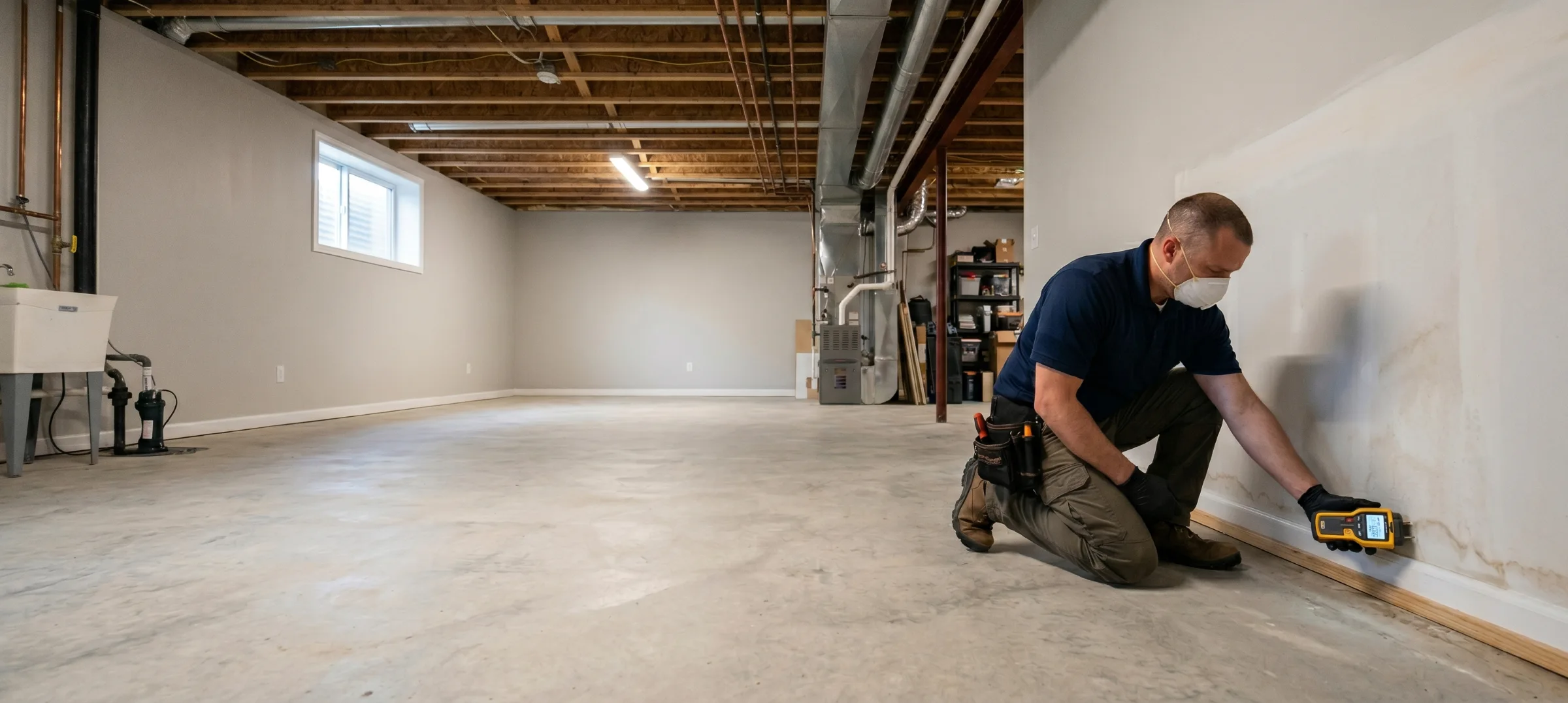

Paying for mold remediation and then watching it come back is one of the most frustrating things a homeowner can experience, and it happens more often than it should. The short answer to whether mold can return is yes, but it will not return if the job was done correctly and the underlying moisture source was permanently fixed. Mold remediation as defined by the IICRC S520 standard eliminates existing contamination and restores a space to normal fungal ecology; it does not create a permanent barrier against future growth if conditions change.
Key insights
- Spores are always present. Every indoor environment contains mold spores. Remediation removes active growth and contaminated materials; it does not sterilize a space. Growth only begins when moisture and organic material are present together.
- Moisture is the only real variable. The EPA states directly: "If you clean up the mold, but don't fix the water problem, then, most likely, the mold problem will come back." Fixing the source is not optional.
- Regrowth can begin in 24 to 48 hours. If moisture returns to a remediated surface, new spore germination can begin within the same window as the original outbreak. Speed of recurrence depends entirely on available moisture.
- Recurrence in the same spot usually means incomplete removal. New growth appearing elsewhere or after a new water event is a separate problem. Mold reappearing in the exact same footprint within weeks of remediation typically indicates the original work was incomplete.
- Independent clearance testing is the only objective confirmation. Post-remediation verification per IICRC S520 requires a third party, not the contractor who did the work, to confirm results meet the normal fungal ecology standard.
- Most contractor warranties exclude new moisture events. If mold returns due to a new leak or seasonal humidity increase, standard remediation warranties will not cover the repeat job. Know what your contract says before signing.
Why mold comes back after remediation
Mold returns after remediation when the conditions that caused the original outbreak are still present or have returned. Remediation treats contamination; it does not prevent biology. Any surface that stays damp long enough will support new growth regardless of what was done to it previously.
 A slow drain leak inside a cabinet is one of the most common hidden moisture sources that causes mold to return after remediation -- often undetected for weeks.
The IICRC S520 standard defines the goal of remediation as returning a structure to "normal fungal ecology," meaning spore types and concentrations comparable to the outdoor baseline. That standard can be met and verified through post-remediation verification, which includes independent air sampling. What it cannot do is prevent future moisture from creating the conditions for a new colony.
The moisture source was not fixed
This is by far the most common cause. A contractor removes visible growth, treats surfaces, replaces drywall, and closes everything up, but the slow pipe drip, inadequate exhaust fan, or high crawl space humidity that triggered the outbreak is still there. Growth returns to the same area, sometimes within weeks.
The remediation was incomplete
Mold that penetrates porous materials like drywall, insulation, and subfloor framing cannot be cleaned; it must be physically removed. When contaminated materials are treated instead of replaced, surviving hyphae regrow into visible colonies.
Spores spread during the job
Remediation without proper containment (negative air pressure, 6-mil polyethylene sheeting, HEPA filtration) can aerosolize spores and deposit them in previously unaffected areas. Those spores remain dormant until a new moisture event activates them.
A new water intrusion occurred
A roof leak, plumbing failure, or flooding event after a successful remediation creates new growth that is not a recurrence of the original problem. This is technically new mold, not failed remediation, though it requires the same response.
New mold growth vs. a failed remediation: how to tell the difference
Mold reappearing in the same location within weeks of a completed job almost always indicates incomplete remediation; mold appearing in a new location after a separate water event is a new problem requiring a fresh response. These two situations require different actions, and confusing them leads homeowners to spend money in the wrong places.
 Mold appearing at a new location, such as a window frame where condensation collects, typically indicates a separate moisture source rather than a failed remediation job.
Signs pointing to a failed or incomplete remediation:
- Mold reappears within the same exact footprint as the original colony, typically within 2 to 6 weeks of job completion
- The contractor did not replace porous materials like drywall or insulation; the contractor only cleaned or painted over them
- No clearance testing was performed or the contractor discouraged independent testing
- The musty odor returned immediately after the job
Signs pointing to new growth from a separate moisture source:
- Mold appears at a different location than the original outbreak
- A new water event (pipe leak, roof leak, flooding) preceded the appearance
- The original remediation included material replacement, containment, and independent clearance testing
- New growth appears at moisture entry points: around windows, at base of exterior walls, near plumbing fixtures
When in doubt, hire an independent mold inspection professional, not a remediation company, to assess the scope.
How fast can mold return
Mold spore germination requires as little as 24 to 48 hours of moisture contact on an organic surface. This is the same timeline that applies to any new water intrusion event. The practical implication is that a slow, undetected leak behind a wall can produce visible growth within days of a completed remediation.
 At 82% relative humidity, conditions for mold germination are active. The EPA identifies 60% RH as the threshold above which mold growth is supported on organic surfaces.
The speed of visible recurrence depends on three variables:
| Variable | Effect on speed | What to watch |
|---|---|---|
| Available moisture level | Higher moisture = faster growth | Dripping or pooled water far faster than condensation |
| Surface material | Porous faster than nonporous | Drywall, wood, and insulation at highest risk |
| Temperature | 68°F–86°F is the fastest growth range | Warm seasons and heated spaces accelerate regrowth |
Surface growth visible to the naked eye typically takes 1 to 3 weeks after germination begins, meaning a moisture problem that resumes the day after remediation is complete may not become visually obvious for 2 to 4 weeks.
Moisture sources that cause recurrence
Not all moisture sources carry the same recurrence risk. Acute events like burst pipes are easier to identify and fix; chronic low-level sources are responsible for most repeat mold cases because they go undetected.
 A clogged or undersized exhaust fan cannot remove shower humidity fast enough, keeping ceiling surfaces wet long enough to support mold growth even in a recently remediated bathroom.
Identifying the specific source before any new remediation begins is required under IICRC S520. A contractor who cannot point to a confirmed moisture pathway and explain how it will be corrected is missing the most important part of the job. The table below ranks common sources by recurrence risk and detection difficulty.
| Moisture source | Recurrence risk | Detection difficulty | What to fix |
|---|---|---|---|
| Active plumbing leak | Very high | Low to medium | Plumber repair before remediation restarts |
| Condensation on cold surfaces | High | Medium | Insulation upgrade, humidity control below 60% |
| Crawl space or basement vapor migration | High | Medium to high | Vapor barrier, mechanical dehumidification |
| Inadequate exhaust ventilation (bathroom, kitchen) | Medium to high | Low | Fan upgrade to HVI-rated CFM spec |
| HVAC condensate drain blockage | Medium to high | Medium | Annual drain cleaning, HVAC inspection |
| Roof leak or flashing failure | High (seasonal) | Medium | Roofing repair before interior work |
| Exterior grading directing water toward foundation | Medium | Low | Regrading, gutter extension |
A complete remediation scope per IICRC S520 requires identifying and correcting the moisture source before or concurrent with mold removal. Any contractor who begins remediation without addressing moisture is not following the standard, and the job will likely fail. Flooding and plumbing failures are the most common acute triggers; the full timeline for mold after water damage explains how quickly colonization begins and what the response sequence should be.
Signs that remediation actually worked
A properly completed remediation job leaves specific, verifiable evidence: a written clearance report from an independent assessor, moisture readings at or below 16% in wood substrates per IICRC S520, physical removal of contaminated porous materials, and documented containment during active work. If your job did not include these, the likelihood of recurrence is significantly higher.
Written clearance report from an independent assessor
The contractor who did the remediation should not be the one conducting post-remediation testing. An independent environmental professional collects air samples, runs them through a certified lab, and issues a written report confirming spore types and concentrations have returned to normal fungal ecology. This is the IICRC S520 standard.
Moisture readings at or below 16% in wood substrates
IICRC S520 sets 16% wood moisture content as the threshold below which mold growth is not supported. Before closing up walls or encapsulating a crawl space, the contractor should verify moisture levels meet this threshold with a calibrated moisture meter.
Replacement, not cleaning, of contaminated porous materials
Drywall and insulation with active mold growth cannot be cleaned to an acceptable standard. They must be removed and replaced. If your contractor cleaned and painted instead of replaced, that is a warning sign.
Containment was established
Negative air pressure machines and plastic sheeting barriers prevent spore spread during active work. A job done without containment likely redistributed spores to adjacent areas.
What to do if mold comes back
When mold returns after remediation, the correct sequence is: fix the moisture source, get an independent inspection, then hire for remediation with a written scope and third-party clearance testing. Remediating before the moisture source is confirmed produces the same result a second time.
 Before calling a contractor, locate and confirm the active moisture source. Remediating without fixing the source first produces the same result a second time.
1. Find and stop the moisture source first
Do not hire a mold contractor until the water source is confirmed and corrected. If there is a plumbing leak, call a plumber. If the issue is exhaust ventilation, fix the fan. If it is a roof leak, have the roof repaired.
2. Assess whether this is recurrence or a new problem
Is growth appearing in the same location as before, or somewhere new? Has there been a new water event since the original job? This distinction affects what kind of response and what claims you may have against the original contractor.
3. Get an independent inspection
Hire an inspector or environmental professional who does not offer remediation services to assess the scope. An unbiased assessment tells you how much is affected, what materials need to come out, and what the moisture source actually is. This report also documents conditions before any new work begins.
4. Review the original contractor's warranty
If the recurrence falls within the warranty period and within the original scope, you may have grounds to have the work redone at no cost. Warranties typically cover workmanship failures, not new moisture events. Know the difference before making a claim.
5. Hire for professional mold remediation with written scope
A written scope should identify the moisture source, list every affected material to be removed, specify containment requirements, and include independent clearance testing.
6. Require independent clearance testing before walls close
Post-remediation verification by a third party is the only way to confirm the job met the standard before the contractor reinstates walls, flooring, or ceiling materials. This step protects you from paying for a job that leaves active growth behind finished surfaces.
Contractor red flags that predict recurrence
The quality of the original remediation is the single largest predictor of whether mold returns. These warning signs during the hiring process or during active work should raise concern.
No written scope of work is the most important red flag. A contractor who gives only a verbal or line-item price without specifying which materials will be removed, what containment measures will be used, and how results will be verified is not following IICRC S520. A written scope is not optional on any job above the EPA's 10-square-foot threshold, and choosing a mold remediation company on credentials, insurance, and conflict-of-interest policy determines whether the scope you receive is trustworthy.
Offering to do both the assessment and the remediation is a conflict of interest. The assessor who identifies the problem and writes the protocol should not have a financial stake in the scope of work. Florida and New York require this separation by law; even in states without that requirement, it is an industry best practice under IICRC S520.
No moisture source in the scope signals that the contractor is treating symptoms rather than cause. A legitimate scope identifies what caused the moisture, how it will be corrected, and who is responsible for that correction before remediation begins.
Discouraging independent clearance testing is a major red flag. A contractor who argues against post-remediation verification, says it is unnecessary, or offers to do their own testing as a cost-saving measure is removing the only objective quality check on their own work.
Preventing mold from coming back
Preventing recurrence after a completed remediation requires ongoing attention to indoor humidity and early detection of new moisture intrusion. The EPA's recommended indoor relative humidity range of 30%–50% starves mold of the primary growth requirement. Sustained humidity above 60% is enough to support new growth on its own, without any visible water source. The CDC reinforces that keeping materials dry is the single most effective long-term defense.
 Clearing the HVAC condensate drain line at the start of each cooling season takes minutes and eliminates one of the most common hidden moisture sources that causes mold to return after remediation.
The most practical post-remediation prevention actions:
Monitor humidity actively
A digital hygrometer in each problem-prone area (basement, crawl space, bathroom, attic) provides continuous feedback. Many models with display and alarm cost $15–$40. Readings above 60% warrant investigation.
Inspect plumbing annually
Slow leaks behind walls are the leading hidden cause of recurrence. Annual inspection of supply lines, drain connections, and valve areas (including areas that were previously remediated) identifies new drips before they produce visible growth.
Service HVAC condensate drains seasonally
Blocked condensate drain pans are among the most common high-risk moisture sources in the home. Clearing the drain line at the start of cooling season costs almost nothing and prevents a significant recurrence pathway.
Address signs of mold immediately
Musty odor, visible discoloration, or increased allergy symptoms in a previously treated area should trigger a moisture investigation before any cleaning begins. Treating symptoms without finding the source is how repeat remediations start. Knowing the full range of signs of mold, visual, odor-based, and health-related, helps catch a returning problem before it establishes.
Dry any new water intrusion within 48 hours
The CDC and IICRC both cite 48 hours as the window before mold colonization begins on wet materials. A fast response to a new leak or flood eliminates the conditions for a repeat outbreak before they develop.
The mold remediation cost of a second job on the same area is almost always higher than the first because prior damage, remediated materials, and scope verification add to the work.
Frequently asked questions
Can mold come back after professional remediation?
Yes, mold can come back after professional remediation if the underlying moisture source is not permanently fixed. The IICRC S520 standard is explicit: remediation addresses existing contamination, but it cannot prevent new growth if the conditions that caused the original problem remain unchanged.
How long does it take for mold to come back after remediation?
Mold can begin to regrow within 24 to 48 hours if moisture is still present. This is the same window that applies to any new water intrusion. Active moisture will trigger spore germination on organic surfaces regardless of prior treatment.
How do I know if mold came back or was never fully removed?
Recurrence within the same footprint as the original job, especially within the first few weeks, typically indicates incomplete removal. New growth from a separate or returning moisture source usually appears at moisture entry points (around windows, at base of walls, or near plumbing) and may differ in location from the original colony.
What does it mean if mold keeps coming back in the same spot?
Mold returning repeatedly to the same location means the moisture source feeding that spot has not been permanently corrected. Common causes include a slow plumbing leak behind a wall, chronic condensation on a cold surface, inadequate exhaust ventilation, or a compromised vapor barrier in a crawl space or basement.
What should I do if mold comes back after remediation?
First, identify and fix the active moisture source before doing anything else. Then get an independent inspection to assess scope. If the original contractor's warranty covers the recurrence, make a written claim. For any new work, require a written scope and independent clearance testing before walls close. Jobs above 10 square feet, or those involving HVAC, structural framing, or mold remediation required by a licensed professional under state law, fall outside DIY territory regardless of how small the visible patch appears.
Should I get clearance testing after remediation to confirm mold is gone?
Yes. Post-remediation verification is the only objective confirmation that remediation met the IICRC S520 standard. An independent assessor, separate from the contractor who did the work, should conduct air sampling and visual inspection before work areas are closed. Patches under 10 square feet on nonporous surfaces may qualify for DIY mold removal, but even small jobs benefit from a post-work moisture reading to confirm the source is gone.
Sam Hickerson is the founder of RestoreAdvisor and writes consumer guides on mold remediation, water damage restoration, inspection, testing, and home recovery. His work focuses on helping homeowners understand costs, risks, and when to call a professional. He draws on guidance from the EPA, CDC, IICRC, and other authoritative sources to make complex home issues easier to navigate.