
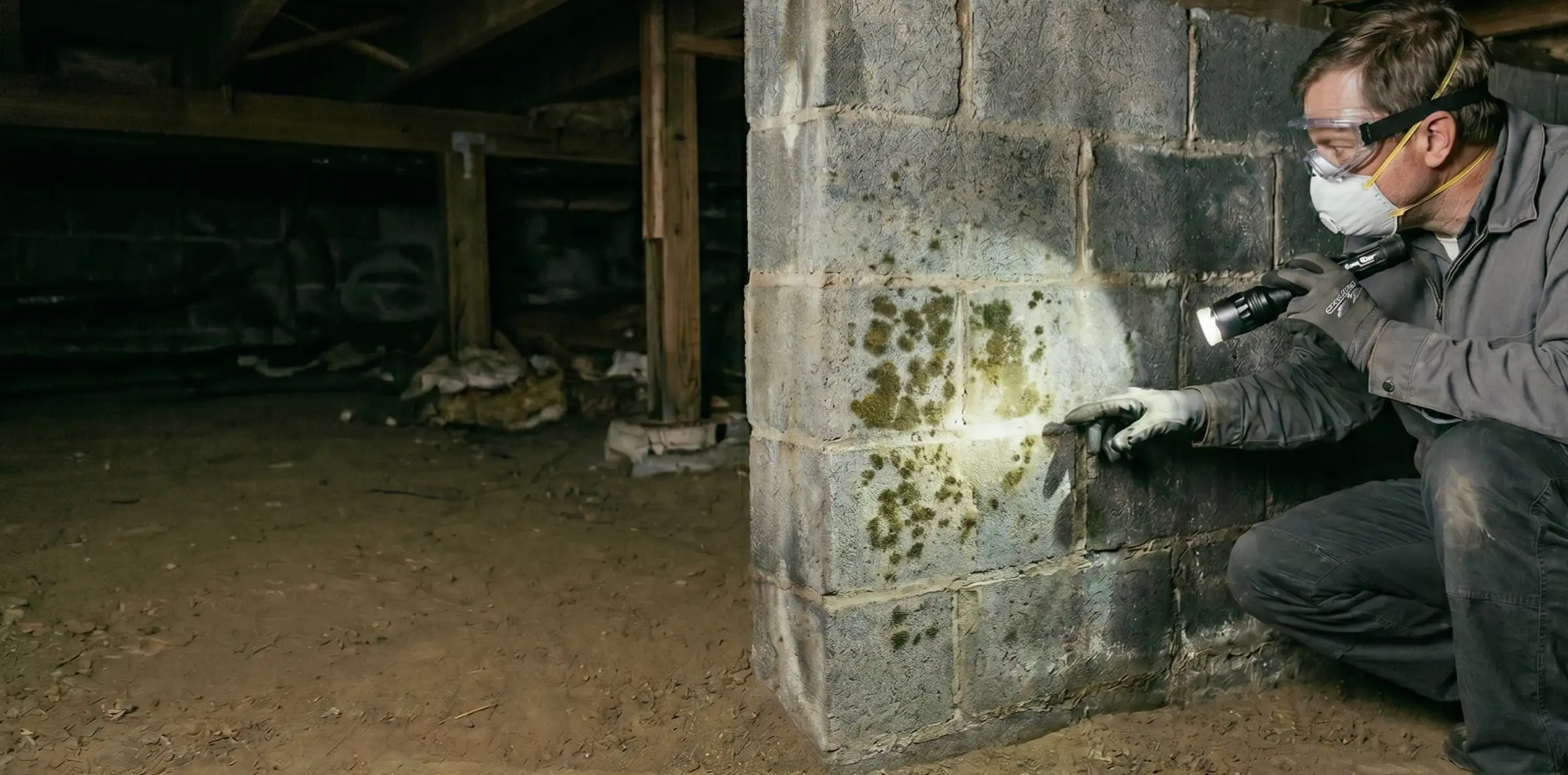

You notice dark, powdery patches on your window sills or basement walls and wonder what you're dealing with. If the growth is olive green, dark brown, or nearly black with a suede-like texture, there's a strong chance it's Cladosporium, one of the most common indoor and outdoor molds found in homes across the United States. Cladosporium is a genus of darkly pigmented fungi comprising more than 500 species, classified by the CDC as an allergenic mold whose primary health mechanism is respiratory sensitization rather than mycotoxin production. Small infestations on hard surfaces are manageable, but the complicating factor is that Cladosporium looks nearly identical to several other mold genera, can colonize HVAC systems that spread spores through your entire home, and thrives at humidity levels many households never think to control.
This guide covers how to identify Cladosporium by species and visual characteristics, what the health risks actually are (and for whom), how to confirm it through testing, when DIY removal is appropriate versus when to hire a professional, and what removal costs to expect.
Key insights
- Most common indoor mold. The CDC identifies Cladosporium alongside Penicillium and Aspergillus as the most frequent molds found indoors in U.S. homes.
- Allergenic, not typically toxigenic. Most indoor Cladosporium species do not produce mycotoxins at clinically significant levels; the primary health mechanism is allergic sensitization and respiratory irritation.
- Grows at lower humidity than many molds. Cladosporium sphaerospermum can colonize surfaces at water activity as low as 0.82, below the 0.90 threshold required by Stachybotrys chartarum.
- HVAC is a high-risk location. Cladosporium sphaerospermum dominates indoor air handling units, colonizing blower wheels, cooling coil fins, and ductwork, and distributing spores with every air cycle.
- DIY threshold is 10 square feet. The EPA's recommended limit for homeowner self-remediation applies to Cladosporium, as it does to all mold types. Larger jobs or HVAC involvement require professional remediation.
- Visual ID is unreliable. Cladosporium, Alternaria, Aspergillus, and Stachybotrys can all appear dark or olive-colored to the naked eye. Lab testing is the only way to confirm the species.
What is Cladosporium mold
Cladosporium is a genus of dematiaceous (darkly pigmented) fungi in the family Cladosporiaceae, comprising more than 500 described species and recognized by the CDC: Basic Facts About Mold as one of the most common molds found inside U.S. homes. Unlike Stachybotrys chartarum, which requires sustained water saturation to establish, Cladosporium is an opportunistic colonizer capable of growing on a wide range of organic materials at relatively modest humidity levels, making it far more prevalent in typical residential environments.
Outdoors, Cladosporium spores are among the most abundant airborne fungal particles in temperate climates, peaking in late summer and early fall. Spores enter homes through open windows, doors, vents, and HVAC systems, landing on damp surfaces where they germinate within 24–72 hours if sufficient moisture is present. Because Cladosporium is so common in outdoor air, a baseline level of its spores is always present indoors. The concern for homeowners is elevated indoor levels, visible surface growth, or confirmed HVAC colonization, all of which indicate an active indoor moisture problem.
How to identify Cladosporium mold
Cladosporium typically appears as powdery or velvety patches ranging in color from olive green to dark brown or nearly black, growing in clusters or streaks on damp surfaces. The texture is key: Cladosporium has a suede-like or powdery surface when dry, which distinguishes it from Stachybotrys chartarum (black mold), which appears slimy and wet due to the sustained moisture it requires.
 Speckling this fine along a caulk line is easy to mistake for dirt, but the suede-like texture, not the color, is what actually separates Cladosporium from a slimy species like Stachybotrys.
Common visual indicators include the following. Growth often starts at a central point and radiates outward in a roughly circular pattern. On porous surfaces like drywall or wood, it may appear as staining rather than distinct fuzzy growth. On window sills and painted walls, it frequently presents as dark speckling along grout lines, caulk edges, or condensation zones. On fabrics, carpet backing, and upholstery, it may appear as a diffuse discoloration with a faintly musty odor.
Visual identification alone cannot reliably distinguish Cladosporium from Alternaria, Aspergillus, Penicillium, or other dark-pigmented molds. All of these species can appear olive, brown, or black to the naked eye. If species identification matters for remediation decisions or health reasons, professional mold testing using air sampling or surface swabs and lab analysis is the only reliable method.
Cladosporium species common indoors
The three Cladosporium species most commonly found indoors in North America are C. cladosporioides, C. herbarum, and C. sphaerospermum, each with distinct environmental preferences that determine where it establishes and how difficult it is to control. C. sphaerospermum's unusually low water activity requirement means it can colonize surfaces that seem too dry for mold, while C. herbarum sensitization can cause allergic reactions at elevated indoor spore levels even before visible growth appears.
| Species | Appearance | Preferred location | Notes |
|---|---|---|---|
| C. cladosporioides | Olive green to brown; powdery | Outdoor plant debris, indoor fabrics, soil | Most common Cladosporium species worldwide; dominant in outdoor air |
| C. herbarum | Olive brown to dark brown; velvety | Window frames, HVAC insulation, refrigerator seals, food surfaces | Major outdoor allergen; optimal growth at 18–28°C; can grow below 0°C |
| C. sphaerospermum | Grey-olive to dark brown; suede-like | HVAC systems, cooling coils, blower wheels, damp building materials | Xerotolerant (water activity 0.82); dominates air handling unit colonization; most commonly recovered in indoor surface samples |
All three species are classified as allergenic molds. None produces mycotoxins at the levels associated with Stachybotrys chartarum or Aspergillus flavus under typical residential conditions. C. sphaerospermum's xerotolerance makes it particularly problematic because it can persist in environments where other molds cannot.
Where Cladosporium grows in your home
Cladosporium grows wherever organic material and sufficient moisture meet. Relative humidity above 55% sustained for more than 24–48 hours is enough to support active colonization on many surfaces. Controlling humidity levels below 50% is the most effective single action a homeowner can take to prevent Cladosporium from establishing indoors.
 Grout like this only needs 55% relative humidity sustained for 24 to 48 hours to support colonization, a lower bar than several other common household mold species require.
The table below maps the most common indoor locations to the moisture cause behind each one, what to look for during a self-inspection, and whether the job falls within DIY scope or requires a professional. HVAC and structural wood locations almost always require professional assessment regardless of visible surface area.
| Location | Primary cause | What to look for | DIY or pro |
|---|---|---|---|
| Window sills and frames | Condensation from temperature differential | Dark speckling along caulk lines, paint bubbling | DIY if under 10 sq ft on painted surface |
| Bathroom grout and caulk | Chronic high humidity, poor ventilation | Dark staining at grout joints, black caulk edges | DIY on tile; pro if behind tile wall |
| Basement walls and floor joists | Ground moisture, poor drainage, condensation | Fuzzy growth on concrete block, wood framing | DIY if surface-level; pro if on structural wood |
| HVAC ductwork and coils | Condensate buildup, low water activity of C. sphaerospermum | Musty odor when system runs, visible growth on vents | Pro only; requires NADCA-certified duct cleaning |
| Carpet backing and padding | Moisture intrusion from below or spills | Musty odor, discoloration on underside of carpet | Replacement required in most cases |
| Drywall paper face | Leak or condensation behind wall | Dark staining, soft spots in wallboard | Pro if penetrated to stud cavity |
| Attic sheathing | Inadequate ventilation, roof leak | Powdery green growth on OSB or plywood | Pro; scope typically exceeds 10 sq ft |
| Refrigerator door seals | Condensation at rubber gasket | Black growth in gasket folds | DIY with thorough cleaning |
Signs of mold beyond visible growth include a musty or earthy odor that worsens when the HVAC runs, household members experiencing allergy symptoms that improve when they leave home, and condensation that recurs on the same surfaces after wiping. In bathrooms, window sills, and basements, these non-visual signals are often the first indication of an active colony.
Cladosporium health effects
Cladosporium is classified as an allergenic mold, meaning its primary mechanism of harm is immune sensitization rather than direct toxicity. In sensitized individuals, inhaled Cladosporium spores trigger IgE-mediated allergic responses in the upper and lower respiratory tract. The NIOSH Dampness and Mold in Buildings report identifies Cladosporium alongside Alternaria as among the leading fungal triggers for allergic rhinitis and asthma exacerbations in damp indoor environments.
 Symptoms this mild are the typical presentation for a healthy adult; Cladosporium's harm profile is almost entirely allergenic rather than toxigenic at residential exposure levels.
For most healthy adults, moderate Cladosporium exposure causes symptoms similar to seasonal allergies: sneezing, runny nose, nasal congestion, and itchy or watery eyes. These symptoms typically resolve when the exposure source is removed.
Symptom severity varies considerably depending on the individual's baseline health, the concentration of spores in the indoor environment, and the duration of exposure. The table below summarizes typical presentations by population group, from low-risk healthy adults to those at highest risk of serious complications.
| Population | Common symptoms | Risk level |
|---|---|---|
| Healthy adults | Sneezing, runny nose, itchy eyes | Low to moderate |
| Children | Persistent cough, wheezing, worsened asthma | Moderate to high |
| Elderly | Sinus infections, fatigue, respiratory irritation | Moderate to high |
| Asthma patients | Bronchospasm, increased attack frequency | High |
| Weakened immune systems | Sinusitis, skin and nail infections, rare invasive infection | High to severe |
| Pregnant women | Respiratory irritation; fetal exposure risk under investigation | Elevated caution |
For people with asthma, Cladosporium is one of the most clinically significant outdoor and indoor mold triggers. The relationship between mold and asthma is well-documented, and Cladosporium herbarum sensitization is particularly associated with asthma exacerbations in atopic individuals. For more on the clinical relationship, see the information on mold and asthma.
Does Cladosporium produce mycotoxins? Most indoor Cladosporium species do not produce mycotoxins at concentrations associated with serious illness under typical residential conditions. Some species produce low-level secondary metabolites including cladosporol and dihydrobotrydial, but these have not been identified as major clinical concerns at typical indoor exposure levels. This contrasts sharply with Stachybotrys chartarum and Aspergillus flavus, which produce potent mycotoxins at much lower spore concentrations. Cladosporium's harm profile is almost entirely allergenic.
Rare but serious: invasive infection. In severely immunocompromised individuals, particularly those with hematologic malignancies or undergoing chemotherapy, C. cladosporioides can cause phaeohyphomycosis, a fungal infection affecting the skin, sinuses, or lungs. These cases are extremely rare in otherwise healthy people but represent the upper end of Cladosporium's clinical range. Full mold exposure symptoms by body system and onset timeline are covered separately.
When to test for Cladosporium
You should test for Cladosporium any time visible growth cannot be visually confirmed as a specific species, occupants are experiencing unexplained respiratory symptoms, or a clearance test is needed after remediation. Testing is also warranted when an HVAC system is suspected as a distribution source, since airborne spore counts in that scenario can be elevated throughout the home even with no visible surface growth.
 A sample collected this way gets compared against an outdoor baseline taken the same day; indoor counts exceeding that baseline by a meaningful margin point to active growth, not just outdoor spore intrusion.
A professional mold inspection includes moisture assessment, visual survey, and collection of air or surface samples. Air sampling is the most useful method for Cladosporium because its spores are small (2–7 micrometers) and highly airborne. Results are reported as spore counts per cubic meter and compared against outdoor baseline counts collected simultaneously. Indoor Cladosporium levels exceeding outdoor levels by a meaningful margin suggest active indoor growth, not just spore intrusion from outside.
Surface swab or tape lift samples identify the specific species present on a visible colony and are useful when you want to confirm that a dark-colored growth is Cladosporium rather than Stachybotrys or Alternaria. Mail-in DIY test kits can provide species identification from surface samples but lack the air quality context that a professional inspector provides alongside the results.
Cladosporium mold removal: DIY vs. professional
Cladosporium mold removal follows the EPA's 10-square-foot rule: patches under 10 square feet on non-porous or semi-porous surfaces, in a household with no high-risk members, can typically be handled by a careful homeowner. Anything beyond that threshold, or involving the conditions listed below, requires professional mold remediation.
When professional remediation is required:
- The affected area exceeds 10 square feet
- Growth is inside HVAC ductwork, the air handler, or on cooling coils
- Mold has penetrated porous structural materials (drywall stud cavity, subfloor, framing)
- A household member has asthma, a serious respiratory condition, or a compromised immune system
- Mold returns within weeks of cleaning, indicating an unresolved moisture source
- Hidden mold is suspected behind walls, under flooring, or in ceiling cavities
- The moisture source has not been identified or repaired
DIY removal process for small jobs (under 10 sq ft on non-porous/semi-porous surfaces):
For Cladosporium specifically, the critical points that differ from generic mold removal advice are spore suppression before scrubbing and mandatory porous material replacement rather than cleaning. The full PPE requirements and surface-by-surface DIY mold removal process apply here unchanged.
 Growth around fittings like these often traces back to a slow supply line drip that's easy to miss during a routine cabinet check, unlike an active leak that announces itself.
1. Fix the moisture source first
Cleaning mold without resolving the moisture cause guarantees recurrence. Identify and repair leaks, improve ventilation, or reduce indoor humidity before touching the mold colony.
2. Set up containment
Seal the work area with 6-mil polyethylene sheeting over doorways and vents. This prevents spore dispersal to unaffected areas during cleaning.
3. Wear appropriate PPE
An N95 respirator at minimum, nitrile gloves, and safety goggles are required. Cladosporium spores are small enough to penetrate standard dust masks.
4. Mist, then clean
Lightly mist the affected surface with water before scrubbing to suppress airborne spore release. On non-porous surfaces (tile, glass, metal), scrub with detergent and water or a 3% hydrogen peroxide solution. On semi-porous painted surfaces, use detergent followed by an antimicrobial solution.
5. HEPA vacuum and dry
After cleaning, HEPA vacuum the work area and surrounding surfaces. Dry the area completely using fans and a dehumidifier. Verify moisture content below 15% using a moisture meter before closing up.
6. Replace porous materials
Drywall, insulation, carpet, and carpet padding that shows mold penetration cannot be adequately cleaned. These materials must be cut out, double-bagged, and disposed of.
Note on bleach: Bleach is not effective for Cladosporium on porous surfaces. It kills surface organisms but does not penetrate the material, and the moisture from the application can worsen the underlying problem. On non-porous surfaces it is effective but offers no advantage over detergent plus hydrogen peroxide and generates harmful fumes in enclosed spaces.
Cladosporium removal cost
Professional Cladosporium removal typically costs $500–$3,000 for small surface jobs and $2,000–$8,000 or more for infestations involving structural materials, HVAC systems, or attic sheathing. Knowing when mold remediation is required and how large the affected area is before calling for estimates helps you evaluate bids accurately.
 Containment goes up before demolition starts on jobs like a basement wall cavity, since disturbing framing without it spreads spores well past the room where the growth was found.
Job complexity is the biggest variable within each scenario. HVAC involvement, low-clearance crawl spaces, and finished basement wall cavities all add labor and access costs that push quotes toward the higher end of any range. National averages by project size, material, and location are in the mold remediation cost guide.
| Scenario | Typical cost | What drives the price |
|---|---|---|
| Window sill and trim, small area | $500–$1,200 | Surface cleaning, caulk replacement, minimal demolition |
| Bathroom tile and grout (full bathroom) | $800–$2,000 | Surface cleaning, grout removal, caulk replacement |
| Finished basement wall cavities | $2,000–$6,000 | Drywall removal, framing treatment, drying, rebuild |
| HVAC system (air handler and ductwork) | $1,500–$5,000+ | Requires NADCA-certified HVAC specialist, component cleaning or replacement |
| Attic sheathing | $2,500–$8,000 | Access difficulty, large surface area, wood treatment or replacement |
| Crawl space | $1,500–$6,000 | Insulation removal, mechanical abrasion, vapor barrier |
Factors that increase cost beyond these ranges include structural wood replacement, clearance testing fees ($150–$400), post-remediation drywall and painting, and any HVAC component replacement. Jobs that fail initial clearance testing require additional work before the contractor returns, adding to the total.
How to prevent Cladosporium
Preventing Cladosporium means keeping indoor relative humidity below 50% and eliminating moisture sources before spores can germinate. Because Cladosporium is nearly ubiquitous in outdoor air, eliminating spore entry entirely is not practical. The goal is ensuring that spores landing on indoor surfaces do not find the moisture conditions needed to germinate and establish colonies.
 Staining hidden behind weatherstripping like this often goes unnoticed for years, since the seal itself masks the very condensation zone that let C. herbarum establish underneath.
The eight actions below cover the most common moisture entry points and colonization zones in a typical home. Frequency matters as much as the action itself: an exhaust fan installed but rarely used provides almost no protection.
| Action | Frequency | Why it works |
|---|---|---|
| Maintain indoor humidity at 30%–50% RH | Continuous, monitored with hygrometer | Cladosporium requires above 55% RH for active growth on most materials |
| Run bathroom exhaust fans during and 20 minutes after showers | Every use | Removes moisture before it condenses on grout and caulk |
| Inspect and replace window caulk and weatherstripping | Annually | Eliminates condensation zones where C. herbarum establishes |
| Change HVAC filters every 60–90 days | Per manufacturer minimum | Reduces spore load recirculating through ductwork |
| Have HVAC system inspected and cleaned | Every 3–5 years or after water intrusion event | Removes C. sphaerospermum colonization from coils and blower wheels |
| Fix plumbing leaks within 24–48 hours | Immediately on discovery | Prevents the sustained moisture that allows mold to transition from spore to active colony |
| Use mold-resistant caulk in bathrooms and kitchens | At installation and replacement | Inhibits surface colonization at high-humidity zones |
| Keep indoor plants in well-ventilated areas | Ongoing | Potted soil is a common C. cladosporioides reservoir that can elevate indoor spore counts |
For homeowners who experience recurring Cladosporium growth despite cleaning, the underlying issue is almost always an unresolved moisture source. Common culprits include chronic bathroom ventilation failure, a slow plumbing leak behind a wall, inadequate attic or crawl space ventilation, or an HVAC system with a clogged condensate drain. A professional mold inspector with a moisture meter and thermal imaging camera can identify moisture pathways that are not visible during a standard walkthrough.
Frequently asked questions
Is Cladosporium dangerous?
Cladosporium is classified as an allergenic mold, not a toxigenic one like Stachybotrys. For most healthy people, exposure causes allergy and asthma symptoms rather than serious illness. People with asthma, compromised immune systems, or chronic respiratory conditions face a higher risk of more severe reactions, and these individuals should not remain in a home with active visible Cladosporium growth without remediation underway.
What does Cladosporium smell like?
Cladosporium produces a musty, earthy odor that is often described as similar to damp soil or rotting wood. The smell comes from microbial volatile organic compounds (MVOCs) released during active growth. It is typically most noticeable in enclosed or poorly ventilated spaces and tends to worsen when an HVAC system distributes spores through ductwork.
Can Cladosporium make you sick immediately?
For most people, Cladosporium does not cause immediate illness. Symptoms typically develop after repeated or sustained exposure as the immune system becomes sensitized. However, individuals who are already allergic to mold or have asthma can experience rapid symptom onset, including sneezing, nasal congestion, and wheezing, within minutes of entering a heavily contaminated space.
Can I remove Cladosporium myself?
You can remove Cladosporium yourself if the affected area is under 10 square feet, limited to non-porous or semi-porous surfaces, and you have no serious respiratory conditions. Affected porous materials like drywall and carpet almost always need to be replaced, not cleaned. Areas larger than 10 square feet require professional remediation per EPA guidance.
How do I know if it's Cladosporium or black mold?
Visual inspection alone cannot reliably distinguish Cladosporium from Stachybotrys chartarum (black mold) or other dark-colored species. Cladosporium tends to be powdery or velvety in texture; Stachybotrys is typically slimy and wet. Lab testing through air sampling or surface swab is the only way to confirm the species. If the growth is slimy, occurs after a sustained flood or leak event, and is concentrated in an area that stayed wet for weeks, Stachybotrys is a more likely candidate and professional assessment is warranted immediately.
What humidity level does Cladosporium need to grow?
Cladosporium can grow at relative humidity above 55% and at surface moisture content as low as 0.82 water activity, which makes it one of the more tolerant indoor molds. Keeping indoor humidity between 30% and 50% significantly reduces growth risk.
Does Cladosporium produce mycotoxins?
Most Cladosporium species found indoors do not produce significant mycotoxins at the levels associated with Stachybotrys or Aspergillus flavus. Some species produce low-level secondary metabolites, but Cladosporium is primarily an allergenic rather than toxigenic mold for typical residential exposures.
- CDC: Basic Facts About Mold
- IICRC S520: Standard for Professional Mold Remediation
- NIOSH: Dampness and Mold in Buildings (2019-115)
- EPA: A Brief Guide to Mold, Moisture, and Your Home
- NIH/PubMed: Cladosporium cladosporioides in clinical infection
- NIH/PubMed: Indoor damp surfaces and mold species
- Thermo Fisher: Cladosporium herbarum allergen facts
Sam Hickerson is the founder of RestoreAdvisor and writes consumer guides on mold remediation, water damage restoration, inspection, testing, and home recovery. His work focuses on helping homeowners understand costs, risks, and when to call a professional. He draws on guidance from the EPA, CDC, IICRC, and other authoritative sources to make complex home issues easier to navigate.