
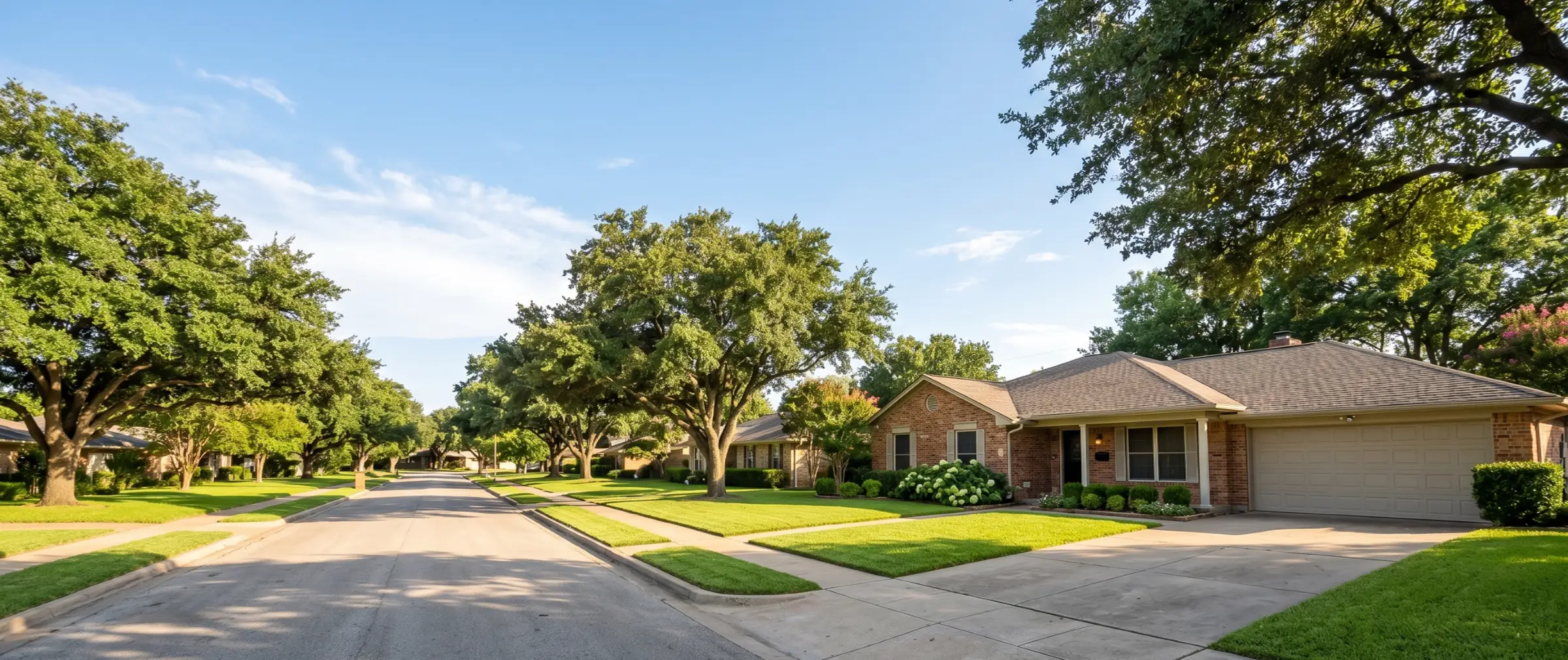

Dallas has a mold problem that most homeowners do not see coming. The city sits on Blackland Prairie clay, one of the most expansive soils in North America, and that soil is the hidden engine behind a mold pathway unique to the Dallas market. When seasonal rains swell the clay and summer drought contracts it, the resulting shrink-swell cycle creates micro-fractures in slab foundations that let soil moisture wick upward into wall framing, bottom plates, and insulation, often with no visible water intrusion at all. Pair that with 8 or more months of air conditioning use generating steady HVAC condensation, and Dallas homeowners are managing two persistent hidden moisture sources year-round.
Mold remediation in Dallas follows the standards set by ANSI/IICRC S520, the governing protocol for professional mold remediation, and is regulated under the Texas Mold Assessment and Remediation Rules (TMARR) administered by the Texas Department of Licensing and Regulation (TDLR). What makes Dallas different from most U.S. markets is that the primary moisture pathways here are structural and hidden: clay soil movement and slab plumbing failures rather than the storm flooding or chronic humidity that drives mold risk in other high-risk cities. Hiring the wrong contractor in Dallas does not just mean a bad job. It often means a clearance certificate issued over a moisture source that was never addressed.
Key insights
- Clay soil is the primary culprit. North Texas Blackland Prairie clay can change volume by 30%–75% between wet and dry conditions, creating foundation micro-fractures that channel moisture into wall assemblies without any visible leak.
- HVAC is the second moisture source. Dallas runs air conditioning 8 or more months per year, generating condensation on coils, drain pans, and ductwork that becomes a mold source when drain lines clog or pan seals fail.
- Texas requires separate companies. Under TMARR, the licensed assessor who writes the remediation protocol and the licensed contractor who performs the work must be different firms.
- Floor-level mold needs a plumber first. Mold at baseboard level in a Dallas home is a slab-leak signal until proven otherwise. Starting with a remediation contractor before addressing the plumbing source guarantees recurrence.
- The MDR-1 certificate travels with the property. Texas's Certificate of Mold Damage Remediation is signed by both the assessor and the remediator, is transferable at sale, and can be requested by buyers or title companies as proof of completed work.
- Typical cost range is $1,800–$5,500. Slab-leak coordination, HVAC involvement, or multi-room contamination can push Dallas projects well above that range.
What drives Dallas mold risk: clay soil, slabs, and HVAC
Dallas mold risk is shaped by three overlapping physical conditions that do not exist in most other U.S. cities at the same intensity: expansive clay soil, post-tensioned slab foundations built to ride that clay, and an HVAC season long enough to generate condensation for most of the year. Understanding all three is the first step toward diagnosing any mold problem correctly.
 When North Texas Blackland Prairie clay contracts during dry season, the gap it opens at the slab perimeter becomes a direct moisture pathway into wall framing once rains return. This is the primary hidden mold driver in Dallas slab-on-grade homes.
The North Texas Blackland Prairie clay that underlies most of Dallas and Tarrant counties is classified by the USDA as having "very high shrink-swell potential." According to the American Society of Civil Engineers, expansive soils cause more structural financial damage in the U.S. each year than floods, hurricanes, tornadoes, and earthquakes combined. In some parts of Dallas, clay volume can shift by 30%–75% depending on soil moisture. The post-tensioned concrete slabs used in the vast majority of Dallas homes since the 1970s are engineered to flex with that movement, but the tendons cannot seal every micro-fracture that develops over time. Those fractures become moisture pathways. Water does not need to puddle on the floor to cause a problem; sustained capillary wicking from the soil into the bottom plate of interior walls is enough to create the sustained moisture that Stachybotrys chartarum requires to establish.
The HVAC dynamic compounds the clay problem. Dallas averages more than 100 days above 90°F annually, and most homes run central air conditioning from March through November. That 8-plus month cooling season means HVAC coils, drain pans, and supply ductwork are generating condensation continuously. A partially clogged condensate drain line that would be a minor nuisance in a cooler climate becomes a chronic slow drip in a Dallas attic or air handler closet, saturating surrounding drywall before any visible staining appears. CDC guidance on mold identifies HVAC condensation as one of the most common hidden moisture sources in homes with year-round cooling seasons.
Older pier-and-beam homes carry a separate risk profile
East Dallas, Oak Cliff, Lakewood, and the M Streets neighborhoods contain significant concentrations of pre-1960 craftsman bungalows and cottage-style homes built on pier-and-beam foundations. These homes have crawl spaces rather than slabs, and in Dallas's climate, that crawl space accumulates ground moisture year-round. Many of these homes were built without sealed vapor barriers. Elevated humidity in the crawl space migrates upward into floor joists, subfloor sheathing, and the living area above, creating mold conditions that slab-on-grade homes do not experience in the same way. Crawl space mold in these neighborhoods is often discovered during a home sale inspection or HVAC service call rather than by the homeowner.
The 2022 Trinity River flooding and its mold legacy
Dallas's number one hazard is flooding, according to the city's own deputy director of emergency management. The 2022 event made that concrete: parts of Dallas received 14–16 inches of rainfall, causing billions of dollars in damage and affecting thousands of homes in low-lying corridors along the Trinity River and its tributaries. Some of those homes were dried quickly and resold without comprehensive moisture verification. Others were repaired cosmetically without opening wall cavities. Both categories carry latent mold risk that standard home inspections are not designed to detect.
 At this inundation depth, drywall, insulation, and subfloor assemblies absorb enough moisture to sustain mold growth within 24–48 hours; IICRC S520 requires material removal, not surface drying, once porous materials have been wetted to this extent.
The specific mold risk from the 2022 floods is Stachybotrys chartarum and Chaetomium globosum, the two species that require sustained wetness rather than brief moisture exposure. Both establish in wall cavities and structural wood that remained wet for days, exactly the condition produced when flood water sits against a foundation or intrudes behind drywall. Neither species is detectable by visual inspection of the finished wall surface. A mold inspection by a TDLR-licensed MAC using moisture meters and air sampling is the only reliable detection method.
What this means for buyers in flood-affected areas
The TREC Seller's Disclosure Notice (Form OP-H) requires sellers to disclose flooding they personally experienced. A home purchased from a post-2022 flipper who acquired and resold the property quickly may show no flooding on the current disclosure because the current seller never experienced the event. For any home in the Trinity River floodplain, the West Dallas corridor, or areas with documented 2022 inundation, treat the disclosure as a starting point and order a licensed mold assessment before the inspection contingency expires. Problems found before closing are negotiating leverage. Problems found after closing are entirely your expense.
What this means for current owners
If your home sustained any flood intrusion in 2022 and received only surface-level drying or cosmetic repairs, the absence of visible mold today does not confirm clean materials. Stachybotrys and Chaetomium can remain dormant in wall cavities through dry seasons and become active again when humidity rises the following spring. If you have a persistent musty odor that worsens in humid months, recurring allergy symptoms that improve when you travel, or soft baseboards at the original water line, a professional assessment is warranted. The 24–48 hour drying window and full inspection sequence for mold after water damage applies directly to these post-flood properties.
How to spot mold in a Dallas home
The five most reliable early indicators of mold in a Dallas home are a water bill spike with no usage change, a musty odor on HVAC startup in spring, cupped or soft hardwood floors in pier-and-beam homes, baseboard staining or paint bubbling at floor level, and ceiling damage or soft spots following a winter freeze. Dallas mold rarely announces itself at the surface because the city's two primary moisture pathways, slab leaks wicking upward through wall framing and HVAC condensation accumulating behind drywall, both produce growth inside building materials before any visible patch or odor reaches the living space. The signs of mold most relevant to this market are each tied to a specific Dallas moisture source.
 Paint failure and mold staining at the wall-floor junction in a slab-on-grade Dallas home is a slab-leak indicator until a plumbing pressure test rules it out. Surface cleaning without moisture source diagnosis almost always results in recurrence within 60–90 days.
A spike in your water bill without a change in usage
Post-tensioned slabs in Dallas develop pinhole leaks in copper supply lines as the clay beneath them shifts seasonally. A leak running under or within the slab does not surface as a visible puddle; it wicks upward into the bottom plate of interior walls. The first sign is often a water bill 20%–40% above normal with no obvious explanation. Any unexplained water bill increase in a Dallas slab home warrants a plumbing pressure test before a mold assessment, because treating the mold without correcting the slab leak guarantees recurrence.
A musty odor that emerges when the HVAC system first runs in spring
Dallas HVAC systems sit dormant for several weeks in winter. When they restart in March or April, condensate drain lines that partially clogged during fall operation begin overflowing, pushing moisture into air handler enclosures and adjacent wall cavities. The startup odor in early spring, particularly one that dissipates within a few days and returns the following season, points directly to HVAC condensate as the moisture source. An HVAC technician's drain line inspection and coil check is the right first call, not an air freshener.
Cupped or soft hardwood floors in East Dallas, Oak Cliff, or M Streets homes
Pier-and-beam homes in these neighborhoods sit directly above unencapsulated crawl spaces where ground moisture accumulates year-round. When crawl space relative humidity stays above 60% from spring through fall, the hardwood flooring above absorbs moisture from below: board edges rise above center (cupping), and soft or springy spots indicate subfloor degradation. These are structural moisture readings, not cosmetic finish problems, and they usually mean the crawl space has been generating elevated humidity long enough to begin affecting the framing. Crawl space mold in pier-and-beam homes follows a specific diagnostic and remediation sequence that differs from slab-home work.
Baseboard staining or paint bubbling at floor level
In both slab and pier-and-beam homes, mold driven by moisture rising from below first becomes visible at the wall-floor junction. Paint bubbling, soft drywall near the baseboard, or dark staining at or just above floor level in a room that has no obvious water source are all consistent with either slab-leak wicking or crawl space moisture migration. Unlike ceiling staining from a roof leak, which points upward toward a single source, floor-level staining in a Dallas home is ambiguous until a plumbing pressure test and a moisture meter reading are taken. Attempting mold removal without that diagnostic step almost always results in recurrence and a repeated remediation cost.
Ceiling collapse, wet drywall, or soft spots following a winter freeze
Dallas lacks the building practices of colder climates, and supply lines in attics, exterior walls, and under-insulated bathrooms are vulnerable to hard freezes. The February 2021 statewide freeze burst pipes in thousands of DFW homes, often in locations homeowners did not think to check: attic supply lines, exterior hose bib connections, and garage plumbing. Acute wetting from a burst pipe is rarely subtle, but the mold consequence is not always immediately visible. Drywall that was not removed within 48–72 hours of getting wet is likely harboring growth on its back face and paper layer even after visible water has dried. If your home sustained any pipe-burst wetting in 2021 or a subsequent freeze event and received only surface repairs without material removal and moisture verification, a professional assessment is warranted before assuming the job was done correctly.
Mold species common in Dallas and why they appear
The four mold species found most often in Dallas homes are Cladosporium, Aspergillus, Penicillium, and Stachybotrys chartarum, each tied to a specific moisture source common in this market. The same conditions that make Dallas structurally vulnerable, clay-driven slab movement and extended HVAC operation, also determine which species establish most readily.
| Species | Primary Dallas moisture source | Typical location | Diagnostic signal |
|---|---|---|---|
| Cladosporium | HVAC condensation, exterior-facing walls | Supply registers, window frames, bathroom surfaces | Musty odor on HVAC startup in spring; dark powdery spots on registers |
| Aspergillus / Penicillium | Water-damaged drywall, HVAC ductwork, insulation | Wall cavities, air handler cabinet, attic insulation | Reported as Asp/Pen in air sampling; indistinguishable visually |
| Stachybotrys chartarum | Sustained chronic moisture from slab leaks or condensate overflow | Behind drywall at slab level, under flooring, in insulation | Floor-level baseboard staining; paint bubbling; water bill spike |
| Alternaria | Post-rain exterior moisture, window frame condensation | Bathroom caulk, window frames, exterior-facing wall cavities | Peaks April through June during North Texas wet season |
Stachybotrys warrants specific attention in Dallas because its required growth condition, sustained wetness over weeks or months, is exactly what an undetected slab leak produces. Unlike Cladosporium, which can establish on intermittent surface moisture, Stachybotrys does not appear quickly. Its presence in a Dallas home is almost always evidence of a chronic hidden moisture source, most commonly a copper supply line failing under the slab in the 15–25 year corrosion window typical of Dallas-area construction. Aspergillus and Penicillium are grouped together in the table because routine air sampling cannot distinguish between them visually or by spore morphology alone; a Dallas air sampling report listing elevated Asp/Pen counts in an HVAC-served space is the standard result for condensation-driven contamination in this market.
What mold remediation costs in Dallas
Dallas mold remediation costs typically range from $1,800 to $5,500 for a contained, single-room job on standard porous materials like drywall and insulation. That range is consistent with the national mid-range but varies significantly based on scope, material type, and whether slab-leak plumber coordination is required before remediation work can begin.
 IICRC S520 sets 28% wood moisture content as the threshold above which structural damage risk begins; a reading at this level near a baseboard in a Dallas slab home warrants a plumbing pressure test before any remediation work starts.
Slab-leak jobs are the biggest cost outlier in the Dallas market. When a plumber must first locate and repair the leak under the post-tensioned slab before remediation can begin, total project cost routinely reaches $8,000–$15,000 once plumbing repairs, drying, mold removal, and reconstruction are all factored in. That combined scope is meaningfully higher than the cost of a straightforward drywall mold job of the same square footage.
| Scope | Affected area | Typical cost | Dallas-specific notes |
|---|---|---|---|
| Small surface job | Under 10 sq ft | $500–$1,500 | Non-porous surfaces, no material replacement |
| Single room, porous | 10–100 sq ft | $1,800–$3,500 | Drywall and insulation removal typical |
| Multi-room | 100–300 sq ft | $3,500–$7,000 | Often involves hidden wall cavities |
| HVAC involvement | System-wide | $2,000–$8,000 | Separate NADCA-certified scope often needed |
| Slab-leak aftermath | Varies | $4,000–$12,000 | Plumber coordination adds timeline and cost |
| Whole-home or post-flood | Extensive | $8,000–$15,000+ | Post-Trinity corridor flooding or multi-area |
Dallas costs run slightly below national averages due to lower labor costs relative to coastal markets, but post-storm surge pricing of 15%–25% above standard rates is common following major flooding events in the Trinity River corridor. Clearance testing by a separate licensed assessor typically adds $300–$700 to the total project cost and is required by Texas law to issue the MDR-1 certificate.
| Location | Typical cost range | Primary Dallas driver |
|---|---|---|
| Bathroom | $800–$2,500 | Ventilation failures, older tile surrounds |
| Bedroom or living room wall | $1,500–$4,000 | Slab-leak wicking into drywall |
| Attic | $2,000–$6,000 | Hail-damaged roofing, HVAC exhaust fans venting into attic |
| Crawl space (pier-and-beam) | $2,500–$7,000 | Ground moisture, absent vapor barrier |
| HVAC/ductwork | $2,000–$8,000 | Condensate overflow, 8-month cooling season |
| Basement or slab perimeter | $3,000–$9,000 | Clay-driven moisture intrusion |
Per-square-foot pricing in Dallas runs $10–$25 for standard remediation work, consistent with national benchmarks. Jobs involving structural wood replacement, Stachybotrys protocols, or post-tensioned slab repairs add additional cost and extend timelines. Mold inspection as a standalone service typically runs $300–$600 in the Dallas metro, and that cost is separate from the remediation scope. National mold remediation cost data, including labor percentage breakdowns, material replacement rates, and clearance testing as a separate line item, provides useful context when evaluating Dallas bids against the national range.
DIY vs. professional mold removal in Dallas
In Dallas, DIY mold removal is appropriate only for patches under 10 square feet on non-porous surfaces where the moisture source is already identified and corrected. Any floor-level mold in a slab home, any growth inside wall cavities or HVAC systems, and any job over 10 square feet requires a licensed professional, as does any situation involving a real estate transaction or an active slab leak. The EPA's 10-square-foot threshold and Texas TMARR's 25-square-foot licensing threshold give Dallas homeowners two different reference points, and the EPA standard is the more protective one to follow when in doubt.
 Mold growth that starts at the baseboard and spreads upward is consistent with moisture wicking from below rather than a leak from above; in a Dallas slab home this pattern warrants a plumbing pressure test before any removal attempt.
Seven factors determine whether a Dallas mold job stays in DIY territory or requires a licensed MRC. The one factor that overrides all others in Dallas is location: any mold at baseboard height in a home built on a concrete slab belongs in the professional column regardless of how small the patch appears.
| Factor | DIY appropriate | Hire a professional |
|---|---|---|
| Affected area | Under 10 sq ft, non-porous surface | Over 10 sq ft, or any porous material |
| Moisture source | Identified and corrected | Unknown, or a suspected slab leak |
| Mold location | Visible, surface-level | Inside wall cavities, HVAC, or attic |
| Mold type | Unknown surface mold, likely Cladosporium | Confirmed or suspected Stachybotrys |
| Health household | No vulnerable occupants | Children, elderly, asthma, immunocompromised |
| Real estate involved | Owner-occupied, no transaction pending | Pre-sale, tenant-occupied, or insurance claim |
| Floor-level location | No | Yes; slab leak must be ruled out first |
The last row is the Dallas-specific exception that overrides the size rule. Floor-level mold anywhere in a slab-on-grade Dallas home warrants a professional moisture assessment before any removal attempt, regardless of patch size. Cleaning a visible 4-square-foot mold patch at a baseboard without first running a plumbing pressure test routinely results in the same patch returning within 60–90 days because the slab leak feeding it was never addressed. A licensed plumber's pressure test costs $150–$300 and is the correct first step, not a last resort. Patches that genuinely fall within the DIY threshold follow a specific nine-step process with containment and PPE requirements detailed in DIY mold removal.
Texas licensing law: what Dallas homeowners must know
Texas is one of a small number of states with a specific mold licensing statute. The Texas Mold Assessment and Remediation Rules (TMARR), administered by TDLR, require separate licenses for the assessment side and the remediation side of any job involving more than 25 contiguous square feet of mold-contaminated material. The law applies statewide, so every Dallas-area job above that threshold is covered.
The full framework covering Texas mold license types, the MAC/MRC separation requirement, Form MDR-1, the Consumer Mold Information Sheet, and the SB 1255 update is documented under Texas mold licensing law.
The short version: confirm your assessor holds an active MAC or MAT license and your remediator holds an active MRC or MRW license before signing anything. Both are searchable at tdlr.texas.gov/LicenseSearch/. The assessor and remediator must be different companies. Any contractor offering to handle both the written protocol and the physical removal under the same license is operating outside the law.
How to hire a Dallas mold remediation contractor
Hiring correctly in Dallas starts with the TDLR licenses confirmed above, then moves to execution quality. The quality gap between contractors who meet only the minimum legal threshold and those who hold IICRC certification and carry full insurance is significant, and the difference shows in containment protocol, moisture source diagnosis, and whether the MDR-1 is issued correctly at the end.
 Under Texas TMARR the written remediation protocol must be completed by the licensed MAC assessor before physical work begins; this pre-work review is where scope disputes, moisture source responsibility, and MDR-1 delivery terms should all be confirmed in writing.
Not every TDLR-licensed contractor in Dallas carries the same level of training, insurance, or commitment to the written protocol. These are the six requirements that distinguish the ones who do.
| Credential or requirement | Why it matters in Dallas |
|---|---|
| Active TDLR MRC license for the remediation company | Required by Texas law; unlicensed = no MDR-1, no legal recourse |
| Active TDLR MAC license for the assessment company | Protocol must be written by a licensed assessor separate from remediator |
| IICRC AMRT certification for the lead technician | Demonstrates mold-specific training beyond basic contractor licensing |
| IICRC Certified Firm status | Firm-level commitment to S520 protocols and continuing education |
| General liability, workers comp, and pollution liability insurance | Pollution liability specifically covers mold; general liability alone does not |
| Written remediation protocol from the assessor before work begins | Texas law requires the scope to be in writing before remediation starts |
Questions to ask before signing a scope of work:
Does your scope address the moisture source before removal begins?
In Dallas, a remediator who starts physical removal before the moisture source is corrected is doing half a job. For slab-on-grade homes, that means a plumbing pressure test before demolition begins. For pier-and-beam homes, it means a crawl space moisture reading and vapor barrier assessment. Ask the contractor to show you how the moisture source diagnosis and correction is sequenced into the scope of work, not appended as a future recommendation after the visible mold is gone.
Who performs clearance testing?
Under Texas law, the post-remediation clearance assessment must be performed by a licensed assessor who is independent of the remediation contractor. If the same company proposes to clear their own work, that is a disqualifying red flag.
What does your MDR-1 certificate look like, and when is it issued?
A legitimate MDR-1 is signed by both the licensed assessor and the licensed remediator and issued only after the clearance assessment confirms the remediation protocol was executed correctly. Ask to see a sample before you hire.
Do you offer a warranty, and what does it cover?
Credible contractors typically offer a 1-year warranty on workmanship and protocol execution, not on the absence of new mold growth from future moisture sources. Distinguish between the two before signing.
After getting at least two written bids, compare them line by line for scope of containment, material removal and replacement, clearance testing, and warranty terms. How to choose a mold remediation company covers what a written scope of work must contain, how to evaluate competing quotes, and what red flags to watch for before signing.
Homeowners insurance and mold in Dallas
Standard Texas HO-3 homeowners policies cover mold only when it directly results from a covered sudden peril, such as a burst pipe or an appliance failure. Mold that develops from gradual slab leaks, chronic HVAC condensation, or any form of flooding is typically excluded under the standard policy language.
 Whether this damage is covered depends entirely on the moisture source: a burst pipe qualifies under a standard Texas HO-3 policy, but the same wall damage from a gradual slab leak is typically excluded regardless of how long it went undetected.
The most relevant coverage gap for Dallas homeowners is the slab-leak exclusion. Because slab leaks are classified as gradual water intrusion rather than a sudden event, insurers routinely deny mold claims that trace back to an undetected slab leak, even when the leak was genuinely unknown to the homeowner. If you file a mold claim and the adjuster determines the underlying moisture source was a slab leak, expect the mold remediation to be excluded.
Most Texas HO-3 policies include mold coverage only up to $10,000–$25,000 via an optional endorsement. On a Dallas job involving slab-leak aftermath and multi-room contamination, actual remediation and reconstruction costs can reach $12,000–$20,000 before clearance testing and plumbing repairs are factored in. NFIP flood insurance, the HO 04 26 endorsement, cause-by-cause coverage analysis, and the full claims process are all part of homeowners insurance and mold coverage that Dallas homeowners should review before a water event makes it urgent.
Who pays for mold remediation in Dallas
In Dallas, homeowners pay when mold results from maintenance failures or undetected slab leaks; landlords pay when mold results from structural defects or unrepaired plumbing under Texas Property Code Section 92; HOAs pay when the source is in a shared building system; and buyers can negotiate seller-paid remediation or a price reduction during the inspection period. The ownership structure, moisture source, and what was disclosed all affect which party bears the cost.
 Mold discovered near a water heater or supply line in a Dallas utility room raises an immediate ownership question: if the source is a failed appliance the homeowner maintained, the remediation cost is theirs; if the source is a landlord-owned appliance in a rental, Texas Property Code Section 92 may shift that obligation.
Homeowners carry full responsibility when mold results from deferred maintenance, an undetected slab leak, or chronic HVAC neglect. Standard Texas HO-3 insurance covers mold only when the source is a sudden covered peril. If insurance does not apply, the cost falls entirely on the owner. Getting the MDR-1 certificate at the time of remediation protects resale value and limits future liability regardless of who ultimately pays.
Renters in Dallas have protections under Texas Property Code Section 92, which requires landlords to maintain rental properties in a habitable condition. If mold results from a landlord's failure to repair a known leak, faulty plumbing, or a structural defect, the cost of remediation is the landlord's obligation. If mold results from a tenant's failure to ventilate, report moisture issues promptly, or maintain reasonable cleanliness, responsibility can shift to the tenant. Document every moisture issue in writing the moment it appears, and if the landlord refuses to act, mold remediation for renters covers the state-by-state framework and escalation options including housing authority complaints, rent withholding, and repair-and-deduct.
Condo and HOA owners in Uptown, Knox-Henderson, and the Bishop Arts District face a more complicated split. Mold originating in shared building systems, roofing, exterior walls, or common plumbing is typically the HOA's responsibility under the governing documents and master insurance policy. Mold confined to an individual unit from an interior source is typically the unit owner's responsibility. The boundary is almost always disputed when the moisture source is ambiguous, and HOA CC&Rs vary significantly in how they define the common element boundary. Review your HOA's master policy mold sublimit and your individual HO-6 policy before assuming one or the other covers the full cost.
Buyers who discover mold during the inspection period in Dallas have three options: negotiate for the seller to remediate with a licensed MRC and provide the MDR-1 before closing, negotiate a purchase price reduction that covers the estimated remediation cost, or terminate the contract within the inspection period. A written bid from a TDLR-licensed MRC, based on the assessor's written protocol, is the correct documentation to support a price reduction request. Verbal estimates or unlicensed contractor bids do not carry the same weight in negotiations.
Buying or selling a Dallas home with mold history
Texas has some of the strongest flood and water damage disclosure requirements in the country, shaped in part by Hurricane Harvey. The TREC Seller's Disclosure Notice (Form OP-H) requires sellers to disclose previous water penetration (Section 3), previous flooding (Section 5), and prior insurance claims for water damage (Section 6). Mold is not listed by name on the form, but a seller who knows about mold resulting from a disclosed water intrusion event has an obligation to disclose the full condition, including any remediation performed.
 A pre-purchase foundation perimeter inspection in Dallas should specifically look for soil separation at the slab edge; a gap here indicates active clay shrink-swell movement and raises the probability of historic or ongoing moisture intrusion into the wall assembly above.
The MDR-1 Certificate of Mold Damage Remediation is the most valuable document a Dallas seller can have in hand if remediation was performed on the property. It is signed by both the licensed assessor and the licensed remediator, confirms the work met the written protocol, and is fully transferable at sale. Buyers and title companies in Dallas increasingly request the MDR-1 as a condition of closing when any water damage history appears in the disclosure. Sellers who had remediation done without obtaining the MDR-1 may face buyer demands to re-inspect or re-remediate, even when the original work was done correctly.
For buyers in the Dallas market, the disclosure form's water penetration and flooding questions are the starting point, not the finish line. Post-inspection requests for TDLR remediation records, TDLR-licensed inspection of the crawl space in pier-and-beam homes, and HVAC coil and drain pan inspection are all reasonable buyer due diligence items in a market where slab leaks and HVAC condensation are the two primary hidden moisture drivers.
Post-2022 flood due diligence is particularly important for homes in the Trinity River floodplain and adjacent neighborhoods. Properties that experienced the 2022 flooding event and were subsequently sold without comprehensive drying verification may carry latent mold in wall cavities, under flooring, and in insulation that was not visible at the time of sale. A pre-purchase assessment by a TDLR-licensed MAC firm is the most reliable way to identify these conditions before closing. If water damage history is disclosed, professional mold testing that includes air sampling and surface sampling gives buyers an independent data point before committing to the purchase.
Dallas neighborhood mold risk by area
The highest mold risk in the DFW metro is concentrated in East Dallas and Oak Cliff pier-and-beam neighborhoods, the Trinity River and West Dallas floodplain corridor, and Lakewood and M Streets slab homes with aging copper plumbing. Mold risk varies significantly by neighborhood based on construction era, foundation type, and proximity to flood-prone corridors. The table below covers seven distinct areas, each with a different primary risk driver and homeowner-specific context.
 Dallas mold risk is not uniform across the metro; foundation type, construction era, and proximity to the Trinity River corridor determine which neighborhoods carry the highest exposure, independent of home size or condition.
Knowing your neighborhood's risk profile before buying, selling, or scheduling an inspection changes what you prioritize. Pier-and-beam areas call for crawl space evaluation first. Post-tensioned slab corridors call for plumbing pressure testing. Trinity River floodplain homes call for post-flood moisture verification regardless of the seller's disclosure.
| Neighborhood | Primary risk factor | Construction era | Homeowner notes |
|---|---|---|---|
| East Dallas / M Streets | Pier-and-beam crawl spaces, aging copper plumbing | 1920s–1960s | Crawl space inspection is essential before purchase; many homes lack sealed vapor barriers |
| Oak Cliff / Kessler Park | Pier-and-beam, proximity to Trinity River floodplain | 1930s–1970s | Bishop Arts District bungalows show high HVAC duct mold rates from leaky older ductwork |
| Lakewood / Lower Greenville | Post-tensioned slabs on clay, older copper supply lines | 1950s–1980s | Slab leaks are the leading mold referral source for this area; water bill spikes are an early warning |
| Preston Hollow / University Park | Large slab homes, HVAC systems with extended ductwork | 1950s–present | Long duct runs increase condensation risk; HVAC drain pan inspection is recommended annually |
| Trinity Groves / West Dallas | Trinity River floodplain, 2022 flood-affected corridor | 2000s–2015s | Some post-flood homes were not comprehensively dried before resale; pre-purchase inspection strongly recommended |
| Uptown / Knox-Henderson | High-density townhomes and condos, shared building envelopes | 2000s–present | Unit-to-unit moisture migration is common; HOA disputes over remediation responsibility are frequent |
| Plano / Frisco / Allen (North Dallas suburbs) | Post-tensioned slab on expansive clay, newer HVAC systems | 1990s–2010s | Newer construction does not mean lower risk; post-tensioned slabs in this corridor still shift with clay |
Dallas-specific mold prevention
The four highest-impact mold prevention actions for Dallas homes are monthly HVAC condensate drain flushes from March through November, a plumbing pressure test at the 15-year mark for slab homes, crawl space encapsulation with mechanical dehumidification for pier-and-beam homes, and a post-storm roof inspection after any hail event above 1 inch. Preventing mold in Dallas requires a maintenance calendar built around the city's two structural moisture risks, clay soil movement and HVAC condensation, rather than a generic humidity checklist.
 Monthly condensate drain flushing from March through November is the single highest-frequency prevention action for Dallas homeowners; a blocked drain line during a July heat wave can saturate an air handler cabinet and surrounding drywall within hours.
Flush HVAC condensate drain lines monthly, March through November
Dallas HVAC systems run long enough that the 30-day drain flush standard used in cooler climates is insufficient. A blocked condensate line during a July heat wave can overflow the drain pan in under 24 hours and begin wetting the ceiling or wall framing below the air handler before the homeowner detects anything.
Inspect post-tensioned slab plumbing at your 15-year mark
Copper water supply lines embedded in or running under Dallas slabs begin to show corrosion and pinhole failures in the 15–25 year range, particularly in homes with moderately hard water. A plumbing pressure test every 3–5 years after reaching that threshold is inexpensive relative to the cost of a slab-leak mold remediation job.
Encapsulate crawl spaces in pier-and-beam homes
For East Dallas, Oak Cliff, Lakewood, and M Streets homes with crawl spaces, a sealed vapor barrier covering 100% of the ground surface, combined with a dedicated crawl space dehumidifier targeting below 50% relative humidity, is the single highest-impact prevention investment.
Schedule a post-storm roof inspection every spring
North Texas hail storms, which occur most frequently April through June, commonly fracture roof shingles without creating immediate visible leaks. The damage allows slow water intrusion into attic insulation that progresses to mold before the homeowner notices staining on interior ceilings. A licensed roofer's inspection after any hail event larger than 1 inch in diameter is worth the cost. EPA mold guidance is consistent that addressing moisture within 24–48 hours is the most effective prevention measure available, regardless of the source.
Frequently asked questions
How much does mold remediation cost in Dallas?
Most Dallas mold remediation projects cost between $1,800 and $5,500 for a contained, single-room job on standard porous materials. Slab-leak plumber coordination, HVAC system involvement, or multi-room contamination can push costs to $8,000–$15,000 or above. Clearance testing by a separate licensed assessor typically adds $300–$700 and is required to issue the MDR-1 certificate.
Do mold remediation contractors in Dallas need to be licensed?
Yes. Texas TMARR rules require mold assessors to hold an active MAC or MAT license from TDLR and mold remediators to hold an active MRC or MRW license. The two firms must be separate companies. Verify both licenses at tdlr.texas.gov/LicenseSearch/ before signing any contract.
What is the MDR-1 certificate and do I need one?
The MDR-1 is Texas's Certificate of Mold Damage Remediation, signed by both the licensed assessor and the licensed remediator after successful clearance testing. It is not mandatory for every remediation job, but it is the document buyers and title companies request when a property has a mold or water damage history. If you are planning to sell, get one.
Does homeowners insurance cover mold remediation in Dallas?
Sometimes, but usually not for the causes most common in Dallas. Standard Texas HO-3 policies cover mold only when the moisture source is a covered sudden peril. Mold from slab leaks, HVAC condensation, or flooding is typically excluded. Most policies cap mold coverage at $10,000–$25,000 with an optional endorsement. Review your current sublimit before a water event makes the question urgent.
What should I do if I find mold near my baseboard in Dallas?
Floor-level mold in a Dallas slab-on-grade home is a slab-leak indicator until a plumbing pressure test rules it out. Call a licensed plumber before calling a mold remediator. Starting remediation before the plumbing source is corrected means the mold will return regardless of how well the remediation is performed.
How do I know if my crawl space has mold in an East Dallas or Oak Cliff home?
Musty odor strongest at floor level, bouncy or soft flooring, and allergy symptoms that improve when you leave the home are the three most reliable indicators in East Dallas and Oak Cliff pier-and-beam homes. Sticking interior doors or windows from wood swelling are a secondary signal. A TDLR-licensed mold inspector using a moisture meter and borescope camera can assess the crawl space without requiring full excavation and will confirm or rule out active mold within the framing.
Can I stay home during mold remediation in Dallas?
Yes, for small contained single-room jobs away from sleeping areas, with the containment zone kept off-limits. No for jobs involving HVAC systems, multi-room contamination, or Stachybotrys; temporary displacement is strongly recommended for those scenarios, particularly for households with children, elderly members, or anyone with asthma or respiratory conditions.
What is professional mold remediation and when do I need it in Dallas?
Professional mold remediation is the process of containing, removing, and verifying the elimination of mold contamination according to ANSI/IICRC S520 standards. In Dallas, professional mold remediation is required when the affected area exceeds 25 contiguous square feet under Texas TMARR rules, when HVAC systems are involved, when the mold source is a slab leak, or when the property is involved in a real estate transaction.
How long does mold remediation take in Dallas?
A contained single-room job typically takes 1–3 days of active remediation followed by 1–2 days of drying verification before clearance testing. If a slab-leak plumber must complete repairs first, total project time can extend to 2–3 weeks. HVAC-involved jobs typically take 3–7 days. Timeline factors specific to Dallas include summer scheduling constraints for attic work above 100°F and plumber availability during peak storm season.
What questions should I ask a Dallas mold assessor before hiring them?
Ask for their TDLR MAC license number and confirm it is active. Ask whether they are affiliated with any remediation company (they should not be). Ask what sampling methods they use, what lab they send samples to, and how long results take. Ask what a completed remediation protocol looks like and whether they return to perform clearance testing after remediation is complete. Good and red-flag answers for all of these questions to ask a mold remediation company are organized by phase, from pre-call vetting through pre-signing.
What mold health risks are highest for Dallas residents?
Chronic HVAC exposure to Aspergillus and Penicillium spores is the most common health risk for Dallas residents with indoor mold, particularly for those with asthma or compromised immune systems. Sustained Stachybotrys exposure from long-running slab leaks carries the most serious risk profile and is associated with respiratory damage, neurological symptoms, and opportunistic infections in immunocompromised individuals.
What is the difference between a mold assessor and a mold remediator in Texas?
A mold assessor is the licensed professional who inspects the property, writes the written remediation protocol, and performs clearance testing after the work is done. A mold remediator is the licensed contractor who executes the physical removal and treatment work according to that protocol. Texas law requires these to be separate companies for any job over 25 contiguous square feet. The health risks of mold exposure by species and population explain why the separation requirement matters. A conflict of interest between assessment and remediation can result in incomplete work that leaves occupants exposed.
- TDLR Mold License Search
- EPA: Mold Cleanup in Your Home
- CDC: Basic Facts About Mold
- IICRC S520 Standard for Professional Mold Remediation
- TREC Seller's Disclosure Notice (Form OP-H)
- KERA News: Trinity River Flooding Risks (2025)
- American Society of Civil Engineers: Expansive Soils
- NIOSH: Dampness and Mold in Buildings
Sam Hickerson is the founder of RestoreAdvisor and writes consumer guides on mold remediation, water damage restoration, inspection, testing, and home recovery. His work focuses on helping homeowners understand costs, risks, and when to call a professional. He draws on guidance from the EPA, CDC, IICRC, and other authoritative sources to make complex home issues easier to navigate.