
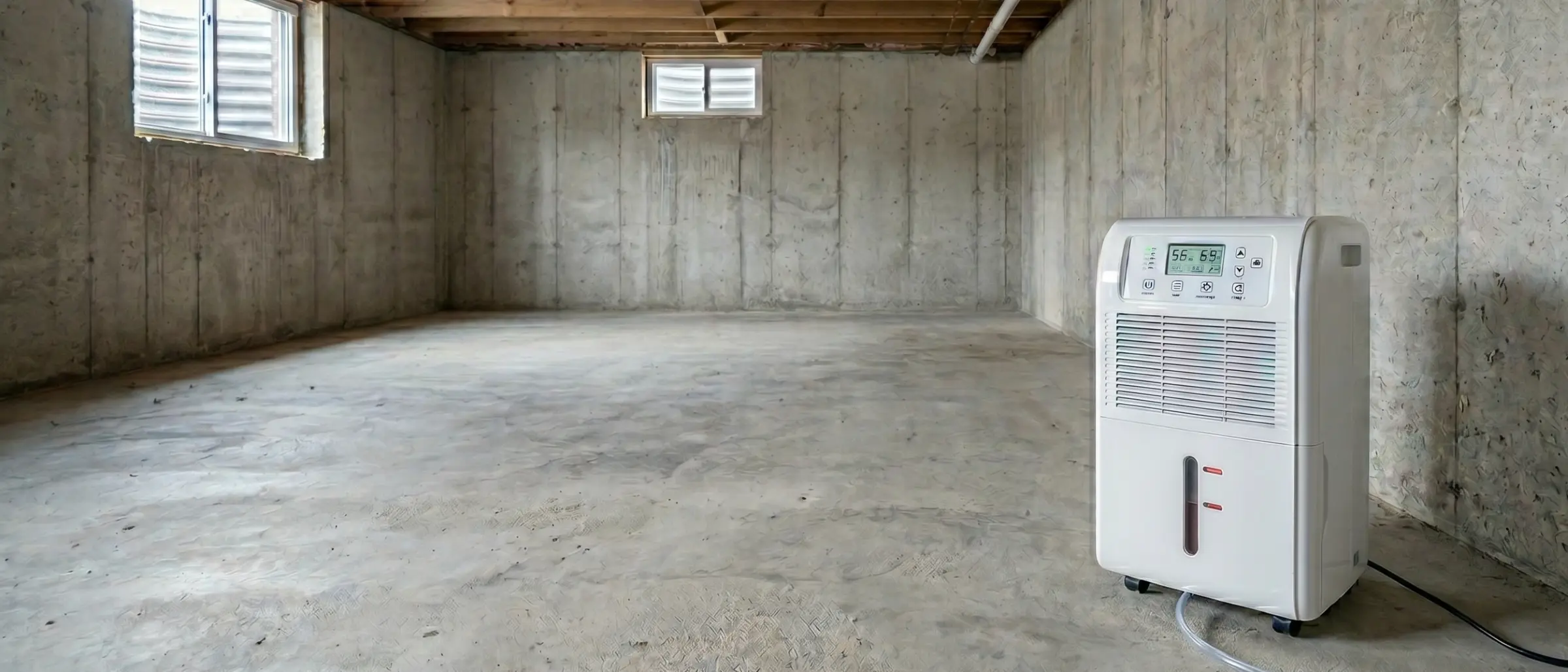

If you are dealing with recurring mold, persistent mustiness, or a damp basement that never fully dries out, humidity is almost certainly the underlying driver. A dehumidifier prevents mold by removing airborne moisture before it reaches the surfaces where mold germinates. The EPA identifies 60% relative humidity (RH) as the threshold above which mold can grow on organic materials such as wood, drywall, and insulation, and the ANSI/IICRC S520 Standard for Professional Mold Remediation identifies moisture control as a core requirement for lasting mold prevention.
Key insights
- Dehumidifiers prevent mold; they don't cure it. A dehumidifier removes moisture from the air. It will not kill or remove existing mold colonies. If you already have visible mold, it must be physically removed before a dehumidifier can prevent regrowth.
- Target 45%–50% RH, not just below 60%. Staying just under 60% leaves almost no margin. Targeting 45%–50% keeps you safely below the mold threshold while staying above 30%, where over-drying causes static, wood shrinkage, and respiratory irritation.
- The 2019 DOE standard changed capacity ratings. A dehumidifier labeled "50 pints" today is equivalent in output to a unit labeled "70 pints" before June 2019. The machine did not change; the test temperature dropped from 80°F to 65°F to better reflect basement conditions.
- Size for your dampness level, not just square footage. The Association of Home Appliance Manufacturers (AHAM) sizing method uses both room size and moisture severity. A wet 500 sq ft basement needs the same capacity as a moderately damp 1,500 sq ft space.
- Continuous drainage is not optional for long-term use. A dehumidifier that shuts off because the tank is full stops controlling humidity. Use a drain hose or condensate pump for spaces where you need consistent protection.
- Active moisture intrusion defeats any dehumidifier. A unit placed in a basement with an active foundation leak or an unsealed crawl space will run continuously and never hit its target. Fix the source first.
Does a dehumidifier prevent mold?
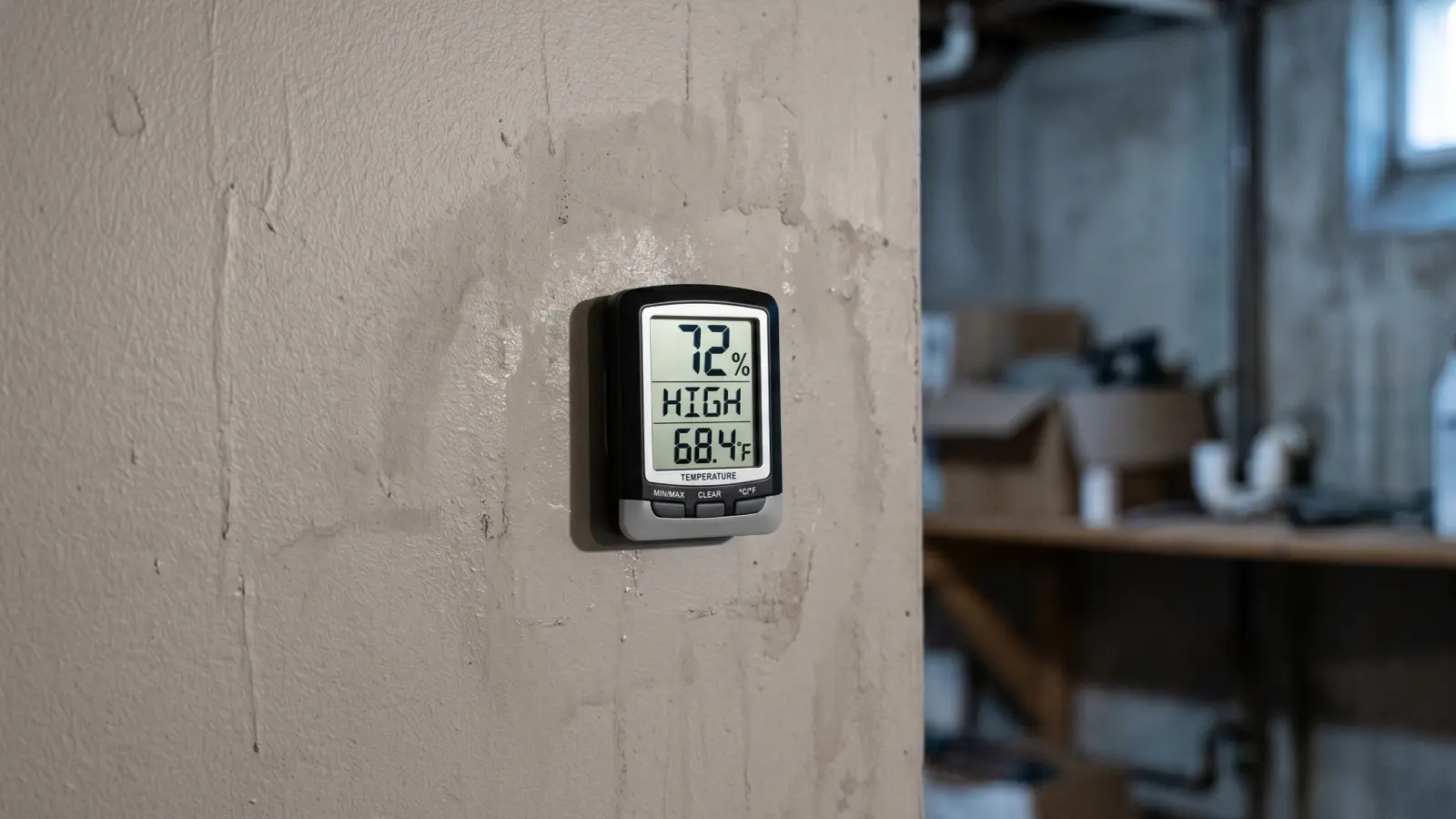
Most mold species grow aggressively above 70% RH and can germinate on organic surfaces at 60%, per EPA and NIOSH guidance. Maintaining indoor RH at 45%–50% creates conditions hostile to mold establishment and addresses the persistent background humidity that allows dormant spore reservoirs to activate.
What a dehumidifier cannot do is substitute for mold removal. If you have visible growth, a dark musty odor in enclosed spaces, or recurring spots that keep returning after cleaning, those are signs of mold that require physical removal first. Running a dehumidifier over active mold can disturb spores and spread contamination to adjacent areas. The correct sequence is always: identify and fix the moisture source, remove existing mold, then deploy the dehumidifier to prevent recurrence.
A dehumidifier is also distinct from an air purifier. Air purifiers with HEPA filters capture airborne mold spores but do nothing about surface moisture conditions. Controlling humidity eliminates the condition that allows spores to establish; filtering the air reduces what is already airborne.
Portable vs. whole-house dehumidifiers
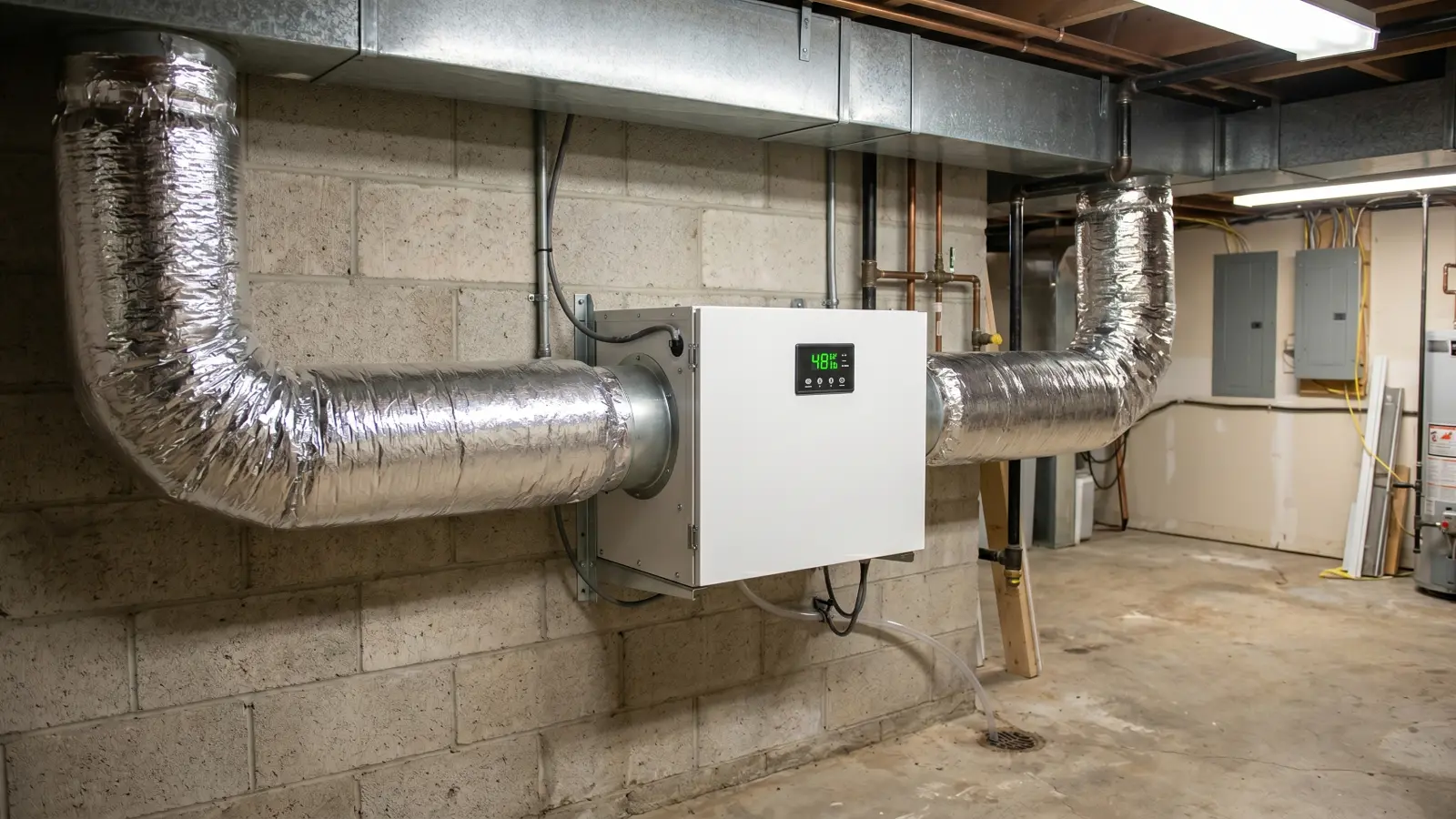
Portable dehumidifiers are standalone units rated up to 50 pints per day that treat a single room or zone; whole-house dehumidifiers are ducted into the HVAC system, rated 70–120 pints per day, and control humidity throughout the entire home. Choosing the wrong type for your situation often means a unit that runs continuously but never reaches its humidity target.
Portable dehumidifiers are rated under the 2019 DOE standard at 65°F and 60% RH, the conditions typical of a basement, not the warmer 80°F conditions used before 2019. They cost $150–$350, require no installation, and are effective for basements, bedrooms, and other discrete spaces. Their limitation is reach: a portable unit in a finished basement cannot treat humidity in adjacent unfinished sections or connected mechanical rooms.
Whole-house dehumidifiers are most valuable during shoulder seasons (spring and fall) when outdoor humidity is high but the air conditioning is not running and therefore not pulling moisture out of circulated air. They are rated 70–120 pints per day and condition all air moving through the duct system. Installation costs $1,000–$2,500 depending on duct configuration and unit capacity, and professional sizing is required.
| Feature | Portable | Whole-house |
|---|---|---|
| Capacity (2019 DOE standard) | Up to 50 pints/day | 70–120 pints/day |
| Coverage | Single room or zone | Whole home via ductwork |
| Cost | $150–$350 | $1,000–$2,500 installed |
| Installation | Plug-in, no install | Requires HVAC integration |
| Best for | Basement, crawl space, bedroom | Chronic whole-home humidity |
| Drain setup | Gravity or pump | Typically plumbed to drain |
For most homeowners with a problem concentrated in a basement, crawl space, or single damp room, a properly sized portable unit is the right starting point. Whole-house units make more sense when humidity is persistently elevated throughout the home, when the HVAC system already needs service, or when a contractor recommends it as part of a post-remediation moisture management plan.
How to size a dehumidifier for mold
Sizing a dehumidifier correctly requires two inputs: square footage of the space and the current moisture condition of that space. Using square footage alone is the most common sizing mistake, and it consistently produces units that run continuously, never reach the target humidity, and wear out prematurely.
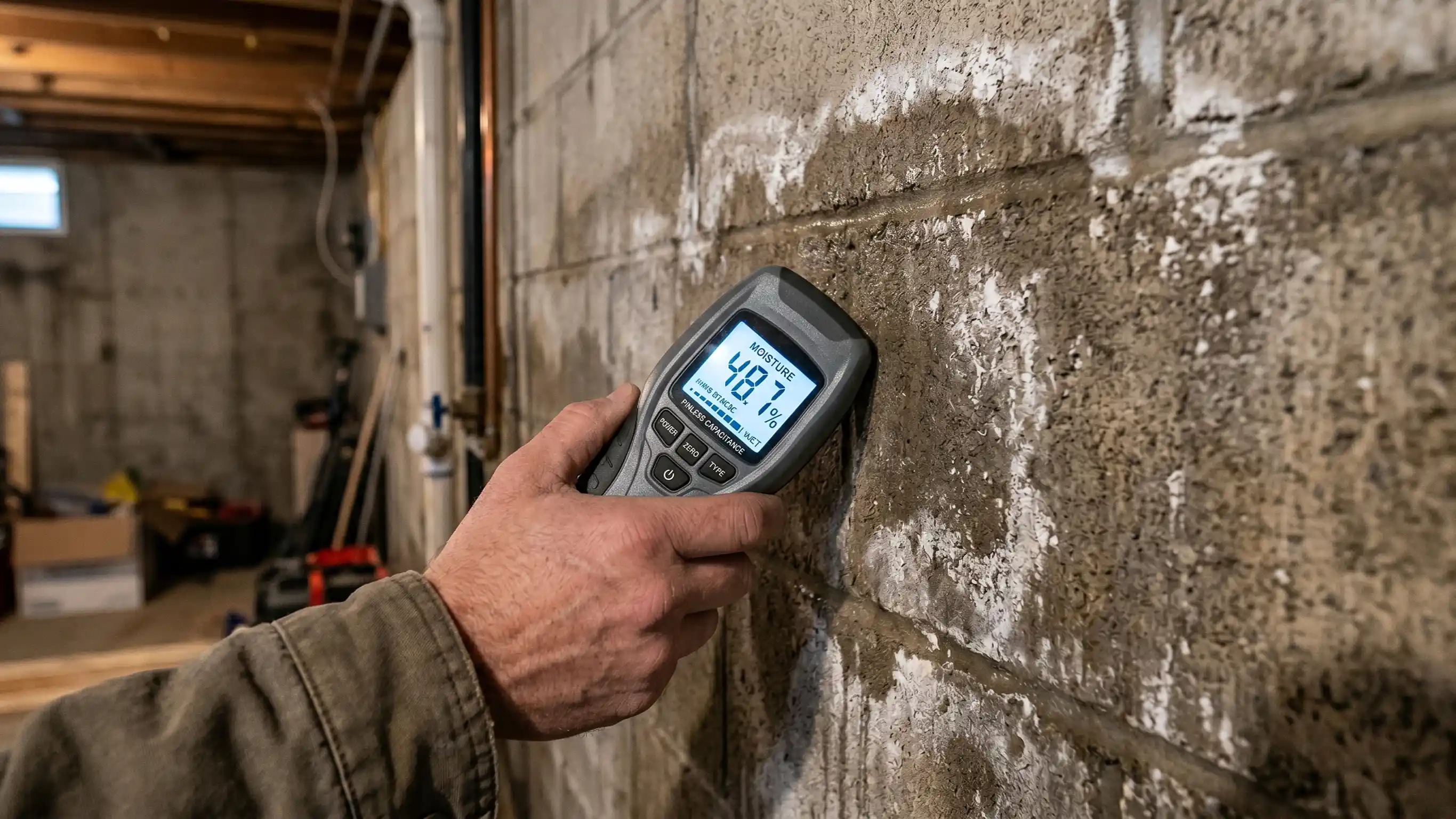
The Association of Home Appliance Manufacturers (AHAM) developed a standardized sizing framework that accounts for both variables. The four moisture condition levels are: moderately damp (musty smell in humid weather only), very damp (consistently musty or visible damp spots), wet (water beading on walls or floors, visible condensation), and extremely wet (standing water or recent flooding, which typically requires structural repair before any dehumidifier will be effective). The humidity and mold relationship at each RH level explains why the same square footage can require dramatically different capacity depending on how much moisture is actively entering the space.
One critical note on capacity labels: the Department of Energy updated its dehumidifier test procedure in June 2019, lowering the test temperature from 80°F to 65°F to better reflect real basement conditions. This change caused capacity ratings to decrease by roughly 30% across all units. A model labeled "50 pints" today is the equivalent of a unit labeled "70 pints" before the standard changed. Per ENERGY STAR's dehumidifier testing guidance, both portable and whole-house dehumidifiers are now tested under this updated DOE procedure.
| Square footage | Moderately damp | Very damp | Wet | Extremely wet |
|---|---|---|---|---|
| Up to 500 sq ft | 10 pints | 14 pints | 18 pints | 26 pints |
| 500–1,000 sq ft | 14 pints | 18 pints | 26 pints | 36 pints |
| 1,000–1,500 sq ft | 18 pints | 26 pints | 36 pints | 44 pints |
| 1,500–2,000 sq ft | 22 pints | 30 pints | 44 pints | 50 pints |
| 2,000–2,500 sq ft | 26 pints | 34 pints | 50 pints | 50 pints+ |
When in doubt, size up by one tier. An oversized unit reaches its target and cycles off; an undersized unit runs continuously and still fails. Add 10 pints to your calculated capacity if the space is below grade with no vapor barrier on soil or concrete floors. For homes with mold already present, pairing the right-sized dehumidifier with an air purifier for mold handles both surface moisture conditions and airborne spores simultaneously.
Sizing by location
Basements, crawl spaces, and HVAC systems each require different dehumidifier types and capacities because their moisture loads, temperatures, and structural constraints differ significantly. A unit sized correctly for a living room will be inadequate in a crawl space with exposed soil, and a standard portable unit will fail in a sealed crawl space regardless of its pint rating.
Basements
Basements are the most common location for mold-related dehumidification. Below-grade construction means moisture migrates through concrete and block walls regardless of visible leaks. A finished 1,000 sq ft basement in moderately damp condition typically needs a 30-pint unit under the 2019 standard. If you have had mold before, can see efflorescence or discoloration on walls, or the space smells musty after rain, treat the condition as "very damp" and size up to 40–50 pints.
Basement dehumidifiers should be rated for low-temperature operation. Most basements in northern climates fall below 65°F during winter months. Standard portable units lose efficiency significantly below 60°F and may ice over entirely below 55°F. Look for units with an auto-defrost feature and confirmed operation down to 41°F if your basement stays cold year-round.
Crawl spaces
Crawl spaces have the highest sustained moisture loads of any space in most homes. Exposed soil releases vapor continuously, outdoor air infiltrates through vents, and the space stays cool enough that condensation forms readily on wood framing. The IICRC S520 identifies crawl space moisture as a primary driver of whole-home mold risk because of the stack effect: air drawn upward from the crawl space carries moisture and spores into living areas above it.
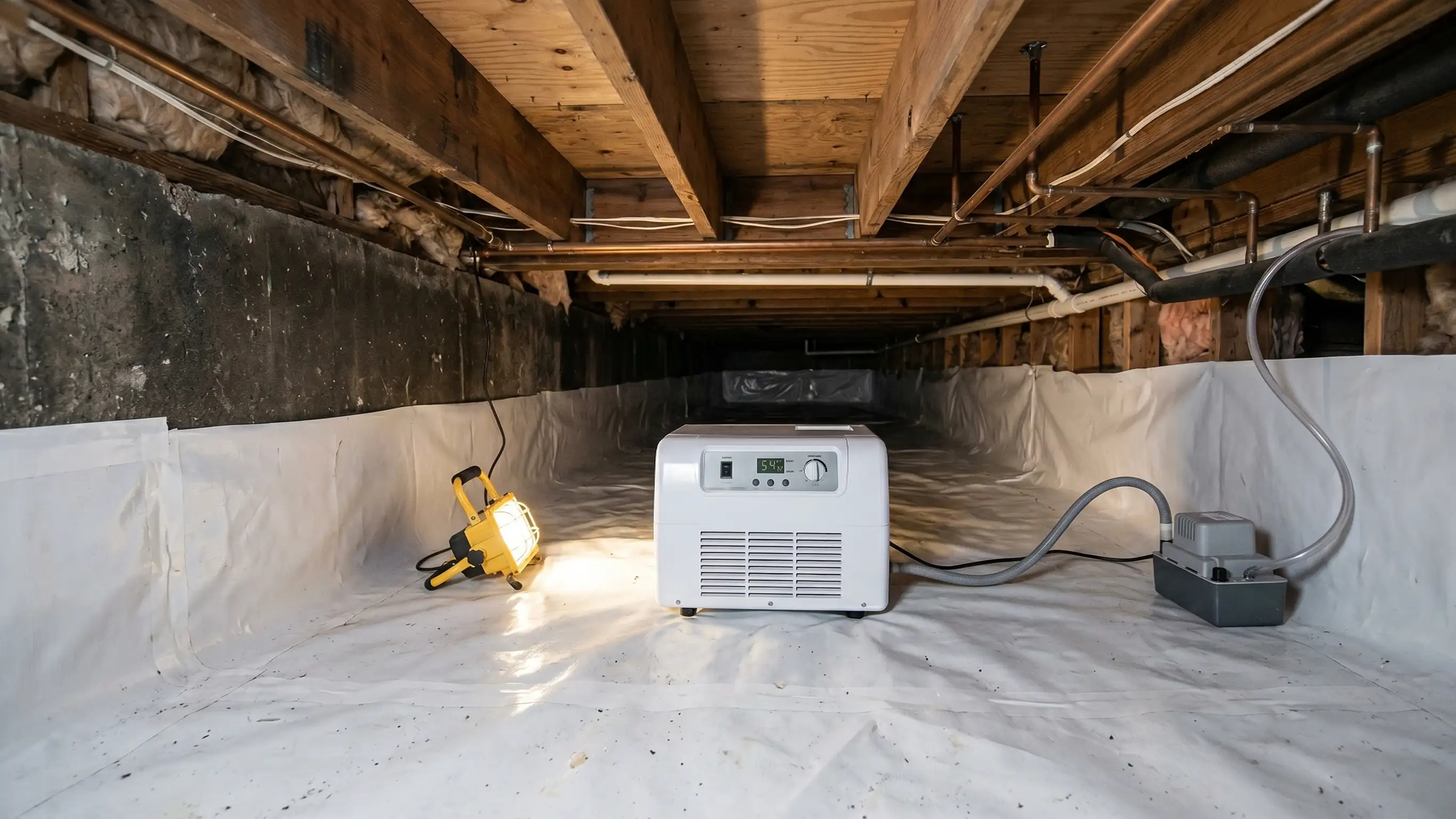
Standard portable dehumidifiers are not well-suited to crawl spaces for long-term use. The clearance is too low for most portable units, airflow is restricted, and the moisture load typically exceeds what a portable unit can handle. A dedicated crawl space dehumidifier, designed for low clearance and higher moisture capacity (typically 70–90 pints per day), with built-in drainage pump is the appropriate equipment for sealed crawl spaces where encapsulation and drainage are also part of the moisture control plan.
HVAC and whole-home humidity
When indoor humidity is consistently elevated across multiple rooms, the root cause is often the HVAC system failing to condition moisture adequately, or the home lacking sufficient dehumidification capacity during shoulder seasons when cooling is not running. A room-by-room hygrometer check that reveals RH above 60% in multiple rooms simultaneously points toward a whole-house solution rather than portable units in each room.
Mold in HVAC systems introduces a separate concern: if mold is growing in ductwork or on coils, circulating air through the system distributes spores throughout the home. A whole-house dehumidifier installed in an HVAC system with an active mold problem will spread contamination rather than control it. The diagnostic steps and remediation sequence for duct-related mold must be completed before any moisture control equipment is added.
Features that matter for mold prevention
The most important features for mold control are a humidistat with an adjustable setpoint, continuous drain capability, and ENERGY STAR certification. Units without a humidistat cannot maintain a target humidity level and will either over-run or shut off too soon, leaving the space unprotected.
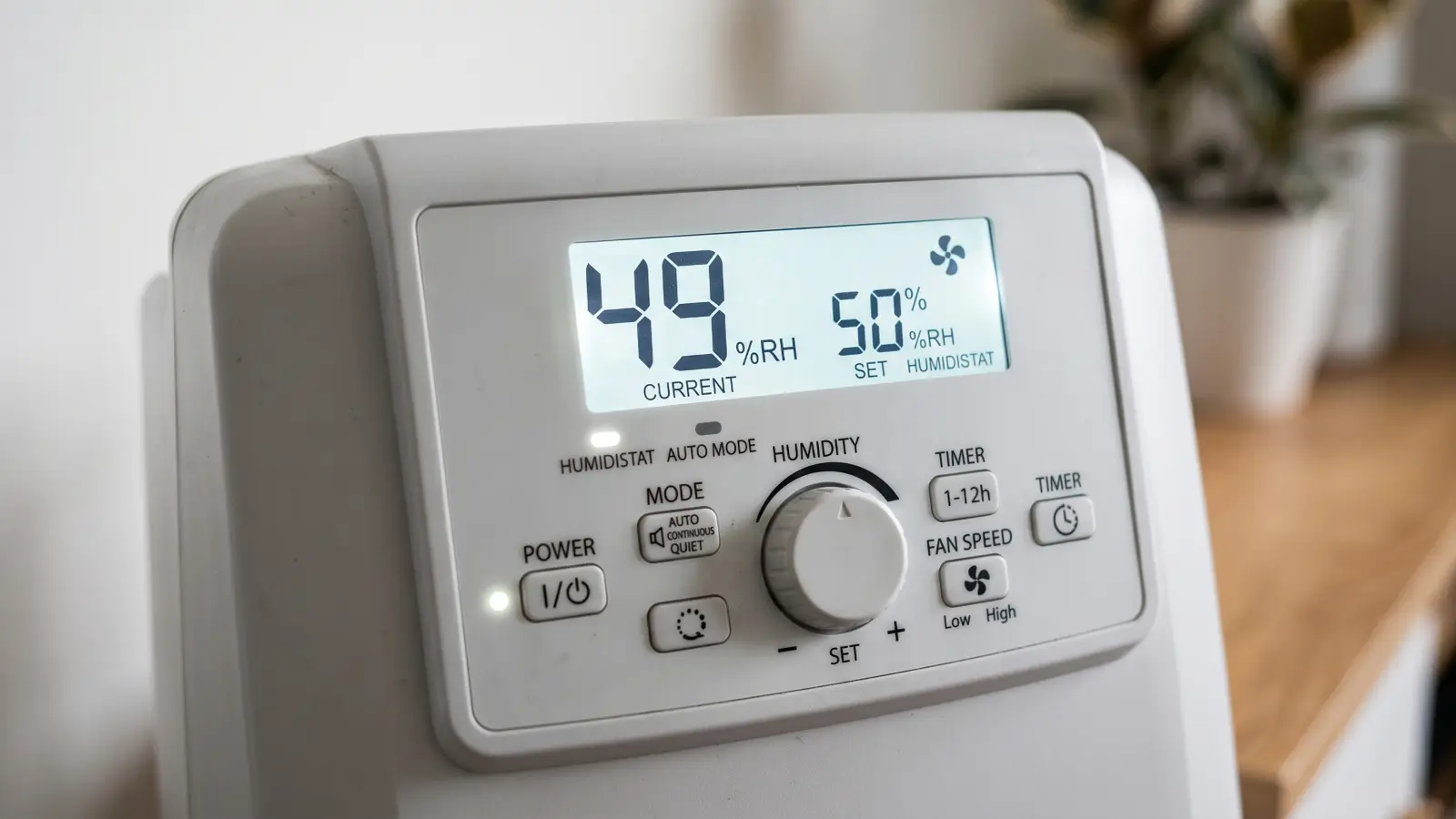
Humidistat with adjustable setpoint
Set the humidistat to 45%–50% RH. The unit will run until it hits the target, shut off, and restart when RH rises again. A unit without a humidistat runs continuously regardless of ambient RH, wastes energy, and may over-dry the space below 30%, which causes its own problems with static, wood shrinkage, and respiratory irritation.
ENERGY STAR certification
ENERGY STAR certified dehumidifiers meet the DOE's Integrated Energy Factor (IEF) standard, meaning they remove more moisture per kilowatt-hour than uncertified models. A certified 50-pint unit typically costs $15–$30 less per year to operate than a comparable non-certified model.
Continuous drain connection
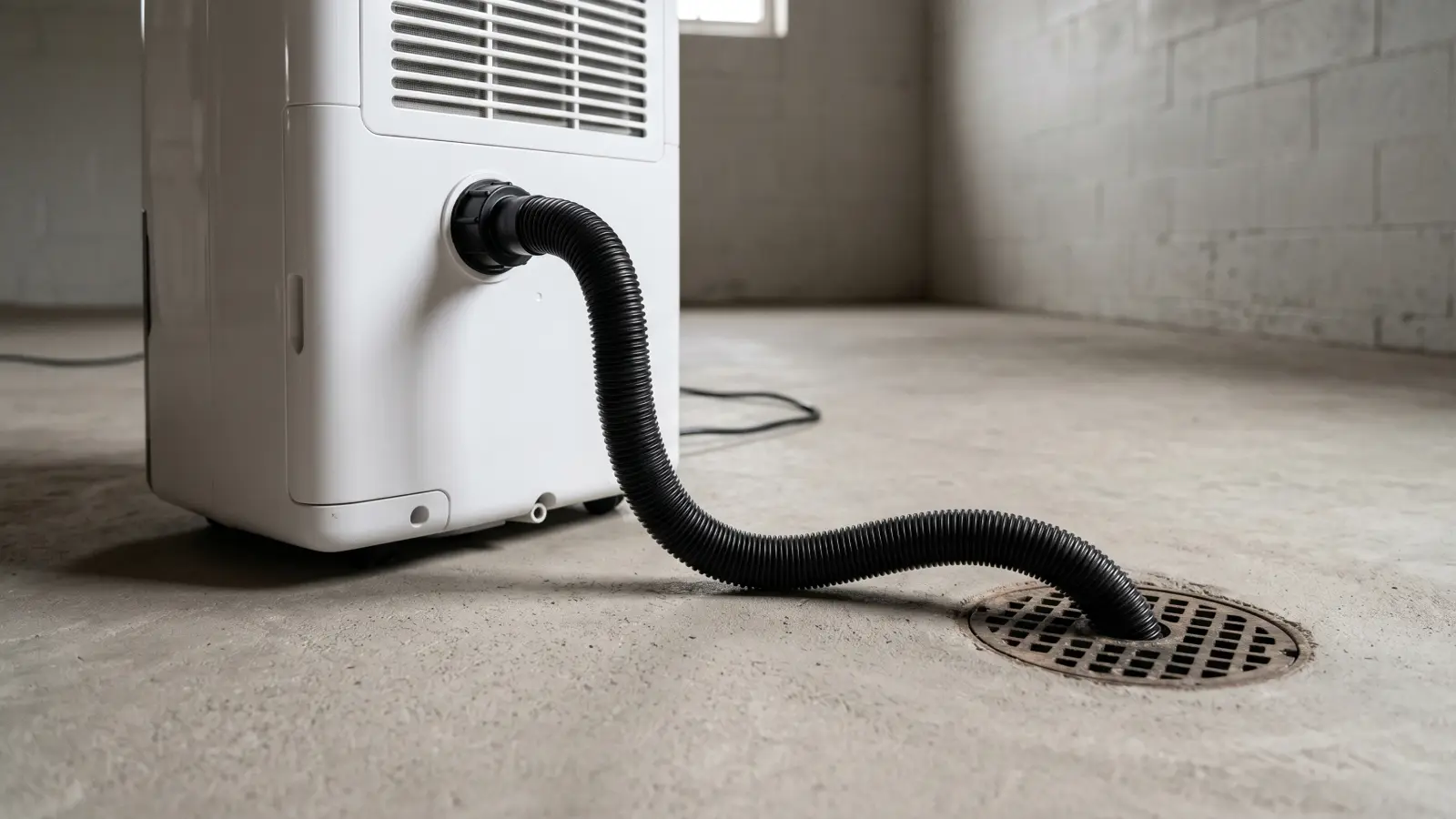
A unit that shuts off when its tank fills stops controlling humidity. For basements and crawl spaces where you need consistent protection, connect the unit to a gravity drain hose routed to a floor drain or sump, or use a built-in or external condensate pump to route drainage upward to a sink or utility drain.
Auto-restart after power outage
Units without this feature revert to standby mode after a power interruption. In a basement or crawl space that may experience brief outages, a unit that does not restart automatically can leave the space unprotected for hours or days without the homeowner realizing it.
Low-temperature operation
Standard compressor-based dehumidifiers lose capacity below 65°F and ice up below 55°F. If your basement or crawl space drops below those temperatures in winter, choose a unit with confirmed low-temperature performance down to 41°F or consider a desiccant dehumidifier, which operates effectively at lower temperatures.
Sealed housing
Units with gaps between internal components allow air to bypass the refrigerant coils without being dehumidified. Sealed housing ensures all air passing through the unit is actually processed, not just moved.
How to use a dehumidifier correctly
Place the unit at least 6 inches from walls, set the humidistat to 45%–50% RH, and connect it to a continuous drain so it never shuts off because the tank is full. These three steps determine whether a correctly sized unit actually maintains your target humidity or just runs without reaching it.
Placement
In basements, position the unit centrally at floor level near the exterior walls where moisture concentration is highest, not near the stairway where air circulation may skew the sensor. Allow at least 6 inches of clearance on all sides so the intake and exhaust can draw and discharge freely.
Setting the target
Set the humidistat to 45%–50% RH. Staying above 50% leaves you with insufficient margin; dropping below 30% causes dry-air problems including static electricity, wood shrinkage, and respiratory irritation. For spaces where mold after water damage is a concern during drying, a restoration contractor may target 40% or lower during the initial drying phase.
Drain management
Set up continuous drainage before you need it. If gravity drainage is not possible (no floor drain lower than the unit's drain port), use a condensate pump. Running without a drain connection means checking and emptying the tank daily in high-humidity conditions, and a single missed day can leave the space unprotected.
Monitor with a hygrometer
A separate hygrometer placed across the room from the dehumidifier confirms that the unit is actually achieving the target throughout the space, not just at the sensor built into the unit. Built-in sensors can read lower than actual room humidity if the unit is positioned near a heat source or air current.
Filter maintenance
Most dehumidifiers have a basic dust filter that should be cleaned monthly. A clogged filter restricts airflow, reduces capacity, and can cause the unit to overheat. In dusty basements or crawl spaces, clean more frequently.
Seasonal operation
In most climates, dehumidifiers are most needed from April through October when outdoor humidity is highest. During winter months, heating the home typically reduces indoor RH. Pairing this seasonal schedule with room-by-room mold prevention actions like exhaust fans, vapor barriers, and leak checks keeps humidity controlled year-round without relying on the dehumidifier alone.
When a dehumidifier is not enough
A dehumidifier is a moisture management tool, not a mold remediation tool. There are situations where a dehumidifier alone will not solve the problem and may create a false sense of security while conditions worsen.
Active moisture intrusion
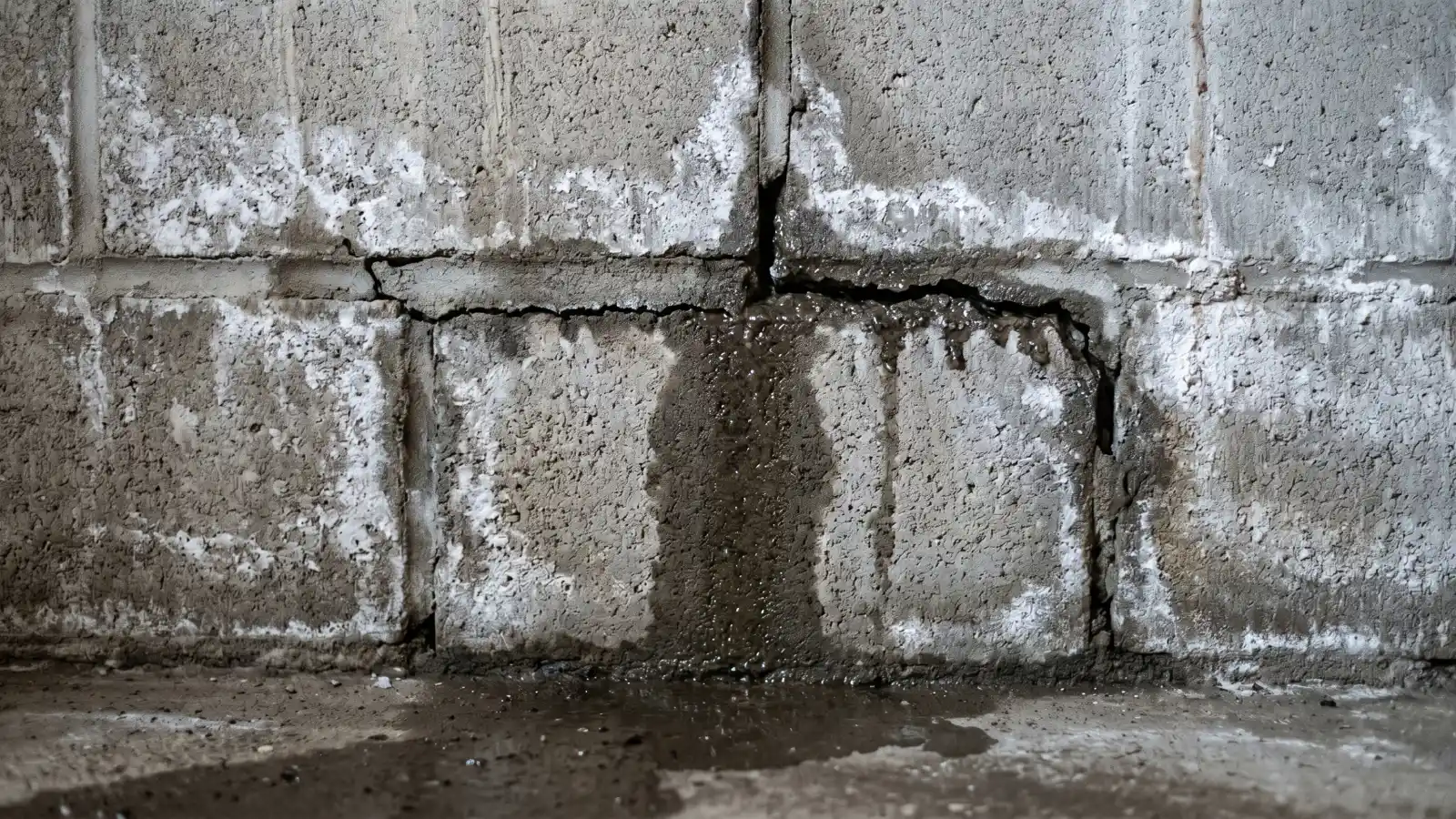
A dehumidifier placed in a basement with a wall crack that allows groundwater infiltration, an HVAC condensate drain that overflows onto the floor, or a plumbing leak above a finished ceiling will run continuously without ever reaching its target. The unit extracts moisture from the air while the intrusion continuously replaces it. Fix the source before running any dehumidifier; DIY mold removal is only effective once the moisture driving the growth has been eliminated.
Existing visible mold
If you have had a water event where materials stayed wet for more than 48 hours, or if mold spots keep returning within days of cleaning, a dehumidifier is the wrong first tool. Active growth needs physical removal before moisture control can hold. The EPA's 10-square-foot threshold is the standard for determining whether professional involvement is needed rather than DIY cleaning.
Mold in porous building materials
Drywall, wood framing, and insulation that have sustained mold growth below the surface cannot be dried out and reused. A dehumidifier running in a room where mold has colonized wall cavities will not address the growth inside those materials. The EPA's contamination level classifications in when mold remediation is required define the scope at which professional removal is necessary rather than surface cleaning.
Post-remediation follow-through
After professional mold remediation, the contractor should specify a target humidity range and recommend a dehumidifier if the space lacked adequate moisture control before. Running a dehumidifier in the weeks after remediation, combined with a post-remediation mold inspection and clearance test, confirms that conditions no longer support mold growth.
A dehumidifier that is properly sized, correctly placed, and continuously draining is one of the most effective long-term tools for mold prevention. The investment is modest compared to the cost of mold remediation, and maintaining indoor RH in the 45%–50% range year-round is among the most consistent actions a homeowner can take to stop mold before it starts.
Frequently asked questions
Can a dehumidifier over-dry a space and cause damage?
Yes. Running a dehumidifier below 30% RH causes dry-air problems including static electricity, wood shrinkage, cracking in drywall and trim, and respiratory irritation. Set the humidistat to 45%–50% RH rather than running the unit at maximum. A unit with an adjustable humidistat cycles off when it hits your target, so over-drying only happens if the setpoint is too low or the unit has no humidistat at all.
How do I know if my dehumidifier is actually working?
Check a separate hygrometer placed across the room 24–48 hours after starting the unit. If RH has dropped toward your 45%–50% target, the unit is working. If the tank fills daily but RH stays above 60%, the unit is either undersized for the space, the moisture condition is worse than estimated, or there is an active intrusion source the dehumidifier cannot overcome on its own.
What size dehumidifier do I need for a basement?
A 1,000 sq ft basement in moderately damp conditions needs a 25–30 pint unit under the 2019 DOE standard. If the space smells musty consistently, has moisture on walls, or has had mold before, step up to 40–50 pints. Very wet basements above 1,500 sq ft need a 50-pint unit at minimum.
What is the difference between a portable and a whole-house dehumidifier?
Portable dehumidifiers are self-contained units rated up to 50 pints per day that work in a single space. Whole-house dehumidifiers connect to your HVAC ductwork, are rated 70–120 pints per day, and control humidity throughout the entire home. Whole-house units cost $1,000–$2,500 installed versus $150–$350 for portables.
Do I need a dehumidifier if I already have central air conditioning?
In many climates, yes. Air conditioning removes moisture as a byproduct of cooling, but only when there is a cooling load. During spring and fall shoulder seasons when temperatures are mild but outdoor humidity is high, the AC does not run and indoor RH can climb above 60%. Basements and crawl spaces also stay cool enough that the AC rarely conditions their air directly, making a dedicated dehumidifier necessary for those spaces year-round.
Does an old 70-pint dehumidifier equal a new 50-pint unit?
Yes. The Department of Energy updated its test standard in June 2019, dropping the test temperature from 80°F to 65°F to better reflect real basement conditions. A unit previously rated 70 pints per day is now rated approximately 50 pints per day. The machine is the same; only the testing conditions changed.
Sam Hickerson is the founder of RestoreAdvisor and writes consumer guides on mold remediation, inspection, testing, and home recovery. His work focuses on helping homeowners understand costs, risks, and when to call a professional. He draws on guidance from the EPA, CDC, IICRC, and other authoritative sources to make complex home issues easier to navigate.