
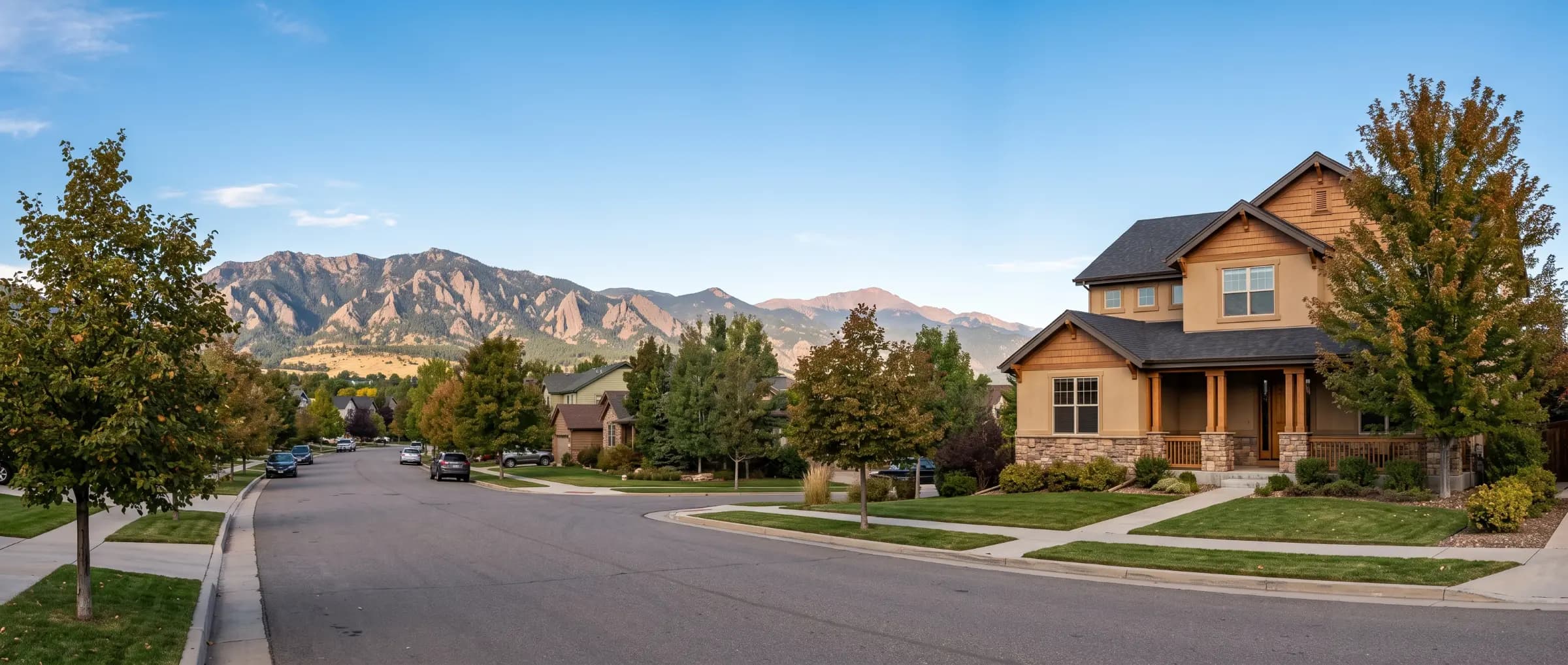

Denver homes have two moisture problems working against each other. The ground underneath most of the metro area is bentonite clay, a mineral that swells when wet and shrinks when dry with enough force to crack a foundation wall. Above that same foundation, the Front Range sits inside what meteorologists call Hail Alley, and a roof that takes a direct hit in June can be leaking by the next thunderstorm if nobody gets up there first. Neither problem is about humidity in the way flood-prone or coastal cities experience it. Denver's climate is genuinely dry, but a cracked slab or a punctured shingle turns that dryness irrelevant in the specific spot where water is getting in.
Mold remediation is the physical removal of active mold growth and the materials it has colonized, done according to the ANSI/IICRC S520 standard, followed by correction of the moisture source that let it grow. Colorado has no state agency that licenses or regulates who performs that work, which means the credential worth checking is IICRC certification rather than a state mold license. Denver's contractor licensing, insurance treatment, and legal exposure for buyers, sellers, and renters all trace back to that same clay-and-hail risk profile, since the ground itself is part of what makes a claim, a disclosure, or a habitability complaint play out differently here than in most other cities.
Key insights
- Denver sits on expansive clay, not high humidity. Bentonite clay under most of the metro area swells and shrinks with moisture, cracking foundations and creating entry points for water even though outdoor air stays dry most of the year.
- Hail is the other half of the story. Denver averages around 13 hailstorms a year, and the May 2017 storm alone caused $2.3 billion in damage across the metro area, mostly to roofs.
- Colorado licenses no mold remediation trade. There is no state mold license and no statewide contractor license; Denver's own municipal licensing covers repair trades like drywall and framing, not the mold cleanup itself.
- Insurance treats clay-soil cracks and hail damage very differently. Hail-caused roof leaks are usually a covered sudden peril; foundation cracking from earth movement is almost always excluded, even when the mold that follows looks identical.
- Colorado's landlord mold law is unusually specific. State statute requires a landlord to begin containment and HEPA filtration within 96 hours of written notice, a faster and more detailed mandate than most states set.
- Colorado's disclosure standard protects sellers who genuinely did not know. Unlike states with a broader duty to investigate, Colorado only requires disclosure of defects the seller actually knew about.
Why bentonite clay and hail season drive mold risk in Denver
Denver's mold risk comes from two mostly unrelated hazards that both end in the same place: water finding a way past a building envelope that was not designed to stop it. Bentonite clay, a swelling mineral formed from ancient volcanic ash, underlies most of the Front Range and can expand by roughly 20% in volume when saturated with snowmelt or heavy rain, exerting pressure the Colorado Geological Survey has measured at up to 30,000 pounds per square foot. That pressure is what cracks basement walls, bows slabs, and separates foundations from framing in homes across the metro area, and Colorado's own geological survey attributes more property damage statewide to expansive soil each year than floods, tornadoes, and earthquakes combined.
 Under ANSI/IICRC S520 guidance, active seepage through a crack like this calls for a moisture assessment before any mold cleanup begins, since sealing the surface alone rarely holds.
The second driver sits above ground. Denver's position along the Front Range puts it inside Hail Alley, the North American region with the highest frequency of large hail on record, and the National Weather Service office in Boulder tracks an average of roughly 13 hailstorms hitting the Denver area each year between mid-April and mid-September. The May 8, 2017 storm remains the costliest in Colorado history at $2.3 billion in insured losses, and June 2026 brought another round of softball-sized hail across the Front Range and Eastern Plains. A roof that loses shingle granules or takes a punctured mat during one of these storms does not necessarily leak the same day. It leaks the next time it rains hard, which in Denver's pattern of afternoon thunderstorms can be within days.
A third, quieter factor compounds both of these. Denver's semi-arid climate, averaging around 14 to 17 inches of annual precipitation against roughly 50 inches of snow, means outdoor humidity almost never drives mold growth on its own. That same dryness pushes many households to run whole-house or portable humidifiers through the winter heating season, and an oversized or unmonitored unit can push indoor relative humidity high enough to condense on cold windows, rim joists, and exterior wall cavities, which is a moisture source specific to dry-climate homes rather than something a humid-region homeowner would ever deal with.
A fourth mechanism has nothing to do with a hail event, a foundation crack, or a humidifier at all. Denver's day to night temperature swing often runs 25 to 30 degrees between the afternoon high and the overnight low, and basements, crawl spaces, and the inside face of exterior walls stay several degrees cooler than the rest of the house once the sun goes down. That gap is enough for ambient moisture to condense directly onto those cooler surfaces overnight, which explains why some Denver basements develop a musty smell even when there is no crack, no leak, and no humidifier anywhere in the house.
| Construction era | Common foundation type | Denver-specific vulnerability | Neighborhoods |
|---|---|---|---|
| Pre-1920 | Brick on shallow stone or rubble footing | Minimal moisture barrier, decades of clay movement | Curtis Park, Baker, Five Points |
| 1900 to 1940 | Brick bungalow with partial basement | Foundation designed before expansive soil standards existed | Capitol Hill, Park Hill, Montclair |
| 1950 to 1979 | Poured concrete basement, slab additions | Peak era of under-engineered foundations on bentonite | West Highlands, Sunnyside, Berkeley |
| 1980 to 2005 | Engineered basement or crawl space | Better soil reports, but hail-era asphalt roofing now aging out | Green Valley Ranch, Central Park |
| 2006 to present | Slab or engineered pier foundation | Modern soil mitigation, but new-build roofs face the same hail exposure | Reunion, Stapleton infill lots |
Homeowners renovating an older Denver home after finding a crack or a leak often end up needing professional mold remediation rather than a surface cleaning, particularly once water has been tracking through a foundation gap for more than a few weeks. Water that enters through a hail-damaged roof follows a faster but equally destructive timeline once it starts.
How to tell if Denver mold is coming from clay soil or a hail-damaged roof
The signs of clay-soil movement and the signs of a hail-damaged roof rarely overlap, and telling them apart early points a homeowner toward the right specialist before calling anyone. Foundation-driven signs tend to show up low in a home and worsen gradually over months; roof-driven signs show up high and often trace back to a specific storm date.
 Per IICRC S520, granule loss and mat exposure like this is a precursor sign, not yet an active leak, and warrants a roof inspection before the next rain reaches the same spot.
A widening crack near a window or door frame
A diagonal drywall crack running from the corner of a window or door, paired with a door that has started sticking or no longer latches cleanly, points to foundation movement rather than a plumbing or roof leak. These cracks tend to appear gradually and reopen after being patched if the underlying soil movement was never addressed.
A gap where the basement floor meets the foundation wall
A visible separation, even a thin one, between the slab and the foundation wall is a classic sign of differential settlement caused by clay swelling unevenly around the perimeter. Water tracking through that gap after snowmelt is one of the more common ways a Denver basement develops mold without any visible leak from above.
A musty basement smell that follows the seasons rather than storms
An odor that intensifies every spring after snowmelt or after a heavy spring rain, but stays flat through a dry summer thunderstorm, is consistent with a foundation crack rather than roof damage, since it tracks groundwater pressure rather than direct rainfall on the roof.
A ceiling stain that appeared after a specific storm
A stain a homeowner can trace to a particular hailstorm date, rather than one that developed slowly, usually means a roof breach let water in during that storm and has continued leaking with every rain since. This is the signal that most often means a roof repair needs to happen before or alongside the mold cleanup.
Granules collecting in the gutter or at the downspout
Asphalt granules showing up in a gutter or pooling at the base of a downspout after a hailstorm is an early warning sign, not yet a leak, that the shingle mat has been exposed and a leak is likely on its way if the roof isn't inspected soon.
Damp or matted insulation directly under a roof valley or vent
Insulation that feels wet or has flattened out in one specific spot in the attic, rather than throughout the space, almost always sits directly beneath the point where a hail-damaged shingle or a failed vent boot is letting water through.
These signals cover the two hazards specific to Denver. For general visual and odor indicators that apply to any home regardless of cause, the visual and odor identification that most homeowners check first is still worth reviewing alongside these.
DIY or professional: how to decide in Denver
Size alone is not the deciding factor in Denver the way the EPA's Mold Cleanup in Your Home guidance and its 10 square foot threshold might suggest, because a foundation crack or an active roof leak keeps producing new mold no matter how small the current patch looks. A patch tied to either of those two sources needs a professional even if it covers less than a single square foot, because cleaning the visible mold without fixing the water source behind it means the same patch reappears within weeks.
 A patch this size and this isolated fits the EPA's under 10 square foot threshold for DIY cleanup, provided the moisture behind it has actually stopped rather than just the surface being wiped.
A patch with no connection to either hazard, a shower ceiling spot caused by a weak exhaust fan, for example, still fits the standard EPA calculus and remains a reasonable candidate for DIY cleanup under 10 square feet. The distinguishing question is not how large the patch looks today but whether the water behind it has actually stopped, since a foundation crack or an unrepaired roof breach keeps feeding the same spot even after a thorough cleaning.
| Factor | DIY may be appropriate | Call a professional |
|---|---|---|
| Size | Under 10 sq ft, per EPA guidance | 10 sq ft or more, or spread across multiple rooms |
| Moisture source | Isolated, already fixed, and non-recurring | Tied to a foundation crack, active roof leak, or unresolved humidifier issue |
| Location | Accessible surface such as tile, glass, or painted drywall | Basement wall near a foundation crack, attic decking, or inside HVAC ductwork |
| Water history | A single, already-corrected event | Repeat staining, a crack that has reopened before, or storm damage over 1 inch of hail |
| Household risk | No infants, elderly residents, or respiratory conditions in the home | Any high-risk household member present |
A basement patch that meets every DIY column above can still warrant a call if it sits directly below a known clay-soil crack, since the underlying movement is ongoing even when the visible mold looks contained. The full DIY step-by-step process and supply kit covers the room-agnostic cleaning steps and PPE that apply once a Denver homeowner has confirmed the job genuinely qualifies.
What mold remediation costs in Denver
Most Denver mold remediation jobs cost between $500 and $6,000, with the final number driven far more by how much material has to come out than by square footage alone. A small patch on a bathroom ceiling sits at the low end; a basement wall opened up after months of an unnoticed foundation leak sits at the high end, and a whole-house job following major water intrusion can run $10,000 to $30,000. Contractors typically price by the square foot rather than a flat fee once the job exceeds a small patch.
 Staining that has climbed this far up a wall usually means the mold has been active for months, which is what pushes a job from a small patch price into a full wall section removal.
Two factors push a Denver quote higher than a similar job elsewhere would run. Most contractors set a minimum project charge of $500 to $1,000 regardless of how small the affected area is, since containment, setup, and disposal costs stay roughly fixed no matter the size of the job. Foundation-related jobs also tend to carry a separate waterproofing or crack-injection line item billed on top of the mold cleanup itself, which is why two homes with the same visible square footage of mold can end up with very different total invoices depending on whether the water source was a roof leak or a cracked basement wall.
| Project scope | Typical cost | What drives the range in Denver |
|---|---|---|
| Small patch, under 10 sq ft | $300–$1,200 | DIY-eligible under EPA guidance if surfaces are cleanable and non-porous |
| Medium area, 10 to 100 sq ft | $1,200–$3,500 | Common for a single wall section after a foundation crack or window leak |
| Large area, 100 to 300 sq ft | $3,500–$8,000 | Basement-wide jobs after a slow clay-soil crack; often bundled with foundation sealing |
| Whole floor or attic after roof leak | $4,000–$12,000 | Hail-damaged roof jobs often bundle roof repair costs on top of remediation |
| Whole-house after major intrusion | $10,000–$30,000+ | Burst pipe, prolonged foundation leak, or undetected multi-room roof failure |
Per square foot pricing in Denver generally falls in the $10 to $25 range, consistent with national figures, though jobs requiring foundation waterproofing or roof decking replacement on top of the mold work push toward the higher end. Standalone mold inspection typically runs $300 to $700, and post-remediation clearance testing adds another $200 to $1,200 depending on how many samples are collected.
Full national cost tables break down pricing by every scenario in more depth, including how per square foot rates shift once demolition or foundation work gets added to the scope.
Cost by room and moisture source
Basement mold remediation costs the most on average in Denver homes specifically because the moisture source is so often structural rather than incidental. A foundation crack from clay-soil movement means a contractor is not just cleaning mold, they are typically coordinating with a foundation repair specialist or waterproofer, which raises the total project cost even when the mold itself covers a modest area.
 Mold spread across roof decking like this usually traces back to a hail-damaged shingle that went unrepaired through multiple rainstorms, not a single leak event.
Attic remediation tied to a hail-damaged roof follows a different cost logic entirely. The mold cleanup itself is often straightforward, but a contractor typically will not close up drywall or insulation until a roofer has confirmed the leak point is fully sealed, which tends to add scheduling delay rather than a direct cost increase. Bathroom and kitchen jobs stay cheapest because ventilation fixes and surface cleaning rarely require demolition, while jobs involving mold in HVAC ductwork or humidifier lines run higher specifically because reaching the affected components means partial disassembly of a system that has to keep working through a Denver winter.
| Location | Typical cost | Denver-specific driver |
|---|---|---|
| Basement | $1,500–$6,000 | Foundation crack or window well leak tied to expansive clay movement |
| Attic | $1,000–$5,000 | Hail-damaged roof allowing water intrusion, often paired with roof repair |
| Bathroom | $500–$2,000 | Standard ventilation gaps, less climate-specific than other locations |
| HVAC and humidifier lines | $800–$3,500 | Whole-house humidifier condensation on ductwork or nearby framing |
| Crawl space | $1,200–$4,500 | Less common in Denver than basements, but present in some older bungalows |
A basement crack that has been leaking intermittently for a season often hides more damage than the visible mold suggests, which is part of why a contractor's written scope should always include a moisture-meter reading of the surrounding framing rather than a visual assessment alone. Confirming the species through mold testing before demolition starts also helps settle whether a basement job needs black-mold-level containment or a standard cleanup.
What Denver mold remediation actually looks like
Professional mold remediation in Denver follows the same core ANSI/IICRC S520 sequence used nationally, with two extra coordination steps built in for whichever hazard caused the job.
 Under ANSI/IICRC S520, containment stays sealed and the negative air machine keeps running until the exposed framing is fully cleaned and dried, not just until the visible mold is gone.
Inspection and moisture mapping
A technician confirms the water source with a moisture meter or infrared camera before touching any material, since starting demolition before the source is identified is how a job ends up reopened a second time.
Coordinating the root-cause repair
For foundation-related jobs, this is where a waterproofer or structural specialist gets scheduled, since sealing a crack from the inside without addressing the soil pressure behind it rarely holds. For hail-related jobs, this is where a roofer confirms the breach is closed.
Containment and removal
The crew isolates the work area with poly sheeting and negative air pressure, then removes contaminated porous material such as drywall, insulation, or subflooring that cannot be cleaned in place.
Cleaning and antimicrobial treatment
Remaining structural surfaces get HEPA vacuumed and treated, and air scrubbers run continuously through this phase to capture spores the removal work disturbed.
Drying and clearance verification
Framing and subfloor are dried to a target moisture content before anything gets closed back up, and a third-party clearance test confirms the space is ready for reconstruction.
Reconstruction, drywall, insulation, and any flooring that had to come out, gets scheduled separately once clearance passes, and in Denver this is the phase where the contractor's own city license class actually matters, since closing up drywall or reframing falls under the city's building permit requirements even though the mold cleanup itself does not.
How long mold remediation takes in Denver
Most Denver jobs run 3 to 7 active working days from the start of containment to the final clearance test, not counting whatever repair work the root cause requires on either end. A small bathroom or closet job can close out in a single day; a basement job tied to a foundation crack routinely runs longer because the waterproofing work has to happen before or during the mold cleanup rather than after it.
Coordinating multiple trades, not the mold cleanup itself, is usually what stretches a short timeline into a long one. A basement job that only involves mold removal can often wrap in two to three days, but the same basement with an active foundation crack tends to wait on a structural engineer's assessment before a waterproofer can even start, and most remediation crews will not schedule final cleaning until that sequence is locked in.
| Job type | Typical active timeline | What extends it in Denver |
|---|---|---|
| Small bathroom or closet patch | 1 day | Rarely extended unless behind tile |
| Medium basement or bedroom wall | 2 to 4 days | Waiting on foundation crack assessment before closing drywall |
| Attic after a hail-damaged roof | 3 to 5 days | Roofer confirmation of a sealed leak point before reconstruction starts |
| Whole basement after a slow foundation leak | 5 to 10 days | Waterproofing or crack injection scheduled alongside the mold work |
| Whole-house after major water intrusion | 10 to 20 days | Multiple trades sequencing repair, drying, and reconstruction |
Clearance testing itself typically adds 24 to 72 hours on top of the active work, since lab turnaround for the confirming clearance sample runs on its own schedule separate from the crew's calendar. Homeowners scheduling around a hail season repair should build in extra buffer specifically for the roofer's timeline, since Denver roofing crews book out fastest in the same June through August window when remediation demand also peaks.
Does Colorado require a mold remediation license?
No. Colorado has no state agency that licenses, certifies, or regulates mold remediation contractors, and it is also one of a small number of states with no statewide general contractor license of any kind. Licensing in Colorado happens entirely at the city and county level, which means Denver's rules are not the same as Aurora's or Colorado Springs's, and none of them address mold specifically.
 Since Colorado issues no mold license at any level, verifying a contractor means checking the Denver city license and the IICRC credential separately rather than asking for one document that covers both.
Denver requires anyone performing repair work covered by a building permit, drywall, framing, insulation, or roofing among them, to hold a Denver contractor license issued through Community Planning and Development. Getting one starts with a Construction Supervisor certificate that proves hands-on experience, followed by a Class C license for residential work or a Specialty Class D license for trades like drywall and insulation specifically. Denver does not reciprocate licenses from any other Colorado city, so a contractor licensed in Colorado Springs still has to apply fresh in Denver.
None of that licensing structure touches the mold cleanup step itself. A contractor can hold a valid Denver Specialty Class D license for the drywall replacement and still have no formal mold training at all. That gap is exactly why IICRC certification does the job Colorado's licensing system does not: the AMRT credential and Active Certified Firm status verify mold-specific training that the city license was never designed to cover.
Denver contractor license verification
Call Denver Community Planning and Development at (720) 865-2700 or use the city's online license verification tool to confirm the contractor holds an active Denver-issued license, not a license from a different Colorado municipality.
IICRC certification lookup
Search the IICRC's own certification locator separately, since it is a different organization from the city and covers a different credential entirely.
Insurance and bonding proof
Ask for a current certificate of general liability insurance, and for any project involving excavation or right-of-way work, confirm the required Denver surety bond is in place.
Contractors who also hold IICRC certifications beyond AMRT, such as a Mold Remediation Specialist credential, bring a level of documented experience the Denver licensing system alone does not require.
Questions to ask before hiring a Denver mold contractor
The questions worth asking a Denver contractor differ from a licensed-state script because there is no license number that automatically vouches for mold competence. What matters is whether the answers show real familiarity with expansive soil and hail-related water intrusion, not generic mold knowledge.
How do you handle mold tied to a foundation crack rather than a plumbing leak?
A contractor who has worked in Denver should immediately ask about grading, drainage, and whether a waterproofer or structural engineer needs to be brought in before remediation starts. A vague answer about just cleaning the visible mold is a red flag, since sealing the crack without addressing the soil movement behind it often means the mold comes back.
Is your Denver contractor license current, and for which class?
The answer should specify Class C, Class B, or Specialty Class D depending on scope, and should be verifiable through the city's own portal. A contractor who cannot name their license class likely does not have one that covers the work.
What's your plan if this turns out to be hail-related roof damage?
Attic and top-floor mold jobs in Denver frequently trace back to a roof breach that predates the visible mold by weeks. A contractor should be willing to coordinate timing with a roofer rather than remediate and reseal drywall over a leak that is still active.
Do you carry IICRC AMRT certification, and can I see it?
This is the credential doing the work Colorado's licensing system does not, so a contractor should produce it without hesitation.
What does your written scope include for moisture verification after the work is done?
A scope that ends at visible cleanup without a follow-up moisture reading leaves open the possibility that a clay-soil crack is still letting water in.
The contractor vetting standards cover bid comparison and scope-of-work requirements that apply regardless of state licensing, along with red flag answers across every phase of hiring a remediation company.
Does homeowners insurance cover mold damage in Denver?
Sometimes, and the deciding factor is almost always which of Denver's two main hazards caused the water intrusion in the first place. A standard Colorado HO-3 policy treats hail as a sudden, named peril, so a roof breach from a hailstorm followed by water damage and mold is typically covered, often up to the policy's separate mold sublimit of roughly $5,000 to $10,000. A foundation crack from bentonite clay movement is a different story entirely, since HO-3 policies almost universally exclude damage caused by earth movement, and adjusters routinely classify expansive-soil cracking under that exclusion even when the resulting mold looks identical to a covered claim.
 Since adjusters classify foundation cracking as earth movement rather than storm damage, photo documentation like this often determines whether a claim gets denied before repair work even starts.
That distinction matters more in Denver than in most markets, because it means two homeowners with visually identical basement mold can get opposite claim outcomes depending on whether an inspector traces the water to a roof leak or a foundation crack. Colorado's hail losses have also pushed several insurers to raise premiums, add hail-specific deductibles, or decline renewal in the hardest-hit ZIP codes, which can complicate filing a claim even for a covered roof-related loss.
Gradual leaks and gradual humidifier condensation typically fall outside coverage on both types of policy regardless of cause, since insurers generally require a sudden, identifiable event rather than damage that accumulated slowly. Homeowners considering an endorsement for additional mold coverage should review how these exclusions and sublimits work nationally before assuming a specific Denver claim will or will not be paid.
Buying or selling a Denver home with a mold or grow house history
Colorado's disclosure law protects sellers who genuinely did not know about a defect, which sets it apart from states that impose a broader duty to investigate before listing. Under C.R.S. § 38-35.7, a statute enacted by the Colorado General Assembly, and the Colorado Real Estate Commission's standard disclosure form, a seller only has to disclose material facts within their current actual knowledge, and a landmark case, Gattis v. McNutt, held a seller liable specifically for actively denying knowledge of expansive soil the seller did in fact know about, not for failing to investigate soil conditions they had no reason to suspect. The practical effect for a buyer is that a pre-purchase inspection carries more weight in Colorado than in a state where sellers are presumed to know more than they disclose.
 Added conduit running to a junction box with no fixture attached is one of the signs worth asking about directly, since Colorado's actual knowledge standard means a seller has no duty to volunteer a grow history they never lived through themselves.
That actual-knowledge standard becomes especially relevant with a property that was ever used to cultivate marijuana, legally or otherwise. A converted grow room typically runs elevated humidity, modified electrical service, and altered ductwork to support plant growth, all of which can leave lingering moisture damage in framing, insulation, and subfloor long after the equipment is removed. If a seller never lived through the grow operation or purchased the home after it had already been converted back, they may have no actual knowledge of the moisture history at all, which means Colorado's disclosure law would not require them to mention it even though the risk to a buyer is real. A buyer touring any Denver home with signs of modified ventilation, extra electrical panels, or blacked-out basement windows should ask directly and request a moisture-focused inspection before closing.
Mold history does not automatically hurt a Denver sale the way many sellers assume it does. A patch that was professionally remediated with a documented clearance report tends to read to buyers and lenders as a solved problem rather than an ongoing one, and most appraisers treat it the same way. What actually depresses a sale price is mold tied to a structural cause that was never fixed, since a buyer's inspector in Denver knows to look for a foundation crack behind any basement mold given how common bentonite-related settling already is here, and an offer often comes back contingent on a structural engineer's assessment rather than just a mold quote. Undisclosed mold discovered during a buyer's own inspection is the scenario most likely to blow up a deal or trigger a last-minute price renegotiation, which is the practical reason full documentation matters more than the mold itself.
Sellers dealing with an active or recently remediated mold issue should document the repair thoroughly, since Colorado's disclosure form asks whether a problem has ever existed, not just whether it currently does. The full state-by-state disclosure comparison covers how Colorado's actual-knowledge standard compares to states like Florida that impose a more affirmative duty to disclose.
What Denver renters can require under Colorado's mold law
Colorado's warranty of habitability statute sets one of the more specific mold-response timelines in the country, and it applies the same way in Denver as anywhere else in the state. Once a landlord receives written or electronic notice of mold associated with dampness, C.R.S. § 38-12-503 requires the landlord to begin mitigation, installing containment, stopping any active water source, and running HEPA air filtration, within 96 hours. Full remedial action, including protecting workers and occupants, drying and removing damaged materials, and confirming the mold has been successfully addressed, must follow within a reasonable time after that.
 Under C.R.S. § 38-12-503, the 96 hour clock for a landlord's response starts on notice like this, so dated photos and a written record matter more than the phone call itself.
If a condition materially interferes with a tenant's health or safety, the landlord must provide a comparable dwelling unit or hotel room within 24 hours of the tenant's request, at the landlord's expense, and cannot require the tenant to file a claim against their own renters insurance to cover it. A tenant who gives proper notice and does not see remedial action begin within the required window can terminate the lease without penalty, deduct qualifying repair costs from rent after providing advance written notice, or bring a claim for the reduced fair rental value of the unit, which Colorado law presumes to be zero dollars for any period the condition made the unit uninhabitable.
Colorado's mold statute is more specific than most states have, and comparing it against tenant rights in other states shows just how far ahead of the curve it is.
Denver adds a second layer on top of the state law. Every rental property in the city, single unit or multi unit, has been required to hold a Residential Rental Property License since 2021, and getting one means passing a third-party inspection against the city's Residential Health Rules and Regulations, checked again every four years at renewal. Water intrusion and visible mold are both named items on that inspection checklist, which means a Denver unit can get flagged for mold during a routine license renewal even if the tenant never files a habitability complaint at all. Tenants can look up whether their own rental currently holds an active license through the city's online registry, and a landlord operating without one is already out of compliance before a mold issue even enters the picture.
Mold risk by Denver neighborhood
Denver's mold risk breaks down by neighborhood mostly along construction era and proximity to historic flood corridors, not by income level or lot size. The oldest neighborhoods sit on foundations built before any expansive-soil engineering standard existed, while newer developments on the same clay generally have modern soil mitigation working in their favor.
 Homes built this close together on the same block often sit on identical bentonite clay, but original construction era changes how much moisture protection stands between that soil and the basement below.
Renovation history matters as much as original construction date. A 1910 bungalow that has already had its foundation underpinned with helical piers carries less risk today than a 1970s home in a newer suburb that has never had its foundation inspected, regardless of which neighborhood looks older on paper. Anyone touring a home in the areas below should ask for foundation repair records specifically, not just a general disclosure form, since expansive-soil work often gets permitted separately from other renovation history.
| Neighborhood | Primary risk factor | Homeowner notes |
|---|---|---|
| Park Hill | Pre-1950s brick homes on untreated bentonite clay | Foundation cracking is common in original basements; many homes lack modern moisture barriers |
| Capitol Hill | Aging plumbing in dense multi-unit Denver Squares | Shared walls and older cast-iron plumbing raise the odds of a slow, hidden leak |
| Baker | Proximity to the South Platte River corridor | Historically the hardest-hit neighborhood in Denver's 1965 flood; older basements still sit close to the floodplain |
| Curtis Park | Denver's oldest housing stock, much of it pre-1900 | Shallow, minimally engineered original foundations predate any expansive-soil building standards |
| West Highlands and Sunnyside | Mid-century brick bungalows nearing roof replacement age | Original 1950s to 1970s roofing is now old enough that hail damage is more likely to breach fully |
| Montclair | Early-suburban lots with mature, deep-rooted trees | Tree roots near foundations can worsen soil moisture swings around the slab |
| Green Valley Ranch and Central Park | Newer slab and engineered foundations on the same clay | Better soil engineering than older stock, but open, exposed terrain sees some of the metro's most direct hail impact |
Every one of these areas sits on some version of the same bentonite clay, but the age and construction of the housing stock changes how that risk actually shows up. A 1910 foundation in Curtis Park and a 2015 slab in Central Park face the identical soil, with very different levels of engineering standing between that soil and the living space above it.
Mold species common in Denver homes
Denver's dry climate limits the species that thrive on ambient humidity alone, which shifts the local species mix toward molds tied to specific, localized moisture events rather than whole-house dampness. Cladosporium and Alternaria show up most often, since both tolerate lower moisture thresholds and commonly arrive on outdoor air currents before settling near a window sill, HVAC intake, or any surface with intermittent condensation, and the clinical health risk depth by population and species matters most for households with allergy or asthma concerns.
Aspergillus and Penicillium tend to concentrate around humidifier lines and HVAC condensate, the areas most affected by the winter over-humidification pattern specific to dry-climate homes. Chaetomium shows up in a similar pattern, appearing most often after water damage that went undetected for an extended period rather than as a baseline household presence.
Stachybotrys chartarum, the species most associated with the term black mold and identified by the CDC as one of many species that can grow indoors after water damage, is genuinely less common in Denver than in humid regions, because it requires the kind of sustained saturation that Denver's climate rarely produces without a specific triggering event. When it does appear, it is almost always traceable to one of the two hazards already covered above, and the species-specific protocols that apply once containment and cost premiums come into play are worth reviewing before hiring anyone.
A lab test remains the only way to confirm species with certainty. The full testing methodology covers sampling methods and how to read results regardless of location, and any Denver homeowner weighing a positive lab result against the cost of remediation should treat that report, not a visual guess, as the basis for the decision.
Preventing mold in a dry, high-altitude climate
The prevention priorities in Denver look different from a humid-climate checklist because the goal is not lowering ambient humidity, it's controlling two specific, event-driven moisture sources before they become chronic ones. Bentonite clay movement and hail-damaged roofing both create narrow windows where a home is vulnerable, and most of what protects a Denver house is catching one of those windows early rather than following a daily routine built for a wetter climate.
 Keeping a downspout extension clear so water discharges well past the foundation line is one of the cheapest ways to reduce the seasonal soil swelling that cracks a basement wall.
A $15 hygrometer near a window sill and a basic moisture meter run along basement baseboards twice a year catch both of Denver's main risks earlier than any general household habit would. Homeowners who wait for a musty smell before checking either device are usually finding a problem that started weeks earlier, since neither a hairline foundation crack nor early shingle granule loss produces an odor on its own.
| Action | Frequency | Why it works in Denver |
|---|---|---|
| Inspect foundation walls for new or widening cracks | Twice a year, spring and fall | Catches clay-soil movement before a hairline crack becomes an active leak path |
| Keep sprinklers and downspouts at least 5 feet from the foundation | Ongoing, check each spring | Reduces the moisture swings that drive bentonite clay expansion near the slab |
| Schedule a roof inspection after any hail event over 1 inch | Within days of a storm | Catches granule loss and mat punctures before the next rain turns them into leaks |
| Set whole-house humidifiers to 35% to 45% relative humidity, not higher | Check monthly through winter | Prevents window and rim-joist condensation without leaving the home uncomfortably dry |
| Clear gutters and check for ice dam buildup | Before first snow and after major storms | Prevents snowmelt from backing up under roofing at the eaves |
Denver's biggest prevention lever is speed after a known event rather than a daily maintenance routine, since neither a foundation crack nor a hail-damaged roof causes mold on the day it happens. Both need weeks of unaddressed water intrusion to get there, which means the homeowners who catch mold earliest are the ones who inspect immediately after a hailstorm and walk their basement perimeter each spring rather than waiting for a musty smell to prompt the check. The full humidity mechanism and RH thresholds cover the science behind the 35% to 50% target range in more depth.
Frequently asked questions
Does homeowners insurance cover mold in Denver?
Only sometimes, and the classification of what caused the water intrusion decides it. If you are filing a claim, get an inspector's documentation of the cause before contacting your adjuster, since ambiguous cases tend to get classified under the excluded earth movement category by default rather than the covered hail category.
Does Colorado require a license to do mold remediation?
No, and that has a practical downside: since there's no dedicated mold license at the state or city level, there's also no licensing board to file a complaint with if the work goes wrong. A dispute over bad remediation in Denver typically has to go through small claims court or a civil suit rather than a regulatory complaint process, which is one more reason to get the scope of work in writing before anything starts.
How much does mold remediation cost in Denver?
Most Denver jobs run $500 to $6,000. For context, that range sits close to the roughly $3,500 national average reported for a typical single-room job, since Front Range labor costs generally track close to the U.S. median rather than running noticeably higher or lower.
Can I sue a Denver seller for not disclosing mold?
Yes, but only if you can prove the seller had actual knowledge of the mold and failed to disclose it. Colorado's disclosure standard protects sellers who genuinely did not know about a problem, which is different from states that impose a broader duty to investigate before selling.
How long does a Denver landlord have to fix mold?
Ninety-six hours to begin mitigation once notice is given, and that clock starts on written or electronic notice, meaning a text message or email to the landlord counts under the statute, not just a certified letter. Full remediation has to follow within a reasonable time after that.
Does Denver's clay soil actually cause mold?
Indirectly, yes. Bentonite clay swelling and shrinking beneath a foundation cracks basement walls and slabs, and those cracks become entry points for groundwater and snowmelt. The clay itself is not the mold source, but the cracks it creates are one of the most common paths water takes into a Denver basement.
Is black mold common in Denver?
It is less common than in humid regions but not absent. Stachybotrys chartarum needs sustained moisture that Denver's dry climate rarely provides on its own, so it tends to show up only after a specific event such as a hail-damaged roof leak, a burst pipe, or a foundation crack that went unnoticed for weeks.
Do I need a permit to remove mold in a Denver home?
Not for the mold cleanup itself, but you likely do if the job involves cutting into drywall, replacing framing, or repairing a roof or foundation. Denver's Community Planning and Development department issues those permits separately from any mold-specific requirement, since none exists.
Can a humidifier cause mold in a Denver home?
Yes, if it is oversized for the space or runs unmonitored. Denver's outdoor air is dry enough that many homes run whole-house or portable humidifiers all winter, and a unit set too high can push indoor humidity past the point where condensation forms on cold windows, rim joists, and exterior walls.
What should I check before buying a former grow house in Denver?
Ask directly whether the home was ever used to cultivate marijuana, request any permit or electrical history tied to grow equipment, and get a professional inspection that includes moisture readings in any room with modified ventilation or ductwork. Colorado's actual-knowledge disclosure standard means a seller only has to disclose what they actually knew, so a documented inspection matters more here than in states with a broader duty to disclose.
Does hail damage always lead to mold?
No, but a hail-cracked roof left unrepaired through even one rainstorm creates the conditions for it. Mold risk after hail comes down almost entirely to how fast the roof gets tarped, inspected, and repaired, not the hail event itself.
How do I verify a Denver mold contractor's credentials?
Ask for their Denver contractor license number and check it through the city's Community Planning and Development verification portal, then separately confirm IICRC AMRT certification or Active Certified Firm status through the IICRC's own locator, since the city license and the mold credential come from two different systems.
Sam Hickerson is the founder of RestoreAdvisor and writes consumer guides on mold remediation, water damage restoration, inspection, testing, and home recovery. His work focuses on helping homeowners understand costs, risks, and when to call a professional. He draws on guidance from the EPA, CDC, IICRC, and other authoritative sources to make complex home issues easier to navigate.