
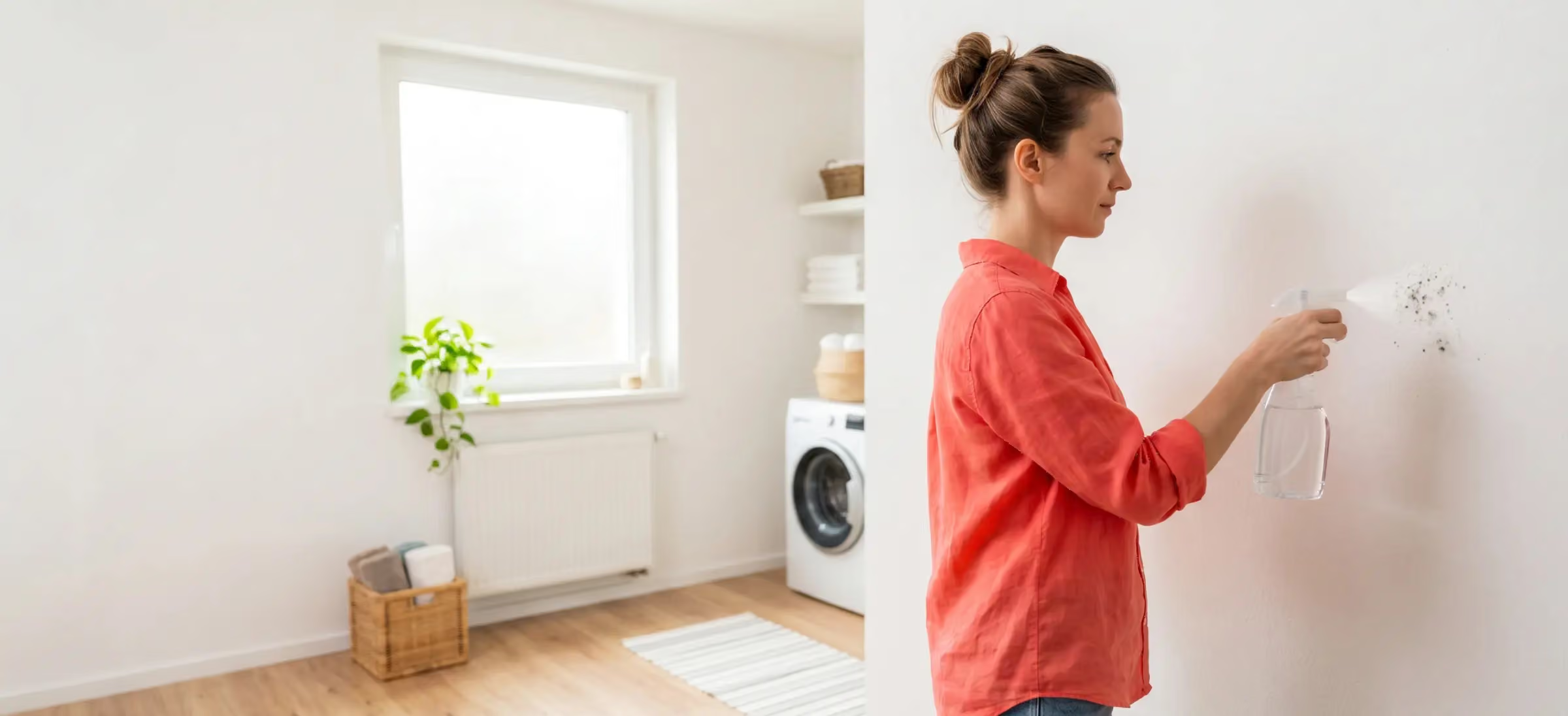

Bleach (sodium hypochlorite) kills mold on hard, nonporous surfaces but cannot penetrate porous materials like drywall or wood, which is why the EPA does not recommend it as a routine mold cleanup method. Whether it solves your problem depends entirely on the surface you are treating, and most home mold grows on exactly the surfaces where bleach falls short.
Key insights
- Surface type is everything. Bleach kills mold on nonporous surfaces like tile and glass. It cannot reach mold roots on porous materials like drywall, wood, or grout.
- Bleach is roughly 90% water. On porous surfaces, the chlorine evaporates while the water soaks in, adding moisture that feeds deeper mold growth.
- The EPA does not recommend bleach for routine mold cleanup. Its guidance is to scrub mold with detergent and water, then dry completely.
- IICRC S520 does not permit bleach as a substitute for physical removal on porous materials. Professional remediation focuses on removing contaminated material, not spraying chemicals.
- Dead mold spores are still allergenic. Killing spores with bleach does not eliminate the health risk if the debris remains. Physical removal matters more than chemical killing.
- Moisture is the real problem. No cleaning product stops mold from returning unless the water source causing it is fixed first.
Does bleach kill mold?
Bleach kills mold on hard, nonporous surfaces by breaking down mold cell walls on contact, but it cannot reach the roots of mold growing on porous materials like drywall or wood. Sodium hypochlorite, the active ingredient in household chlorine bleach, oxidizes and destroys the outer membrane of mold cells and disrupts the enzymes that allow them to function.
 Growth this extensive inside the cavity would have looked bleached and clean on the surface if treated with bleach, while the hyphae feeding it stayed fully intact beneath the paint.
The EPA's mold cleanup guidance states that using a chemical biocide like chlorine bleach "is not recommended as a routine practice during mold cleanup," and that scrubbing with detergent and water is the preferred method on hard surfaces. The CDC: Basic Facts About Mold takes the same position.
Why bleach fails on porous surfaces
Bleach cannot penetrate porous materials, which is the critical limitation that makes it ineffective for the majority of home mold problems. Mold remediation professionals understand this well: mold does not simply sit on the surface of materials like drywall, wood, or grout. It sends microscopic filaments called hyphae into the substrate, sometimes several millimeters deep. The visible surface growth is the top layer of a colony whose roots are embedded in the material itself.
When bleach is applied to a porous surface, the chlorine reacts with the topmost layer of mold and bleaches it white or removes the visible discoloration. This looks like success. Underneath, the hyphae remain intact. Within days or weeks, the colony regrows from those roots and the visible mold returns, often more aggressively, because the bleach application added moisture to the substrate.
Standard household bleach is roughly 90% water. On a porous material, the chlorine compound evaporates or reacts quickly, but the water soaks into the material and remains. Mold requires moisture to grow, so applying bleach to wood or drywall essentially delivers water directly to the mold's root system. The IICRC S520 standard for professional mold remediation is explicit on this point: bleach is not an acceptable substitute for physical removal on porous materials.
Surface-by-surface breakdown
Bleach works on nonporous surfaces like tile, glass, and sealed countertops, and fails on porous materials like drywall, wood, grout, carpet, and insulation where mold roots grow below the surface bleach can reach. Getting this distinction wrong is the most common reason mold returns after treatment.
 Grout is porous enough that bleach only whitens the surface here; it doesn't reach roots the way it would on the surrounding nonporous tile, which is why recurring grout mold often means it's time to replace it rather than keep scrubbing.
Whether bleach works comes down to whether the material has pores large enough for mold hyphae to enter. Nonporous materials have an impermeable surface layer that keeps mold on top where bleach can reach it. Porous materials absorb moisture and allow hyphae to colonize below the visible surface.
| Surface | Bleach works? | Why | Better approach |
|---|---|---|---|
| Ceramic or porcelain tile | Yes | Nonporous; bleach reaches all mold growth | Bleach solution or detergent and water |
| Glass shower doors | Yes | Nonporous; mold grows only on surface | Bleach solution or hydrogen peroxide |
| Sealed countertops | Yes | Nonporous if sealer is intact | Bleach solution or detergent and water |
| Plastic or fiberglass | Yes | Nonporous | Bleach solution or hydrogen peroxide |
| Tile grout | Partially | Grout is porous; bleach whitens surface but does not reach roots | Replace grout if mold recurs repeatedly |
| Painted drywall | No | Paint layer may be nonporous but gypsum beneath absorbs water | Cut out and replace; do not treat in place |
| Unpainted drywall | No | Highly porous; bleach waters the mold roots | Cut out and replace |
| Wood framing or studs | No | Open-grain wood allows deep hyphae penetration | HEPA vacuuming, mechanical abrasion, or soda blasting |
| Wood furniture (finished) | Partially | Finish layer may allow surface treatment but wood below is porous | Test carefully; replace if mold has penetrated finish |
| Concrete | Partially | Depends on density and sealing; unsealed concrete is porous | TSP or commercial biocide; address moisture source |
| Drywall joint compound | No | Very porous | Replace affected section |
| Carpet or fabric | No | Highly porous and fibrous | Remove and replace; cannot be adequately treated |
| Insulation | No | Porous and absorbs water | Remove and replace entirely |
For mold on drywall and structural wood, the only reliable remediation is physical removal. Applying bleach delays that decision while the mold colony continues to grow.
How to use bleach correctly on nonporous surfaces
To kill mold with bleach on a nonporous surface, mix 1 cup of household bleach per gallon of water, apply to the affected area, allow a 10-minute contact time, then scrub, rinse, and dry completely. This method is only appropriate when the affected area is under 10 square feet, the surface is confirmed nonporous, and the moisture source causing the mold has already been fixed.
 This kit only belongs on a job under 10 square feet with the moisture source already fixed; applying bleach to an area still receiving water is a cosmetic fix, not a solution.
Fix the moisture source before applying anything. Bleach applied to an area still receiving moisture is a temporary cosmetic fix and the mold will return.
1. Protect yourself
Put on rubber gloves, safety glasses, and an N-95 respirator. Open windows or run an exhaust fan. Never work in an enclosed space with bleach fumes, particularly if anyone in the household has asthma or respiratory sensitivities.
2. Mix the solution
Combine 1 cup (8 oz) of household bleach per 1 gallon of water. This produces approximately 6,000–7,000 ppm sodium hypochlorite. Do not use a stronger solution; it does not improve effectiveness and significantly increases fume hazard. Never mix bleach with ammonia, vinegar, or any other cleaner.
3. Apply and wait
Apply the solution directly to the affected surface and allow it to sit for at least 10 minutes without scrubbing or wiping. This contact time is required for the sodium hypochlorite to oxidize the mold cells.
4. Scrub and rinse
After the contact time, scrub the surface with a stiff brush, then rinse thoroughly with clean water. Dispose of any sponges or cloths used during cleaning.
5. Dry completely
Dry the surface as thoroughly as possible. Remaining moisture is the leading cause of mold recurrence. Use a fan or dehumidifier if needed. Confirm moisture levels are normal before considering the job done.
Knowing the signs of mold before you start helps confirm the full extent of the affected area. Mold in bathrooms often extends behind tile and into grout even when the visible surface appears limited to tile faces.
Before reaching for bleach, it is also worth confirming you are dealing with mold and not mildew. The two look similar but behave differently, and mildew is generally easier to address with surface cleaning alone.
Bleach health and safety risks
Bleach used indoors to treat mold releases chlorine fumes that can cause airway irritation, coughing, throat burning, and eye irritation, with higher risk for anyone with asthma or chronic respiratory conditions. The NIOSH publication on dampness and mold in buildings cautions against introducing additional chemical irritants into an indoor environment already compromised by mold.
In an enclosed bathroom or basement, fumes from bleach concentrate quickly and exposure in significant concentrations can cause pulmonary edema. Sodium hypochlorite reacts with the organic matter in mold itself, which accelerates fume release compared to using bleach on a clean surface.
The mixing hazard is equally serious. Bleach combined with ammonia produces chloramines. Bleach combined with acidic cleaners like vinegar produces chlorine gas. Both reactions can occur in concentrations dangerous enough to require evacuation and medical attention. Check the label of every cleaning product in the area before opening a bleach container.
If bleach is being considered because mold has caused health symptoms, review the mold exposure symptoms information and address the underlying mold problem rather than relying on a surface treatment that may not reach the source.
What works better than bleach
For nonporous surfaces, hydrogen peroxide (3%) and undiluted white vinegar (5% acetic acid) both outperform bleach with fewer health risks and no fume hazard. For porous surfaces, no topical product works. Physical removal of the contaminated material is the only reliable solution regardless of what product is used.
 Vinegar kills roughly 82% of mold species on nonporous surfaces without the fume hazard bleach carries, though it faces the same penetration limit once the surface turns porous.
Detergent and water is the EPA's first-line recommendation for hard surface mold. Scrubbing with a non-fragranced dish detergent and water physically removes mold growth and disrupts the surface colony without fumes or chemical residue. On nonporous surfaces, this approach is as effective as bleach for small areas. It is also the right first step if you are not certain whether you are dealing with mold or mold vs. mildew, since both respond well to mechanical scrubbing with detergent.
Hydrogen peroxide (3%) is an antifungal agent that kills mold on contact on nonporous surfaces. Apply undiluted from a spray bottle, allow a 10-minute contact time, scrub, and rinse. It produces no toxic fumes and does not leave a chemical residue. On porous surfaces it faces the same penetration limitation as bleach and is not a substitute for physical removal.
Undiluted white vinegar (5% acetic acid) is effective against approximately 82% of mold species on nonporous surfaces and can penetrate somewhat further into semi-porous surfaces than bleach. It is safe to use indoors, leaves no harmful residue, and will not damage most surfaces. Like every other topical product, it does not solve mold on wood or other porous material problems. Do not mix it with bleach.
EPA-registered antimicrobials are what professional remediators use after physical removal on salvageable nonporous surfaces. Products registered with the EPA specifically for mold remediation have documented efficacy testing, defined application protocols, and are formulated to remain effective in the presence of organic matter unlike bleach, which degrades rapidly on contact with mold debris.
When to call a professional
Call a professional when mold covers more than 10 square feet, involves porous building materials, has returned after previous treatment, or is affecting someone with a respiratory condition or compromised immune system. Any of those conditions means the problem is beyond what a household cleaning product can solve. Situations involving mold after water damage are especially likely to require professional scope, since water migration spreads contamination beyond the visible area.
 A reading from a meter like this is what actually determines scope; visible mold on a wall this size routinely extends well past the EPA's 10 square foot DIY threshold once the surface is opened up.
Professional mold remediation follows the IICRC S520 standard, which prioritizes physical removal of contaminated material over chemical treatment. Certified remediators use containment to prevent spore spread, HEPA air filtration, mechanical removal of colonized material, and EPA-registered antimicrobials as a finishing step only after the physical work is complete. This approach addresses the problem at the source rather than treating the surface while the colony continues to grow beneath it.
Understanding when mold remediation is required helps you make the right call before a manageable surface problem becomes a structural one. A mid-sized residential project typically runs $1,500–$6,000, and catching the problem early keeps costs at the lower end of that range.
If you are unsure whether what you see is mold, professional testing can confirm the species before you decide on a treatment approach.
Regardless of outcome, mold prevention afterward means fixing humidity, improving ventilation, and eliminating the moisture source permanently.
Frequently asked questions
Does bleach kill mold on nonporous surfaces?
Yes. Bleach kills surface mold on hard, nonporous materials like tile, glass, sealed countertops, and porcelain. Use a solution of 1 cup bleach per gallon of water, allow a 10-minute contact time, then rinse and dry thoroughly. This is the only surface category where bleach is genuinely effective.
Does bleach kill mold on drywall?
No. Bleach cannot reach mold roots in drywall. The chlorine reacts with the surface while the water in the solution soaks into the gypsum, adding moisture that feeds the colony deeper in the material. Drywall with visible mold growth should be cut out and replaced, not treated with bleach or any other topical product.
Does the EPA recommend bleach for mold cleanup?
No. The EPA mold cleanup guidance states that using a chemical biocide like chlorine bleach "is not recommended as a routine practice during mold cleanup." The EPA recommends scrubbing mold off hard surfaces with detergent and water, then drying completely.
What bleach-to-water ratio kills mold?
Mix 1 cup of household bleach per 1 gallon of water. This ratio produces a sufficient concentration for surface mold on nonporous materials. Do not mix stronger solutions; they increase fume hazard without improving effectiveness against mold.
Does bleach kill black mold?
Bleach can kill the visible surface growth of Stachybotrys chartarum on nonporous surfaces, but Stachybotrys almost always colonizes porous materials like drywall and wood where bleach cannot reach the roots. The IICRC S520 standard does not support bleach as an adequate treatment for black mold. For confirmed or suspected black mold removal, professional remediation is appropriate in nearly every case.
Can bleach make a mold problem worse?
Yes, on porous surfaces. Household bleach is roughly 90% water, so applying it to wood or drywall deposits moisture into the substrate while the chlorine evaporates at the surface, feeding deeper mold growth and often causing the colony to return faster than if nothing had been applied.
What kills mold better than bleach?
For nonporous surfaces, hydrogen peroxide (3%) and undiluted white vinegar (5% acetic acid) are effective, produce fewer toxic fumes, and are safer to use indoors. For porous surfaces, no topical product reaches mold roots. Physical removal of the colonized material is the only reliable solution. Consult the DIY mold removal information for guidance on which surface situations are appropriate for homeowner handling and which require professional intervention.
Sam Hickerson is the founder of RestoreAdvisor and writes consumer guides on mold remediation, water damage restoration, inspection, testing, and home recovery. His work focuses on helping homeowners understand costs, risks, and when to call a professional. He draws on guidance from the EPA, CDC, IICRC, and other authoritative sources to make complex home issues easier to navigate.