
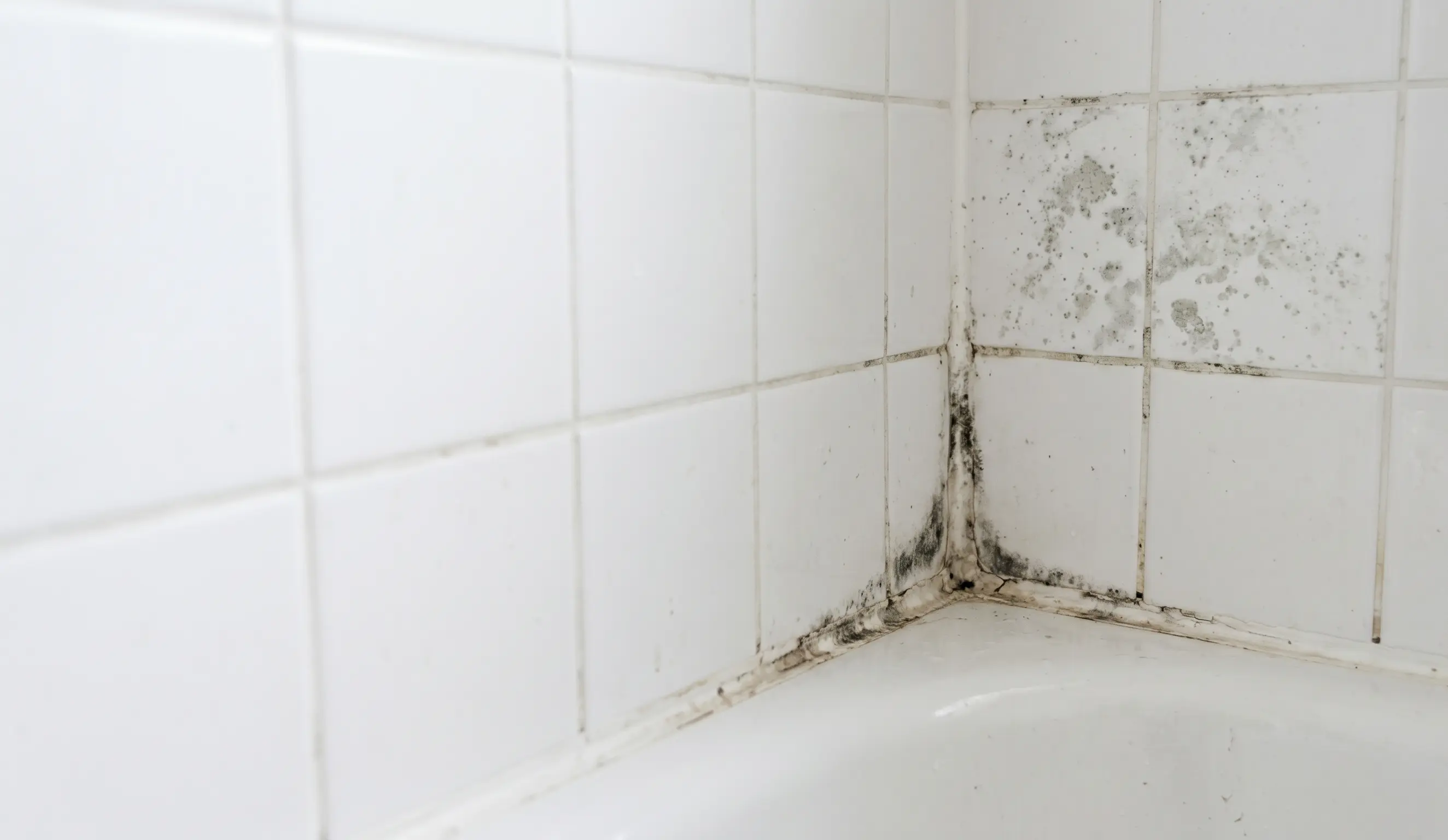

You noticed something growing on a tile, windowsill, or wall. Before reaching for the spray bottle, it helps to know exactly what you are dealing with, because mold and mildew call for different responses. Mildew is a surface problem you can usually clean yourself in under an hour. Mold can penetrate materials, damage your home's structure, and pose real health risks that cleaning alone will not fix.
Mold and mildew are both fungi that grow in moist indoor environments, but mildew stays on the surface of materials while mold penetrates porous substrates and causes structural damage and serious health effects. The EPA, CDC, and IICRC S520 standard all treat that growth-depth distinction as the primary factor in determining the appropriate cleanup response.
Key insights
- Mildew is technically mold. The EPA classifies mildew as a category of mold with a flat growth habit, meaning they share the same biological family.
- Mildew is best understood as early-stage mold. Visible mildew is a warning sign that conditions are right for more invasive mold growth if moisture is not corrected.
- Texture is the most reliable visual test. Mildew is flat and powdery or downy; mold is fuzzy, raised, or slimy.
- Mildew stays on the surface. Mold penetrates porous materials like drywall, wood, and grout and cannot be removed with surface cleaning alone.
- The EPA threshold for professional mold remediation is 10 square feet. Patches smaller than that can often be handled with DIY removal on non-porous surfaces.
- Both need a moisture fix first. Cleaning either one without correcting the humidity or leak source guarantees it will return.
What mold and mildew actually are
Per the EPA, mildew is technically a subtype of mold defined by its flat, surface-level growth pattern. Mildew is best understood as early-stage mold, meaning it represents conditions that will support more invasive mold species if moisture is not corrected. In everyday use, "mildew" refers to powdery or downy fungal growth that stays on the outer surface of a material, while "mold" refers to species that penetrate into and break down whatever they are growing on. Mold commonly colonizes drywall, wood framing, insulation, and enclosed spaces like crawl spaces where moisture accumulates out of sight. Their growth depth is what determines the health risk, the right cleaning approach, and whether a professional is needed.
 The lighter growth on the left stays flat and surface-level; the darker patches on the right have already begun penetrating into the grout beneath.
How to tell them apart
The most reliable way to distinguish mold from mildew is to examine texture, color, growth pattern, and location. Mildew comes in two forms: powdery mildew, which starts white and turns yellow, brown, or black as it ages; and downy mildew, which starts yellow and darkens to brown. Both stay flat on the surface. Mold, by contrast, grows in three dimensions and penetrates the material beneath it.
| Characteristic | Mildew | Mold |
|---|---|---|
| Texture | Flat, powdery, or downy | Fuzzy, slimy, or raised |
| Color | White or yellow (powdery); yellow to brown (downy); darkens with age | Green, black, gray, brown, or mixed |
| Growth pattern | Surface only, spreads outward in patches | Penetrates into material, often spreading below visible surface |
| Odor | Mild musty smell from low-level MVOCs | Strong, pungent earthy odor from higher MVOC output |
| Typical location | Tile, grout, windowsills, bathroom shower walls | Drywall, wood, carpet, insulation, behind walls |
| Structural damage | Rarely causes structural harm | Can destroy wood and organic materials over time |
What about black mold?
Any dark-colored growth tends to alarm homeowners, but color alone does not determine danger. Mildew darkens from white or yellow to brown or black as it ages and can look alarming on a grout line. True Stachybotrys chartarum, commonly called black mold, is greenish-black and slimy, not powdery, and requires sustained and significant moisture to grow. It is most often found in attics and basements with long-term water intrusion, not on bathroom tile. The CDC notes that the color of mold does not reliably indicate whether it is more or less dangerous. If you have concerns about a dark growth, professional mold testing can identify the species.
Health risks: mold vs. mildew
Mildew poses minor health risks limited to mild allergy symptoms, while mold can cause significant respiratory illness, structural damage, and in some species, mycotoxin exposure, making the distinction between the two directly relevant to how urgently you act.
 Symptoms like this from mildew are usually temporary and resolve once exposure ends; mold carries meaningfully higher risk, especially for anyone with asthma or a compromised immune system.
Mildew exposure can cause mild allergy symptoms including nasal congestion, coughing, and eye irritation, particularly in people who are sensitive to allergens. These symptoms are generally temporary and resolve once exposure ends. Mildew does not cause structural damage to your home.
Mold carries greater risk. The CDC states that mold exposure can cause a stuffy nose, sore throat, coughing or wheezing, burning eyes, and skin rash. People with asthma, allergies, or compromised immune systems are at significantly higher risk of more serious reactions. The 2004 Institute of Medicine report found sufficient evidence linking indoor dampness and mold to upper respiratory symptoms, coughing, and wheezing in otherwise healthy people.
Certain mold species produce mycotoxins that add a secondary layer of health concern. These are not airborne in the way spores are and require significant sustained exposure to cause the most serious effects, but they are a reason not to disturb a large mold colony without proper protective equipment.
Full clinical detail on mold health effects by population, including high-risk groups and specific species, is covered under is mold dangerous.
How to clean mildew
Mildew on non-porous surfaces is a straightforward DIY job. The key steps are to fix the moisture source first, then clean, and then take steps to keep humidity down so it does not return.
 A respirator belongs in this kit even for mildew, since scrubbing any fungal growth releases spores regardless of how minor the visible patch looks.
What you need: rubber gloves, an N-95 or P-100 respirator, safety goggles, a stiff-bristled scrub brush, and your cleaning solution.
Cleaning solutions by surface:
| Surface | Solution | How to use |
|---|---|---|
| Ceramic tile, glass, sealed grout | 1 cup bleach per gallon of water | Apply, let sit 10 minutes, scrub, rinse thoroughly |
| Fiberglass shower | Undiluted white vinegar | Spray, let sit 15 minutes, scrub, rinse |
| Fabric and soft surfaces | Check label; most washable fabrics tolerate diluted bleach or white vinegar | Launder at the hottest safe temperature |
| Painted walls (small patches) | Diluted bleach or hydrogen peroxide (3%) | Apply, let sit 10 minutes, wipe, allow to dry fully |
| Unfinished or porous grout | White vinegar or oxygen bleach (powder) | Apply generously, scrub with stiff brush, rinse |
Do not mix bleach and vinegar. The combination produces chlorine gas.
After cleaning, dry the area completely. Mildew returns wherever moisture lingers. Growth on porous materials like unsealed grout, drywall, wood framing, or fabric with deep staining requires DIY mold removal rather than surface cleaning alone.
When mold requires a professional
Once you have confirmed you are dealing with mold rather than mildew, the next question is whether it is a job for a professional. Mildew on tile is almost always a DIY clean. Mold that has penetrated a surface or spread beyond a small patch requires mold remediation rather than surface cleaning, because wiping alone leaves the root structure, called hyphae, intact inside the material.
 Coverage at this scale is well past the EPA's 10 square foot DIY threshold, the point where containment and HEPA filtration become necessary rather than optional.
Call a licensed mold remediation professional when any of the following apply:
| Situation | Why professional care is needed |
|---|---|
| Growth covers more than 10 square feet | EPA threshold; larger infestations require containment and HEPA air filtration |
| Growth followed a flood, pipe burst, or roof leak | Hidden moisture in structural materials creates mold well beyond the visible patch |
| Strong musty odor without visible growth | Indicates mold is growing in a concealed location |
| Household members have asthma, allergies, or immune conditions | Disturbing mold during DIY cleanup elevates exposure risk significantly |
A certified mold inspector can assess the full scope and confirm moisture levels with a meter before any work begins. Signs of mold covers what hidden mold looks like and how to identify it.
Preventing both from coming back
Mildew and mold grow in the same conditions, so prevention targets moisture control throughout the home. Fixing the source is the only permanent solution; cleaning without it is maintenance, not prevention.
 A daily pass like this removes surface moisture before it has the chance to support the fungal growth that a weekly clean would only address after the fact.
Bathrooms are the most common starting point since humidity spikes with every shower. A few simple habits like running the exhaust fan, squeegeeing walls, and checking caulk lines every few months eliminate most of the conditions mold and mildew need to take hold.
| Prevention action | Recommended frequency | Why it works |
|---|---|---|
| Run bathroom exhaust fans during and 30 minutes after showering | Every shower | Removes moisture-laden air before it condenses on surfaces |
| Keep indoor humidity between 30%–50% RH | Continuous monitoring with a hygrometer | EPA-recommended range; mold growth accelerates above 60% RH |
| Squeegee or wipe shower walls after use | Daily | Removes surface moisture before it can support fungal growth |
| Inspect caulk and grout for cracks | Every 6 months | Damaged seals allow water to reach porous substrate behind tile |
| Use mold-resistant paint in bathrooms, basements, and kitchens | At next repaint | Antimicrobial additives slow surface fungal growth |
If you are unsure whether what you have found needs a professional, when mold remediation is required covers the EPA thresholds and conditions that call for professional removal.
Room-by-room humidity targets, material choices, and an annual inspection schedule are covered under mold prevention.
Frequently asked questions
What is the main difference between mold and mildew?
Mildew is a surface fungus that stays flat and powdery, while mold penetrates porous materials and grows in three dimensions. Mold poses greater health and structural risks because it colonizes the interior of building materials, not just their surface.
How do I tell if I have mold or mildew?
Check the texture. Mildew is flat and powdery or downy and stays on the surface of materials like tile and windowsills. Mold is fuzzy, slimy, or raised and penetrates into porous materials like drywall and wood.
Is mildew dangerous?
Mildew can cause mild allergy symptoms and respiratory irritation, particularly in sensitive individuals. It is far less dangerous than invasive mold and rarely causes structural damage. Mildew is best understood as early-stage mold, meaning it signals conditions that will support more serious mold growth if the underlying moisture is not corrected.
Can I clean mildew myself?
Yes. Small patches of mildew on non-porous surfaces such as tile, glass, or sealed grout can be cleaned with a scrub brush and a diluted bleach solution (1 cup bleach per gallon of water) or undiluted white vinegar. Always fix the moisture source first or it will return.
When does mold require a professional?
Hire a professional when mold covers more than 10 square feet, when it follows a water damage event, when you smell mold but cannot find it, or when anyone in the household has asthma, allergies, or a compromised immune system.
What does mildew smell like versus mold?
Both produce a musty odor caused by microbial volatile organic compounds (MVOCs) released during fungal growth. Mildew produces a mild, damp smell. Mold produces a stronger, more pungent odor. A strong musty smell with no visible source is a reliable sign of hidden mold rather than surface mildew.
Does bleach kill mold?
Bleach kills mold on non-porous surfaces such as tile and glass. On porous materials like wood, drywall, or unsealed grout, bleach penetrates only the surface layer and leaves the root structure, hyphae, intact inside the material. IICRC S520 guidance recommends against bleach as the primary treatment for mold on porous substrates.
Sam Hickerson is the founder of RestoreAdvisor and writes consumer guides on mold remediation, water damage restoration, inspection, testing, and home recovery. His work focuses on helping homeowners understand costs, risks, and when to call a professional. He draws on guidance from the EPA, CDC, IICRC, and other authoritative sources to make complex home issues easier to navigate.