
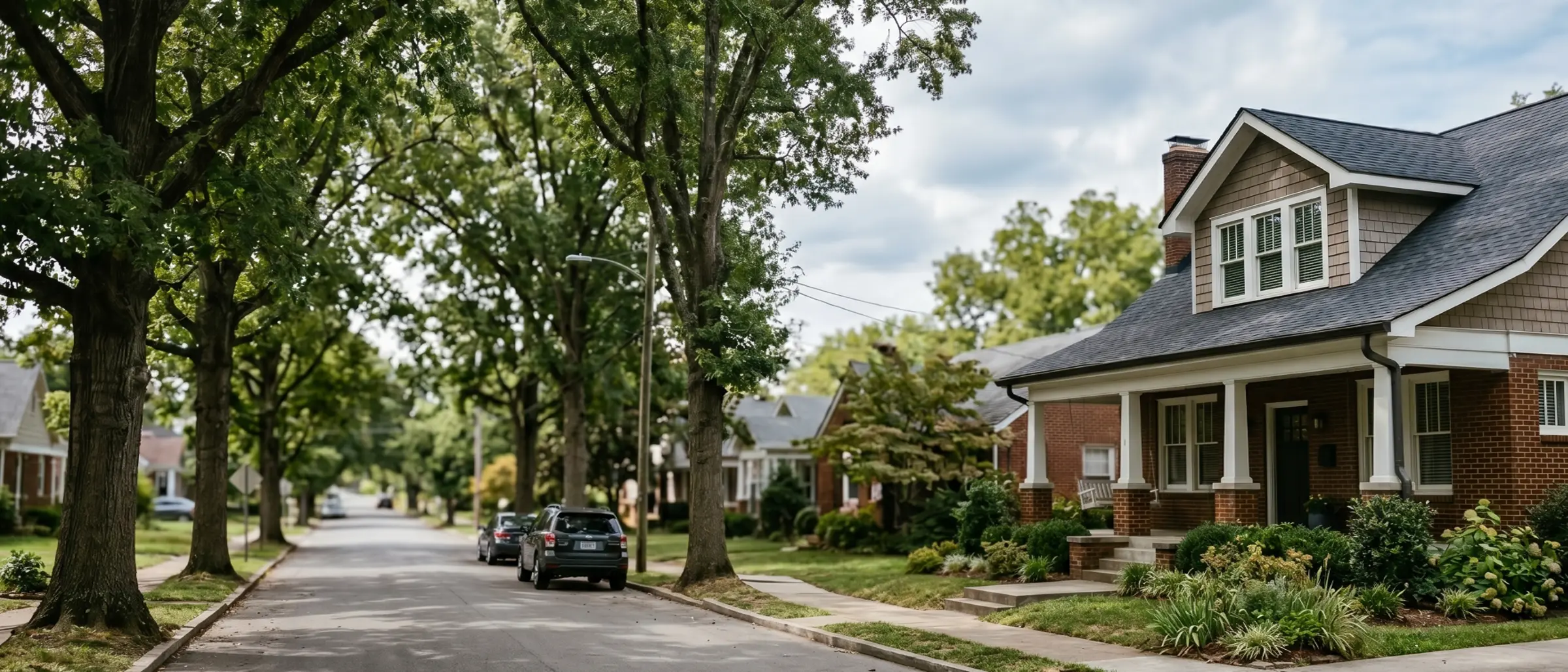

Nashville mold jobs come from two places: vented crawl spaces that let 70% average humidity and about 49 inches of rain reach the wood under postwar houses, and the May 2010 Cumberland River flood that left some homes dried in a hurry and never cleared. Every summer, warm humid outdoor air enters the foundation vents, meets cooler wood joists, and condenses, which feeds mold from below while the house looks dry from the inside.
Mold remediation in Nashville is the containment, removal, and clearance of mold under the ANSI/IICRC S520 standard, and Tennessee has no standalone mold license, so the Tennessee Department of Commerce and Insurance requires a contractor license with the S-Mold designation only for mold work over $25,000. Any contractor can be verified at verify.tn.gov.
Key insights
- Crawl spaces come first. Vented crawl space foundations under the postwar brick ranches of Madison, Donelson, and Antioch pull humid outdoor air beneath living space for most of the warm season, and crawl space work dominates the local job mix.
- Humidity never leaves. Nashville's 70% average relative humidity sits above the 60% threshold at which mold actively grows, according to the National Weather Service forecast office, so moisture control is a year-round task.
- The 2010 flood is still in some walls. The May 2010 Cumberland River flood damaged about 9,300 properties in Davidson County, and homes in Bellevue and along Mill Creek that were dried in a hurry may still hold hidden mold.
- The license depends on job size. Remediation over $25,000 needs a contractor license with the S-Mold designation, jobs from $3,000 to $24,999 need a home improvement license, and smaller jobs need neither.
- One contractor can do everything. Tennessee does not separate assessment from remediation, so an independent inspector for clearance testing is the homeowner's decision to make.
- Typical cost. Most Nashville jobs cost $1,400–$5,500, with a mid-range near $2,200. Full crawl space remediation with encapsulation pushes projects well above that range.
Nashville mold costs by job type
Most Nashville mold remediation jobs cost $1,400–$5,500, with a mid-range of about $2,200. Most Nashville projects involve some crawl space component, and crawl space access, debris removal, and encapsulation add labor and materials that a slab-on-grade job never needs, so a quote should account for that access work specifically.
 A quote reviewed here should account for crawl space access costs specifically, since crawl space access work adds cost that a slab-on-grade job does not.
Bureau of Labor Statistics data puts construction and extraction wages in the Nashville area at about 91 percent of the U.S. average in May 2025. Joist treatment, work in tight crawl space access, and the wide gap between remediation-only and remediation-plus-encapsulation scopes shape the mold remediation cost of a Nashville job more than the hourly rate does.
| Project size | Estimates | Example | Nashville notes |
|---|---|---|---|
| Under 10 sq ft | $500–$1,400 | Bathroom or kitchen surface job | Labor and containment setup |
| 10–100 sq ft | $700–$3,600 | Single room, drywall involved | Drywall removal and HEPA filtration |
| 100–300 sq ft | $2,300–$8,200 | Basement or partial crawl space | Access difficulty and joist treatment |
| 300–1,000 sq ft | $5,500–$18,000 | Full crawl space or attic | Structural wood treatment and containment |
| Over 1,000 sq ft | $13,500–$27,500 | Whole home or severe post-flood | Demolition, structural drying, clearance |
Pricing runs about $9–$23 per square foot for standard surface work, and crawl space work runs $14–$32 per square foot of affected area because of access constraints and encapsulation materials. Dividing a bid by the affected area and comparing the result with the cost per square foot range shows whether it sits in range.
Room-level costs follow a different distribution here because crawl space work dominates. A crawl space job in a 1,200-square-foot Madison ranch costs materially more than the same square footage of affected drywall would in a slab-on-grade home, since the crew works in tight access, handles contaminated insulation, and treats structural wood before anything else can be closed up.
| Location | Estimates | Driver |
|---|---|---|
| Bathroom | $500–$1,800 | Poor ventilation and failed grout or caulk, often DIY-eligible under 10 sq ft |
| Attic | $900–$4,500 | Weak ventilation and exhaust fans venting into the attic, common in ranch homes |
| Basement | $1,400–$6,400 | Water intrusion and HVAC condensate, though many Nashville homes have no basement |
| Crawl space, remediation only | $1,800–$9,100 | Condensation on joists from vented foundations, the most common local job |
| HVAC system | $2,700–$9,100 | Condensate drain clogs and humid air returns that circulate mold through the house |
| Crawl space, remediation and encapsulation | $4,500–$16,500 | Persistent humidity and clay soil moisture, with encapsulation preventing recurrence |
| Post-flood, Cumberland or Mill Creek corridor | $4,500–$22,500 | Extended submersion and Stachybotrys, often needing independent clearance |
Lab testing adds $300–$900, and reconstruction after removal can add $500–$9,100. A standalone assessment costs $300–$700 depending on home size and the number of sampling locations, so the inspection cost comes before the remediation bid. Clearance testing by an independent inspector adds $200–$500 as its own line item and belongs in every project budget.
What crawl space encapsulation includes
Encapsulation seals a vented crawl space against humid outdoor air by closing the foundation vents, lining the ground and walls with a vapor barrier, and adding mechanical dehumidification. It prevents mold from returning, but it must follow remediation and not replace it, because sealing over active mold traps spores and moisture against structural wood and speeds the damage it was meant to stop.
 A barrier this thick, 20-mil reinforced polyethylene, resists tearing and lifting against Nashville's clay soil moisture better than a 6 or 10-mil liner does.
A typical Nashville crawl space runs 1,000–2,500 square feet. Most of the postwar stock sits on unencapsulated vented foundations built before vapor control standards existed, and few have ever been upgraded. A complete system has four parts, and a quote missing any of them is incomplete however low the price.
A 20-mil barrier, fully adhered
The minimum for Nashville's clay soil is 20-mil reinforced polyethylene, adhered at seams and fastened mechanically at wall transitions. Thinner 6-mil and 10-mil liners tear and lift more easily on clay ground, so confirm the thickness before comparing quotes.
Every foundation vent sealed
Foam inserts that can shift or degrade do not count. Sealing the vents is what converts a vented crawl space into a conditioned one and ends the condensation cycle behind local crawl space mold.
A drained dehumidifier sized to the space
A sealed crawl space without a dehumidifier becomes a sealed humidity chamber. The unit should hold 50% relative humidity or below and drain to a line instead of a reservoir, and a 70-pint unit with continuous drainage is the standard specification for the usual 1,000–2,500 square foot range.
Clearance before the barrier goes in
Testing must confirm that mold on structural wood is within acceptable levels before anything is installed over it. A liner sealed over active growth traps spores and moisture against the joists, so the clearance report should come from an independent assessor and be in hand before the encapsulation crew is scheduled.
| System tier | What is included | Estimates | Best for |
|---|---|---|---|
| Barrier only | 6–10 mil barrier, no vent sealing, no dehumidifier | $1,400–$3,200 | Not a lasting fix here |
| Standard | 20-mil barrier, vent sealing, dehumidifier | $4,500–$9,100 | Most 1940s–1980s crawl spaces without drainage issues |
| Full system | Standard plus drainage or sump and structural repair | $9,100–$18,000 | Water intrusion, rotted joists, or post-flood conditions |
The Tennessee Board for Licensing Contractors treats crawl space encapsulation as a contractor-level project when it comes with structural repairs. If the scope includes joist sistering, beam replacement, or drainage installation, confirm that the contractor holds either an S-Mold license for the mold work or a general contractor license.
Why vented crawl spaces drive mold
Humid air, clay soil, and a long cooling season combine in Nashville to feed mold underneath the floor. Average relative humidity of 70% and about 49 inches of rain keep the city above the 60% threshold where mold colonizes surfaces, according to the National Weather Service Nashville forecast office, and there is no low-humidity window long enough for stressed materials to dry out on their own.
 A vent like this one is doing exactly what it was designed to do, letting outdoor air in, which is precisely the problem in a climate where that air condenses on cooler joists the moment it enters.
Clay-heavy soil holds water against foundations for days or weeks after rain, and most of the city's pre-1980 housing sits on vented crawl spaces directly above that wet ground. When warm outdoor air enters the vents in summer it condenses on the cooler joists above, and that mechanism is behind much of the structural wood mold found in humid climates.
The cooling season adds a second source. Nashville's 8–9 month HVAC season means a clogged condensate drain can saturate insulation and drywall for weeks before any staining appears, and crawl space mold from ground moisture plus HVAC condensate accounts for the majority of remediation jobs in the metro.
What to do the day you find mold
Stop the water, leave the growth alone, and document it before calling anyone. Wiping it, aiming a fan at it, or opening a wall without sealing the work zone releases spores that the HVAC system then spreads through the house, and a small patch becomes a whole-room job.
 Photos taken before any cleanup begins, like this one, are what an insurance adjuster will actually need if the underlying cause turns out to be a covered event rather than gradual moisture.
Nashville adds a sequencing rule because of its crawl space stock: the moisture source has to be corrected before remediation begins, or regrowth is likely no matter how thorough the removal. A plumber, an HVAC technician, or a crawl space contractor may need to come first, and the remediator's scope should say so in writing.
Cut off what is feeding the moisture
For a leaking pipe or fixture, shut it off immediately. For crawl space condensation the source is the vents themselves, which only encapsulation stops, though a dehumidifier reduces it in the short term. After a storm, a wet vac clears standing water before anything else.
Keep the affected area undisturbed
Do not wipe, scrub, or blow air at visible growth. Shut off the HVAC if the area sits near registers, and keep the room's doors closed.
Photograph before any cleanup
Capture visible growth, moisture staining, and water lines with timestamps. If the cause turns out to be a covered event, these photos are what an adjuster needs.
Treat 48 hours as the deadline
The CDC identifies 24–48 hours as the window in which mold colonization begins on wet materials. Anything that stayed wet past it should be treated as colonized whether or not growth is visible, and Nashville's summer humidity puts that window at the short end.
Call a licensed contractor for anything beyond a surface patch
Surface mold on non-porous materials under 10 square feet can be cleaned with protective gear and an EPA-registered antimicrobial. A crawl space, a wall cavity, structural wood, or post-flood materials call for a licensed S-Mold contractor and an independent inspection.
Active flooding or sewage-contaminated water falls under emergency mold removal, where extraction and drying come before any standard remediation steps. Contaminated floodwater adds protective equipment and disposal requirements, and porous materials it touched are removed instead of cleaned. Standing water also needs a pump or wet vacuum and a full day of continuous air movement before anyone judges whether drywall can stay.
Tennessee mold contractor licensing: what the S-Mold classification means
Tennessee has no standalone mold remediation license. It ties mold work to the contractor license by project size, and the Tennessee Department of Commerce and Insurance (TDCI) administers the Board for Licensing Contractors, which attaches an S-Mold designation to the contractor license for mold remediation. Work under that license must follow ANSI/IICRC S520, the national standard for containment, removal, and clearance.
 A lookup like this only matters for jobs over $25,000, since that's the threshold at which Tennessee actually requires the S-Mold classification rather than just a home improvement license.
The S-Mold designation is required when the total cost of labor and materials exceeds $25,000. For projects from $3,000 to $24,999, the contractor must hold a home improvement license issued by the same Board. Below $3,000 no state license applies, though that does not make unlicensed operators legal on a large project.
Tennessee does not require separate licenses for mold assessment and mold remediation, so one contractor can do both. That reduces paperwork, but it also means the homeowner must deliberately hire an independent party for post-remediation clearance testing and not rely on the contractor to declare the job done.
To verify a Tennessee mold contractor, search the Tennessee license verification portal by company name or license number, confirm the status reads active, and confirm the S-Mold designation appears on the contractor license. The lookup takes a couple of minutes and should happen before a bid is accepted, not after work starts.
For IICRC credentials, check the Applied Microbial Remediation Technician (AMRT) certification in the IICRC Global Locator. Real IICRC credentials appear in the locator with an expiration date, while a logo on a truck or a website proves nothing about training or testing. Ask for the certification number and look it up yourself, because a card shown on a phone can be out of date.
A Tennessee S-Mold license shows that the contractor met the Board's experience and business law requirements. It does not replace IICRC training, which covers the technical protocols the standard requires, and the strongest Nashville contractors hold both. A contractor with only a license has not shown that the crew understands containment, negative air, and clearance.
Hiring a Nashville mold contractor
Verify three things before any other conversation: an active S-Mold license at verify.tn.gov, an IICRC AMRT certification for the lead technician, and a written scope that specifies containment, removal, drying verification, and independent clearance. Nashville's growth has drawn in out-of-state operators who hold none of these, and the license threshold makes it simple to filter them out before a quote is requested.
 A real quote starts with someone looking at the crawl space, because the access, the wood condition and the moisture source decide the scope that a written bid has to describe.
What is feeding the moisture?
Before calling a remediator, identify the water source driving the mold. A plumber or HVAC technician may need to address the root cause first, and a contractor who cannot name the source is guessing at the scope.
Does the contractor hold an S-Mold license?
Ask each contractor for a Tennessee contractor license number and the S-Mold designation. For jobs over $25,000 it is legally required, and a contractor who cannot give a number for a job that size is operating outside Tennessee law.
Does verify.tn.gov show it as active?
Search by company name or license number and confirm that the license is active and that the S-Mold classification is listed. The lookup takes under two minutes.
Does the lead technician hold IICRC AMRT credentials?
Ask for the technician's Applied Microbial Remediation Technician credential and verify it through the IICRC Global Locator. Company-level credentials do not replace individual certification, and a certificate of insurance should show both general liability and pollution liability with your address listed.
What does the written scope promise?
Require a written remediation protocol before signing. It should specify containment methods, negative air pressure, the materials to be removed, antimicrobial treatment, drying verification, and the clearance standard.
Who runs clearance testing?
Tennessee does not require a separate assessor, so choose an independent inspector for post-remediation clearance and not the contractor who did the work. A contractor signing off their own job has a conflict of interest.
A quote delivered without a site visit, a price that ignores crawl space access, a request for full payment up front, a proposal that skips independent clearance, or a contractor who offers to "fog" the space and call it finished all point to work that will not hold through the next humid season. In a market with this much crawl space work, scopes that describe only wiping or spraying deserve suspicion.
Two written bids that answer all six questions can be compared on price and warranty terms using how to choose a mold remediation company. A bid that cannot say who will fix the moisture source, or who will run clearance, is missing the two items that decide whether the work holds.
Moisture fix to clearance
A Nashville remediation job moves from the moisture fix to containment, removal, drying, and independent clearance, and the length depends mostly on whether a crawl space is involved. Small surface jobs finish in days, while a full crawl space with encapsulation can take more than a week from the first containment to the final clearance result.
A small bathroom or kitchen job takes 1–2 days. Basement or partial crawl space projects take 3–5 days, and a full crawl space with encapsulation takes 5–7 days or longer. Post-storm jobs that need structural drying add 2–5 days before remediation can begin. Each phase follows the mold remediation process, and encapsulation starts only after clearance confirms the structural wood is acceptable.
The sequence matters more than the speed. Day one is containment and the moisture fix: plastic sheeting seals the work zone, negative air machines with HEPA filtration start running, and any active leak or condensation source is stopped. The next days are removal, where porous materials such as insulation and damaged subflooring come out and structural wood is sanded or soda blasted. Drying follows, and the contractor should hold moisture readings below 15% on structural wood before anything is closed up or encapsulated.
Clearance comes last and belongs to someone independent. The inspector takes air or surface samples and compares them with outdoor baseline readings, and a failed result means another round of cleaning at the contractor's cost. Every professional mold remediation job in Nashville should end with that written result in the homeowner's hands.
Floor-level signs and DIY limits
Nashville mold usually announces itself indirectly: an earthy odor that rises through the floor in April, cupped hardwood, and symptoms that follow the humidity calendar. Homeowners tend to find it at an inconvenient moment, such as the first week of April when the HVAC starts up, a pre-sale inspection, or the day a contractor lifts the subfloor during a kitchen renovation, because condensation in vented crawl spaces beneath 1940s–1980s homes produces symptoms that are easy to blame on something else for months.
 Staining radiating out from a register like this usually means the ductwork picked up spores during the dormant winter months and pushed them into the room the moment the system cycled on in spring.
An earthy odor that rises through the floor from April
When the HVAC turns on in April, it draws air from the crawl space through ductwork and register gaps and pushes accumulated mold odor into the living space. Crawl space odor in a Madison or Donelson ranch spreads through the first floor with no clear origin. If it is strongest near the floor, worsens during the first week of cooling season, and eases on upper floors, the source is below.
Hardwood that cups or goes soft
The brick ranches of Madison, Donelson, Haynes Heights, and Melrose were built with original hardwood over unencapsulated crawl spaces. When crawl space humidity stays above 60% from April through October, board edges rise above the center and springy spots mark subfloor decay. East Nashville and Inglewood bungalows on pier-and-beam foundations show the same pattern, and both are structural moisture readings, not finish problems.
A musty smell from the registers on first startup
Ductwork in the crawl space picks up spores during the dormant winter, then pushes them through registers when the system first cycles. A smell that clears in four or five days is probably surface contamination at the registers. One that lasts beyond a week, particularly in a Bellevue or Antioch home near Mill Creek, calls for a crawl space inspection and not duct cleaning.
Symptoms that follow the humidity calendar
Symptoms that worsen from April through October, ease after a night away from home, and concentrate in rooms above the crawl space fit the CDC pattern for indoor mold. Pollen season overlaps those months, but mold symptoms typically begin within 30 minutes of coming home and improve in air conditioning, which outdoor allergens do not do.
Moisture readings above 19% in structural wood
A meter reading above 19% on joists or subflooring means the wood is wet enough to support growth even when nothing is visible, and it is the number that settles the crawl space question.
Any of these signals justifies a professional crawl space assessment with moisture readings, even with no mold in sight, because the signs of mold in a crawl space house show up on the floor above long before they show on a wall. A meter reading takes minutes and settles the question that smell and symptoms leave open.
A homeowner can handle surface growth on non-porous materials under 10 square feet with a known, fixed cause by following the steps for DIY mold removal, using protective gear and an EPA-registered antimicrobial. The post-flood corridors add one more rule, since Stachybotrys and Chaetomium, found at elevated rates along the Cumberland River and Mill Creek, need professional containment under IICRC S520 regardless of patch size.
What HO-3 policies pay for mold
Most standard Tennessee HO-3 policies cover mold only when it results directly from a sudden, accidental event such as a burst pipe, a storm roof failure, or an appliance leak, and then only up to the policy's mold sublimit. Mold from any other cause usually falls outside the policy.
That sublimit commonly runs $5,000–$10,000, which can cover a small surface job and falls well short of a full crawl space remediation. Confirm that the contractor is licensed and insured before filing, since unlicensed work can complicate a claim. Adjusters typically want the moisture source documented, dated photographs, the plumber's or HVAC technician's repair invoice, and a written remediation protocol with line-item pricing, so gather those before the first call to the carrier.
Mold that grows from gradual leaks, chronic humidity, deferred maintenance, or flooding is typically excluded, and a crawl space that has condensed for years falls into that excluded group, which is why documenting a sudden cause matters. Homeowners in flood-prone areas need separate NFIP coverage for mold that starts with rising water, because the cause of loss decides which policy answers the claim.
The NFIP's 30-day waiting period means a policy bought after a storm warning does nothing for that event. Owners in the FEMA-designated Special Flood Hazard Areas of Bellevue, Antioch, Donelson, and the Cumberland River corridor should treat NFIP coverage as standard rather than optional. Endorsements and the way a denial is appealed change what mold insurance coverage actually pays, so ask the carrier about both before filing.
The 2010 flood and its mold legacy
The May 2010 Cumberland River flood remains the defining event in Nashville's mold history. Over 36 hours on May 1–2, about 13.57 inches of rain fell across Middle Tennessee, pushing the river to 51.86 feet, nearly 12 feet above flood stage. Eleven people died in Davidson County alone, about 9,300 properties were damaged with nearly 2,000 confirmed as residential, and private property damage across three states passed $2 billion.
 Water at this depth is exactly the sustained submersion that produces Stachybotrys and Chaetomium rather than the more common allergenic species, since both require prolonged wetness that brief flooding doesn't provide.
The flooding ran from Bellevue on the western edge through downtown, into MetroCenter, and downstream through the Pennington Bend corridor. Whole residential neighborhoods in Bellevue, along the Harpeth River, and in the Mill Creek watershed stayed submerged for days, and many of those houses were gutted and rebuilt on tight deadlines.
Long submersion is exactly what produces Stachybotrys chartarum and Chaetomium globosum, the two most serious species tied to long-term water damage, and post-flood assessments along the Cumberland and Mill Creek corridors documented both at elevated rates. Homes that skipped professional remediation with clearance testing carry a residual risk that may be invisible but can be confirmed through mold testing.
For buyers in Bellevue, Antioch, or other 2010-affected corridors, the disclosure form under TCA 66-5-202 covers only defects the seller actually knew about, and many properties were remediated under time pressure in 2010 without independent clearance. A pre-purchase mold inspection is a sound precaution even when the form shows no current issue. Ask any seller in these corridors for the 2010 repair records, including the contractor's name, the scope, and whether anyone tested afterward. Flash flooding remains a risk in the Mill Creek and Stones River drainages, and a home that stays wet past 48 hours after any flood follows the timeline of mold after water damage.
Mold species in Nashville homes
Wood, drywall, and HVAC components in a Nashville crawl space rarely test negative for Cladosporium, since Middle Tennessee humidity seldom falls far enough in any season to starve it. Wet materials tell a different story. Aspergillus and Penicillium take over on wet insulation, behind drywall near plumbing leaks, and inside air handlers with condensate problems. A lab often lists the two on one line, since telling them apart takes culturing instead of a visual check.
 The dark spots and olive patch side by side here usually get reported as separate findings, though in practice Aspergillus and Penicillium are indistinguishable without culturing and typically show up together on the lab sheet.
Humid Nashville summers keep all of these species in circulation, and a lab report that lists them by count per cubic meter is far more useful than a report that only says mold was found. Both Aspergillus and Penicillium can produce mycotoxins that cause serious effects at high concentrations or in immunocompromised households, while Cladosporium rarely threatens healthy adults but is a significant allergen.
Stachybotrys chartarum and Chaetomium globosum need sustained wetness and are tied to materials that stayed wet for long stretches. Both were documented at elevated rates in homes along the Cumberland River and Mill Creek after the 2010 flood, and they are the two species most likely to mean a job needs professional containment under IICRC S520 and not DIY surface cleaning. A confirmed result follows the stricter protocols in black mold removal.
Nashville areas by construction era
Risk concentrates along two lines: the 2010 Cumberland River and Mill Creek flood corridors, where Bellevue, Antioch, and Donelson homes carry residual post-flood exposure, and the pre-1980 crawl space belt in East Nashville, Madison, and Inglewood, where original vented foundations create condensation conditions every humid season. The highest-volume job in the city is the 1940s–1960s brick ranch in Madison, Donelson, and Antioch, whose original vented crawl space has never been encapsulated and condenses on joists from April through October.
 Brick ranch streets like these sit on clay that stays saturated after storms, so crawl space moisture lingers in the same neighborhoods that carry the highest remediation volume.
Seven areas carry the highest remediation volume, and each has its own main driver. Flood corridor homes face compounding risk from the post-event legacy and ordinary seasonal moisture, and pre-war crawl space stock in East Nashville, Inglewood, and Germantown carries structural vulnerability that predates vapor control standards, so an assessor's first question differs from one area to the next.
| Area | Risk factor | Construction notes | Homeowner notes |
|---|---|---|---|
| East Nashville, Inglewood | Pre-1940 pier-and-beam crawl spaces with no vapor barriers | Plaster walls and old-growth lumber, near the Cumberland River lowland | Floor-level odors and warped hardwood are early signs, and a crawl space inspection belongs at purchase |
| Bellevue, Harpeth River corridor | 2010 flood submersion and Harpeth overflow in major rain | 1970s–1980s split-levels and ranches on crawl spaces | Flood risk continues, and 2010-era remediation may not have included clearance testing |
| Madison, Rivergate | 1950s–1960s brick ranches on vented crawl spaces, near the river at Neely's Bend | Original vented foundations with no encapsulation | The highest-volume crawl space category in Nashville, driven by condensation on joists |
| Antioch, Mill Creek corridor | Mill Creek flooding history, and 2010 water reached parts of Antioch | Slab and crawl space mix with early fiberglass insulation | Post-flood risk concentrates near the creek, with HVAC condensate a secondary driver |
| Donelson, Percy Priest Lake | Cumberland River adjacency and drainage through the Percy Priest watershed | 1960s–1970s brick ranch and frame homes | Seasonal flood risk from tributaries, so crawl spaces on low streets deserve yearly inspection |
| Germantown, Buena Vista Heights | Late 1800s masonry and historic commercial conversions | Unreinforced masonry and rubble stone foundations | Brick wicks moisture into basement walls and behind plaster, so hire an assessor with historic building experience |
| South Nashville, Wedgewood-Houston | Older pier-and-beam homes beside new infill | Pre-1950 frame homes next to post-2010 infill | Older homes grow crawl space mold, infill traps moisture in tight envelopes, and drainage plans deserve a check |
Homes outside those areas can be judged by era. Pre-1980 construction on crawl spaces carries the condensation risk in the table, 1990s–2000s rapid-build homes in the Spring Hill corridor, Nolensville, and outer Bellevue are vulnerable to moisture-sensitive OSB sheathing and house wrap failures, and 2010s infill in Wedgewood-Houston, the Nations, and 12South risks moisture trapped by tight envelopes without adequate mechanical ventilation.
Nashville tenant rights for mold
Renters in Davidson County have stronger protections than renters in much of rural Tennessee, because the Uniform Residential Landlord and Tenant Act (URLTA), codified at Tennessee Code Annotated Section 66-28-304, applies only in counties with populations above 75,000. Under URLTA, landlords must keep premises fit and habitable, and a mold problem tied to moisture intrusion fits that duty. Tennessee has no standalone mold statute, so the habitability duty is the legal foundation a tenant acts on.
 Growth at this baseboard in a Davidson County rental falls under URLTA's habitability duty, a protection that doesn't extend to renters in Tennessee counties under 75,000 in population.
The older rental stock in East Nashville, Germantown, and South Nashville carries the same crawl space and moisture weaknesses as owner-occupied homes of its era, and renters there often find mold along lower exterior walls and under sinks tied to crawl space humidity. Mold that traces to crawl space humidity is a building problem, which gives a habitability complaint its strongest footing.
A renter who finds mold should photograph every affected area with timestamps and send written notice by email or certified mail before anything else. URLTA sets notice requirements before a tenant can use remedies such as ending the lease, and Metro Codes Enforcement handles habitability complaints for residential rentals, creating an official record and sometimes a formal inspection. That written record is what disputes over mold in your rental turn on.
Enforcement runs through Metro Codes, the courts under URLTA, and, for federally assisted housing, HUD Housing Quality Standards. A renter with an unresponsive landlord should call Legal Aid Society of Middle Tennessee and the Cumberlands before withholding rent, because self-help remedies carry legal risk without proper notice. Keep copies of every message and any inspection record in one folder.
Buying or selling with mold history
Tennessee Code Annotated Section 66-5-202 requires sellers of residential property with one to four units to give a written disclosure of known material defects before a purchase contract is signed. A seller who knows about mold and does not disclose it faces fraud liability under the Disclosure Act and under common law misrepresentation.
 A signature on a form like this only covers what the seller actually knows; many 2010-era properties were remediated quickly without clearance testing, which means a clean disclosure here doesn't guarantee a clean crawl space.
The weak point is the known-defects standard, because sellers must disclose only what they know. In post-2010 flood areas, many properties were remediated quickly under insurance or disaster relief funding with no documented clearance testing. A seller who believes the mold was cleaned up may have no continuing duty to disclose even if hidden mold remains.
For buyers in high-risk areas, the form is a starting point and not a guarantee. A buyer's agent has an independent duty under Tennessee Code Annotated Section 62-13-403 to disclose adverse facts they actually know, such as visible mold or a history of water damage seen during the transaction. Buyers in Bellevue, Antioch, Madison, or East Nashville should still write a mold inspection contingency into the contract and commission a pre-purchase mold inspection with crawl space moisture readings and air sampling.
A signed clearance report from an independent inspector is the document that turns a disclosed mold issue into a manageable transaction. Sellers who remediated in the past should keep the contractor's scope, the clearance lab results, and any encapsulation warranty in one folder, since a buyer's inspector will ask for all three. Buyers who receive them can usually negotiate with confidence, and buyers who receive nothing should price the unknown into their offer.
Nashville drainage and humidity checks
Four actions prevent most Nashville mold: managing foundation drainage before storm season, maintaining HVAC condensate drains, monitoring indoor humidity, and inspecting attic ventilation every year. Each one targets a moisture path that clay soil and a long cooling season keep open for most of the year, and most cost little beyond an afternoon of work.
 A reading above 65% like this one sits well past the threshold where mold actively colonizes surfaces, and in a Nashville crawl space it usually means the dehumidifier is undersized or a vapor barrier gap is letting ground moisture through.
Fix foundation drainage before each storm season
Clay-heavy soil holds water against foundations for days after heavy rain. Before spring storms, clear gutters, extend downspouts at least six feet from the foundation, and confirm that grading falls away from the house at about one inch per foot for the first six feet. Homes in the Bellevue and Antioch flood corridors should also test sump pumps and charge backup batteries before the May and June storm peak.
Flush condensate drains from April through November
The cooling season runs about 8–9 months. Flush condensate lines monthly with a diluted bleach solution, inspect the drain pan at April startup for standing water or biofilm, and confirm the float switch works. A clog in June or July, the most humid months, can back moisture into the air handler and saturate nearby framing within days.
Track humidity from April through October
Relative humidity climbs above the CDC's mold threshold of 60% reliably from April through October and often into November. Keep a calibrated hygrometer in the main living area and another in any crawl space or basement, and aim for 45%–55% indoors. Crawl space readings that stay above 60% with the dehumidifier running mean the unit is undersized or a vapor barrier gap is letting ground moisture through.
Check attic ventilation every year
The 1950s and 1960s brick ranch stock often has soffit and ridge venting blocked by insulation added over the decades. Blocked ventilation raises moisture in attic sheathing and feeds attic mold directly, so confirm each year that insulation does not cover the soffit vents.
Frequently asked questions
How much does mold remediation cost in Nashville?
Most Nashville jobs cost $1,400–$5,500, and the mid-range is about $2,200. Jobs under 10 square feet cost $500–$1,400, crawl space remediation costs $1,800–$9,100, and jobs over 1,000 square feet cost $13,500–$27,500. These are estimates based on national pricing adjusted for Nashville-area labor costs, and clearance testing adds $200–$500.
Does Tennessee require a license for mold remediation?
Only on larger jobs. Projects where labor and materials exceed $25,000 require a contractor license with the S-Mold designation from the Tennessee Department of Commerce and Insurance, since Tennessee has no standalone mold license. Jobs from $3,000 to $24,999 require a home improvement license, and you can verify any contractor at verify.tn.gov.
Does Tennessee separate mold inspectors from remediators?
No. Tennessee does not require separate licenses for mold assessment and mold remediation, so one contractor can perform both. Hiring an independent inspector for clearance testing is still recommended, because it gives you an objective result.
Which mold species are most common in Nashville homes?
Cladosporium is the most common species year-round because baseline humidity rarely drops far enough to stop it. Aspergillus and Penicillium dominate water-damaged materials, and assessments after the 2010 flood found elevated Stachybotrys chartarum and Chaetomium globosum along the Cumberland River and Mill Creek corridors.
How do I verify a mold contractor's license in Tennessee?
Go to verify.tn.gov, search by company name or license number, and look for an active contractor license with the S-Mold designation under the Tennessee Board for Licensing Contractors. For jobs under $25,000, confirm the contractor holds a home improvement license.
Does homeowners insurance cover mold remediation in Nashville?
It depends on the cause. Standard Tennessee HO-3 policies cover mold that follows a sudden, accidental covered peril such as a burst pipe, and flood-related mold needs separate NFIP coverage. Mold from gradual leaks, chronic humidity, or deferred maintenance is typically excluded, and limits often run $5,000–$10,000, well below the cost of a major project.
What should I do after a flood or heavy rain in Nashville?
Act within 48 hours: remove standing water, run fans and dehumidifiers, and photograph everything. If materials stay wet past that window, treat them as colonized and call a licensed Tennessee contractor. Photographs of the water line taken before cleanup support both the repair scope and any insurance claim.
Do Nashville sellers have to disclose mold?
Yes. Tennessee Code Annotated Section 66-5-202 requires sellers of residential property with one to four units to disclose known material defects, which includes mold, in a written statement before a purchase contract is signed. A buyer can waive the form, but a seller cannot hide known mold without legal risk.
How long does mold remediation take in Nashville?
A small bathroom or kitchen job takes 1–2 days. Basement or partial crawl space projects take 3–5 days, and a full crawl space with encapsulation takes 5–7 days or longer. Post-storm jobs that need structural drying add 2–5 days before remediation can begin.
Can I stay in my home during mold remediation in Nashville?
For small contained jobs, yes. Full crawl space access, multi-room contamination, or Stachybotrys call for leaving during active work, and households with asthma, weakened immune systems, or respiratory conditions should relocate for the duration. Ask the contractor for the containment and air filtration plan before work begins.
How do I know if my crawl space needs encapsulation?
Four signs point to it: a floor-level musty odor that worsens from April through October, cupped or warped hardwood on the first floor, visible mold on joists or insulation during an inspection, and moisture meter readings above 19% on structural wood. Any one of them justifies a professional assessment before the next humid season.
When is mold remediation required in Nashville?
Tennessee sets no state area threshold for mold work, so the EPA's 10 square foot figure and the moisture source decide when mold remediation is required. Growth beyond a small surface patch, anything inside a crawl space or wall cavity, and post-flood materials call for a professional, and untreated crawl space mold weakens floor joists and must be disclosed at sale.
- IICRC S520 Standard for Professional Mold Remediation
- EPA: Mold Cleanup in Your Home
- CDC: Basic Facts About Mold
- Tennessee Board for Licensing Contractors
- Tennessee License Verification
- NWS Nashville: Local Climate Data
- Tennessee Residential Property Disclosure Act (TCA 66-5-202)
- BLS: Occupational Employment and Wages in Nashville-Davidson-Murfreesboro-Franklin, May 2025
Sam Hickerson is the founder of RestoreAdvisor and writes consumer guides on mold remediation, water damage restoration, inspection, testing, and home recovery. His work focuses on helping homeowners understand costs, risks, and when to call a professional. He draws on guidance from the EPA, CDC, IICRC, and other authoritative sources to make complex home issues easier to navigate.