
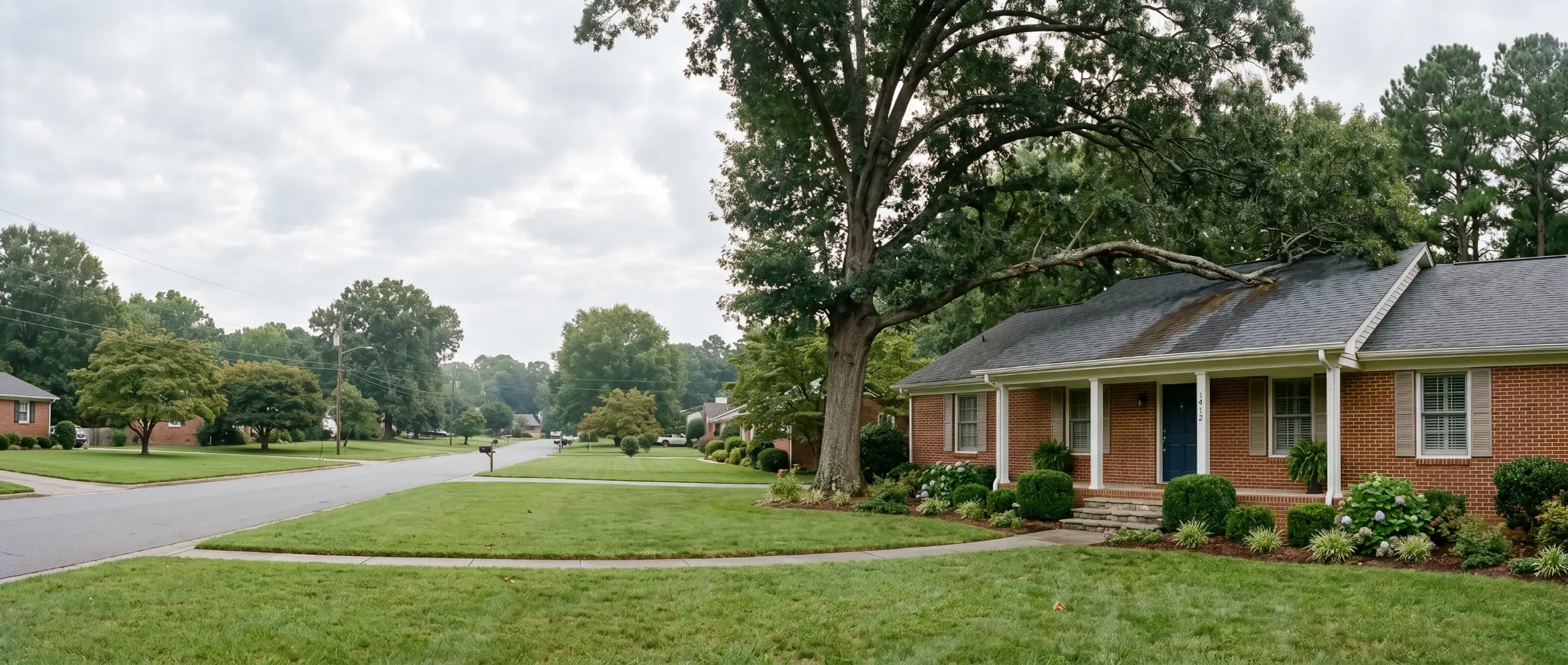

Raleigh sits on Piedmont clay that drains slowly and under an oak canopy old enough to outlast the houses it shades. Few homeowners realize either fact matters until they're already dealing with a remediation bill or a contractor they can't fully vet.
Mold remediation is the physical removal of mold colonies and the materials that host them, performed according to the ANSI/IICRC S520 standard for professional remediation work. North Carolina has no dedicated state mold license, so the credential that matters most when hiring in Raleigh is IICRC AMRT certification, not a state-issued number.
Key insights
- Typical local cost. Most Raleigh remediation jobs run $1,400 to $6,200, with isolated patches as low as $500 and whole-crawl-space jobs reaching $15,000 or more.
- No state license required. North Carolina has no mold-specific contractor license, so IICRC AMRT certification and Active Certified Firm status are the strongest verification standards available.
- Crawl spaces drive most cases. A large share of Raleigh's pre-2000s housing stock sits on vented crawl space foundations over slow-draining Piedmont clay, creating a near-constant moisture source.
- Storm risk is wind-driven, not surge-driven. Unlike coastal cities, Raleigh's mold risk after a major storm typically traces back to fallen oak limbs puncturing roofs, not flood surge.
- Insurance rarely covers chronic moisture. A standard HO-3 policy excludes mold from gradual leaks or humidity, and most policies cap covered mold cleanup at $5,000 to $10,000.
- Clearance testing confirms the work. A clearance report following IICRC S520 protocols, not a visual check, is the only reliable way to confirm remediation succeeded.
Why Raleigh homes grow mold: clay soil and canopy storms
Raleigh's mold risk comes from two distinct sources working independently of each other: chronic ground moisture trapped under vented crawl space foundations, and acute roof damage from falling oak limbs during summer thunderstorms and tropical systems. A homeowner needs to know which one applies to their specific situation before they can fix it.
 Vented crawl spaces like this one let humid outdoor air condense directly on floor joists, the moisture pathway IICRC S520 identifies as a primary driver of structural wood mold in humid climates.
The first driver sits underneath the house. Much of the Triangle rests on Piedmont clay, including the Cecil and Wedowee soil series common across Wake County, which absorbs rainfall and then releases it slowly. A single inch of rain can keep that clay saturated for a week or more, and homes built from the 1980s through the early 2000s typically have vented crawl space foundations designed to let outside air circulate underneath the floor. During Raleigh's humid months, when relative humidity regularly sits above 70%, that vented air carries moisture into the crawl space and condenses on cooler surfaces like floor joists and ductwork. Building scientists call the resulting upward air migration the clay-soil pump: warm, humid air drawn into the crawl space by slow-draining clay gets pulled into the living space through floor penetrations and HVAC returns, carrying spores with it even when nothing looks wrong from inside the house. The result is a moisture source that has nothing to do with a storm event and everything to do with ordinary summer weather repeating itself for months.
The second driver sits overhead. Raleigh is known as the City of Oaks for its mature tree canopy, and that same canopy is a recurring source of roof damage. Hurricane Fran in 1996 dropped close to nine inches of rain on the city and brought wind gusts near 79 miles per hour, downing trees and limbs across the metro and causing significant inland wind damage well away from the coast. Hurricane Matthew in 2016 added a different kind of damage, with more than eight inches of rain causing flooding along Crabtree Creek and other waterways inside the city. Between named storms, routine summer thunderstorms drop branches and whole limbs onto roofs every season, and a cracked shingle or punctured underlayment from that kind of impact can go unnoticed for months until a ceiling stain or attic smell gives it away.
Construction era and where the risk concentrates
The age and foundation type of a Raleigh home determines which of these two drivers is more likely to apply. Homes inside the Beltline built before 1960 were built with crawl space or pier foundations designed for a pre-air-conditioning era, and many still have the original vented crawl space design even after renovations to the living space above. Homes built from the 1980s through the early 2000s in established suburban areas extended that same vented crawl space approach at larger scale. Newer construction since roughly 2010 more often uses slab-on-grade foundations, which trade crawl space humidity risk for a different problem: plumbing lines run under or through the slab, and a slow leak there can wick moisture into flooring and baseboards for months before it surfaces as a visible sign. The neighborhood table later in this guide maps specific Raleigh areas to these eras in more detail.
Whichever pathway applies, the goal is the same: confirm the moisture source before paying for removal. A contractor who quotes remediation without first identifying why the mold appeared is treating the symptom, not the cause. The EPA's 10-square-foot threshold is the line most contractors use to decide whether a patch is DIY-sized or requires professional remediation, and a smaller affected area found early in either pathway often does not need a full crew at all.
How to spot mold in a Raleigh home
In a Raleigh home, mold usually announces itself through the clay-soil pump or the oak canopy, not through visible growth you stumble across by accident. A floor-level odor points to the crawl space pulling humid air upward, a pathway active whenever crawl space relative humidity sits above the 60% threshold the EPA identifies as the active-growth line; a ceiling stain that shows up out of nowhere points to a limb strike or wind-lifted shingle from a storm weeks earlier. Hardwood seam ridges, a returning HVAC smell each spring, and symptoms that ease away from home round out the five signals worth tracking.
 A ring pattern like this, with a darker tannin border and a paler center, typically indicates a slow intermittent leak rather than a single saturation event, and the surrounding drywall should be tested for moisture before any cosmetic repaint.
The smell gets worse the closer you get to the floor
Stand near a baseboard and compare what you smell there to what you smell standing up. If the earthy, damp odor is noticeably stronger down low, especially in the stretch from May through September when Raleigh's humidity peaks, the clay-soil pump under the house is the likely source, not anything happening at eye level.
A ceiling stain shows up weeks after the weather cleared
Raleigh homeowners often connect a stain to whatever storm just passed, but a limb strike or lifted shingle can leak quietly for weeks before enough water accumulates to mark the ceiling. If you can't point to a recent event that explains a new stain, check the roof for damage from a storm that happened a month or more ago, not just the most recent one.
Hardwood floors develop a slight rise at the seams
This shows up first as a faint ridge where two boards meet, not a dramatic warp. It happens when an unencapsulated crawl space stays damp long enough for the wood to absorb moisture from underneath. Press near the seam; if it feels even slightly spongy rather than solid, the subfloor has already started absorbing more than the boards above it show.
The first week of spring cooling brings back a smell that had gone away
Crawl space air sits in the ductwork all winter, and the first real cooling cycle each spring pushes it through the registers before the system has had a chance to flush itself out. A smell that clears up within several days is just buildup at the vents. One that's still there after a week means the crawl space itself, not the ductwork, needs a look.
Symptoms ease on vacation and come back the day you're home
This pattern alone proves nothing, since plenty of things can cause that. But paired with any of the four signals above, a respiratory symptom that consistently lifts away from the house and returns within a day of coming back is worth mentioning to whoever inspects the crawl space or attic.
These five signals cover Raleigh's two dominant pathways specifically, but a kitchen leak, a bathroom exhaust failure, or an attic condensation issue unrelated to a storm can produce signs of mold that look nothing like a crawl space or roof-leak case, so a smell or stain in a room not mentioned above still warrants the same attention.
Mold species common in Raleigh
The most common mold species found in Raleigh homes are Cladosporium and the Aspergillus/Penicillium grouping in crawl spaces and HVAC systems, Stachybotrys chartarum after sustained moisture from a roof leak or chronic crawl space saturation, and Alternaria on window sills and bathroom surfaces. Which species shows up tends to track the city's two dominant moisture pathways: humid crawl space air favors different organisms than the standing moisture left behind by a roof leak.
 Color and texture alone cannot confirm species, since several of these genera overlap visually, which is why lab analysis rather than visual inspection is required to identify what is actually growing.
Visual color alone cannot confirm species, since Cladosporium and the Stachybotrys/Chaetomium grouping can look similar to an untrained eye in low light, and several species common to Raleigh homes overlap in both color and texture depending on the surface they're growing on. A moisture meter reading combined with how long the surface has stayed wet narrows the likely species considerably before any lab sample is taken, which is why a contractor who asks about the timeline of the leak or condensation, not just what the spot looks like, is gathering the right information.
| Species | Common Raleigh location | Conditions that favor it | Health category |
|---|---|---|---|
| Cladosporium | Crawl spaces, HVAC, bathrooms | Year-round, cooler damp surfaces | Allergenic |
| Aspergillus/ Penicillium | Crawl spaces, water-damaged drywall | Persistent humidity above 60% | Allergenic, some toxigenic species |
| Stachybotrys chartarum | Crawl spaces after sustained moisture, post-roof-leak drywall | Chronic, sustained water contact | Higher concern, requires specific protocols |
| Alternaria | Window sills, bathroom surfaces | Seasonal humidity spikes | Allergenic |
Crawl space cases in Raleigh's older vented foundations tend to skew toward Cladosporium and the Aspergillus/Penicillium grouping under sustained moderate humidity, while cases tracing back to an undetected roof leak after a storm are more likely to develop Stachybotrys if the moisture source went unaddressed for weeks rather than days. Visual color and texture cannot reliably distinguish these species from each other, which is why air sampling and mold testing results, not a contractor's eye, are what actually confirm which organism is present.
That distinction matters most for households with young children, older adults, or anyone with a respiratory condition, since the appropriate level of caution and containment differs meaningfully between an allergenic species and a higher-concern one.
A confirmed black mold finding changes both the containment protocol and the price, since Stachybotrys remediation typically carries a 15% to 25% cost premium over standard removal.
What mold remediation costs in Raleigh
Most Raleigh homeowners pay between $1,400 and $6,200 for professional mold remediation, with the final number driven primarily by affected square footage and whether the job requires moisture correction work like crawl space encapsulation alongside the mold removal itself. A small bathroom ceiling patch under 10 square feet can run as low as $500, while a whole-crawl-space remediation paired with encapsulation in a larger Raleigh home can reach $15,000 or more.
 A written scope should list affected square footage, containment method, and which materials get removed versus cleaned, since a verbal quote alone leaves no record to compare against the finished work.
Raleigh's mold remediation cost sits roughly in line with national averages rather than carrying a major regional premium. Labor rates in the Triangle are moderate compared to coastal North Carolina markets recovering from storm damage, and Raleigh's mold cases are more often chronic crawl space issues than acute flood-driven emergencies, which keeps demand steadier and pricing less volatile.
| Project scope | Typical Raleigh cost | What drives the price |
|---|---|---|
| Small isolated area (under 10 sq ft) | $500–$1,500 | Single surface, no structural removal |
| Bathroom or single room | $800–$3,000 | Drywall and trim removal, containment setup |
| Crawl space, moderate moisture | $2,500–$7,500 | Vapor barrier, mold removal, partial dehumidification |
| Crawl space, full encapsulation needed | $7,500–$15,000 | Vented-to-closed conversion, code-compliant vapor retarder |
| Whole-home or multi-room | $6,000–$20,000+ | Multiple containment zones, HVAC involvement |
| Post-storm tree damage to roof and attic | $3,000–$12,000 | Roof repair coordination, attic insulation replacement |
Cost by location in the home
The room or system affected changes both the price and the complexity of the job, since attic and crawl space work involves confined-space access that bathroom or kitchen work does not. A bathroom ceiling patch under the EPA's 10-square-foot threshold is often within reach of DIY mold removal on a non-porous surface, while a crawl space job almost always requires a crew and runs over several days to allow for drying time between steps.
| Location | Typical cost | Why it varies | DIY or pro |
|---|---|---|---|
| Bathroom ceiling or wall | $500–$2,000 | Surface area, drywall replacement need | DIY under 10 sq ft, pro above |
| Kitchen, under sink | $400–$1,800 | Cabinet removal, plumbing access | Usually pro |
| Crawl space | $2,500–$15,000 | Square footage, encapsulation scope | Pro |
| Attic, post-roof-leak | $1,500–$8,000 | Insulation removal, structural inspection | Pro |
| Basement (less common in Raleigh) | $1,500–$6,000 | Finished vs. unfinished, foundation type | Pro |
| HVAC system | $600–$10,000+ | Component cleaning vs. full duct replacement | Pro |
Per square foot, Raleigh contractors typically charge $10 to $25, with the lower end applying to large, easily accessible areas and the higher end applying to small jobs in tight spaces like crawl spaces, where minimum project charges affect the effective cost per square foot more than the posted rate suggests.
Two cost items deserve their own line because homeowners frequently miss them when budgeting. Clearance testing, the air or surface sampling that confirms the job succeeded, typically runs $200 to $600 separately from the removal cost itself, and a standalone mold inspection costs $300 to $700 before any remediation work begins, depending on home size and whether air sampling is included. Following a major storm event, contractors in high-demand windows sometimes apply a 10% to 20% surge premium for emergency scheduling, which is worth asking about directly before booking.
How long each type of job takes from start to clearance
A small bathroom patch can be done and cleared within a week, while a crawl space job with encapsulation typically runs two to three weeks once drying time and lab turnaround are factored in. The table below breaks down active work, drying time, and clearance testing separately, since homeowners often budget for the active work alone and are caught off guard by how much the drying and testing phases add to the calendar.
| Job type | Active work | Drying time | Clearance lab | Total |
|---|---|---|---|---|
| Bathroom or single room | 1–2 days | 1–2 days | 1–3 days | 3–7 days |
| Crawl space, moderate moisture | 2–4 days | 3–5 days | 1–3 days | 1–2 weeks |
| Crawl space with encapsulation | 3–5 days | 5–7 days | 1–3 days | 2–3 weeks |
| Attic after a roof leak | 2–3 days | 3–5 days | 1–3 days | 1–2 weeks |
| Multi-room or post-storm | 5–10 days | 7–14 days | 1–3 days | 3–6 weeks |
Mold removal versus full crawl space encapsulation
Mold removal and crawl space encapsulation are two different line items, and Raleigh contractors frequently quote them separately even when a homeowner expects one number. Removal addresses the existing mold; encapsulation addresses the moisture conditions that let it grow back, and skipping the second step after paying for the first is one of the most common reasons Raleigh homeowners deal with recurrence within a year or two.
 A sealed vapor barrier alone does not remove existing mold, so any growth on the joists or subfloor needs physical remediation before the space is closed in, not after.
A full encapsulation in the Raleigh area, covering a sealed vapor barrier, vent sealing, and a dedicated dehumidifier, typically runs $3,500 to $7,500 for a standard crawl space, with smaller or partial jobs starting around $1,500 and larger or more complicated spaces reaching $15,000. North Carolina's building code requires a 3 to 4 inch gap between the top of the vapor barrier and the sill plate for termite inspection access, a detail worth confirming directly since it affects how the barrier is installed and is sometimes skipped by contractors unfamiliar with the requirement. Vapor barrier mil thickness and dehumidifier sizing both scale with crawl space square footage, so a quote based on a neighbor's home rarely transfers directly to a different floor plan.
Hiring a contractor when North Carolina has no mold license
North Carolina does not require a state-issued license to perform mold remediation work, which means the credential that actually protects you is voluntary IICRC certification, not a government number you can look up the way you would in Florida or Texas. General contractor licensing through the North Carolina Licensing Board for General Contractors applies only to construction work above $30,000 under N.C.G.S. Chapter 87, and most mold jobs fall well under that threshold, so even that licensing layer often does not apply.
That gap puts the verification burden on the homeowner. The strongest available standard is IICRC AMRT (Applied Microbial Remediation Technician) certification combined with Active Certified Firm status, both of which you can confirm directly through the IICRC Global Locator before signing anything.
Here's a practical verification sequence rather than a generic question list, since the order you ask things in Raleigh's no-license environment matters more than the questions themselves:
Start with the IICRC Global Locator, not a phone call
Search the company name before you ever speak with a representative. A legitimate Triangle-area firm will show up with an Active Certified Firm designation and at least one technician holding AMRT certification. If the company isn't listed, that's not automatically disqualifying, but it shifts the burden to them to explain their credentials directly.
Ask who performs clearance testing
A contractor who proposes to test their own work after finishing it has a financial incentive to pass it. Ask whether an independent third party handles clearance sampling, and treat hesitation on this question as a meaningful signal.
Request the scope of work before any deposit
A written scope should specify the affected square footage, the containment method, what materials will be removed versus cleaned, and the expected timeline. If a contractor wants payment before providing this in writing, that is a red flag worth taking seriously.
Ask how they'll address the moisture source, not just the mold
Given how often Raleigh mold traces back to a vented crawl space or an undetected roof leak, a contractor who only discusses mold removal without addressing why it happened is solving half the problem. Ask directly what they identified as the cause and what they recommend to prevent recurrence.
Comparing two written scopes side by side is usually more revealing than comparing the two prices attached to them, since lining up containment method, materials removed, and timeline often shows that the cheaper number left out a step the higher number included. Beyond the four questions above, a Raleigh-specific concern worth raising directly is moisture source sequencing: ask whether a contractor's hiring process addresses your specific leak or crawl space condition before or after they quote a price, since a quote given before the cause is identified is a guess. AMRT is the credential that matters most for the remediation itself, and it's worth knowing that other IICRC credentials like WRT cover water damage restoration specifically and are not a substitute for mold-specific training.
Does homeowners insurance cover mold remediation in Raleigh?
Sometimes, and the deciding factor is almost always how the moisture got there in the first place. A standard North Carolina HO-3 policy generally covers mold remediation when it results from a sudden, named covered peril, such as a burst supply line or storm-driven roof damage, but excludes mold caused by gradual leaks, chronic humidity, or deferred maintenance, which describes a large share of Raleigh's crawl space cases.
Even when coverage applies, most policies cap mold cleanup at a sublimit, commonly $5,000 to $10,000, which can fall well short of a full crawl space remediation and encapsulation job. Some insurers offer an endorsement that raises that limit for an additional premium, and it's worth asking your agent directly whether your policy covers mold before you need it. Renters face a different question entirely, since renters insurance generally covers personal property damaged by mold but not the structural remediation itself, which falls to the landlord under North Carolina's habitability statute. A tenant who has given written notice and documented the moisture problem has a stronger position under N.C.G.S. 42-42 than one who has only mentioned it verbally.
Buying or selling a home with mold history in Raleigh
Buyers and sellers in Raleigh need to know that North Carolina's residential property disclosure law requires sellers to disclose known mold problems on the standard disclosure form, and that a documented remediation with a clearance report generally reads to buyers and their inspectors as a resolved issue rather than an ongoing liability. Mold history comes up in Raleigh transactions more often than buyers expect, particularly for homes inside the Beltline or in established 1980s and 1990s neighborhoods with vented crawl spaces, and CDC: Basic Facts About Mold notes that visible growth and a musty odor are themselves evidence of a moisture problem regardless of whether lab testing has confirmed a species.
 A visual check at the vent only catches what light reaches, so an inspector who suspects a problem will typically request full crawl space access rather than relying on this view alone.
The Triangle's relocation market adds a wrinkle worth naming directly. A steady stream of buyers moving to Raleigh for tech and research jobs in the Research Triangle Park corridor are often purchasing sight-unseen or on a compressed timeline, and they are less likely to know to ask about crawl space condition or request a moisture inspection before closing than a local buyer would be. If you're selling an older home with a vented crawl space, getting ahead of that question with documentation, rather than waiting for a buyer's inspector to surface it, tends to keep negotiations smoother.
For sellers and buyers navigating an active mold issue or one discovered during inspection, the home inspection process itself rarely includes air sampling by default, so a separate mold inspection is often worth scheduling independently if the home inspector flags moisture concerns or if the crawl space hasn't been checked in several years.
Neighborhood risk across the Raleigh area
Mold risk in Raleigh varies by neighborhood mainly because of when an area was built and which foundation type was standard at the time, not because some parts of the city are inherently wetter than others. The dividing line runs roughly through 2010: homes built before it are far more likely to sit on a vented crawl space foundation, while most newer construction trades that risk for slab-on-grade plumbing.
 Homes raised on piers like this one have an open crawl space with more direct outside air exposure than a closed perimeter foundation, which is why pier-and-beam construction shows up disproportionately in older-neighborhood mold calls.
The two oldest categories, the historic ITB neighborhoods and the 1980s through 2000s suburban expansion, share a vented crawl space foundation but for different reasons. Historic districts retained original pier-and-beam or early crawl space designs because renovation rules often restrict altering the foundation, while the later suburban wave simply built that same approach at scale before closed crawl space construction became standard. Newer growth corridors invert the pattern entirely, trading a known crawl space risk for a less visible slab plumbing risk that doesn't announce itself until a water bill spike or a damp baseboard gives it away.
| Area | Construction era | Primary risk factor | Homeowner notes |
|---|---|---|---|
| Five Points / Cameron Park | Pre-1940s | Original vented crawl spaces, mature oak canopy | Tree limb roof damage and original crawl space ventilation both apply |
| Mordecai / Historic Oakwood | Late 1800s–1920s | Aging pier-and-beam foundations | Historic district renovation rules can affect encapsulation permitting |
| Boylan Heights | 1900s–1920s | Hillside drainage, older crawl spaces | Sloped lots can direct stormwater toward foundations |
| North Hills / inner North Raleigh | 1960s–1980s | Mixed crawl space and slab, aging HVAC ducts | Ductwork age increases HVAC-related condensation risk |
| North Raleigh / Wake Forest Road corridor | 1980s–2000s | Vented crawl space condensation | High-volume growth area with consistent crawl space exposure |
| Brier Creek | 2000s–2010s | Slab plumbing leaks, tighter building envelopes | Newer construction shifts risk from crawl space to slab leaks |
| Knightdale-adjacent eastern Wake County | 2010s–present | New construction moisture from rapid build-out | Fast-growing corridor; verify crawl space or slab moisture controls were inspected at closing |
If you're unsure which category your home falls into, a standalone inspection will identify the specific moisture pathway in your home rather than relying on neighborhood averages alone.
Preventing mold in a Raleigh home
Preventing mold in a Raleigh home means managing two specific risks: crawl space moisture, controlled by keeping relative humidity below 60%, and storm-related roof damage from fallen oak limbs, addressed through routine inspection rather than waiting for a stain to appear. These actions target the mechanisms most likely to apply to a Triangle home rather than generic year-round advice.
 A limb resting directly on shingles can wear through roofing material in a single storm season, so trimming back contact points before hurricane season starts is more effective than waiting for a leak to appear.
Most of these actions take less than an hour and cost nothing beyond a flashlight and a ladder, which is worth emphasizing since the payoff is avoiding a remediation bill that often runs into the thousands. The crawl space and attic checks matter most after the specific trigger noted in the frequency column, rather than on a fixed calendar date, since a quiet rainy season needs less attention than one with a named storm or several heavy thunderstorms in a short window.
| Action | Frequency | Why it works |
|---|---|---|
| Inspect crawl space for standing water or condensation | Quarterly, plus after heavy rain | Catches moisture buildup before mold has time to establish |
| Schedule oak limb trimming away from the roofline | Annually, before hurricane season | Reduces the chance of a storm-driven roof puncture |
| Check attic after any major wind event | Within 48 hours of a storm with reported damage in your area | Hidden roof damage from limb strikes can leak for weeks before staining appears inside |
| Maintain indoor humidity below 60% | Year-round, monitor with a hygrometer | Limits the conditions that let airborne spores establish on interior surfaces |
| Service HVAC condensate drains | Twice yearly, spring and fall | Clogged drains are a common, overlooked moisture source in Triangle homes |
Most homes only need humidity managed below 60% to stay out of the growth range, and a hygrometer reading taken in the crawl space and the most humid interior room gives a clearer picture than relying on the thermostat's built-in sensor. Mold can begin colonizing a wet surface within 24 to 48 hours under the right conditions, which is part of why a delayed response to a known leak or storm event tends to cost more than catching it in the first day or two.
None of this requires expensive equipment or a contractor visit to check. A hygrometer costs under $20, a flashlight and a willingness to open the crawl space hatch covers most of the inspection, and the habit of looking matters more than the tools used to do it.
If a recent storm dropped a limb on the roof, a leak that develops afterward often shows up as a ceiling stain days or weeks later rather than immediately, so the attic check matters even when nothing looks wrong from inside the house right after the storm passes.
Frequently asked questions
How much does mold remediation cost in Raleigh?
Most Raleigh homeowners pay between $1,400 and $6,200 for professional mold remediation, with small isolated jobs running $500 to $1,500 and whole-crawl-space or whole-home jobs running $8,000 to $15,000 or more. The exact price depends on the affected square footage, the room or system involved, and whether moisture correction work like crawl space encapsulation is part of the scope.
Do I need a license to hire a mold remediation contractor in Raleigh?
No. North Carolina has no state-mandated mold remediation license, so Raleigh contractors are not required to hold a mold-specific credential. The strongest verification standard is IICRC AMRT certification and Active Certified Firm status, which you can confirm through the IICRC Global Locator before signing a contract.
Is mold common in Raleigh homes?
Yes. Raleigh's humid subtropical climate, average humidity in the 70 percent range for much of the year, and the prevalence of vented crawl space foundations on slow-draining Piedmont clay combine to make mold a recurring issue across the Triangle, not an isolated event tied to a single storm season.
Does homeowners insurance cover mold remediation in Raleigh?
Sometimes, depending on the cause. Mold caused by a sudden, covered event like a burst pipe is typically covered up to a sublimit, often $5,000 to $10,000, while mold from chronic humidity, a slow leak, or deferred maintenance is usually excluded. Review your policy's mold sublimit and ask whether an endorsement raising that limit is available.
How long does mold remediation take in a typical Raleigh home?
A small bathroom patch can be done and cleared within a week. A crawl space job with full encapsulation typically takes two to three weeks once drying time and lab clearance turnaround are included, and a multi-room job following a roof leak or major storm can stretch to four to six weeks.
What part of a Raleigh home is most likely to have mold?
The crawl space. A large share of Raleigh's pre-2000s housing stock sits on vented crawl space foundations over Piedmont clay that drains slowly, and that combination creates a near-constant moisture source even without a storm or leak.
Can I sell a Raleigh home with a history of mold remediation?
Yes, and most buyers and agents in this market treat a clearance report as a sign the issue was handled correctly rather than a reason to negotiate down. The mistake worth avoiding is keeping the remediation invoice but skipping the independent clearance test, since a buyer's inspector can't verify the work succeeded without that document.
Does Raleigh's older housing stock have more mold risk than newer construction?
It depends on the mechanism, not just the age. Older homes inside the Beltline are more likely to have vented crawl spaces and original wood framing exposed to decades of humidity cycles. Newer construction in areas like Brier Creek and North Raleigh trades that risk for slab-on-grade plumbing leaks and tighter building envelopes that trap moisture if ventilation is inadequate.
What should I ask a Raleigh mold contractor before hiring them?
Ask whether they hold IICRC AMRT certification, whether the same company will also perform clearance testing, what their written scope of work includes, and how they isolate the work area with negative air pressure. A credible contractor answers all four without hesitation.
Do Raleigh apartment and rental tenants have any legal protection against mold?
Yes. A tenant who suspects mold should give written notice, not verbal, and keep dated photos of the affected area before contacting the landlord. North Carolina courts apply a "reasonable time" standard for landlord response rather than a fixed deadline, and a documented paper trail is what determines whether that standard was met if the dispute ever escalates to Wake County housing court.
Can I remove mold myself in a Raleigh home?
Yes, for small surface patches under 10 square feet on non-porous materials like tile or glass, following EPA guidance on detergent-and-water cleaning. Crawl space mold, attic mold after a roof leak, or any growth on porous material like drywall or wood generally requires professional remediation, since DIY cleaning on porous surfaces rarely reaches the moisture trapped underneath and the mold typically returns within weeks.
Did Hurricane Fran or Hurricane Matthew cause lasting mold problems in Raleigh?
Indirectly, yes. Hurricane Fran's 1996 wind damage and Hurricane Matthew's 2016 flooding along Crabtree Creek both caused water intrusion that, in homes not dried or repaired promptly, contributed to mold growth that in some cases went undetected for years. Homes with a documented history near these events that haven't had a moisture inspection since are worth checking.
Does crawl space encapsulation get rid of mold, or do I need remediation first?
No, encapsulation alone does not remove existing mold. Encapsulation seals out the moisture that allows mold to grow, but any mold already present on joists, subflooring, or insulation needs to be physically removed first. Sealing a crawl space over active mold traps spores and moisture against the wood and makes the problem worse, not better.
Sam Hickerson is the founder of RestoreAdvisor and writes consumer guides on mold remediation, water damage restoration, inspection, testing, and home recovery. His work focuses on helping homeowners understand costs, risks, and when to call a professional. He draws on guidance from the EPA, CDC, IICRC, and other authoritative sources to make complex home issues easier to navigate.