

A patch of white, cottony growth spreading across bread, a cardboard box, or a damp corner of drywall can look alarming, especially once it starts turning gray or black within a day or two. Rhizopus mold rarely poses a serious threat to a healthy household. Knowing what it actually is, how dangerous it can get, and the specific steps for removing it makes the difference between overreacting and handling it correctly. Sometimes that means bagging up a loaf of bread. Other times it means deciding the job needs a professional.
Rhizopus is a fast-growing genus of mold in the order Mucorales, the same fungal family as Mucor, and remediation of it follows the same ANSI/IICRC S520 standard used for household mold work generally. It thrives on starchy, sugary, and cellulose-rich materials, which makes it one of the most common molds found on spoiled food, though it also colonizes damp drywall, wallpaper paste, and cardboard once enough moisture is present indoors.
Key insights
- Rhizopus grows fast. A visible colony can roughly double in coverage within 24 to 48 hours under warm, humid conditions.
- It shows up on food more than any other surface. Bread, soft fruit, and other starchy or sugary items are its preferred growth medium.
- Most healthy people experience only mild symptoms. Sneezing, nasal congestion, and coughing are the typical reaction to exposure.
- Certain species cause mucormycosis. This rare, serious infection mainly affects people with diabetes, cancer, organ transplants, or other conditions that weaken the immune system.
- Rhizoids set it apart from Mucor. These small root-like anchoring structures are the main visual clue distinguishing the two genera.
- Small colonies are often DIY-eligible. Removal under about 10 square feet on a nonporous surface is usually manageable without a contractor.
What is Rhizopus mold?
Rhizopus is a genus of filamentous fungi that includes roughly a dozen recognized species, all sharing a fast growth rate and a strong preference for starch-rich or sugar-rich food sources. The genus was first described in 1818, and Rhizopus stolonifer, commonly called black bread mold, remains the most widely studied and most frequently encountered species in homes.
 The dark pinhead sporangia visible here contain the spores that spread Rhizopus to nearby food and surfaces within hours.
As a saprophyte, Rhizopus feeds on dead organic matter rather than living tissue, which is why it shows up so reliably on stale bread, overripe fruit, and other decaying food. It spreads across a surface using horizontal runners called stolons, anchors itself with rhizoids at contact points, and sends up thread-like stalks that produce spores within a few days of first appearing.
Outside the kitchen, Rhizopus spores are present nearly everywhere, in soil, decaying vegetation, and household dust, waiting for a warm, damp surface with the right food source. Two species in particular, R. oryzae and R. arrhizus, carry the added distinction of being among the most common fungal causes of mucormycosis, the serious infection covered later in this piece.
What does Rhizopus mold look like?
Rhizopus mold starts as a dense, white, cottony growth that can cover a surface within a day, then develops small black or dark brown dots as it matures and begins producing spores. The texture is soft and fibrous rather than slimy or powdery, and an established colony often gives off a faint musty or yeasty odor once it has been growing for more than a day or two.
 The visible rhizoids anchoring each stalk to the surface are the feature that distinguishes Rhizopus from the closely related Mucor mold.
Beyond color, the clearest identifying feature is height and structure. Rhizopus colonies grow noticeably tall for a household mold, often several millimeters, and a close look reveals small root-like rhizoids where the stalks meet the surface. Sporangiophores can grow singly or in small clusters, and their color shifts from white to gray to black over one to two days as spore production increases. Under magnification, each sporangium looks like a tiny black pinhead on a slender stalk, and a mature colony can grow dense enough to be visible from several feet away without close inspection.
| Growth stage | Appearance | Timeframe | What's happening |
|---|---|---|---|
| Early | Fine white, thread-like fuzz | Hours to 1 day | Hyphae are spreading across the surface and anchoring with rhizoids |
| Cottony | Thick, tall, cotton-like white or gray mass | 1–2 days | Aerial stalks (sporangiophores) are rising above the surface |
| Sporulating | Black or dark brown pinhead dots atop the white mass | 2–4 days | Spore sacs (sporangia) have matured and are ready to release spores |
Rhizopus mold vs. Mucor mold: how to tell them apart
Rhizopus and Mucor look nearly identical to the untrained eye because both belong to the order Mucorales and start as white, cottony growth topped with dark spore heads, but Rhizopus has visible rhizoids anchoring it to the surface while Mucor does not. The two genera also differ in how their sporangiophores emerge: Rhizopus produces them in clusters directly above the rhizoids, while Mucor's arise individually from any point along the hyphae.
 Rhizopus, left, anchors with thread-like rhizoids at the base; Mucor, right, spreads without them, the single feature that separates the two genera on sight.
Lab confirmation through a surface swab or air sample is the only reliable way to separate the two genera when identification matters, since color and texture alone regularly get mistaken for each other even by experienced inspectors, including on early-stage growth that both share with the broader white mold category before darker spore heads develop. The distinction matters most for a household with an immunocompromised member, since certain Rhizopus species carry a documented mucormycosis link that most Mucor species do not, even though the removal protocol for both genera is otherwise the same.
| Feature | Rhizopus | Mucor |
|---|---|---|
| Rhizoids (roots) | Present, anchor the colony at each stolon contact point | Absent |
| Growth direction | Grows tall, with spores concentrated at the top | Spreads more sideways, covering a wider area |
| Sporangiophores | Straight or curved, sometimes clustered | More scattered across the colony |
| Common home locations | Food, cardboard, wallpaper paste | Damp wood, HVAC dust, decaying organic material |
| Mucormycosis risk | R. oryzae and R. arrhizus are leading clinical causes | Also implicated, though less frequently than Rhizopus |
The closely related Mucor mold carries its own visual stages, common locations, and mucormycosis risk profile worth reviewing if a lab report names that species instead.
Where Rhizopus mold grows in your home
Rhizopus mold grows wherever a damp surface meets a starch or sugar source, most often in kitchens, pantries, and any room with cardboard, paper, or wallpaper paste exposed to moisture. Kitchens see the most activity because they combine the highest concentration of food sources with regular moisture from cooking, dishwashing, and produce storage, conditions Rhizopus can exploit within hours of a spill or an overripe piece of fruit left out.
 Concrete wicks ground moisture even without a visible leak, which is why boxes stored directly on the floor are more vulnerable than boxes on a shelf.
Beyond the kitchen, basement storage areas are a common secondary location, since stacked cardboard boxes and paper goods sitting on a damp concrete floor give Rhizopus both the moisture and the food source it needs. Concrete wicks moisture from the ground even without a visible leak, which is why boxes stored directly on a basement floor are more vulnerable than the same boxes stored on a shelf a few inches up.
| Location | Common cause | What to look for | DIY or pro |
|---|---|---|---|
| Kitchen pantry | Overripe food, spilled liquids, humidity | White fuzz on bread, fruit, or packaging | DIY, discard food |
| Bathroom | Condensation on wallpaper or paper products | White to gray growth on damp paper surfaces | DIY if under 10 sq ft |
| Basement or crawl space | Stored cardboard on a damp floor | Fuzzy growth on boxes, paper, or drywall | Pro if on drywall or widespread |
| HVAC drain pan or filter | Condensate mixing with dust | Cottony patches near the pan or filter housing | Pro for component cleaning |
| Houseplant soil | Overwatering, poor drainage | White growth on the soil surface | DIY, repot and reduce watering |
| Stored paper or cardboard | Humidity plus cellulose food source | Fuzzy patches on boxes, books, documents | DIY for isolated items |
Condensate pans and dust-laden filters create the same conditions in a mechanical closet that a damp pantry shelf creates in a kitchen, which is why routine HVAC maintenance is one of the more overlooked ways Rhizopus establishes itself indoors.
Rhizopus mold on food
Rhizopus mold on food appears as a dense white or gray cotton-like mass, often flecked with black, and it should never be eaten around, because the visible growth reflects only the surface of a fungal network that has already spread through the item's soft, porous interior.
 A shared bowl spreads spores between berries even before visible growth appears on the rest, so the entire batch should be discarded rather than just the affected pieces.
Bread and soft fruit are Rhizopus's preferred targets, which is why a loaf left on the counter can look clean one evening and be fully covered by morning. Once a food item shows any visible growth, the correct response is to bag the whole thing in plastic and discard it, rather than trimming away the moldy section and keeping the rest, since spores can be present in surrounding tissue that still looks unaffected.
After discarding contaminated food, clean the surrounding storage area with a HEPA vacuum followed by a damp wipe using a low-toxicity cleaner, and check any other items that were stored nearby, since a shared shelf or drawer can spread spores between products even without visible contact.
Is Rhizopus mold dangerous?
For most healthy people, Rhizopus mold is a mild allergen that causes symptoms such as sneezing, nasal congestion, and coughing rather than a serious illness, though certain species can cause a rare, life-threatening infection called mucormycosis in people with weakened immune systems. That split, a mild allergen for most people and a rare infection risk for a specific group, mirrors the pattern seen across mold health risks generally, where the population exposed matters more than the mold species alone.
The allergic reaction works the way most mold sensitivities do: inhaled spores trigger an IgE-mediated immune response in sensitive individuals, producing upper respiratory symptoms that resemble a cold or seasonal allergy rather than anything more severe.
Mucormycosis is a separate and much more serious concern, though it's far less common than the allergic response. Per CDC guidance on mucormycosis, the infection develops most often when spores are inhaled and settle in the sinuses or lungs, with skin infection through a wound or burn as a less frequent route, and it is not contagious between people or animals. Among the mold genera capable of causing it, R. oryzae and R. arrhizus rank among the most frequently identified culprits in clinical cases.
Who faces the highest risk from Rhizopus exposure
People with diabetes, particularly uncontrolled diabetes with diabetic ketoacidosis, face the highest documented risk of mucormycosis from Rhizopus exposure, followed by people with cancer, organ transplants, or other conditions that suppress the immune system. This population also faces the highest risk of complications, since mucormycosis often requires aggressive antifungal treatment and surgical removal of infected tissue once it takes hold.
 Uncontrolled diabetes with ketoacidosis carries the highest documented risk of mucormycosis from Rhizopus exposure, making home glucose management part of exposure prevention for this group.
Confirming the species through mold testing is a reasonable extra step for a household with a higher-risk member before deciding on a removal approach, and involving a doctor makes sense if respiratory symptoms appear during an active exposure. Facial swelling, dark nasal discharge, or sinus pain in a high-risk individual warrant same-day medical attention rather than a wait-and-see approach, since mucormycosis can progress quickly once established.
| Population group | Why the risk is elevated | What to watch for |
|---|---|---|
| Diabetes, especially with ketoacidosis | Acidic blood conditions favor fungal growth in tissue | Facial pain, swelling, or dark nasal discharge |
| Cancer or hematologic malignancy | Chemotherapy and the disease itself suppress immune defenses | New respiratory symptoms during treatment |
| Organ transplant recipients | Immunosuppressive medication reduces infection-fighting ability | Unexplained fever or lung symptoms |
| Prolonged steroid use | Steroids blunt the immune response over time | Symptoms that don't resolve with standard treatment |
| Neutropenia | Low neutrophil counts remove a key fungal defense | Fever without an obvious source |
| Healthy adults and children | Normal immune function generally contains exposure | Mild allergy symptoms only, no infection risk |
How to remove Rhizopus mold
Removing Rhizopus mold safely starts with fixing the moisture source, then cleaning the affected surface with the right product for that material, and disposing of anything porous or food-based that can't be fully sanitized. Because Rhizopus spreads quickly once established, addressing a colony within a day or two of noticing it keeps the job contained rather than letting it reach adjacent surfaces or materials.
 Growth in spots hidden from daily view, like under a small appliance, often goes unnoticed long enough to establish before anyone spots it.
The same DIY mold removal process used for other common household molds, including the full supply list and PPE costs, applies to Rhizopus provided the patch is small and sitting on a nonporous surface like tile, sealed countertop, or glass. Porous materials such as drywall, cardboard, and paper generally need to be removed and replaced rather than cleaned, since the fungal network penetrates deeper than surface wiping can reach.
| Product | Dilution | Dwell time | Best for | Limitation |
|---|---|---|---|---|
| Detergent and water | Standard concentration | Scrub until clean | Most nonporous surfaces | Won't reach porous materials |
| Hydrogen peroxide | 3% solution, undiluted | 10 minutes | Nonporous and lightly porous surfaces | Can lighten some finishes |
| White vinegar | Undiluted | 1 hour | Nonporous surfaces, mild cases | Slower acting than other options |
| Bleach | 1 cup per gallon of water | 10 minutes | Nonporous surfaces only | Ineffective on porous materials, respiratory irritant |
Bleach is the one product on that list worth a caution: per EPA guidance, it does not reach mold growing inside a porous material and offers no real advantage over detergent and water for most household cleanup, despite being the product people reach for first.
1. Fix the moisture source
Identify and correct whatever is keeping the surface damp, whether that's a slow leak, condensation, or high indoor humidity, before cleaning anything. Cleaning without addressing moisture only delays regrowth by a few days.
2. Put on PPE
Wear gloves, an N95 or better respirator, and eye protection before disturbing any visible mold, since scrubbing or bagging moldy material releases spores into the surrounding air.
3. Remove or contain the source
Bag and discard moldy food immediately rather than trimming around it. For surface mold, isolate the work area to limit how far spores travel while you clean.
4. Clean the surface
Scrub nonporous surfaces with detergent and water or one of the products above, working from the outer edge of the growth inward so spores aren't pushed into clean areas.
5. HEPA vacuum and dry the area
Run a HEPA-filtered vacuum over surrounding surfaces to capture settled spores and dust, then dry the area completely, since any lingering dampness invites regrowth within days.
6. Monitor for recurrence
Check the area over the following one to two weeks. If mold returns despite a dry surface, the underlying moisture source likely hasn't been fully resolved.
When to call a professional for Rhizopus mold
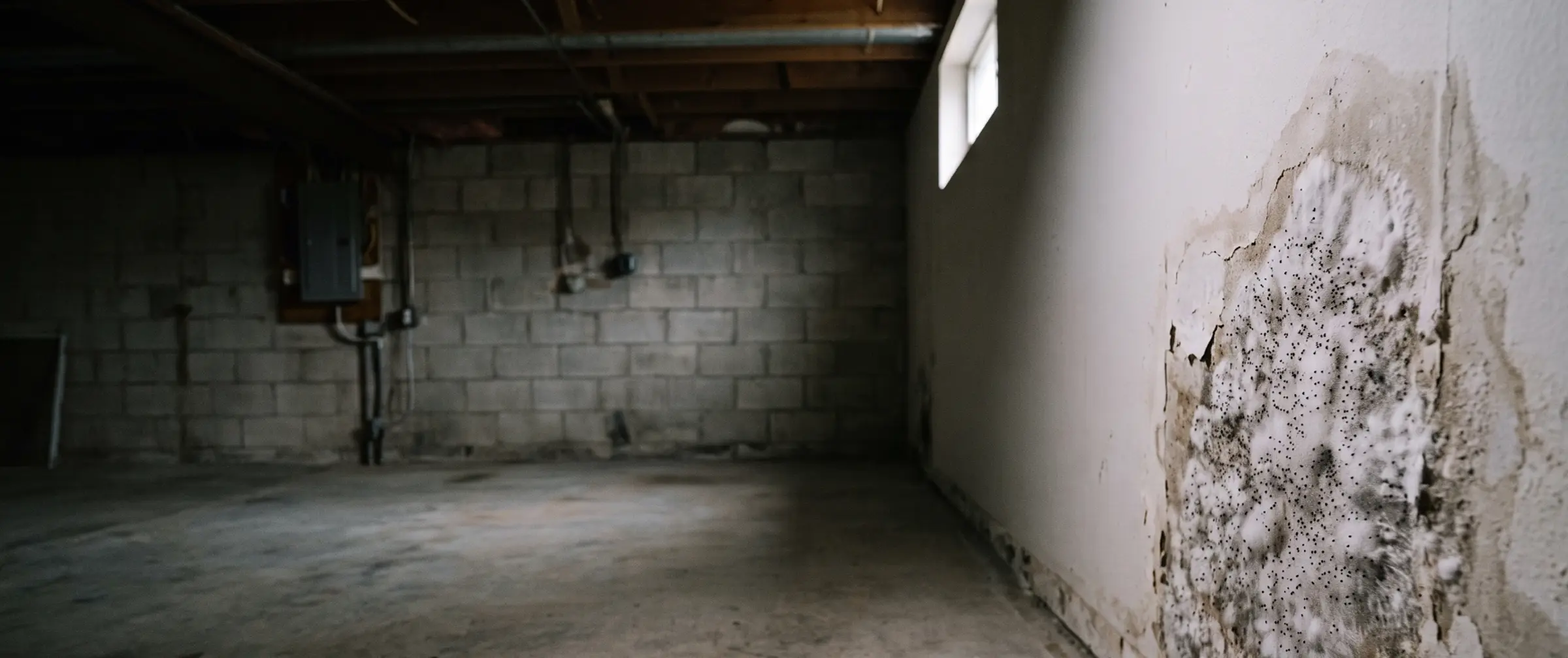
Call a professional when the affected area exceeds about 10 square feet, when Rhizopus is growing on a porous material like drywall or insulation, or when anyone in the household has diabetes, cancer, or another condition that weakens the immune system.
 Drywall this saturated has to be removed and replaced rather than cleaned, since the fungal network has already spread past the visible surface growth.
Area larger than 10 square feet
The EPA's 10-square-foot threshold is the standard cutoff most remediation professionals use to decide whether a job qualifies as DIY-scale or requires professional containment and equipment.
Growth on a porous building material
Drywall, insulation, and subflooring that Rhizopus has colonized generally need to be removed and replaced, a scope of work better handled by a mold inspection and professional crew than a weekend cleanup.
A high-risk household member is present
Anyone with diabetes, cancer, a transplant, or another immune-suppressing condition should not be the one handling removal, and the household may want professional mold remediation even for a job that would otherwise be DIY-scale.
The mold keeps coming back
Recurrence after cleaning, despite a dry surface, usually means the moisture source is hidden or only partially fixed, which is a diagnostic job better suited to a professional than repeated cleaning attempts.
The source of moisture is hidden
Moisture inside a wall cavity or under flooring can't be confirmed or corrected without opening up the structure, which calls for professional assessment rather than guesswork.
A large quantity of stored food or paper goods is affected
Widespread contamination through a pantry, cabinet, or storage area is a bigger cleanup and disposal job than a single moldy item, and professional help can prevent cross-contamination during removal.
How much does Rhizopus mold removal cost?
Rhizopus mold removal typically costs between $300 and $4,500, with the price driven mainly by whether the growth is limited to food and surfaces or has spread into porous building materials. Additional factors, including containment setup, the number of rooms affected, and whether post-removal clearance testing is required, can push a job toward the higher end even when the visible growth looks small.
Removing Rhizopus from a nonporous surface under 10 square feet typically costs $300 to $800 professionally, while drywall or crawl space contamination that requires material removal and replacement can run $1,500 to $8,000. Professional mold remediation generally runs $10 to $25 per square foot, though Rhizopus jobs involving HVAC components or multiple rooms often land above that range because of the added containment and labor required.
| Scenario | Typical cost |
|---|---|
| Discarding contaminated food and cleaning storage area | $0–$50 (DIY) |
| DIY supplies for a small nonporous surface patch | $50–$150 |
| Professional cleaning of a small nonporous area (under 10 sq ft) | $300–$800 |
| Drywall or insulation removal and replacement (moderate scope) | $1,500–$4,500 |
| Extensive basement or crawl space contamination | $3,000–$8,000 |
| Post-removal clearance testing | $200–$600 |
These figures reflect Rhizopus-specific scenarios rather than every mold job. National mold remediation cost tables run by square footage, room location, and mold type, and a Rhizopus job on drywall or in a crawl space will typically land within those broader national ranges rather than outside them.
How to prevent Rhizopus mold from coming back
Preventing Rhizopus mold from returning comes down to controlling moisture and limiting how long food or cellulose materials sit in a humid environment before being used or discarded. A colony can reestablish within 24 to 48 hours once conditions return to the temperature and humidity range it needs, so prevention works best as a routine rather than a one-time fix.
 A reading below 60 percent humidity keeps most kitchen surfaces outside the range Rhizopus needs to establish, even with fruit sitting out.
Keeping indoor humidity below 60 percent, per EPA guidance, is the single most effective control, since Rhizopus cannot establish on a surface that never gets wet enough to sustain it. Rhizopus favors warm conditions in particular, generally between 68°F and 86°F, so a damp surface in a heated room carries more risk than the same dampness in an unheated space during winter.
| Prevention action | Frequency | Why it works |
|---|---|---|
| Store bread and produce in the refrigerator once past peak freshness | Ongoing | Cold temperatures slow Rhizopus growth dramatically |
| Keep indoor humidity below 60 percent | Ongoing, monitor with a hygrometer | Rhizopus needs elevated moisture to establish and spread |
| Inspect stored cardboard and paper goods | Every few months | Catches early growth before it spreads to nearby items |
| Fix leaks and condensation sources promptly | As soon as noticed | Removes the moisture Rhizopus depends on |
| Clean and dry HVAC drain pans and filters | Seasonally | Prevents organic dust and condensate from combining |
| Avoid overwatering houseplants | Ongoing | Wet soil surfaces are a common, overlooked Rhizopus source |
| Ventilate basements and storage areas | Ongoing | Reduces ambient humidity around stored cellulose materials |
Indoor humidity above 60 percent is the single condition most of the actions above are designed to eliminate, since Rhizopus can't sustain new growth once ambient moisture drops below that threshold, regardless of how much food or cellulose material is available.
Checking stored cardboard, paper goods, and pantry items every few months catches early growth before it spreads to nearby items, which matters more for Rhizopus than for slower-growing household molds given how fast a small patch can expand.
Rhizopus responds to the same underlying conditions that drive most household mold prevention work, so a household already managing recurring mold in more than one room is usually solving one moisture problem rather than several separate ones.
Frequently asked questions
Is Rhizopus mold the same as black mold?
No, Rhizopus is not the mold typically called black mold. That common name usually refers to Stachybotrys chartarum, which requires sustained, heavy moisture and grows as a dark, slimy patch rather than the fast, cottony white growth Rhizopus produces.
Can Rhizopus mold make you sick?
Yes, for most healthy people the reaction is mild, limited to allergy-type symptoms such as sneezing, a runny or stuffy nose, and coughing after inhaling spores. People with diabetes or a weakened immune system face a separate and more serious risk from certain Rhizopus species.
How fast does Rhizopus mold grow?
Very fast. A visible colony can roughly double in coverage within 24 to 48 hours when warmth and moisture are both present, which is why bread or fruit left out can look clean one day and be fully covered the next.
Can Rhizopus mold grow on plastic or metal?
No, not typically. Rhizopus needs an organic food source such as starch, sugar, or cellulose to grow, so plastic and metal don't support colonization on their own. A colony growing on nearby organic material, like food packaging or cardboard, can still deposit spores on a hard surface next to it.
Can you eat around Rhizopus mold on bread?
No, cutting away the visible mold and eating the rest is not safe. The fuzzy growth you see on the surface is only part of a fungal network that has already spread through the soft, porous interior, and spores from handling the item can also become airborne.
What kills Rhizopus mold?
Detergent and water removes Rhizopus effectively from nonporous surfaces like tile, glass, and sealed countertops. Bleach works on nonporous surfaces only and does nothing for growth that has penetrated a porous material like drywall or cardboard, which needs to be removed rather than cleaned.
Does Rhizopus mold need standing water to grow?
No, standing water isn't required. Elevated humidity, a damp surface, or condensation is enough moisture for Rhizopus to establish itself and grow, particularly on a food source or cellulose-based material.
Is Rhizopus mold the same thing as mucormycosis?
No, Rhizopus is the mold; mucormycosis is the infection that certain Rhizopus species can cause in people with weakened immune systems. Encountering Rhizopus mold in a home does not mean mucormycosis will develop, since the infection is rare and tied almost entirely to specific underlying health conditions.
Sam Hickerson is the founder of RestoreAdvisor and writes consumer guides on mold remediation, water damage restoration, inspection, testing, and home recovery. His work focuses on helping homeowners understand costs, risks, and when to call a professional. He draws on guidance from the EPA, CDC, IICRC, and other authoritative sources to make complex home issues easier to navigate.