
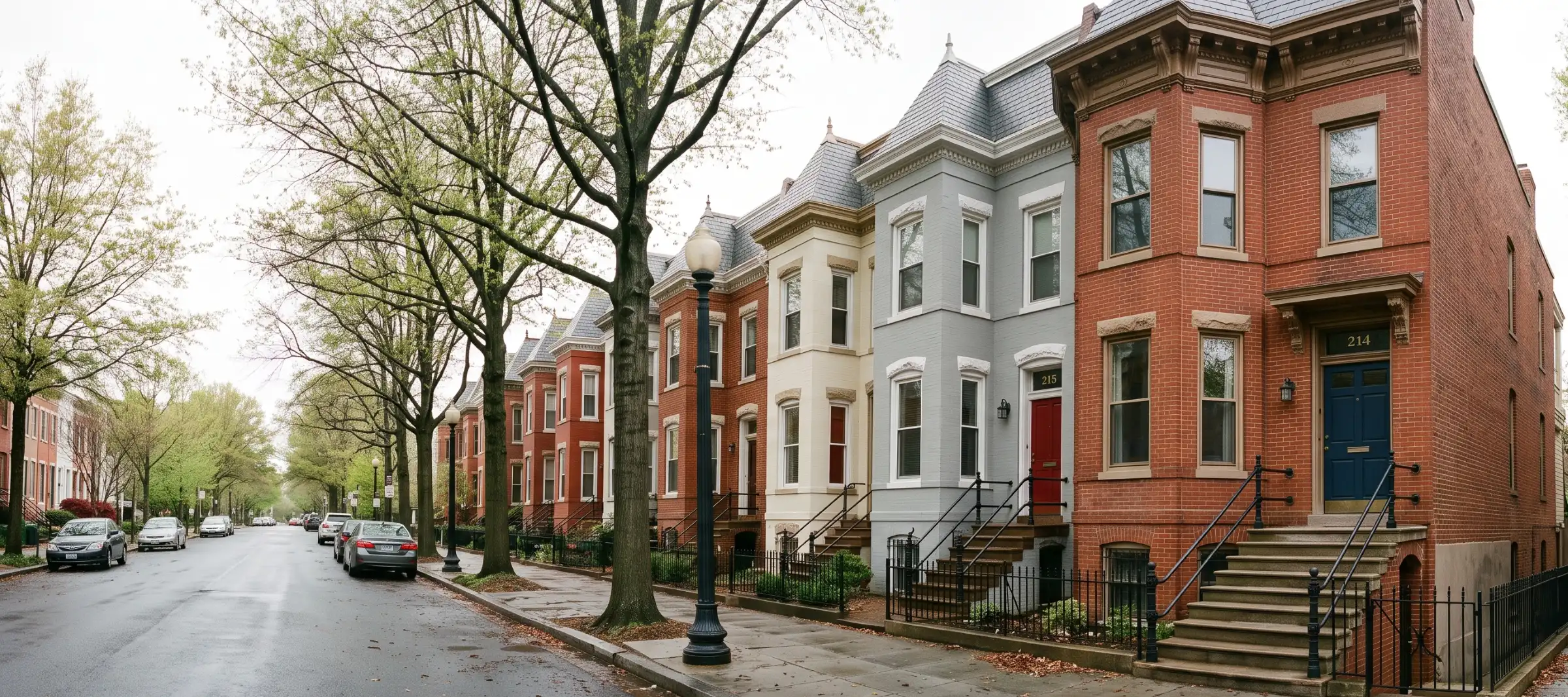

Finding mold in a DC rowhouse basement is rarely a surprise once you know what to look for, but figuring out what the law actually requires before you hire someone usually is. The District licenses mold work through its own city agency rather than a state board, sets hard deadlines for landlords, and ties a lot of its risk to infrastructure most homeowners never think about until water shows up where it shouldn't.
Mold remediation is the licensed process of identifying, containing, and removing indoor mold contamination from a property, performed according to the ANSI/IICRC S520 standard for professional remediation work. Washington DC is one of the few U.S. cities that licenses this work through its own municipal agency, the Department of Energy and Environment, rather than leaving it to a state board or no licensing requirement at all.
Key insights
- DC requires its own license, not a state one. The Department of Energy and Environment licenses mold assessors and remediators separately under the Air Quality Amendment Act of 2014, and the two roles cannot be performed by the same company on jobs at or above 10 square feet.
- Most jobs cost $1,100 to $7,500. Per square foot pricing in the District typically runs $10 to $30, with whole-basement rowhouse jobs reaching the higher end of that range.
- Landlords have 7 days to inspect and 30 days to remediate. DC Code § 8-241.04 sets both deadlines, and a landlord who misses them in bad faith can owe treble damages.
- Basements are the District's primary risk zone. English basements built below or near street grade face both rising groundwater through old masonry and, in roughly a third of the city, backup from a combined sewer system built more than a century ago.
- The 10 square foot threshold controls almost everything. Below it, an owner-occupant can legally remediate without a license. At or above it, DOEE licensing is mandatory for both rental and owner-occupied units once a professional is hired.
- Construction era predicts the failure mode. Federal and Victorian rowhouses from before 1900 tend to fail at the foundation and party wall; Wardman-era rowhouses from the 1900s through 1920s tend to fail at flat roofs and aging plumbing chases instead.
Why Washington DC's mold risk looks different from other cities
DC's mold risk isn't driven by a hurricane season or a coastal flood plain. It's a combination of century-old masonry rowhouse basements and a stormwater system that, in large sections of the city, still carries sewage and rain through the same century-old pipes.
 Per ANSI/IICRC S520, water backing up through a floor drain is classified as Category 3 contaminated water, which requires a different containment and removal protocol than a clean roof leak.
When those combined sewers exceed capacity during a heavy storm, water doesn't just pool in the street. It backs up through floor drains, toilets, and shower drains into basements that were excavated decades before anyone planned for a 4-inch-per-hour downpour. The neighborhoods built atop the District's buried streams, including the long-paved-over Tiber Creek, feel this first and worst. According to the National Weather Service, the heaviest of these storms have dropped six inches of rain in just over an hour in parts of the city.
Layered on top of that infrastructure risk is the building stock itself. A large share of DC's housing predates 1930, and a meaningful share predates 1900. Federal-era rowhouses in Georgetown and Capitol Hill have flat brick facades and shallow, unwaterproofed foundations original to the 1780s through 1830s. Victorian rowhouses from the post–Civil War building boom in Capitol Hill, Shaw, and Logan Circle often include an English basement, a below-grade unit with its own entrance that was built for live-in staff and is now frequently rented out, which puts a habitable, code-regulated space directly in the path of foundation moisture. Early 20th century Wardman-built rowhouses across Petworth, Bloomingdale, and Brightwood introduced flat roofs and built-in gutters that fail differently than a pitched roof, sending water into wall cavities instead of obviously onto the ground.
Confirming the source before remediation begins is the only way to know which of these pathways is actually feeding a specific infestation, since basement moisture, roof leaks, and sewer backup all produce different remediation scopes even when the visible mold looks identical.
Neighborhood-by-neighborhood mold risk in DC
Mold risk in DC tracks two largely separate variables: proximity to the combined sewer system and buried waterways, and the age and construction type of the housing stock. A property can carry high exposure to one factor and low exposure to the other, which is why those two risk drivers need to be evaluated separately rather than collapsed into a single blended score.
 Blocked storm drains like this one are a documented contributor to the surface flooding that has repeatedly affected basements in Bloomingdale, which sits atop the District's buried Tiber Creek watershed.
The two risk factors compound rather than substitute for each other in some pockets of the city. A pre-1900 rowhouse sitting directly above one of the District's buried streams carries both an aging, minimally waterproofed foundation and direct exposure to interior flooding during heavy storms, which is part of why Bloomingdale and LeDroit Park show up so often in DC Water's own flood documentation.
| Neighborhood | Primary risk factor | Notes |
|---|---|---|
| Bloomingdale | Combined sewer backup | Sits atop the buried Tiber Creek watershed; documented repeated basement flooding events |
| LeDroit Park | Combined sewer backup | Adjacent to Bloomingdale's drainage basin; shares the same interior flooding pattern |
| Riggs Park | Buried tributary flooding | Built over a tributary of the Anacostia River; flash flooding has reached two dozen homes in a single event |
| Capitol Hill | Pre-1900 masonry foundation | Federal and Victorian-era foundations with limited original waterproofing; English basements common |
| Shaw | Pre-1900 masonry foundation, plus infill construction | Mix of historic rowhouse stock and newer infill with varying foundation quality |
| Petworth | Wardman-era flat roof and plumbing age | 1900s–1920s rowhouse stock with flat roofs prone to membrane failure over time |
| Anacostia and east of the river | Aging storm drainage infrastructure | Historically underserved by stormwater investment relative to the rest of the city |
A property in one of these areas isn't guaranteed to have a mold problem, and a property outside them isn't guaranteed to be safe. The table identifies which failure mode is statistically more likely so an inspection can be scoped to check the right thing first, whether that property is owner-occupied or rented. Renters facing an active dispute anywhere in the city, regardless of neighborhood, have escalation options under DC's broader tenant rights, including rent abatement and repair-and-deduct remedies.
How to tell what's causing a musty smell in a DC basement
A musty basement smell in DC usually traces to one of four sources: combined sewer backup, ordinary humidity, a roof leak migrating down through the structure, or a failed HVAC condensate line. The signal that tells these apart is timing and location, not just how strong the smell is.
 A stain or mineral deposit line that starts at the baseboard and works upward points to groundwater or sewer backup entering at floor level, while staining that starts near the ceiling instead almost always traces to a roof or plumbing leak above.
A musty smell that intensifies after, not during, a storm
Combined sewer surcharge typically backs up into a basement during or shortly after the heaviest part of a storm, then recedes once the system catches up. If the smell shows up the morning after a downpour and is strongest near floor drains or a laundry hookup, treat it as the same kind of water damage timeline a burst pipe would create rather than routine condensation.
Staining low on basement walls, not high
Groundwater and sewer backup both enter at or near floor level, producing a stain or efflorescence line that starts at the baseboard and works upward. A stain that starts near the ceiling almost always points to a roof or plumbing leak above, not a basement-level moisture source, which changes who you call first.
A ceiling stain that appears within days of a roof inspection gap
DC's Wardman-era rowhouses run flat roofs with built-in gutters that fail less obviously than a pitched roof. A new ceiling stain on the top floor that wasn't there during the last rain but appears after the next one usually means a roof membrane or gutter seam has failed, not that the prior stain simply got worse.
A sour or earthy odor concentrated near an HVAC closet
A basement-level mechanical closet housing an air handler is common in DC rowhouse conversions. An odor that's strongest there and fades elsewhere in the room points to a condensate drain failure rather than a structural moisture source, and the fix is different from anything related to the foundation.
Recurring odor in the same spot after a cleaning attempt
If a previous cleaning addressed the visible mold but the smell returns in the same location within a season, the moisture source was never corrected. This is true regardless of which of the patterns above applies, and it's the clearest signal that DIY cleaning alone won't hold.
Which mold species are common in DC homes
Cladosporium is the species DC assessors find most consistently, since it needs only sustained dampness rather than standing water to establish, which is exactly what a humid rowhouse basement provides for most of the year. It shows up on basement walls, closet interiors, and around window frames in older masonry construction regardless of whether a flooding event has ever occurred.
Aspergillus and Penicillium dominate samples taken after a specific moisture event rather than chronic humidity alone. A lab can't separate the two genera without culturing the sample, so air sampling reports usually list them as a single Asp/Pen line rather than naming one or the other. In DC, they show up most often around HVAC condensate failures and in basements after a plumbing leak that wasn't fully dried within 48 hours.
Stachybotrys chartarum and Chaetomium globosum require sustained saturation, not brief dampness, which makes their presence a meaningful signal in DC specifically. Combined sewer backup leaves cellulose materials like drywall paper and subfloor wet for far longer than a typical leak, and DOEE-licensed assessors report elevated rates of both species in basements that took on sewer-contaminated water and were not professionally dried within the first two days. Confirming species requires lab-based mold testing since visual identification alone cannot distinguish Stachybotrys from ordinary surface mold.
DC's DOEE mold licensing law
Washington DC requires anyone performing mold assessment or mold remediation as a business to hold a license issued by the Department of Energy and Environment under the Air Quality Amendment Act of 2014, codified at D.C. Code §§ 8-241.01 through 8-241.09. This makes DC one of a small number of jurisdictions, alongside Florida, Texas, Louisiana, Maryland, New York, and Tennessee, that license mold work at all, and DC is unusual even among those because the license requirement is set by the city government rather than a state agency.
 An English basement is a separately occupiable unit under D.C. housing code, which is why DOEE's licensing threshold and the assessor-remediator separation requirement apply to these spaces the same way they apply to the main house above.
The threshold that triggers the requirement is 10 square feet of indoor mold growth in an affected area, defined by DOEE regulation as space in close proximity to or likely impacted by the same water source. Below that threshold, an owner-occupant can legally assess and remediate mold in their own home without a license. At or above it, the work must be performed or supervised by a DOEE-licensed professional, and DC requires the assessor and the remediator to be two separate licensees rather than one company filling both roles.
A licensed assessor who finds contamination at or above the threshold must issue a written Mold Remediation Protocol before any cleanup begins, specifying the affected locations and at least one analytical method to verify success. Within ten days of completed remediation, the assessor returns to verify the work and issues a written report. This independent verification step, sometimes called post-remediation verification, is what separates a DOEE-compliant job from a contractor simply declaring the work done.
| Role | What DOEE requires | Who it applies to |
|---|---|---|
| Assessor | Separate license, $1M general liability and E&O insurance, DOEE exam | Anyone assessing mold professionally at or above 10 sq ft |
| Remediator | Separate license, $1M general liability with mold and pollution coverage, DOEE exam | Anyone remediating mold professionally at or above 10 sq ft |
| Owner-occupant | No license required | Owner remediating their own occupied unit under 10 sq ft |
Two licensees performing related construction work, such as drywall removal tied to the remediation, also need a Home Improvement Contractor license through the Department of Buildings, since DC does not fold general construction licensing into the mold license itself.
What mold remediation costs in Washington DC
Mold remediation in DC typically costs $1,100 to $7,500 for most residential jobs, with per-square-foot pricing in the $10 to $30 range reported across local providers, in line with cost per square foot figures seen in other dense East Coast markets. A small bathroom ceiling patch under 50 square feet often lands near the bottom of that range, while a flooded basement spanning several hundred square feet with porous drywall and insulation removal pushes toward the top.
 Visible mold across multiple framing bays like this typically pushes a job past the partial-basement scope into the whole-basement cost tier, since containment and demolition both expand once the growth has spread between studs.
Three factors move DC pricing more than they would in most other markets: whether the job crosses the 10 square foot DOEE threshold and therefore requires two separate licensees instead of one, whether the affected basement has an English basement layout with a separate egress that complicates containment, and whether the source is sewer backup, which usually means Category 3 contaminated water and a more aggressive removal protocol than a simple roof leak.
| Project scope | Typical DC cost | What drives the price |
|---|---|---|
| Bathroom or closet patch, under 10 sq ft | $400–$1,200 | Owner-occupant may not need a license at all |
| Single room, 10–100 sq ft | $1,100–$3,000 | Crosses DOEE threshold; two licensees required |
| Basement, partial, 100–300 sq ft | $2,500–$6,500 | English basement access; possible sewer-backup contamination |
| Whole basement, 300+ sq ft | $6,000–$15,000+ | Full containment, demolition, and clearance testing |
| Sewer backup, any size | $3,000–$12,000+ | Category 3 water; biohazard handling adds labor and disposal cost |
Location within the rowhouse is one of the strongest cost drivers in DC specifically, since an English basement carries access and containment costs that a comparable bathroom or attic job doesn't. The table below breaks cost out by where the mold actually is, which matters more here than in markets without DC's distinctive below-grade housing stock.
| Location | DC cost range | Why it's common here |
|---|---|---|
| Bathroom | $500–$1,800 | Pre-1990 ventilation in older rowhouse bathrooms; persistent steam humidity |
| English basement | $2,500–$8,000 | Separate egress and finished living space complicate containment; groundwater and sewer exposure both apply |
| Attic or roofline | $1,200–$5,000 | Wardman-era flat roofs and built-in gutters fail less obviously than pitched roofs |
| HVAC system or mechanical closet | $1,200–$4,000 | Basement-level air handlers common in rowhouse conversions; condensate drain failures |
| Shared wall or party wall | $2,000–$6,000+ | Moisture traveling between attached rowhouses; often requires coordination with the adjoining owner |
Standalone mold inspection before remediation runs separately, typically $300 to $1,000 in the District, distinct from the DOEE-required verification report covered above.
Mold insurance in DC: the sewer backup gap
A standard HO-3 homeowners policy in DC covers mold remediation only when it results from a sudden, accidental covered peril, such as a burst supply line or a failed appliance hose, typically up to a sublimit in the $5,000 to $10,000 range. Mold from gradual seepage, chronic basement humidity, or a known unrepaired leak is excluded outright, since insurers treat those causes as a maintenance failure rather than a covered loss.
The gap that matters most in DC specifically is sewer backup. Standard HO-3 policies categorically exclude water that backs up through a drain, toilet, or floor drain during a combined sewer surcharge event, regardless of how sudden or severe the storm was. Coverage for this specific scenario requires a separate water backup or sewer endorsement, typically costing $50 to $150 a year, and homeowners in DC's flood-documented neighborhoods are far more likely to need it than homeowners in markets where the dominant moisture source is a roof or a slab leak rather than the municipal sewer system itself.
NFIP flood insurance is a separate policy entirely and generally does not respond to interior flooding caused by an overwhelmed sewer system unless the event is specifically classified as a flood rather than a backup, a distinction that has produced denied claims for DC homeowners who assumed their flood policy would cover a sewer-driven basement loss. Confirming which endorsement actually applies, and whether a specific storm event would be classified as flood or backup, is worth doing with an agent before a loss occurs rather than during a claim dispute.
Hiring a mold remediation company in DC
Hiring a mold remediation company in DC means verifying two separate DOEE licenses, one for the assessor and one for the remediator. A contractor who offers to assess and remediate the same job under one license is either unaware of DC's separation requirement or skipping it, and either answer should end the conversation. (If the affected area is genuinely under the threshold and the property is owner-occupied, DIY is a legitimate option instead.)
 DOEE's licensing threshold and the assessor-remediator separation requirement apply the same way in a bathroom as they do in a basement, since the law is tied to square footage of contamination, not which room it's found in.
Skipping the separation requirement isn't just a paperwork issue. A remediator who also writes their own assessment has no independent check on whether the job was actually done to standard, which is precisely the conflict of interest DC's two-license structure exists to prevent. The questions below surface that conflict early, before a deposit changes hands.
| Question to ask | What a credible answer sounds like |
|---|---|
| Are you DOEE-licensed as an assessor, a remediator, or both? | A specific license number for one role, with a referral to a separately licensed company for the other if the job is above 10 sq ft |
| Will I get a written Mold Remediation Protocol before work starts? | Yes, naming the affected locations and the verification method, before any demolition |
| Do you carry the required mold-specific liability coverage? | A certificate showing at least $1 million in general liability with mold and pollution coverage, not just standard contractor's liability |
| Who performs the post-remediation verification? | The original licensed assessor, returning within ten days of completed work, not the remediation crew checking their own work |
| If this involves drywall removal, do you also hold a Home Improvement Contractor license? | Yes, with a license number distinct from the DOEE mold license |
Always get at least two estimates covering identical scope before committing. A bid that omits containment, source correction, or the DOEE post-remediation verification report isn't actually cheaper than one that includes them; it's an incomplete job priced to look competitive. Pressure tactics, verbal-only estimates, and promises of total mold elimination are red flags here just as they would be when choosing a mold remediation company in any other city, and they should end the conversation just as fast.
Renters and landlords in DC
The Air Quality Amendment Act of 2014 gives DC tenants one of the more specific statutory mold timelines in the country. Once a tenant notifies a landlord in writing of mold or suspected mold, the landlord has 7 days to inspect the affected area before doing anything else, including painting over or scraping at visible growth. After that inspection, the landlord has 30 days to remove any mold found, unless a court orders a shorter window. A burst pipe or active leak that's actively flooding a unit falls outside this standard timeline and calls for emergency response rather than waiting on the statutory clock.
 A building like this one, with multiple units sharing the same structure, still falls under DC's landlord notice and remediation timeline the same way a single-family rental does, regardless of how many units share the building.
If the inspection turns up 10 square feet or more of contamination, the landlord must use a DOEE-licensed assessor and a separately licensed remediator, the same threshold and separation rule that applies to owner-occupied units. A landlord cannot satisfy this requirement by sending an unlicensed maintenance crew to scrub the area, even if the work looks thorough.
The statute also creates a financial consequence for landlords who ignore the process. If a tenant's own professional assessment finds mold above the threshold, the landlord receives written notice of that assessment, and the landlord still fails to remediate within 60 days in bad faith, a court can award treble damages on top of standard remedies. DC's broader warranty of habitability separately requires landlords to maintain rental units in a safe and sanitary condition, an obligation that reflects the same health risk from chronic indoor moisture that the CDC documents nationally.
Tenants moving into a new lease are entitled to disclosure of any mold history above the threshold from the prior three years, unless that mold was already remediated by a DOEE-licensed professional. As of June 2026, DOEE no longer inspects rental units or takes enforcement action against landlords over mold; that authority now sits with the Department of Buildings, which can issue a Notice of Infraction if a landlord misses the 7-day or 30-day deadline.
Tenants with a mold complaint the landlord won't address have a free option before going to court: the Office of the Tenant Advocate at (202) 719-6560 helps tenants file complaints and navigate disputes at no cost, and for landlords who ignore repeated written notice, a private claim in DC Superior Court's Housing Conditions Court remains available.
Condo and shared-wall mold in DC
Mold responsibility in a DC condo splits along the same line drawn by D.C. Code § 42-1903.07: the unit owners' association is responsible for common elements, and the individual unit owner is responsible for the unit and anything inside it. In practice, that line gets blurry fast in a building where a shared plumbing stack, a party wall, or a centralized HVAC riser can carry moisture from one unit into another without the source ever appearing inside the affected unit at all, which is exactly the kind of ambiguity a proper mold inspection is built to resolve before anyone starts assigning blame.
 A shared plumbing stack like this one can carry moisture into an adjoining unit's wall cavity with no leak ever appearing inside that unit, which is why D.C. Code Section 42-1903.07 routes common-element damage like this to the condo association rather than the affected owner.
DC's condo and rowhouse-conversion stock is large enough that this scenario isn't rare. A leak in a shared riser two floors up can saturate a wall cavity in a unit that has never had a plumbing problem of its own, and the DOEE licensing law's owner-occupant exemption only covers an owner remediating their own unit, not common-element work, which legally still requires a DOEE-licensed assessor and remediator regardless of square footage once the building's association authorizes the job.
Before assuming a mold problem is the building's responsibility, get a licensed assessor to document where the moisture actually originates. If it traces to a shared wall, riser, or roof, the association's insurance and maintenance obligation likely applies; if it originates inside the unit's own fixtures or finishes, the cost falls to the owner even though the symptom looks identical from inside the affected room. Master policies and HO-6 unit policies typically split that cost along the same common-element line, a distinction mold remediation for a condo walks through case by case for disputes that go beyond what's specific to DC's licensing law here.
Buying or selling a home with mold history in DC
DC's mold disclosure law requires sellers and landlords to disclose known mold contamination at or above the 10 square foot threshold from the previous three years unless it was remediated by a DOEE-licensed professional. For a buyer, this means the disclosure form itself is only as good as the seller's actual knowledge and the paper trail behind any past remediation, which is why learning the visual and odor signs of mold is worth doing before a walkthrough rather than relying on disclosure alone.
Given how common basement-level moisture is in the District's rowhouse stock, a pre-purchase inspection that specifically checks basement walls, sump pit operation, and signs of prior water intrusion is worth the cost even when the seller's disclosure shows nothing. A finished basement is the single hardest place to verify mold history visually, since drywall and flooring can hide a prior infestation that was cleaned but not properly remediated. Request copies of any DOEE post-remediation verification reports from past work; their absence on a property with an obvious history of basement finishing is a reasonable basis to request a current assessment before closing.
Preventing mold in a Washington DC home
Preventing mold in a DC home means controlling basement moisture from old masonry foundations and reducing exposure to sewer surcharge during heavy storms, the District's two dominant failure modes. Attics, crawl spaces, and HVAC systems carry their own prevention schedules that aren't unique to DC, and the national mold prevention system breaks those out room by room for anyone whose risk extends beyond the basement.
 Rowhouse lots like this one often share a single downspout-to-alley drainage path with the property next door, so confirming the discharge point clears the foundation matters as much as the gutters themselves staying clean.
Maintain positive drainage away from the foundation
Rowhouse lots are narrow and often share a downspout-to-alley drainage path with neighboring properties. Confirm gutters discharge well away from the foundation and that grading slopes away from the house, not toward it.
Install or service a sump pump in any basement below grade
A functioning sump pump with a battery backup is the most direct defense against both groundwater seepage and combined sewer backup reaching a finished basement.
Schedule HVAC condensate drain checks each spring
DC's humid summers run an air conditioning season of roughly five to six months. A clogged condensate line is one of the most common non-flood mold triggers in rowhouses with mechanical closets in finished basements.
Address English basement moisture before finishing the space
If a below-grade unit shows any history of dampness, resolve the moisture source and confirm dry conditions for a full season before finishing walls or flooring, since finishing over an unresolved moisture problem is one of the most common causes of recurring basement mold in the District.
Know your sewer backup risk before a storm, not during one
If a property sits in or near the combined sewer service area, a backwater valve installed on the main sewer line can prevent storm surcharge from reaching interior drains during a heavy rain event. Mold growing in sewer-contaminated water should be treated with the same caution as confirmed black mold until testing says otherwise.
Frequently asked questions
How much does mold remediation cost in Washington DC?
Most DC mold remediation jobs run $1,100 to $7,500, with small bathroom or closet patches under $1,000 and whole-basement rowhouse jobs reaching $10,000 or more. Per square foot pricing typically falls between $10 and $30, in line with regional rates reported by local cost trackers.
Does DC require a license for mold remediation?
Yes. The District requires anyone who assesses or remediates mold professionally to hold a license from the Department of Energy and Environment under the Air Quality Amendment Act of 2014. This applies to both the assessor and the remediator, and DC requires the two roles to be performed by different licensed individuals on jobs at or above the 10 square foot threshold.
Can I do my own mold remediation in DC?
Yes, if the affected area is under 10 square feet and you own and occupy the unit. Above that threshold, or in a rental unit of any size above 10 square feet, DC law requires a DOEE-licensed mold assessor and a separately licensed mold remediator.
How long does a landlord have to fix mold in DC?
Seven days to inspect after written notice from a tenant, then 30 days to remediate any visible mold found. Landlords who ignore both deadlines in bad faith can face treble damages under D.C. Code § 8-241.05.
Why does DC have so much basement mold?
Most English basements in DC rowhouses sit at or below the surrounding grade, which puts them in the path of two distinct moisture sources: groundwater migrating through century-old masonry foundations and stormwater backing up through a combined sewer system that still serves roughly a third of the city.
Does DC homeowners insurance cover mold remediation?
Sometimes. Mold caused by a sudden, covered event like a burst pipe is typically covered up to a sublimit, often $5,000 to $10,000. Mold from gradual seepage, chronic basement dampness, or a known unrepaired leak is usually excluded under a standard HO-3 policy.
Who pays for mold remediation in a DC rental?
The landlord, in nearly every case. DC's warranty of habitability makes the owner responsible for moisture conditions that cause mold, and the Air Quality Amendment Act puts the inspection and remediation duty on the landlord once written notice is given, regardless of whether the lease tries to shift that cost to the tenant.
What neighborhoods in DC have the highest mold risk?
Bloomingdale, LeDroit Park, and Riggs Park sit on historic buried waterways and have the District's most documented history of basement flooding from the combined sewer system. Capitol Hill, Shaw, and Petworth carry elevated risk from pre-1940s masonry foundations rather than sewer backup.
Sam Hickerson is the founder of RestoreAdvisor and writes consumer guides on mold remediation, water damage restoration, inspection, testing, and home recovery. His work focuses on helping homeowners understand costs, risks, and when to call a professional. He draws on guidance from the EPA, CDC, IICRC, and other authoritative sources to make complex home issues easier to navigate.