
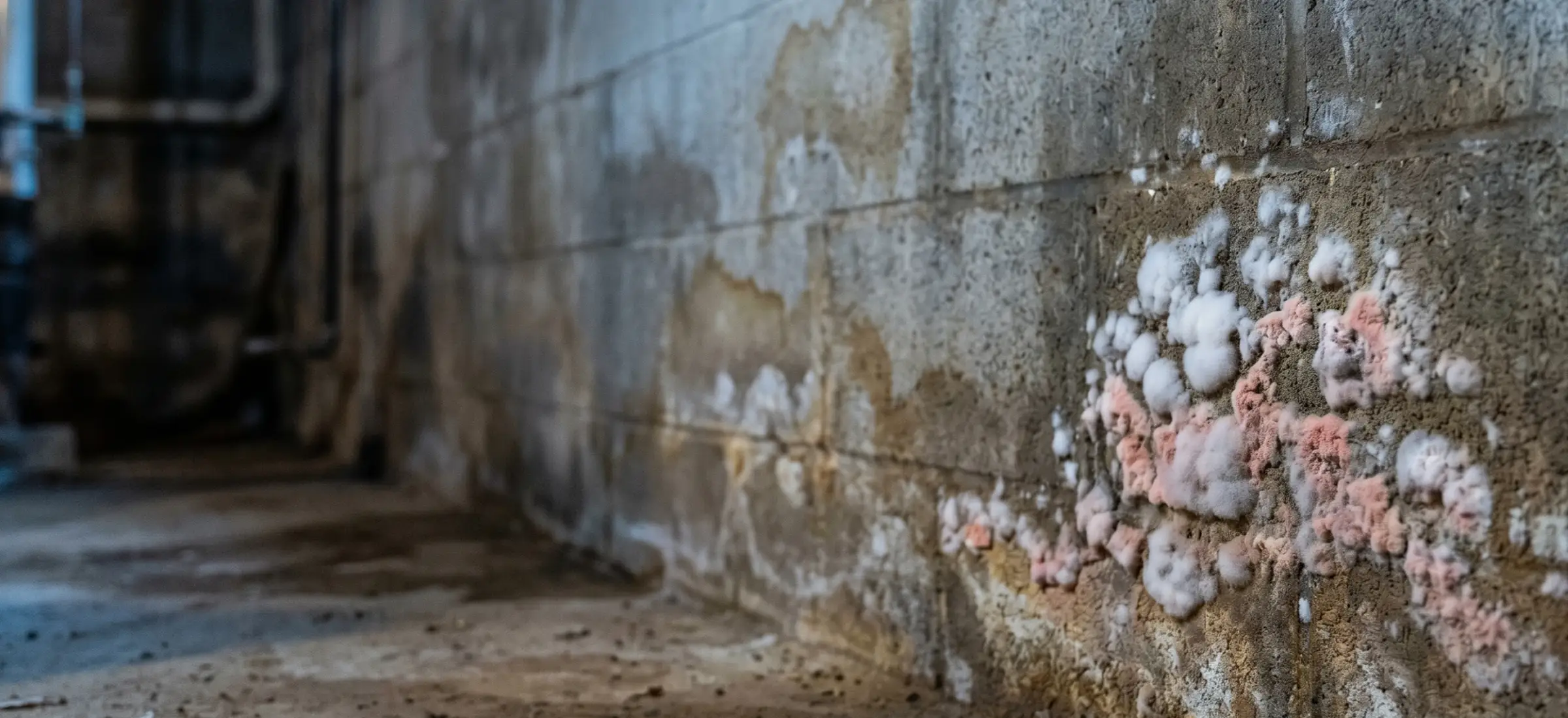

Fusarium is not the mold most homeowners expect to find. It shows up pink, white, or reddish-brown rather than the dark colors typically associated with serious mold problems, and it can grow in cold, damp spaces where other molds struggle to survive. That combination of an unfamiliar appearance and unusual behavior makes it easy to dismiss as something minor. It is not.
Fusarium mold is a genus of soil-borne fungi that colonizes water-damaged building materials and can cause infections ranging from nail and corneal disease to life-threatening disseminated illness in immunocompromised individuals, per CDC guidance and the ANSI/IICRC S520 Standard for Professional Mold Remediation. It is both allergenic and toxigenic, producing mycotoxins in three distinct chemical classes documented in water-damaged indoor environments. If you have found something pink, cottony, or reddish in a damp area of your home, this article covers how to confirm whether it is Fusarium, what the health stakes are for your household, and what removal involves.
Key insights
- Cold-tolerant and fast-spreading. Fusarium can grow at temperatures below 50°F (10°C), allowing it to colonize unheated basements, crawl spaces, and garages where other molds cannot thrive.
- Appears in multiple colors. Growth may be white, pink, reddish-brown, salmon, yellow, or purple, making visual identification alone unreliable. Lab culture or spore analysis is required to confirm the genus.
- Three mycotoxin classes. Fusarium species produce trichothecenes, fumonisins (IARC Group 2B possible human carcinogens), and zearalenone, all of which have been documented in water-damaged building materials.
- Serious infection risk for vulnerable individuals. Disseminated fusariosis in immunocompromised patients carries mortality rates up to 90%, according to NIH research. Anyone with a weakened immune system in the household elevates the removal priority.
- Not routinely airborne, but spores become airborne when dried. Fusarium does not typically appear in routine air samples, making surface swab or bulk sampling the more reliable detection approach for indoor growth.
- Removal cost runs higher than many mold types. Professional remediation typically ranges from $800–$8,000, driven by its fast-spreading nature and the frequent need to address multiple rooms or porous structural materials.
What is Fusarium mold
Fusarium is a large genus of filamentous fungi containing hundreds of species, most of which are primarily plant pathogens and soil inhabitants. Per the ANSI/IICRC S520 Standard for Professional Mold Remediation, Fusarium is classified as both allergenic and toxigenic when found in indoor water-damaged environments. It is distinguished from most other indoor molds by two traits: its ability to grow and spread at colder temperatures than competing genera, and the distinctive banana-shaped (sickle-shaped) macroconidia it produces, which are identifiable under microscopy and in laboratory culture.
 Color alone couldn't confirm this is Fusarium; the banana-shaped macroconidia visible under microscopy in a culture like this are the actual identification marker labs rely on.
Indoors, Fusarium colonizes materials that stay persistently wet: carpet backing, wallpaper, drywall, polyurethane foam insulation, and the internal components of HVAC systems. A leak, flood, or chronic condensation problem is nearly always the trigger; mold after water damage events are among the most common scenarios in which Fusarium is confirmed indoors.
Because it spreads quickly once established, finding it in one room warrants a careful search of adjacent spaces. Its fast-spreading behavior is one reason the EPA's 10-square-foot threshold for when mold remediation is required frequently underestimates the true scope of a Fusarium job.
Fusarium species found indoors
Several Fusarium species appear in indoor water-damaged environments, and per CDC classification all are considered potentially harmful regardless of species. Visual identification by color and texture cannot distinguish them reliably; laboratory culture or DNA sequencing is required. The species with the most documented health significance are noted below.
 F. solani accounts for roughly 60% of documented human infections, which makes carpet backing this contaminated a higher-priority find than the same growth on a less clinically significant species.
According to NIH research, F. solani accounts for approximately 60% of Fusarium human infections, and F. oxysporum accounts for around 20%. The remaining species are responsible for the balance of clinical cases.
| Species | Appearance | Common indoor locations | Primary mycotoxins | Health category |
|---|---|---|---|---|
| F. solani | White to cream, blue-green tones on reverse | Carpet, mattress dust, damp walls, HVAC drain pans | Trichothecenes | Allergenic, toxigenic, invasive |
| F. oxysporum | White, pink, or purple tones | Soil-contaminated floors, potted plants, damp concrete | Fumonisins, beauvericin | Allergenic, opportunistic |
| F. culmorum | Pale to tan, dark red-brown reverse | Carpet, floor dust, polyurethane foam | Deoxynivalenol (DON), zearalenone | Allergenic, toxigenic |
| F. proliferatum | White to pale purple | HVAC systems, water pipes, duct liner | Fumonisins B1/B2, beauvericin | Allergenic, toxigenic |
| F. verticillioides | White, pink, or reddish | Grain-based stored materials, damp wood | Fumonisins B1/B2 | Allergenic, toxigenic |
Mycotoxins produced by Fusarium
Fusarium species collectively produce three major classes of mycotoxins documented in water-damaged buildings. The International Agency for Research on Cancer (IARC) has classified fumonisin B1 and B2 as Group 2B possible human carcinogens. Trichothecenes, including T-2 toxin and deoxynivalenol, suppress immune function and damage mucosal membranes. Zearalenone acts as an estrogenic compound and has demonstrated reproductive toxicity in animal studies.
These toxins are produced on building materials when conditions are wet enough to sustain active fungal growth. Unlike spore exposure, mycotoxin exposure does not require the mold to be actively dispersing airborne particles; fragments and settled dust from contaminated materials can carry toxins to other areas of the home. Trichothecenes are also produced by Stachybotrys chartarum, and the protocols for black mold removal share several features with Fusarium remediation for this reason.
Where Fusarium grows in a home
Fusarium requires very wet conditions to establish indoors, unlike genera such as Cladosporium that can colonize surfaces at moderate humidity. Active growth indicates a sustained moisture source, not just elevated ambient humidity.
 Joists this extensively colonized rarely show obvious surface signs until growth is already well established, since Fusarium favors hidden substrates like joist cavities over open, visible surfaces.
Carpet backing, polyurethane foam, and wallpaper adhesive are particularly hospitable substrates because they retain moisture against surfaces and provide organic material for fungal nutrition. These hidden substrates mean visible surface growth frequently represents only a fraction of the actual contamination area. Crawl space and unfinished basement environments are especially prone to this pattern, where Fusarium can colonize floor joists and insulation without producing obvious surface indicators until growth is extensive. Musty odors or unusual discoloration in these spaces are worth investigating even in cool months, since Fusarium's cold tolerance keeps it active in winter when most other common indoor molds slow down.
| Location | Primary moisture source | What to look for | DIY or pro |
|---|---|---|---|
| Carpet and padding | Flooding, chronic leaks, slab moisture | Pink or white discoloration, musty odor, damp feel at backing | Pro for any area larger than 10 sq ft; carpet often requires replacement |
| Damp walls and drywall | Plumbing leaks, foundation intrusion | Pink, white, or reddish cottony patches, soft or bubbling paint | Pro; drywall penetration requires removal |
| Mattress and upholstered furniture | Flood events, high indoor humidity | Discoloration, musty odor at seams | Discard and replace |
| Wallpaper | Condensation, wall leaks | Staining or fuzzy growth at seams and edges | DIY if under 10 sq ft on non-porous substrate; pro if drywall behind is wet |
| HVAC drain pans and duct liner | Condensate buildup, inadequate drainage | Visible growth in pan, musty supply-air odor | Pro; HVAC component replacement may be required |
| Polyurethane foam insulation | Foundation moisture, pipe condensation | Discoloration, odor | Pro |
| Crawl space and basement floors | Hydrostatic pressure, flooding | Pink or white patches on concrete or framing lumber | Pro for structural framing; small concrete patches may be DIY |
Fusarium mold health risks
Fusarium is both allergenic and toxigenic, meaning it can cause harm through two separate mechanisms: immune-mediated allergic response to spore proteins, and direct toxic effects from mycotoxins produced on colonized materials. The severity of health effects depends heavily on the quantity and duration of exposure, the specific species present, and the health status of the exposed individual.
 Exposure that would cause mild irritation in a healthy adult carries meaningfully higher stakes for an elderly household member, given the immune decline that comes with age.
For immunocompetent adults with no underlying conditions, Fusarium primarily causes respiratory irritation, allergic symptoms, and the possibility of superficial infections. For anyone with a compromised immune system, active cancer treatment, organ transplant, or HIV/AIDS, the stakes are substantially higher. According to NIH research, disseminated fusariosis in severely immunocompromised patients carries mortality rates as high as 90%. Checking for signs of mold early, before growth spreads to adjacent rooms, is the most effective way to keep the health risk and the remediation scope manageable.
| Population group | Common health effects | Serious conditions | Risk level |
|---|---|---|---|
| Healthy adults | Nasal congestion, sneezing, itchy eyes, sore throat, skin irritation | Onychomycosis (nail infection), keratitis (corneal infection) | Low to moderate |
| Children | Allergic rhinitis, asthma worsening, skin irritation | Upper respiratory infections | Moderate |
| Elderly | Respiratory irritation, chronic sinus symptoms | Pneumonia, secondary infections | Moderate to high |
| Weakened immune system individuals (transplant, chemotherapy, HIV/AIDS) | Sinusitis, pulmonary symptoms | Disseminated fusariosis, septicemia, mortality up to 90% | High to very high |
| Asthma and allergy sufferers | Worsened asthma attacks, allergic rhinitis | Hypersensitivity pneumonitis | Moderate to high |
| Burn victims and wound patients | Wound site infections | Invasive fusariosis through skin entry | High |
Fusarium is also unusual in that it can enter the bloodstream through skin wounds, making burn patients and anyone with open cuts a higher-risk group beyond the standard inhalation pathway. This is why the IICRC S520 requires heightened containment protocols for Fusarium rather than standard mold cleaning procedures.
Fusarium mold symptoms
Fusarium exposure produces symptoms through two documented pathways: allergic sensitization to spore proteins and direct mycotoxin effects on mucosal tissue, per NIOSH research on dampness and mold in buildings. Symptoms alone cannot confirm Fusarium; the same presentation can result from Aspergillus, Penicillium, or other indoor molds.
 Symptoms this mild look identical to what Aspergillus or Penicillium exposure would produce, which is exactly why symptom presentation alone can't confirm which genus is actually responsible.
For anyone whose respiratory or systemic symptoms consistently improve when away from home and worsen upon return, indoor mold is a plausible contributing factor. The CDC: Basic Facts About Mold notes that while the specific mold type often does not change the remediation decision, it does affect the medical response, particularly for vulnerable individuals; consulting a physician and having the property tested is the appropriate next step.
Respiratory and allergic symptoms: nasal and sinus congestion, sneezing, runny nose, sore throat, coughing, wheezing, shortness of breath, and asthma exacerbation. These result from immune sensitization to Fusarium spore proteins and are common to mold exposure generally.
Skin and eye symptoms: skin irritation or rash at exposure sites, itchy or watery eyes, and in some cases nail discoloration or thickening consistent with onychomycosis. Fusarium is one of the more common causes of fungal keratitis (corneal infection), particularly in individuals who wear contact lenses or have had eye injury. A full breakdown of mold exposure symptoms by body system covers the diagnostic pathway for confirming mold as the source.
Systemic symptoms (immunocompromised individuals): fever unresponsive to antibiotics, skin lesions, lung infiltrates on imaging, sinusitis, and bone pain consistent with osteomyelitis. These presentations require immediate medical attention and will not resolve from environmental correction alone; antifungal treatment is required.
How to identify Fusarium mold
Fusarium cannot be confirmed by visual inspection alone. Its color range (white, pink, reddish-brown, salmon, yellow, or purple) overlaps with multiple other mold genera and with non-mold substances including efflorescence and bacterial biofilms such as Serratia marcescens. The definitive identification marker for Fusarium is its macroconidia: large, banana-shaped (sickle-shaped), multi-celled spores that are visible under microscopy and distinctive in laboratory culture.
 A flashlight inspection like this can rule out efflorescence or Serratia marcescens by texture, but confirming Fusarium specifically still requires a lab sample, not a visual call.
Visual characteristics to investigate:
- Cottony or fuzzy texture, occasionally slick when wet
- Pink, white, or reddish-brown coloration, sometimes shifting to purple in older colonies
- Musty or earthy odor from affected materials
- Growth in areas of sustained moisture, not just elevated ambient humidity
- Spread to adjacent rooms or materials more rapidly than typical indoor molds
Testing approach: Because Fusarium does not routinely appear in routine air samples at elevated levels under normal indoor conditions, air sampling alone may miss active growth. Surface swab sampling of suspect material or bulk sampling of affected building material sent to an accredited laboratory is the more reliable approach. Results will identify the genus and, with culture analysis, the specific species. Mold testing methodology and how to read laboratory results are covered in detail separately.
What Fusarium is not:
- Pink or orange slime in the shower is almost always Serratia marcescens bacteria, not Fusarium; it has a gelatinous texture rather than fuzzy growth
- White powder on concrete walls is typically efflorescence (mineral salt deposit) rather than mold; the water-and-dry test distinguishes them
- Black or very dark colonies are unlikely to be Fusarium, which rarely presents in dark coloration under normal indoor conditions
DIY vs. professional removal
Fusarium mold warrants professional assessment in more cases than most other indoor molds, primarily because of three factors: its rapid spread to adjacent rooms once established, its production of mycotoxins that persist in building materials beyond visible growth, and the elevated infection risk it presents to vulnerable household members.
 This scope only holds if the visible patch represents the true extent of growth, and Fusarium's habit of colonizing hidden substrates like padding and foam means that assumption often doesn't hold.
The EPA 10-square-foot threshold applies as it does to all indoor mold: growth under 10 square feet on a non-porous cleanable surface may be addressed with appropriate PPE and cleaning products following DIY mold removal protocols. However, that threshold assumes the visible growth represents the full extent of contamination. Because Fusarium grows readily in materials like carpet padding, wallpaper adhesive, and foam insulation that are not directly visible, what appears to be a small surface patch may indicate a larger subsurface problem.
1. Growth covering more than 10 square feet
The EPA considers any single area exceeding 10 square feet to require professional handling. With a fast-spreading genus like Fusarium, the visible area frequently underestimates the actual contaminated footprint.
2. Mold on porous materials
Drywall, carpet, insulation, wallpaper, and wood framing cannot be cleaned; contaminated porous materials must be removed and replaced. Surface cleaning does not reach hyphae that have penetrated into the substrate.
3. HVAC system involvement
Fusarium isolated from HVAC drain pans, duct liners, or air handler components requires professional remediation with expertise in both mold protocols and HVAC systems. Contaminated supply air distributes spores and mycotoxins throughout the building; HVAC mold remediation often requires component replacement that goes beyond surface cleaning.
4. Spread to more than one room
Fusarium spreads more readily than many indoor molds. Growth in multiple rooms indicates the moisture source and the contamination footprint both require professional mapping.
5. Vulnerable household members
Anyone who is immunocompromised, undergoing chemotherapy, has HIV/AIDS or an organ transplant, is pregnant, has asthma, or has chronic respiratory disease raises the risk profile substantially. In these households, even small amounts of Fusarium exposure carry greater consequence, and professional remediation with clearance testing is the appropriate standard.
6. Recurrence after DIY cleaning
If growth returns after a previous cleaning attempt, the moisture source was not corrected, the subsurface contamination was not fully addressed, or both. Recurrence is a clear indicator that the scope exceeded what surface cleaning could resolve.
7. Unknown moisture source
If the water source driving the growth cannot be identified and permanently corrected, any cleaning is temporary. A professional inspection using moisture meters and, if needed, infrared imaging can locate hidden moisture migration that a homeowner cannot detect visually.
Containment protocols, air filtration, clearance testing, and documentation are all phases of mold remediation that a professional contractor manages once the scope has been assessed.
Fusarium mold removal cost
Fusarium is consistently cited as one of the higher-cost mold types to remediate, typically ranging from $800–$8,000, reflecting its rapid spread, frequent involvement of porous structural materials, and the stricter containment protocols its toxigenic classification warrants.
 Containment on a job like this tends to run stricter than for most other mold genera, a direct consequence of Fusarium's toxigenic classification under IICRC S520.
Cost is driven primarily by the square footage of contaminated material and whether that material can be cleaned or must be removed and replaced. Carpet, drywall, and foam insulation almost always require replacement rather than cleaning when Fusarium is confirmed.
| Scenario | Typical scope | Estimated cost | Notes |
|---|---|---|---|
| Small surface patch, non-porous | Under 10 sq ft on tile, concrete, or painted surface | $800–$1,500 | Includes containment, cleaning, clearance test |
| Carpet or flooring involvement | One room, carpet replacement required | $1,500–$3,500 | Carpet, padding, and subfloor inspection included |
| Drywall involvement | One to two walls, drywall removal and replacement | $2,000–$5,000 | Framing inspection and treatment typically included |
| Multi-room contamination | Two or more rooms, porous materials | $4,000–$8,000 | Full containment, multiple clearance tests |
| HVAC system involvement | Air handler, duct liner, or drain pan | $1,500–$4,000+ | Often combined with other room costs |
| Crawl space or basement framing | Structural wood, insulation removal | $3,000–$8,000+ | May require encapsulation after remediation |
The per-square-foot rate for professional mold remediation generally runs $10–$25, but Fusarium jobs involving mycotoxin confirmation, multi-room spread, or structural wood replacement routinely push above that range due to stricter containment and disposal requirements.
National mold remediation cost tables broken down by project size, location, and scope give a fuller picture of what drives total project pricing.
Factors that increase cost:
- Confirmation of mycotoxin presence through laboratory testing, which triggers more stringent containment and disposal protocols
- Low clearance in crawl spaces or confined areas requiring additional labor
- Failure of initial clearance testing requiring additional treatment cycles
- Structural wood replacement beyond the contaminated surface layer
- HVAC replacement components in addition to remediation labor
Insurance coverage: Fusarium growth resulting from a sudden covered peril such as a burst pipe or appliance leak may be covered under a standard homeowners policy, subject to sublimits and the terms of your specific policy. Growth attributed to chronic moisture, condensation, or maintenance neglect is generally excluded. Document the moisture source, the timeline of discovery, and the professional assessment report before filing. The mold insurance coverage framework explains cause-by-cause coverage decisions and what documentation strengthens a claim.
Prevention
Fusarium requires sustained wet conditions to colonize building materials; it cannot establish on surfaces that are maintained below the moisture thresholds at which active fungal growth occurs. The ANSI/IICRC S520 sets 16% moisture content as the post-remediation clearance target for structural wood, and the same principle applies to prevention: keeping building materials dry is the most reliable way to prevent Fusarium and other moisture-dependent molds from establishing.
 A repair made within 24 to 48 hours here is often the entire difference between no mold problem and one that's already spread into carpet backing or wall cavities before anyone notices.
Of the eight preventative actions in the table below, fixing leaks within 24–48 hours carries the most weight for Fusarium specifically. Unlike genera that can grow at moderate humidity, Fusarium requires sustained saturation to establish, which means a promptly repaired leak is often the difference between no mold problem and one that spreads into carpet backing, wall cavities, or floor joists before it becomes visible.
| Prevention action | Frequency | Why it matters for Fusarium | Target |
|---|---|---|---|
| Fix leaks immediately | As discovered, within 24–48 hours | Fusarium requires very wet conditions; drying within 48 hours prevents establishment | Visible moisture gone within 24 hours |
| Maintain indoor humidity | Continuously monitored | Sustained high RH supports Fusarium growth on organic substrates | 30%–50% RH per EPA guidance |
| Inspect carpet in high-moisture areas | Quarterly | Fusarium colonizes carpet backing invisibly; discoloration or odor signals subsurface growth | No moisture at backing level on moisture meter |
| Keep HVAC drain pans clean and flowing | Every 3–6 months | Stagnant water in drain pans is a documented Fusarium habitat | Pan completely dry between cycles |
| Ventilate unheated basements and crawl spaces | Year-round | Fusarium's cold tolerance makes these spaces at-risk even in winter | RH below 60% in all seasons |
| Inspect and replace HVAC duct liner | Per manufacturer, or if moisture intrusion occurs | Fiberglass duct liner is a documented Fusarium substrate; damaged liner should be replaced per NAIMA and NADCA guidance | No visible moisture or discoloration on liner |
| Store organic materials off damp floors | Ongoing | Cardboard, paper, and textiles on wet concrete floors are direct colonization substrates | All storage on shelving, not direct floor contact |
| Monitor moisture in unheated spaces in winter | Monthly in cold months | Fusarium's ability to grow below 50°F means cold-season inspections are necessary | Moisture meter reading below 16% on wood surfaces |
Because Fusarium can remain active below 50°F, prevention requires year-round monitoring of unheated spaces, not just seasonal checks during high-humidity months. A vapor barrier, corrected drainage, and a hygrometer left in place through winter covers the gap that most standard mold prevention checklists miss; the full room-by-room schedule is covered under mold prevention.
Frequently asked questions
What does Fusarium mold look like?
Fusarium mold appears as pink, white, reddish-brown, or purple fuzzy or cottony patches. Its laboratory signature is banana-shaped macroconidia visible under microscopy. Color alone cannot confirm the species, so surface swab or air sampling with lab analysis is required for a definitive identification.
Is Fusarium mold dangerous?
Yes, Fusarium is both allergenic and toxigenic. In healthy adults it can cause nail and corneal infections; in immunocompromised individuals it can cause disseminated fusariosis, a systemic infection with mortality rates reaching 90% in severe cases, according to NIH research.
Can Fusarium mold grow in cold temperatures?
Yes. Fusarium is one of the few indoor mold genera capable of active growth at temperatures below 50°F (10°C). This cold tolerance is a key distinguishing trait and means it can colonize unheated basements, crawl spaces, and garages through winter months when other moisture-loving molds are dormant.
What are the symptoms of Fusarium mold exposure?
Symptoms in healthy individuals include nasal congestion, sneezing, itchy eyes, sore throat, and skin irritation. Prolonged or heavy exposure may cause nail infections (onychomycosis) or corneal infections (keratitis). In immunocompromised individuals, exposure can trigger sinusitis, pneumonia, bone infections, or disseminated fusariosis. Anyone whose symptoms worsen at home and improve away from it should consult a physician; the health risks by population group section covers how different conditions affect vulnerability.
Can I remove Fusarium mold myself?
Small patches under 10 square feet on non-porous surfaces may be cleaned following EPA guidelines with proper PPE. However, because Fusarium spreads quickly and its mycotoxins pose elevated risks, any growth on porous materials, in HVAC systems, covering more than one area, or in a home with vulnerable occupants requires professional remediation per ANSI/IICRC S520 protocols.
How much does Fusarium mold removal cost?
Professional Fusarium removal typically costs $800–$8,000, placing it among the higher-cost mold types to remediate. A small surface patch may cost $800–$1,500; a multi-room infestation involving porous materials and HVAC contamination can reach $5,000–$8,000 or more. The fast-spreading nature of the genus frequently means the actual contaminated area is larger than the visible growth suggests.
What mycotoxins does Fusarium produce?
Fusarium species produce three major mycotoxin classes: trichothecenes (including T-2 toxin and deoxynivalenol), fumonisins (B1 and B2, classified by IARC as Group 2B possible human carcinogens), and zearalenone. These toxins can be produced indoors on water-damaged building materials and can persist in settled dust even after visible mold is removed.
How do I test for Fusarium mold?
Surface swab sampling or bulk sampling of suspect material sent to an accredited laboratory is the most reliable detection method. Fusarium does not routinely appear in elevated concentrations in routine air samples under normal indoor conditions, so air sampling alone may underestimate the extent of growth. A professional mold inspection can determine the appropriate sampling strategy for your specific situation.
- CDC: Basic Facts About Mold
- NIOSH: Dampness and Mold in Buildings
- IICRC S520: Standard for Professional Mold Remediation
- EPA: Mold Cleanup in Your Home
- NIH/PMC: Fusarium species and human infection
- NIH/PMC: The Medical Relevance of Fusarium spp
- NIEHS: Mold
- WHO: Mycotoxins
- EBSCO Research Starters: Fusarium
- NIH/PMC: Fusarium Fungi Pathogens Review
Sam Hickerson is the founder of RestoreAdvisor and writes consumer guides on mold remediation, water damage restoration, inspection, testing, and home recovery. His work focuses on helping homeowners understand costs, risks, and when to call a professional. He draws on guidance from the EPA, CDC, IICRC, and other authoritative sources to make complex home issues easier to navigate.