
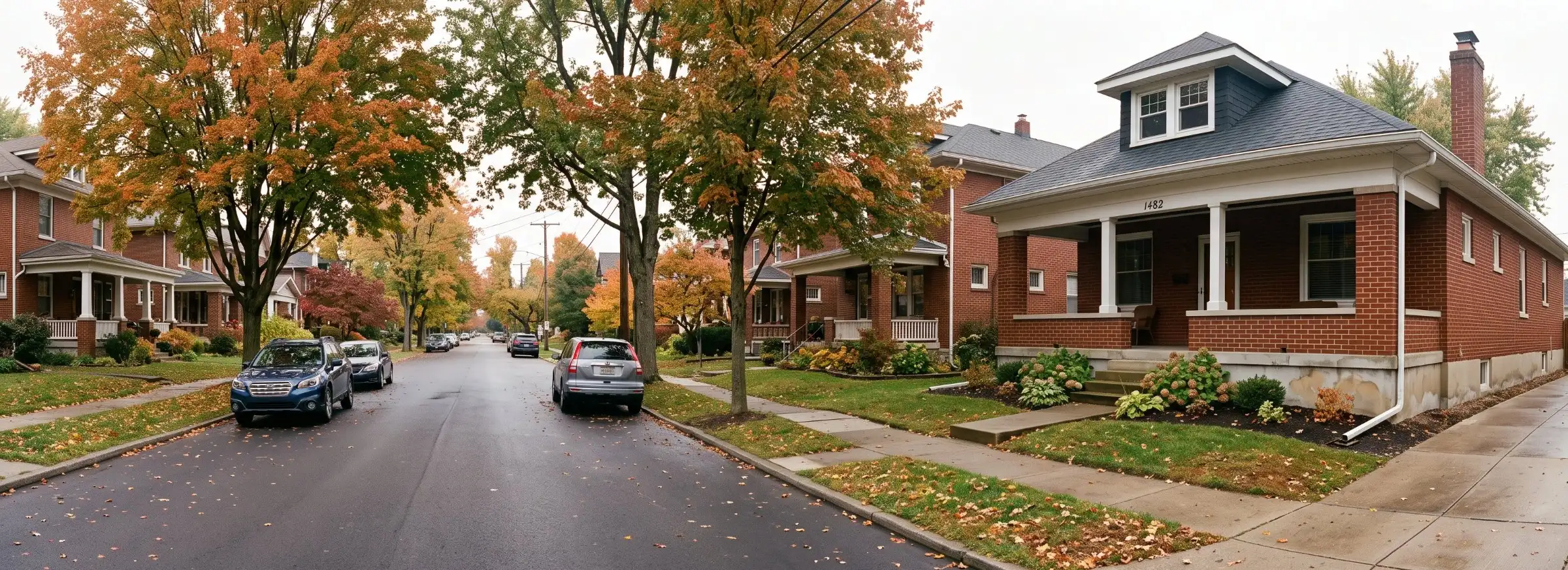

Mold in a Columbus home after this summer's heavy rain is fixable, but only if the water source is dealt with first. Most professional mold remediation jobs here cost $1,500–$6,000, Ohio does not issue a mold license to check when you hire, and basements that took on water in August are now at the stage where hidden mold starts to show.
Professional mold remediation is the process of containing the affected area, removing contaminated materials, correcting the moisture source, and verifying that the space has returned to normal fungal conditions, as defined by the ANSI/IICRC S520 standard. Ohio has no mold exposure standards and no licensing or certification requirements for mold inspectors or remediators, according to the Ohio Healthy Homes Network, so a contractor's written scope should follow S520 and include a containment plan, drying targets, and an independent clearance check before the room is rebuilt.
Key insights
- No state mold license. Ohio issues no license or certification for mold inspectors or remediators, so IICRC certification, insurance certificates, and a written scope are the practical ways to screen a Columbus contractor.
- Typical cost. Most professional mold remediation in Columbus costs $1,500–$6,000, and sewage backups, finished basements, and HVAC involvement push totals higher.
- Flood timing. The EPA says mold can grow on wood, drywall, carpet, and furniture that stay wet for more than 24 hours, so homes that flooded on August 19–20, 2026 should be checked for hidden moisture now.
- Sewer backups. A backup through a Columbus floor drain should be reported to the city's 24 hour line at (614) 645-7102, and a verified wet weather backup can qualify a single or two family home for a city paid backflow prevention device.
- Insurance gaps. Standard homeowners policies do not cover flood damage and often limit or exclude sewer backup, so a water backup endorsement or a flood policy decides whether mold from those events is paid.
- Renter remedies. Columbus tenants can report the water problem behind mold to 311, and a tenant who is current on rent and has given written notice can deposit rent with the court under ORC 5321.07 if the landlord does not fix it within a reasonable time or 30 days.
Why Columbus homes get mold
Columbus homes get mold mainly when water enters a basement through clay rich soil, foundation cracks, or sewer backups and then stays in a climate with no dry season. Roof leaks, plumbing and HVAC condensate leaks, and summer condensation on cool basement walls add to the risk in houses of every age.
 White mineral crust and a damp line at the base of a block wall mark a path where groundwater is moving through the foundation. Fix that water path first, since mold cleanup alone will not hold.
Columbus receives roughly 40 inches of precipitation in a normal year, spread across every month, and 2026 has run above that pace. Through August 30, the airport had recorded 36.70 inches since January 1 against a normal of 29.49 for the same period, including 9.94 inches in August against a normal of 3.62, according to National Weather Service climate data. The National Weather Service in Wilmington then documented 4–7 inches in the heaviest parts of Franklin and Licking counties on August 19–20, which caused significant overland and river flooding.
| Moisture driver | How it leads to mold | Where it shows first |
|---|---|---|
| Heavy rain on slow draining soil | Saturated soil presses water through foundation cracks, floor and wall joints, and block walls | Basement floor edges, lower walls, rim joists |
| Sewer or drain backup | Wet weather flow can overload sewers and push contaminated water through floor drains | Basement floors, drywall, stored boxes |
| Freeze and thaw cycles | Winter freezing and spring thaw widen small foundation cracks and add to soil saturation | Foundation walls, window wells |
| Summer humidity on cool surfaces | Warm outdoor air condenses on cool slabs, walls, and ducts | Basement walls, cold water pipes, duct seams |
| Roof and gutter failures | Storm damage and clogged gutters send water into attics and exterior walls | Ceilings, attic sheathing, wall corners |
| Plumbing and HVAC condensate leaks | Slow leaks and clogged condensate lines feed hidden damp spots | Cabinet bases, ceilings below bathrooms, furnace area |
Much of Franklin County sits on glacial till and clay rich soils that drain slowly, though soil varies from lot to lot. Early basement mold shows up first at the floor edges and lower walls, where an unsealed cold joint, a clogged perimeter drain, or an undersized sump pit lets water through.
Mold after the August 2026 flooding
After the August 2026 flooding, Columbus homeowners should cut power, document the damage, remove wet porous materials, and dry the structure within 24–48 hours. Mold can start growing within 24 hours on wood, drywall, carpet, and furniture that stay wet, as the EPA's flood cleanup recommendations explain. Materials that stay wet longer often show visible growth within days to weeks, and homes that took on water during the August 19–20 storms are at that stage now.
 Water wicks upward past the visible stain line, so the cut should extend until a moisture meter reads dry material at its edge. Readings of 15% or less are the EPA's target before the wall is refinished.
Flood water and sewer backups are Category 3 water under the IICRC S500 water damage standard, so wet carpet, padding, drywall, and insulation are removed rather than dried in place. The EPA says wall materials should read 15% or less on a moisture meter before refinishing.
Visible mold after flooding usually means something stayed wet: the bottom of drywall, carpet padding, or insulation inside a wall cavity. A musty odor that returns after cleaning, stained baseboards, loosened trim, or framing above 19% moisture content, the IICRC S520 warning level, points to hidden moisture that needs a professional meter reading. Cleanup in the first days follows a set order to limit contamination and keep the insurance record clean until emergency mold removal crews arrive:
1. Wait for the water to recede and cut power
The City of Columbus says to wait until water recedes before cleanup, and electricity must be off at the main box before anyone walks through standing water. Wear rubber boots and gloves, because the water may contain sewage.
2. Report a sewer backup to the city
Call the Sewer Maintenance Operations Center at (614) 645-7102, which takes calls 24 hours a day, for any backup through a floor drain. The city issues a service request number that should be kept, because the report starts eligibility for its backflow prevention program.
3. Document the damage before moving anything
Photograph and video the waterline, damaged materials, and belongings, then call your insurer the same day. Keep receipts for pumping, drying equipment, and temporary housing.
4. Remove wet porous materials
Bag and remove carpet, padding, insulation, and drywall that the water touched, since they remain a source of mold growth after surface drying. Hard surfaces such as concrete and sealed tile can usually be cleaned and dried.
5. Dry the structure mechanically
Gently clean visible mold first so moving air does not spread it, then run fans and dehumidifiers until framing and concrete are dry. Do not use an HVAC system that flood water reached, because contaminated ducts and equipment need professional cleaning.
6. Call a remediator if mold or sewage is involved
Hire a qualified firm when visible growth covers more than 10 square feet, the water was sewage, or materials stayed wet more than 48 hours. Waiting for a second round of visible growth usually adds demolition.
Signs of mold in Columbus homes
The clearest signs of mold in a Columbus home are a musty odor that returns after cleaning, visible fuzzy or speckled growth, and staining or warped material near a basement wall, ceiling, or plumbing fixture. Finished basements hide growth for months, so odor and moisture readings often find mold before the eye does.
 Bubbling paint and a stain line that rises from the baseboard mean moisture has been moving through the wall behind it. Find and stop the water source before repainting, because paint over a damp wall will blister again.
Seasonal timing helps locate the source: odor that peaks in July and August points to condensation and humidity, while odor after a long rain or spring thaw points to groundwater and drain problems. Odor that appears when the furnace first runs for the season points to damp ductwork or a clogged condensate line, and the other common signs of mold in a basement are dark speckling and peeling or bubbling paint near the floor.
| Location | Common cause | What to look for | DIY or pro |
|---|---|---|---|
| Basement floor and wall joint | Groundwater pushing through the cold joint after long rain | Damp line, white mineral crust, dark spots at the base of the wall | DIY only under 10 sq ft on bare concrete |
| Rim joist and floor joists | Warm air condensing on cool framing | Dark staining on wood, damp or sagging insulation | Pro |
| Behind finished basement walls | Seepage or leaks trapped behind drywall or paneling | Musty odor with no visible source, bubbling paint, warped trim | Pro |
| Furnace, ductwork, and condensate line | Cooling season condensate and sweating ducts | Odor at startup, damp insulation, rust in the drain pan | Pro |
| Ceilings and attic sheathing | Storm damaged roofs and clogged gutters | Brown rings, dark nail heads, damp insulation | Pro in most cases |
| Window wells and sills | Poor drainage and condensation | Black speckling, peeling paint, a wet sill | DIY if small and on sealed or nonporous surfaces |
White, chalky deposits on concrete or block walls are often efflorescence, a mineral residue that marks a path where moisture is moving through the wall, and a damp spot that returns after cleaning is more informative than the color of the growth. Wall cavities stay damp long after surfaces feel dry, so a moisture meter and a thermal camera find damp framing that no one can see.
Is mold dangerous in Columbus homes?
Mold in a Columbus home can affect health, but the risk depends on the person and the exposure, not on the color of the growth. The EPA states that there is no practical way to tell how harmful a mold is by looking at it, so black, green, and white growth all call for the same moisture control and cleanup rules.
Common reactions include a stuffy nose, wheezing, and red or itchy eyes or skin. People with asthma, mold allergies, or weakened immune systems can react more strongly, and infants and older adults are generally treated as higher risk.
Households with someone who may be reacting to mold should start by stopping the moisture and limiting how much the area is disturbed. A person whose symptoms ease when away from the house should talk to a doctor, because symptoms alone cannot confirm mold as the cause.
Mold inspection and testing in Columbus
A mold inspection in Columbus is an independent assessment of where moisture is entering, how far growth has spread, and whether testing is needed, and it is usually the right first call when the source of an odor is unclear. Testing is a separate, optional step, and the EPA generally advises that visible mold should be cleaned up regardless of species, so sampling is not routinely needed when growth is already obvious.
 A moisture meter shows whether a wall is wet right now, which staining alone cannot confirm. Readings logged on a moisture map give every contractor the same scope to price.
An inspector who does not sell remediation has no stake in the size of the job, which makes the report a fair basis for comparing bids. A Columbus assessment typically runs $300–$700, and the report should include a moisture map, photographs, the suspected water source, and a written scope that any contractor can price. If air sampling is added, it should include an outdoor sample taken at the same time, since indoor results mean little without a comparison.
| Method | What it shows | Limit |
|---|---|---|
| Visual inspection with a moisture meter | Wet materials, staining, and the likely water path | Cannot see inside sealed cavities |
| Thermal imaging camera | Temperature patterns that point to damp areas | Shows possible moisture, not mold itself |
| Air sampling with an outdoor control | Airborne spore levels compared with outside air | A snapshot that varies with time of day and activity |
| Surface or tape sampling | Whether a stained area is mold and which types are present | Does not show airborne levels or health effects |
| Borescope or small test openings | Conditions inside wall cavities | Requires small holes that are patched afterward |
Testing makes the most sense when there is a musty odor with no visible source, when a buyer or insurer wants documentation, or when a job is disputed. Paying for mold testing beyond those cases rarely changes the cleanup plan, since visible growth is handled the same way regardless of species.
DIY or professional mold removal
A Columbus homeowner can clean mold themselves only when it covers less than 10 square feet, sits on a nonporous or semiporous surface, and comes from a moisture problem that has already been fixed. Flood water, sewage, HVAC involvement, hidden growth, and high risk household members move the job to a professional regardless of size.
 A patch this size is within the EPA's 10 square foot limit for homeowner cleanup, but only after the leak is fixed. Drying the wall within 24 to 48 hours keeps growth from restarting.
Ohio sets no mold cleanup standard of its own, so the 10 square foot threshold in the EPA's Mold Cleanup in Your Home is the usual dividing line. Deciding when mold remediation is required also depends on the water source and on who lives in the home.
| Situation | Who does it | Why it matters |
|---|---|---|
| Under 10 sq ft on tile, concrete, or sealed wood, with the leak fixed | DIY | Detergent and water remove surface growth, with an N95 respirator, gloves, and goggles |
| Over 10 sq ft or growth in several rooms | Professional | Containment keeps disturbed spores out of the rest of the house |
| Sewage or floor drain backup | Professional | Category 3 contamination calls for protective equipment and regulated disposal |
| Flood water that stayed more than 48 hours | Professional | Porous materials and wall cavities are likely contaminated |
| Growth behind finished walls or under flooring | Professional | Finding the full extent takes moisture mapping and selective demolition |
| Mold on ductwork, the furnace, or HVAC components | Professional | Air handling spreads spores through the whole house |
| Household member with asthma, an immune condition, or an infant | Professional | Higher health risk, and they should stay out during the work |
Homeowners who qualify for DIY mold removal should fix the water source first, then clean with detergent and water, because bleach does not penetrate porous materials such as drywall and wood. Dry the area completely before repainting, since paint over damp material lets growth continue underneath.
Slimy dark growth on drywall paper that stayed wet for a week or more calls for a professional assessment before anyone disturbs it. Sanding, scrubbing, or wiping it releases spores into the air, which is why confirmed black mold calls for stricter containment than a standard cleanup.
Mold remediation cost in Columbus
Mold remediation in Columbus typically costs $1,500–$6,000 for most residential jobs, priced at about $10–$25 per square foot of affected area, with whole basement or sewage related jobs reaching $10,000 or more. Containment, air filtration, removal of porous materials, and clearance testing drive the total more than the mold itself.
 Porous materials such as drywall that stayed wet are usually removed rather than cleaned. That demolition, disposal, and rebuilding is what pushes a finished basement into the higher price tiers.
Finished basements raise costs because drywall, trim, and flooring must be removed and rebuilt, while unfinished basements with concrete or block walls are cheaper to clean. Columbus jobs skew toward basements, which is why mold remediation cost here depends so heavily on whether the space is finished.
| Scope | Area | Cost | Common examples |
|---|---|---|---|
| Small patch | 10–30 sq ft | $500–$1,500 | One section of a basement wall, a ceiling patch from a roof leak |
| Single room | 30–100 sq ft | $1,500–$3,500 | Bathroom, laundry area, one finished basement room |
| Large area | 100–300 sq ft | $3,500–$6,000 | Most of a basement wall system, an attic section |
| Whole basement or several rooms | 300+ sq ft | $6,000–$15,000 | Finished basement with demolition, multiple rooms with hidden growth |
Size sets the starting price, but the type of damage often moves the total more than the square footage does. An unfinished basement with open block walls typically costs less than the same area in a finished basement, because open surfaces can be HEPA vacuumed and cleaned in place while finished walls have to be opened and cleared of damaged material. Sewer backups and jobs that involve the furnace or ductwork add their own costs, since contaminated materials need special disposal and air handling components have to be cleaned or replaced. A quote that lands well outside the range for the matching scenario deserves a line-by-line explanation from the contractor.
| Scenario | What drives the price | Typical cost |
|---|---|---|
| Unfinished basement, concrete or block walls | Open surfaces allow HEPA vacuuming and cleaning without demolition | $1,000–$3,500 |
| Finished basement with drywall removal | Demolition, hidden cavities, disposal, and rebuilding | $3,500–$10,000 |
| Sewer backup (Category 3) | Sanitizing, protective equipment, and disposal of contaminated materials | $3,000–$10,000 |
| Attic or ceiling after a roof leak | Sheathing treatment and insulation replacement | $1,500–$6,000 |
| HVAC system involvement | Duct, coil, and condensate pan cleaning or replacement | $1,500–$5,000 added |
Most Columbus contractors price accessible work by the square foot, and the rate falls as the area grows because containment setup spreads across more space. Clearance sampling adds $200–$1,200, and reconstruction of drywall, flooring, and trim is billed separately from remediation.
How to hire a Columbus mold contractor
To hire a mold contractor in Columbus, verify IICRC certification through the IICRC Global Locator, ask for certificates of general liability and pollution liability insurance, and get a written scope that follows ANSI/IICRC S520 before paying a deposit. Ohio issues no mold license, so a company advertising a state mold license is misdescribing its credentials.
 Quotes that list a measured area, a method, and a clearance plan can be compared line by line, while a lump sum with no scope cannot. Ask each contractor to price the same written scope so the totals are comparable.
Anyone choosing a mold remediation company should compare at least three quotes that itemize containment, removal, cleaning, drying, disposal, and clearance so the bids line up. Recent customers with similar jobs are the best check on whether a firm delivers what its quote promises.
| Credential | What it shows | How to verify |
|---|---|---|
| IICRC Certified Firm | The company has certified technicians, carries insurance, and agrees to the IICRC code of ethics | Search the IICRC Global Locator |
| AMRT certificate | An individual technician completed IICRC training in applied microbial remediation | Ask for the certificate number and confirm it in the locator |
| General liability insurance | Covers damage the crew causes to your property | Request a certificate of insurance sent directly by the insurer |
| Pollution liability coverage | Covers claims tied to contaminant release or cross contamination | Ask whether mold is excluded under the policy |
| Written scope and protocol | Containment, removal methods, drying targets, and clearance criteria | Compare it with the IICRC S520 elements and keep it with the contract |
| Recent references | A record of similar completed jobs | Call two customers whose jobs were comparable in size and type |
Some firms hold unrelated trade licenses for work such as HVAC or electrical, and Columbus and the state license certain construction trades, so ask which licenses apply to any rebuilding work. Ask also whether the crew that wrote the quote is the crew that will do the work, since subcontracted crews may carry separate insurance.
Several practices signal trouble in a Columbus quote. Walk away from a contractor who:
- Claims a state mold license, which Ohio does not issue
- Quotes one lump sum with no measured area, method, or clearance plan
- Offers to fog or spray a biocide in place of removing contaminated material
- Asks for most of the payment before work starts
- Offers to assess, remediate, and clear its own work, when an independent inspection avoids that conflict of interest
The Ohio Attorney General's Consumer Protection Section takes complaints about home improvement contractors under the Consumer Sales Practices Act, which generally covers residential work under $25,000. After storms, Ohio's Home Solicitation Sales Act gives a three day right to cancel certain door to door sales, which matters when crews knock on doors after flooding.
What mold remediation looks like
Mold remediation in a Columbus home follows a fixed order: set up containment, remove contaminated material, clean and dry what remains, and verify the result. Most small basement jobs finish in one to three days, while a finished basement or a sewer backup can take a week or more once drying and rebuilding are counted. The ANSI/IICRC S520 sequence behind that order starts with a moisture assessment and ends with verification, so the whole mold remediation process is built around finding and fixing the water first.
 Clearance criteria should be written into the contract before work begins, since step four is the only independent check on the first three. If the water source is not fixed first, the mold returns and the steps repeat.
Crews begin by sealing the work area with plastic sheeting and running a HEPA air scrubber, often under negative air pressure so disturbed spores are pulled out of the space instead of pushed into the rest of the house. Wet drywall, carpet padding, and insulation are bagged and removed, framing is HEPA vacuumed and cleaned, and dehumidifiers and fans run until moisture readings match unaffected areas. Columbus basements add one more step, because the floor drain and sump pit need checking so the same water path does not reopen.
| Job type | Cleanup | Drying | Clearance and rebuild |
|---|---|---|---|
| Small patch on one wall or ceiling | Half a day to 1 day | 1–2 days | Clearance within 1–2 days, minor patching |
| Single room | 1–2 days | 2–4 days | Clearance within 1–2 days, rebuild adds 2–5 days |
| Unfinished basement, concrete or block walls | 1–3 days | 2–4 days | Clearance within 1–2 days, little rebuilding |
| Finished basement with demolition | 3–5 days | 3–5 days | Clearance within 1–2 days, rebuild adds 1–3 weeks |
| Sewer backup or post flood cleanup | 2–5 days | 3–7 days | Clearance within 1–2 days, rebuild adds 1–3 weeks |
Typical timelines assume the moisture source is already fixed, since drying cannot finish while water is still getting in. Delays usually come from hidden growth found after demolition, a failed clearance sample that triggers re-cleaning, or crews booked solid after a storm. Ask for written start and finish dates, and treat rebuild time as a separate estimate, since it is often handled by a different crew.
Clearance testing after mold remediation
Clearance testing is the independent verification, done after remediation and before containment comes down, that confirms the work area is dry, visibly clean, and has fungal levels comparable to normal conditions. Ohio does not require it, so it appears in your contract only if you ask for it.
IICRC S520 verification starts with a visual inspection and moisture readings and may add air or surface sampling, with results compared against an outdoor sample or an unaffected room. The person who samples should not be paid by the remediation company, and sampling typically costs $200–$1,200 depending on the number of rooms and samples.
Writing post-remediation verification into the contract before work begins gives you a clear right to a re-clean if a sample fails, because the contractor agreed to it in advance. A clearance report also becomes the document an insurer, landlord, or future buyer will ask for.
Does insurance cover mold in Columbus?
Ohio homeowners policies usually cover mold when it results from a sudden and accidental covered water loss, such as a burst pipe or storm damage to a roof, and usually exclude mold from flooding, sewer backup, groundwater seepage, and long term leaks. Most policies cap mold payments with a sublimit, so the cause of the water and the endorsements on your policy decide what is paid.
 Wide shots and close ups of the stain and the water source help an adjuster judge the cause, which decides whether the mold sublimit applies. Take them before cleanup begins, since wet materials are often removed the same day.
The National Association of Insurance Commissioners states that homeowners policies do not cover flood damage and that most offer limited or no coverage for sewer or drain backup and sump pump overflow, which are available by endorsement. Ohio Department of Insurance materials list sewer backup and basement leaks among typical exclusions, and a water backup endorsement commonly costs $40–$100 a year with limits that often start at $5,000.
| Cause of the water | Usually covered | What it takes |
|---|---|---|
| Burst pipe or sudden appliance failure | Yes, within the mold sublimit | Standard policy |
| Storm damage to the roof, then a leak | Yes, if the roof damage is a covered peril | Standard policy |
| Sewer or drain backup | Usually no | Water backup endorsement |
| Sump pump failure or overflow | Usually no | Water backup or sump endorsement |
| River or surface flooding | No | National Flood Insurance Program or private flood policy |
| Slow leak or chronic humidity | Usually no | Treated as a maintenance issue |
Whether homeowners insurance covers mold also depends on the mold sublimit, commonly $5,000–$10,000 on standard policies, which often falls short of a finished basement job. Policyholders must protect the home from further damage, so pumping water and removing wet materials promptly is part of a valid claim, and photographs taken before cleanup support it.
Mold in a Columbus rental
Under Ohio Revised Code 5321.04, a Columbus landlord must keep rental premises fit and habitable, which includes fixing the leaks and moisture that cause mold. Ohio has no mold specific statute, so tenants enforce these duties through written notice, the city's code enforcement process, and rent escrow under ORC 5321.07.
More than half of Columbus households rent, and the practical first step is a written notice to the landlord with dated photos of the water source and the mold. File a complaint with Columbus 311 online or at (614) 645-3111 and describe the leak, moisture, or sewage problem rather than the word mold alone, because Columbus enforces its housing code against the water conditions behind mold. Columbus Public Health's Healthy Homes Program answers questions about mold and health but does not inspect for mold. Ohio law also bars a landlord from retaliating against a tenant for a good faith code complaint.
If the landlord does not act within a reasonable time or 30 days, whichever is sooner, a tenant who is current on rent and gave written notice can deposit rent with the clerk of the court, ask the court to order repairs, or end the lease. The statute excludes landlords who have three or fewer units and gave written notice of that fact, and it excludes dwelling units occupied by a student tenant, so students renting near Ohio State should confirm how it applies before relying on escrow.
Beyond these steps, tenant mold rights depend on the lease and the facts, so a tenant who cannot reach a settlement should contact local legal aid before withholding or depositing any rent. Keep copies of every notice, photo, and reply, since the record decides how a court or the city reads the dispute.
Buying or selling a home with mold
Ohio sellers of residential property with one to four dwelling units must complete the state's Residential Property Disclosure Form under ORC 5302.30 and deliver it to buyers as soon as practicable. The form asks about water intrusion, flooding, moisture seepage, and sewer backup, which are the conditions that lead to mold. Sellers are not required to test for mold before listing.
 A cool patch on a thermal image points to possible moisture, not mold, so it should be confirmed with a moisture meter. Ask for the thermal images and readings in the written report so any repair request is documented.
Rescission rights are time limited: a buyer who receives the form after signing has three business days from receipt to rescind, and in every case the buyer must act before the earlier of 30 days after the seller accepts the offer or closing. A buyer who never receives the form can rescind within that same outer deadline.
The form reflects the seller's actual knowledge, and the statute does not bar fraud claims for concealment, so a seller who knows about mold behind finished walls and answers no creates legal exposure. The form also carries a notice that mold is present in every home to some degree and urges buyers to arrange an inspection by a qualified inspector.
Homes that took on water in August 2026 deserve a moisture meter and thermal camera inspection, repair and insurance records, and direct questions about how the basement drained, because a seller can truthfully report no mold while a wall cavity is still wet. A past remediation with a clearance report is a favorable record to ask for.
Mold risk by Columbus neighborhood
Mold risk in Columbus follows housing age and drainage more than ZIP code. Neighborhoods along the Scioto River, the Olentangy River, and Big Walnut Creek carry flood and seepage exposure, older brick and stone basements carry seepage, and newer suburbs carry hidden basement mold behind finished drywall.
 Flood zone status, lot elevation, and basement type often matter as much as distance from the water, so check a property's FEMA flood map designation before buying near a river or creek.
Neighborhood is a starting point, not a verdict, because lot elevation, basement type, and whether a sump pump or backflow device is installed often matter as much as location. A past water event at the same address is the strongest warning sign.
| Area | Typical housing | Main mold driver | Homeowner note |
|---|---|---|---|
| Franklinton | Early 1900s homes plus newer infill, low lying west of the Scioto | River flooding and groundwater, with the 2004 floodwall raised in August 2026 | A floodwall addresses river overflow, while rainfall and drain backups behind it are separate risks |
| German Village and Merion Village | 1800s brick homes | Seepage through old brick and stone foundations, plus retrofitted HVAC condensation | Check basement walls and mortar after wet seasons |
| Olde Towne East | Late 1800s and early 1900s Victorian houses | Aging roofs, gutters, plumbing, and damp basements | Roof and gutter condition drives ceiling mold |
| Clintonville | 1920s–1950s bungalows and Cape Cods with basements | Clay soil moisture and downspouts that discharge near foundations | Extend downspouts and watch the floor and wall joint |
| North Linden | Modest early to mid 1900s homes | Sewer backups during heavy rain | Residents have reported sewage in basements after heavy storms, so ask about backflow prevention |
| Northeast side near Big Walnut Creek | Mixed mid century homes in low lying areas | Creek flooding and storm drains backing up in heavy rain | Confirm flood zone status before buying or finishing a basement |
| Dublin, Hilliard, and Westerville suburbs | 1990s–2010s homes with finished basements | Hidden moisture behind drywall, sump pump failure, condensate leaks | Test the sump pump and check the furnace area each season |
How to prevent mold in a Columbus home
Preventing mold in a Columbus home means controlling water at three points: outside drainage, basement drains and sump pumps, and indoor humidity. The EPA recommends keeping indoor humidity below 60%, ideally between 30% and 50%, and fixing leaks quickly enough that materials do not stay wet beyond 24–48 hours.
 The outlet should discharge at least 6 feet from the foundation onto ground that slopes away from the house, since water pooling against the wall is what seeps through brick and block. Watch the outlet during a heavy rain to confirm the water actually drains away.
Columbus's Project Dry Basement program, which began in July 2004, pays for an approved backflow prevention device on single and two family homes that have had verified sewer backups during wet weather or blockages. The backup must be reported to the Sewer Maintenance Operations Center first so a service request number is on file, and the installed device needs cleaning every month to stay sealed.
| Action | When | Why it works |
|---|---|---|
| Clean gutters and extend downspouts at least 6 feet from the foundation | Late fall after leaf drop and before spring rains | Moves roof runoff away from the clay soil beside the walls |
| Test the sump pump and battery backup | Every spring and before forecast storms | A pump that fails in a storm lets groundwater reach the slab |
| Run a basement dehumidifier | May through September | Holds humidity in the 30%–50% range when warm air meets cool walls |
| Seal foundation cracks and window wells | Early fall before freezing weather | Reduces water entry and slows crack widening from freezing and thawing |
A $15–$40 hygrometer in the basement shows whether your mold prevention routine is working, and readings above 60% in July or August point to a dehumidifier that is undersized or not draining. Check the readings monthly through summer, since the damp season in Columbus runs from the first warm spell in May through September.
Frequently asked questions
How much does mold remediation cost in Columbus?
Most professional jobs cost $1,500–$6,000, with the cost per square foot running about $10–$25 across the affected area. Whole basement, sewage backup, and HVAC jobs can reach $10,000–$15,000 or more, mainly because of demolition, disposal, and rebuilding.
Does Ohio require a mold remediation license?
No. Ohio has no licensing or certification requirement for mold inspectors or remediators, so IICRC certification, insurance certificates, and a written scope are the practical ways to screen a Columbus contractor.
How long does mold remediation take in Columbus?
Most small jobs take one to three days of removal and cleaning plus two to four days of drying, and lab results from clearance sampling take 24–72 hours. Finished basements and sewage cleanups can stretch active work to one to two weeks, and rebuilding drywall and flooring adds time after clearance.
Should I test for mold before hiring a remediator?
Not always. Visible mold with a known water source does not need sampling to justify removal, and the EPA says sampling is usually unnecessary when mold is visible. An independent written assessment is worth paying for when the odor source is hidden, when contractors disagree on scope, or when an insurer, landlord, or buyer needs a documented record.
Does the City of Columbus inspect homes for mold?
No. Columbus Public Health's Healthy Homes Program answers questions about mold and health but does not inspect for mold. A tenant can report habitability problems through the city's code enforcement process, and a homeowner who needs an assessment hires a private inspector.
Who is responsible for a sewer backup in Columbus?
The city investigates the public sewer, and the homeowner is typically responsible for the private line from the house to the street. Report any backup through a floor drain to the Sewer Maintenance Operations Center at (614) 645-7102 so crews can check the public main and a service request number is on record. Interior cleanup is generally paid under homeowners insurance only when a water backup endorsement is in place.
Does Project Dry Basement pay for a backflow device after a sewer backup?
Yes, for eligible homes. The program pays for an approved backflow prevention device on single and two family homes with verified sewer backups during wet weather or blockages. The backup must be reported to the Sewer Maintenance Operations Center at (614) 645-7102 first so a service request number is on file, and the installed device needs cleaning every month to stay sealed.
What should I do about mold after the August 2026 flooding?
Cut power before entering a wet basement, document the damage, remove wet porous materials, and dry the structure within 24–48 hours, then call a remediator if sewage was involved or growth appears, which is usually when mold remediation is required instead of optional. A musty odor or visible mold weeks after the flood usually means something is still wet inside drywall, carpet padding, or insulation.
Can a Columbus tenant withhold rent because of mold?
No. Withholding rent without depositing it with the court can put a tenant at risk of eviction for nonpayment. Ohio law instead lets a tenant who is current on rent and gave written notice deposit rent with the clerk of the court if the landlord does not act within a reasonable time or 30 days, whichever is sooner. Local legal aid can explain how that applies to a specific lease.
Is black mold common in Columbus basements?
No. Stachybotrys chartarum, the species usually called black mold, needs materials such as drywall paper or wood to stay saturated for a week or more, so it is far less common than Cladosporium, Aspergillus, and Penicillium. Dark color alone does not identify the species, and a basement after a sewer backup or flood is where it is most likely to appear, and a confirmed case calls for professional black mold removal with full containment.
- IICRC S520: Standard for Professional Mold Remediation
- EPA: Flood Cleanup to Protect Indoor Air and Your Health
- EPA: Mold Cleanup in Your Home
- National Weather Service Wilmington: August 19-20, 2026 Flooding
- City of Columbus: Project Dry Basement
- Ohio Revised Code 5302.30: Property Disclosure Form
- Ohio Revised Code 5321.07: Remedies of Tenant
- Ohio Healthy Homes Network: Mold Basics
- NAIC: A Consumer's Guide to Home Insurance
- Ohio Attorney General: File a Consumer Complaint
Sam Hickerson is the founder of RestoreAdvisor and writes consumer guides on mold remediation, water damage restoration, inspection, testing, and home recovery. His work focuses on helping homeowners understand costs, risks, and when to call a professional. He draws on guidance from the EPA, CDC, IICRC, and other authoritative sources to make complex home issues easier to navigate.