
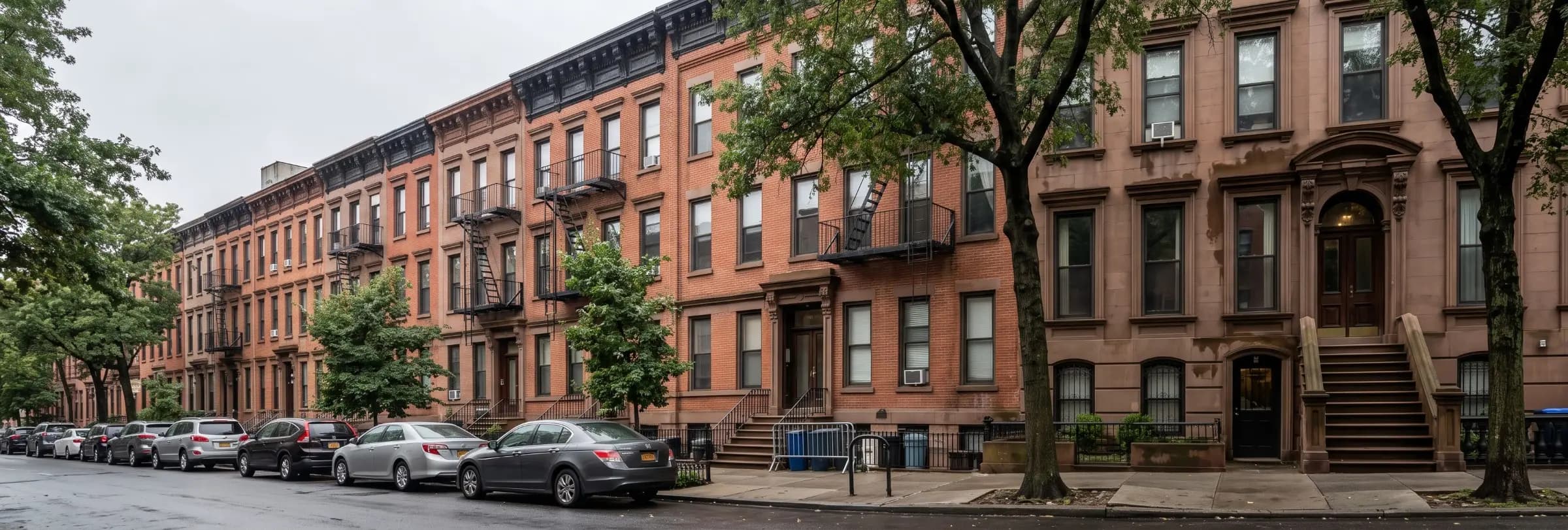

Finding mold in a New York City apartment or house is stressful partly because state law, city law, and your building's rules all apply at once. The main rule is that mold over 10 square feet must be handled by two separate licensed professionals, so your first call goes to an assessor, not a remediation company.
In New York State, mold remediation is the licensed removal, cleaning, and containment of mold growth over 10 square feet, performed under a written plan from an independent licensed assessor and confirmed by a passed clearance report, as required by New York State Labor Law Article 32 and consistent with the ANSI/IICRC S520 standard. That structure adds an independent assessment and a second licensed contractor to every mold remediation project in New York, and it also protects homeowners and tenants from contractors who inflate the scope of work.
A licensed single room job typically costs $1,800–$4,500 before assessor fees, and HPD and DEP rules put firm deadlines on landlords and boards. Tenants, owners, co-op shareholders, and public housing residents each have a different first call and are owed different duties by a landlord, board, or insurer.
Key insights
- Two licenses, two companies. New York State Labor Law Article 32 requires a licensed mold assessor and a separate licensed mold remediator for any project over 10 square feet, and one company cannot do both jobs on the same project.
- The plan comes before the price. The assessor writes the Mold Remediation Plan first, and the Department of Labor says remediators should not give cost estimates before an independent assessment.
- NYC landlords carry a legal duty. Under Local Law 55 of 2018, owners of buildings with three or more apartments must keep apartments free of mold, and HPD gives owners 90 days for Class A, 30 days for Class B, and 21 days for Class C mold violations.
- Larger buildings file with the city. In buildings with 10 or more dwelling units, the remediator files a work plan notice with NYC DEP before work starts and the assessor files a post-remediation certification afterward, with penalties from $800 to $10,000 for missed requirements.
- Licensed jobs have a price floor. A licensed single room job typically costs $1,800–$4,500 for remediation plus roughly $700–$2,400 in assessor and clearance fees, before any rebuilding.
- Old buildings and flash floods drive the work. About 54% of New York City housing units were built before 1947, and flash floods in September 2021 and July 2026 sent water into basements and garden level apartments.
New York mold law and the 10 sq ft rule
New York State Labor Law Article 32 requires that any mold assessment, remediation, or abatement project over 10 square feet be performed by licensed professionals, and it prohibits one licensee from performing both the assessment and the remediation on the same project. The law took effect on January 1, 2016, and the New York State Department of Labor enforces it.
 Article 32 counts the total area of mold on a project, so add every patch together before deciding whether licensed professionals are required above 10 square feet.
The 10 square foot threshold counts the total area of mold, and the mere presence of mold does not obligate an owner to assess or clean it. If an owner decides to hire help for a project over that size, the work must follow the Department of Labor's mold program rules, which include a written remediation plan, a posted notice of the project and the contractors' licenses, and a post-remediation assessment. Licenses are valid for two years, and the state keeps a public search tool for verifying them.
| Role | License type | What they do | Cannot do |
|---|---|---|---|
| Mold assessor | Mold assessment contractor and assessor licenses | Inspects, finds the moisture source, writes the Mold Remediation Plan, performs the post-remediation assessment, and issues the clearance report | Remove or clean mold on the same project |
| Mold remediator | Mold remediation contractor license | Writes a work plan that meets the assessor's plan, builds containment, removes and cleans mold, uses only disinfectants named in the plan | Assess the same project, or take down containment before a passed clearance report |
| Abatement worker | Mold abatement worker or supervisor license | Performs the physical cleanup under the remediator, and supervisors draft work plans | Work on a mold project without the individual license |
| Home inspector | Mold assessor license if the report assesses mold | Performs a general inspection for a home sale | Include a mold assessment without the assessor license |
Plumbers, roofers, masons, and general contractors fix the water source and rebuild after clearance, because repair work outside the remediation plan is not covered by Article 32. A mold contractor may also repair the moisture source if it has the expertise, but remediators are not required to do so.
Most assessments rest on a visual mold inspection and moisture meter readings rather than lab samples. The Department of Labor explains that sampling will almost always find some mold or spores and that no national or state standards exist for comparing results, so the assessor's judgment about the moisture source and the extent of growth carries more weight than a spore count.
Who to call first
The right first call depends on who controls the building, because owners, tenants, board members, and public housing residents each have a different duty and a different route to a fix. Calling the wrong party first costs time while mold keeps growing.
- Tenant in a private rental: Send the landlord or managing agent a dated written notice, then file a 311 complaint if nothing happens.
- Co-op or condo owner: Notify the managing agent or board in writing, because the building's governing documents decide who repairs the source of the water.
- Homeowner: Hire an independent licensed assessor first, found through the Department of Labor's search tool, and do not sign with a remediator until the plan exists.
- NYCHA resident: Submit a mold work order through NYCHA's Customer Contact Center and keep the ticket number.
NYC mold laws and HPD violations
New York City adds two local laws on top of state licensing: Local Law 55 of 2018, the Asthma-Free Housing Act, requires owners of buildings with three or more apartments to keep apartments free of mold and pests, and Local Law 61 of 2018 adds filing requirements for larger buildings. Both laws place the duty on the building owner, and both apply on top of the Article 32 licensing rules.
 HPD measures mold room by room, so a ceiling patch of 30 square feet or more draws a Class C violation with a 21 day correction deadline.
In New York City, the Department of Housing Preservation and Development enforces Local Law 55 through inspections, and its inspectors must ask about mold during every apartment inspection regardless of the original complaint. In fiscal year 2023, HPD recorded 21,492 mold violations issued on inspection.
What owners must do under Local Law 55
Local Law 55 sets specific duties for owners of buildings with three or more apartments. Owners can use their own staff for small patches, but the size of the mold and the size of the building decide when licensed professionals are mandatory.
- Inspect every unit annually for mold, mice, roaches, and rats, and respond to complaints from tenants or HPD.
- Clean vacant apartments and make sure they are free of mold and pests before a new tenant moves in.
- Give each tenant the Local Law 55 fact sheet and a notice of owner responsibilities with the lease.
- Hire a licensed assessor and a separate licensed remediator whenever mold exceeds 10 square feet in a building with 10 or more units.
- Follow safe work practices for smaller patches and smaller buildings: isolate the work area with plastic sheeting, mist the mold before cleaning, clean with soap or detergent and water, remove materials that cannot be cleaned, and leave the area dry and visibly free of mold and dust.
How HPD classifies mold violations
HPD classifies a mold violation by the amount of visible mold in a room, and the class sets the deadline for the owner. A tenant's 311 complaint starts the inspection, and the inspector measures the affected area.
| Class | Mold in one room | Days to correct |
|---|---|---|
| Class A | Less than 10 sq ft | 90 |
| Class B | 10–29 sq ft | 30 |
| Class C | 30 sq ft or more | 21 |
HPD upgrades a Class A violation to Class B, and a Class B violation to Class C, when the owner does not certify correction in time and a reinspection still finds the condition, or when the owner falsely certifies. Clearing a Class B or Class C violation in a building with 10 or more units requires copies of both contractors' licenses, an affidavit from the assessor and one from the remediator, and the DEP filing receipts.
The New York City Department of Health and Mental Hygiene's 2008 guidelines on indoor fungi sort mold jobs into four size levels: under 10 square feet, 10 to 30, 30 to 100, and over 100. HPD's Class A, B, and C violations use the same 10 and 30 square foot lines.
DEP filings for buildings with 10 or more units
Local Law 61 of 2018 applies to buildings with 10 or more dwelling units and to zoning lots with 25,000 or more square feet of nonresidential floor area. The remediator files a Mold Remediation Work Plan notification with the New York City Department of Environmental Protection at least 48 hours before work begins, and the assessor files a Post-Remediation Assessment Form and certification within seven days after the assessment.
Owners can face DEP penalties of $800 to $10,000 for failing to hire the appropriate licensed professionals or for missing the post-remediation filings. Owners should ask each contractor for its filing receipt, because HPD requires those receipts to clear Class B and Class C violations.
Mold in a New York City rental
In New York City, a landlord of a building with three or more apartments must keep apartments free of mold and fix the moisture causing it, and tenants enforce that duty by notifying the landlord and then filing a complaint with 311. New York's warranty of habitability, set out in Real Property Law Section 235-b, also gives tenants a legal basis to demand repairs and, in serious cases, a rent reduction.
 Radiator valve leaks are a common source of wall moisture in older buildings. Report them to the landlord in writing, because that notice starts the record HPD uses when it classifies a mold violation.
Mold over 10 square feet is the landlord's responsibility to assess and remediate with licensed professionals in buildings with 10 or more units, and the landlord cannot shift that work to the tenant. Under New York law, tenant mold rights depend on the building and the lease, so a clear record of dated notices and photographs matters most once a landlord stops responding.
Document the mold and the leak
Photograph the mold with a ruler or tape measure in frame, record the date, and note any leak or humidity source. Photographs of the affected area help HPD classify the violation.
Notify the landlord in writing
Send a dated message or letter to the landlord, managing agent, or superintendent describing the mold and its location. HPD's own instructions tell tenants to notify the owner first.
File a 311 complaint
If the landlord does not act or the repair is not done safely, file a complaint online or call 311 so HPD inspects. The inspector measures the mold, issues a Class A, B, or C violation when conditions warrant, and notifies both owner and tenant.
Ask your doctor about a free home inspection
If you or your child has asthma, your doctor can request a free home environmental inspection through the New York City Health Department's online registry. The inspection documents conditions and adds medical context to the complaint.
Follow the violation to correction
Check the status of the violation after the deadline passes, and report again if the owner certifies correction but the mold remains. HPD can upgrade a violation that was falsely certified.
Start an HP action if repairs stall
A tenant can sue for repairs in an HP action, a Housing Part case filed in the Housing Court of the county where the building sits. The tenant files an order to show cause and a verified petition describing the repairs needed, and if the tenant wins, the court orders the landlord to make them. A filing fee applies, and tenants who cannot afford it can ask for a fee waiver, according to the New York State court system's HP action instructions.
Ask DHCR for a rent reduction if your unit is regulated
Tenants in rent stabilized or rent controlled apartments can file a reduction of services complaint with the state Division of Housing and Community Renewal when a landlord stops maintaining required services such as repairs and maintenance. If DHCR finds a decrease in services, it can order the rent reduced until services are restored. Mold tied to an unrepaired leak is the kind of condition tenants raise in this complaint, and DHCR makes the final call.
Mold in NYCHA public housing
Mold in New York City public housing is handled under a federal court settlement, Baez v. NYCHA, approved in 2014, that gives residents deadlines and court oversight private renters do not have. The settlement set a 7 day deadline for simple mold and leak repairs and 15 days for complex ones.
 Mold clustered along a pipe usually means a leak at the pipe or from the unit above, so report the leak and the mold together. Under the Baez settlement, NYCHA repair deadlines are 7 days for simple jobs and 15 days for complex ones.
Residents report mold and leaks through NYCHA's Customer Contact Center, and they can also file complaints with the court-appointed ombudsperson through the Ombudsperson Call Center, which opened in 2020. Under NYCHA's mold procedures, the water source must be fixed, not just the visible mold cleaned, and mold over 10 square feet requires a state licensed assessor, a work plan, and a DEP notification.
Deadlines have often been missed in practice. A 2024 report on the settlement found that only 31% of complex repairs were finished within 15 days and that the average mold work order took 266 days, so residents should expect to escalate.
Submit and record the work order
File the mold complaint through the Customer Contact Center, write down the ticket number, and photograph the mold with the date visible. The ticket number is the record of when NYCHA was notified and the reference for any later escalation.
Escalate after the deadline passes
If the 7 or 15 day period ends without a repair, file a complaint with the Ombudsperson Call Center and cite the ticket number. Note the date the deadline passed, since the missed deadline is the basis of the complaint.
Ask about the licensed process for large areas
When the mold covers more than 10 square feet, ask whether NYCHA has assigned a licensed assessor and issued a remediation work plan. Under NYCHA's own procedures, a large area cannot be handled with a quick wipe-down.
Who pays for co-op and condo mold
In a New York co-op or condo, the owner is usually responsible for mold inside the unit and the building is responsible for shared structure such as risers, facades, roofs, and common walls, but the offering plan, proprietary lease, or bylaws set the exact line. The split turns on where the moisture started, which is the central question in any condo mold dispute.
 In most co-op proprietary leases and condo declarations, the owner pays for fixtures and pipes inside the unit, while the building pays for shared risers in the walls. Find out which pipe leaked and read your lease or declaration before filing a claim.
Opening walls or setting up containment almost always requires approval from the managing agent or board. Most buildings ask for an alteration or work agreement, a certificate of insurance naming the building, an elevator reservation, and limits on work hours, so submit the paperwork before the crew is scheduled.
Local Law 61 filings apply to any building with 10 or more dwelling units, which includes most co-op and condo buildings. A board will usually want these documents in one package:
- The assessor's Mold Remediation Plan with the assessor's license.
- The remediator's Mold Remediation Work Plan with the remediator's license.
- A certificate of insurance at the building's required limits.
- Proof that the plumber, roofer, or mason has repaired the moisture source.
If the leak came from a shared pipe or from another unit, give the managing agent written notice with photographs before any wall is opened. That record supports a claim against the building's master policy or a neighbor's insurer and protects you if the board later disputes who caused the damage.
Mold remediation cost in New York City
Licensed mold remediation in New York City typically costs $1,800–$4,500 for a single room of 10–30 square feet and $4,500–$12,000 for two or three rooms, before assessor fees and rebuilding. Contractors generally price the work at $15–$30 per square foot, and minimum charges make small licensed jobs cost more per square foot than large ones.
 Containment and air filtration are part of what separates licensed remediation from a surface cleanup, and they are a big reason jobs over 10 square feet cost more. Ask every bid whether containment and an air scrubber are included in the price.
New York City's mold remediation cost runs high because of labor rates, difficult access in walk-ups and elevator buildings, debris hauling, and the separate assessment that state law requires. Remediation pricing covers containment, removal, HEPA cleaning, and disposal only. The assessor's plan and clearance fees are billed separately by the independent assessor, not by the remediator.
| Affected area | Cost range | Licensed pros? | Common example |
|---|---|---|---|
| Under 10 sq ft | $150–$600 | Not required | Bathroom corner, window sill |
| 10–30 sq ft | $1,800–$4,500 | Assessor and remediator | One bathroom wall or ceiling patch |
| 30–100 sq ft | $4,500–$12,000 | Assessor and remediator | Two or three rooms, wall cavity |
| 100+ sq ft | $10,000–$30,000+ | Assessor and remediator | Whole apartment, flooded basement |
Contractors build the number from the assessor's plan: containment sheeting, negative air machines, HEPA filtration, debris hauling, and labor hours. Minimum charges and containment setup are why small licensed jobs look expensive when priced by mold remediation cost per square foot.
Cost by location in the home
Where the mold grows changes the price as much as the area does, because older walls and ceilings often hide lath and plaster, steam pipes, and shared risers. Building rules add labor time, since most co-op and condo buildings require certificates of insurance, elevator reservations, and restricted work hours.
| Location | Cost range | Price drivers |
|---|---|---|
| Bathroom ceiling or wall | $1,800–$4,500 | Tile and plaster removal, ventilation repair |
| Kitchen wall or under the sink | $1,800–$5,000 | Cabinet removal, plumbing coordination |
| Closet or bedroom exterior wall | $2,000–$6,000 | Exterior wall moisture, insulation and plaster |
| Wall near a radiator or steam pipe | $2,500–$7,000 | Lath and plaster demolition, pipe access |
| Top floor ceiling from a roof leak | $3,000–$9,000 | Access, roofer coordination, ceiling cavity |
| Finished basement or garden level | $6,000–$20,000 | Flooring and drywall removal, Category 3 water protocols |
Costs outside the remediation invoice
Several costs sit outside the remediator's bill and still belong in the budget. The assessor's fees are separate by law, and repairs and rebuilding start only after the passed clearance report.
| Item | Cost range | When it applies |
|---|---|---|
| Assessment and written plan | $400–$1,500 | Before any bid, required for projects over 10 sq ft |
| Post-remediation assessment | $300–$900 | After the work, before containment comes down |
| Lab samples | $75–$150 each | Rarely, only when the plan calls for sampling |
| Moisture source repair | $300–$5,000+ | Before or during remediation, by a plumber or roofer |
| Rebuilding | $1,500–$10,000+ | After clearance, drywall, tile, paint, flooring |
A licensed 10–30 square foot job therefore totals roughly $2,500–$6,900 before rebuilding, with the assessor's two visits accounting for $700–$2,400 of that. Moisture source repair and rebuilding are the most variable lines in that budget, so get them quoted separately from the remediation.
The licensed mold remediation process
A New York mold project follows six steps in a fixed order: independent assessment, written plan, moisture repair, licensed remediation, required filings, and a passed clearance report. The order matters because a remediator who starts before the plan exists, or an assessor who also removes the mold, breaks Article 32.
 HEPA vacuuming and wiping happen after the damaged material is removed, and a licensed assessor must then clear the area before it is closed up. Under Article 32 the assessor cannot be the same company as the remediator.
The Department of Labor's fact sheet on what to expect when you hire a mold assessor and remediator describes each handoff between assessor, remediator, and building, and it is worth reading before you request the first bid. The assessor's plan, the remediator's work plan, and the passed clearance report are the three documents the owner should hold at the end.
1. Hire an independent licensed assessor
Start with a mold assessor licensed by the Department of Labor and confirm the company has no ownership tie to any remediator you may hire. The assessor inspects the property, uses a moisture meter, identifies the source of moisture when possible, and takes samples only in rare cases.
2. Get the written Mold Remediation Plan
The assessor must give you a written plan before cleanup starts. The plan lists the moisture source and how to fix it, the rooms and quantities of material to be cleaned or removed, the removal methods, containment needs, protective equipment, clearance criteria, notice to occupants, any EPA-registered disinfectant to be used, and an estimate of cost and time.
3. Fix the moisture source
The plan names the trade that must stop the water, usually a plumber, roofer, or mason. The Department of Labor recommends correcting the moisture source before cleanup because mold will likely grow back if the water remains.
4. Hire a licensed remediator and review its work plan
Give the assessor's plan to two or three licensed remediators so each bids the same scope. The chosen remediator must prepare a Mold Remediation Work Plan that meets every requirement of the assessor's plan and give it to you before work starts.
5. Confirm the filings and posted notices
The project must carry a posted notice of the work and the contractors' licenses. In buildings with 10 or more dwelling units, the remediator files with NYC DEP before work begins and the assessor files after completion.
6. Get a passed clearance report
After the crew finishes, the assessor performs the post-remediation assessment, and visual checks and moisture readings make up most post-remediation verification unless the plan sets sampling criteria in advance. The job is complete only when the assessor issues a written passed clearance report stating that the work area is free of visible mold, that the work followed both plans, and that the clearance criteria were met. The remediator may not dismantle containment before that report exists, and a failed result produces a final status report listing what remains.
Containment, negative air machines, HEPA filtration, and removal methods follow the same sequence used in any mold remediation process under ANSI/IICRC S520, and New York adds the assessor, the written plans, and the filings around it. In a New York City building, coordination with management often adds days before work starts.
How long each job takes
Active work is short, and the calendar time comes from scheduling, approvals, and clearance. Timelines run from the first assessor visit.
| Job size | Active work | Total timeline | Main delay |
|---|---|---|---|
| One bathroom or closet | 1–3 days | 1–3 weeks | Booking assessor and bids |
| Two or three rooms | 3–7 days | 2–4 weeks | Hidden growth in wall cavities |
| Whole apartment or HVAC | 5–10 days | 3–6 weeks | Board approvals, access |
| Flooded basement | 5–14 days | 3–8 weeks | Drying, Category 3 removal |
Delays rarely come from the mold crew. They come from the 3–10 days it can take to schedule an assessor and collect bids, from management or board approvals, and from a failed clearance that sends the crew back for a second pass.
How to hire a licensed mold contractor
Verify any mold assessor or remediator in the Department of Labor's public license search before accepting a bid, and confirm that the assessor and the remediator are two unrelated companies. Both checks take about five minutes and are the most direct protection against the fraud Article 32 was written to prevent.
 A contractor who quotes mold work above 10 square feet without a written plan from a licensed assessor is skipping a step New York requires. Ask who will find and fix the moisture source, because mold returns if the leak stays.
The state's Licensed Mold Contractors Search Tool shows license type and status, and individual assessor and worker licenses can be checked separately. Once the licenses check out, the simplest way to choose a mold remediation company is to compare written bids against the same assessor plan, without paying for scope you do not need. New York City buildings add their own requirements, so ask the managing agent for the building's contractor insurance limits and work rules before you sign.
Four checks before you sign
Licensing, independence, insurance, and a written work plan are the four places New York mold jobs most often fail. A contractor who cannot pass all four should not get the work.
- Confirm an active license number for the company, and match the license type to the job: assessment contractor for the plan, remediation contractor for the work.
- Confirm independence by asking each company to state in writing that it has no ownership or financial tie to the other.
- Request a certificate of insurance, remembering that the state minimum for licensed contractors is $50,000 in liability coverage, which is below what most buildings and boards require.
- Require the remediator's work plan in writing before the first day, with every disinfectant or antimicrobial coating named in the assessor's plan.
Questions that expose weak contractors
Ask every company the same questions on the first call, because licensing, independence, and scope are where weak bids show up. Walk away from any answer that is vague, rushed, or offered without paperwork.
| Question | Good answer | Red flag |
|---|---|---|
| Are you licensed by the state as a mold remediation contractor? | Gives an active license number you can verify | Cites only an IICRC or "certified" credential |
| Will you also assess the mold? | No, an independent assessor writes the plan | Offers a free assessment bundled with removal |
| Can you quote before the assessor's plan? | Quotes only against the written plan | Names a lump sum after a quick look |
| Which products will you use? | Only EPA-registered products named in the plan | Applies fogging or coatings by default |
| Do you file with DEP for 10 or more units? | Yes, and provides the receipts | Does not know Local Law 61 |
| What insurance can you show? | Certificate naming the building at required limits | State minimum only, no certificate |
IICRC credentials such as the Applied Microbial Remediation Technician (AMRT) add training, and the differences among mold remediation certifications are worth checking on every bid. They never replace the state license, so treat them as a tie-breaker between two licensed bidders, not as proof that a company may legally do the work.
Why NYC buildings get mold
Mold grows in New York City buildings wherever moisture stays on plaster, wood, paper, or paint for more than 24–48 hours, and the city's older building stock offers many places for that to happen. About 54% of New York City housing units were built before 1947, according to the 2023 New York City Housing and Vacancy Survey, and survey data show prewar units report three or more housing problems at more than twice the rate of newer units.
 The white streaks under the sills are mineral deposits left by water moving through the brick, a sign that moisture is reaching the wall behind the interior plaster. Tenants with mold on an exterior wall should report the facade leak to the landlord along with the mold.
The Department of Labor lists humidity above 55%, an organic food source, and temperatures from 40°F to 99°F as the three conditions mold needs. In New York City, leaks from shared risers and upstairs units, winter condensation on cold exterior walls and windows, summer humidity, windowless bathrooms, and below grade rooms supply the moisture, and the earliest signs of mold are usually a musty odor or paint that bubbles and peels before any growth is visible.
| Location | Common cause | Warning sign | First step |
|---|---|---|---|
| Windowless bathroom ceiling | Weak exhaust, shower steam | Black or gray spotting, peeling paint | Fix ventilation, clean if under 10 sq ft |
| Wall below a neighbor's bathroom | Riser or supply line leak | Brown stain, bubbling paint, musty odor | Notify landlord or board in writing |
| Exterior wall corners | Winter condensation on cold surfaces | Fuzzy spotting behind furniture | Improve airflow, lower humidity |
| Wall or floor near a radiator | Leaking steam valve or pipe | Warped baseboard, peeling plaster | Repair the valve, then assess |
| Under the kitchen sink | Slow supply or drain leak | Soft cabinet floor, dark staining | Fix the leak, replace swollen wood |
| Top floor ceiling | Roof, parapet, or flashing leak | Ring shaped stain after rain | Roofer first, then assessor |
| Basement or garden level | Groundwater, floods, sewer backup | White crust, damp odor, stained drywall | Dry within 24–48 hours, call an assessor |
A leak from an upstairs unit starts the same 24–48 hour clock as a burst pipe, and the first week decides whether the damage stays in the drywall surface or reaches the framing and insulation behind it. Left alone, mold after water damage spreads from the surface into framing and insulation, so a slow wall leak that goes unreported for a month can turn a small repair into a licensed remediation project.
Mold risk by NYC neighborhood
Flood-prone waterfront blocks, prewar walk-ups, and row houses with basement units carry the highest mold risk in New York City, because a building's water exposure and plumbing matter more than its borough. Coastal and low lying blocks flood and back up, dense prewar districts leak at shared risers, and newer towers collect condensation behind finished walls.
 Mold risk on a block depends on building age, whether units sit below grade, and flood exposure, so two homes on the same street can face very different odds. The city's Flood Hazard Mapper shows whether a specific address sits in a flood zone.
A neighborhood's reputation for being old or new does not tell an owner where to look, because a newer tower and a tenement can both hide a leak behind the wall. Flood maps, a building's heating system, and its repair history are better guides than the address.
| Area | Moisture driver | Building type | Owner notes |
|---|---|---|---|
| Red Hook, Gowanus, Lower Manhattan | Storm surge, sewer backup | Rowhouses, lofts, converted warehouses | Inspect cellars and ground floors after any flood |
| Rockaways, Coney Island, Staten Island South Shore | Coastal flooding, groundwater | Bungalows, one and two family houses | Take moisture readings in finished basements before buying |
| Queens and Brooklyn row house blocks | Basement flooding, drain backup | Attached houses with basement units | Check floor drains and consider a backwater valve |
| Bronx, Upper Manhattan, central Brooklyn | Riser leaks, steam heat | Prewar apartment buildings | Report leaks in writing and watch for growth behind plaster |
| Lower East Side, East Village, Chinatown | Old plumbing, windowless bathrooms | Walk-up tenements | Fix exhaust fans and shared pipe leaks first |
| Long Island City, Downtown Brooklyn | Condensation, window and facade leaks | Newer condo and rental towers | Check HVAC drain pans and window seals after heavy rain |
Basement mold after flooding
Basement and garden level mold after a New York City flood is almost always a Category 3 water problem, so porous materials that touched floodwater or sewage must be removed rather than dried or cleaned. Mold can begin within 24–48 hours, which is why the first two days after a flood matter most.
 The waterline shows how high the water rose, and porous materials below it, such as drywall, insulation, and carpet, usually have to come out. Mold can start growing within 24 to 48 hours, so removal and drying should begin the same day if possible.
Water has reached lower levels repeatedly in recent years. Superstorm Sandy's 2012 surge flooded 51 square miles, about 17% of the city's land, and put 88,700 buildings inside the inundation zone according to the city's 2013 resiliency report. On September 1, 2021, the National Weather Service recorded 3.15 inches of rain in one hour in Central Park from the remnants of Hurricane Ida, and at least 13 people died in New York City, 11 of them in flooded basement apartments. On July 18, 2026, thunderstorms caused flash flooding across the city, with the heaviest rain in lower Manhattan and western Brooklyn and Queens, and emergency officials told basement apartment residents to move to higher floors.
Flood timelines differ from slow leaks, and mold after flooding follows a faster schedule because the water is contaminated and saturates materials completely. Report a sewer backup to 311 so the city can check the street sewer, and treat any water that came up through floor drains as sewage until proven otherwise.
The first 48 hours after basement flooding
Act in this order, and do not enter a flooded space until the power is confirmed off. The EPA's flood cleanup recommendations call for removing wet, porous materials that cannot be dried within 24–48 hours.
- First hour: Turn off power to the affected area from a dry location, stop any ongoing water source, and photograph the water line and damaged belongings before moving anything.
- First 24 hours: Extract standing water, remove soaked carpet, padding, and wet drywall below the water line, and start air movers and dehumidifiers. Wear an N95 respirator, gloves, and boots because floodwater can carry sewage.
- Within 48 hours: Notify your insurer, call a licensed assessor if materials stayed wet or any visible growth appears, and bag discarded materials for removal. Keep the HVAC system off if floodwater reached any ductwork.
Professional flood damage crews use extraction pumps, moisture mapping, and drying equipment to stop the clock, and the assessor then determines whether the work becomes a licensed mold project. Sewage contamination, saturated framing, and growth over 10 square feet make it a licensed job.
Buying or selling a home with mold
Sellers of one-to-four family homes in New York must deliver the Property Condition Disclosure Statement before the buyer signs a contract, or give the buyer a $500 credit at closing, and the law excludes co-op apartments and condo units. The statute sits in Article 14 of the Real Property Law, and it does not remove other duties against concealing a known defect.
 For one to four family homes, New York sellers must give buyers a Property Condition Disclosure Statement or credit them $500 at closing. The statement is a starting point and not an inspection, so order your own mold assessment before you commit.
A passed clearance report is the strongest document a seller can hold, because it shows an independent licensed assessor verified the work. Sellers weighing how to disclose mold when selling a house should keep that report, the assessor's plan, the remediator's work plan, and any DEP filing receipts with the closing records.
Buyers of a home with a documented mold history can request the same package and hire their own licensed assessor to check the areas involved. For a co-op or condo purchase, ask the managing agent about past water damage, recent assessments for roof or riser repairs, and any Local Law 61 filings in the building.
Insurance and mold in New York
In New York City, the insurance gap that catches the most owners is water that comes up from below, such as a sewer backup, a drain overflow, or a flood, because sewer or drain backup usually requires a water backup endorsement and flood damage requires a separate flood policy. Mold that follows a sudden, covered loss inside the unit, such as a burst supply line, falls under homeowners insurance coverage for mold in most policies, while mold from long term leaks and humidity is commonly excluded.
Condo and co-op owners rely on an HO-6 policy for the unit interior, while the building's master policy covers shared structure. Report the loss promptly, because the assessor's plan and clearance report become the evidence supporting the claim.
The National Association of Insurance Commissioners explains policy exclusions and endorsements in its consumer publication on homeowners insurance. Ask the carrier whether the policy has a water backup endorsement and a mold sublimit before work starts, and keep the leak repair invoice and every assessor report with the claim file.
How to prevent mold in NYC homes
Preventing mold in a New York City home comes down to controlling steam heat condensation, window air conditioner drip, and slow leaks from shared pipes, because older buildings handle those moisture sources poorly. Fixing any leak within 24–48 hours keeps most materials from growing mold.
 A humidity monitor costs little and shows when moisture is climbing. The EPA recommends keeping indoor humidity between 30 and 50 percent, so a reading of 54 percent with condensation on the glass is a cue to ventilate or run a dehumidifier.
A leaking radiator valve keeps a wall and floor damp for weeks, and cold exterior wall corners collect condensation behind furniture all winter. Checking the sink cabinet and radiator valve each month catches slow leaks before they soak into plaster.
| Action | Frequency | Why it works |
|---|---|---|
| Run the bathroom exhaust fan during and after showers | Every shower, 20 minutes | Removes steam before it condenses on the ceiling |
| Wipe window and sill condensation | Daily in winter | Keeps cold surfaces from staying wet |
| Inspect under sinks, behind toilets, and at radiator valves | Monthly | Finds slow leaks before materials stay wet for 48 hours |
| Empty and clean air conditioner drip pans | Each season | Stops standing water and overflow onto walls |
| Report upstairs or shared pipe leaks in writing | Immediately | Starts the legal clock and shortens the time materials stay wet |
Reporting a leak the day you notice it starts the landlord's repair clock and keeps a small stain from becoming a licensed project. Effective mold prevention also means checking every room, not only bathrooms and kitchens, because hidden leaks start in closets, on window walls, and behind furniture.
Frequently asked questions
How much does mold remediation cost in New York City?
Licensed mold remediation in New York City typically costs $1,800–$4,500 for a single room of 10–30 square feet and $4,500–$12,000 for two or three rooms, before assessor fees and rebuilding. The independent assessor bills assessment and clearance separately, roughly $700–$2,400 for the two visits.
Can I remove mold myself in New York?
Yes, residential property owners can remove mold on their own property without a license, and any patch under 10 square feet can be cleaned with detergent and water. Tenants should report mold over 10 square feet to the landlord instead of removing it, because the landlord is responsible for fixing it. Owners can handle patches under 10 square feet with DIY mold removal, but people with asthma, allergies, or a weakened immune system should not do the cleaning themselves.
Do I need mold testing in New York?
No, testing is rarely needed. The Department of Labor says sampling will almost always find mold or spores and that no national or state standards exist for comparing results, so assessors usually rely on a visual inspection and moisture readings. Sampling can still help confirm a hidden source or document conditions for a dispute, and mold testing methods differ in what each can prove.
Is it illegal to hire an unlicensed mold contractor in New York?
Yes, for projects over 10 square feet. Article 32 makes it unlawful to perform, advertise, or hold yourself out as a mold assessor, remediator, or abatement worker without the matching Department of Labor license, and violators can face civil penalties.
The law exempts residential owners working on their own property and certain owners or managing agents working on buildings they own. Government agencies and their employees are also exempt, but outside contractors working for them are not.
Can I stay in my apartment during mold remediation?
Often yes for small jobs, but the work area itself must stay unoccupied. Plan to leave during work on HVAC systems, work over 30 square feet, demolition that creates heavy dust, or when anyone in the household is an infant, pregnant, immunocompromised, or has asthma. The assessor's plan should state occupant notice and posting requirements.
Who pays for mold caused by an upstairs neighbor's leak?
Responsibility follows the source of the leak. In a rental, the landlord must keep your apartment free of mold no matter where the water came from.
In a co-op or condo, the answer depends on whether the leak came from a shared pipe or another owner's unit and on what the proprietary lease or bylaws say. Notify the managing agent in writing, photograph the damage, and notify your own insurer.
Can I withhold rent for mold in New York City?
Not safely without legal advice. A tenant who withholds rent can be taken to court for nonpayment, although New York's warranty of habitability can support a rent reduction when mold makes a home unfit to live in.
Report the mold to the landlord in writing, file a 311 complaint so HPD inspects, and contact a legal aid organization or tenant group before changing how you pay rent. This information is general and is not legal advice.
Is black mold more dangerous than other mold in New York City?
No, New York City health officials do not treat it as uniquely toxic. The NYC Health Department's guidelines on indoor fungi state that Stachybotrys chartarum cannot be treated as uniquely toxic in indoor environments, and color alone does not identify a species. All mold over 10 square feet follows the same licensed process, and the extra precautions for black mold removal concern containment and protective equipment, not a separate legal category.
Does the 10 square foot rule apply per room or to the whole apartment?
State law counts the total area of mold, while HPD violation classes count mold per room. A project over 10 square feet in total triggers the Article 32 licensing requirement, and a room with 10 or more square feet of visible mold draws a Class B or Class C violation from HPD. Measure each affected surface and add them together before deciding whether the job needs licensed professionals, because several small patches in different rooms can add up to more than 10 square feet.
Which New York City neighborhoods have the most mold risk?
Flood-prone and low lying areas carry the most risk, including Red Hook, Gowanus, the Rockaways, Coney Island, and Staten Island's South Shore. Prewar walk-ups in the Bronx, Upper Manhattan, and central Brooklyn have frequent riser and steam heat leaks, and basement units in Queens and Brooklyn row house blocks flood during heavy rain. The building's water exposure and plumbing matter more than the borough, so a recent leak history or a past flood is a better risk signal than the address alone.
- NYS Department of Labor: Mold Program
- NYS Department of Labor: What to Expect When You Hire a Mold Assessor and Mold Remediation Contractor
- NYS Department of Labor: Mold Frequently Asked Questions
- NYC HPD: Indoor Allergen Hazards (Mold, Mice, Roaches and Rats)
- NYC DEP: Mold Abatement
- NYC Health Department: Guidelines on Assessment and Remediation of Fungi in Indoor Environments
- EPA: Flood Cleanup to Protect Indoor Air and Your Health
- NAIC: A Consumer's Guide to Home Insurance
- New York State Courts: Starting an HP Proceeding to Obtain Repairs
- NYCHA: Mold and Moisture Procedures
- IICRC S520 Standard for Professional Mold Remediation
- NYC HPD: 2023 New York City Housing and Vacancy Survey Selected Initial Findings
Sam Hickerson is the founder of RestoreAdvisor and writes consumer guides on mold remediation, water damage restoration, inspection, testing, and home recovery. His work focuses on helping homeowners understand costs, risks, and when to call a professional. He draws on guidance from the EPA, CDC, IICRC, and other authoritative sources to make complex home issues easier to navigate.