
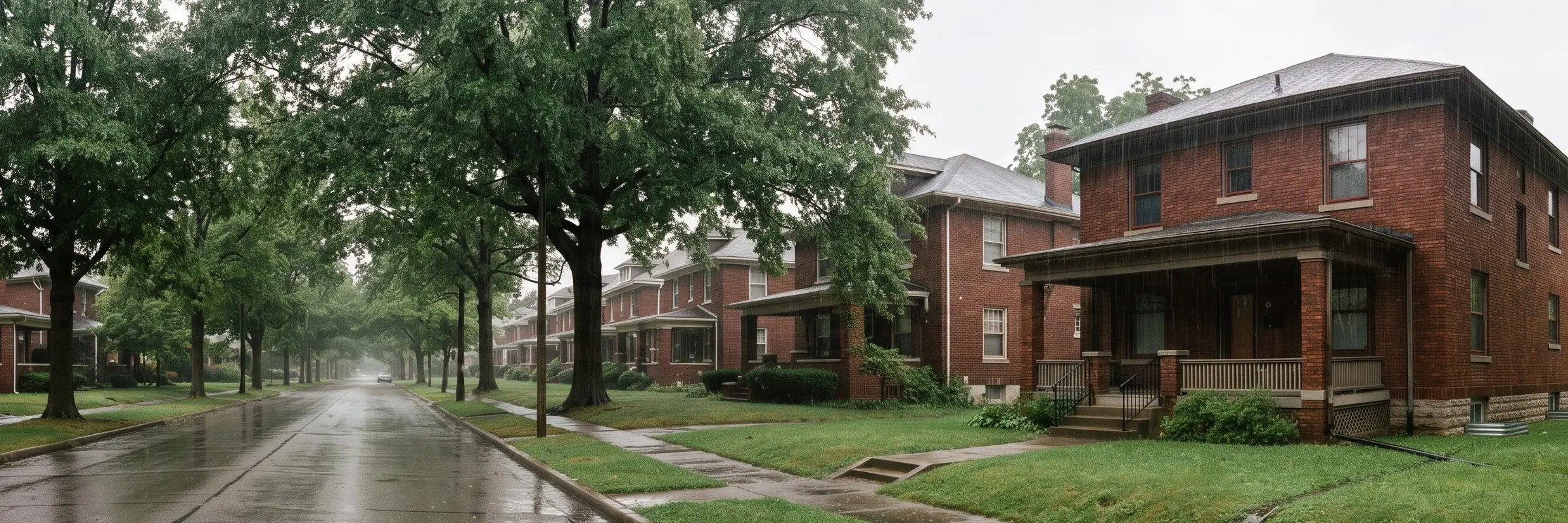

A floor drain that gurgles during a Columbus thunderstorm, a ceiling stain under a second floor bathroom, or basement carpet that squishes after a night of rain all lead to the same two calls, one to a crew for water damage restoration and one to the insurer. In Ohio the second call starts a clock, because the insurer has 15 days to acknowledge the claim and 21 days after proof of loss to accept or deny it.
Columbus water damage restoration covers pulling water out of a home, drying its framing and finishes, and rebuilding what cannot be saved, work governed by ANSI/IICRC S500, the Standard for Professional Water Damage Restoration, with the Ohio Department of Insurance enforcing claim handling under Ohio Adm. Code 3901-1-54 and City of Columbus Building and Zoning Services licensing the contractors who pull permits. The state's storm guidance names no license for the drying itself, which makes the checks a homeowner runs on the crew the main safeguard.
Key insights
- Cost range. A typical Columbus job costs $1,600–$7,500 and averages about $4,100, a sewage backup starts near $7,500, and a multi-room flood runs $10,500–$26,500 or more.
- Insurer clocks. Ohio Adm. Code 3901-1-54 gives an insurer 15 days to acknowledge a claim, 21 days to accept or deny it after a properly executed proof of loss, and 10 days to pay an undisputed claim after accepting it.
- Rain record. Columbus's airport station averages 41.57 inches of precipitation a year in NOAA's 1991–2020 normals, and August 2026 brought 9.94 inches with a record daily rainfall on August 20.
- Coverage gap. The Ohio Department of Insurance says a typical homeowners policy leaves out flood and does not include sewer drain backup unless it is added, and a flood policy carries a 30-day waiting period.
- City role. The City of Columbus takes sewer backup reports at (614) 645-7102 and does not assist with cleanup of private property, so the owner, a crew and the insurer handle the drying.
- Contract rule. Ohio Revised Code 4722.02 requires a written contract with a certificate showing at least $250,000 in liability insurance for home construction services costing $25,000 or more.
What Columbus water damage costs
Most Columbus water damage jobs cost $1,600–$7,500, with an average near $4,100. Cleanup of a spot found the same day starts near $400, sewage backups begin around $7,500, and water that spreads through several rooms costs $10,500–$26,500 or more, because the water category and the room count set how much carpet, pad and drywall has to go.
 A finished basement costs more than an unfinished one because carpet, pad and lower drywall are replaced, and the slab beneath them can stay damp for days after the surface feels dry.
Construction and extraction workers in the Columbus area earned about 7 percent more than the U.S. average in May 2025, the Bureau of Labor Statistics reports. A water damage restoration cost on a Columbus bid also moves with whether the basement is finished, how many stairs the equipment has to be carried down, and the 25–50 percent after-hours premium that applies to a loss found at night.
| Scenario | Estimates | What drives it |
|---|---|---|
| Minor spot mitigation | $400–$1,600 | A damp wall section or a spill found within hours, dried in a few days with air movers |
| Supply line burst | $1,100–$3,200 | Clean water in one wall cavity and the room next to it, dried while it is still Category 1 |
| Standard mitigation | $1,600–$4,300 | Extraction and drying across a whole floor with nothing cut out |
| Washing machine or dishwasher overflow | $2,100–$5,300 | Gray water that creeps under flooring and wicks into cabinet bases |
| Roof leak during a storm | $2,700–$7,500 | Wet attic insulation and ceiling drywall, plus the time to reach the attic and roof |
| Mitigation plus basic repairs | $4,300–$7,500 | Drying first, then drywall, trim and flooring replaced one room at a time |
| Sewage backup | $7,500–$15,000+ | Category 3 water from a floor drain, so porous materials it touched are bagged and hauled out before drying |
| Storm flooding across rooms | $10,500–$26,500+ | Wall cavities opened, subfloors repaired and finishes replaced in every flooded room |
Drying is priced by the square foot of wet floor, so a 300 square foot loss bills the same whether the house is 1,500 or 2,000 square feet. Category 1 water dries at $3.25–$4.25 per square foot and Category 3 at $7.50–$8.00 or more, and the rebuild after drying carries its own rate of $21–$40 per square foot of damaged area.
| 300 sq ft area | Estimates | Estimates per sq ft |
|---|---|---|
| Category 1 floor, dried | $975–$1,275 | $3.25–$4.25 |
| Category 2 floor, dried | $1,275–$2,100 | $4.25–$7.00 |
| Category 3 floor, dried | $2,250–$2,400+ | $7.50–$8.00+ |
| Rebuild once dry | $6,300–$12,000 | $21–$40 |
Room by room, the price follows what the water touched. A tiled bathroom is cheapest, a kitchen adds cabinet bases and flooring along the sink and dishwasher lines, and a basement adds a slab and block wall bases that keep giving off moisture after extraction, which keeps dehumidifiers running longer. Carpet, pad and furniture put a living room at the top.
| Room | Estimates | What drives it |
|---|---|---|
| Bathroom | $500–$4,800 | A small tiled floor and vanity that dry quickly |
| Laundry room | $1,100–$5,300 | A hose or drain that fails while the house is empty and floods the next room |
| Kitchen | $1,600–$8,500 | Cabinet bases, toe kicks and floors beside the sink and dishwasher supply lines |
| Basement | $1,600–$10,500+ | A sump failure or floor drain backup, followed by a slab and wall bases that hold moisture for weeks |
| Living or family room | $3,500–$20,000 | The largest floor area, with carpet, pad and furniture to clear |
The plumber who fixes the failed pipe bills separately, since the restoration crew's work ends once the structure meets the dry standard. A lump sum with no equipment counts conceals the line that differs most between Columbus bids, which makes two quotes impossible to compare item by item.
The first 48 hours after water arrives
In the first 48 hours after water reaches a Columbus home, switch off power to the wet area while standing on dry ground, report a floor drain backup to the city, photograph everything, and call a certified crew and the insurer the same day. The City of Columbus says electrocution is the danger in a flooded basement and that floodwater may carry sewage, so cleanup waits until the water recedes.
 Water that backs up through a floor drain is Category 3 under ANSI/IICRC S500, so the report to the city's Sewer Maintenance Operations Center comes before any cleanup. Porous materials it reaches are removed before drying begins.
The city's basement flooding instructions say the city does not assist with cleanup of private property, which leaves the drying to the owner, a crew and the insurer. They also say city tap water stays safe in almost all basement floods, but faucets below the flood level should stay off until the water recedes.
1. Cut power before you wade in
Turn off power to the wet area at the main box before you step into standing water, and leave the house and call an electrician if water reaches the panel, an outlet or a cord. The city says to wait until the water recedes before cleanup, and a furnace or appliance that got wet needs a technician's inspection before it runs.
2. Report a floor drain backup
Call the Sewer Maintenance Operations Center at (614) 645-7102 for a sewer backup through a floor drain, and keep the service request number you are given. Report street flooding and storm damage on public property to 311 at (614) 645-3111.
3. Photograph before you move anything
Shoot photos and video of every wet room, stain and damaged item, note the date and time, and keep receipts for emergency supplies and temporary repairs. The city advises against throwing away damaged items until the insurer says it is acceptable.
4. Move what is dry and leave what is wet
Move electronics, papers and small furniture into a dry room, and leave sodden carpet pad and wet drywall where they are so the crew can measure them. Open windows when the weather allows and start drying within 24 to 48 hours.
5. Book the crew and open the claim
Choose a firm with an IICRC certification that dries to ANSI/IICRC S500, then report the loss to the insurer that day and write down when you called and who took the call. Get more than one estimate, and ask the insurer for its list of preferred contractors.
When towels and fans are enough
A small spill on a hard floor, wiped up within hours, can be handled with towels and a fan. When water has reached carpet pad, drywall, insulation or a ceiling cavity, call a crew, because an emergency water damage response that starts the same day keeps a stain from turning into a wet wall. Floor drain water is Category 3 and stays out of homeowner hands.
Why Columbus basements take on water
Columbus basements take on water from three directions: rain that exceeds what the ground and the sewers can carry, groundwater pressing through foundation walls, and sanitary sewers that surcharge into floor drains in wet weather. The airport station averages 41.57 inches of precipitation a year in NOAA's 1991–2020 normals, with 12.74 inches of it falling from June through August.
 A window well that fills faster than it drains holds water against the window frame and the foundation wall behind it. That is how a heavy rain becomes a basement loss without any pipe failing.
August 2026 pushed past those averages. The National Weather Service office in Wilmington reported 9.94 inches at the Columbus airport for the month, which it said may have been the second wettest August on record, with a record daily rainfall on August 20 and 4–7 inches in the heaviest parts of Franklin and Licking counties. WOSU reported that city crews activated the Franklinton floodwall and floodgates along Greenlawn and Harmon avenues that morning.
| Water source | Category | What the crew faces |
|---|---|---|
| Failed supply line or water heater | Category 1 | Clean water that soaks into drywall, insulation and flooring and degrades the longer it sits |
| Washing machine or dishwasher discharge | Category 2 | Detergent and drain water that seeps beneath flooring and into cabinet bases |
| Sump pump that stops in a storm | Category 2 or 3 | Groundwater carries silt into the room, so soaked carpet and pad are usually removed |
| Sanitary sewer through a floor drain | Category 3 | Sewage rises at the lowest drain, and porous materials it reaches go out in bags before drying starts |
| River or creek water entering the house | Category 3 | Floodwater that crossed soil and pavement is assessed as contaminated |
Water from a failed supply line starts as Category 1 and can degrade to a higher category within about 48 hours as drywall, insulation and flooring absorb it, per the categories in ANSI/IICRC S500. Water that came through a floor drain from the sanitary sewer is Category 3 from the start, which means the porous materials it touched are removed before drying begins.
Concrete slabs and block walls release moisture long after the standing water is gone, so a finished Columbus basement can need more dehumidifier days than its floor area suggests. Winter adds a second source of loss, because the airport station averages 103.2 days a year when the low drops to 32°F or colder, 33.6 days at 20°F or colder and 2.3 days at 0°F or colder, enough for a supply line in an exterior wall, a garage or a crawl space to split in a hard freeze.
What Ohio does and does not license
Ohio's storm guidance and the City of Columbus's contractor license scopes name no license for water extraction or drying, but Columbus requires a city license or registration for contractors who apply for permits and begin work in the city. The city and the Ohio Department of Insurance both ask owners to confirm that a contractor is registered with the Ohio Secretary of State, to get more than one estimate and a written contract, and to avoid paying in full up front.
Under Columbus City Code Chapter 4114, the city's contractor license requirements say that contractors performing work in the city must hold the appropriate license or registration from Building and Zoning Services before they apply for permits and begin the job. A home improvement general contractor license covers structural additions, alterations and repairs to existing one, two and three family homes, and limited licenses name specialties such as residential gypsum board and basement waterproofing, while extraction and drying are not among the listed scopes.
A drying company that also rebuilds walls, replaces plumbing or rewires a basement is working in licensed territory. The Citizen Access Portal has a contractor search that lists licensed contractors by trade with their contact information, and a Columbus owner can check a rebuild contractor there before any permit is pulled.
Ohio Revised Code 4722.02 adds a consumer rule for larger rebuilds. A home construction service supplier whose work costs $25,000 or more must sign a written contract with the owner that lists the work, the estimated cost, the start and completion dates and a certificate of general liability insurance of at least $250,000, and the supplier must give notice before unforeseen excess costs pass $5,000 over the contract. The chapter defines home construction service to include repair of an existing structure.
The Ohio Department of Insurance warns owners not to give a contractor power of attorney or let one negotiate or settle an insurance claim, and to pay by check or credit card so each payment leaves a record. The IICRC firm certification is a training credential, not a license, so ask the crew how it applies to the job and when you choose a restoration company, check the credential and the registration together.
Six checks on a Columbus crew
A Columbus homeowner can screen a water damage crew with six questions covering certification, registration, permits, the written scope, the drying proof and the payment terms. Each answer can be checked against a document or a public record, and a crew that will not put an answer in writing has not finished its assessment.
 A written scope names the water category, the source and every wet room, which a crew can list only after seeing the wet wall in person. A price quoted by phone skips that step.
Door-to-door crews appear in the days after a storm. The City of Columbus warns that fraudulent contractors often go door to door after severe weather offering fast repairs, and it lists the Ohio Attorney General's contractor fraud line at 1-800-828-0348 for suspected fraud. Equipment counts, subcontractors and warranty terms add more questions to ask before a work authorization is signed.
| Ask | Credible answer | Walk away if |
|---|---|---|
| Which IICRC certificate does the firm hold? | A firm certificate in the company's name, plus technician certificates, and a crew that cites ANSI/IICRC S500 when it names the water category | The certificate carries a different company name, or the crew cannot say which category the water is |
| Is the company registered with the Ohio Secretary of State? | A business name that matches the contract and shows up in the Secretary of State's search | The name on the truck, the contract and the registry do not match |
| Who pulls the permit for repairs? | A named contractor licensed or registered with the City of Columbus, listed by trade in the Citizen Access Portal | The firm asks you to pull a permit for work it will perform |
| What does the written scope list? | The water category and source, each room, the number of air movers and dehumidifiers and the days they will run | A lump sum with no equipment counts or room list |
| How will drying be proven? | Daily moisture readings on each wet material, compared with a dry reference reading from the same material | Equipment comes out after a day or two with no readings |
| What are the payment terms? | A deposit, the balance after dry readings, and a clear answer on whether the firm bills the insurer directly | Full payment up front, or a request for power of attorney over the claim |
When the readings say dry
A Columbus crew has finished drying when the daily readings on each wet material come down to the reading taken on a dry sample of that same material, the standard set by ANSI/IICRC S500. Equipment usually runs 3–7 days, and the full restoration, repairs included, averages 1–3 weeks.
The EPA says materials should read 15 percent moisture or less before they are refinished, and it describes a simple slab check for a basement: tape the edges of a clear plastic sheet to the concrete and wait about 16 hours, and moisture under the sheet means the slab is still wet. That test matters in Columbus, where a finished basement is where most of the flooring and drywall sits.
The log is the paper trail for that standard. Each entry records the reading on a material, the dry sample reading, which machines sit in which room and any change the crew made, and repairs start on the date the scope sets, after the readings meet. A crew that explains its structural drying plan before it sets a machine hands the insurer what it will ask for.
How fast Ohio insurers must act
An Ohio insurer must acknowledge a claim within 15 days, decide whether to accept or deny it within 21 days after receiving a properly executed proof of loss, and pay an undisputed claim within 10 days after accepting it. Those clocks come from Ohio Adm. Code 3901-1-54, the Department of Insurance's claim handling rule.
 The 15-day acknowledgement clock starts when the insurer or its agent is notified, so dated photographs and the time of the first call belong in the file from day one. The 21-day decision clock starts only after a properly executed proof of loss.
If an insurer needs more than 21 days to investigate, it must notify the claimant within that period and explain why, and it must update the claimant in writing at least every 45 days while the investigation continues. Notice of a claim given to an agent counts as notice to the insurer, and an insurer that denies a claim must name the policy provision, condition or exclusion it relied on.
| Clock | Limit | Starts when |
|---|---|---|
| Acknowledge the claim | 15 days | The insurer or its agent is notified of the claim |
| Answer a communication | 15 days | The claimant writes or calls in a way that calls for a response |
| Accept or deny | 21 days | The insurer receives a properly executed proof of loss |
| Status update | 45 days | Repeats in writing while the investigation runs past 21 days |
| Pay an agreed claim | 10 days | The insurer accepts a claim whose amount is not in dispute |
| Warn of a deadline | 60 days | Before a statute of limitation or policy limit expires, when no lawyer is involved |
The Ohio Department of Insurance says a typical homeowners policy does not include sewer drain backup or basement water backup unless the coverage is added, and that flood insurance is not part of a standard policy and is bought separately through the National Flood Insurance Program with a 30-day waiting period before it begins. A policy's declarations page and exclusions show whether a backup endorsement exists, and an owner whose home sits near a river or creek has a second decision to make about flood insurance coverage that is separate from the homeowners policy.
When the claim is low or denied
A Columbus homeowner whose insurer denies or underpays a water claim can contact the Ohio Department of Insurance at 1-800-686-1300, the number the City of Columbus lists for policy questions and insurer disputes. Under Ohio Adm. Code 3901-1-54 an insurer must give the department a reasonable response within 21 days of receiving its inquiry about a claim.
A denial that cites no provision can be challenged, because the rule bars an insurer from denying a claim on a specific policy provision, condition or exclusion unless the denial refers to it. Put the crew's written scope, the drying log, the dated photographs and the service request number from the city in one file, and compare each line of the adjuster's estimate with the scope item by item.
The Department of Insurance's severe weather toolkit advises owners not to sign a contract before an adjuster has surveyed the damage and to keep copies of all correspondence, with the date, the name and the title of each person they spoke with. Dated notes on each call also show the insurer when the 15-day and 21-day clocks started.
A public adjuster can prepare the documentation and negotiate with the insurer, and the toolkit notes that public adjusters offer the same services as an insurer's adjuster but the policyholder pays their fees. The toolkit adds that a policyholder may receive more than one claim check and that the first is likely an emergency advance, so an early payment is not necessarily the full settlement.
Permits and the numbers to call
Columbus requires a permit for plumbing work beyond a simple leak repair, and the city issues it to the property owner for work in the owner's own home or to a contractor licensed or registered with the city. Repairing a leak in a drain, water, soil, waste or vent pipe needs no building permit, but removing and replacing a defective concealed pipe with new material is treated as new work that needs approval and an inspection.
 Removing and replacing a defective concealed pipe is the work that triggers a Columbus plumbing permit. The inspection is scheduled against the permit number and uses one of its inspection trips, so book it before the wall is closed.
According to Building and Zoning Services, property owners cannot purchase permits for work they hire a contractor to perform, and trade permits are pulled by appropriately registered contractors after the building permit is issued. Each permit comes with a set number of inspection trips, and an extra trip is bought when the balance reaches zero. Before a crew cuts into a wall to replace pipe, ask which permits apply and who will pull them, since permit requirements differ by trade and project.
| Problem | Who to call | Number |
|---|---|---|
| Sewer backup through a floor drain | Sewer Maintenance Operations Center | (614) 645-7102 |
| Street flooding or damage on public property | Columbus 311 | (614) 645-3111 |
| Smell of gas | Columbia Gas, from outside the house | 1-800-282-7820 |
| Permit or contractor license question | Building and Zoning Services | (614) 645-7433 |
| Dispute with an insurer | Ohio Department of Insurance | 1-800-686-1300 |
| Suspected contractor fraud | Ohio Attorney General | 1-800-828-0348 |
If mold follows the water
According to the EPA, wood, drywall, carpet and furniture that stay wet for more than 24 hours can grow mold, and the City of Columbus tells owners to begin drying within 24 to 48 hours to prevent it. A Columbus basement that took on water over a weekend or while the owner was away is the case most likely to pass that window.
Damp readings after the crew leaves, a musty smell that comes back, or a stain that spreads mean the drying stopped early, and the next step is a mold assessment. Once mold is found, mold after water damage is handled with containment, removal and clearance testing at its own price, and the drying log from the water job is the first record a remediator asks to see.
For a finished basement the city's advice is to discard wet drywall and replace that portion rather than try to save it, since drywall that stays wet is where mold takes hold. A furnace that got wet also needs a technician's inspection, and once it is cleared the city says to install a new, dry filter.
Central Ohio areas with flood records
Floodwater, groundwater and sewer water each reach a Central Ohio home by a different route, and each route carries its own category under ANSI/IICRC S500. Areas with flood records include Franklinton on the Scioto River, the Olentangy corridor in Clintonville, the Hilltop and Linden neighborhoods in the city's Blueprint Columbus stormwater program, and the Reynoldsburg streets around Nocturne Road.
 Parks along the Olentangy corridor in Clintonville flooded on August 20, 2026, including Whetstone Park and Clinton-Como Park. Homes on the same stretch can take on water from the river, from groundwater or from the sewer, and the written scope should name which.
Water from a river or creek rising into a home is flood water damage and Category 3, groundwater through a foundation wall is Category 2 or 3, and a surcharging sanitary sewer is Category 3. The written scope should name the route, because the insurer decides coverage on it, and flood and sewer backup are separate coverages from the water damage a plumbing failure causes.
| Area | Risk factor | Homeowner note |
|---|---|---|
| Franklinton | Scioto River rise behind the floodwall | City crews activated the floodgates on Greenlawn and Harmon avenues on August 20, 2026, so ask whether water came over the wall, up from the ground or through a drain |
| Clintonville | Flooding along the Olentangy corridor | Whetstone Park and Clinton-Como Park flooded on August 20, 2026, and Blueprint Columbus has concluded its voluntary sump pump program in the Clintonville 1 project area |
| Hilltop and Linden | Basement flooding and sewer overflows | Blueprint Columbus offers free sump pumps to qualifying homes in its project areas, and its stated goal is keeping rain out of the sanitary sewer, with fewer basement floods as a secondary result |
| Reynoldsburg, Nocturne and Briarcliff roads | Flash flooding of streets and basements | Water rescues and flooded basements were reported there on August 20, 2026, and Reynoldsburg is a separate city that runs its own water, sewer and stormwater departments |
Tenants, condo owners and buyers
A Columbus tenant whose rental floods should tell the landlord in writing and keep a copy, because Ohio Revised Code 5321.04 requires a landlord to make the repairs needed to keep the premises fit and habitable and to maintain plumbing in good working order. A renters policy covers the tenant's belongings but not the building, so a tenant photographs damaged belongings for that claim while the landlord handles the structure.
In a condominium, the owner's policy covers the contents and only the portion of the building the owner holds, such as interior walls, according to the Ohio Department of Insurance, so the association's coverage for the rest has to be checked separately. A condo water damage claim starts with the owner's declarations page and the association's rules, because those documents mark where the owner's coverage ends and the association's begins.
A buyer in Columbus receives the Residential Property Disclosure Form under Ohio Revised Code 5302.30, which asks the seller about material physical conditions including the sewer system, roof, foundation, walls and floors. A basement stain at the showing is worth a question about prior claims and drying records before the buyer commits.
Before the next downpour
Preventing Columbus water losses means protecting the basement from sewer backup and storm runoff, and protecting the pipes from the cold. A sump pump failure during a storm lets groundwater rise into the basement, so the pump, its discharge line and its power are the first things to check, and a backflow valve on the sewer line is the next.
 Pouring a bucket of water into the pit before spring storms shows whether the float switch starts the pump and the discharge pipe moves the water out. Groundwater that gets past a failed pump is Category 2 or 3.
A supply line in an exterior wall or garage needs insulation before the first hard freeze, and the main shutoff should be easy to reach. A line that has frozen but not split can be thawed with a hair dryer, never an open flame, and a frozen pipe that has already split is a plumber's call.
| Action | When | Why it works |
|---|---|---|
| Clean and inspect a backflow valve | Monthly | The city says an installed device needs monthly cleaning, and a loose lid can keep the alarm from sounding in a backwater condition |
| Add water backup coverage | At renewal | The Ohio Department of Insurance says sewer drain backup is not included or is limited in a typical policy and must be added |
| Test the sump pump and its power | Before spring and summer storms | A pump that fails during a downpour lets groundwater into the basement |
| Insulate exposed lines and find the shutoff | Before the first hard freeze | Lines in exterior walls, garages and crawl spaces freeze first |
| Photograph each room and keep a home inventory | Yearly | The department offers a home inventory checklist, and dated records speed a claim |
The city's Project Dry Basement program pays for an approved backflow prevention device on a single or two family home after a sewer backup caused by wet weather surcharging of the public sewer or by a blockage. The city's online report for a wet basement or neighborhood flooding is how an owner asks whether a home qualifies, and it goes in after the first call to the sewer line, so the service request number from that call should be on hand.
Frequently asked questions
How much does water damage restoration cost in Columbus?
Most jobs cost $1,600–$7,500, and the average is about $4,100. Sewage backups start near $7,500, while a flood through several rooms costs $10,500–$26,500 or more after wet carpet, pad and drywall are replaced. Drying runs $3.25–$4.25 per square foot for clean water and $7.50–$8.00 or more for Category 3.
How long does an Ohio insurer have to respond to a water damage claim?
15 days to acknowledge the claim and 21 days to accept or deny it after receiving a properly executed proof of loss. Under Ohio Adm. Code 3901-1-54 the insurer must also pay an undisputed claim within 10 days after accepting it, and if it needs more than 21 days to investigate it must say why and send written updates at least every 45 days.
Does homeowners insurance cover sewer backup in Columbus?
Usually not unless you added a water backup endorsement. The Ohio Department of Insurance says coverage for sewer drain backup is not included or is limited in a typical policy and must be added, and flood damage needs a separate flood policy. Review your homeowners insurance declarations for the endorsement and its limit.
Does Ohio require a license for water damage restoration?
No license is named for extraction or drying in the City of Columbus contractor license scopes or the Ohio Department of Insurance's recovery advice. Columbus requires contractors performing work in the city to hold the appropriate license or registration before they apply for permits, and the city and the department both point owners to Secretary of State registration, references and a written estimate.
Who do I call when a sewer backs up into my Columbus basement?
The Sewer Maintenance Operations Center at (614) 645-7102, which takes backup reports 24 hours a day and gives you a service request number. Keep that number for the city and the insurer, and treat the water as Category 3 until a crew says otherwise, which makes it a sewage backup job.
Does the City of Columbus clean up a flooded basement?
No. The city says it does not assist with the cleanup of private property, and its 311 line handles damage on public property and the public right of way. Damage entirely on private property is the responsibility of the owner and the insurer.
Do I need a permit to repair water damage in Columbus?
Replacing a defective concealed pipe does, because the Columbus building code treats it as new work that needs approval and an inspection. Repairing a leak in a drain, water, soil, waste or vent pipe needs no building permit. Building and Zoning Services at (614) 645-7433 can confirm which permits apply to a repair.
How long does water damage restoration take in Columbus?
Drying equipment usually runs 3–7 days, and the full restoration, repairs included, averages 1–3 weeks. A finished basement takes longer since the slab and block walls give up moisture slowly.
How do I choose a water damage restoration company in Columbus?
Start with the IICRC firm certificate, then check the business name with the Ohio Secretary of State. Ask for a written scope that states the water category and lists the air movers and dehumidifiers, a daily moisture log, and payment terms that hold the balance until the readings are dry.
Is a Columbus landlord responsible for water damage?
Usually yes, for the building, because Ohio Revised Code 5321.04 requires a landlord to make the repairs needed to keep the premises fit and habitable and to keep plumbing in good working order, while the tenant's own belongings are covered only by a renters policy, and tenant rights after a leak start with written notice to the landlord.
- IICRC S500
- EPA: Flood Cleanup to Protect Indoor Air and Your Health
- NOAA NCEI: 1991–2020 annual normals for Columbus airport
- National Weather Service Wilmington: August 2026 climate report
- BLS: Occupational Employment and Wages in Columbus, May 2025
- Ohio Administrative Code: Rule 3901-1-54
- Ohio Revised Code: Section 4722.02
- Ohio Department of Insurance: Severe Weather Toolkit
- City of Columbus: Contractor Licenses
- City of Columbus: Building and Zoning Services frequently asked questions
Sam Hickerson is the founder of RestoreAdvisor and writes consumer guides on mold remediation, water damage restoration, inspection, testing, and home recovery. His work focuses on helping homeowners understand costs, risks, and when to call a professional. He draws on guidance from the EPA, CDC, IICRC, and other authoritative sources to make complex home issues easier to navigate.