
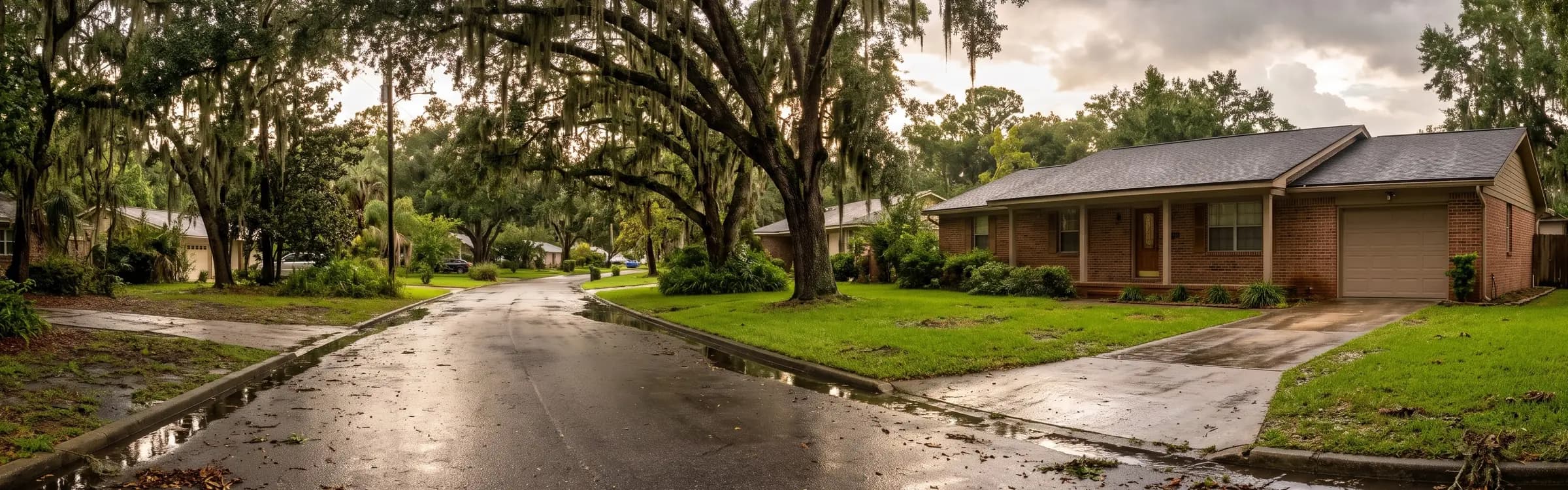

A wet floor in Jacksonville raises two questions at once: what the insurer will pay, and what the city will let a contractor rebuild without a permit. Drying equipment can run the same day, but the repair that follows falls under the Building Inspection Division, which currently tells applicants to expect 25–30 business days for the first review of a building permit and fines work started without a required permit $250.
Jacksonville water damage restoration is the extraction, drying, cleaning, and repair of a wet home under the ANSI/IICRC S500 standard, with the Florida Department of Business and Professional Regulation (DBPR) licensing the rebuild trades and the City of Jacksonville permitting the repairs. River and creek flooding draws the headlines, yet a roof leak, a failed supply line, or an overflowing air conditioner drain pan follows different insurance and permit rules than rising water, and the source of the water decides which rules apply.
Key insights
- Typical cost. Water damage restoration in Jacksonville costs $1,300–$6,000 for one affected area, while Category 3 river, creek, or sewage water on a ground floor can reach $8,500–$21,500 or more.
- Permits. The city requires a permit to alter or repair a building and exempts stopping plumbing leaks and clearing drain stoppages, but its published exempt list names neither drywall nor flooring.
- Notice of Commencement. The Building Inspection Division says most jobs over $5,000 need a Notice of Commencement, so a larger rebuild adds paperwork before work starts.
- Flood zones. The city lists flood insurance as mandatory in zones A, AE, AH, AO, and VE and not in Zone X, and a homeowners policy excludes flood water in every zone.
- Claim notice. Florida Statute 627.70132 bars a new or reopened property claim unless the insurer receives notice within 1 year of the date of loss, and a supplemental claim within 18 months.
- Mold clock. The EPA says mold can grow on wood, drywall, carpet, and furniture that stay wet for more than 24 hours.
Hour by hour in a wet Jacksonville home
The first 48 hours in a wet Jacksonville home go to stopping the source, naming the water, documenting the damage, and starting to dry, in that order. The EPA says mold can grow on wood, drywall, carpet, and furniture that stay wet for more than 24 hours, so drying that waits for an adjuster's schedule starts a day behind.
 Dated photographs of the water line and the source, taken before anything is moved, show an adjuster how high the water reached and when you found it.
Switch off the breaker for wet circuits only if the panel is dry and reachable without stepping through water. If water is still moving, the panel is wet, or sewage is involved, call for emergency water damage restoration and keep everyone out of the room until an electrician clears the circuits.
1. Stop the flow at the nearest shutoff
Close the shutoff valve for the failed fixture, or the main valve for the house, and run a tap to confirm the line is dry. If the valve will not close or the leak is on the utility side of the meter, call the water utility, because only the utility can shut the supply at the meter.
2. Decide whether the water is clean, gray, or flood
Water from a supply line or condensate drain starts as clean Category 1 water, washing machine and dishwasher overflow is Category 2, and river, creek, or sewage water is Category 3 under ANSI/IICRC S500. Category 3 water means protective gear, removal of soaked drywall and carpet, and a flood policy claim, so write down where the water came from before anyone asks.
3. Record the loss before cleanup
Photograph the source, the water line on the walls, and the damaged belongings, then email the insurer the date, the source, and the photos so the notice carries a time stamp. Keep receipts for hotel stays, dehumidifiers, and emergency repairs, because they support the claim later.
4. Start drying before the adjuster comes
Hire an IICRC Certified Firm to start extraction and drying the same day instead of waiting for an adjuster. Keep windows and doors closed while the dehumidifiers run, since Jacksonville's summer air can carry more moisture than the air inside the house.
5. Ask before demolition or rebuild starts
Before the crew removes walls or you order repairs, call the Building Inspection Division at (904) 255-8500, option 4, and ask which of the repairs need a permit. If the address sits in a mapped flood zone and outside water entered the home, also ask whether the repair needs a substantial damage review.
Wait to paint, caulk, or seal a wall that looks dry. The EPA advises against sealing flooded wall cavities or applying paint or sealants to wet surfaces until the materials are completely dry on the inside, because the finish traps moisture against framing and drywall where nobody can see it.
Where Jacksonville's water comes from
Jacksonville homes get wet from river and creek flooding, roof leaks after summer storms, failed plumbing, and the air conditioning system, and which one it was decides the water category, the insurance policy, and the permit path. Water that comes from outside the house, such as river, creek, or sewage water, is Category 3 under the ANSI/IICRC S500 standard, while water from inside the plumbing starts cleaner.
 Overflowing condensate starts as clean Category 1 water under ANSI/IICRC S500, so quick extraction and drying keep it from growing into a larger loss.
Flood zones set the baseline for river and creek risk. The City of Jacksonville floodplain definitions say every parcel carries a FEMA flood zone based on a 100 year storm, which has a 1 percent chance of occurring in any year, and that flood insurance is mandatory in zones A, AE, AH, AO, and VE and in the floodway. Zone X sits outside the 100 year floodplain, and flood insurance there is not mandatory.
A Zone X address can still flood in heavy rain, and a homeowners policy excludes flood water in every zone, so a flood policy depends on where the water came from. The insurer's first question is always the source, so the photographs and notes taken in the first hour become the main evidence in the claim file.
Roofs, plumbing, and cooling equipment cause the water that is not flood water. A roof leak shows up as a ceiling stain after a storm, a supply line or slab failure wets floors from below, and an air conditioner with a clogged condensate line can soak a closet and the ceiling beneath it over weeks. Clean water that sits in warm, wet materials can move to Category 2 under S500, so a slow leak found after a week is treated differently from one found within the hour.
The class of loss matters as much as the category. A leak that wets only the floor surface is a lower class than water that has climbed into wall cavities and carpet padding, and each step up the classes adds equipment and drying days. Ask the crew to write down the category and class on the estimate so the insurer and the city see the same description of the job.
Jacksonville restoration price ranges
Most Jacksonville water damage jobs cost $1,300–$6,000 for one affected area, and the average is about $3,200. Category 3 water, several rooms, older materials, and a late start on drying push a job above that range, while a leak caught within a day stays near the bottom. A single wet room with clean water and a fast response sits at the low end, and a job that crosses several rooms, involves river water, or waits days for drying moves toward the top.
 Ask the person presenting the estimate to tie each equipment line to a moisture reading, so the daily drying log can later confirm each piece was needed.
In May 2025, the Bureau of Labor Statistics found that Jacksonville construction and extraction workers averaged about 85 percent of the U.S. hourly wage. River and creek water that brings Category 3 cleanup, slab floors that hold moisture under tile, and the permit steps an older home's rebuild can add all push a Jacksonville job toward the top of the water damage restoration cost range.
| Scenario | Estimates | What drives it |
|---|---|---|
| Minor spot mitigation caught within a day | $300–$1,300 | A small clean water spill, a few days of equipment, and little demolition |
| Mitigation only, 300 sq ft of floor | $750–$1,950 | Extraction and drying priced by the square foot of affected floor |
| Burst supply line or water heater leak | $900–$2,600 | Clean water in one room, with cabinet or drywall repair when the unit sits in a garage or closet |
| Slab leak or condensate overflow | $1,300–$3,400 | Wet flooring or ceiling drywall below the source, often found after weeks of slow leaking |
| Washer or dishwasher overflow | $1,700–$4,300 | Category 2 water under flooring and into cabinet bases |
| Roof leak after a storm | $2,100–$6,000 | Wet attic insulation and ceilings, with the roof repair billed separately by a roofer |
| Mitigation plus basic repairs | $3,400–$6,000 | Drying followed by new drywall, paint, and flooring, with a permit when the work calls for one |
| Sewage backup (Category 3) | $6,000–$12,000+ | Disinfection, protective gear, and removal of porous materials such as padding and lower drywall |
| River, creek, or rain water in a ground floor home (Category 3) | $8,500–$21,500+ | Flood cuts, flooring, drywall, and contents, often across several rooms |
Each factor in a job should appear as its own line on a written estimate. The water category, the hours before drying started, the age of the framing, and the number of rooms explain why one Jacksonville bid is double another, and a bid that cannot point to the line behind a higher total needs revising.
Extraction and drying are billed as one scope and drywall, flooring, and paint as another, and insurers usually divide an estimate the same way. Drying equipment is billed per piece per day, so a written estimate lists the air movers and dehumidifiers and the number of days each one runs. After a named storm, demand for crews and dehumidifiers rises across Duval County, so a written start date protects against wet drywall sitting in place for a week.
Mitigation is priced at about $2.50–$6.50 per square foot of affected floor, and the rate applies to the affected area only, so a 300 square foot loss is $750–$1,950 for drying alone in a 1,500 or 2,000 square foot house alike. The rate climbs with the water category, and repairs are priced separately from drying.
| Work | Estimates per sq ft | Applies to |
|---|---|---|
| Mitigation, all categories | $2.50–$6.50 | Affected floor area, priced before any rebuild work |
| Category 1 mitigation | $2.50–$3.50 | Affected floor area after a supply line or condensate leak |
| Category 2 mitigation | $3.50–$5.50 | Affected floor area after washer or dishwasher overflow |
| Category 3 mitigation | $6.00–$6.50+ | Affected floor area after river, creek, or sewage water |
| Repair and rebuild | $17–$32 | Affected floor area that needs new drywall, paint, and flooring |
Room costs follow how much flooring, drywall, and cabinetry the water reaches. A living area carries the highest total because of its floor area and wall cavities, and a bathroom the lowest, while kitchens and laundry rooms rise when water runs under cabinets or tile. A concrete slab under tile adds drying days, because the slab releases moisture slowly.
| Room | Estimates | Cause |
|---|---|---|
| Bathroom | $400–$3,800 | Supply line, toilet, and tub failures that wet the floor and the wall behind |
| Laundry room | $900–$4,300 | Washer hose failures and drain overflows beside an interior or garage wall |
| Kitchen | $1,300–$6,800 | Dishwasher and refrigerator lines with water running under cabinets |
| Living or family room | $2,800–$16,000 | The largest floor area, plus wall cavities that hold water |
Florida licenses and your crew
Florida licenses the rebuild trades and mold work, and a 2024 appeals court decision found that most water damage mitigation tasks, including dehumidification, did not need a building contractor's license, so the screening for a Jacksonville drying crew comes from IICRC Certified Firm status, a written scope, and a named license holder for every trade that touches the structure. The DBPR license search shows each holder's license, status, and complaints.
 Ask who holds the license for each trade before work starts, because wet circuits should be cleared by a licensed electrician before power is restored.
The Third District Court of Appeal, in Incident365 Florida v. Ocean Pointe V Condominium Association, sent the removal of materials affixed to the building back to the trial court, which leaves Florida licensing for water damage work unsettled for structural demolition. Work that alters the building, along with plumbing, electrical, roofing, and air conditioning work, can still require the matching Florida license.
| Ask | Credible answer | Red flag |
|---|---|---|
| What is your IICRC firm number? | A certificate number that appears in the IICRC locator | A logo or the phrase certified technicians with no firm listing |
| What category and class is this water? | A written category and class, with the reason for each | The words water damage and nothing else |
| Will I get a drying log? | Daily moisture readings and equipment counts | Equipment left running with no readings |
| Who holds the license for the rebuild? | A named Florida licensee whose number matches the DBPR search | No number, or a license for a different trade |
| Who pulls the permit? | A contractor registered with the city, which requires a state construction license, photo ID, and proof of workers' compensation or an exemption | An offer to start with no permit or to put the permit in your name |
| Can you start before the adjuster visits? | Yes, after photographs and moisture readings are taken | Demolition before any photographs |
A bid that omits equipment counts and drying days cannot be compared with another bid, which is the reason to ask every company the same questions. Get at least three itemized estimates when the loss is large, and compare scope line by line before comparing totals. Ask for the answers in writing with the estimate, because a promise made by phone leaves nothing to point to if the scope changes after demolition.
The city adds its own checks. Contractors who pull permits in Jacksonville register with the Building Inspection Division, and a homeowner can verify a license with the DBPR. Complaints about a contractor or a suspected code violation go to the city's Citizen Active Response Effort office at (904) 630-CITY, and a license complaint can also go to the DBPR.
City of Jacksonville permit rules
The City of Jacksonville requires a permit to alter or repair a building, and its exempt list covers stopping plumbing leaks and clearing drain stoppages but names neither drywall nor flooring. The residential permit rules call work started without a required permit unlawful and punishable by a $250 fine, so a rebuild scope that includes walls, wiring, or plumbing should come with a named permit holder.
 Framing and drywall appear on the city's list of typical inspections, so confirm with the Building Inspection Division before drywall covers the new wiring and pipe.
The permit requirement comes from Florida Building Code Section 105.1, which the city quotes, and it extends to electrical, gas, mechanical, and plumbing systems. Exempt plumbing work includes stopping leaks, replacing faucets after the stop, and clearing drain stoppages that do not involve replacing valves, pipes, or fixtures, and the city says it does not inspect cosmetic items such as paint, wallpaper, carpet, and interior door hardware.
| Repair | Permit | Notes |
|---|---|---|
| Stopping a plumbing leak | Exempt | Covers the leak repair itself and not replacing pipes or valves |
| Clearing a drain stoppage | Exempt | Applies only when no valves, pipes, or fixtures are replaced or rearranged |
| Paint, wallpaper, and carpet | Not inspected | The city treats these as cosmetic items |
| Drywall, framing, and flooring | Ask the city | Not listed as exempt, and drywall and framing appear on the list of typical inspections |
| Replacing a water heater | Required | Listed among repairs that need a permit |
| Replacing an air conditioning unit or rewiring | Required | Listed among repairs that need a permit |
Plan for time and paperwork. The city currently asks applicants to expect 25–30 business days for the first review of a building permit, resubmissions take about 10 business days or less, and a permit is good for 180 days. Most jobs over $5,000 need a Notice of Commencement, which makes a larger rebuild a paperwork project before the first wall opens, so ask the contractor who files each document and when.
In a mapped flood zone, outside water adds a second question. FEMA says a structure is substantially damaged when the cost of repairing it is 50 percent or more of its market value before the damage, that land value is not counted, and that the community's building official or floodplain manager makes the determination. In a Special Flood Hazard Area, FEMA adds that an NFIP policy can pay up to $30,000 in Increased Cost of Compliance coverage toward bringing a substantially damaged home up to code.
Ask the Building Inspection Division at 214 N. Hogan St., Room 280, or at (904) 255-8500, option 4, whether the address needs a determination before you sign a reconstruction contract. The answer sets whether the rebuild must meet current floodplain rules, and it changes both the scope and the price. Anyone unsure which repairs qualify for a permit for water damage repairs should ask in writing and keep the reply with the claim file.
Drying a humid Jacksonville home
A wet Jacksonville home usually needs 3–7 days of structural drying followed by 1–3 weeks of repairs, and drying ends when daily moisture readings reach the dry goal the crew set on day one. Category 3 water, concrete slabs, dense hardwood, and permit review for the rebuild can add days to either stage.
 The day counts are typical ranges. Drying ends when daily readings reach the goal, so a quote should allow extra days for readings that lag.
Under ANSI/IICRC S500, the crew sets a dry goal from unaffected materials in the same house and documents readings until the wet materials reach it. The EPA says drying usually takes several days to weeks and that materials should read 15% or less to be ready for refinishing. In summer, outdoor air in Jacksonville can hold more moisture than a drying house, so a crew keeps the house closed and runs dehumidifiers, and a homeowner who opens windows to help can slow the job.
Moisture map on day one
The technician scans walls, floors, and ceilings with a meter and marks the wet boundary, which sets the equipment count and the first dry goal. Without that map, an adjuster has no way to confirm how many air movers and dehumidifiers the job needed.
Pull the standing water
Extraction removes the bulk of the water within hours, which stops it from wicking further into walls and flooring. The crew then sorts what can stay from what cannot, using the moisture map from day one as the guide.
Open what cannot dry
Porous materials that soaked up a lot of water, and anything touched by Category 2 or 3 water, come out when they cannot be cleaned and dried. The EPA says to throw away materials that soak up a lot of water and cannot be cleaned and dried.
Daily readings until the goal
The crew returns each day to log readings, move equipment, and remove units as areas reach the goal. A log that stops after day one is a warning, since readings can rebound once the equipment leaves.
Sign off before the rebuild
The rebuild starts only after the final readings match the goal and any required permit is in hand. Closing walls on damp framing is how a dried house turns into a mold job.
Some losses are a fair DIY job. A small spill of clean water on a hard floor, mopped up within a day, dries with fans and a dehumidifier. Anything beyond that needs a certified crew, including Category 2 or 3 water, wet drywall, soaked padding, water near wiring, and any loss that sat longer than a day. A sewage backup is never a DIY job, and a moisture meter reading confirms what the surface hides.
Policies, flood zones and low offers
A homeowners policy pays for sudden water damage such as a burst pipe or a storm damaged roof and excludes flood water, so the source of the water decides whether the claim goes to the homeowners insurer, a flood insurer, or neither. Adjusters ask for the cause first, and the dated photographs taken before cleanup are the evidence that settles it.
 Record the date you first saw a stain and photograph it again as it changes, because an adjuster uses that timeline to judge whether the loss was sudden.
Florida Statute 627.70132 bars a new or reopened property claim unless the insurer receives notice within 1 year after the date of loss, and a supplemental claim unless notice comes within 18 months. For a hurricane, windstorm, or severe rain, the date of loss is the date of landfall or the date NOAA verifies the event, which can start the clock before a homeowner finds hidden damage.
Written notice protects that deadline, and the policy's own terms say how notice must be given. Send the insurer an email with the date, the source, and the photographs, keep the sent copy, and open the claim the same week. A phone call alone leaves nothing to show when the carrier counts the days.
A low offer usually leaves out drying days, equipment, or the rebuild line. Send the contractor's itemized estimate and drying log, ask the adjuster in writing which lines were changed and why, and keep the reply. When the gap is large, a licensed public adjuster or a lawyer can reopen the discussion, and a supplemental claim covers damage found after the first payment, inside the 18 month limit.
Flood policies work on a different calendar and a different definition. The city lists flood insurance as mandatory in mapped hazard areas and optional in Zone X, and a Zone X owner can still buy a policy, so the zone lookup belongs in the file with the closing papers and the insurance declarations.
Mold after a slow dry out
Water damage becomes a mold job when wet materials stay wet for more than 24 hours, the EPA's threshold for wood, drywall, carpet, and furniture. In a closed Jacksonville house in summer, a wall cavity that stays damp behind finished drywall gives growth a long head start, because nobody sees it until a smell or a stain appears.
Four signs mean the dry out failed: a musty smell that returns after the equipment leaves, baseboards that feel soft at the old water line, paint that lifts where a wall meets the floor, and moisture readings that rise again after units are removed. Any of them calls for a moisture check before the rebuild covers the wall.
Once growth is visible or the smell lingers days after drying, the job changes from restoration to remediation, which Florida licenses separately through the DBPR. The steps for mold after water damage start with a licensed assessment of where the growth is and how far it spread. The drying log and dated photographs shorten that assessment, because they show which walls stayed wet and for how long.
A water loss that came from river or creek flooding carries more risk, because Category 3 water soaks into framing and subfloor that cannot be dried in place. Keep the drying log and the first moisture map from a flood job, because the assessor who starts mold remediation in Jacksonville reads them to see where the water went and how long it stayed.
Jacksonville areas, risk, and permits
Water risk in Jacksonville depends on how close an address sits to the St. Johns River and its creeks, and the permit rules depend on which jurisdiction holds the address. Older neighborhoods near the water take in flood water, farther out leaks from roofs, plumbing, and cooling equipment are the first sources to check, and addresses outside the consolidated city follow a different building department.
 On lots farther from the river, check for roof, plumbing, and cooling system leaks first, and check the flood zone on any lot beside a retention pond.
Atlantic Beach runs its own Building Division, St. Johns County and Nassau County each run a county Building Department for their unincorporated areas, and homes in the other beach communities should confirm with their city which office issues repair permits. Check the jurisdiction before calling, because the exempt work, plan review time, and substantial damage steps come from the department that holds the address.
| Area | Risk factor | Homeowner notes |
|---|---|---|
| Downtown and Southbank | River flooding | Inside the City of Jacksonville, so the Building Inspection Division and the city's flood zone designations apply |
| Northside, Trout and Ribault corridor | River and creek flooding | Category 3 water means removal of soaked materials, and a flood policy decides whether the loss is paid |
| Riverside, San Marco, and Springfield | Older homes near the water | Repair scope decides which city permits apply, so ask the Building Inspection Division before the walls close |
| Ortega | Waterfront lots | River adjacent homes carry flood exposure that a standard homeowners policy excludes |
| Mandarin, Southside, and Baymeadows | Roof, plumbing, and condensate leaks | Away from the river and creek corridors, leaks from roofs, plumbing, and cooling equipment are the first sources to check |
| Atlantic Beach | Coastal storms | The Atlantic Beach Building Division issues repair permits for addresses in that city |
| Neptune Beach and Jacksonville Beach | Coastal storms | Ask each city which office issues repair permits before the rebuild starts |
| Ponte Vedra and Yulee | County permit offices | St. Johns County and Nassau County run their own Building Departments for unincorporated addresses |
Ask for the property's flood history before buying, since a seller's disclosure covers only that seller's years of ownership. A moisture scan and a look at the permit record show repairs that a clean form leaves out, and the flooding history of a block shows what the zone on the map leaves out.
Renting, condos and selling in Duval
A renter whose unit floods usually reports the leak to the landlord in writing and files a renters insurance claim for belongings, while the landlord repairs the building under Florida Statute 83.51, which excuses the landlord only for damage the tenant or a guest caused. Keep the notice dated, because the record shows when the landlord learned of the leak.
Send the notice by email or letter with dated photographs, and keep every reply, because a repair dispute turns on that record. A renter's policy does not pay to repair the building, and the renters' rights in a water loss depend on the lease and the written notice more than on any single phone call.
In a condominium, the declaration decides who repairs what, and the unit owner's policy and the association's policy each cover different parts of the building. Report the leak to the association the same day, ask which units share the pipe or roof, and keep the drying log, because the association's insurer and the owner's insurer will each ask for it.
Sellers in Florida must disclose known material defects. Under Johnson v. Davis, that means facts that materially affect a home's value and that a buyer cannot readily observe, and Florida Statute 689.302 adds a flood disclosure about prior flood claims and federal flood assistance. A repaired leak with permits and a drying log is easier to sell than a patched ceiling with no paper behind it.
Prevention before storm season
Five habits lower the odds of a wet floor in Jacksonville: installing leak sensors, servicing the condensate drain, testing shutoff valves, checking the roof before storm season, and photographing the home each year. Four of them target sources that send water into the house with no flood involved. A long cooling season keeps the condensate line busy for much of the year, so that drain needs attention more than once.
 Place sensors where a hose, pan, or heater can leak and test them each season, because an alert in the first hour keeps a small leak from reaching the subfloor.
A float switch on the condensate pan cuts the air conditioner off before the pan overflows, which matters because HVAC condensation water can soak a closet and the ceiling beneath it for weeks before anyone sees it. A leak sensor can send an alert to a phone, which helps when the house sits empty during a trip.
| Action | Frequency | Why it works |
|---|---|---|
| Install leak sensors under the water heater, washer, and sinks | Once, then test each season | An alarm catches a slow leak before it soaks the floor |
| Flush the air conditioner condensate drain | Each spring and midsummer | A clogged line overflows the pan into a closet or ceiling |
| Test shutoff valves and replace worn supply hoses | Once a year | A valve that turns and a sound hose limit a burst to minutes of flow |
| Check the roof for lifted shingles and flashing | Before storm season | Wind opens a roof edge, and rain follows |
| Look up the flood zone and photograph belongings | Once a year | The zone and photographs support a claim and a coverage choice |
Walk the ceilings after each storm and look at the places a roof leak shows first, such as ceilings near chimneys, vents, and valleys. Keep dated receipts for drain flushes and roof inspections in the same folder as the photographs, because they give an adjuster evidence of the home's condition before a loss.
Frequently asked questions
How much does water damage restoration cost in Jacksonville?
Most Jacksonville jobs cost $1,300–$6,000, with an average near $3,200. A ground floor loss from river, creek, or sewage water can reach $8,500–$21,500 or more, so ask any bid outside those ranges to explain each line.
Do I need a permit for water damage repairs in Jacksonville?
Often, because a rebuild usually touches walls, wiring, or plumbing. Stopping a plumbing leak is exempt, replacing a water heater needs a permit, and drywall and flooring are not listed either way, so call the Building Inspection Division at (904) 255-8500, option 4, before the walls close.
Does Florida require a license for water damage restoration?
Generally not for drying alone, since a 2024 Florida appeals court decision found that most water damage mitigation tasks need no building contractor's license. The DBPR licenses the rebuild trades and mold work, so look up a named license in the DBPR license search for any drywall, plumbing, electrical, roofing, or air conditioning work, and ask the drying crew for its IICRC firm certificate.
How do I read reviews of a Jacksonville water damage company?
Verify credentials first, then read reviews for specifics. Confirm the firm in the IICRC locator and each named license in the DBPR license search, then look for reviews that mention drying logs, itemized estimates, and insurer handling, the same points that matter when choosing a water damage restoration company.
How long do I have to report water damage to my Florida insurer?
One year for a new or reopened claim and 18 months for a supplemental claim. Florida Statute 627.70132 counts from the date of loss, and for a hurricane or other weather event that date is landfall or the date NOAA verifies the event, so report in writing as soon as you find the damage.
Does homeowners insurance cover creek or river flooding in Jacksonville?
No, creek and river flooding needs a separate flood policy. A homeowners policy pays for sudden water damage such as a burst pipe or a storm damaged roof and excludes rising water, so flood insurance is worth pricing even in Zone X, where the city says it is not mandatory.
How long does water damage restoration take in Jacksonville?
Typically 3–7 days of drying, then 1–3 weeks of repairs. Category 3 water, concrete slabs, and permit review for the rebuild can add days, and drying ends when daily moisture readings reach the dry goal.
Should I call my insurer or a restoration company first?
Both on the same day, starting with the company if water is still spreading. Stop the source, send the insurer written notice with photos to open the insurance claim, and start drying without waiting for the adjuster, because mold can grow on wet wood, drywall, and carpet that stay wet for more than 24 hours, according to the EPA.
Can I dry a wet Jacksonville home myself?
Only for a small clean water spill caught within a day. Fans and a dehumidifier can handle a mopped hard floor, but Category 2 or 3 water, wet drywall, soaked padding, or water near wiring need a certified crew, and a moisture meter shows what the surface hides.
Who pays when a landlord's pipe floods my Jacksonville rental?
The landlord usually repairs the pipe and the building, and your renters policy covers your belongings. Florida Statute 83.51 requires landlords to follow building, housing, and health codes and keep plumbing in reasonable working condition, unless the tenant caused the damage, so send the notice in writing with photos.
Do I have to disclose water damage when selling a Jacksonville home?
Yes, known material defects must be disclosed. Under Johnson v. Davis, Florida sellers must disclose known facts that materially affect a home's value and that a buyer cannot readily observe, and Florida Statute 689.302 adds a flood disclosure that asks about prior flood claims and federal flood assistance.
- IICRC S500
- EPA: Flood Cleanup to Protect Indoor Air and Your Health
- City of Jacksonville: Building Inspection Division FAQs
- City of Jacksonville: Residential Permits
- City of Jacksonville: Floodplain Definitions
- FEMA: Substantial Damage Determinations
- Florida Statutes: 627.70132 Notice of Property Insurance Claim
- Florida Statutes: 83.51 Landlord's Obligation to Maintain Premises
- Florida Third DCA: Incident365 Florida v. Ocean Pointe V Condominium Association (2024)
- BLS: Occupational Employment and Wages in Jacksonville, FL, May 2025
Sam Hickerson is the founder of RestoreAdvisor and writes consumer guides on mold remediation, water damage restoration, inspection, testing, and home recovery. His work focuses on helping homeowners understand costs, risks, and when to call a professional. He draws on guidance from the EPA, CDC, IICRC, and other authoritative sources to make complex home issues easier to navigate.