
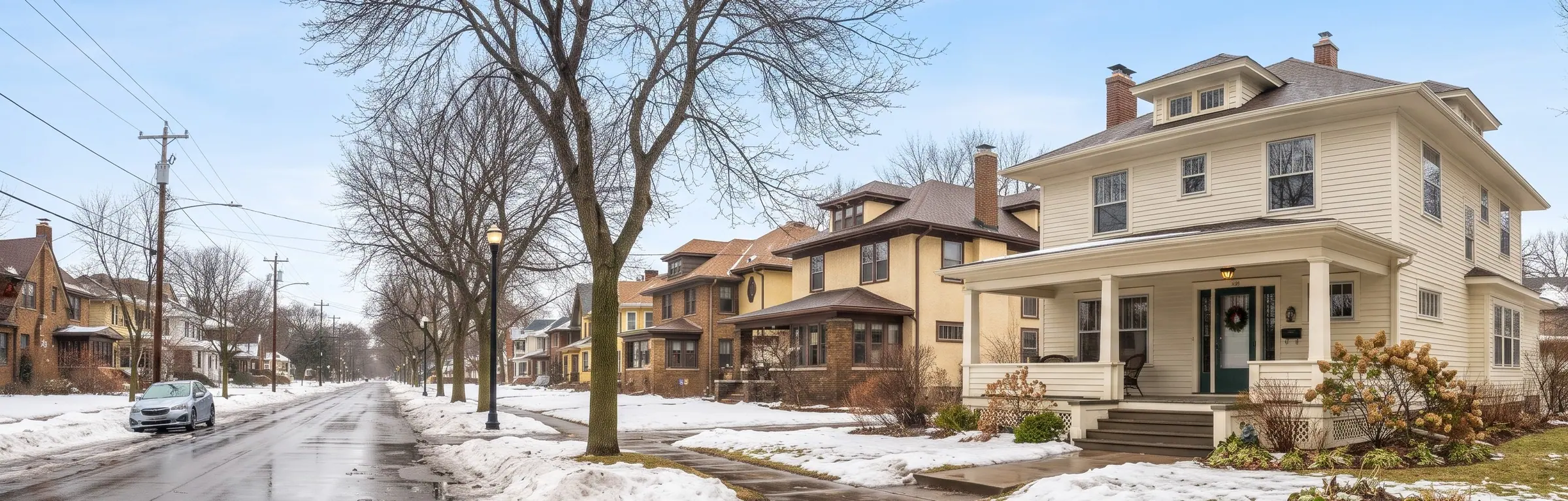

A supply line that froze during a subzero stretch can split inside a Minneapolis wall and stay hidden until the thaw sends water through it. In February 2019, Minneapolis firefighters answered 43 burst pipe calls in 24 hours after the metro rose above zero following 76 consecutive subzero hours, and a homeowner who finds a split has to pick a crew for water damage restoration before knowing how far the water traveled.
Minneapolis water damage restoration covers pumping out water, drying the structure and restoring the building under ANSI/IICRC S500, the Standard for Professional Water Damage Restoration published by the Institute of Inspection, Cleaning and Restoration Certification, and a firm that rebuilds across two or more building trades needs a license from the Minnesota Department of Labor and Industry. The Twin Cities average 51.2 inches of snow a year, and Minnesota Statute 72A.201 gives an insurer 10 business days to acknowledge a claim, so the order of the first phone calls matters.
Key insights
- Cost range. Most Minneapolis water damage jobs cost $1,800–$8,400, with an average near $4,600, while a sewage backup starts near $8,400 and a flood across several rooms reaches $12,000–$30,000 or more.
- Cold snap. On February 2, 2019, the Minneapolis Fire Department answered 43 burst pipe calls in 24 hours after 76 consecutive subzero hours, according to FOX 9, and the airport station averages 22.1 days a year with a low at or below 0°F.
- Claim clock. Minnesota Statute 72A.201 requires an insurer to acknowledge a claim within 10 business days and to accept or deny it within 30 business days unless it explains the delay.
- Burst pipe coverage. The Minnesota Department of Commerce says a standard homeowners policy typically covers burst pipe damage, with exceptions for a home left unoccupied without heat and for slow leaks.
- Contractor license. Minnesota licenses contractors who provide two or more of eight building skills, and drying and mitigation are not on the list, but a firm that also replaces drywall and flooring is providing two.
- Sewer backups. The city's 24-hour sewer hotline, 612-673-5625, sends a crew to assess a backup at no charge, and a blockage in the owner's private lateral is the owner's to repair.
The first two days after a burst
Four jobs fill the first two days after a Minneapolis pipe bursts: closing the valve where the water line enters the house, killing power to the wet area from a dry panel, documenting the damage, and booking a crew that dries to ANSI/IICRC S500 while the insurer gets notice. The valve comes first, because a split supply line keeps releasing water until someone closes it, and the phone calls, photographs and cleanup all wait for that.
 Send dated photographs of the stain to the adjuster along with the crew's written scope, and hold off on permanent repairs until the insurer has inspected, as the Minnesota Department of Commerce advises.
1. Close the valve where the line enters
Close the main shutoff, which ends the flow through a split line. If the valve will not turn, call a plumber before anything else, because every minute the line runs adds wet drywall.
2. Cut power from a dry panel
Turn off the main breaker or the wet area's breakers only from a panel on dry ground, because touching electrical equipment while the ground is wet is a shock hazard. If water stands near the panel or has reached outlets, stay out and call an electrician.
3. Lift furniture and electronics clear
Move electronics, paper and furniture legs off wet carpet, and leave soaked pad and drywall where they are so the crew can measure them. Clear floor lets the crew set equipment in the first hour.
4. Shoot dated photos of every wet surface
Photograph the split pipe, the water line on each wall, each wet room and each damaged item with the date on the files. The adjuster compares those photographs with the crew's written scope.
5. Phone the crew, then the insurer
Book an IICRC certified firm that dries to ANSI/IICRC S500, then notify the insurer the same day. Keep receipts for emergency repairs, rented equipment and any hotel stay.
The Minnesota Department of Commerce tells owners to notify the insurer immediately, keep receipts for emergency repairs and hold off on permanent repairs until the insurer has inspected the damage. The same advice warns against calling the loss flood damage, because a standard homeowners policy does not cover flood, so the claim should describe the loss as a burst pipe when that is what it was.
When a faucet runs weak in a deep freeze, the line may be frozen but intact, and the first job is to find the shutoff before the thaw so a split can be stopped within seconds. Safe thawing, with a hair dryer or a heating pad and never an open flame, is the work of a frozen pipe response, and a plumber is the safer call for a line that runs inside a wall.
A towel and a fan are enough for a spill of clean water found within hours on a hard floor. Anything that has reached carpet pad, drywall, insulation or a ceiling cavity needs a crew, because wet porous materials hold water after the surface feels dry, and a burst pipe that ran for hours or dropped water through a ceiling has usually passed the DIY line. The EPA tells people with asthma or weakened immune systems to stay away from moldy sites and not to take part in flood cleanup, and sewage is Category 3 under ANSI/IICRC S500, so the porous materials it soaks are removed and hauled away.
Minneapolis pricing by scenario and room
Minneapolis water damage jobs mostly cost $1,800–$8,400, with an average near $4,600. A spot found the same day can start near $400, a sewage backup starts near $8,400, and a flood through several rooms runs $12,000–$30,000 or more, since Category 3 water means crews bag and haul out every porous material it touched before drying starts.
 A plumber's pipe repair is billed separately from the restoration, so each quote should say which firm replaces the split section.
In May 2025, construction and extraction workers in the Minneapolis area earned about 20 percent more than the U.S. average, according to the Bureau of Labor Statistics. The water damage restoration cost on a Minneapolis bid moves with the water category, the number of wall and ceiling cavities a split pipe soaked, and the after-hours rate for a loss found at night in a hard freeze.
| Scenario | Estimates | What drives it |
|---|---|---|
| Minor spot mitigation | $400–$1,800 | A damp wall section or a spill caught the same day, with a few days of airflow |
| Supply line burst or frozen pipe split | $1,200–$3,600 | Clean water in one or two rooms that must be dried before it turns worse |
| Standard mitigation | $1,800–$4,800 | Extraction and drying over a whole floor with no demolition |
| Washing machine or dishwasher overflow | $2,400–$6,000 | Soapy water that spreads under flooring and wicks into cabinet bases |
| Roof leak during a storm | $3,000–$8,400 | Wet attic insulation and ceiling drywall, plus the time to reach the roof or attic |
| Mitigation plus basic repairs | $4,800–$8,400 | Drying followed by new drywall, trim and flooring in each affected room |
| Sewage backup | $8,400–$17,000+ | Category 3 water, so porous materials it reached are bagged and hauled out before drying |
| Storm flooding across rooms | $12,000–$30,000+ | Wall cavities opened, subfloor repaired and finishes replaced in each flooded room |
Crews price drying by the square foot of wet floor, so 300 wet square feet cost the same to dry in a 1,500 square foot house as in a 2,000 square foot one. The cost per square foot climbs with each water category, from $3.50–$4.75 for Category 1 to $8.50–$9.00 or more for Category 3, and the rebuild after drying is a second charge of $24–$45 per square foot of damaged area.
| 300 sq ft area | Estimates | Estimates per sq ft |
|---|---|---|
| Dry a Category 1 floor | $1,050–$1,425 | $3.50–$4.75 |
| Dry a Category 2 floor | $1,425–$2,325 | $4.75–$7.75 |
| Dry a Category 3 floor | $2,550–$2,700+ | $8.50–$9.00+ |
| Rebuild after drying | $7,200–$13,500 | $24–$45 |
Room prices follow the materials that got wet. A tiled bathroom with a vanity stays cheap, a kitchen adds cabinet bases and the dishwasher and sink lines, and a basement adds a concrete slab that holds moisture after extraction, so the dehumidifiers run more days there. Carpet, pad and furniture push a living room to the top of the list.
| Room | Estimates | What drives it |
|---|---|---|
| Bathroom | $600–$5,400 | A small tiled floor and vanity that dry fast |
| Laundry room | $1,200–$6,000 | A failed hose or drain while no one is home, spilling into the next room |
| Kitchen | $1,800–$9,600 | Cabinet bases, toe kicks and flooring beside the sink and dishwasher lines |
| Basement | $1,800–$12,000+ | A split pipe, sump failure or backup, then a slab and walls that stay damp for weeks |
| Living or family room | $3,900–$22,500 | The largest floor, with carpet, pad and furniture to move |
On a written quote, look for the water category, the hour extraction started, each wet room by square footage and the count of air movers and dehumidifiers with the days each will run. After-hours calls add 25–50 percent to daytime labor, and the plumber who replaces the split section sends a separate bill, since restoration pricing stops once the structure is dry. A bid that shows one lump sum with no equipment count or drying days cannot be compared line by line with another bid, so ask the crew to itemize it before anything is signed.
How a Minneapolis freeze becomes a loss
A Minneapolis freeze becomes a loss when a supply line in an exterior wall, an attic, a garage or a crawl space freezes during a subzero stretch and splits, and the split shows itself once water flows again. Minneapolis Fire's February 2019 burst pipe count was logged after the metro rose above zero, so the damage surfaced at the thaw.
 Water from a split line in an exterior wall can run down the cavity and surface at the baseboard, far from the break, so the valve gets closed before anyone looks for the leak.
The 1991–2020 Twin Cities normals published by the Minnesota Department of Natural Resources give the airport station 147.2 days a year with a low at or below 32°F and 22.1 days at or below 0°F, along with 31.62 inches of precipitation and 51.2 inches of snowfall. A winter loss therefore usually starts at a pipe, a roof or a drain, and the spring thaw adds meltwater to the list of ways water gets in.
| Water source | Category | What the crew faces |
|---|---|---|
| Split line in an exterior wall or attic | Category 1 | Clean water that runs through framing and insulation and gets worse the longer it sits |
| Washer or dishwasher line | Category 1 or 2 | A supply hose leaks clean water at first, and drain water brings soap and soil |
| Ice dam meltwater | Category 1 at first | Meltwater wets attic insulation and ceiling drywall, then turns worse inside the cavity |
| Sump failure or thaw seepage | Category 2 or 3 | Groundwater picks up soil and debris on the way in, so wet carpet and pad usually come out |
| Root-clogged sewer lateral | Category 3 | Sewage surfaces at the lowest drain, and porous materials it reaches are cut out and hauled off |
Meltwater from an ice dam enters under the shingles and soaks attic insulation and ceiling drywall, which is how a thaw can produce a ceiling stain in a house whose pipes never froze. Water from that route is clean at first and degrades inside the cavity, the same way water from a split supply line does.
Minnesota licensing for repair crews
Minnesota requires a residential contractor license for anyone who contracts directly with the owner of a one to four unit home to provide two or more of eight special skills, and drying, mitigation and mold work are not among the eight. The Minnesota Department of Labor and Industry lists the eight as excavation, masonry and concrete, carpentry, interior finishing, exterior finishing, drywall and plaster, roofing and general installation specialties, under its residential contractor licensing rules.
 A firm that finishes drywall and also lays flooring provides two of Minnesota's eight special skills, so it needs a Department of Labor and Industry license. Drying alone is not one of the eight.
A water crew that only extracts and dries sits outside that skill list, while a firm that also replaces drywall and lays flooring is providing drywall work and floor covering, which are two skills, and needs a residential remodeler or building contractor license. Specialty contractors who provide only one skill are exempt, except roofers, and a firm with annual residential receipts of $15,000 or less can hold a certificate of exemption under Minnesota Statute 326B.805.
Replacing the split section of pipe is plumbing work, which Minnesota Statute 326B.46 reserves for licensed plumbers and plumbing contractors. A homeowner may do plumbing work on a residence the homeowner owns and occupies unless a local ordinance forbids it, so the plumber who repairs the line and the crew that dries the wall can be two different companies, each with its own license to check.
A subcontractor who does not contract with the homeowner does not need the license but must register with the Construction Contractor Registration Program. The department says a contractor who offers a "license number" that begins with the letters IR holds only a registration, which gives the homeowner no consumer protection, and the lookup at dli.mn.gov/license-and-registration-lookup shows whether a real license number is active.
A homeowner who hires a licensed contractor gains access to the Contractor Recovery Fund, which reimburses direct out-of-pocket losses from a licensed contractor's misconduct after the homeowner wins a judgment, up to $75,000 per claim, and the fund is not available when the contractor is exempt from licensing. The fund does not reimburse attorney or court fees, and a homeowner must apply within two years of the judgment.
IICRC certification is a credential from the non-profit that publishes the S500 standard, and it shows training in water damage restoration without licensing the firm to rebuild. A homeowner who sees both an IICRC certificate and a Minnesota license number on the same contractor has confirmed that the crew knows how to dry the structure and that the firm is allowed to replace what the drying removed.
What a Minneapolis crew should show you
A Minneapolis crew should be able to show five things before it signs a work authorization or starts the emergency water damage response: an IICRC certificate, a written scope, a plan for proving the drying, a billing arrangement and a named firm for the rebuild. Each has a credible answer that a homeowner can check against a document.
 A crew with equipment at the door still needs to provide a written scope and billing terms before anything is signed.
Reviews record how quickly a crew arrived and how it handled billing, which makes them a second filter after the certificate and the written scope. When you choose a restoration company, compare each bid line by line against the same written scope items, because a bid that omits a wet room or an equipment count has not priced the same job.
| Ask the crew | Credible answer |
|---|---|
| Is the firm IICRC certified? | A firm certificate and a water damage technician certificate, with a plain explanation of why a supply line loss is Category 1 and a backup is Category 3 under ANSI/IICRC S500 |
| What does the written scope list? | The water category, the hour extraction started, each wet room and material with square footage, and the air mover and dehumidifier counts with the days each will run |
| How is drying proven? | Daily moisture readings on each wet material, a dry reference reading from an unaffected piece of the same material, and equipment that stays until the two match |
| Who bills the insurer? | A written answer on direct billing and the deductible, with any direction to pay signed only after the scope exists |
| Who rebuilds the walls and floors? | The same firm or a named second firm, with its Minnesota license number and a separate invoice for the rebuild |
A crew that cannot name the water category, the hour it started extraction or the days its equipment will run has not finished the assessment. A signed direction to pay should wait until the scope exists. The Minnesota Department of Labor and Industry's consumer guide also lists a contractor who offers to pay the insurance deductible, demands full or substantial payment before starting, or refuses a written estimate as a red flag.
Dry readings and the mold hand off
Drying ends when daily moisture readings on every wet material match a dry reference reading taken from an unaffected piece of the same material, the dry standard in ANSI/IICRC S500. The EPA says drying usually takes several days to weeks, and most jobs need 3–7 days of equipment, with repairs adding 1–3 weeks when drywall, flooring or framing was removed. A finished basement runs longer because the slab and the base of the wall framing release moisture slowly.
The drying log is the record that the job reached that standard. It lists each wet material's reading, the reference reading, the number of machines in each room and every change the crew made, and a crew that pulls machines before the readings match leaves a lingering odor and a return trip. The written scope should name the day repairs begin, which cannot come until the readings reach the standard.
The EPA says mold can grow on wood, drywall, carpet and furniture that stay wet for more than 24 hours, which is why drying has to start inside a day. A wall that still reads damp after the crew packs up, a musty smell that comes back or a stain that keeps widening shows the drying stopped early, so the next call is a mold assessment.
A late dry out in an attic after an ice dam leak or in a basement after a sump failure is the case most likely to need Minneapolis mold remediation, because mold work brings an assessment, containment and clearance testing and carries its own price. With the EPA's 24 hour mark as the line, a basement dried inside a day usually stays a water job, while one that stayed wet through a long weekend is the one to have assessed.
Minnesota claim clocks and exclusions
Under Minnesota Statute 72A.201, an insurer must acknowledge a water damage insurance claim within 10 business days and must accept or deny it within 30 business days after notice, unless it tells the policyholder why the investigation is not complete and when it expects to finish. The acknowledgment has to include the telephone number of a company representative who can help.
 The insurer's deadlines run from the date it receives notice, and the Minnesota Department of Commerce lists a home left unoccupied without heat as an exception to burst pipe coverage. Keep the heat on or drain the water before a winter absence.
Once the policyholder returns a properly executed proof of loss, the insurer has 60 business days to accept or deny the claim. The statute lists missing these deadlines among the acts that constitute unfair settlement practices, which is why the dates of the first call, the proof of loss and each reply belong in the claim file.
The Department of Commerce says a standard homeowners insurance policy typically covers water damage from burst pipes, but not when the house was left unoccupied without heat or when a slow leak ran over a longer period. Both exceptions apply in a freeze, so the thermostat setting and the date the leak was found go into the claim file next to the photographs.
Pushing back on a low or denied claim
Under Minnesota Statute 72A.201, a denial that rests on a policy provision, condition or exclusion has to cite that provision and has to be given in writing, so a verbal refusal or a vague letter does not meet the statute. A homeowner can set the cited provision beside the policy language and beside the cause the plumber and the crew recorded, which shows whether the insurer applied the exclusion to the right facts.
Documents answer a low offer better than phone calls do: the crew's written scope, the daily drying log and the dated photographs go to the adjuster together, because each answers a line of the insurer's estimate. Asking the adjuster to walk through the offer line by line shows which wet rooms, equipment days or materials were left out. An estimate that falls below the deductible produces no payment, and the deductible is printed on the declarations page.
A homeowner who thinks a deadline was missed can ask the Minnesota Department of Commerce, the state's insurance regulator, for help, and a homeowner facing a large or disputed loss can hire a public adjuster to prepare the claim. Keeping every request and reply in writing matters because the clocks in the statute run from notice of the claim and from the proof of loss.
Sewer backups and who owns the pipe
A Minneapolis sewer backup starts with a call to the city's 24-hour hotline at 612-673-5625, and a crew from Minneapolis Public Works assesses the backup at no charge. Normal hours run 7 a.m. to 3:30 p.m., and after hours the stand-by employee at 612-490-5568 typically arrives within a half hour, while 311 handles non-urgent follow-up.
 Water that backs up through a floor drain from the sewer is Category 3 under ANSI/IICRC S500 however clear it looks, so the porous materials it reaches are removed and the city's hotline is the first call.
If the blockage is in the City-owned sanitary sewer pipe, Sewer Operations fixes it, and if it is in the private sanitary lateral, the owner may need a drain cleaning service. The city says most backups occur when roots grow into a cracked or broken lateral, and it lists a poor-condition city pipe, ground movement and higher than normal rain as other causes. The city maintains about 830 miles of sanitary sewers.
When the city sewer caused the backup, staff open the blockage and restore flow, and they may photograph the flooded areas. The city tells owners to contact 311 about cleanup and advises hiring a professional cleaning company, because sewage in a basement is Category 3 and a sewage backup cleanup removes every porous material it touched before drying starts.
The owner can submit a claim for damages to City Risk Management, and the city says fault is generally worked out between insurance companies. A plumber's written finding on where the blockage sat belongs in the claim file with the crew's scope and the drying log, because that finding decides which insurer, or whether the city, answers for the loss.
Water that comes up a drain is a separate coverage question from a burst pipe. The Insurance Federation of Minnesota's spokesperson told WCCO in 2022 that a backup of sewer and drain endorsement covers basement damage from that water, at about $35 a year for about $5,000 of coverage with higher limits available, and that any homeowner with a sump pump should consider it. A homeowner can read the declarations page or ask the agent whether the endorsement is on the policy before a loss.
Permits for pipe and wall repairs
Minneapolis requires a plumbing permit to replace or install water piping, so swapping out a split section of supply line is permit work. The city's list of work exempt from a permit includes repairing leaking fixtures and water pipes in one and two family homes, provided conditions are sanitary and not hazardous and the work does not alter or replace the existing water supply line or plumbing piping system.
The same exempt work list names floor tile and carpeting, wallpaper and paint, and cabinets and countertops, and it does not mention drywall or plaster. Minnesota Rule 1300.0120 says application or notice to the building official is not required for ordinary repairs, but ordinary repairs do not include the opening or removal of any wall, partition or portion of a wall, so cutting open a wall to reach a split pipe falls outside that exemption under the rule's wording.
Individuals who own and live in a home can do their own plumbing work in Minneapolis and apply for the permit with a valid photo ID, while a corporation, an LLC or a partnership cannot apply as an owner. Contractors who apply for a building permit must show proof of a residential specialty contractor license or one of the state licenses the city lists.
The Minnesota Department of Labor and Industry lists a contractor who asks the homeowner to obtain the permits as a red flag, so the firm doing the work normally pulls them. Questions about whether a repair needs a permit go to the city's permit staff in Community Planning and Economic Development at 612-673-3000, and the exempt list itself invites owners to contact the city to confirm that a project needs none.
Minneapolis areas with repeat flooding
The city's own records tie two parts of Minneapolis to repeat flooding: the Cleveland neighborhood in north Minneapolis, where streets flood as often as every other year, and the Southwest Harriet area south and west of Lake Harriet, where the storm sewer was originally designed to carry only a 2-year storm. A 2024 Star Tribune report adds that the city's priority list puts flood-prone parts of Jordan and Cleveland in the most critical need for storm water work.
 The city's Cleveland project replaces aging storm water pipes from 2026 to 2028. Its study of Southwest Harriet estimated a full program of storm sewer fixes there at upwards of $72 million.
The city says it has completed computer modeling on about 90 percent of Minneapolis, and that the models flag flood-prone areas where it will focus future studies. Flooding complaints also help it identify problem areas, so a basement that takes street water belongs in a report to the city, and that record helps rank where storm sewer work goes first.
| Area | Risk factor | Notes |
|---|---|---|
| Cleveland, between 34th and 36th Avenues North and Xerxes and Queen Avenues North | Street and basement flooding | The city's flood mitigation project replaces aging storm water pipes, runs 2026–2028 and carries a $5 million state grant from the Minnesota Pollution Control Agency |
| Jordan | Flood-prone areas on the priority list | The Star Tribune reported in April 2024 that Jordan and Cleveland have the most critical need on the city's list |
| Southwest Harriet, 51st St and Abbott Ave | Undersized storm sewer | The city's model shows 19 primary buildings flooded in a 10-year storm and 40 in a 100-year storm, the most of any subarea in a 100-year storm |
| Southwest Harriet, 5000 blocks of Upton to Queen Aves | Low point and pump station | Steep streets drain to a low point served by the pump station at 50th St and Sheridan Ave, with 19 primary buildings flooded in a 10-year storm and 24 in a 100-year storm |
| Southwest Harriet, Penn and Oliver Aves | Alley storm sewer backups | The model shows 14 primary buildings flooded in a 10-year storm and 18 in a 100-year storm |
| Southwest Harriet, Knox, James and Irving Aves near Lynnhurst Park | Backyard drainage backing up | Backyard runoff cannot drain because pipes back up from 49th St, with 13 primary buildings flooded in a 10-year storm and 20 in a 100-year storm |
The city's 2018 Southwest Harriet flood mitigation study counts primary buildings, meaning homes, businesses and other community buildings, that its model puts in the path of storm sewer flooding: 76 in a 10-year storm, which has a 10 percent chance of happening in any year, and 125 in a 100-year storm. The model also puts 27,834 linear feet of streets under water in the 10-year storm, and because it relies on elevation data without a survey of building openings, the counts show where water is likely to collect and not confirmed damage.
The 35th Avenue North flood mitigation project includes a flood map for a 4.3 inch rain over 24 hours, a storm with a 10 percent chance of happening in any year, and the city says some streets there flood at least once during most years. Street water that enters a basement from outside is a flood loss, which a standard homeowners policy does not cover, so the dated photographs and the drying log should record where the water came in.
Tenants, condos and seller disclosure
A Minneapolis landlord must keep rental premises fit for their intended use and in reasonable repair, and the lease cannot waive that duty under Minnesota Statute 504B.161. The same statute requires heat at a minimum of 68°F in all places intended for habitation, including kitchens and bathrooms, from October 1 through April 30, so a rental that loses heat in the freeze season puts that covenant at issue.
 Minnesota law requires a landlord to supply heat of at least 68°F from October 1 through April 30. A renter without it should notify the owner first and contact 311 if there is no response.
A tenant can petition the court for emergency relief under Minnesota Statute 504B.381 when the landlord is responsible for the service and the unit has lost running water, hot water or heat, or when a condition poses a serious and negative impact on health or safety. The petitioner must attempt to notify the landlord at least 24 hours before applying, and the statute does not name flooding or mold.
Rent escrow under Minnesota Statute 504B.385 starts with written notice to the person or place where rent is normally paid, and a tenant who sees the violation uncorrected after 14 days may deposit the rent with the court administrator. A cited code violation follows the inspection route in 504B.185, where the local authority inspects at the tenant's request and the landlord gets a reasonable period to correct it.
Which renters rights apply to a leak turns on who owns the failed pipe, and a tenant's own furniture and clothing are covered only by a renters policy. The City of Minneapolis tells renters to ask the owner for repairs in writing and says the owner should respond and fix the issue within 14 days, and a renter who hears nothing back can contact 311 or Regulatory Services at 612-673-3000.
In a Minnesota condominium or other common interest community, the association is responsible for repairing and replacing the common elements and each owner for the owner's own unit, under Minnesota Statute 515B.3-107, unless the declaration says otherwise. For communities created on or after August 1, 2017, damage to a unit or to the common elements from an owner's or the association's lack of maintenance or failure to perform necessary repairs is the responsibility of whoever caused it, so a leak traced to a missed repair lands on the party that skipped it, and whether a given pipe belongs to the unit or the association depends on the declaration.
Before signing an agreement to sell, a Minnesota seller must make a written disclosure of the material facts the seller knows that could adversely and significantly affect an ordinary buyer's use and enjoyment of the property, under Minnesota Statute 513.55. Water is not named in the statute, but a known burst pipe loss or a wet basement fits the standard, and a written report by a qualified third party can relieve the seller of disclosing what it covers under 513.56, though the seller must still disclose known facts that contradict the report.
Prevention for subzero winters
Minneapolis pipe protection is finished before the first hard freeze, and most of it is cheap and done once: finding the shutoff, insulating the runs closest to outdoor air and keeping the heat on when the house is empty. Each of those steps limits how much water reaches the drywall and insulation before a crew can arrive and set equipment.
 Pour water in until the float lifts and the pump starts, then confirm the water leaves through the discharge line, because a line frozen shut leaves it sitting in the pit.
Drying inside a day matters for the same reason, because mold can start on drywall and carpet that stay wet past 24 hours. A loss found early and dried at once costs less than one discovered after a long weekend away, when the water has had days to spread into wall cavities and under flooring.
| Action | When | Why it works |
|---|---|---|
| Find and test the main shutoff | Before the first hard freeze | A stiff valve is found in October, not during a split line when every minute adds wet drywall |
| Keep the heat on or shut off and drain the water | Every winter trip | A heated house keeps supply lines above freezing, and draining the water leaves nothing in the pipes to freeze |
| Insulate pipes in exterior walls, attics, garages and crawl spaces | Before the first hard freeze | These runs sit closest to outdoor air and get the least heat when temperatures fall below zero |
| Disconnect hoses and drain outdoor spigots | Before the first hard freeze | Trapped water in a spigot line freezes and cracks the pipe inside the wall |
| Test the sump pump and its discharge | Each spring and before a thaw | A pump that quits during meltwater leaves the basement to fill with Category 2 or 3 water |
| Have the private sewer lateral checked for roots | When drains run slow | The city says most backups start when roots grow into a cracked or broken sanitary lateral |
A sump pump that quits during meltwater fills the basement with Category 2 or 3 water, so pour water into the pit to confirm the pump starts and check that the discharge line runs clear of ice. A sump pump failure during a thaw is a preventable loss, and a pump that runs but pushes water into a frozen line leaves the basement in the same state as one that has stopped.
Frequently asked questions
How much does water damage restoration cost in Minneapolis?
Most jobs cost $1,800–$8,400 and the average is about $4,600. Sewage backups start near $8,400, and floods across several rooms cost $12,000–$30,000 or more once wet carpet, pad and drywall are replaced.
How fast must a Minnesota insurer respond to a water damage claim?
Within 10 business days to acknowledge it. Under Minnesota Statute 72A.201 the insurer must also accept or deny the claim within 30 business days after notice, unless it explains why the investigation is not finished and when it expects to finish.
Does homeowners insurance cover a burst pipe in Minneapolis?
Usually yes, because the Minnesota Department of Commerce says a standard homeowners policy typically covers burst pipe damage, though not when the home was left unoccupied without heat or the damage came from a slow leak, so keep the heat on or shut off and drain the water when away.
Does Minnesota license water damage restoration companies?
Not for drying alone, because drying and mitigation are not among the eight special skills in the Minnesota contractor statute, while a firm that also replaces drywall and flooring provides two skills and needs a residential remodeler or building contractor license from the Department of Labor and Industry.
Who pays when the city sewer backs up into my Minneapolis basement?
It depends on the pipe, because a blockage in the City-owned sanitary sewer lets the owner submit a claim for damages to the city, which says fault is generally worked out between insurance companies, while a blockage in the private lateral is the owner's to repair.
How do I choose a water damage restoration company in Minneapolis?
Start with the IICRC firm certificate, then a written scope with the water category and equipment counts, and a daily drying log. Ask which firm rebuilds the drywall and flooring and what Minnesota license number it holds, and treat reviews as a record of response time and billing.
Does homeowners insurance cover flooding in Minneapolis?
No. The Minnesota Department of Commerce says a standard homeowners policy does not cover flood damage, so rising water from outside the house needs a separate flood insurance policy through the National Flood Insurance Program or a private insurer.
Is a Minneapolis landlord responsible for a burst pipe?
Usually yes. Minnesota Statute 504B.161 requires a landlord to keep rental premises in reasonable repair and bars the lease from waiving that duty, and a tenant can petition the court under 504B.381 when the unit loses running water or heat.
Who pays for a burst pipe in a Minneapolis condo?
It depends on whose pipe failed, because under Minnesota Statute 515B.3-107 the association repairs the common elements and each owner repairs the unit, and the declaration says which pipes belong to which.
Do I need a permit to repair a burst pipe in Minneapolis?
Sometimes, because replacing water piping needs a Minneapolis plumbing permit, while repairing a leaking fixture or water pipe in a one or two family home is on the city's permit exempt list when the work does not alter or replace the existing supply line and conditions stay sanitary and not hazardous.
Which Minneapolis neighborhoods flood most often?
Cleveland, in north Minneapolis, where the city says streets flood as often as every other year, and the Southwest Harriet area, where the city's model puts 125 homes, businesses and community buildings in the flood extent of a 100-year storm. A 2024 Star Tribune report adds that flood-prone parts of Jordan and Cleveland are in the most critical need on the city's priority list.
How long does water damage restoration take in Minneapolis?
Drying takes 3–7 days on most jobs, and repairs add 1–3 weeks when drywall, flooring or framing was removed. A concrete slab or basement wall that stays damp can extend the drying.
Does water damage restoration include mold removal?
No, mold work is quoted separately. Drying to the dry standard is meant to stop mold before it starts, and when materials stayed wet past it, mold after water damage calls for remediation with assessment, containment and clearance testing.
- IICRC S500
- EPA: Flood Cleanup to Protect Indoor Air and Your Health
- Minnesota DNR: Twin Cities normals, means and extremes (NCEI 1991–2020)
- Minnesota DLI: Residential contractor licensing
- Minnesota Statutes 72A.201: Unfair claims practices
- Minnesota Commerce: Insurance tips if your water pipes froze and broke
- City of Minneapolis: Sewer problems in the home
- FOX 9: Minneapolis Fire, 43 frozen pipes burst in 24 hours
- City of Minneapolis: Construction work exempt from permit
- BLS: Occupational Employment and Wages in Minneapolis-St. Paul-Bloomington, May 2025
Sam Hickerson is the founder of RestoreAdvisor and writes consumer guides on mold remediation, water damage restoration, inspection, testing, and home recovery. His work focuses on helping homeowners understand costs, risks, and when to call a professional. He draws on guidance from the EPA, CDC, IICRC, and other authoritative sources to make complex home issues easier to navigate.