
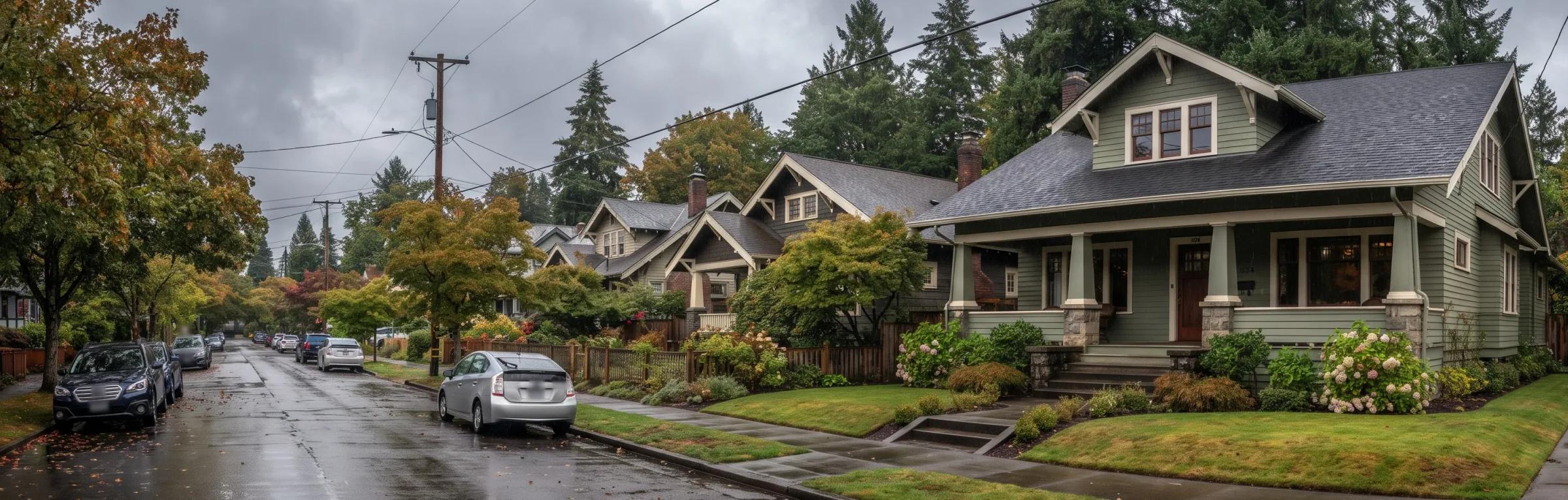

A Portland homeowner with water in the basement will hear from crews quickly, and in Oregon the first thing to ask any of them is the CCB license number. The Construction Contractors Board licenses restoration work, and each endorsement covers different tasks, so a bid that lumps extraction, demolition and rebuilding together can hide work the firm is not licensed to do. Reading the license on the first water damage restoration estimate matters as much as reading the price, and a sewer line repair needs a plumber with a separate license.
Portland water damage restoration is the work of extracting water, drying the structure and repairing what the water damaged to ANSI/IICRC S500, performed by contractors licensed under ORS 701.540 by the Oregon Construction Contractors Board (CCB). Most Portland losses start with a failed supply line, a leak during the long wet season or a sewer backup, and the records kept in the first two days decide how the claim and the repair go.
Key insights
- Cost range. Most Portland water damage jobs cost $1,900–$8,800, while sewage backups start near $8,800 and floods across several rooms reach $12,500–$31,500 or more.
- License rule. ORS 701.540 counts water removal after a flood, fire or other sudden event as restoration work that needs a CCB license, and repair, replacement of building components and demolition fall outside the restoration endorsement.
- Sewer line. The Bureau of Environmental Services (BES) says the property owner repairs the line from the home to the street and the City repairs its own sewer line.
- Valve program. In combined sewer areas subject to basement flooding, the resident pays the first $100 of a backflow valve and the City pays the next $1,500, against an installed cost of about $1,600.
- Rain and freezes. NOAA's 1991–2020 normals for Portland International Airport give 36.92 inches of precipitation a year on 157 days, and 31.7 days with a low at or below 32°F but only 1.3 days at or below 20°F.
- Claim clocks. An Oregon insurer must acknowledge a claim within 30 days and accept or deny it within 30 days after proofs of loss, and a denial must be in writing and cite the policy provision.
Portland restoration price ranges
A Portland water damage job usually costs $1,900–$8,800, and the average is about $4,800. Sewage backups start near $8,800 and floods across several rooms reach $12,500–$31,500 or more, since sewage forces the crew to tear out and disinfect first and dry second, and a small clean spill caught the same day can start near $400.
 Once carpet and pad are pulled, the crew can measure the wet floor area, and that square footage drives the per square foot mitigation charge on the estimate.
Construction and extraction wages in the Portland metro run about 126 percent of the U.S. average, according to the Bureau of Labor Statistics for May 2025. The water damage restoration cost on a Portland invoice moves with the water category, with a plumber's sewer line repair billed on its own invoice, and with how many flights of basement stairs a crew carries wet debris up.
| Scenario | Estimates | What drives it |
|---|---|---|
| Minor spot mitigation | $400–$1,900 | A single wet wall section or a spill mopped up the same day, with a few days of fans |
| Supply line burst | $1,300–$3,800 | Clean water in one or two rooms that has to be dried before it turns gray |
| Standard mitigation | $1,900–$5,000 | Pump-out and drying equipment over a whole floor, with no materials replaced |
| Washing machine or dishwasher overflow | $2,500–$6,300 | Soapy water that seeps beneath flooring and wicks into cabinet bases |
| Roof leak during a storm | $3,100–$8,800 | Wet attic insulation and ceiling drywall, plus access time on the roof or in the attic |
| Mitigation plus basic repairs | $5,000–$8,800 | Drying followed by replacement drywall, trim and flooring in every affected room |
| Sewage backup | $8,800–$17,500+ | Category 3 water means every porous material it touched is bagged and hauled away |
| Storm flooding across rooms | $12,500–$31,500+ | Cut-out walls, subfloor repair and new finishes in each flooded room |
Mitigation is billed on the wet floor area, so 300 wet square feet in a basement price the same under a 1,500 or a 2,000 square foot home. The cost per square foot climbs with each water category, and the rebuild is billed afterward at $25–$46 per square foot of damaged area.
| 300 sq ft area | Estimates | Estimates per sq ft |
|---|---|---|
| Dry a Category 1 floor | $1,125–$1,500 | $3.75–$5.00 |
| Dry a Category 2 floor | $1,500–$2,475 | $5.00–$8.25 |
| Dry a Category 3 floor | $2,625–$2,850+ | $8.75–$9.50+ |
| Rebuild after drying | $7,500–$13,800 | $25–$46 |
Each room carries its own mix of materials. Tile and a vanity make a bathroom cheap to dry, a kitchen adds cabinet bases and appliance lines, and a basement slab and its walls keep giving up moisture after the pumps stop, which adds equipment days. The living room costs the most because of the carpet, pad and furniture on its floor.
| Room | Estimates | What drives it |
|---|---|---|
| Bathroom | $600–$5,600 | Tile and a vanity on a small floor that dries fast |
| Laundry room | $1,300–$6,300 | A hose or drain that fails unattended and runs into the next room |
| Kitchen | $1,900–$10,000 | Cabinet bases, toe kicks and flooring around the dishwasher and sink lines |
| Basement | $1,900–$12,500+ | Sewer or storm water coming in, then a slab and walls that keep releasing moisture for weeks |
| Living or family room | $4,100–$23,500 | The biggest floor area, with carpet, pad and furniture to move out |
A line item estimate names the water category, the hour extraction started, every wet room, and how many air movers and dehumidifiers run for how many days. Daily meter readings are how a homeowner checks that each machine earned its daily charge. After-hours calls add 25–50 percent to a standard daytime rate, and a sewer line repair arrives as a separate plumber's invoice because the restoration price covers cleanup and drying only.
First 48 hours after a leak or backup
In the first 48 hours after water arrives, a Portland homeowner should stop the source, cut power to the wet area, get a plumber to name the cause, photograph everything and hire a crew certified for the water category. Sewage counts as Category 3 under ANSI/IICRC S500, so porous materials it touched are cut out and hauled away, and clean supply water stays Category 1 only until it has sat for about 48 hours. The EPA says mold can grow on wood, drywall, carpet and furniture that remain wet for more than 24 hours, so extraction on day one limits how much has to be replaced.
 A dated photo of the water line, taken before cleanup, shows the adjuster how high the water reached and gives the crew's moisture readings a baseline.
1. Stop the water at its source
Close the main shutoff valve for a supply line, and stop flushing and running drains when sewage is rising. The Portland Water Bureau tells owners with a burst pipe to close the main shutoff valve and turn off the water heater at its cold-water inlet, and its 24-hour dispatch line, 503-823-4874, requests an emergency shutoff when the valve cannot be reached.
2. Switch off power to the wet area
Turn off the breakers for the wet area only when the panel is dry and can be reached without stepping in water, and leave anything that sat in sewage unplugged. When the panel or outlets are wet, stay out and call an electrician.
3. Call a plumber before the City
BES says to call a plumber first to find the cause of a sewer backup, and the plumber's finding on whether the blockage sits in the line from the house to the street or in the City sewer decides who pays for the repair. A sewer odor or emergency can be reported to BES at 503-823-1700 at any hour.
4. Record the damage before anything moves
Photograph the water line on the walls, the backed-up drain and each damaged item, then keep every invoice for cleanup, hotel stays and rented equipment. The insurer and, in a City sewer case, Risk Management will ask for the same records.
5. Book a crew that can handle Category 3
Hire an IICRC certified firm with an active CCB number that will remove soaked carpet, pad and drywall before drying equipment goes in, and give the insurer notice the same day. Sewage is Category 3 under ANSI/IICRC S500, so anything porous it soaked is removed rather than dried.
An emergency water damage call starts with extraction, because water left standing in carpet, pad and wall cavities does the most harm in the first hours. Photographs taken before the crew moves anything are the record the insurer compares with the crew's written scope, which is why the crew should wait for them before porous materials go into bags.
How Portland homes take on water
Water gets into Portland homes from three directions: rain that soaks the roof, walls and foundation through a long wet season, sewer pipes that fill in heavy storms, and plumbing that fails inside the house. Each one lands in a different S500 category, and the source decides how much of the house has to come out.
 Overflow runs down the siding and can work behind the lap joints into the wall cavity, so a stain below the gutter line is a reason to check moisture readings from the inside.
At Portland International Airport, NOAA's 1991–2020 normals record 36.92 inches of precipitation a year on 157 days with 0.01 inch or more, and December, November and January bring 5.77, 5.45 and 5.03 inches. Lows reach 32°F or colder on 31.7 days a year but 20°F or colder on only 1.3 days, so deep freezes are uncommon while the wet season returns every year.
| Source | Category | What happens |
|---|---|---|
| Blocked or broken sewer line | Category 3 | Sewage rises at the lowest drain, usually a basement floor drain, shower or toilet |
| Combined sewer surcharge in a storm | Category 3 | Sewage and stormwater push back through fixtures lower than the next manhole upstream |
| Roof or exterior wall leak | Category 1 at first | Rain soaks insulation and drywall, then degrades as it sits in the cavity |
| Supply line or water heater | Category 1 | Clean water spreads under flooring and into walls until the valve is closed |
| Washing machine or dishwasher | Category 2 | Soap and soil in the water make carpet and pad hard to save |
| Pipe split by a freeze | Category 1 | Water shows when the thaw starts, often behind a wall or in a crawl space |
BES says many of Portland's older neighborhoods have a combined sewer system that carries sewage and stormwater in the same pipes, and it opens its backflow valve program only to combined sewer areas subject to basement flooding. A sewage backup in one of those homes sends Category 3 water through the lowest drain.
Portland's plumbing code requires an approved backwater valve on any fixture installed on a floor lower than the next upstream manhole cover of the public or private sewer. A basement bathroom or laundry sink in an older house can sit below that line, which is why the valve question belongs in the first conversation with a plumber.
The January 2024 freeze shows what a hard freeze does here. The Portland Water Bureau reported over 1,250 calls for service between Saturday, January 13, and midday Tuesday, January 16, and it warned that frozen pipes are more likely to burst as temperatures begin to thaw. A split pipe often shows itself only when the thaw starts, so the shutoff valve should be found before the forecast turns warmer.
Where DIY cleanup stops
Cleanup stops being a homeowner job once sewage is involved or the water has gone into a wall or subfloor. The EPA tells people with asthma or weakened immune systems to stay out of wet and moldy buildings, and it says children and pregnant people should not take part in flood cleanup at all.
A small spill of clean water that is found within hours and stays on a hard floor can be mopped up, aired out and checked with a moisture meter until the readings match a dry part of the house. Water that has reached carpet pad, drywall or insulation is a different case, as with a roof leak that soaks attic insulation, since those materials keep water inside long after the surface feels dry, which is when a crew should be called.
For sewage cleanup that falls to the owner, BES lists hiring a cleanup professional first and otherwise advises gloves, boots and rain gear, hot soapy water on surfaces and then a disinfectant of one part household bleach to ten parts water. Photograph each item before it goes out with the debris, write down what it cost, and keep hard goods such as metal shelving and glazed tile that can be washed and disinfected.
Which CCB license covers which task
A firm that removes water from a Portland home after a sudden event needs a license from the Oregon Construction Contractors Board, because ORS 701.540 counts nonroutine cleaning and water removal after a flood, fire or other sudden event as restoration work. A residential restoration contractor endorsement covers that work, while repair or replacement of building components and demolition fall outside it and need a residential general, specialty or limited endorsement.
 ORS 701.540 treats water removal, cleaning, inventory, debris removal without demolition and board-up as restoration work and excludes repair of building components and demolition, so ask which CCB number covers each line of a bid.
The restoration endorsement is the narrow one. ORS 701.540 bars the CCB from requiring the business practices test for it, and ORS 701.081 sets a $15,000 bond and $100,000 of general liability for the restoration services endorsement, which applies to residential and small commercial structures only. A firm with only that endorsement can board up, remove water and handle debris that needs no demolition, and anything past that belongs to a firm with a repair endorsement.
That split decides how a bid should read. A single firm can hold both endorsements, but a bid that includes cutting out wet drywall, replacing flooring and rebuilding a wall should name the CCB number that covers each task. Ask in writing which license covers demolition, because the statute excludes demolition of all or part of a structure from restoration work.
Oregon exempts casual, minor work with an aggregate price under $1,000 from the license requirement under ORS 701.010, and the exemption does not reach anyone who advertises as a contractor. Work on the sewer line has its own gate: PP&D says contractors who do plumbing need a license from the Oregon Plumbing Board, so the drying crew and the plumber are two separate credentials on two separate invoices.
Checking a crew before work starts
Verify a Portland crew by looking up its CCB number in the CCB license search, confirming an IICRC firm certificate, and reading the written scope and drying log terms before any equipment is set. The CCB search shows which endorsements the firm holds, so a restoration firm that quotes a rebuild can be checked against the license before it signs.
 Look up the CCB number in the license search before the crew sets equipment, because the endorsement it shows decides which tasks the firm can bid.
Online reviews show patterns in response time and billing, and they cannot show a license, a certificate or a scope. A firm with hundreds of reviews and a lapsed CCB number has not shown it can legally do the repair part of the job, so the reviews belong after the paperwork.
| Ask | Credible answer |
|---|---|
| What is the CCB number and endorsement? | The firm reads the number aloud and it matches the CCB license search, with an endorsement that fits the work: residential restoration contractor for water removal, residential general, specialty or limited for repair |
| Who removes and rebuilds wet drywall? | A named firm and CCB number for the demolition and rebuild, priced on its own line, since ORS 701.540 excludes both from restoration work |
| Does the firm hold IICRC certification? | A firm certificate and a lead technician certificate for water damage, and a crew that can explain its category call and drying goals under ANSI/IICRC S500 |
| Can I see the insurance certificate? | A certificate sent by the firm's insurance agent, with limits that meet what the CCB requires for the endorsement |
| What does the written scope say? | The water category, each wet room and material, the square footage of each, and the air mover and dehumidifier count with the days each will run |
| How will drying be logged? | Daily moisture readings for each wet material, the dry reference reading from an unaffected area, and equipment that leaves when readings reach the standard |
| Who repairs the sewer line? | A licensed plumber with a PP&D plumbing permit, billed separately from the drying |
| Who bills the insurer? | A written answer on direct billing, the deductible and a direction to pay, given before the equipment is set |
Bids that differ by more than a few hundred dollars usually differ in equipment counts or demolition scope, so the quotes should be read line by line when homeowners choose a restoration company. Whatever the firm answers should be written into the scope, since any balance that the insurer refuses to pay lands on the homeowner.
Drying logs and the repair timeline
A Portland drying job moves from pumping out standing water to setting air movers and dehumidifiers, then to daily meter checks until every wet material reads the same as a dry sample of its own kind. The EPA says drying usually takes several days to weeks, and equipment commonly runs 3–7 days before repairs begin, with repairs adding 1–3 weeks whenever materials were removed.
 Each reading is compared with a dry reference reading from an unaffected piece of the same material, and the log records both until the wet floor matches.
A sewage job reverses the order, with demolition and disinfecting in the first days and the drying equipment arriving afterward. Basements and crawl spaces take longest because slabs and low framing hold moisture, and a flooded basement can need 1–2 weeks of drying and 4–8 weeks to finish once repairs are counted.
The daily log records each wet material's reading, the reference reading from a dry area, the number of machines in each room and every change the crew made, and it is the proof that drying is finished. Baseboards, sill plates and the bottom of wall framing are usually the last to reach the standard, and machines pulled before they do leave a damp smell behind.
A written scope also sets the date repairs start, because repairs begin only after the readings reach the dry standard. When the equipment is billed per day, a crew that pulls machines early lowers the invoice and raises the chance of a second visit, so the log is the document both the homeowner and the insurer should hold at the end of the job.
Who pays after a Portland loss
Who pays depends on the water's source: a standard homeowners insurance policy answers sudden water such as a burst supply line, flood needs its own policy, and the City pays only when its own sewer system caused the backup. The plumber's written finding on where the water entered becomes part of the claim file, because the insurer decides which cause applies.
 A wide wall stain like this can read as long running seepage, which insurers may treat differently from a sudden burst, so record the day the leak was found and the day it started.
Oregon's claim rules set the clock the insurer works under. Under OAR 836-080-0225 an insurer must acknowledge a claim within 30 days of notice, OAR 836-080-0230 sets 45 days to complete the investigation unless it cannot reasonably be done in that time, and OAR 836-080-0235 requires it to accept or deny within 30 days after proofs of loss, in writing and with the specific policy provision it relies on.
| Water source | Who answers | If it does not |
|---|---|---|
| Burst supply line or appliance hose | Homeowners policy | Deductible, plus damage the insurer treats as gradual seepage |
| Roof or window leak in a storm | Homeowners policy | Damage blamed on poor maintenance is commonly excluded |
| Backup from the owner's sewer line | The policy's water backup wording, if any | Owner pays the line repair and the cleanup |
| Backup caused by the City sewer | A claim to the City through Risk Management | Owner pays, because the claim applies only when the City's system caused it |
| Rising water from outside | Flood policy | Owner pays, because most homeowners policies exclude flood |
A short offer can be answered with documents. The contractor's scope, the daily drying log and the photographs should go to the adjuster together, because each one answers a line in the insurer's estimate and shows which equipment days and demolition the crew recorded. Ask the agent before a loss whether the policy has any sewer or drain backup wording, because that one line decides who answers a sewer backup.
Sewer lines, valves and City claims
In Portland the property owner repairs the sewer line from the house to the street, and the City repairs its own line, so the plumber's finding on where the problem sits decides who pays. BES states that if the plumber finds a problem in the line from the home to the street, the repair is the property owner's responsibility, and if the problem is in the City sewer line, the repair is the City's.
 The plumber's written finding on where the blockage sits decides which side repairs it, and the same report is what a claim to the City's Risk Management rests on.
A claim for damage caused by a backup of the City's sewer system goes to Risk Management, whose liability claims line is 503-823-5101. The BES sewer backup instructions do not promise payment, and they do not say whether a backup caused by an owner's line qualifies, so the plumber's report and the City crew's paperwork are the documents a claim rests on.
BES also helps pay for the device that stops a repeat. A sewer backflow device is a one-way valve in the home's drain line, and residents of combined sewer areas subject to basement flooding may apply once per address. The resident pays the first $100, the City pays the next $1,500, installation typically costs about $1,600, and the reimbursement is taxable income.
After the work, the valve belongs to the resident, who is responsible for its maintenance and repair and for any future sewer backups at the address. Repairs to a sewer line need their own approvals, because the PP&D permit list includes installing or capping sewer lines, and the rough-in must pass inspection before it is covered.
Permits for Portland repairs
Portland Permitting & Development (PP&D) requires no building permit to replace interior wall, floor or ceiling coverings such as wallboard or sheet vinyl, but work on piping needs a plumbing permit. Even when a building permit is not needed, the project must meet the Building and Zoning Code requirements, and a plumbing permit carries its own inspections: a rough-in inspection before any piping is covered and a final plumbing inspection to close the permit.
PP&D's residential permit rules also exempt installing shelving and cabinets, removing and reinstalling a toilet when new floor covering goes in, and replacing accessible plumbing fixtures to make emergency repairs or to replace freeze-damaged or leaking concealed pipes of five feet or less. It requires a permit to move, remove or add walls, to repair hard-wired electrical systems, and to replace a water heater.
Framing repair is not addressed by name, so a rebuild that reaches studs, joists or a bearing wall should be confirmed with PP&D before the work starts. A property in a flood hazard area carries additional requirements, and the plumbing rough-in must be inspected before it is covered with floor, wall or ceiling material. Homeowners may do their own plumbing work when they are the recorded owner. The restoration firm and the plumber should say in writing who pulls which permit, since an uninspected rough-in has to be opened again before the wall is closed.
When wet materials turn moldy
A water loss becomes a mold job when materials stay wet past 24 hours or when the equipment leaves before the readings reach the dry standard. Wood, drywall, carpet and furniture are the materials the EPA names, so the speed of the first day's extraction sets how much of the house can stay.
Three signs point to mold work after a dry out: a basement that still reads damp once the machines are gone, a musty smell that comes back, and a stain that keeps spreading. Each one calls for an assessment of its own, and the drying log shows which areas had reached the dry standard and on what day. The EPA adds that when mold is already visible, fans and dehumidifiers should wait until the visible mold has been gently cleaned once, so the airflow does not spread it.
The drying log is where an assessor starts, and the timeline for mold after water damage depends on which materials stayed wet and for how long, so the firm that dried the house should hand over its readings. Moisture left in the framing is what a mold assessor looks for after a dry out.
A late dry out in a crawl space or a below grade room is the case most likely to need Portland mold remediation, since those spaces release moisture slowly and are the last to reach the dry standard. Remediation has its own assessment, containment and clearance testing, which is why it is quoted separately from the drying.
Portland areas by water risk
Portland's public records tie water risk to three named areas: St. Johns in north Portland, Lents along Johnson Creek, and the downtown waterfront. The sources are BES, USGS and the Oregon History Project, and they describe areas rather than individual houses; St. Johns and Lents are the two neighborhoods BES names in its sewer and creek work.
 A creek running this high can spill into adjoining yards, which is the private property flooding BES's West Lents floodplain project aimed to reduce.
A house in any other area can still have a blocked sewer line or a failed supply line, because those fail wherever the pipe runs. These three have a documented reason to ask what the public system did during a loss, or what the creek or river did, since flood water damage from outside the house is a different loss from a plumbing failure.
| Area | Risk factor | Notes |
|---|---|---|
| St. Johns | Combined sewer history | BES calls the St. Johns area of north Portland the site of its largest sewer separation project, built with new storm sewers to keep stormwater out of combined pipes |
| Lents, along Johnson Creek | Creek flooding on private property | BES's West Lents floodplain project, from SE 82nd to SE 92nd Avenues, aimed to reduce flooding on private property and finished in October 2025, and the Oregon History Project says clay soils south of the creek intensify flooding in heavy rain |
| Downtown waterfront | River flooding | In February 1996 more than 1,500 volunteers built a mile long wall of 40,000 sandbags to hold the Willamette out of downtown, and the lower deck of the Steel Bridge closed to traffic for nearly 48 hours, according to USGS |
A basement in any of these areas keeps releasing moisture from its slab and walls after the standing water is pumped out, so the drying log matters more there than in an upstairs room. BES also asks owners with continuing seepage or moisture in a basement to report it through its online survey.
Renters, buyers and sellers
A Portland tenant can ask the landlord to repair water damage, and a buyer can read a seller's water history on Oregon's disclosure form. ORS 90.320 requires a landlord to keep the dwelling habitable at all times, including effective waterproofing and weather protection of the roof and exterior walls, plumbing maintained in good working order, and floors, walls and ceilings in good repair.
The section sets no repair deadline, so a tenant should give written notice with dated photographs, and the renters rights that apply to a leak depend on who owns the failed pipe. A tenant's own belongings depend on a renters policy, if the tenant has one. Photographs of the damage, the date the landlord was told and the landlord's written reply make up the file that any later claim or dispute rests on, and the tenant should keep receipts for emergency costs such as a hotel stay or a rented wet vacuum.
On the seller's side, Oregon's property disclosure statement under ORS 105.464 asks whether the roof has leaked, whether there are moisture problems or areas of water penetration, especially in the basement, whether there are sewage system problems, and whether the property has had flood damage. The seller must deliver the form to each buyer who makes a written offer, and the buyer has five days from delivery to revoke the offer, a right the buyer can waive before signing the sale agreement. A yes on any of those questions is a lead for the buyer's inspector, and the seller's records of the repair, the drying log and any claim are the documents that answer it.
Prevention for Portland homes
Prevention in Portland starts with the drains and the gutters before the wet season, because the heaviest rain arrives from November through January. Most of the actions that protect a Portland house follow City guidance on the sewer line, the roof drainage and the water shutoff, and one covers the freezes that come on about 31.7 days a year.
 Open doors let room heat reach the pipes under the sink, and the Water Bureau says moving water is less likely to freeze.
For a frozen pipe that has not burst yet, the Water Bureau advises a hair dryer or heat lamp to thaw it safely. A line that has frozen once is worth insulating before the next freeze, since the same exposed run is the one most likely to freeze again.
| Action | When | Why it works |
|---|---|---|
| Keep wipes, grease and debris out of drains | Every day | BES says a sewer pipe plugged with wipes, garbage, debris or grease can back up |
| Maintain the backflow valve | Each fall | The resident owns the valve and is responsible for its maintenance and repair |
| Clear gutters and downspouts | Before November | The City advises making sure water runs away from your or your neighbors' foundation |
| Find the main shutoff valve | Before a forecast freeze | The Water Bureau says to close the main shutoff valve when a pipe freezes, leaks or bursts |
| Open cabinets and drip faucets | During a hard freeze | The Water Bureau advises leaving cabinets open and letting indoor faucets drip |
A shutoff valve that has never been turned may be stuck, so test it once a year, because the first minutes of a burst pipe decide how far the water spreads across the floor. Washer and dishwasher hoses that are cracked or bulging should be replaced before they split, since the Category 1 water they release degrades the longer it sits.
Frequently asked questions
How much does water damage restoration cost in Portland?
About $4,800, within a range of $1,900–$8,800. Sewage backups start near $8,800 and floods across several rooms reach $12,500–$31,500 or more, because soaked carpet, pad and drywall are removed and rebuilt.
How do I choose a water damage restoration company in Portland?
Check the CCB license number first, then the IICRC firm certificate, the insurance certificate and a written scope with daily drying logs. Reviews show response time and billing patterns, and the CCB license search shows which endorsement the firm holds.
What does water damage restoration include?
Extraction, drying and repair, in that order. Crews remove standing water, place air movers and dehumidifiers, read moisture meters daily until each material reaches the dry standard under ANSI/IICRC S500, and then rebuild what was removed, which needs a repair endorsement from the CCB.
Does Oregon require a license for water damage restoration?
Yes. ORS 701.540 counts water removal after a flood, fire or other sudden event as restoration work, and a firm that bids or performs it needs a CCB license with a residential restoration contractor endorsement or a residential general, specialty or limited endorsement. Work under $1,000 that is casual and minor is exempt for anyone who does not advertise as a contractor.
Does the City of Portland pay for sewage cleanup?
Only when the City's sewer system caused the backup. BES directs owners to call Risk Management's liability claims line at 503-823-5101 about that claim, so keep every cleanup invoice.
Can the City help pay for a backwater valve?
Yes, in combined sewer areas subject to basement flooding. The resident pays the first $100 of installation, the City pays the next $1,500, and installation typically costs about $1,600.
Does homeowners insurance cover flood damage in Portland?
No, because most homeowners policies exclude flood and rising water from outside the house needs a separate flood insurance policy, available through the National Flood Insurance Program or some private insurers. A burst supply line is a sudden event that the homeowners policy usually covers.
How long does an Oregon insurer have to respond to a water damage claim?
Thirty days to acknowledge the claim and thirty days after proofs of loss to accept or deny it. An insurer that needs more time must give its reason within those 30 days and update the claimant in writing every 45 days, and a denial must be in writing and cite the policy provision under OAR 836-080-0235, so a denied water damage claim starts with that written reason.
How long does it take for water damage to be repaired in Portland?
Expect 3–7 days of drying and then 1–3 weeks of repairs. Basements run longer because the concrete slab and the lower wall framing give up moisture slowly, and the machines stay until the meter readings match the dry standard.
- IICRC S500
- EPA: Flood Cleanup to Protect Indoor Air and Your Health
- NOAA NCEI: U.S. Climate Normals, 1991–2020
- Portland BES: What to Do After a Sewer Backup
- Portland BES: Report a Sewer Problem
- Portland PP&D: Do You Need a Permit for Your Home Project?
- Oregon CCB: License Types and Endorsements
- ORS 701.540: Residential restoration contractor
- OAR 836-080-0235: Standards for Prompt and Fair Settlements
- BLS: Occupational Employment and Wages in Portland-Vancouver-Hillsboro, May 2025
Sam Hickerson is the founder of RestoreAdvisor and writes consumer guides on mold remediation, water damage restoration, inspection, testing, and home recovery. His work focuses on helping homeowners understand costs, risks, and when to call a professional. He draws on guidance from the EPA, CDC, IICRC, and other authoritative sources to make complex home issues easier to navigate.