
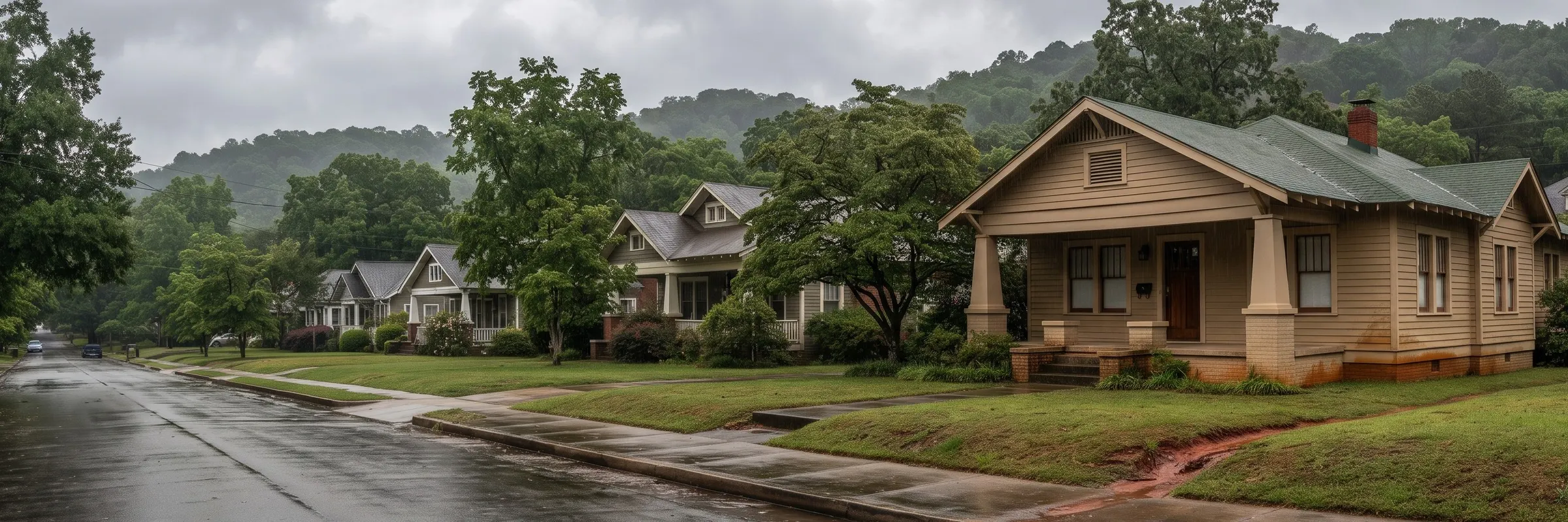

A Birmingham homeowner whose ceiling is stained after a storm can get one bundled bid, covering drying, tear-out and rebuild from the same company, and no license number anywhere on it. Alabama draws its license line at the repair work, not the drying, so the bundled bid is the document to read first before choosing a company for water damage restoration.
Birmingham water damage restoration is the removal of water, structural drying and repair of the building under ANSI/IICRC S500, the Standard for Professional Water Damage Restoration, and in Alabama a contractor who repairs a home for more than $10,000 needs a residential home builder license from the Alabama Home Builders Licensure Board. The state's claims regulation also gives an insurer 30 days after proof of loss to accept or deny a claim.
Key insights
- Cost range. A typical Birmingham job costs $1,300–$5,900 and averages about $3,200, a sewage backup runs $5,900–$11,500 or more, and flooding through several rooms reaches $8,400–$21,000 or more.
- License line. Alabama requires a residential home builder license for home repairs that cost more than $10,000, or more than $2,500 for roofing, and the licensing statute and rules never mention drying or water mitigation.
- Insurer deadlines. Alabama Regulation 482-1-125 gives an insurer 15 days to acknowledge a claim, 30 days after proof of loss to accept or deny it, and 30 days to pay once liability and the amount are agreed.
- Rain load. Birmingham's airport averages 56.62 inches of precipitation a year in NOAA's 1991–2020 normals, and FEMA records more than 20 floods on Village Creek in 20 years.
- Flood exclusion. The NAIC says homeowners policies do not cover flood damage, so creek water in a house needs a flood policy to be paid.
- Flood policy. A National Flood Insurance Program policy pays up to $250,000 for the building and $100,000 for contents and starts 30 days after purchase, so creek water needs a policy bought before the storm.
Birmingham job costs by scope and room
A typical Birmingham job costs $1,300–$5,900, with an average near $3,200. Water removal and drying on a spot caught the same day starts near $300, a sewage backup runs $5,900–$11,500 or more, and a flood through several rooms reaches $8,400–$21,000 or more, since the water category and the number of rooms decide how much material comes out of the house.
 A leak that stays at the cabinet base and baseboard keeps a bathroom job near the low end of its $400–$3,800 range, and water that reaches the subfloor or the next room pushes it higher.
In May 2025, construction and extraction pay in the Birmingham area stood at about 84 percent of the U.S. average, according to the Bureau of Labor Statistics. The water damage restoration cost on a Birmingham bid rises when creek water makes a job Category 3, because carpet, pad and lower drywall then come out, and when a storm leaves a roof opening that adds attic and ceiling work.
| Scenario | Estimates | What drives it |
|---|---|---|
| Minor spot mitigation | $300–$1,300 | One wet wall section or a spill caught in hours, with a few days of fans |
| Supply line burst | $800–$2,500 | Clean water in one wall cavity and the room beside it, dried before the 48 hour mark |
| Standard mitigation | $1,300–$3,400 | Water extraction and drying over a whole floor, with no demolition |
| Washing machine or dishwasher overflow | $1,700–$4,200 | Drain water that creeps under flooring and into cabinet bases |
| Roof leak during a storm | $2,100–$5,900 | Wet attic insulation and ceiling drywall, plus time to reach the attic |
| Mitigation plus basic repairs | $3,400–$5,900 | Drying, then drywall, trim and flooring replaced room by room |
| Sewage backup | $5,900–$11,500+ | Category 3 water means every porous material it touched is bagged out before drying starts |
| Storm flooding across rooms | $8,400–$21,000+ | Open wall cavities, subfloor repair and new finishes in each flooded room |
A drying bid follows the floor area that got wet, so 300 wet square feet price the same in a small bungalow or a large two story. The rate rises with the water category, and the cost per square foot runs $2.50–$3.25 for Category 1 and $5.75–$6.25 or more for Category 3, with the rebuild after drying billed separately at $17–$31 for each square foot of damaged area.
| 300 sq ft area | Estimates | Estimates per sq ft |
|---|---|---|
| Category 1 floor drying | $750–$975 | $2.50–$3.25 |
| Category 2 floor drying | $975–$1,650 | $3.25–$5.50 |
| Category 3 floor drying | $1,725–$1,875+ | $5.75–$6.25+ |
| Rebuild once dry | $5,100–$9,300 | $17–$31 |
The room sets the price through its materials. Tile and a vanity in a bathroom dry quickly, a kitchen adds cabinet bases and flooring around the sink and dishwasher connections, and a basement slab releases moisture long after extraction, so dehumidifiers stay longer. A living room reaches the top of the range because carpet, pad and furniture all need handling.
| Room | Estimates | What drives it |
|---|---|---|
| Bathroom | $400–$3,800 | A small tile floor and a vanity, both quick to dry |
| Laundry room | $800–$4,200 | A hose or drain that fails while the house is empty and runs into the next room |
| Kitchen | $1,300–$6,700 | Cabinet bases and flooring around the sink and dishwasher connections |
| Basement | $1,300–$8,400+ | Flood, sump failure or backup, followed by a slab and wall bases that hold moisture for weeks |
| Living or family room | $2,700–$15,500 | The biggest floor area, with carpet, pad and furniture to shift |
A night or weekend call carries a 25–50 percent premium on labor, and the plumber who repairs the failed pipe sends a separate invoice, since restoration work ends at the dry standard. A bid written as one lump sum with no equipment count conceals the part that varies most between companies, so it cannot be set beside a second quote line by line.
First 48 hours in a Birmingham home
In the first 48 hours, stop the water or leave its path, cut power to the wet rooms from dry footing, lift dry belongings out of reach, photograph the water line, and call a certified crew and the insurer the same day. Flood cleanup changes the order when the water comes from outside, because floodwater can carry bacteria, chemicals and other hazards, according to the EPA, and nobody should wade into it.
 Dated photographs record what the water reached before anything is moved, and Alabama's claims regulation gives the insurer 15 days after notice to acknowledge the claim.
1. Stop the flow or leave its path
Close the main shutoff when a pipe or appliance is the source. When rain or creek water is coming in from outside, move everyone above the water line and wait for it to recede before going into a flooded room.
2. Cut power before you step in
Shut off the breakers that serve wet rooms, reaching the panel only over a dry floor. If the panel sits in or beside standing water, do not touch it, and have an electrician cut the power.
3. Lift what is dry out of reach
Move electronics, papers and small furniture into a dry room, but leave soaked carpet pad and drywall where they are until the crew has measured them. Clearing the floor lets the crew place air movers as soon as they arrive.
4. Record the water line with the date
Photograph the stain line on each wall, each wet surface and every ruined item, and save the original files with their dates intact. The adjuster sets those pictures beside the crew's written scope.
5. Open the claim and book the crew
Call the insurer the day the water arrives and write down the time and the name of the person on the phone. Book a crew certified by the IICRC that dries to ANSI/IICRC S500, and keep receipts for emergency repairs and rented equipment.
When a homeowner can handle the cleanup
A small spill on a hard floor, wiped up within hours, can be handled with towels and a fan. Water that has reached carpet pad, drywall, insulation or a ceiling cavity needs a crew, and an emergency water damage call placed the same day keeps a small stain from turning into a wet wall. Floodwater is a bigger step, because the EPA calls flood cleanup difficult and dangerous work, says people with asthma or weakened immune systems should not take part, and says children and pregnant people should stay out of it. Water that came up a floor drain is sewage and belongs to a crew.
Power loss after a storm adds a second hazard. The EPA says a fuel-powered generator belongs outdoors and at least 20 feet from buildings because it gives off carbon monoxide, a gas that cannot be seen or smelled and can kill within minutes, and it should never run in a garage, shed or other enclosed space.
Where Birmingham water comes from
Water gets into Birmingham homes from creeks and storm runoff, roof openings after heavy rain, and plumbing or appliance failures that can happen in any house. NOAA's 1991–2020 normals put Birmingham's airport at 56.62 inches of precipitation a year, and the same NOAA normals count 47 days a year with a low at or below 32°F, 6.2 days at or below 20°F and 17.7 days with an inch or more of rain.
 A blocked culvert can back creek water up onto nearby yards, and once that water reaches a floor or wall it is Category 3 under ANSI/IICRC S500.
On Village Creek, FEMA's loss avoidance study counted 735 acquisitions and describes a floodplain with about 4,574 residential dwellings, 196 commercial and industrial structures and 87 institutional structures. FEMA lists structures in the floodway, undersized culverts and bridges, debris build-up and roadbed erosion among the causes, and records more than 20 floods in the previous 20 years.
| Water source | Category | What the crew faces |
|---|---|---|
| Split supply line or failed appliance hose | Category 1 | Clean at first, but it spreads through framing and insulation and degrades the longer it stays |
| Condensate from an air handler | Category 1 | A slow drip that stains ceilings and soaks insulation before anyone sees it |
| Roof opening after a storm | Category 1 or 2 | Rain that soaks attic insulation and ceiling drywall and picks up debris on the way |
| Creek or street water entering the house | Category 3 | Floodwater that carries soil and contamination, so wet carpet, pad and lower drywall are removed |
| Sewage through a floor drain | Category 3 | Sewage rises at the lowest drain, and the carpet, pad and drywall it touches are cut out and removed before drying |
A shingle that lifts in a storm or a tarp that shifts lets water into attic insulation, and the stain shows on a ceiling days later. Rain through a roof opening is a Category 1 or 2 loss when it enters and degrades as it moves through materials, so the same-day call matters even when the stain looks small.
Cold is the occasional cause. A burst pipe from a supply line in a garage, attic or crawl space is the usual result of a hard freeze, and the water runs only after the ice melts. Locating the shutoff valve before a cold snap, instead of during one, lets a homeowner stop a split line within seconds, and a line in an unheated space is the first to check.
Alabama licensing and permits
Alabama requires a residential home builder license for repairs to a home that cost more than $10,000, or more than $2,500 for roofing, and drying is not named in the license rules. The Alabama Home Builders Licensure Board issues the license, and its statute and rules define the work as construction, repair, improvement or reimprovement of a residence of no more than three floors and four units.
 A plumber works under a separate plumbing license, so the pipe repair and a rebuild over $10,000 can be two companies with two credentials to check.
The board's rules split the license in two. A limited license covers work that does not affect the structure and does not involve more than one trade, and an unlimited license is required when the work affects structural integrity or involves more than one trade. A rebuild that affects the structure calls for the unlimited license, so the contractor should say in writing which license covers the bid and give its number.
An owner who acts as their own contractor on their own home does not need a license, and a person licensed by the state for another trade, such as plumbing, can work within that license. Manufactured homes sit under the Alabama Manufactured Housing Commission instead. The statute never names a drying company that does no rebuilding, which is why the line falls on the repair contract.
An unlicensed builder cannot go to court to enforce the contract, the work is a Class A misdemeanor, and the board can fine up to $5,000 per violation. Before work begins, a licensed builder must also disclose in writing whether it carries liability insurance. A builder without it needs the homeowner's signature and a witness, and the written disclosure is a document worth keeping with the scope.
IICRC certification is a separate credential from the nonprofit that publishes S500, and it shows a crew knows how to dry. The license is what lets a firm rebuild, so a bid that bundles drying with repairs above $10,000 needs the certificate for the first part and the license number for the second.
Permits follow the license, and the statute tells building officials to refuse a permit for any undertaking that requires a license unless the applicant shows one. From January 1, 2027, a builder who renovates or repairs a home must also follow the adopted residential building code. When the city asks, the builder must also list its subcontractors with their addresses and phone numbers within 15 days after the permit is issued, which shows a homeowner who is working on the house.
Birmingham's Technical Code, effective October 1, 2024 and built on the 2021 International codes, requires a permit to alter or repair a building and to repair or replace a plumbing or electrical system. It exempts painting, papering, carpeting, cabinets, countertops and similar finish work in single family homes, and roof shingles, gutters and downspouts on one and two family homes outside historic or design review districts. Section 103.1.3 also lets the building official approve ordinary minor repairs without a permit. Drywall replacement is not named in the exemptions, so confirm it with the Department of Planning, Engineering & Permits at 205-254-2904 before walls are opened.
Hiring a Birmingham crew
Before a Birmingham water damage company starts drying or signs a work authorization, confirm eight things: the IICRC certificate, references, the Alabama license, the liability insurance disclosure, the water category, the equipment plan, the moisture log and the billing terms. Each can be checked against a document, and a company that will not put one in writing has not finished assessing the house.
 A crew should name the water source in writing because the source sets the category: rain through a roof opening is Category 1 or 2, and creek water entering the house is Category 3 under ANSI/IICRC S500.
When you choose a restoration company, compare every bid against the same scope, and ask each company to put the water category, the equipment count and the license number in writing. A quote that leaves out a wet room or an equipment count is pricing a smaller job than its neighbor, and a quote given by phone without a walkthrough prices a house nobody has seen.
| Ask | Credible answer | Red flag |
|---|---|---|
| IICRC certificate | A firm certificate and technician certificates in the company's name | A logo on a truck with no document |
| References | Recent customer references and a certification from a body the EPA lists, such as IICRC, ACAC, AIHA or NEHA | No references, or testimonials that cannot be checked |
| Alabama license for repairs | A license number for any rebuild over $10,000, checked with the board | "We don't need one" on a large bid |
| Liability insurance | A written disclosure in the contract or an addendum | A verbal assurance only |
| Water category | Named in the scope with the source, such as a roof opening or creek water | "Just water" |
| Equipment plan | Air movers and dehumidifiers counted per room, with days | A lump sum |
| Moisture log | Daily readings per material against a dry reference | Equipment pulled with no readings |
| Billing | Direct billing terms and a deductible plan in writing | A request to sign over the claim before a scope exists |
Keep the signed scope, the license number, the liability insurance disclosure and each day's moisture log together in one folder, because the insurer's adjuster and any later contractor will ask for the same documents. Pay the final invoice only after the log shows every wet material at the dry standard.
Dry standard, timeline and mold
Drying equipment commonly runs 3–7 days, and a job is done when each wet material reads the same as a dry sample of that material from an unaffected part of the house, which is the dry standard in ANSI/IICRC S500. The EPA says a flooded house usually takes several days to weeks, so a crew that removes machines after one or two days has quit early.
 Equipment stays until every wet material matches a dry reference sample, so a cabinet base that still tests damp is a reason to keep the machines running.
The daily log records each material's reading next to its reference, the machines placed in every room and each change the crew made, and repairs start only once the numbers match. Rebuilding commonly adds 1–3 weeks when drywall, flooring or framing came out, and a finished basement takes longer because the slab and the bottom of the wall framing release moisture slowly. A written plan with a day count for each room is how a homeowner can check that.
The EPA warns that mold can grow on wood, drywall, carpet and furniture left wet for more than 24 hours. Readings that stay high after the crew leaves, a musty odor in a dried room or a stain that keeps spreading point to drying that ended too soon. Wet materials that pass that mark lead to mold after water damage, which calls for an assessment, containment and clearance testing, and a mold contractor will want to see the water job's reading log first.
Alabama claim clocks and coverage
An Alabama insurer must acknowledge a first party claim within 15 days, tell the policyholder within 30 days after proof of loss whether it accepts or denies the claim, and pay within 30 days once it accepts liability and the amount is agreed. Those clocks come from Regulation 482-1-125 of the Alabama Department of Insurance, which sets standards for property and casualty claims.
 A National Flood Insurance Program policy covers installed basement equipment such as furnaces and sump pumps, plus washers and dryers. Most other belongings kept in a basement are not covered, so anything valuable belongs upstairs.
The regulation says the 30 day periods run "or the number of days specified in the policy," so the policy's own wording can change a clock, and the declarations page and the claims section are worth reading before a loss as well as after. The clocks start from the insurer's receipt of notice or proof, which is why the time and name of the person who took the first call belong in the claim file.
| Clock | Limit | Starts when |
|---|---|---|
| Acknowledge the claim | 15 days | The insurer receives notice of the claim |
| Accept or deny | 30 days | The insurer receives proof of loss |
| Insurer asks for more time | 30 days, then every 45 days | The insurer receives proof of loss, and updates follow every 45 days from the first notice |
| Pay | 30 days | The insurer accepts liability, the amount is agreed and documents arrive |
Flood is the coverage gap that matters most near Birmingham's creeks. The NAIC consumer guide says homeowners policies do not cover flood damage and that a National Flood Insurance Program or private policy does, and that a lender will usually require flood insurance on a home in a flood plain. Water from a split pipe or a storm opening in the roof is a different loss under the same homeowners policy.
FEMA's FloodSmart site lists National Flood Insurance Program limits of $250,000 for the building and $100,000 for contents, and a new policy takes effect 30 days after purchase unless it is bought with a mortgage that is new, increased, extended or renewed, or at a coverage change on renewal. A policy bought after a storm warning does not cover that storm, so the time to check coverage is before the rain.
| Loss | NFIP policy | Detail |
|---|---|---|
| Creek or street water in the house | Covered | Flood damage to the building up to $250,000 and to contents up to $100,000 |
| Sewer backup from flooding | Covered | The backup must be a direct result of the flood |
| Sewer backup from clogged pipes | Not covered | A backup without flooding falls outside the policy |
| Roof leak or wind-driven rain | Not covered | Water entering from the top down is excluded |
| Basement | Limited | Installed furnaces, central air, sump pumps and outlets are covered, as are washers, dryers and freezers, but other belongings kept in a basement are not |
| Mold | Not covered | NFIP policies do not cover damage from mold |
When an Alabama insurer pays low
When an Alabama insurer pays low or denies a water claim, the homeowner can ask for the denial in writing with the policy provision it relies on, and for storm damage the Department of Insurance can arrange a mediation conference. Regulation 482-1-125 bars an insurer from denying a first party claim on a provision, condition or exclusion unless the denial refers to it, and a policyholder who asks for a written denial is owed a mailed copy within a reasonable time.
Alabama's mediation rule covers residential property claims from hurricanes, tropical storms, tornadoes and other disasters, and it applies when the Insurance Commissioner issues a bulletin saying so. Where it applies and the dispute is $500 or more, an insurer that has not resolved the claim must mail a notice of the right to mediate within 60 days after receiving it, the homeowner can request the conference through the Department's Consumer Services Division at 334-241-4143 once 21 days have passed from the notice, and the insurer pays the $350 mediator fee.
At the conference the homeowner can bring an adjuster, appraiser or contractor, attorneys may not attend, and a settlement can be rescinded within 3 business days if the check has not been cashed. The homeowner keeps every other right under the policy and the law. A denied claim outside a declared disaster follows the same paper trail: the drying log, the written scope and the dated photographs record how far the water went and how long materials stayed wet.
Birmingham areas by flood history
Ensley, Tarrant, the airport area and Forestdale show up in NWS Birmingham and FEMA records of creek and flash flooding, with dated events behind each entry. Those are the areas that FEMA and NWS records name, and other neighborhoods flood too, because a house on high ground near a creek can still take water through a roof or a pipe.
 FEMA counted 735 acquisitions along Village Creek, where the floodplain holds about 4,574 residential dwellings, so a home near the creek is worth a flood policy check.
A short, intense burst of rain is what the National Weather Service describes on July 24, 2017, when nearly stationary storms dropped 2–3 inches in one hour and the airport recorded 3.64 inches for the day. NWS says much of that flooding came from Fivemile Creek and Village Creek overflowing. On June 19–20, 2021, remnants of Claudette brought 4.5–6.5 inches of rain across areas along and north of I-59/20, and NWS reported flash flooding across central Alabama, including Birmingham.
| Area | Risk factor | Notes |
|---|---|---|
| Ensley | Village Creek | FEMA's acquisition project covered part of Ensley, and NWS photographed Village Creek in Ensley during the June 2021 flooding |
| Tarrant | Village Creek and Fivemile Creek | NWS lists Highway 79 in downtown Tarrant among the flooded roads of July 2017 |
| Airport area | Short, intense rain | The airport recorded 3.64 inches on July 24, 2017, and NWS lists streets near the airport among the flooded spots |
| Forestdale | Flash flooding | NWS shows Pebble Creek Parkway in Forestdale among the June 2021 flooding photos |
| Tallapoosa Street | Flash flooding | NWS names the street in its photos of both the 2017 and 2021 events |
Once water crosses a threshold, a flood damage loss is Category 3, and the same-day photograph of the water line shows the insurer or the flood program how high it rose. A home in one of these areas is worth a flood policy check before the next storm.
Renters, condos and buyers
Reporting comes first for all three: a tenant writes to the landlord, a condo owner checks the declaration and tells the association, and a buyer reads the walls before the paperwork. Dated photographs help each one, because every claim and every negotiation turns on when the water arrived and what it reached.
The renters rights that apply depend on the lease and on who owns the failed pipe, and the tenant's own furniture and clothing are covered only when the tenant carries a renters policy. A written repair request with photographs fixes the date the landlord was told. Receipts for any emergency step the landlord approves in writing are easier to recover with that approval on paper.
In a condo the line between the owner's loss and the association's loss follows the pipe. Who repairs a leak from a shared stack or the roof depends on the condominium's declaration and bylaws, so the owner should read both and notify the association in writing. The association's master policy and the owner's policy answer different parts of the same event, so each claim should be opened the same day as the loss.
Before closing on a Birmingham house, look at the walls: tan rings at a baseboard, patched drywall, one freshly painted wall or a damp smell each raise a question. Ask the seller for the plumber's invoices, the drying log and the insurance claim history, and compare the answers with what the house shows. A paint patch that bleeds a tan ring at the baseboard says the wall got wet again after it was painted.
Prevention for rain and creek season
Birmingham homeowners can lower the odds and the size of a loss with five steps: clear gutters and extend downspouts, check the roof after every storm so a roof leak is caught early, test the shutoff valve and replace old hoses, insulate lines before a cold snap, and review flood coverage. Each limits how much water reaches drywall and insulation before a crew arrives.
 The extension should carry roof water well past the foundation, because water released beside the wall runs back toward lower walls and crawl spaces.
NOAA's 1991–2020 normals count about 118 days a year with measurable precipitation at Birmingham's airport, including 3.7 days with two inches or more, so gutters, downspouts and roof surfaces get tested many times a year. NWS Birmingham puts the average first freeze at November 9 and the average last freeze at March 25, which makes October the practical month for insulating pipes and draining outdoor spigots.
| Action | When | Why it works |
|---|---|---|
| Clear gutters and extend downspouts away from the foundation | Before spring storms | Roof water that lands beside the house enters lower walls and crawl spaces |
| Look at the roof and any tarp after each storm | After every hard rain | A lifted shingle or a shifted tarp lets rain reach attic insulation within hours |
| Find and test the main shutoff, and replace old supply hoses | Once a year | A valve unused for years can stick, and a split hose leaves no time to learn that |
| Insulate pipes in garages, attics and crawl spaces, and drain outdoor spigots | Before the first cold snap | These runs get the least heat, and a full spigot can crack the pipe behind the wall |
| Read the flood coverage on the policy and photograph belongings | Each renewal | Homeowners policies exclude flood, and photographs make a claim faster |
A frozen pipe in a Birmingham garage can split during a hard freeze and show up as a leak when it thaws. Thaw one with a hair dryer or a heating pad and never an open flame, and call a plumber for a line inside an exterior wall, because heat in the wrong place damages the pipe and the wall around it.
Frequently asked questions
How much does water damage restoration cost in Birmingham?
Most jobs cost $1,300–$5,900 and the average is about $3,200. Sewage backups run $5,900–$11,500 or more, and floods across several rooms cost $8,400–$21,000 or more when wet carpet, pad and drywall must be replaced. On the cost per square foot, drying runs $2.50–$3.25 on clean water and $5.75–$6.25 or more on Category 3.
Does Alabama require a license for water damage restoration?
Not for drying by name, because the Home Builders Licensure Board's statute and rules do not mention water mitigation or drying. A contractor who repairs or rebuilds a home for more than $10,000 needs a residential home builder license, and a roofer needs one above $2,500.
How long does an Alabama insurer have to pay a water damage claim?
Within 30 days after accepting liability and agreeing on the amount, or the time the policy specifies. Under Alabama Regulation 482-1-125 the insurer must also acknowledge a homeowners insurance claim within 15 days and tell you within 30 days after proof of loss whether it accepts or denies the claim.
Can an Alabama insurer deny a water damage claim without explaining?
No, the denial has to point to the policy provision, condition or exclusion it relies on. If the insurer denies by phone, you can ask for a written denial, and the regulation says it must be mailed within a reasonable time.
Is there mediation for a disputed water claim in Alabama?
Yes, when the Insurance Commissioner has issued a bulletin saying the mediation rule applies. Alabama Regulation 482-1-135 covers disputed residential property claims from hurricanes, tropical storms, tornadoes and other disasters, the insurer pays the $350 mediator fee, and the homeowner can request the conference through the Department of Insurance's Consumer Services Division at 334-241-4143 after the insurer's mediation notice.
How long does a new flood insurance policy take to start?
30 days after the date of purchase, according to FEMA's FloodSmart site. The wait does not apply when the policy is bought while making, increasing, extending or renewing a mortgage, or when coverage is changed at renewal.
Does homeowners insurance cover creek flooding in Birmingham?
Usually not, because the NAIC says homeowners policies do not cover flood damage. Creek or street water that enters a house is a claim for a National Flood Insurance Program or private flood policy, and water from a burst pipe or a storm opening in the roof is a separate question under the homeowners policy.
How fast can mold start after water damage in Birmingham?
Within 24 hours, according to the EPA, on wood, drywall, carpet and furniture that stay wet. A crew that has not dried those materials by the end of the first day should explain why, and a wall that still reads damp when the equipment leaves needs a mold assessment, followed by Birmingham mold remediation if growth is confirmed.
How long does water damage restoration take in Birmingham?
Drying equipment commonly runs 3–7 days, and repairs commonly add 1–3 weeks once drywall, flooring or framing has been cut out. The EPA says drying a flooded house usually takes several days to weeks.
What happens if an unlicensed contractor repairs my Birmingham home?
The contractor cannot sue to enforce the contract. Alabama law makes residential home building without a license a Class A misdemeanor, lets the Home Builders Licensure Board fine up to $5,000 per violation, and tells building officials to refuse a permit to an applicant who cannot show a license.
Does Birmingham require a permit for water damage repairs?
Often yes. Birmingham's Technical Code requires a permit to alter or repair a building and to repair or replace plumbing or electrical systems, and it exempts finish work such as painting, carpeting, cabinets and countertops in single family homes. Ask the Department of Planning, Engineering & Permits at 205-254-2904 about drywall and other repairs before walls are opened, and expect to show a license where Alabama law requires one.
How do I choose a water damage restoration company in Birmingham?
Check the IICRC firm certificate first, then get a written scope that names the water category and counts every machine, along with a daily moisture log. When the repairs will pass $10,000, ask for the Alabama builder license number and the written liability insurance disclosure.
- IICRC S500
- EPA: Flood Cleanup to Protect Indoor Air and Your Health
- NOAA NCEI: U.S. Climate Normals, 1991–2020 (Birmingham Airport)
- BLS: May 2025 Occupational Employment and Wages, Birmingham-Hoover metropolitan area
- FEMA: Loss avoidance study of Birmingham, AL acquisitions
- NWS Birmingham: Localized flooding of July 24, 2017
- Alabama Department of Insurance: Regulation 482-1-125
- Alabama Home Builders Licensure Board: statute and rules effective October 1, 2026
- City of Birmingham: Technical Code, effective October 1, 2024
- FEMA FloodSmart: Buy a flood insurance policy and start a claim
Sam Hickerson is the founder of RestoreAdvisor and writes consumer guides on mold remediation, water damage restoration, inspection, testing, and home recovery. His work focuses on helping homeowners understand costs, risks, and when to call a professional. He draws on guidance from the EPA, CDC, IICRC, and other authoritative sources to make complex home issues easier to navigate.