
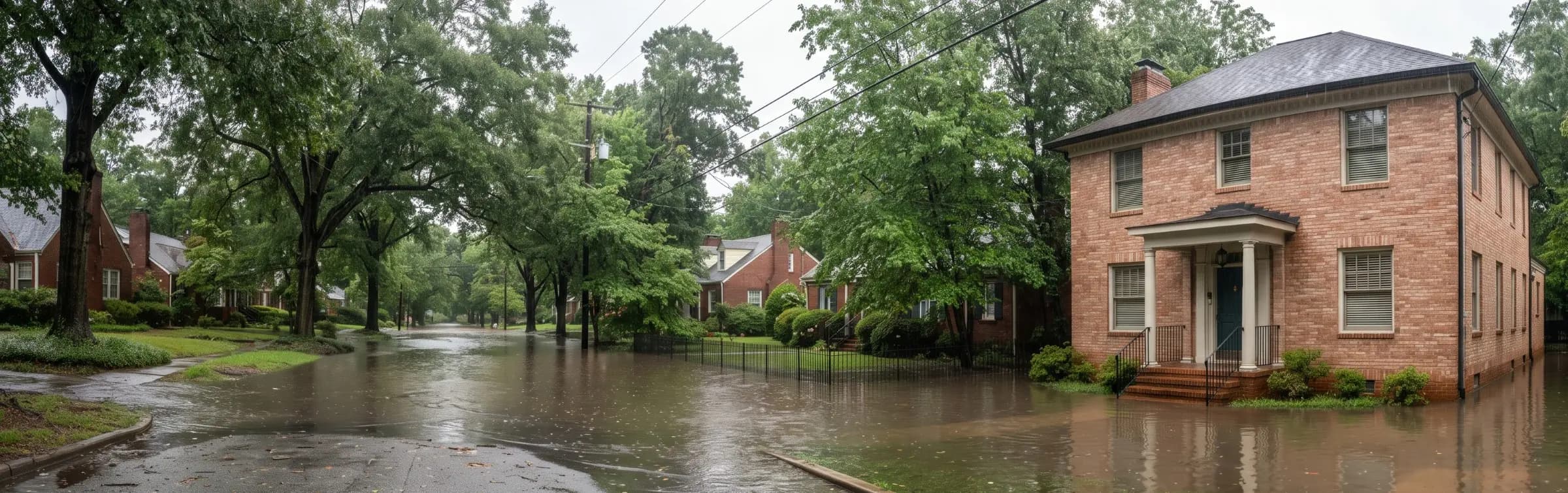

In an Atlanta home, the first move after water damage depends on where the water came from. Creek water, like the flooding along Peachtree Creek during Hurricane Helene, is contaminated and needs a crew on day one, while a failed supply line or water heater starts as clean water that a dry out inside a day can keep small. Most Atlanta water damage restoration jobs cost $1,300–$6,300, and Georgia's claim deadlines, Atlanta's permit rules, and the lack of a state drying license all change how the job should be handled.
In Atlanta, water damage restoration is the work of extracting water, drying building materials, and cleaning and rebuilding what cannot be saved under the ANSI/IICRC S500 standard, and the Georgia Secretary of State's contractor licensing board licenses rebuild work above $2,500 while no state authority licenses extraction and drying. When you choose who to call, IICRC credentials, a written drying scope, and a prompt written claim report count for more than a company's advertising.
Key insights
- Record rain. Atlanta logged 11 inches of rain in 48 hours during Hurricane Helene in September 2024, the most on record since 1878, and Peachtree Creek and Nancy Creek flooded homes and apartments.
- What it costs. Most Atlanta jobs cost $1,300–$6,300 with an average near $3,400, and creek water or sewage on a finished level can reach $9,000–$22,500 or more.
- Creek water is Category 3. ANSI/IICRC S500 treats water from creeks, storm drains, and sewers as Category 3, so carpet, pad, and wet drywall come out instead of drying in place.
- Georgia claim clocks. An insurer must acknowledge a claim within 15 days and affirm or deny it within 15 days of a completed proof of loss, or within 30 days of the claim when none is required.
- Flood needs its own policy. Homeowners policies exclude creek flooding, and a flood policy takes 30 days to start, so the cover has to be in place before the storm.
- No drying license. Georgia licenses rebuild contractors above $2,500 and sets no license for extraction and drying, so verify IICRC Certified Firm status before work starts.
First 48 hours in an Atlanta home
In an Atlanta home, the first 48 hours come down to six moves: stop the water, make the circuits safe, record the damage, remove what cannot dry, report the loss in writing, and book a certified crew. The EPA says mold can begin on wet materials within 24–48 hours, and Atlanta's humid summers shorten that window.
 A leak on the street side of the meter is the water provider's repair, while a leak after the meter is the homeowner's. If the dial keeps moving with every fixture off, the loss is on the house side.
If water is still running, sewage is involved, or the breaker panel is wet, call a certified crew right away and stay out of the room until the power is confirmed safe. Do not use a household vacuum or a space heater in wet areas, since both are electrical hazards near standing water.
1. Find out who owns the pipe
Close the valve on the failed line, or the main shutoff where the service line enters the house. If the water is coming from the street side of the meter, tell your water provider at once, because the city's Department of Watershed Management serves Atlanta while other cities and counties run their own systems, and your bill names the provider to call.
2. Cut power before you step in
Switch off the breaker only if the panel is dry and reachable without wading, and stay out of any room where standing water touches live outlets. If the panel is wet or the water is still rising, leave the house and call an electrician and the utility.
3. Record the water line and the damage
Photograph the water line on the walls, the source of the leak, and every damaged item before anything moves. A quick video with the date visible and a note of the time you found the water gives the adjuster a record of when the loss started.
4. Pull what cannot dry and start airflow
Remove standing water with a wet vacuum on clean water losses only, lift soaked rugs and pad, and set furniture on foil or blocks. Creek, storm drain, and sewage water is Category 3, so leave that cleanup to a crew in protective gear.
5. Report the loss in writing the same day
Email the insurer the date, the source of the water, and your photos so the timestamp starts your claim record. A fast written report also lets the adjuster see the damage before it is dried or discarded.
6. Book a certified crew before the adjuster visits
Hire an IICRC certified firm to extract and dry without waiting for the adjuster, and ask the crew to keep moisture readings for every visit. Those readings and photos are what the adjuster needs, so drying can start while the claim is still being assigned.
DIY limits for Atlanta water losses
An Atlanta homeowner can safely dry only a small, clean spill on a hard floor that is caught within hours, while water behind walls, in carpet pad, or from creeks, drains, or sewage needs a certified crew. What matters is the water category and what the water touched.
 Mopping works only for clean water on sealed flooring that is caught within hours. If water has reached the cabinet base or a floor seam, take a moisture reading before calling it dry.
Call a certified crew the same day if the water has sat past 48 hours or the floor, wall, or pad stays damp after a day of fans, since a surface that feels dry can still hold moisture in the subfloor or wall cavity that only a meter will find. Keep the photos, receipts, and moisture readings from any drying you do yourself, because an adjuster will ask what was wet and how long it stayed that way.
| Loss | DIY? | Why |
|---|---|---|
| Small clean leak on a hard floor, caught within hours | Usually | Mop, run fans and a dehumidifier, and confirm dry with a meter |
| Clean water into carpet and pad | Often no | The pad holds water and usually has to be lifted and dried or replaced |
| Water behind drywall or under cabinets | No | The wall cavity needs drying and moisture mapping |
| Crawl space or basement seepage | No | Often Category 2 or 3, and hard to dry without equipment |
| Creek, storm drain, or sewage water | No | Category 3 needs protective gear and removal of porous materials |
| Any water that has sat past 48 hours | No | Mold can begin on wet materials within 24 to 48 hours |
What Atlanta water damage costs
Most Atlanta water damage jobs cost $1,300–$6,300, and the average is about $3,400. Contamination, the number of rooms the water reached, and the hours before drying starts move the total more than anything else. Mitigation, which extracts water and dries the structure, is billed separately from the rebuild that replaces drywall and flooring, so two quotes can look far apart when one covers only the first part.
 A written estimate should list the equipment count, the number of drying days, and whether the assessment fee is credited. A bid that shows only a total cannot be compared line by line.
Atlanta construction and extraction wages run about 90 percent of the U.S. average according to the Bureau of Labor Statistics, so the labor share of water damage restoration cost runs lower here than in higher-wage metros. Demand after a named storm or a hard freeze can push start dates back, because crews and dehumidifiers go to the same jobs at once.
| Scenario | Estimates | What drives it |
|---|---|---|
| Minor leak caught within hours | $300–$1,300 | A single wet area, a few days of drying equipment, and little demolition |
| Supply line failure in one room | $900–$2,700 | Extraction, wet drywall at the base of the wall, and 3–5 days of drying |
| Washer or dishwasher overflow | $1,800–$4,500 | Category 1 to 2 water under flooring and into cabinet bases |
| Roof leak during a thunderstorm | $2,200–$6,300 | Wet attic insulation and ceiling drywall, plus the roofer's separate bill |
| Mitigation plus basic repairs | $3,600–$6,300 | Drying followed by new drywall, paint, and baseboard in one or two rooms |
| Sewage backup | $6,300–$12,500+ | Category 3 disinfection, protective gear, and removal of pad and lower drywall |
| Creek flooding across several rooms | $9,000–$22,500+ | Flood cuts, flooring, drywall, and contents, with structural repair on severe losses |
A sewage backup and creek flooding sit at the top of the range because Category 3 water forces removal of porous materials and adds disinfection. Severe multi level losses can cost more. Contents are usually billed on top of the structure, since pack out, cleaning, and storage of belongings fall outside the drying scope on most quotes.
Mitigation alone runs about $2.75–$6.75 per square foot in Atlanta: $2.75–$3.50 for Category 1 water, $3.50–$5.75 for Category 2, and $6.25–$6.75 or more for Category 3. Rebuilding runs $18–$33 per square foot. By room, a finished basement or a living area costs the most. The figures apply to the affected area rather than the whole house, so a single wet room is priced on its own floor area.
| Room | Estimates | Atlanta cause |
|---|---|---|
| Finished basement | $1,300–$9,000+ | Creek seepage, sump pump failure, and lower level drywall and flooring |
| Bathroom | $400–$4,000 | Supply line, wax ring, and tub or shower failures in older plumbing |
| Kitchen | $1,300–$7,200 | Dishwasher and ice maker lines, with cabinet bases that swell |
| Living or family room | $2,900–$17,000 | Roof leaks and creek water across large floor areas |
| Laundry room | $900–$4,500 | Washer hoses, which empty a full tub when they fail |
Three line items on a written quote explain most of the gap between bids. A cheap bid often leaves one of them off or leaves the counts and days blank, and the difference returns later as a change order. Mitigation bids also tend to rise when hidden wet materials turn up after demolition, so ask how the company handles a change in scope before work starts.
Equipment days
Air movers and dehumidifiers are billed by the piece for each day they run, and most clean water jobs need 3–5 days. Ask for the count and the number of days in writing so a late start does not turn into extra rental.
Assessment and moisture mapping
Some companies charge a separate fee for the first inspection and moisture map. Ask whether that fee is credited toward the job if you hire them.
After hours dispatch
Evening, weekend, and holiday calls for emergency water damage restoration add 25–50 percent to a bill. Ask whether the premium covers the whole job or only the first visit.
Creek floods and old mains in Atlanta
Atlanta water damage comes from three main sources: creeks that rise within hours of heavy rain, aging water mains and private plumbing, and thunderstorm runoff over saturated clay. The source sets the water category, which decides what can be dried in place and what has to be removed.
 Debris and mud lines on fences and lawns mark how high the creek rose, so photograph them before anything is cleared. That line helps the adjuster see how far the water reached.
Peachtree Creek and Hurricane Helene
Hurricane Helene put 11.12 inches of rain on Atlanta in two days in late September 2024, the heaviest 48 hour total in records going back to 1878, according to the Georgia Climate Office. Peachtree Creek and Nancy Creek spilled over their banks, and Atlanta Fire Rescue pulled more than 25 people from the Peachtree Creek and Peachtree Battle area, including residents of the Peachtree Park Apartments.
Many of the homes damaged along Woodward Way in Buckhead had up to two feet of water on the main level and fully flooded basements, which turns a leak sized job into a flood loss with Category 3 water, flood cuts, and a rebuild. Atlanta's Department of Watershed Management said the pressure of the overflowing creek broke a sewer line on Defoors Ferry Road and sent raw sewage into the surrounding neighborhood.
Sweetwater Creek and the 2009 flood
The September 20–21, 2009 flood still sets the upper limit for Atlanta, with an estimated 10–20 inches of rain in under 24 hours and a maximum of 21.03 inches at the Douglas County Water and Sewer Authority, according to the National Weather Service. Sweetwater Creek near Austell crested 20 feet above flood stage, nine feet higher than its previous record, and 79 river gages rose above flood stage across the region.
Many homes on Hanover West, a street beside Peachtree Creek, were raised after 2009, one of them by 11 feet. Helene still flooded ground floor storage areas there. Elevation changed what the water reached but did not keep it out. A furnace, water heater, or electrical panel left at ground level can be ruined by a few inches of water, so raising the living space alone does not protect the systems.
Aging mains and winter freezes
Atlanta's water system has about 3,000 linear miles of pipe, and in late May 2024 breaks in two large mains, near Boone Boulevard and Brawley Drive and at 11th and West Peachtree Streets, left downtown and Midtown without reliable water under a boil advisory. The mayor said the system had logged about 500 breaks or leaks in the prior year, and the Watershed Management commissioner said some of the pipes that burst were old and corroded.
Cold does similar damage inside homes. Temperatures stayed below freezing for three days in December 2022, including 8°F on Christmas Eve morning, and frozen pipes and sprinkler lines burst in apartment and condo towers across Midtown and Buckhead when they thawed. The water from a burst supply line is clean Category 1 water at first, but it worsens after about 48 hours in wet drywall and insulation.
Ordinary summer thunderstorms add a third source. Afternoon storms in north Georgia can drop up to three inches of rain, and flash flooding follows where streets and lots no longer drain naturally, a problem made worse because Atlanta's clay soil absorbs water slowly. Surface water that runs into a house from a flooded yard or street is usually excluded from a homeowners policy and is treated as contaminated water.
How each Atlanta source is classified
ANSI/IICRC S500 assigns each Atlanta source a category by contamination: Category 1 is clean water, Category 2 carries some contamination, and Category 3 is grossly contaminated. Class is a separate S500 rating from 1 to 4 that describes how much water the materials hold and how fast it will evaporate, so a clean Category 1 loss can still be Class 3 when the water came down from the ceiling.
| Water source | Category | Atlanta example |
|---|---|---|
| Creek or river overflow | Category 3 | Peachtree Creek in 2009 and during Helene |
| Storm drain or sewer backup | Category 3 | A creek driven sewer line break on Defoors Ferry Road |
| Supply line or water main water | Category 1, worsens in about 48 hours | A burst line in a Midtown tower after the 2022 freeze |
| Rain through a roof or window | Category 1, can worsen | A thunderstorm lifting shingles over an attic |
| Air handler condensate | Category 1, Category 2 if it sits | An attic unit overflowing in July |
| Washer or dishwasher discharge | Category 2 | A failed drain hose in a kitchen or basement laundry |
Heaters, attics, and wet crawl spaces
Most in-home Atlanta losses start in a utility closet, an attic, or the space under the floor, and most begin as clean Category 1 water unless it has passed through soil. Water in these spaces travels along framing, pipes, and insulation, so a stain on a ceiling can sit several feet from the real source.
 Sagging insulation is saturated and is normally removed rather than dried in place. Groundwater in a crawl space is often Category 2 or 3, which is why the crew wears a respirator and coveralls.
Water heaters and supply lines
A leaking water heater, a split braided hose, or a loose fitting at a washer or ice maker can run for hours before anyone notices, especially when the house is empty. The water is clean when it starts, so fast extraction usually saves the drywall, but a leak inside a wall or under a floor needs moisture mapping before anyone calls the job dry.
Air handler condensate
Atlanta's humid summers keep air conditioners running for months, and a clogged condensate line or a rusted drain pan sends water into the attic ceiling or the closet floor below. These leaks are slow and usually show up first as a ceiling stain that keeps growing on dry days.
Roof, window, and flashing leaks
Afternoon storms push rain sideways past worn flashing, vent boots, and window seals. This kind of storm water damage tends to stay in one wall or ceiling, but wet insulation holds water long after the roof dries. Ask the crew to check the cavity, not only the stain.
Crawl space and basement seepage
Houses on sloped lots with slow draining clay can take groundwater through foundation walls and floor joints after long rain. Crews generally remove porous materials rather than dry them in place. A sump pump, a French drain, or a gutter discharge pointed at the foundation often explains why a crawl space stays wet, and fixing that source matters as much as drying the space.
Finished basements
Finished basements are the hardest rooms to save. Carpet, pad, lower drywall, and insulation all hold water. A clean supply leak caught within 48 hours can often be dried in place once the pad is removed, while creek or seepage water means those materials come out to the studs. Ask your agent before a loss how the policy treats finished basement space, since a standard homeowners policy covers a sudden pipe leak but excludes groundwater seepage, and flood policies cover only limited basement items.
Early signs of a hidden Atlanta leak
In Atlanta, the usual signs of a hidden leak are a musty smell, a ceiling stain that keeps spreading, bubbling paint, a warm spot on the floor, or a water meter that moves with every fixture off. In the city's humid climate the window between the first sign and visible mold is short, so match the sign to its likely source before opening any wall, since a roof leak and a supply line call for different first checks.
| Sign | Likely cause | Where to check |
|---|---|---|
| Musty smell with no visible stain | Wet insulation or subfloor | Crawl space, under sinks, and closets that share a plumbing wall |
| Ceiling stain that spreads after rain | Roof or flashing leak | Attic decking below the stain and around vents and chimneys |
| Ceiling stain that grows on dry days | Condensate or supply line | Attic air handler pan, drain line, and overhead pipes |
| Warm floor spots, hissing, or a meter that moves with everything off | Slab or supply line leak | Water meter leak indicator, floor hot spots, and the water heater closet |
| Bubbling paint or soft drywall near a bath | Shower pan or supply leak | Wall behind the tub, toilet base, and the ceiling below |
| Cold damp wall or white mineral crust in a basement | Groundwater seepage | Basement wall, floor joint, and downspout discharge outside |
Photograph any sign before it is cleaned and keep the plumber's invoice. Insurers treat a sudden leak and a long-term seep differently. A restoration company can confirm hidden moisture with a meter or thermal camera before anything is opened, though the camera only shows temperature differences and a meter reading is what confirms water.
Hiring with no Georgia drying license
Georgia has no separate state license for extraction and drying, which leaves an Atlanta homeowner to verify a restoration company's credentials directly. The State Licensing Board for Residential and General Contractors licenses rebuild work above $2,500, and plumbing and electrical repairs need their own licensed tradespeople. The IICRC is a certifying body, not a licensing agency, so its Certified Firm listing is the closest thing to a credential check for the drying side.
 Line the bids up on the same items: the water source and category, the equipment count and days, and who pulls permits. A low total that leaves one of those out is usually a smaller scope, not a better price.
The license question changes when a job moves from drying to rebuilding. Ask any company whether it will do both and who holds the license for each part of the work. A drying company that subcontracts the rebuild should name that contractor before work starts, because the rebuild is a second contract with its own price, schedule, and warranty.
| Job scope | License needed | Check before hiring |
|---|---|---|
| Extraction and drying only | No state license | IICRC Certified Firm listing, proof of liability insurance, and a written drying scope |
| Rebuild work above $2,500 | Residential or general contractor | An active license number in the state lookup that matches the name on the contract |
| Plumbing repairs | Licensed plumber | A plumber's license number before any pipe inside a wall is cut |
| Electrical repairs | Licensed electrical contractor | A licensed electrician to clear water soaked circuits before power returns |
| Exterior work on a historic property | City review plus the licenses above | A city permit or certificate before work starts |
Compare at least three written bids line by line, since choosing a water damage restoration company on price alone often hides missing equipment days or skipped moisture readings. After Hurricane Helene the Georgia Insurance Commissioner's office warned residents about storm chasing contractors. Complaint history is worth a look too, since the Georgia Attorney General's consumer protection division takes complaints about contractors.
Before you sign, get each bidder's Georgia business address and a current insurance certificate, and have the written contract name the water source and category, who pulls permits, and the payment terms. Insurers read the contract alongside the invoice, so vague terms give them room to question charges.
Source, category, and class
The scope should name where the water came from, such as a creek, a sewer backup, or a supply line, and give the ANSI/IICRC S500 category and class with the reason for each. A line that says only water damage means the loss was never assessed.
Permit and subcontractor duties
State in writing who pulls any permit and which trades are subcontracted. Look up each rebuild license number in the state lookup before the work starts.
Payment terms
Payment should follow completed work, with no full payment upfront and no offer to waive your deductible. Both are common in post storm scams.
Give every bidder the same questions to ask before hiring, because uneven answers show which company has actually worked Atlanta jobs. A company that cannot name its drying equipment or its reading method has not worked through a creek flood before. Write the answers down in the same order for each company, because a quick phone call is easy to misremember and the notes become a record if the work goes wrong.
Drying records and independent checks
A complete Atlanta drying file holds a written scope, daily moisture readings, equipment logs, photos, and a final reading that matches the dry reference. Those records prove the loss was dried and give the insurer what it needs to pay. Ask the company how and when you will receive the file, since some companies only hand it over after the final visit, and asking for copies of the daily readings while equipment is still running lets you catch a problem early.
The ANSI/IICRC S500 standard sets the dry goal by comparison with unaffected materials in the same home. A reading only means something next to a dry reference reading. For large or Category 3 losses, an independent inspector or industrial hygienist hired by the homeowner, not the restoration company, can verify dryness before walls are closed.
| Record | What it shows | Who provides it |
|---|---|---|
| Written scope of work | Source, category, class, equipment, and planned days | Restoration company |
| Daily moisture log | Readings in wet materials against a dry reference | Restoration company |
| Photos and equipment log | Damage before demolition, what was removed, and what ran when | Restoration company |
| Final dry readings | That affected materials match the reference before walls close | Restoration company or independent inspector |
| Itemized invoice | Mitigation and rebuild billed as separate lines | Restoration company |
Keep these records with the claim file, since an adjuster who disputes drying days will ask for them. If a company cannot produce daily readings, treat the drying as unverified and ask for an independent check before any wall is closed. Store copies somewhere that does not depend on the house, such as a cloud folder or a phone backup, because a second loss or a long rebuild can scatter paper records.
How an Atlanta job runs
A typical Atlanta job takes 3–7 days to dry and 1–3 weeks to rebuild, and creek flooding or sewage losses run longer. Extraction takes hours, drying runs for days, and the rebuild takes the most time when walls and floors have to come out. Timelines also stretch when special order cabinets or flooring take weeks to arrive, so ask for a written schedule with milestone dates for the rebuild.
 New drywall should go up only after the wall cavity reads dry against the reference reading. In Atlanta, repairs valued at $10,000 or more need a permit and inspections before the walls are closed.
Atlanta summers slow drying because outdoor air is humid, and a basement or slab floor holds moisture longer than a wood floor over a crawl space. Rebuild work such as new drywall, flooring, and paint is a separate contract that starts only after readings match the dry reference.
| Loss type | Drying | Rebuild | What stretches it |
|---|---|---|---|
| Clean water leak, one room | 3–5 days | 1–2 weeks | Hidden wall moisture found after the first visit |
| Washer or dishwasher overflow | 3–5 days | 1–2 weeks | Wet cabinet bases and flooring that must come out |
| Roof leak with wet attic insulation | 3–5 days | 1–3 weeks | Waiting on a roofer to stop the leak first |
| Sewage backup | 3–7 days | 2–3 weeks | Disinfection and removal of porous materials and lower drywall |
| Creek flooding across levels | 5–10 days | 3–6 weeks | Large wet areas, flood cuts, and permit inspections |
Slow drying and mold after a leak
Mold can start on wet drywall, insulation, and framing within 24–48 hours, and a slow dry out in an Atlanta basement or crawl space is the usual way a leak becomes a mold job. Water damage restoration dries and repairs the structure, and mold remediation is a separate service that follows only if growth is found.
If growth does appear, mold remediation in Atlanta is its own project with a written protocol and clearance testing, and the drying records show whether the structure was dry when the crew left. Ask the crew to note any visible growth or musty odor on the daily log, so a later mold claim can be tied to when it was first seen.
Keep, clean, or discard belongings
In an Atlanta water loss, hard non-porous items usually survive after cleaning, while upholstery, carpet, mattresses, and paper that sat in creek or sewage water (Category 3) are discarded. The water category and how porous the item is decide the rest. Contents cleaning is a separate service from structural drying and is often billed per item or per box, so weigh the cost of saving an item against its replacement value.
Photograph and list every item before it leaves the house, because the adjuster needs that inventory for a contents claim, and keep a sample or photo of anything you discard. Most policies pay contents at either replacement cost or actual cash value, and which one applies decides whether the payment buys a new item or only the depreciated value of the old one.
| Item | Category 1 water | Category 3 water |
|---|---|---|
| Solid wood and metal furniture | Dry and keep | Clean and disinfect, or discard if soaked |
| Upholstery and mattresses | Often kept if dried within 48 hours | Discard |
| Carpet and pad | Pad usually discarded, carpet may be dried | Discard |
| Books, papers, and photos | Freeze and dry quickly | Discard unless irreplaceable, then use a specialist |
| Electronics and appliances | Do not power on until a technician checks them | Discard |
| Clothing and linens | Wash and dry quickly | Discard if soaked, and wash lightly splashed items hot |
| Glass, ceramics, and hard plastic | Wash and keep | Wash and disinfect |
Ask the restoration company whether it offers contents cleaning or storage for items worth saving, since a crew can move them out before demolition starts. Ask for a written inventory of what moves and where it goes, because a crew that takes contents off site should list each box and its condition at pickup.
Georgia claim deadlines and who pays
Under Georgia Rule 120-2-52-.03, an insurer must acknowledge a property claim within 15 days, affirm or deny it within 15 days of a completed proof of loss, and pay an undisputed amount within 10 days after coverage is confirmed. A federal flood policy follows federal rules instead, including a sworn proof of loss due within 60 days of the loss, so the state clocks do not govern a flood claim.
 Take wide and close photos before anything is cleaned, since the date saved with each file supports when you found the damage. Send them with the written report so the insurer's 15 day clock starts with evidence on file.
The rule sets the insurer's clocks, but the policy sets yours, including how soon to report a loss and how long you have to sue. Report in writing the same day and read both clauses as soon as the policy arrives. Policy clauses on reporting vary by insurer, and a late report can give the insurer a reason to question the claim even when it met every deadline in the rule.
| Claim step | Deadline |
|---|---|
| Insurer acknowledges the claim | Within 15 days of notice, unless it pays first |
| Insurer sends proof of loss forms | Within 15 days of notice |
| Insurer affirms or denies coverage | Within 15 days of a completed proof of loss, or 30 days from the claim if none is required |
| Insurer pays an undisputed amount | Within 10 days after coverage and the amount are settled |
| Insurer needs more time | Written notice with the reason, and a final decision within 60 days of notice |
Whether homeowners insurance covers water damage from a slow leak turns on dated plumber invoices and the first photos of staining, which show how long the water ran. Insurers sometimes send a plumber or engineer to date the leak, so keep the failed part if the plumber removes it.
If a mortgage lender is on the policy, the dwelling payment may be issued jointly to you and the lender, which can delay funds until repairs are inspected. Ask the adjuster whether the check will carry the lender's name before you sign a repair contract. If the check does carry the lender's name, the lender often holds the funds and releases them in stages as repair work is inspected, so ask the lender for its process before the work starts.
Flood, backup, and wind coverage
A Georgia homeowners policy covers sudden and accidental water damage but excludes flood. Creek water in an Atlanta basement is a flood policy claim, and sewer or drain backup is covered only with an endorsement. Which policy pays depends on how the water entered the house. Sump pump failure and overflow also sit in a gap, since many policies exclude them unless a water backup endorsement is added.
 Water that comes up through a floor drain is Category 3 because it comes from the sewer line, and a standard homeowners policy excludes it unless a water backup endorsement was added before the loss. Check the endorsement limit, which is often far lower than the dwelling limit.
Rain driven through an opening a storm made in the roof or a window falls under the homeowners policy, while rising creek or storm drain water needs a flood policy, which is why storm and hurricane water damage often means two claims from one storm. Many homeowners policies also carry a separate wind or hail deductible, so the roof repair and the interior water damage can fall under different deductibles.
| Water source | Homeowners policy | Flood policy |
|---|---|---|
| Burst pipe or appliance leak | Pays if sudden | No coverage |
| Rain through an opening the storm made | Pays | No coverage |
| Creek or storm drain water in the house | No coverage | Pays up to policy limits |
| Sewer or drain backup | Only with a water backup endorsement | Only as part of a general flood |
| Slow or repeated leak | Usually excluded | No coverage |
Federal flood policies pay up to $250,000 for the building and $100,000 for contents. Any home near a creek is worth pricing for flood insurance, since heavy rain can flood homes outside mapped flood zones. Private flood policies are also sold and can offer higher limits than the federal program, so compare both before choosing.
When Atlanta insurers delay or underpay
A late payment, a low offer, or a denied water damage claim can be challenged in steps in Georgia: a written dispute to the insurer, a complaint to the Office of Commissioner of Insurance, a request for arbitration, or help from a licensed public adjuster. The strongest dispute sets the insurer's figure next to an itemized contractor scope and the daily drying records, because it shows the gap line by line instead of as an opinion.
When the insurer has agreed the loss is covered but the amount is disputed, either side can ask the Commissioner to arbitrate under the claims rule, and complaints about delays or unfair handling can be filed online with the Office of Commissioner of Insurance. Keep the claim number, adjuster names, and dates of every call so a complaint shows exactly when each deadline passed.
Georgia licenses public adjusters through the Office of Commissioner of Insurance, requires a bond, and requires the Commissioner to approve the contract form. Check the license and the approval before signing. A public adjuster for a water damage claim makes the most sense on a large or disputed loss, because the fee comes out of your settlement.
If the insurer refuses to pay and the refusal looks unreasonable, Georgia law lets a policyholder who sends a written demand and waits 60 days seek a penalty of up to 50 percent of the loss, or $5,000, plus attorney fees, when a court finds bad faith. That route belongs with an attorney, and a denied claim can often be reversed earlier with a better scope and better documentation.
Atlanta permits for water repairs
Atlanta requires no permit for repair work valued under $10,000 on a single family, duplex, or multi family building, and extraction and drying never alter the building. Larger rebuilds, water heater replacement, and changes to piping inside walls, ceilings, or under floors need permits, according to the City of Atlanta's Office of Buildings.
Every repair must still meet code. Drying itself needs no permit, but the rebuild is where Atlanta's rules start to apply, so ask the contractor in writing who will pull any permit and what the job's valuation will be before work begins. A permit also creates inspection records, which help an insurer confirm the work was done properly and help a future buyer see that the repair was handled by the book.
| Work | Permit? | Atlanta note |
|---|---|---|
| Flooring, paint, trim, and cabinets | No | Exempt scope for single family homes and duplexes |
| Drywall, up to three sheets | No | Exempt scope, and the work must still meet code |
| Replacing existing outlets and fixtures | No | Existing outlets and light fixtures only |
| Building repairs valued under $10,000 | No | General repair exemption, if the work is otherwise lawful |
| Building repairs valued at $10,000 or more | Yes | A repair permit and inspections apply |
| Water heater or in wall piping changes | Yes | Plumbing permit |
| Exterior repair on a landmark or historic property | Often | The general exemption does not apply above $2,500 |
Work in a landmark or historic district is reviewed under Chapter 20 of the city's zoning ordinance. Confirm with the Office of Buildings before you order materials. Historic review can take time and may require repairs to match the original materials, so ask early, and note that drying can proceed while that review is pending.
In a creek floodplain, repairs that cost 50 percent or more of the home's market value before the damage count as substantial damage under FEMA's substantial damage rule, and the local floodplain official makes that call. A substantially damaged home has to be rebuilt to the community's flood standards.
Ask the city in writing for the determination before you sign a reconstruction contract. The answer changes both the scope and the price. If the home carries a federal flood policy, increased cost of compliance coverage can help pay to elevate or floodproof a home that the city finds substantially damaged.
Atlanta areas by creek and main risk
Atlanta's water risk follows creek valleys, water main age, and building height more than ZIP codes. Neighboring cities such as Sandy Springs, Brookhaven, Dunwoody, Decatur, East Point, and College Park run their own permit and floodplain offices, and some run their own water systems, so rules and shutoff contacts change at the city line.
 Old iron mains fail at corroded joints, and a break can send water into nearby yards and basements before the street is shut off. If it reaches your house, report it to the water provider and your insurer the same day.
Start with the address rather than the neighborhood name: confirm the flood zone, which city's permit office applies, and which utility shuts off the water, then check whether the street sits in a creek valley, near an aging main, or in a tower. Report street flooding and a clogged storm inlet to the city the street sits in, since each city in the area runs its own stormwater and public works office.
| Area | Main risk | Homeowner notes |
|---|---|---|
| Peachtree Creek corridor: Peachtree Battle, Woodward Way, Hanover West, Hyde Manor, Bohler Road | Creek overflow in 2009 and Helene | Ground levels and basements took creek water, and some Hanover West homes were raised after 2009, so check the flood zone and carry a flood policy |
| Nancy Creek valley, near Chastain Park and Peachtree-Dunwoody Road | Creek overflow | Nancy Creek set a record level in 2009 and spilled again during Helene, so expect Category 3 water on low levels |
| Midtown and Downtown towers | Main breaks, sprinkler and supply line failures | A May 2024 main break at 11th and West Peachtree Streets and the 2022 freeze both flooded towers, and leaks travel floor to floor |
| Vine City and English Avenue | Aging main near Boone Boulevard and Brawley Drive | The May 2024 break closed this corridor, so ask your provider about pressure and boil advisories before blaming your own plumbing |
| Decatur and unincorporated DeKalb | Heavy Helene rainfall and a separate county water utility | North Decatur recorded 12.51 inches during Helene, and DeKalb County's own watershed department serves unincorporated areas |
| East Point, College Park, Fairburn | Supply main failures during freezes | East Point recorded 12.71 inches during Helene, and East Point supplies College Park, so an outage may sit in another city's main |
| Austell, Mableton, Douglasville along Sweetwater Creek | Record creek flooding in 2009 | Cobb County bought out more than 75 homes in flood hazard areas, and Cobb and Douglas County run their own permits |
High-rises, condos, and rentals
In an Atlanta condo, the association's master policy covers the building's shared elements and your HO-6 policy covers the interior, and who pays depends on where the water started. A tenant reports water damage to the landlord in writing and uses renters insurance for belongings. Ask management for the master policy deductible, since an association can assess that deductible to the owners whose units were affected.
Losses from frozen risers and sprinkler lines, like those in Midtown and Buckhead towers in December 2022, split between the association and individual owners depending on whether the failure was in a common pipe or inside one unit. Sorting out who pays starts with the association's declaration, which defines common and unit elements.
A tenant facing water damage in a rental should send written notice, keep paying rent, and ask code enforcement to inspect if repairs stall, because Georgia's Safe at Home Act gives tenants no right to withhold it. Renters insurance also pays for a hotel stay when a covered water loss makes the unit unlivable, but only when the policy includes loss of use coverage.
Water history in an Atlanta sale
Georgia is a buyer beware state with no required statutory seller disclosure form, but a seller who knows of a latent defect, including water intrusion, must disclose it even when selling as is. Buyers usually have leverage during the inspection period in the purchase contract, where a moisture reading or a thermal camera scan can support a repair request or a price change.
Buyers near Peachtree Creek, Nancy Creek, and Sweetwater Creek should ask for repair invoices, insurance claim history, any flood elevation work, and moisture readings from an independent inspector, and sellers should keep the same records. A seller who answers a direct question falsely can face a fraud claim, so it helps to disclose water damage with repair invoices and claim records in hand.
Georgia lawmakers have considered adding a flood damage disclosure requirement, and a seller or buyer should check whether one has taken effect before listing or signing. Fresh paint low on walls or new flooring in a lower level is a reason to ask what the water reached. The seller's agent should be able to say when the work was done and who did it.
Preventing leaks and creek flooding
Five habits prevent most Atlanta water losses: know your flood exposure, keep drains and downspouts clear, prepare for hard freezes, protect against sewer backup, and replace aging lines and the air handler drain. Leak sensors near the water heater, washer, and air handler pan cost little and send a phone alert before a slow leak becomes a ceiling stain.
 An extension that ends where the lawn slopes back toward the house sends the water straight back to the wall, so check the slope as well as the length. Water that collects at the foundation is a common way groundwater reaches a basement or crawl space.
Price flood cover before the storm
Look up your address on FEMA's flood map and price flood insurance at least 30 days before heavy rain, since a new policy has a 30 day wait. Homes near Peachtree Creek and Nancy Creek flooded in both 2009 and 2024.
Keep storm drains and downspouts open
Clear gutters, point downspouts several feet from the foundation, and report clogged storm drains to the city, which asked residents to do so after Helene. Street water drains slowly through Atlanta's clay soil and a blocked inlet backs up fast.
Insulate before a hard freeze
Disconnect hoses, insulate exposed pipes in garages and crawl spaces, and open cabinet doors on exterior walls when temperatures fall below freezing. Know where the main shutoff is so a burst line can be stopped in minutes.
Add a backwater valve and a sewer endorsement
A backwater valve on the sewer line keeps city and creek driven backup out of lower level drains, and a water backup endorsement pays for what a standard policy excludes. Ask your agent for the limit in writing.
Replace aging lines and service the air handler
Swap rubber washer hoses and old supply lines for braided stainless, test shutoff valves each year, and flush the air handler condensate line before summer.
Frequently asked questions
How much does water damage restoration cost in Atlanta?
Typically $1,300–$6,300 for one affected area, with an average near $3,400. Creek flooding or a sewage backup on a finished level can reach $9,000–$22,500 or more, and an estimate far outside that range should be explained line by line.
Does Georgia require a license for water damage restoration?
No, Georgia has no separate state license for extraction and drying. Rebuild work above $2,500 needs a general or residential contractor license, and plumbing and electrical repairs need licensed tradespeople, so check IICRC firm status for the drying and the Secretary of State lookup for the rebuild.
Does Georgia homeowners insurance cover water damage?
Usually yes for sudden and accidental water damage, such as a burst pipe or a failed water heater. Flood water, groundwater seepage, and long-term leaks are excluded, so creek water needs a separate flood policy and a slow leak needs dated records.
Does homeowners insurance cover creek flooding in Atlanta?
No, standard homeowners policies exclude flood water, including creek overflow. A separate flood policy pays for creek water that enters the house, and it takes 30 days to start, so it must be in place before the storm.
How long does a Georgia insurer have to pay a water damage claim?
An insurer must acknowledge a claim within 15 days, affirm or deny it within 15 days of a completed proof of loss, and pay an undisputed amount within 10 days after coverage is confirmed. When no proof of loss is required, the decision is due within 30 days of the claim.
Do I need a permit to repair water damage in Atlanta?
Often no, because Atlanta exempts repair work valued under $10,000 on single family homes, duplexes, and multi family buildings when the work is otherwise lawful. Water heater replacement and piping changes inside walls or under floors still need a permit for water damage repairs, and work on landmark or historic properties follows separate city review.
Should I hire a public adjuster in Atlanta?
Only on a large or disputed claim, because the adjuster's fee comes out of your settlement. Georgia licenses public adjusters through the Office of Commissioner of Insurance and requires the Commissioner to approve their contract forms, so verify both before signing.
Is Atlanta creek flood water dangerous?
Yes, creek flood water is Category 3 under ANSI/IICRC S500 and can carry sewage, chemicals, and bacteria from upstream. Limit contact to short, protected tasks, keep children and pets out, and have a crew remove carpet, pad, and wet drywall instead of trying to dry them.
Who pays when a neighbor's leak floods my Atlanta condo?
The association's master policy usually pays for shared pipes, and the upstairs owner's liability coverage usually pays for a leak that starts in their unit. Your own HO-6 policy covers the interior while those claims are sorted out, so report the damage to building management the same day.
How long does water damage restoration take in Atlanta?
Plan on 3–7 days of drying and 1–3 weeks of repairs for most jobs. Creek flooding and sewage backups run longer, and summer humidity slows drying in basements and slab homes.
Can a finished basement be saved after water damage in Atlanta?
Often yes when the water was clean and the crew starts within 48 hours, because the pad comes out and the rest can be dried in place. Where the cause is creek flooding or groundwater seepage, crews usually remove carpet, lower drywall, and insulation, and coverage depends on whether the water came from a sudden leak or from the ground.
Can I stay in my Atlanta home during restoration?
Often yes, when a clean water leak stays in one area. Sewage, creek flood water, electrical hazards, and the loss of the only bathroom or kitchen make a home unsafe, and additional living expense coverage can pay for a hotel when a covered loss leaves the home unlivable.
- IICRC S500
- EPA: Flood Cleanup to Protect Indoor Air and Your Health
- NWS Peachtree City: Atlanta Floods 10th Anniversary
- Georgia Climate Office: September 2024 Climate Summary
- DWM Issues Boil Water Advisory for Metropolitan Atlanta
- FEMA: Substantial Damage Determinations
- Georgia Rule 120-2-52-.03: Prompt and Fair Settlement of First Party Property Damage Claims
- City of Atlanta Office of Buildings: Work Exempt from Permit
- Georgia Secretary of State: State Licensing Board for Residential and General Contractors
- BLS: Occupational Employment and Wages in Atlanta-Sandy Springs-Roswell, May 2025
Sam Hickerson is the founder of RestoreAdvisor and writes consumer guides on mold remediation, water damage restoration, inspection, testing, and home recovery. His work focuses on helping homeowners understand costs, risks, and when to call a professional. He draws on guidance from the EPA, CDC, IICRC, and other authoritative sources to make complex home issues easier to navigate.