
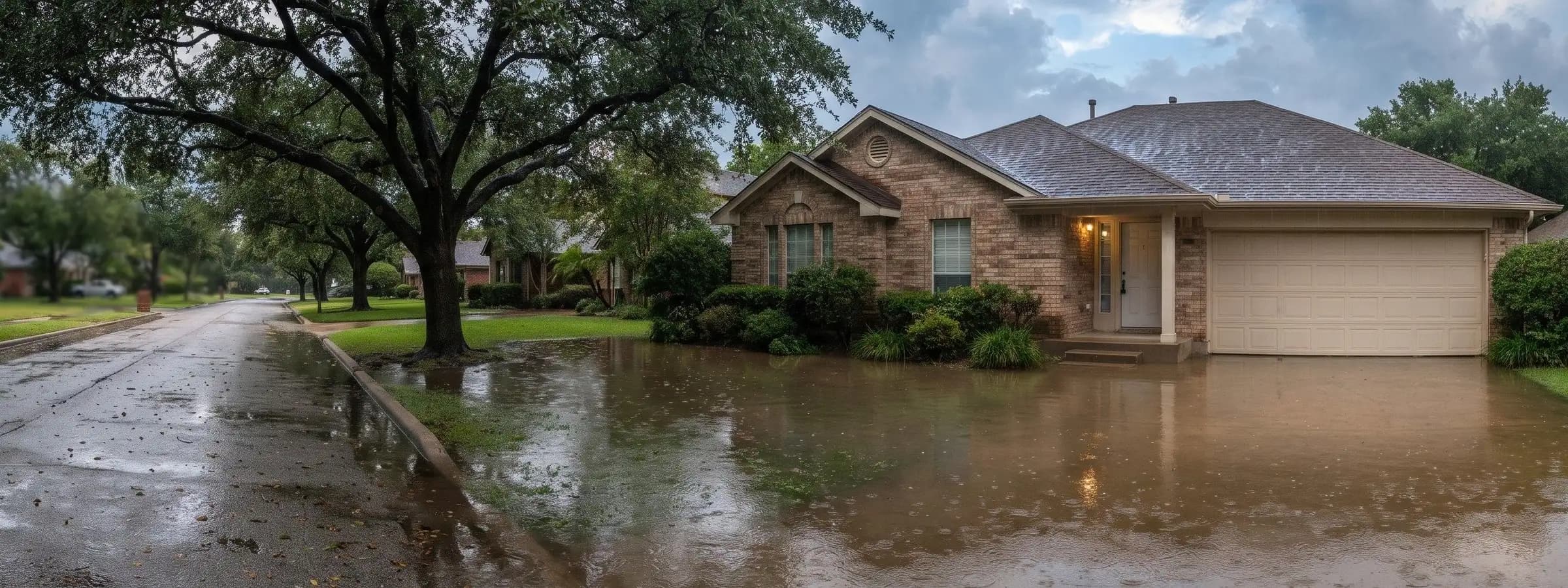

Water reaches Dallas homes fast and from two directions: flash flooding that sends creek and street water through garages and ground floors, and hard freezes that split attic and exterior wall lines. At DFW Airport, 9.19 inches of rain fell in 24 hours on August 21–22, 2022, the second heaviest 24 hour total in National Weather Service records there, and a house with water inside has only a short window before wet drywall and carpet start growing mold.
In Dallas, water damage restoration is the extraction, drying, cleaning, and repair of a water damaged home to the ANSI/IICRC S500 standard, and although Texas has no state license written for it, the Texas Department of Licensing and Regulation (TDLR) licenses the mold assessors and remediators who take over when drying fails. The final bill depends on the category of the water, the number of hours it sat, and whether it came from a pipe, a roof, or a creek.
Key insights
- Typical cost. Water damage restoration in Dallas costs $1,300–$6,000 for a typical job, with an average of about $3,300.
- Flood water is Category 3. Water that enters a Dallas home from a creek or street is Category 3 under ANSI/IICRC S500, so carpet, padding, and lower drywall it touches are removed instead of dried, which puts flash flood jobs at the top of the price range.
- A record rain. DFW Airport recorded 9.19 inches of rain in 24 hours on August 21–22, 2022, second only to 9.57 inches in September 1932, according to the National Weather Service.
- Insurer clocks. Under Chapter 542 of the Texas Insurance Code, an insurer has 15 business days to accept or reject a claim after it receives every item it requested, and 5 business days to pay once it accepts.
- Deductible offers. A Texas contractor cannot pay, waive, or absorb your insurance deductible without the insurer's consent, and Insurance Code 707.002 says the insured must pay it.
- The 50 percent floodplain rule. In Dallas's regulatory floodplain, repairs that cost 50 percent or more of a structure's market value before the damage count as substantial damage and bring the structure under the City's compliance rules.
Flash floods, freezes, and Dallas clay
Dallas homes take on water mainly from flash floods that follow creek watersheds, hard freezes that split pipes, and clay soil that moves the plumbing in and under a house. Flash floods cause the costliest losses because water that enters from outside is Category 3 under ANSI/IICRC S500.
 A supply line that splits in a freeze starts as Category 1 water under ANSI/IICRC S500, and it can degrade to Category 2 if the insulation and drywall it soaks stay wet for about 48 hours.
The ANSI/IICRC S500 standard sorts water into three categories by contamination: Category 1 comes from a clean supply source, Category 2 carries significant contamination, and Category 3 is grossly contaminated and includes flood water and sewage. Clean water that sits for about 48 hours can degrade to Category 2, which makes the first two days after a leak decisive for what gets dried and what gets discarded.
| Water source | Category | Effect on the job |
|---|---|---|
| Supply line, water heater, or sink overflow | 1 | Often dried in place when caught within a day or two |
| Washing machine or dishwasher discharge | 2 | Wet padding and drywall are usually removed instead of dried |
| Freeze burst after the thaw | 1, degrading if it sits | Water spreads across rooms while it runs, so extraction speed sets the scope |
| Creek, street, or flash flood water | 3 | Porous materials it touches are removed and discarded |
| Sewer lateral backup | 3 | Disinfection and removal of porous materials, with the plumbing repaired separately |
The National Weather Service's heaviest 24 hour rainfalls at DFW Airport rank the August 2022 storm second, behind 9.57 inches on September 4–5, 1932, with September 21–22, 2018 fourth at 8.11 inches. Rain at that rate outruns storm drains and sends water toward the lowest doors, garages, and crawl space vents, which is where flash flood water usually enters a house.
Hard freezes are infrequent in Dallas, but when one arrives, as Winter Storm Uri did in February 2021, it splits lines in attics, garages, and exterior walls that were never insulated for it. A line that thaws while the house is empty can run for hours, and a burst pipe that starts as Category 1 water can leave a multi room job behind it.
Clay soil under many Dallas lots swells when wet and shrinks through dry summers, and that movement strains supply and drain lines beside and under a slab or a pier and beam foundation. A strained line can leak for weeks before a stain shows, and the Texas Department of Insurance says policies usually do not cover gradual leaks, so the date of the first sign is worth writing down. Clay movement can also crack a sewer lateral, and a sewage backup is Category 3 from the first minute.
Dallas restoration costs by scenario
Most Dallas water damage jobs cost $1,300–$6,000, and the average is about $3,300. A typical job, meaning one affected area that is dried and, at the high end, repaired, falls inside that range, while a loss that crosses several rooms costs several times as much. Minor leaks caught the same day start near $300, and flood or freeze losses across several rooms reach $8,600–$21,500 or more.
 Under ANSI/IICRC S500 the crew keeps drying until moisture readings match an unaffected reference, so the days a unit runs follow the readings.
Construction and extraction workers in the Dallas area earned about 86 percent of the U.S. average hourly wage in May 2025, according to the Bureau of Labor Statistics. The final water damage restoration cost of a Dallas job also moves with crawl space access under older bungalows, the floors above the wet room in townhomes and condos, and how many crews a regional storm has already booked.
| Scenario | Estimates | Dallas drivers |
|---|---|---|
| Minor spot mitigation | $300–$1,300 | A small clean water spill dried within a day, often with no drying equipment |
| Supply line burst | $900–$2,600 | Clean water in one room, with more cost when the line runs through an attic or upstairs wall |
| Washer or dishwasher overflow | $1,700–$4,300 | Category 2 water that takes wet padding and lower drywall with it |
| Roof leak during a storm | $2,200–$6,000 | Wet attic insulation and ceilings, with the roof repair billed by a roofer |
| Mitigation plus basic repairs | $3,400–$6,000 | Extraction and drying, then replacing drywall, flooring, and paint |
| Sewage backup | $6,000–$12,000+ | Category 3 water, disinfection, and removal of porous materials |
| Flash flood across several rooms | $8,600–$21,500+ | Category 3 water at ground level, with flood cuts, flooring, and contents |
| Freeze burst across several rooms | $8,600–$21,500+ | Hours of running water that soak ceilings, walls, and floors before the main is closed |
Mitigation and reconstruction are usually billed as separate scopes, with extraction and drying first and drywall, flooring, and paint after. Ask each bidder for the equipment count and the number of days it will run, since that line decides most of the mitigation invoice, and ask whether moisture mapping is included or billed on its own.
Rates apply to the affected floor area, so a 400 square foot loss is priced on those 400 square feet only. Mitigation rises with the water category, and Category 3 drying costs more than twice as much per square foot as Category 1 because of disinfection and disposal. Repair and rebuild work costs several times more per square foot than drying.
| Work | Estimates per sq ft | Applies to |
|---|---|---|
| Category 1 mitigation | $2.50–$3.50 | Affected floor area, clean water drying |
| All mitigation | $2.50–$6.50 | Affected floor area, across all categories |
| Category 2 mitigation | $3.50–$5.50 | Affected floor area, appliance and aged water |
| Category 3 mitigation | $6.00–$6.50+ | Affected floor area, flood and sewage water |
| Repair and rebuild | $17–$32 | Affected floor area, drywall, flooring, and paint |
Room costs follow how much flooring, drywall, and cabinetry the water reaches, so a living area runs highest and a bathroom lowest. A basement or finished lower level costs about the same as a kitchen at the low end and more at the high end, and rooms with cabinets, built in tile, or large carpet areas run higher because more material is removed and replaced.
| Room | Estimates | Dallas drivers |
|---|---|---|
| Bathroom | $400–$3,900 | Tile, vanity, and subfloor after a supply line or toilet failure |
| Laundry room | $900–$4,300 | Overflow and supply hoses that wet flooring and the walls behind the machine |
| Kitchen | $1,300–$6,900 | Cabinet bases, flooring, and appliance leaks that run under the cabinets |
| Basement or lower level | $1,300–$8,600+ | Water that rises above the baseboards and into finished walls |
| Living or family room | $2,800–$16,000 | Large carpet or hardwood areas and contents that have to be moved |
Water category on arrival
Category 3 water adds disinfection and removal of porous materials under ANSI/IICRC S500, and that tear out accounts for most of the price gap between a pipe leak and a flash flood.
Hours before the first fan runs
Each hour that water sits pushes moisture deeper into drywall and flooring, so a crew that starts drying the same day removes less material than one that starts on day three, and the invoice reflects the difference.
Emergency hours billing
A night, weekend, or holiday call can add an after hours premium of 25–50 percent on top of the labor rate, so a leak found at 6 p.m. on a Friday costs more to stop than the same leak found on Monday morning.
Regional storm demand
After a regional storm, storm water damage jobs compete for the same crews, dehumidifiers, and drywall, so the same loss can start later and cost more than it would in a quiet week.
From shutoff to first call in Dallas
Close the water at the private shutoff, make the room safe, photograph the damage before moving anything, and call a restoration company and your insurer in the same hour. The Texas Department of Insurance advises policyholders to make temporary repairs only and to hold off on permanent repairs until the insurer has seen the damage.
 A ball valve is closed when its lever sits across the pipe, so locate the shutoff and practice turning it before an emergency.
Water from outside the house changes how you proceed. Treat a creek or street flood as Category 3 from the first minute and keep everyone out of the room until power is confirmed off, because the EPA says flood water can carry bacteria, chemicals, and sewage. Run generators outdoors, far from doors and windows, since carbon monoxide is a danger during storm outages and freezes.
1. Close the private shutoff
Close the private cut-off valve near the house, which Dallas Water Utilities says is usually beside an outside faucet. If you cannot stop the water at the house, call 311 inside the city or 214-670-3111 outside it at any hour for a main break, a meter leak, or help turning the water off at the meter.
2. Cut power to wet circuits from a dry panel
Switch off the breakers that serve wet rooms only if the panel is dry and you can reach it without stepping through water, and call an electrician or the utility if you cannot.
3. Photograph before you move anything
Take one wide photo of each room and close photos of the source, the water line, and each damaged item, then email the insurer a short notice so the claim has a dated record.
4. Lift valuables off wet floors
Move electronics, documents, and photographs to a dry room, and set furniture legs on foil or wood blocks so the finish does not stain wet carpet.
5. Call the crew and the insurer together
Call a restoration company and your insurer in the same hour, because drying cannot wait for an adjuster's schedule, and keep receipts for any temporary repairs and equipment.
A flowing leak that cannot be stopped, sewage, or water near the electrical panel makes the loss an emergency water damage restoration job, and the crew should be on the way before the insurer calls back. Texas prompt payment deadlines run from the date an insurer receives notice of the claim, so the same email that records the loss also starts the clock.
Which jobs a homeowner can handle
A homeowner can handle a small clean water spill caught the same day on sealed flooring, and anything involving flood water, sewage, or materials that have stayed wet longer than a day belongs with a professional. The EPA says mold can grow on wood, drywall, carpet, and furniture that stay wet for more than 24 hours.
 Even after a small spill looks dry, the EPA recommends a moisture meter to confirm that walls, cabinets, and flooring are dry before refinishing.
Contact with flood water or sewage sends carpet, padding, and upholstered furniture to the curb even when they look clean, because those materials cannot be cleaned and dried safely. A small clean water spill is a different job, since towels, fans, and a dehumidifier can handle it as long as the water does not reach the cabinet base, baseboard, or drywall, where the wall cavity can stay wet while the surface dries.
| Situation | DIY or pro | Why |
|---|---|---|
| Small clean water spill on sealed tile or vinyl, dried the same day | DIY | Towels, fans, and a dehumidifier are usually enough |
| Appliance leak that soaked a small patch of carpet within a day | DIY with care | Discard the pad, then dry the carpet and subfloor fully |
| Water in drywall, baseboards, or wall insulation | Pro | Wall cavities need moisture mapping and drying equipment |
| Freeze burst that ran for hours or reached ceilings | Pro | Water travels through framing and insulation before it shows |
| Flood water, creek water, or sewage | Pro | Category 3 contamination calls for protective equipment and removal of porous materials |
Call the insurer before starting any cleanup, and keep receipts for fans, dehumidifier rental, and supplies, since the insurer will want them if the claim is paid. Never run a household vacuum on standing water, and stay out of any room where water reached outlets, appliances, or the electrical panel.
What Texas requires of restorers
Texas has no state license written for water extraction and drying, so a Dallas restoration company needs no state license to dry a house, while mold work, plumbing repairs, and electrical repairs each fall under their own licensing. The practical credentials for water work are IICRC firm certification, general liability insurance, and a written scope.
 Texas has no state license for drying a house, so ask the company for its IICRC Certified Firm listing and proof of liability insurance before the crew starts.
The Texas Department of Licensing and Regulation licenses mold assessors and remediators, and TDLR's mold rules set the 25 contiguous square foot line: in most instances, visible mold covering less than 25 contiguous square feet can be cleaned or removed by people who are not licensed. Owners of houses and of buildings with fewer than 10 units can do their own remediation under the exemptions, while TDLR says contractors who specialize in cleaning up mold in homes must be licensed, and a license holder may not assess and remediate the same project.
Replacing or repairing supply or drain piping is plumbing work under the Texas Plumbing License Law, so a restoration crew that finds a failed line, such as a slab leak, isolates the water and a licensed plumber makes the repair, unless the company employs a licensed plumber. Electrical work after a flood needs the same handoff, which is one reason a written scope should name every trade and say who pulls each permit.
Hiring a restorer in three stages
Hire a Dallas restoration company in three checks: confirm credentials before you sign, watch the readings while the equipment runs, and verify the dry standard before the last payment. Texas law settles a few of the questions for you, including what a contractor may do with your deductible and when a license is required.
 Ask the crew to photograph each opening before any wet material is hauled out, and keep the photos with the drying log for the adjuster.
Questions before you sign
Ask whether the company is an IICRC Certified Firm and look it up in the IICRC locator yourself, because a logo or the phrase certified technicians is not a firm listing. Get a written scope that names the water category, the damage class, the equipment count, and who pulls permits for trade work, and compare two written scopes line by line before hiring a water damage restoration company.
Checks while the equipment runs
A crew should log moisture readings at every visit, and the log should show the equipment count and the days each piece has run. Ask the crew to call before removing drywall, insulation, or flooring and to photograph each removal, since the adjuster will compare the invoice with those photographs. A company that wants to start tearing out before any reading exists is working from a guess.
Proof before the last payment
Do not pay the final invoice until you hold the drying log with the last readings, which should match the dry standard for each affected material. Texas Business and Commerce Code 27.02 makes it an offense for a seller to pay, waive, or absorb an insured's deductible without the insurer's consent, and Insurance Code 707.002 says the insured must pay it, so an offer to cover your deductible is a red flag, and contracts of $1,000 or more that involve an insurance settlement must carry a notice that the policyholder owes the deductible. Section 707.004 also lets an insurer with replacement cost coverage hold payment until it has reasonable proof that the deductible was paid.
Readings that prove the job is dry
A structure is dry when the moisture readings in the affected materials match readings taken from the same unaffected material in the same home, which is the dry standard ANSI/IICRC S500 describes. Professionals map the wet area with a moisture meter on the first visit, repeat the readings every day, and pull the equipment only when the numbers meet that reference.
A thermal camera shows temperature differences that can point to wet material, but it does not measure moisture, so ask for the moisture meter readings behind any heat image. Drywall, wood, and concrete read differently when they are dry, which is why each material gets compared with its own unaffected reference and a single number never serves as the pass mark.
A home on a concrete slab has one extra test. The EPA's flood cleanup advice describes taping clear plastic sheeting to the slab and waiting about 16 hours, and moisture visible on the sheeting means the slab is still too wet to replace the flooring, since new flooring laid over a damp slab traps the moisture underneath it.
On a large or disputed loss, a second set of readings from someone who is not selling repairs removes doubt. The daily log is also the evidence if an adjuster later questions the equipment days, so keep every sheet of it even after the equipment has left the house.
From pump out to rebuild in Dallas
A professional job moves through inspection, extraction, removal of materials that cannot dry, structural drying, and a final reading check, and drying usually takes 3–7 days before repairs of 1–3 weeks begin. The class of the loss sets how long drying lasts: Class 4 losses in hardwood, plaster, and poured concrete dry slowest and need specialty equipment, while Class 3 losses from above, such as a roof leak that soaks insulation and a ceiling, wet the most surface area.
 Extraction removes the water you can see, but the EPA says drying usually takes several days to weeks, so moisture readings continue after the carpet feels dry.
1. Trace the source and map the wet area
A technician finds the source, classifies the water, and maps the wet boundary with moisture meters and often a thermal camera before any equipment is set.
2. Draw down the standing water
Pumps and wet vacuums remove standing water first, because each hour it stays pushes moisture deeper into flooring and wall bases.
3. Open walls and strip what cannot dry
Saturated padding, wet insulation, and soaked drywall come out, and flood cuts are made above the height the water reached on the wall.
4. Set the equipment and take daily readings
Air movers and dehumidifiers run continuously while the crew returns each day to take readings and adjust the equipment.
5. Clean, treat, and confirm the reference reading
The crew cleans, applies antimicrobial treatment where the category calls for it, and confirms the readings match the unaffected reference before pulling the equipment.
The EPA says drying can take several days to weeks, that the air should keep moving even after materials look dry, and that wall cavities should not be sealed or painted until the materials are dry on the inside. If flood water reached any part of the HVAC system, the EPA says not to use it to help dry the house, because cleaning and drying the system is complicated and best done by a professional.
Equipment stays until the readings meet the reference, and structural drying on framing and subfloors runs longer than drying a surface. Ask for a written schedule with the drying dates and the expected start of repairs, so a delay after a regional storm shows up on paper before it shows up on the invoice.
A sewage backup adds disinfection and protective equipment to the same stages, and porous materials the water touched are discarded instead of dried. Crews on Category 3 jobs wear respirators, gloves, and boots, and the plumbing repair that stops the backup is a separate bill from a plumber, which is why that tear out and protection put Category 3 jobs at the top of the cost range.
Keep, clean, or discard belongings
Materials that do not soak up water can usually be cleaned and dried, while materials that soak up a lot of water and cannot be cleaned and dried should be thrown away, according to the EPA. Photograph and list every item before it leaves the house, and keep damaged items until the insurer says to discard them, since the Texas Department of Insurance advises holding them for the adjuster.
Sealed and hard surfaces
Glass, metal, and sealed tile can be cleaned with water and detergent and then dried, and the EPA says disinfectants work only on surfaces that are already clean.
Fabrics and textiles
The EPA says some fabrics and textiles can be saved in the laundry, while upholstered furniture and mattresses that soaked up flood or sewage water usually go to the curb.
Padding, drywall, and insulation
These soak up water and cannot be cleaned and dried after contact with Category 3 water, so they are discarded, while a crew may dry some of them in place after clean water caught early.
Electronics and appliances
Leave wet electronics and appliances unplugged and unpowered until a technician has inspected them, since water in the housing can short a unit that looks dry.
Photos, documents, and keepsakes
The EPA says a restoration specialist for that type of item may be able to clean and dry precious items, so set them aside and call the specialist before trying to dry them yourself.
Texas claim clocks and coverage gaps
In Texas, homeowners insurance covers water damage that is sudden and accidental, such as a burst pipe, and excludes flood water and most gradual leaks. The Texas Department of Insurance says hidden damage usually has to be reported within days after you first see it, which is why a written notice to the insurer in the first hours matters.
 The 15 day and 5 day clocks count business days, so a decision due in 15 business days arrives later than 15 calendar days after notice, while the 45 day extension counts calendar days.
Under that rule, a supply line failure or a freeze burst is usually paid, while a drip that ran for weeks is excluded as gradual, so write down the date you first saw a stain, the date you shut off the water, and the date a plumber confirmed the source. Photographs and the plumber's invoice are the evidence that the loss was sudden.
Flood water from a creek or street needs a separate flood insurance policy through the National Flood Insurance Program or a private carrier, and a new policy carries a waiting period, so coverage bought after a storm appears on the forecast does not respond to that storm. Ask your agent which water sources each of your policies treats as flood, wind, or plumbing, since each goes to a different carrier.
Acknowledgment clock
The Texas Department of Insurance says an insurer has 15 business days to acknowledge a claim, and the clock starts on the date the insurer receives notice of it.
Decision clock
Under Chapter 542 of the Texas Insurance Code, an insurer must accept or reject a claim in writing within 15 business days after it receives all the items it requested, and a rejection must state the reasons. If it needs more time, it must say why within that period and then decide within 45 days, and TDI can add 15 more days after a weather catastrophe.
Payment clock
Once the insurer accepts a claim, it must pay within 5 business days, or within 5 business days after you complete any act it made a condition of payment.
Late payment interest
A late payment adds interest at 18 percent a year plus attorney's fees under section 542.060. A claim caused wholly or partly by a rainstorm, flood, hail, or wind falls under Chapter 542A instead, where interest is the judgment rate plus 5 percent and the policyholder must send written notice at least 61 days before filing suit.
Hail, wind, and rain through the roof
Hail and wind damage in Dallas often comes with a roof opening that lets rain into the attic, and the claim starts with fast filing, photographs, and temporary repairs. The National Weather Service reports that the May 5, 1995 Mayfest storm dropped hail about the size of a softball, with two inch hail falling just east of DFW Airport, and caused about $2 billion in damage across Tarrant and Dallas counties.
 The Department of Insurance says not to make permanent repairs before the adjuster sees the damage, so tape and sheeting hold the window until the visit.
Rain that enters through a storm opening wets insulation and ceilings before a stain shows, so a roof leak needs drying even while the roof waits for a roofer. The Texas Department of Insurance says to photograph and video the damage, cover broken windows and holes to keep rain out, save every receipt for temporary repairs, keep damaged items until the insurer says to discard them, and be present when the adjuster visits.
Wind and hail coverage can carry its own deductible, and TDI explains that a deductible may be a dollar amount or a percentage that has to be converted to dollars. On a $150,000 home, a 5 percent deductible is $7,500, so a $6,500 hail repair would be paid at $0. Ask the insurer in writing which coverage and which deductible applies to rain that entered through the damaged roof.
After a storm, the Department of Insurance says a roofer cannot act as your public adjuster on a claim for work the roofer also does, cannot advertise that service, and cannot waive, rebate, or absorb your deductible. Contracts of $1,000 or more that involve an insurance settlement must carry a notice that you owe the deductible, so get more than one bid, never sign a contract with blank spaces, and do not pay in full up front.
When an insurer delays or underpays
A homeowner whose insurer delays or underpays a water damage claim has these options, according to the Texas Department of Insurance: talk to the insurer, request appraisal, file a complaint with TDI, hire a licensed public adjuster, or sue, with Justice Court available for claims under $20,000. For disaster related damage, written notice is required at least 61 days before suing unless waiting would miss the filing deadline.
The first step is to call the insurer or agent with your documentation and contractor estimates next to the insurer's own estimate, and to ask for any denial in writing with its reasons. Appraisal applies only to disputes about the amount of loss: each side hires an appraiser, the two choose an umpire, the decision is binding, and each side pays its own appraiser and half of the umpire's expenses.
A licensed public adjuster works for you on the claim for a fee capped at 10 percent of the total the insurer pays, and you can cancel within 72 hours of signing. TDI says to verify the license through its Help Line at 800-252-3439, and an adjuster cannot act as your contractor or give legal advice.
A complaint goes through the online Consumer Complaint Portal at TDI, which accepts homeowners and renters claim complaints, and the Help Line answers questions Monday to Friday, 8 a.m. to 5 p.m. Central. The photographs, receipts, and dated notices gathered in the first hours are the documentation a complaint rests on.
Dallas permits and the floodplain rule
Replacing siding, sheetrock, and windows typically needs no Dallas permit, but replacing structural members, roof decking, and electrical or plumbing work does, and a separate floodplain rule applies to repairs inside the regulatory floodplain. The City of Dallas Sustainable Development and Construction department issues the building permits, and the City's floodplain management staff apply the floodplain rule.
 The City's general repair scope excludes electrical wiring, so a wiring change risks a stop work order unless the permit is pulled before the crew starts.
The City of Dallas storm repair rules say replacing structural members such as joists, rafters, or wall sections requires a building permit, and a roof with shingle and decking damage needs a roofing permit. Electrical work may need a permit and inspection, and a permit is always required when a roof or wall is structurally damaged. Homeowners who do their own repairs file a Homeowner's Exemption from Contractor Registration form with the City.
The City's general repair scope form lists what a no permit repair excludes: removing walls or partitions, structural changes, altering water supply, sewer, or drainage piping, electrical wiring, and ductwork. Work beyond that scope risks a stop work order, so ask the contractor in writing which permits for water damage repairs apply and who pulls each one.
Inside the regulatory floodplain, the City treats repairs that would equal or exceed 50 percent of the structure's market value before the damage occurred as substantial damage, and it applies the same threshold to improvements measured against the greater of the market or tax appraisal value, with improvements over the previous five years added together. A structure that crosses the line must comply through a fill permit under the Dallas Development Code, so call floodplain management before signing a rebuild contract.
When a slow dry out turns into mold
A Dallas water loss that is still wet after about a day is at risk of becoming a mold job, because the EPA's 24 hour mark is the point where growth becomes possible. Water damage restoration dries the structure, and mold remediation is a separate service that Texas regulates through TDLR with its own assessor, remediator, and clearance steps.
Whether a wet house later needs mold remediation after water damage depends on how long the materials stayed wet and whether the readings reached the dry standard, so ask for the final readings in writing before drywall is closed. Most Texas homeowners policies exclude mold cleanup and testing unless an add on applies, according to the Texas Department of Insurance, so a drying delay can move the cost from an insured water claim to an owner paid mold bill.
If demolition exposes visible growth, stop and photograph it, and measure the area before anyone continues, since growth that reaches 25 contiguous square feet brings in licensed assessors and remediators. On a licensed mold project the assessor and the remediator must be different companies, so a company that remediates cannot also assess and clear its own work.
Where Dallas water losses cluster
Dallas water losses cluster along the creek watersheds that drain to the Trinity River, on low streets that storm drains cannot clear, and in neighboring cities that run their own permit offices. The address matters more than the neighborhood name, because water follows the drains and the street grade.
 A house sitting below the street grade can take water on a block where the next house stays dry, so ask neighbors and the seller about past water before relying on a neighborhood name.
According to the City of Dallas flood control brochure, White Rock Creek drains 139 square miles and Five Mile Creek 55 square miles, the most recent widespread flooding was June 9, 2019, and significant floods also struck in 2006, 2009, and 2015. The City records the March 2006 flooding as interior drainage behind the Trinity levees, where rain that falls inside the levee system has to be pumped out.
| Area | Risk factor | What to check |
|---|---|---|
| East Dallas, Fair Park, and parts of Uptown | Low streets served by storm drains until the Mill Creek tunnel is finished | Past water at the address, from the seller or landlord |
| Lake Highlands, Lakewood, and Casa Linda | White Rock Creek watershed, the larger of the two creek basins the City highlights | Floodplain status before buying or repairing |
| Oak Cliff and Cedar Crest | Five Mile Creek watershed | Floodplain status before buying or repairing |
| West Dallas and the Trinity levees | Interior drainage behind the levees, where the City records flooding in March 2006 | Whether the street drains to a pump station |
| Uptown and Knox-Henderson condos | Water that moves through shared walls and floors between stacked units, with the association controlling the risers | Which policy the association treats as primary |
| Highland Park and University Park | Separate town governments with their own permit offices | The town's building office for repair permits |
| Garland, Mesquite, Richardson, and Irving | Separate cities with their own floodplain rules and creeks that cross city lines | Which floodplain administrator reviews repairs |
In East Dallas, Fair Park, and parts of Uptown, the five mile Mill Creek tunnel is meant to relieve the storm drains, and NBC DFW reported in February 2026 that it is roughly 83 percent complete, was originally due in 2024, and is now expected to be substantially complete in 2028 and fully complete by early 2029. Until it is finished, those neighborhoods rely on the existing storm drains.
A watershed map shows where water collects, but street level history decides how a particular house behaves. Ask neighbors and the seller about past water, and confirm which city's permit office reviews your repairs, since the boundary between Dallas and its neighbors changes who reviews a floodplain repair.
Renters and condo owners with a leak
A tenant with a burst pipe sends the landlord written notice and can repair and deduct in a flooding emergency, while a condo owner calls the association first, because the association usually controls the shutoffs and risers. Neither situation is a do it yourself repair of the building, and each has a different insurance policy answering for the damage.
Tenants with a broken pipe
Tenants facing water damage in a rental should send written notice by certified mail, since Property Code 92.056 requires the landlord to make a diligent effort to repair a condition that materially affects health or safety and presumes seven days is a reasonable time. Section 92.0561 allows repair and deduct for flooding from broken pipes immediately after notice of intent to repair, up to the greater of one month's rent or $500.
Condo owners and the association
The condominium declaration decides what the association insures and what the owner insures, and an owner's HO-6 policy covers interior improvements and belongings. Report a leak to the association or management company at once, and ask in writing which policy it treats as primary, because who pays for water damage in a condo depends on the declaration and the association's master policy.
Buying a Dallas home that flooded
A Texas seller of a home with no more than one dwelling unit must deliver a seller's disclosure notice, and the notice asks about flood insurance, flood water that entered the structure, reservoir releases, and flood zone location. Property Code 5.008 exempts foreclosure sales, estates, and new homes never occupied, so a buyer cannot assume the notice exists for every sale.
 A thermal camera shows temperature differences that can point to hidden wet material, and a moisture meter confirms it, so ask the inspector to use both on exterior and garage walls.
A clean permit record does not prove a dry history, because replacing siding and sheetrock typically needs no City permit. A seller who knows about water damage has to decide how to disclose it, and the safest record is a set of repair invoices, dated photographs of the drying, and a final moisture reading report.
Paint lines and mismatched floors
Paint that stops at a clean line a few feet up a wall, new baseboards in one room only, and flooring that changes at a doorway can mark a repair. Have an inspector take moisture readings and scan exterior and garage walls with a thermal camera.
Records worth requesting
Ask for repair invoices, the property's insurance claim history report, and any floodplain paperwork the City issued after a major repair.
Price flood cover first
A flood quote before closing shows how an insurer views the address and tells you how long coverage takes to start.
Prevention before storm and freeze
Four habits address the two ways water usually enters a Dallas home, from a failed line and from outside. Each targets a path that Dallas weather has already used, from the August 2022 cloudburst to the hard freezes that split attic lines. A failed line at the wrong hour can wet several rooms before anyone notices, while outside water can arrive within minutes of a cloudburst.
 A foam cover seated flat against the wall is a cheap freeze step, since a faucet that splits floods the wall behind it when the ice thaws.
Mark the private cut-off valve
Find the private cut-off valve that Dallas Water Utilities says is usually near an outside faucet close to the house, test it twice a year, and keep the emergency number, 214-670-3111, where everyone in the house can see it.
Wrap lines before the first freeze
Insulate supply lines in attics, garages, and exterior walls and cover outdoor faucets to prevent frozen pipes, and if power fails during a freeze, shut off the main valve and open a faucet to drain the lines.
Clear gutters and drains before storm season
Clear gutters and downspouts and aim them away from the foundation before spring storms, since runoff pooled at a wall is the first water to find a low door or crawl space vent.
Buy flood cover before the forecast
Homeowners policies exclude flood water and flood policies carry a waiting period, so coverage purchased after a storm forms does not respond to it. Quote a policy even outside the mapped floodplain, because the City records widespread flooding as recently as June 2019.
Frequently asked questions
What is the average cost of water damage repair in Dallas?
About $3,300 for a typical job, within a usual range of $1,300–$6,000. Extraction and drying are billed first, and rebuilding work such as drywall, flooring, and paint follows as a separate scope, so a loss that needs both costs more than either alone.
How long does water damage restoration take in Dallas?
Drying usually takes 3–7 days, and repairs add another 1–3 weeks. Dense materials such as hardwood, plaster, and framing dry slowest, and a regional storm can stretch both phases when crews and materials are in demand.
What does water damage restoration consist of?
Five stages: tracing the source and mapping the wet area, extracting standing water, removing materials that cannot dry, drying with air movers and dehumidifiers while taking daily readings, and cleaning and confirming that readings match an unaffected reference. Reconstruction follows once the structure is dry.
Does Texas homeowners insurance cover water damage?
Yes, when the damage is sudden and accidental, such as a burst pipe. Flood water is excluded and needs a separate flood policy, and most policies do not cover gradual leaks or mold cleanup unless an add on applies.
Does Texas require a license for water damage restoration?
No. Texas licenses mold assessors and remediators through TDLR, along with plumbers and electricians, but no state license applies to extracting and drying water. Check IICRC Certified Firm status, liability insurance, and a written scope instead.
Do I need a permit for water damage repairs in Dallas?
Not for siding, sheetrock, or windows, which typically need no permit. Replacing structural members or roof decking does, electrical and plumbing alterations usually do, and repairs in the regulatory floodplain that cost 50 percent or more of the structure's market value trigger the City's floodplain rule.
Does Texas homeowners insurance cover hail and wind damage?
Yes, most Texas homeowners policies cover wind and hail outside the Gulf Coast, where the Texas Windstorm Insurance Association applies. The policy may carry a separate deductible stated as a dollar amount or a percentage, and a 5 percent deductible on a $150,000 home is $7,500, so a small hail repair can fall entirely under it.
How long does a Texas insurer have to pay a water damage claim?
Within 5 business days after it accepts the claim, and it must accept or reject within 15 business days after receiving every item it requested. An insurer that needs more time must explain why and then decide within 45 days, and a late payment adds interest and attorney's fees.
Should I call 311 for water damage in Dallas?
Yes for a water main break, a meter leak, or help shutting off the water at the meter, and no for a leak inside your walls, which needs a plumber. Dallas Water Utilities takes emergency calls at 311 inside the city or 214-670-3111 outside it at any hour.
Can a Dallas tenant repair a burst pipe and deduct the cost?
Yes, in a flooding emergency from broken pipes, after giving the landlord notice of intent to repair. The deduction is capped at the greater of one month's rent or $500, the tenant must be current on rent, and the repair company must be listed in the local business directory.
What should I do if my insurer underpays a water damage claim?
Give the insurer your documentation and contractor estimates next to its own estimate, then use appraisal for a dispute over the amount, a complaint to the Texas Department of Insurance, or a licensed public adjuster. For disaster related damage, send written notice at least 61 days before suing.
- IICRC S500
- EPA: Flood Cleanup to Protect Indoor Air and Your Health
- NWS Fort Worth: Greatest 24 Hour Rainfall at DFW
- City of Dallas: Storm Damage Repair Information
- TDI: When Are Water Damage and Mold Covered by Insurance?
- TDI: Getting Your Insurance Claim Paid
- TDI: Roofing and Insurance, Know the Law
- TDI: Consumer Guide to Home Insurance
- TDLR: Mold Assessors and Remediators FAQ
- BLS: Occupational Employment and Wages in Dallas-Fort Worth-Arlington, May 2025
Sam Hickerson is the founder of RestoreAdvisor and writes consumer guides on mold remediation, water damage restoration, inspection, testing, and home recovery. His work focuses on helping homeowners understand costs, risks, and when to call a professional. He draws on guidance from the EPA, CDC, IICRC, and other authoritative sources to make complex home issues easier to navigate.