
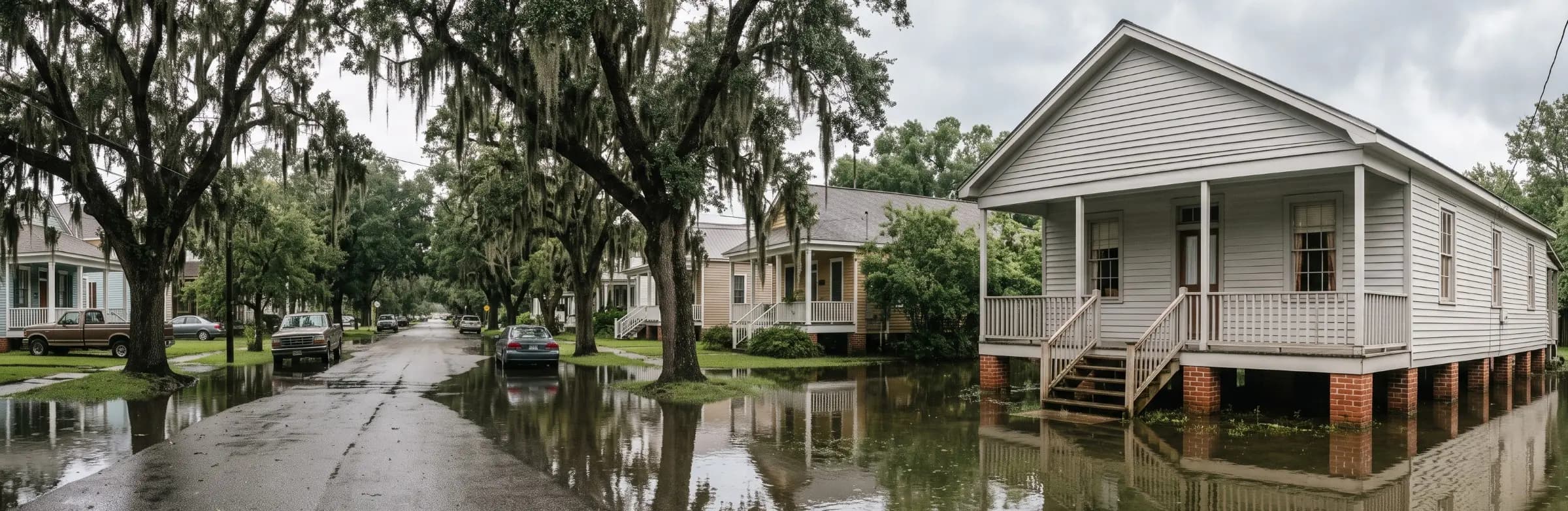

Water inside a New Orleans home has a short window before a water damage restoration job turns from drying into a rebuild, and the city's heat, rain, and drainage limits shorten it. Most local losses start with an air conditioner drain, an aging supply line, a wind opened roof, or street water that outran the pumps, and Louisiana's claim deadlines, permit rules, and contractor licensing thresholds decide how fast you can move and what the job costs.
In New Orleans, water damage restoration follows the ANSI/IICRC S500 standard for extracting water, drying structural materials, cleaning, and repairing the home. Louisiana sets contractor licensing by job value through the Louisiana State Licensing Board for Contractors (LSLBC), so a company's IICRC credentials, its LSLBC status, and a written drying scope are the three checks to make before work starts.
Key insights
- Typical cost. Water damage restoration in New Orleans costs $1,500–$7,000 for one affected area, while rain or street water that enters a ground floor can reach $10,000–$35,000 or more.
- Pumps have a limit. The Sewerage and Water Board designs its drainage system to clear 1 inch of rain in the first hour and 0.5 inch each hour after, so a cloudburst can flood streets and homes even when every pump station is running.
- Louisiana claim clocks. Under R.S. 22:1892, an insurer must start adjusting a property claim within 14 days of notice, or 30 days for a catastrophic loss in a declared emergency, and must pay a claim due within 30 days of satisfactory proof of loss.
- Two year suit floor. A Louisiana homeowners policy cannot limit your time to sue on a first party property claim to less than 24 months from the loss under R.S. 22:868.
- Separate deductibles. A named storm deductible of 2–5 percent applies to wind damage in a hurricane, while storm surge and rising street water need a flood policy with a 30 day waiting period.
- Deductible rules for contractors. Louisiana law bars contractors from paying, waiving, or absorbing your deductible, and from adjusting your claim unless they hold a public adjuster license.
First 48 hours after water damage
Within 48 hours, stop the source, cut power to wet areas if it is safe, document everything with dated photos, give your insurer written notice, and get an IICRC credentialed crew drying the structure. The EPA says mold can begin growing on wet materials within 24–48 hours, and New Orleans' warm, wet climate leaves little room to wait for an adjuster.
 Photograph the stain line, the wet floor, and the water source from several distances before anything is moved, because dated images show the insurer when the damage began and how far it spread.
Photograph the water line, the source, and damaged belongings before moving anything, then email the photos to your insurer so a dated record backs up your phone call. Louisiana policies expect you to protect the property from further damage, and reasonable drying costs belong in the claim, so keep every receipt.
1. Identify the water source
Water that arrives from the street, the yard, or a canal is flood water, water from a failed pipe or appliance is plumbing water, and rain blown in through a roof or window opening is storm water. Each one falls under a different part of your coverage, so note which you have before you describe the loss to anyone.
2. Make the area electrically safe
Turn off the breaker only if the panel is dry and you can get to it without wading through water. If the water is still spreading, has sewage in it, or has reached the panel, treat it as an emergency and keep everyone out of the room until an electrician confirms the circuit is safe. After a hurricane, run generators outdoors and well away from doors and windows, because carbon monoxide poisoning is a recurring danger during long outages.
3. Report the loss in writing
Call your insurer, then send a short email or portal message the same day with the date, the source, and the photos. Louisiana's 14 day adjustment clock starts when the insurer is notified of the loss, so a dated message is your proof of when it began.
4. Start drying the same day
Get standing water off the floor and moving air across wet surfaces, then call an IICRC credentialed restoration company without waiting for the adjuster's visit. Keep doors and windows closed and run air conditioning or a dehumidifier, because opening windows pulls humid outdoor air into a room that is trying to dry.
5. Check the flood zone before you repair
If street or canal water entered the home, ask the City of New Orleans Department of Safety and Permits whether the damage could count as substantial before you order repairs. A written determination tells you whether the home must meet current floodplain requirements before a repair permit is issued.
Why water damage differs in New Orleans
New Orleans homes take water damage differently because much of the city sits below sea level between the Mississippi River and Lake Pontchartrain, rain falls often and fast, and pumps have to move the water out. Storms can also knock out the power that runs those pumps, which turns a heavy rain into a flood.
Heat and humidity add to the problem. Wet materials dry slowly in humid air, so a loss that sits for two days costs more than one dried in the first day, and an air conditioner running most of the year gives leaks more places to start.
Below sea level, surrounded by water
Levees keep storm surge out of the city, but rain that falls inside the levee system has to be pumped out through a network of drainage canals. Any hour of rain that exceeds the pumps' design capacity leaves flood water in streets, yards, and low floors.
Frequent, intense rain
NOAA's National Weather Service climate normals for 1991–2020 show measurable rain on roughly 115 days a year. Short downpours matter more than the annual total, because drainage capacity is measured by the hour. A storm that drops two inches in an hour is twice the 1 inch design rate, so a routine looking cloudburst can still flood a low street.
New Orleans flood and drainage history
New Orleans' major water events include Hurricane Katrina in 2005, cloudburst floods in 2017 and 2019, and Hurricane Ida in 2021, and each exposed a different weakness: levee failure, pump capacity, and power loss. The 2017 and 2019 rains showed that pump capacity, not the levees, sets the limit on rain flooding inside the system.
 New Orleans drains are designed for 1 inch of rain in the first hour, and leaves packed against a grate can pond water on the street at lower rainfall. Report a blocked drain through NOLA 311.
The Data Center reports that 134,000 housing units, 70 percent of occupied units, were damaged when the levees failed after Katrina. Flood depths ranged from about one foot in some areas to more than 10 feet in others, so repair histories vary a lot from one block to the next.
The U.S. Army Corps of Engineers finished the Hurricane and Storm Damage Risk Reduction System in 2018 at a cost of about $14.5 billion. It is built to the 100-year level, meaning surge with a 1 percent chance of occurring in any year, and the Corps describes it as a system that reduces risk and does not eliminate it. The system defends against storm surge, and when flood water does enter a home, it starts as Category 3 under ANSI/IICRC S500.
Rainfall inside the levees is the job of the Sewerage and Water Board's pumps, which are designed to clear 1 inch of rain in the first hour and 0.5 inch each hour after that. On August 5, 2017, water still filled streets and entered homes while all 24 of the board's drainage pump stations were staffed and operating.
On July 10, 2019, rainfall above nine inches in some areas damaged several hundred homes and businesses, and the City of New Orleans later waived building permit fees for flood related repairs. Two cloudburst floods in two years showed that a home does not need to be near the lake or a levee breach to take on rain water.
Hurricane Ida made landfall as a Category 4 storm on August 29, 2021, and knocked out power to all of Orleans Parish, leaving hundreds of thousands of people without air conditioning in summer heat. The levees and pumps largely held, so damage came from wind, roof openings, rain intrusion, and lost power, which is now the typical pattern of hurricane water damage here.
Water damage risk by neighborhood
Water damage risk in New Orleans varies by elevation, drainage, and building age more than by ZIP code, so two homes a mile apart can face different problems. Rain flooding is the most local of these: on August 5, 2017, the City of New Orleans reported 9.43 inches of rain in Mid-City and 0.74 inch in New Orleans East.
 On August 5, 2017, the City of New Orleans reported 9.43 inches of rain in Mid-City and 0.74 inch in New Orleans East. A single storm can flood one neighborhood and miss another, so judge risk by your own address.
A property's flood zone, elevation, and drainage history also affect insurance and permit requirements, so look up the exact address with the city's floodplain office and ask sellers about past flooding. Nearby Jefferson Parish has its own drainage department, permit office, and floodplain administrator, so rules change across the parish line.
| Area | Main water risk | Where to start |
|---|---|---|
| Mid-City and Broadmoor | Rain flooding in a low bowl; 9.43 inches fell in Mid-City and 5.49 in Broadmoor on August 5, 2017, and Mid-City flooded again two weeks after an earlier storm | Check street drainage, lowest floor elevation, and flood coverage before the next storm season |
| Lakeview and City Park | Lakefront rain flooding and surge exposure behind the levee system; 4.71 inches fell in Lakeview and 4.96 in City Park that day | Confirm the flood zone and keep gutters and street drains clear |
| Gentilly and Lower Ninth Ward | Lower totals on August 5, 2017, at 3.94 inches in Gentilly and 3.64 in the Lower Ninth, so rain risk follows the storm track and low ground | Ask for documentation of past repairs and moisture readings |
| New Orleans East | Large area with uneven rainfall; 0.74 inch fell on August 5, 2017, while Mid-City took 9.43 | Look up the exact parcel, since rain flooding follows the storm track |
| Algiers | West bank neighborhood across the Mississippi River; 1.54 inches fell in Lower Coast Algiers that day | Check the flood zone and watch drainage after heavy rain |
| French Quarter, Marigny, Tremé, Garden District | Older plaster and cypress construction where leaks hide inside walls and historic review applies to exterior work | Use a contractor experienced with historic materials and confirm commission approvals |
Common water sources in New Orleans
Water enters a New Orleans home through five common routes: storm and hurricane damage, air conditioner condensate, slab and plumbing leaks, roof, window, and door leaks, and sewer backups during heavy rain. Which route the water took decides how far it spread, how long it went unnoticed, and which coverage applies.
 Standing water in the pan or on the floor around an air handler means the condensate line has backed up. Turn the unit off at the thermostat and photograph the pan and line, because adjusters ask how long a leak ran.
Hurricane and storm damage
After a hurricane in New Orleans, rain that wind drives through a damaged roof, window, or door goes to the homeowners policy and its named storm deductible, while surge or rising street and canal water goes to a flood policy. Because that division splits storm damage across two policies, one hurricane often produces two separate claims. A wind gap in the roof wets the insulation and ceiling long before a stain shows, so tarp the opening, take dated photos, and keep every receipt.
Air conditioner condensation
With air conditioning running for most of the year, a clogged condensate line, cracked drain pan, or stuck float switch is among the most frequent non storm water sources in a New Orleans home. The overflow wets the air handler closet, attic floor, or ceiling below, and condensate overflow can saturate insulation and drywall for weeks before a stain appears. These leaks build slowly, so adjusters ask how long the leak ran and may exclude repeated seepage, which makes dated service records worth keeping.
Slab leaks and plumbing
Homes built on concrete slabs hide their plumbing under the floor, so a slab leak can run for weeks before anyone sees it. Early clues include a warm patch on the floor, a water bill that climbs without explanation, or the hiss of running water when every fixture is closed. Raised homes route plumbing through the crawl space, where a slow leak can drip unseen for months, and a plumber must isolate the failing line before drying can begin in earnest.
Roof, window, and door leaks
Wind driven rain gets into a New Orleans house through the roof, windows, and doors before the structure itself fails. A roof leak usually starts at flashing, valleys, ridge caps, or lifted shingles and soaks attic insulation before a ceiling stain appears.
Failed seals, flashing, or thresholds let wind driven rain past windows and doors. A window or door leak often shows as staining below the frame or bubbling paint at the wall base. Water that gets behind trim often runs down inside the wall, so the damage can show up well below the opening.
Sewer backups and drain overload
Heavy rain can push sewage up through floor drains and low fixtures when the public sewer is overloaded or a private line is blocked, and that water is Category 3 from the start. A sewage backup calls for protective equipment, disinfection, and removal of porous materials, so do not run fans through it or clean it by hand. Report public sewer chokes and leaks to the Sewerage and Water Board at (504) 529-2837, and get a plumber's written finding on whether the blockage is in the public main or your own line, since that affects who is responsible for the repair.
Older and raised homes in New Orleans
Older New Orleans homes, including shotgun houses, Creole cottages, and raised bungalows, take water damage differently because of plaster and lath walls, original wood framing, pier foundations, and aging plumbing. Water in these houses often travels through the floor into a crawl space or inside a wall cavity before it shows.
Raised homes are common in the city, and the space beneath them is where roof, plumbing, and AC drain leaks end up. In a raised home, a wet crawl space can saturate insulation, soften floor framing, and soak ductwork, and none of it is visible from inside the living space.
Plaster and lath dry more slowly than drywall and often cannot be dried in place once saturated, while original cypress and heart pine trim can usually be saved if it is removed carefully and dried. Matching old plaster profiles and trim details adds labor, so historic scopes cost more per room than modern ones.
Homes built before 1978 may contain lead paint, and older materials can contain asbestos, so both change how demolition and cleanup are done. A contractor who has handled water damage in an older or historic home should test or assume these materials before cutting into walls.
Signs of water damage in New Orleans
Water damage in a New Orleans home often shows up as a symptom long after the leak began, because humid air, plaster, and raised floors hide moisture. Catching early signs matters because an insurer will ask how long the water has been there, and wet materials left in place cost more to replace.
 A brown ring with peeling paint marks where water has pooled above the ceiling, so check the roof, attic, and any bathroom or AC unit overhead before the plaster sags. Photograph it with a date, because adjusters ask how long the damage has been there.
Check the places where water collects: ceilings below bathrooms and the air handler closet, walls below windows, the base of exterior walls, and floors over a crawl space. Photograph each sign with a date before anything is moved, since dated photos help show whether the damage was sudden.
| Sign | Likely cause | Where to look |
|---|---|---|
| Brown or yellow ceiling stain | Roof leak, AC overflow, or a supply line above | Under bathrooms, the attic hatch, and the air handler closet |
| Bubbling or peeling paint | Moisture in the wall from a window, door, or pipe leak | Below windows and at the base of exterior walls |
| Cupped or buckled floorboards | Moisture from below, often a wet crawl space | Floors over a raised foundation, near kitchens and bathrooms |
| Soft or spongy floor | A slow plumbing or appliance leak | Around toilets, tubs, and the water heater |
| Warm floor spot or a high water bill | A slab leak | Tile or laminate over a slab, and the water meter |
| Musty smell with no visible source | Wet insulation or a wet wall cavity | The AC closet, attic, and closets on exterior walls |
| Water at drains during rain | Sewer overload or a blocked line | Floor drains and first floor tubs and toilets |
A moisture meter or a thermal camera can confirm what you cannot see, and a stain that returns after it dries points to an active leak. If the signs involve drains or sewage odor, they may point to a sewage backup, so keep out of the area and treat the water as Category 3 until a professional says otherwise.
Water damage categories and classes
The IICRC S500 standard sorts water into three categories by contamination and four classes by how much material it has wet, and the pair decides the cleanup method and much of the price. Category describes how dirty the water is, while class describes how much drying the building needs.
A category can worsen with time and heat. New Orleans' warm temperatures speed bacterial growth, so water that began clean can fall into a higher category when materials stay wet for a day or two, which is another reason to start drying on the first day.
| Category | What it means | New Orleans sources |
|---|---|---|
| Category 1 | Water from a sanitary source that poses little risk at first | A failed supply line, a water heater leak caught early, or fresh AC condensate |
| Category 2 | Water with significant contamination that can cause illness on contact | A washing machine or dishwasher overflow, or AC drain pan water that has sat for days |
| Category 3 | Grossly contaminated water that can carry sewage and other harmful agents | Canal, street, or river flood water, a sewer backup during heavy rain, or storm surge |
Classes run from 1 to 4. Class 1 is a small area of low porosity material, Class 2 wets a whole room including carpet and the lower walls, Class 3 is water that fell from overhead and soaked ceilings, walls, and insulation, and Class 4 is specialty drying of dense materials such as plaster, hardwood, brick, and concrete.
In New Orleans, a roof leak or AC overflow often produces a Class 3 loss because the water falls from above, and wet plaster or old growth wood can push a job into Class 4. Class 4 drying takes longer than the usual 3–5 days of equipment, so get the category and class in writing before you accept an estimate.
Restoration cost in New Orleans
One affected area in New Orleans typically costs $1,500–$7,000 to restore, based on RestoreAdvisor estimates as of October 2026. Costs climb with Category 3 water, multiple rooms, plaster or old growth wood, and slow response, and they fall when drying starts within the first day.
 A flood cut removes wet drywall and insulation to a line above the water mark so the wall cavity can dry. Category 3 water makes this tear out standard under ANSI/IICRC S500, which is why flood jobs cost more than clean water leaks.
No public dataset publishes New Orleans only invoices, so local pricing starts from national ranges and adjusts for local conditions: ground floor rain and surge exposure, a cooling season that runs most of the year, raised pier foundations, plaster walls, and post storm crew demand. Expect two scopes on most bills: mitigation covers extraction and drying, while reconstruction covers drywall, flooring, and paint, and your insurer's estimate will usually split them the same way.
| Scenario | Cost | What drives it |
|---|---|---|
| Water heater or appliance leak caught within a day | $500–$2,500 | Clean water and a small footprint; in a raised home the water drains into the crawl space and wets the insulation below |
| AC condensate overflow from an attic or closet unit | $800–$4,000 | Wet insulation and ceiling drywall, often found after weeks of slow dripping |
| Burst or leaking supply line in one room | $1,500–$7,000 | Extraction, several days of drying equipment, and replacement of wet flooring or drywall; plaster adds time |
| Slab leak under tile or laminate | $1,500–$6,000 | Cleanup only; locating and repairing the line under the slab is a separate plumbing invoice |
| Roof leak after wind damage | $1,000–$6,000 | Wet attic insulation and ceilings; the roof repair is a separate roofing invoice |
| Wet crawl space and ductwork under a raised home | $1,500–$6,000 | Pumping, soaked insulation, and duct cleaning or replacement |
| Sewage backup (Category 3) | $2,000–$10,000 | Disinfection, protective gear, and removal of porous materials such as padding and lower drywall |
| Plaster wall and wood trim in a historic home | $2,500–$12,000 | Slower drying of plaster and lath, and trim that has to be removed and reinstalled |
| Rain or street water in a ground floor (Category 3) | $10,000–$35,000+ | Flood cuts, flooring, drywall, and contents; multi level losses can pass $75,000 |
National restoration cost ranges set the baseline, and New Orleans jobs move above or below them with the contamination category, the hours before drying starts, the age of the building, and storm demand. Ask the company to show where each of those factors appears in its written estimate.
Contamination category
Category 1 jobs are mostly extraction and drying, while rain, street, and sewage water add disinfection, protective equipment, and removal of porous materials under ANSI/IICRC S500. That added tear out accounts for most of the price gap.
Hours before drying starts
A crew on site within the first day can save more drywall and padding, and it shortens the equipment rental, which is billed per day. Each extra day that drywall and padding stay wet adds demolition and replacement cost.
Storm demand
After a named storm, crews, dehumidifiers, and drywall suppliers tighten across the metro at once, so the same job starts later and costs more than it would in a quiet week, and the software price lists adjusters use get revised after big regional events. Ask for a start date in writing so a storm backlog does not leave wet materials sitting.
An insurer's estimate usually comes from Xactimate pricing software, and Louisiana's overhead and profit rule is the first line to compare when it comes in below a contractor's bid. Ask for a line by line copy of the adjuster's estimate and set it beside the contractor's scope before you agree to a settlement.
DIY or pro cleanup in New Orleans
Mopping up a small clean water spill on tile or sealed concrete within a few hours is a reasonable DIY job, but most New Orleans losses cross that line fast. The deciding question is whether the water reached anything that cannot be dried from the surface, such as drywall, plaster, insulation, a wood subfloor, or a duct.
 A mop and towels can clear a thin film of clean water from sealed tile, and a fan or dehumidifier should finish the drying within a day. Water that reaches the cabinet base or baseboard needs a pro, because the wall and toe kick can stay wet after the tile looks dry.
Hire a water damage restoration company when water has gotten into a wall, under flooring, or into insulation, or when it came from outside the house. A room that looks dry can still hold a wet wall cavity, and a company that records moisture readings leaves you the paper trail an insurer will ask for.
| Situation | DIY or pro | Why |
|---|---|---|
| Clean water on tile or sealed concrete, dried within a day | DIY | Surface water dries with towels, fans, and a dehumidifier before it reaches porous material |
| AC drain pan overflow caught the same day | DIY | Clear the drain line and dry the area, then call a pro if the ceiling or insulation below is wet |
| Water in a plaster wall or under old floorboards | Pro | Plaster and wood subfloors hold moisture long after the surface feels dry, and mold can start within 24–48 hours |
| Rain, canal, or street flood water | Pro | Category 3 water carries contamination that needs protective gear and removal of porous materials |
| Sewage backup | Pro | Category 3 from the start, with health risks from direct contact |
| Water near outlets, panels, or ceiling lights | Pro | Shut off power at the breaker first, and have an electrician clear the circuit before anyone enters |
Restoration process and timeline
A water damage job runs in two phases: mitigation, which stops the damage by removing water and drying the structure in about 3–5 days, and repair, which rebuilds what had to be removed in about 1–3 weeks. Ask for the estimate to list the two separately, since mitigation is time sensitive and repair can wait for permits, materials, and your insurer's scope.
 Air movers and dehumidifiers usually run for 3 to 5 days, and the job ends when daily moisture readings match a dry goal, not when the floor feels dry. Ask for the readings in writing each day.
Technicians take moisture readings every day and compare them with a dry goal set from an unaffected part of the home, so the job ends when the readings match and not when the surface feels dry. In New Orleans, plaster, old growth wood, and slow summer air can stretch drying beyond the usual window, so ask for a daily drying log.
| Stage | What happens | Time needed |
|---|---|---|
| Inspection | The technician finds the source, assigns a category and class, and maps wet materials with a moisture meter | First visit |
| Water extraction | Pumps and extractors remove standing water from floors and low areas | Hours to a day |
| Removal of wet materials | Wet carpet pad, insulation, and drywall that cannot dry in place are cut out | Day 1 to 2 |
| Structural drying | Air movers and dehumidifiers dry the structure while daily readings track progress | 3–5 days; longer for plaster |
| Cleaning | Surfaces and salvageable contents are cleaned and disinfected, and odors are treated | Overlaps drying |
| Repair and rebuild | Drywall, flooring, paint, and trim are replaced after the dry goal is met | 1–3 weeks |
Timelines slip after a named storm, when crews, equipment, and materials are in short supply and permit offices run behind. Drying should still start in the first day or two, because every day of delay adds demolition and cannot be made up later.
Mold after water damage in New Orleans
A New Orleans water loss turns into a mold job when drying lags, and the city's warm, humid air gives wet drywall and framing little chance to dry on their own. Mold can begin growing within 24–48 hours, and a long outage like the one after Hurricane Ida leaves a house without the air conditioning that helps drying.
Remediation is a separate job governed by ANSI/IICRC S520, and Louisiana licenses mold remediation as its own contractor classification, so mold remediation in New Orleans brings its own license check, written protocol, and clearance testing. Daily moisture readings from the drying job, kept in writing, are the best protection against a later mold dispute.
Louisiana water damage insurance rules
A standard Louisiana homeowners policy pays for sudden, accidental water damage like a burst pipe or failed appliance, and excludes flood water and damage from long term seepage. The source of the water and how long it ran decide which part of the policy responds, so document both.
 Louisiana's 14 day adjustment clock starts when the insurer is notified, so keep the written notice, dated photos, and receipts together in one folder. That paper trail is what you point to if the insurer misses a deadline under R.S. 22:1892.
State law puts firm clocks on the insurer. Under Louisiana Revised Statute 22:1892, an insurer must start adjusting a property claim within 14 days of notice, or within 30 days for a catastrophic loss in a presidentially or gubernatorially declared emergency, and must pay any claim due within 30 days of receiving satisfactory proof of loss.
| Claim step | Deadline | Statute |
|---|---|---|
| Insurer starts adjusting after notice | 14 days (30 days for a catastrophic loss in a declared disaster) | R.S. 22:1892(A)(3) |
| Insurer pays a claim due | 30 days after satisfactory proof of loss | R.S. 22:1892(A)(1) |
| Insurer makes a written settlement offer | 30 days after satisfactory proof of loss | R.S. 22:1892(A)(4) |
| Insurer gives you its field adjuster report | 15 days after your request | R.S. 22:1892(A)(5) |
| Each side names an appraiser | 20 days after a written appraisal demand | R.S. 22:1892(G) |
| Policy limit on the time to sue | No less than 24 months after the loss | R.S. 22:868(B) |
Missing the payment or offer deadline can cost an insurer a penalty of 50 percent of the amount found due, or $1,000 if greater, plus attorney fees, when the delay is arbitrary, capricious, or without probable cause. For a catastrophic loss to a home, penalties fall under a separate statute, R.S. 22:1892.2.
Homeowners insurance pays or denies a water claim based on the source of the water and how long it ran. A burst supply line is covered as sudden and accidental, while a leak that ran unnoticed for weeks is often excluded as constant seepage, so dated plumber invoices and photographs of the first stain help with an adjuster. Louisiana also regulates how the insurer pays, and several of those rules change what to ask for when a settlement arrives.
| Rule | What it means | Statute |
|---|---|---|
| No required vendor | Your insurer cannot require a particular preferred vendor or contractor, and must tell you that you have no obligation to use one | R.S. 22:1892(E) |
| Overhead and profit | When a general contractor is reasonably foreseeable, the settlement must include contractor overhead and profit, and the insurer cannot subtract it or sales tax when it computes actual cash value | R.S. 22:1892(F) |
| Depreciation | Depreciation must be reasonable, and the insurer must explain in writing how it calculated it | R.S. 22:1892(B)(6) |
| Recoverable depreciation | The insurer may withhold it until you show proof that you paid your deductible | R.S. 22:1892(A)(7) |
| Mortgage lender checks | If a check names you and your lender, the insurer must itemize the amount paid under each coverage or issue separate checks | R.S. 22:1892(A)(6) |
Hurricane deductible and flood coverage
A Louisiana named storm or hurricane deductible is a separate deductible, usually 2–5 percent of the dwelling coverage, that applies to wind damage during a storm the National Hurricane Center has named. The Louisiana Department of Insurance says most homeowners policies carry a hurricane, named storm, or wind and hail deductible in that range, and none of them make flood water covered.
 Wind damage that opens the roof falls under the named storm deductible, while rising street water needs a flood policy. Tarp the opening and keep the receipt, since reasonable steps to prevent more damage belong in the claim.
On a home insured for $250,000, a 2 percent deductible is $5,000 and a 5 percent deductible is $12,500. If a second named storm hits in the same calendar year, R.S. 22:1337 lets the insurer apply only the unused part of the first deductible or the all perils deductible, whichever is greater.
| Water source | Homeowners policy | Flood policy |
|---|---|---|
| Burst pipe or appliance leak | Covered if sudden; standard deductible | Not covered |
| AC condensate overflow | Covered if sudden; excluded if gradual | Not covered |
| Rain through a roof or window opened by wind | Covered; storm deductible applies in a named storm | Not covered |
| Storm surge or rising street water | Not covered | Covered up to policy limits |
| Rain flooding that overruns the drains | Not covered | Covered if it meets the flood definition |
| Sewer or drain backup | Only with a water backup endorsement | Only when part of a general flood |
| Slow or long term leak | Usually excluded as seepage | Not covered |
A flood insurance policy through the NFIP carries a 30 day waiting period, so a policy bought as a storm approaches does not cover that storm. Building coverage tops out at $250,000 and contents at $100,000, and a flood claim has a 60 day proof of loss deadline.
The levee system's 100-year design does not remove the need for flood coverage. Rain flooding inside the system, as in 2017 and 2019, is paid by a flood policy and not by a standard homeowners policy.
Who pays for restoration in Louisiana
You owe the restoration bill, and your insurer reimburses covered amounts under the policy, so the contract you sign is with the company and not with your carrier. Louisiana law bars contractors from paying, waiving, or absorbing your deductible, and from adjusting your claim unless they hold a public adjuster license.
 Your contract is with the restoration company and not your insurer, so get the scope and price in writing before work starts. Louisiana law bars contractors from paying or waiving your deductible, so an offer to do either is a red flag.
The Louisiana Department of Insurance enforces both rules, including against roofers who promised homeowners work for the cost of the deductible, and it advises never signing an insurance check over to a contractor and paying in milestones. If a contractor has not begun work within 45 days of taking a deposit, the department says it may be violating Louisiana's contractor fraud statute.
Replacement cost or actual cash value
Replacement cost coverage pays current prices to repair, and actual cash value deducts depreciation from the start. Ask your insurer what proof it needs to release withheld depreciation, since Louisiana lets it wait for proof that you paid your deductible.
Lender endorsement
When a mortgage lender is named on the check, add time for its endorsement and any inspection before you schedule rebuild work. Ask your insurer for the itemized statement of coverages that R.S. 22:1892 requires with a joint check.
When a public adjuster makes sense
For a large or disputed loss, you can hire a licensed public adjuster who works for you on the claim in exchange for a fee. A restoration company cannot play that role while it does the repairs.
Federal help can fill part of the gap after a declared disaster. FEMA individual assistance does not pay for losses insurance covers, and SBA disaster loans of up to $500,000 can fund repairs to a primary residence. Neither replaces a claim with your own insurer, and both run on deadlines that start at the declaration.
Rentals and condos in New Orleans
Tenants who find water damage in a rental should report it to the landlord in writing and insure their own belongings, because the landlord is generally responsible for the structure. A written report with dated photos starts the repair clock and protects the tenant if a dispute follows.
New Orleans' Healthy Homes Ordinance sets minimum standards for registered rental properties, including a ban on mold in the unit, and tenants can report violations through 311. If a slow leak turns into a mold complaint, the city can inspect and fine the owner.
The condo association insures the common elements and your HO-6 policy covers the interior, so the first question after a leak is whether the water began inside your unit or in a shared system. Coverage for water damage in a condo often turns on the declaration of condominium, so report the leak to management in writing the same day and ask for the master policy declarations before choosing which claim to file.
Hiring a New Orleans water damage firm
A New Orleans water damage company should hold IICRC Certified Firm status, carry liability and workers' compensation insurance, name the water category and damage class in writing, and hold the Louisiana registration or license that matches the job's dollar value. Louisiana sets those thresholds by contract value.
 Search the contractor's license number with the Louisiana State Licensing Board for Contractors and look up the firm in the IICRC locator before you sign. A missing number, or a license for a different classification, is a red flag.
The Louisiana State Licensing Board for Contractors requires a home improvement registration for projects on existing homes valued from $7,500 to $75,000 and a residential license above $75,000. Mold remediation is licensed as a separate classification, and the board's description of it does not mention water extraction or drying, so confirm with the board whether your scope crosses into mold contaminated materials or rebuild work before you sign. Search the license number in the board's contractor search, and check the IICRC Global Locator for the firm's certification.
| Question to ask | A credible answer | A red flag |
|---|---|---|
| Are you an IICRC Certified Firm, and can I verify it? | A firm listing I can look up in the IICRC locator | A logo or a claim of certified technicians with no firm listing |
| Which LSLBC license or registration covers this job? | A number I can search, matched to the job's value | No number, or a license for a different classification |
| What category and class is this water? | A written category and class, with the reason for each | No classification, only the words water damage |
| Will I get a drying log? | Daily moisture readings and equipment counts | Equipment left running with no readings |
| Will you pay or waive my deductible? | No, because Louisiana law bars it | An offer to absorb the deductible or bill the insurer for more |
| Will you handle my claim for me? | No, I document the work and you deal with your adjuster | A promise to negotiate with the insurer without a public adjuster license |
In the days after a named storm, door knockers and out of state crews arrive in neighborhoods. Ask for a local address, proof of liability and workers' compensation insurance, and a written scope, and compare at least two bids before you hire a water damage restoration company.
Repair permits in New Orleans
The City of New Orleans exempts a short list of repairs from building permits, including interior painting, replacing deteriorated floorboards, and replacing less than 50 percent of the roofing or gutters on a one or two family home, according to its list of work exempt from building permits. Drywall, electrical, plumbing, and structural work are not on that list, so confirm each of those scopes with the Department of Safety and Permits before work starts.
Expect extraction and drying to begin while permit questions are settled. Exempt work can still need approval from the Vieux Carré Commission or the Historic District Landmarks Commission. In the Vieux Carré, all exterior work needs a Vieux Carré Commission permit whether or not it is visible from the street, and interior work that affects structural design needs one too.
In a mapped flood zone, FEMA's substantial damage rule applies once repair costs reach 50 percent or more of the building's market value before the damage, and the building must then meet current floodplain requirements. The city applies the same threshold to structures more than 50 percent damaged.
That can include raising the home. NFIP policyholders in a special flood hazard area can claim up to $30,000 in Increased Cost of Compliance coverage toward elevation or floodproofing, filed separately from the flood claim, and FEMA's rules exempt certain designated historic structures from the 50 percent rule, so ask the floodplain office whether yours qualifies.
Jefferson and St. Bernard water damage
Louisiana's insurance deadlines, contractor license thresholds, and 24 month suit floor are state rules that apply in every parish around New Orleans, while permits and floodplain rules change with the address. Many people search for a New Orleans water damage company from Metairie, Kenner, or Chalmette, so the parish line decides which permit rules apply.
 A repair that needs no permit in Orleans Parish may need one in Jefferson or St. Bernard, so confirm the local rule for your address before ordering demolition or rebuild work. Ask the permit office whether the substantial damage rule could apply to your home.
Each parish and city sets its own permit office and floodplain administrator, and a repair that needs no permit in Orleans Parish may need one across the line. Confirm the local rule before you order demolition or rebuild work, and ask the office whether the substantial damage rule could apply to your home, as Kenner's floodplain permit rules do when repairs reach half of a building's value.
| Area | Permit office | What to know |
|---|---|---|
| Unincorporated Jefferson Parish, including Metairie | Department of Inspection and Code Enforcement | Minor repairs need the permit office's approval; roof covering and gutter work on one and two family homes is exempt, but roof decking is not |
| Kenner | City Department of Inspections and Code Enforcement | Kenner is a separate city with its own floodplain manager; repairs costing 50 percent or more of market value must meet new construction elevation |
| St. Bernard Parish | Department of Community Development | A renovation permit needs a site plan and contractor's estimate; electrical, plumbing, gas, and mechanical work must be filed by a licensed parish contractor |
| Other parishes | Local permit or floodplain office | St. Tammany, St. Charles, and Plaquemines each set their own rules, so call before repairs |
Jefferson Parish posts its permit guidance for minor repairs, and a St. Bernard homeowner can request the renovation checklist from the Department of Community Development. A contractor serving the metro area should be able to tell you which office applies to your address.
Buying or selling a water damaged home
Louisiana requires the seller of residential property to complete a property disclosure document on the form prescribed by the Louisiana Real Estate Commission under R.S. 9:3198, and the form asks about mold, prior flooding, and the flood zone. If the document is delivered after an offer, the buyer can withdraw within 72 hours, excluding weekends and holidays, after receiving it.
The form is not a warranty, so a buyer still needs an inspection, and Louisiana's hidden defect remedy, called redhibition, can apply when a defect was concealed. Seller answers of unknown are common in a city where so many homes flooded, so an independent inspection tells you more than the form does.
Ask for repair invoices, claim history, moisture readings, and any substantial damage determination for the property. Fresh repairs can hide a wet history, so readings from an independent inspector matter more than a clean looking finish.
Preventing water damage in New Orleans
Four habits prevent most water damage in a New Orleans home: flushing AC drain lines, replacing aging hoses and shutting off the water when you leave, keeping street drains and gutters clear, and protecting the roof while carrying flood insurance. Most local losses begin with a clogged condensate line, a failed hose, or water the drainage system could not clear, and these habits address each one.
 Replace rubber washer hoses that crack or bulge with stainless braided lines, and close the shutoff valve before you leave for a storm or a trip. Dated records of the swap and the shutoff help show later that a loss was sudden and not a long term leak.
Flush the AC condensate line
Pour a cup of white vinegar through the AC condensate line monthly in the cooling season, and add a float switch that shuts the unit off before the pan overflows. Check the drain pan at every filter change.
Keep drains and gutters clear
Clear gutters and downspouts before hurricane season, and keep the catch basin in front of your property free of leaves and trash. Report a clogged street drain through NOLA 311, which gives you a ticket number for your records.
Replace hoses and shut off the water when you leave
Stainless braided supply lines hold up better than rubber, so swap old washer hoses for them and inspect every line once a year. Close the main valve before leaving for a storm or a trip of more than a few days, and keep dated records of visits and the day you shut the water off, since insurers look closely at vacant home losses.
Protect the roof and carry flood coverage
Have the roof inspected after every named storm so a small roof leak is caught early, and consider a FORTIFIED Roof upgrade, since Louisiana requires insurers to discount hurricane premiums for qualifying roofs and the Louisiana Fortify Homes Program has offered grants of up to $10,000. Buy flood insurance well before hurricane season, because NFIP policies carry a 30 day waiting period.
Frequently asked questions
How much does water damage restoration cost in New Orleans?
Expect $1,500–$7,000 for one affected area in New Orleans, based on RestoreAdvisor estimates. Mitigation usually runs about $3–$7.50 per square foot and repairs $20–$37, so a quote far outside those ranges should come with a line by line explanation. A ground floor hit by rain or street water can reach $10,000–$35,000 or more.
Can I start drying before the insurance adjuster arrives?
Yes, and you should. Your Louisiana policy requires reasonable steps to prevent more damage, and the insurer's 14 day adjustment window is no reason to leave wet materials sitting. Take dated photos first, hold on to any removed material the adjuster may want to inspect, and keep every equipment and labor receipt.
Does flood insurance cover rain flooding far from the lake?
Often yes, when the rain flooding meets the NFIP definition of a flood. Under the NFIP, a flood is a general and temporary condition of partial or complete inundation of two or more acres or of two or more properties, which means water that reaches only your lot from a local drainage problem may not qualify. Any new flood policy also carries a 30 day waiting period.
How long does water damage restoration take in New Orleans?
Drying usually takes 3–5 days, longer for plaster and heavy wood, and repairs add another 1–3 weeks. After a named storm, scarce crews and materials can stretch both stages, and a Category 3 flood job waiting on permits can take months.
What if my restoration bill is more than my insurance pays?
You owe the difference. Your contract is with the restoration company, so the deductible, withheld depreciation, and any uncovered work stay your responsibility. If the insurer denies the claim or underpays it, Louisiana's appraisal clause lets each side name an appraiser within 20 days of a written demand, and you can file a complaint with the Louisiana Department of Insurance.
Who do I report a clogged street drain or sewer choke to?
Report a clogged street drain through NOLA 311 and keep the ticket number. Report water leaks and sewer chokes in the public system to the Sewerage and Water Board at (504) 529-2837. Photograph the water level on your street with a date, since that record supports a claim if the water reaches your home.
Does Louisiana require a license for water damage restoration?
It depends on the contract amount and scope. The LSLBC requires a home improvement registration for work from $7,500 to $75,000 and a residential license above $75,000. Mold remediation is a separate classification, and the board's description of it does not mention water extraction or drying, so confirm your scope with the board and search the contractor's license number before you sign.
How long do I have to report water damage to my insurer?
Report it in writing the same day if you can, because most policies require prompt notice. Louisiana's 14 day adjustment clock starts when the insurer receives notice, a flood claim has a 60 day NFIP proof of loss deadline, and a policy cannot limit your time to sue on a first party property claim to less than 24 months from the loss.
- IICRC S500
- EPA: Flood Cleanup to Protect Indoor Air and Your Health
- NWS New Orleans/Baton Rouge
- City of New Orleans: Updated Reminders Following Saturday Flooding, August 5, 2017
- U.S. Army Corps of Engineers: Engineers Take Protecting New Orleans Personally
- Louisiana Revised Statutes 22:1892
- Louisiana Department of Insurance: Homeowners Insurance After a Disaster
- City of New Orleans: Permit Fee Waiver for Flood Repairs
- City of New Orleans: Work Exempt From Building Permits
- LSLBC: Types of Licenses
Sam Hickerson is the founder of RestoreAdvisor and writes consumer guides on mold remediation, water damage restoration, inspection, testing, and home recovery. His work focuses on helping homeowners understand costs, risks, and when to call a professional. He draws on guidance from the EPA, CDC, IICRC, and other authoritative sources to make complex home issues easier to navigate.