
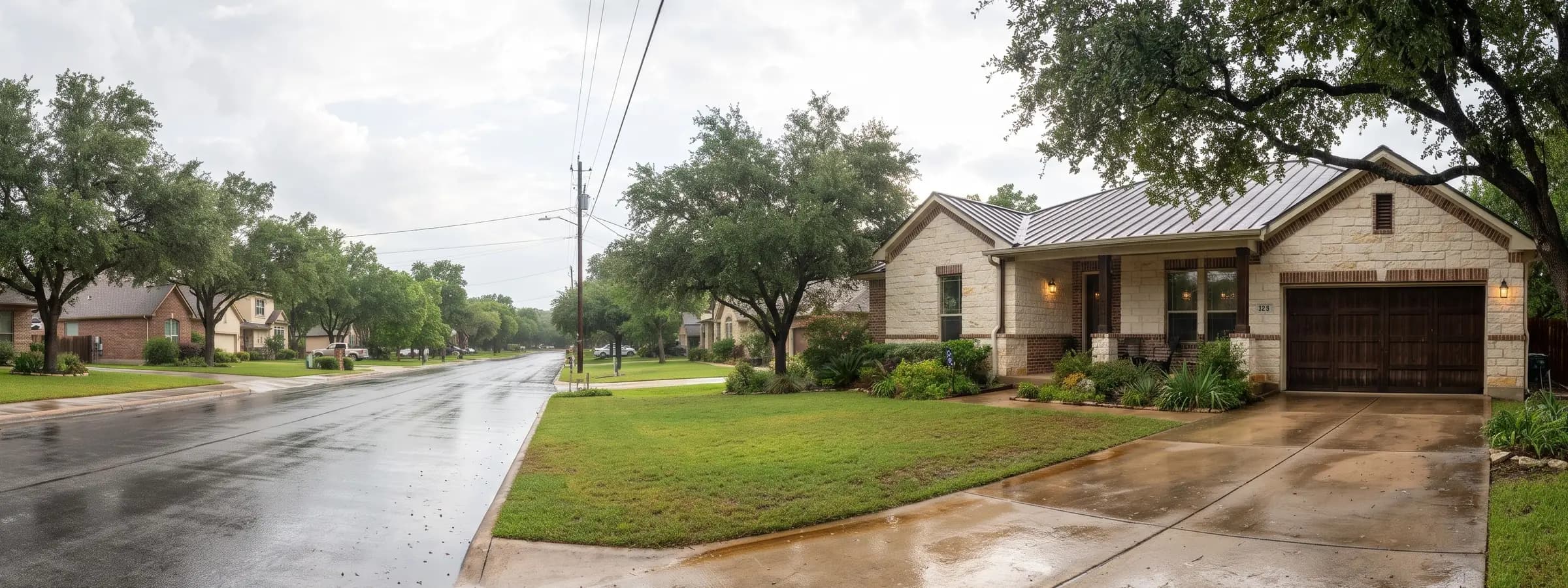

Insurers paid $117.3 million in homeowners water claims in Bexar County in 2025, about $281 for every policy in force, according to the Texas Department of Insurance (TDI), so a water loss in San Antonio is a claim before it is a repair bill. What a crew bills, what the deductible takes out, how long the insurer has to decide, and the date of the first stain all shape what the policy finally pays, and the decisions made in the first two days become the record all of them are judged against.
In San Antonio, water damage restoration means removing water from a house, drying its materials to the ANSI/IICRC S500 standard, and rebuilding what could not be saved, and since the Texas Department of Licensing and Regulation (TDLR) licenses mold assessors and remediators but Texas has no state license for water extraction, the homeowner has to judge a crew on IICRC firm certification, insurance, and a written scope. Water that comes in from a street or yard is Category 3 at once, while supply line water starts clean and degrades the longer it sits.
Key insights
- Typical cost. Water damage restoration in San Antonio costs $1,200–$5,800 for a typical job, with an average of about $3,100.
- Bexar claims. TDI data shows insurers paid $117.3 million in Bexar County homeowners water claims in 2025, about $281 per policy.
- Freeze year. Bexar County water losses per policy rose 123 percent in 2021 to $422, the year of Winter Storm Uri, and fell to $277 in 2022.
- Insurer clocks. A Texas insurer has 15 business days after receiving what it asked for to decide a claim, and 5 business days to pay once it agrees.
- No state water license. Texas licenses mold assessors and remediators through TDLR but writes no state license for water extraction, so IICRC firm certification, insurance, and a written scope are the checks.
- Permits. The City says carpeting, wood and laminate flooring, cabinets, painting, and sheet rock repair typically need no permit, while plumbing fixtures, water heaters, and electrical work do.
What San Antonio water jobs cost
San Antonio water damage jobs usually cost $1,200–$5,800, and the average is about $3,100. A typical job here means one affected area that is extracted and dried and, at the high end, repaired, while a loss across several rooms costs a multiple of that. Small leaks caught the same day start near $300, and flood or storm water through several rooms reaches $8,300–$20,500 or more.
 Padding that stays wet usually has to be pulled and replaced, so a loss that reaches the carpet edge adds removal and new padding to the drying bill.
According to the Bureau of Labor Statistics, construction and extraction workers in the San Antonio area earned about 83 percent of the U.S. average hourly wage in May 2025. The final water damage restoration cost of a San Antonio job depends on how many rooms a Category 3 loss reaches, whether the house sits in a historic district, where the City says design and materials can be restricted, and how long a crew waits behind a regional storm.
| Scenario | Estimates | Drivers |
|---|---|---|
| Minor spot mitigation | $300–$1,200 | A small clean water spill dried within a day, often without drying equipment |
| Supply line burst | $800–$2,500 | Clean water in one room, with higher bills when the line served an attic or upstairs wall |
| Washer or dishwasher overflow | $1,700–$4,100 | Category 2 water that takes wet padding and lower drywall with it |
| Roof leak during a storm | $2,100–$5,800 | Wet attic insulation and ceilings after wind and rain, with the roofer's repair billed separately |
| Mitigation plus basic repairs | $3,300–$5,800 | Extraction and drying, then new drywall, flooring, and paint |
| Sewage backup | $5,800–$11,500+ | Category 3 water, disinfection, and removal of porous materials |
| Flood or storm across several rooms | $8,300–$20,500+ | Category 3 water at ground level, with flood cuts, flooring, and contents |
Insist that each bid separates the mitigation scope, which is extraction and drying, from the repair scope, which is drywall, flooring, and paint. Mitigation moves with the count of air movers and dehumidifiers and the days they run, so a bid that omits the machines or the planned days cannot be compared with one that lists them.
A bid priced per square foot applies to the affected floor area only, so a 300 square foot loss is billed on those 300 square feet, and the cost per square foot differs by water category. Drying that loss costs about $750 at the lowest rate and $1,875 at the highest, and rebuilding the same 300 square feet adds about $5,100 at $17 a square foot and $9,300 at $31.
| Work | Estimates per sq ft | Applies to |
|---|---|---|
| Category 1 mitigation | $2.50–$3.25 | Affected floor area, clean water drying |
| All mitigation | $2.50–$6.25 | Affected floor area, across all categories |
| Category 2 mitigation | $3.25–$5.25 | Affected floor area, appliance and aged water |
| Category 3 mitigation | $5.75–$6.25+ | Affected floor area, flood and sewage water |
| Repair and rebuild | $17–$31 | Affected floor area, drywall, flooring, and paint |
Room totals track how much flooring, drywall, and cabinetry the water touches. A living area costs the most because carpet or hardwood covers a large floor and the furniture has to be moved, a bathroom costs the least because so little surface is wet, and a kitchen lands in the middle since cabinet bases and appliance lines add demolition.
| Room | Estimates | Drivers |
|---|---|---|
| Bathroom | $400–$3,700 | Tile, vanity, and subfloor after a supply line or toilet failure |
| Laundry room | $800–$4,100 | Hose and drain overflow that wets flooring and the wall behind the machine |
| Kitchen | $1,200–$6,600 | Cabinet bases, flooring, and appliance leaks that travel under the cabinets |
| Living or family room | $2,700–$15,500 | Large carpet or hardwood areas and contents that have to be moved |
Category of the water
Clean supply line water can often be dried in place, while Category 3 street or sewer water means disinfecting and discarding porous materials under ANSI/IICRC S500, and that difference is the largest line separating a pipe leak from a flood.
Hours before drying starts
Each hour of waiting lets water climb farther into drywall, padding, and framing, so work that begins the same day removes less material than work that begins on day three, and the invoice reflects it.
Night and weekend calls
A call at night, on a weekend, or on a holiday often carries a labor premium of 25–50 percent. When an emergency water damage call can wait until morning without the water spreading, waiting avoids the premium.
Waiting behind a storm
Crews, dehumidifiers, and drywall stock all move to the hardest hit streets after a big storm, so a loss reported in that week may start later and cost more than the same loss reported in a calm one.
Where San Antonio's water comes from
San Antonio houses take on water from household plumbing and air conditioners in every season, from freezes and storm water damage in some years, and from the utility's own mains in dry summers. TDI data puts Bexar County water claims at $113.8 million in 2022, $132.7 million in 2023, $124.8 million in 2024, and $117.3 million in 2025.
 Condensate overflow starts as Category 1 water and degrades the longer it sits in attic insulation, so a stain this size is a sign the insulation above it is already wet.
Wind paid more than water in Bexar County in every year from 2019 through 2025, reaching $248.1 million in 2025 against $117.3 million for water, so water is the second largest homeowners loss and about a quarter of the $456.2 million insurers paid that year, according to the TDI loss data. Under ANSI/IICRC S500, each source also sets a category, and the category decides how much material is removed and how much is dried.
| Water source | Category | Effect on the job |
|---|---|---|
| Supply line, water heater, or sink overflow | 1 | Usually dried in place when found within a day or two |
| Air conditioner drain overflow | 1, degrading if it sits | Ceiling drywall and attic insulation take the water first |
| Pipe that bursts in a hard freeze | 1, degrading if it sits | Water runs until the main is shut, so several rooms can be wet |
| Washer or dishwasher discharge | 2 | Wet padding and lower drywall are usually cut out instead of dried |
| Roof leak in a storm | 1, degrading if it sits | Insulation soaked for days is replaced, and a roofer repairs the roof on a separate bill |
| Street, yard, or flood water | 3 | Carpet, padding, and drywall it touches are removed |
| Sewer line backup | 3 | The crew disinfects and discards porous materials while a plumber fixes the line |
Cooling season leaks
The National Weather Service climate table for the San Antonio airport counts about 122 days a year at 90 degrees or higher, so air conditioners run for most of the year. A clogged condensate line can overflow into an attic or closet for weeks without a visible sign until a ceiling stain finally appears, and a condensation leak that runs that long is a Category 1 loss that worsens with time.
Freeze years
San Antonio averages about 14 nights a year at or below 32 degrees, which is why a hard freeze catches houses with exposed pipes unprepared. Bexar County water losses per policy rose from $189 in 2020 to $422 in 2021, a 123 percent jump in the year of Winter Storm Uri, and fell back to $277 in 2022, so a freeze event is uncommon in San Antonio but expensive when it comes.
Dry spells and clay soil
The San Antonio Water System (SAWS) experienced roughly 7,400 leaks in 2023, up from 6,400 in 2022 and 4,800 in 2021, according to the San Antonio Report. SAWS staff told the paper that main breaks mostly happen where there is clay soil and are more likely when intense heat dries the soil and shifts the pipes, and the paper reports that a majority of the leaks are inside Loop 410, where the older pipes are.
San Antonio had its second driest year on record in 2022, with 11.51 inches of rain, according to the National Weather Service, and SAWS logged more main breaks in 2023 than in any earlier year. SAWS also warns that large amounts of water can sink into the ground without any evidence left behind, so a water bill that jumps with no visible leak is a reason to check the meter.
Flood years
San Antonio averages 32.38 inches of rain a year and 9.4 days a year with an inch or more, according to the National Weather Service. The airport recorded 11.26 inches on October 17, 1998, 9.87 inches on May 25, 2013, and 9.52 inches on July 1, 2002, and 6.11 inches fell on June 12, 2025, which ranks tenth, according to the NWS precipitation rankings.
The NWS report on the July 2002 floods lists dry periods before the floods of 1957, 1967, 1971, 1978, 1991, 1998, and 2002, so drought and flooding belong to one cycle here. The heaviest rain in 2002 fell north, northwest, and west of San Antonio, and a house that never saw a creek can still take water through a garage door when a street drain cannot carry a storm, or through a roof leak when wind drives rain under the shingles.
The first 48 hours in San Antonio
Shut off the main water, write down when you found the leak, film every wet room, protect valuables, and call the insurer and a crew in the same hour. Those two days decide whether clean water stays Category 1 and whether drywall and padding can be dried in place or must be cut out.
 A quarter-turn ball valve is closed once its handle sits across the pipe, so confirm the lever is perpendicular and then open a faucet to check that the flow has stopped.
SAWS tells customers who suspect a leak to shut off the main water service to the home and contact a plumber, and the shutoff and the date matter to the claim as much as to the house. A leak found in the street or a break in a main goes to SAWS, which takes water and sewer emergencies at all hours.
1. Close the main shutoff
Shut off the main water service to the house and call a plumber, which is the first step SAWS gives customers who suspect a leak. If the water is coming from a main or a leak in the street, call SAWS at 210-704-7297, which takes water and sewer emergencies around the clock.
2. Write down when you found it
Note the date and time you first saw water or a stain, because TDI says hidden water damage usually must be reported within days after you first see it, and that date anchors every deadline that follows.
3. Film every wet room before cleanup
Record a slow video of each wet room, saying aloud what you see, then photograph the source of the water, the stain line on the walls, and every damaged item before anyone moves or discards anything, since TDI tells policyholders to keep damaged items until the adjuster has seen them.
4. Lift valuables and cut power from dry footing
Carry electronics, papers, and photographs to a dry room. Turn off the breakers for wet rooms only if the panel is dry and reachable without standing in water, and call an electrician if it is not.
5. Open the claim and book drying the same day
Open the claim with your insurer and hire a crew within the same hour, since drying should not wait for an adjuster's visit. Tarp the roof or make other temporary repairs, save every receipt, and leave permanent repairs until the insurer has inspected, as TDI advises.
When the water arrives from outside, the EPA's flood cleanup steps apply: flood water can carry sewage, bacteria, and chemicals, and mold can grow on wood, drywall, carpet, and furniture that stay wet for more than 24 hours. Wear an N-95 respirator, goggles, gloves, and boots, and run fuel-powered generators outside and at least 20 feet from buildings, since carbon monoxide can kill in minutes.
Jobs that fit a mop and a fan
A mop and a fan are enough for a small, clean spill on a hard floor that is found the same day, and wider, older, or dirtier water goes to a crew, including any sewage backup. The longer the water sits, the less a household fan can do, and a spill left through a weekend is no longer a DIY cleanup job.
| Situation | Owner can dry? | Reason |
|---|---|---|
| Clean spill on tile or sealed floor, same day | Yes | Towels, a mop, and a fan are enough when nothing absorbed the water |
| Wet carpet over padding from a clean source | Sometimes | Padding that stays wet usually has to be pulled, so speed decides the outcome |
| Wet drywall or insulation | No | Water hides in the wall cavity, beyond a surface meter's reach |
| Water from an appliance drain, a yard, or a sewer line | No | Category 2 or 3 water needs disinfection and removal of porous materials |
| Water near outlets, panels, or ceiling fixtures | No | Power has to be isolated by a qualified person before anyone goes in |
Licenses a San Antonio crew needs
No state license number exists for extracting and drying water in Texas, because the state does not license restoration as a trade. TDLR licenses mold assessors and remediators, and the City requires state licensed contractors to pull electrical, mechanical, and plumbing permits, so the checks left for a water crew are IICRC firm certification, insurance, and a written scope.
 A restoration crew that moves a supply line like this one is doing plumbing work, so ask for the licensed plumber's name before anyone touches the pipe.
TDLR draws the mold line by building: a licensed remediator is required for 25 contiguous square feet or more of visible mold in a residential property with 10 or more units, while the TDLR mold FAQ lists exemptions for buildings with fewer than 10 rental units, which includes houses. A water job that turns into a mold job needs a licensed remediator or not depending on the building.
The City of San Antonio says homeowners can apply for a plumbing permit on an existing residence only when it is their homestead and they will do the work personally, and that only state licensed contractors can get electrical, mechanical, and plumbing permits. A restoration company that proposes to move a pipe or rewire a wall should name the licensed contractor who will pull that permit, and a company that cannot name one is a weak candidate.
The IICRC certification that counts is the one held by the company named on the contract, so the firm listing, the technician's training for the job type, and the insurance certificates are the three checks. A homeowner can confirm all three in a few minutes before signing, since the firm listing is searchable by company name and the certificates come straight from the company's insurance agent.
Questions a San Antonio crew must answer
A San Antonio crew should answer seven questions before it sets a fan: who holds the IICRC firm certificate, what the insurance certificates say, what equipment will run, what gets cut out, how the deductible is handled, who receives the insurance payment, and when the moisture log arrives. Several companies often get called in one afternoon, and putting the same questions to ask a restoration company to each sorts them quickly.
 Ask each company the same questions and write down the answers, so the quotes can be compared on the same scope and the same equipment count.
Does the contract name a certified firm?
Look the company up in the IICRC Certified Firm listing under the exact name printed on the contract. Holding a technician's certificate is a different thing from being a certified firm, so note the result and the date in your claim file.
Can you read the insurance certificates?
Ask for liability and workers' compensation certificates from the insurer's agent, and read the dates, since an expired certificate proves nothing about today's job.
How many machines, in which rooms, for how many days?
Ask for the equipment count and the planned drying days, and have both written on the scope so the invoice can be checked against them later.
What exactly comes out, and who rebuilds?
Ask for a written scope that names what is cut out, what is dried where it stands, and who handles the rebuild. Approve any addition in writing, so a wall opened on day two is an agreed line on the invoice.
How is the deductible handled?
TDI says the insurer subtracts the deductible from the payment and that you owe it to the contractor, so a company that says it will absorb or waive the deductible is making a promise that deserves a second look before you sign.
Who receives the insurance payment, and will you bill the insurer directly?
With a mortgage, TDI says the insurer usually sends the payment to the lender, which must contact you within 10 days of receiving it, so settle early whether the crew will be paid by you, by the insurer, or from a lender release, and whether it bills the insurer directly.
Will the moisture log arrive with the invoice?
Ask for readings on every wet material at each visit, taken in the same marked spots, plus a reference reading from an unaffected area, because the logs are what show that drying is finished.
A free walkthrough is a common offer, and it is fine as long as it ends in a written scope. Reviews help when they are specific, so look for dated comments about how fast the crew arrived, whether drying logs were kept, and whether the final invoice matched the quote, and treat a cluster of reviews posted in one week with caution. Then ask what the warranty covers, since choosing a restoration company comes down to who answers when a second problem shows up behind a closed wall.
Moisture readings that mean dry
A structure is dry when every wet material reads close to the dry standard, which ANSI/IICRC S500 sets as the moisture content of the same material in an unaffected part of the house. A crew that pulls the equipment on a set day, whatever the readings say, leaves moisture inside the walls and floor.
Each visit should add a new row to the log: indoor and outdoor temperature and humidity, the reading at every marked point on drywall, framing, and flooring, and a list of the machines running in each room. Falling numbers at every point that end near the reference value are what an insurer or a later buyer will want to see, and gaps in the log justify another visit before anything is closed up.
Surface meters see only the outer fraction of an inch of drywall, so have the technician check wall cavities and the lower framing with probes or a thermal camera before anything is closed up. Hardwood, plaster, and framing keep their water longest, and the moisture readings that count as dry are different for each material.
How long a San Antonio job takes
Plan on 3–7 days of drying and 1–3 weeks of repairs, after one to two days of extraction and equipment setup. Dense materials and Category 3 water stretch both phases, and the drying schedule depends on the material, the water category, and how many hours passed before the first technician arrived.
 Repairs begin only after moisture readings match the reference, so a patch like this one marks the end of the drying stage.
Hardwood often needs 7–10 days of drying, and carpet and padding dry in 2–3 days but are usually replaced anyway. A quoted drying time begins when extraction begins, so each hour between the leak and the first technician lengthens the job, and a crew that cannot arrive until tomorrow moves the finish date by a full day.
| Stage | Timing | Work |
|---|---|---|
| Extraction | Days 1–2 | Pumps and extractors pull standing water while the crew maps what is wet |
| Tear out | Days 1–2 | Padding, soaked insulation, and drywall that will not dry in place are removed |
| Drying | 3–7 days | Air movers and dehumidifiers run while the technician logs readings at each visit |
| Cleaning | Days 3–7 | Surfaces are cleaned and disinfected, starting with Category 2 and 3 areas |
| Permits and review | Varies | Plumbing and electrical permits, historic district rules, and floodplain review can add waiting |
| Repairs | 1–3 weeks | Drywall, flooring, cabinets, and paint go back once readings match the reference |
When a job outlasts its quote, the usual causes are damage found behind a wall or readings that never reached the reference. Ask for any extension in writing, and ask how long a permit review might hold up the rebuild, since the finish date includes waiting that a drying plan does not show.
Saving contents after a water loss
Belongings that do not soak up water can usually be cleaned and dried after a water loss, while porous items that absorbed a lot of water are thrown away, according to the EPA. Some fabrics and textiles can be saved by putting them through the laundry, and a restoration specialist for that type of item may be able to clean and dry a precious item.
Cleaning comes before disinfecting, and the EPA says to start gently with a cloth dampened in clean water and detergent, to avoid scrubbing or stirring up dust, and to use an EPA-registered disinfectant only on clean surfaces that do not absorb water. Never mix cleaning products or add bleach to other chemicals, and if mold is already visible, wait to run fans or dehumidifiers until the visible mold has been cleaned gently so the fans do not spread it.
Photograph and list every item before it goes to the curb, because TDI tells policyholders to make a list of damaged property and not to throw damaged items away until the adjuster has seen them. The EPA also says people with asthma or weakened immune systems should stay away from moldy sites and flood cleanup, and that children and pregnant people should not take part in it.
Claim clocks and what policies skip
A Texas insurer must acknowledge a claim within 15 business days, accept or reject it within 15 business days of receiving the information it requested, and pay within 5 business days of agreeing to pay. TDI allows a 45 day extension when the insurer explains the need, plus 15 more days after a weather related catastrophe.
 A tarp is the kind of temporary repair TDI says to make right away, with receipts kept, while permanent roof work waits until the insurer has inspected.
The 15 business day decision clock starts only when the insurer has what it asked for, so answering requests quickly and keeping a dated record shortens the wait. The TDI claim steps add that a rejection must come with a written reason and that a home claim with replacement cost coverage can pay twice, first for repairs minus depreciation and again after the work is finished.
| Insurer step | Deadline | Detail |
|---|---|---|
| Acknowledge the claim | 15 business days | The review begins and the company requests what it needs |
| Accept or reject | 15 business days | Runs from receipt of the requested information, with any rejection explained in writing |
| Extended review | 45 more days | The insurer must explain why it needs the time |
| Pay the claim | 5 business days | Starts when the insurer agrees to pay all or part |
| Weather catastrophe | 15 more days | TDI can extend these deadlines after a weather related catastrophe |
Coverage turns on how the water arrived. TDI lists a burst pipe, a toilet overflow, and a broken washer hose as sudden and accidental losses that most policies pay, and says gradual leaks and seepage are usually excluded along with any mold they cause. Mold that grows on a damaged item from a covered loss is covered, most policies leave out mold cleanup and testing unless an endorsement was bought, and a flood needs its own policy. Read homeowners insurance coverage for water damage against your own policy, since endorsements and deductibles differ.
Hidden water damage usually has to be reported within days of the day you first see it, according to TDI, so the date of the first stain belongs in the file next to the photographs and receipts you assemble. Limit work to temporary repairs until the insurer has inspected, as TDI advises.
When an insurer pays late or low
A Texas homeowner who disagrees with a payment should send the insurer documentation that backs up the position, the same record built when filing a water damage claim, and can then take the dispute to the Texas Department of Insurance or a licensed public adjuster. TDI's help line at 800-252-3439 takes complaints and can say whether a public adjuster is licensed, how many complaints have been filed, and whether it has taken any disciplinary action.
TDI allows a public adjuster to charge up to 10 percent of whatever the company pays on the claim, undisputed amounts included. In TDI's example, a $100,000 settlement with $20,000 in dispute can still produce a $10,000 fee, so put the fee in the contract as a dollar amount and use the 72 hours TDI gives you to cancel after signing.
A public adjuster cannot act as your contractor, and a contractor cannot advertise that it will handle your insurance claim, so a restoration company that offers to run the claim for you is outside the rules. When the insurer has rejected the claim outright, the first step is the written reason the company must give you.
San Antonio permits and flood zones
San Antonio does not require a permit for every water repair, and the City says some general repairs are exceptions to the permit rule. The City's list of work that typically needs no permit includes cabinets and counter tops, carpeting and wood or laminate flooring, and painting, plastering, repairing sheet rock, wallpapering, and tiling, while new plumbing fixtures, water heaters, sewer lines, and electrical work need permits.
 In a historic, neighborhood conservation, or corridor district the City notes there may be restrictions on design and materials, so confirm the replacement material before swapping trim or siding.
The City's residential permit rules state that a building permit is typically required to build, remodel, repair, or demolish a structure, and that your project may need building, electrical, mechanical, and plumbing permits depending on scope. The City's Home Remodeling FAQ adds a Limited Service Repair permit that allows immediate repairs to water heaters or softeners to be filed within 3 days, and the Development Services Department answers questions at 210-207-1111.
The Home Remodeling FAQ lists work on walls and removal of insulation among permitted work, while the current no permit list includes repairing sheet rock, so ask Development Services before a flood cut opens a wall. The permits a repair needs depend on what the crew is rebuilding, and a permit delay can hold up the rebuild after the structure is dry.
In a historic, neighborhood conservation, or corridor district, the City notes there may be restrictions on the design and materials used. In the FEMA regulatory 100-year floodplain, the City requires a Flood Plain Development Permit, and Storm Water Engineering says it will require a flood study and compliance with the Flood Plain Ordinance when interior improvements exceed 50 percent of the building's assessed value over a ten year period.
When a wet house turns to mold
A wet house can start growing mold within a day after a leak, according to the Texas Department of Insurance, so drywall, padding, and framing that are still damp on day three have to reach the reference reading or be removed. That is why drying equipment keeps running until the readings match.
Three signs move a water loss into mold work: visible growth, a musty smell that outlasts the drying, or readings that stay above the reference after several days of equipment. The process for mold after water damage differs from drying, since it needs containment and, where the TDLR rules apply, a protocol from a licensed assessor.
TDI's advice for a mold claim is to confirm that the mold professional is state licensed, to get an inspection showing the mold is gone and its cause fixed, and to collect a certificate of removal. File the drying logs and final reading sheet with the claim, since a clean final reading is what separates a water claim from a mold claim later, and when water sat too long, mold remediation in San Antonio adds testing, containment, and licensing.
San Antonio areas and their risks
Water risk in San Antonio concentrates in older neighborhoods inside Loop 410, in the clay soil around US 281 and Loop 410, in northwest Bexar County where the July 2002 floods dropped the most rain, and at any address in a mapped floodplain. The permit office that handles a repair also depends on whether the house is inside San Antonio or in one of the separate cities around it.
 SAWS staff say main breaks are more likely when intense heat dries the soil and shifts the pipes, so a water bill that jumps in a dry summer is worth a meter check.
Check the flood map for the address first and the drainage on the street in front of the house second, since flood water damage arrives as Category 3 water either way. Ask the crew which of these conditions applies, because it changes the drying plan, the permit route, and the insurance questions.
| Area | Risk factor | What to check |
|---|---|---|
| Monte Vista, Tobin Hill, and King William | Most SAWS leaks are inside Loop 410, where older pipes are, and these are local historic districts, where the City says design and materials can be restricted | Age of supply and drain lines, and the district's rules before a repair |
| US 281 and Loop 410 area | The San Antonio Report names the black clay near this intersection as a hot spot for SAWS leaks | Meter box, yard cracks in dry months, and water bills that jump |
| Alamo Heights, Olmos Park, and Terrell Hills | Separate small cities in Bexar County, each with its own city hall and building permits | Which city issues the permit before work starts |
| Helotes and far northwest Bexar County | NWS preliminary totals for June 30 to July 6, 2002 show 33.75 inches at Helotes, against 16.92 inches at the airport | Ground floor, garage, and slab edge readings after heavy rain |
| Vance Jackson and Woods of Shavano | The same NWS totals show 20.31 inches at Vance Jackson and DeZavala, 22.75 at Vance Jackson and Huebner, and 23.00 at Woods of Shavano | Lowest rooms, the garage, and the grading around the slab |
| Schertz, Selma, and Converse | Separate cities northeast and east of San Antonio, each with its own building permits | Which office permits the repair |
| Any address in the FEMA floodplain | Flood Plain Development Permit and the 50 percent assessed value rule | FEMA map status and a flood policy |
Leaks in rentals, condos, and sales
A renter, a condo owner, and a seller each deal with a different party who owns the problem, and Texas law settles some of those lines. A tenant can repair flooding from broken pipes after giving notice, a condo owner follows the association's declaration, and a seller delivers a notice that asks about flood insurance and flood related water penetration.
 A buyer's inspector can see staining on the underside of the roof deck that no listing photo shows, so ask for the inspection report along with the repair records and claim history.
Repair and deduct, with limits
Texas Property Code 92.056 sets a rebuttable seven day presumption for how long a landlord has to repair after notice. For flooding from broken pipes, Section 92.0561 lets a tenant who is not behind on rent and has given notice of intent to repair do the work immediately, and the deduction cannot exceed one month's rent or $500, whichever is greater. Put every notice in writing, since tenant rights after a leak depend on the lease and the source of the water.
Association first, then the owner's policy
Who pays for water damage in a condo turns on two documents, the association's declaration and its master policy, which split the wall, the pipe, and the finishes between the association and the owner. Request both before the crew starts, and photograph the unit before anyone walks in.
Seller's notice and the repair record
Texas Property Code 5.008 requires most residential sellers to hand over a disclosure notice, and its water items concern flood insurance coverage and water that entered the structure in a natural flood event. A buyer should ask separately about plumbing leaks, repair records, permits, and claim history.
Prevention for dry spells and storms
Five habits block the paths that water takes into San Antonio houses, from the hot months to hard freezes and the wet seasons. May, September, and October are the wettest months in the National Weather Service climate table, so the flood policy belongs on the calendar before spring, and the condensate and freeze habits before the seasons that need them.
 Extend each downspout so roof water lands several feet from the wall, and clear the gutter above it before the wet months.
Mark the main shutoff and test it
Find the main shutoff, turn it off and on once a year, and mark it so anyone in the house can find it in the dark. TDI says to know how to turn the water off at the main valve or at the valves under sinks and near appliances, and a valve that seizes during a leak costs the minutes that decide how many rooms get wet.
Clear the condensate line before the hot months
Flush the condensate drain line and look in the safety pan under the air handler before cooling season begins. About 122 days a year reach 90 degrees or higher in San Antonio, so an attic or closet air handler works most of the year, and standing water in the pan means the line is falling behind, the early sign of an HVAC condensation leak.
Wrap exposed lines before a hard freeze
Insulate or wrap exposed pipes in attics, garages, and outside walls, and open the cabinet doors under sinks on exterior walls during a hard freeze. San Antonio averages about 14 nights a year at or below 32 degrees, and in 2021 Bexar County water losses per policy more than doubled, which is how a frozen pipe event shows up in claims.
Read the meter when every tap is off
Read the water meter when nobody is using water, wait an hour, and read it again. SAWS warns that large amounts of water can sink into the ground without any evidence left behind, so a reading that moves with every tap closed is a leak, and a plumber can find it before it reaches a slab or a wall.
Price a flood policy before the wet months
Ask an insurance agent for a flood quote before spring, because home policies do not cover floods, and ask about the waiting period before a new policy takes effect. A quote in March leaves time to get covered before May, the wettest month in the NWS climate table.
Frequently asked questions
How much does water damage restoration cost in San Antonio?
About $3,100 for a typical job, within a usual range of $1,200–$5,800. Extraction and drying are priced as one scope and rebuilding drywall, flooring, and paint as another, so a loss that needs both adds the two.
How long does water damage restoration take in San Antonio?
Drying takes 3–7 days and repairs add 1–3 weeks. Hardwood, plaster, and framing dry slowest, and a permit review in a historic district or a backlog after a regional storm can push the finish date back.
Does homeowners insurance cover water damage in San Antonio?
Yes, when the water is sudden and accidental. The Texas Department of Insurance lists a burst pipe, toilet overflow, or broken washer hose as covered examples, while gradual leaks and floods are usually not covered.
How soon must a Texas insurer decide a water damage claim?
Within 15 business days of receiving what it asked for. It must also acknowledge the claim within 15 business days and pay within 5 business days after agreeing, and it can add 45 days to its decision if it explains why.
Is a San Antonio water damage restoration company state licensed?
Not for water work. Texas has no state license for extracting and drying, and the related TDLR license covers only mold assessors and remediators, so the proof of quality is the IICRC firm listing, current insurance certificates, and a written scope.
Do I need a permit for water damage repairs in San Antonio?
Some repairs do and some do not, since the City says carpeting, wood and laminate flooring, cabinets, painting, and sheet rock repair typically need no permit, while plumbing fixtures, water heaters, and electrical work do, and a house in a historic district faces limits on design and materials while one in the floodplain may need a Flood Plain Development Permit.
Who do I call for a water emergency in San Antonio?
SAWS at 210-704-7297, which takes water and sewer emergencies 24 hours a day. For water already inside the house, shut off the main water service and call a plumber and a restoration crew, and report a water main break in the street to the same line.
Do dry spells break SAWS water mains in San Antonio?
Yes, SAWS mains break more in dry spells, and SAWS staff link the breaks to clay soil that dries out and shifts around the pipes. Those breaks are in the utility's pipes in the street, and a water bill that jumps with no visible leak is a reason to check the meter.
Is a water damage estimate free in San Antonio?
Often, but ask before anyone sets equipment. A free walkthrough should still end in a written scope that lists the rooms, the equipment count, and the planned drying days, because the scope is what the final invoice is checked against.
How do I choose the best water damage company in San Antonio?
Pick the company whose credentials you can verify yourself. Look up the IICRC Certified Firm listing by the exact company name, read the insurance certificates, compare written scopes, and ask for daily moisture logs.
- IICRC S500
- EPA: Flood Cleanup to Protect Indoor Air and Your Health
- NWS: San Antonio Climate Data
- TDI: Texas Homeowners Losses by County
- TDI: Getting Your Insurance Claim Paid
- TDI: When Are Water Damage and Mold Covered by Insurance?
- TDLR: Mold Assessors and Remediators FAQ
- City of San Antonio: Residential Permits
- San Antonio Report: SAWS Prepares for Another Record Summer of Water Main Breaks
- BLS: Occupational Employment and Wages in San Antonio-New Braunfels, May 2025
Sam Hickerson is the founder of RestoreAdvisor and writes consumer guides on mold remediation, water damage restoration, inspection, testing, and home recovery. His work focuses on helping homeowners understand costs, risks, and when to call a professional. He draws on guidance from the EPA, CDC, IICRC, and other authoritative sources to make complex home issues easier to navigate.