
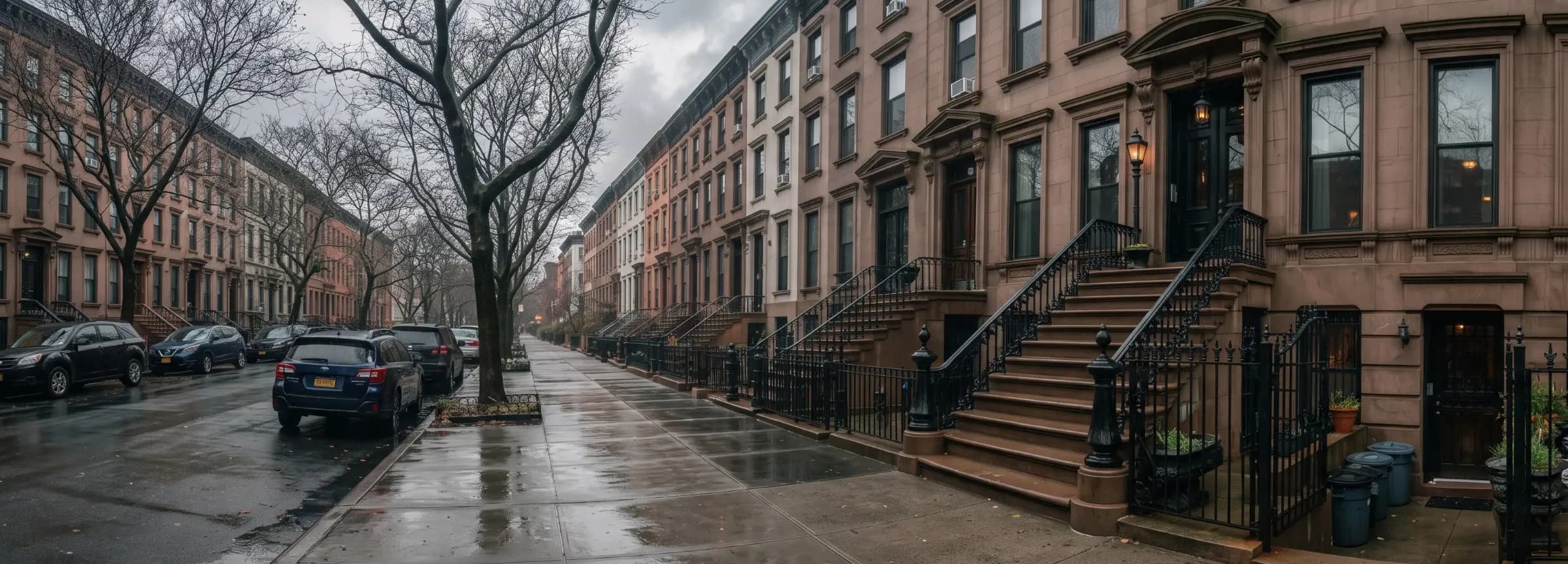

Water damage restoration in New York City is the extraction, drying, and documentation of wet structures under ANSI/IICRC S500. The Department of Consumer and Worker Protection licenses home improvement contractors for the repair phase, the Department of Buildings controls permits, and New York State does not license water mitigation as a separate trade, so the city's rules carry most of the weight when you hire.
A leak in a New York building rarely stays in one apartment. Water follows risers, plaster and lath cavities, and shared walls into the unit below, and the cause may sit in a boiler room, a neighbor's tub, or a 19th century water main. The standard water damage restoration process changes in prewar walk-ups, co-ops, and basement apartments, where city licensing, building rules, and claim deadlines decide who can do the work and how quickly to act.
Key insights
- Typical cost. Most New York water damage jobs cost $1,900–$8,800, and the average is about $4,800.
- Contractor license. Residential repair work above $200 in the city needs a DCWP Home Improvement Contractor license, and pipe work needs a Licensed Master Plumber.
- Main breaks. The city maintains about 6,800 miles of water mains and recorded 402 main breaks in fiscal 2023.
- City claim deadline. A notice of claim for property damage caused by a city main or sewer must be served within 90 days of the loss.
- Insurer deadlines. New York Regulation 64 gives an insurer 15 business days for each major step of a claim response.
- Mold timing. Wet drywall and plaster that are not dried within 48 hours can start supporting mold growth.
What New York water damage costs
Most New York water damage jobs cost $1,900–$8,800, and the average is about $4,800. Mitigation, which covers extraction, demolition of wet materials, and drying, runs $3.75–$9.50 per square foot, with clean supply line water at the low end and sewage or floodwater at the high end. Repair and rebuild work after drying adds $25–$47 per square foot. The wider water damage restoration cost range for any scope depends on the category of water, how many rooms are wet, and how many days of equipment the job needs.
 Under ANSI/IICRC S500, a wet reading means little until it is compared with a dry reference reading from the same material, so a stained plaster wall should be measured beside an untouched section of it.
Prices start from national figures for each scope and are scaled by wage data from the Bureau of Labor Statistics, which put pay for construction and extraction trades in the New York metro area at about 126 percent of the U.S. average in May 2025. The adjustment covers labor only. After a named storm or a citywide flash flood, crews book out quickly and emergency rates rise, so a job scoped during the week of a major storm should be compared with a quote taken after demand settles.
| Scope | Estimates | Cost drivers |
|---|---|---|
| Minor spot mitigation | $400–$1,900 | One wet wall or a small section of floor, often a tub overflow or a leaking radiator valve that was caught early. |
| Standard mitigation | $1,900–$5,000 | Extraction and drying across one or two rooms, with extra labor for hauling equipment up walk-up stairs or through a co-op service entrance. |
| Mitigation plus basic repairs | $5,000–$8,800 | Drying followed by drywall, paint, and baseboard replacement, with plaster patching priced above standard board work. |
| Extensive loss with structural repair | $12,500–$31,500+ | Multi-unit leaks, burst risers, and flooded ground floors where floor joists, subfloor, and electrical panels are affected. |
Room location also moves the number. A basement apartment with a sump pit and a poured slab dries differently from a fifth-floor bathroom with a tile floor over a wet ceiling below. Tile, plaster, and old hardwood hold moisture longer than modern drywall and laminate, which adds equipment days and monitoring visits to the bill.
| Room | Estimates | Local reasons |
|---|---|---|
| Basement | $1,900–$12,500+ | Garden-level and cellar spaces take groundwater and sewer backup, and partial finishing in two-family houses raises the demolition scope. |
| Bathroom | $600–$5,700 | Tile and cast iron drain lines slow drying, and a leak often reaches the ceiling of the unit below. |
| Kitchen | $1,900–$10,000 | Cabinet toe kicks, dishwasher hookups, and shared sink stacks hide moisture inside walls. |
| Living or family room | $4,100–$23,500 | Large open floor areas, plaster ceilings, and hardwood over a subfloor raise the square footage that has to dry. |
| Laundry area | $1,300–$6,300 | Washing machine hoses and shared laundry rooms in multifamily buildings spread water across several units. |
Scenario pricing helps when you know the cause but not yet the damage. A failed washing machine hose in an apartment building is cheap to dry if it is caught at once, while a sewage backup is the most expensive routine job because every porous material the water touched is removed.
| Scenario | Estimates | Local context |
|---|---|---|
| Supply line burst | $1,300–$3,800 | Braided hoses and angle stops under sinks fail in older buildings, and a shutoff usually sits in the basement or a hallway closet. |
| Washer or dishwasher overflow | $2,500–$6,300 | Water drops through the floor into the unit below, so two apartments often need drying. |
| Roof leak | $3,100–$8,800 | Flat roofs on rowhouses and walk-ups pond water, and top-floor ceilings and insulation get wet first. |
| Sewage backup | $8,800–$17,500+ | Category 3 water means removal of carpet, drywall, and insulation, plus cleaning and sanitizing of the area. |
| Storm flooding across rooms | $12,500–$31,500+ | Ground floor and basement flooding after heavy rain often involves contaminated water and electrical hazards. |
Assessment and equipment are billed in ways that vary by company. Dehumidifiers, air movers, and air scrubbers are normally charged per unit per day, and a typical New York dry-out runs three to five days. Any water damage restoration cost quote should list the unit count, the daily rate, and the planned number of days in writing before work starts, and say whether a separate fee applies for moisture mapping.
Where city water damage comes from
New York water damage comes from four sources, and the most frequent one is the plumbing and heating inside older buildings. Supply lines, drain stacks, and radiator valves fail in the walls of prewar apartment buildings, where one failure can wet three or four units. Outdoor water, from street mains, storms, and sewers, causes fewer jobs but far larger ones.
 Water from a leaking radiator valve starts as Category 1 under ANSI/IICRC S500 but moves to Category 2 if the floor stays wet past 48 hours, so the first day of drying decides how much has to be removed.
Interior plumbing leaks start as Category 1 water, the cleanest class under S500, and move to Category 2 if the materials stay wet past 48 hours. Steam and hot water heating add a second interior source, because a failed boiler or radiator leak can release hot water for hours before anyone notices, and a one-pipe steam system can drip into a ceiling cavity for weeks. Window air conditioners that drain inward add a smaller, slower source that stains plaster and warps trim.
The city's mains are old and numerous. The Department of Environmental Protection maintains about 6,800 miles of water mains and recorded 402 breaks in fiscal 2023, which means a flooded street-level storefront or basement from a main break happens often. Water from a main break carries soil and street debris and is treated as Category 2 or 3 depending on what it passed through.
Storms deliver the largest single losses. Ida dropped 3.15 inches of rain in one hour in Central Park on September 1, 2021, and most of the city's deaths came in basement apartments. Flash flooding hit again on July 18, 2026, and Hurricane Sandy's surge in 2012 reached about 14 feet at the Battery. For ground-level and basement apartments, flood water damage is treated as Category 3 once the water has mixed with sewage or street runoff.
Sewage is the other outdoor source. A large part of the city is served by combined sewers that carry stormwater and household waste in the same pipe, so a heavy rain can push wastewater back up through floor drains and low fixtures. Backups of this kind are Category 3 from the first minute, and the cleanup follows the contaminated-water protocol from S500.
Building materials decide how long a wet area takes to dry. Plaster over wood lath traps water in the cavity behind it and often needs holes opened for airflow, brick and stone party walls hold moisture for weeks, and old-growth hardwood floors cup quickly and can be dried in place only if work starts within a day or two. Those materials push many New York losses into Class 3 or Class 4, which means more equipment and more days than the same leak in a newer frame house. Roofs add a further source: flat roofs on rowhouses and walk-ups collect ponded water, and ponded water usually shows up first as a stain on the top-floor ceiling.
Steps for the first two days of a leak
In the first two days, stop the water source, protect the unit below, and document everything before wet materials are removed. What happens in them usually decides whether the loss stays a drying job or becomes a rebuild. The same priorities hold for owners, renters, and managers, though only an owner or the building can close the riser valve, so treat any active leak as an emergency water damage event until it is closed.
 Photograph the outer edge of a ceiling stain with a date and repeat it daily, because the way the stain grows shows an adjuster how long the leak ran.
Locate the right valve before anything else
Under-sink stop valves close one fixture, a riser valve in the bathroom or kitchen closet isolates the unit, and the building's main shutoff usually sits in the basement or boiler room. If you cannot reach a valve, call the superintendent or management office at once and say that water is actively leaking.
Photograph the damage before it is touched
Take wide shots of each room, close shots of the source, and a clear image of every damaged item. Add a short video that shows the water line on walls. Insurers and building managers both ask for this record, and most of it disappears the moment demolition starts.
Tell the super and the board in writing
In a co-op, condo, or rental, send an email or letter the same day to the superintendent, managing agent, or landlord. The message creates a dated record and starts the building's own response, which may include opening an access panel or shutting a riser.
Turn off power to wet circuits
If water reached outlets, baseboard heaters, or a panel, shut off the breaker for that area and stay out until an electrician has checked it. Have a Licensed Master Electrician inspect any circuit that stayed wet before it is turned back on.
Report the loss to your insurer
Call the carrier or agent, get a claim number, and ask what the policy requires for emergency mitigation. Keep receipts for hotel stays, equipment, and cleaning. Dry-out work done to stop further loss is normally a covered expense, and the insurer will usually name its own preferred vendors, but you are not required to use them.
Save damaged materials until the adjuster sees them
Hold on to a cut piece of drywall, a section of flooring, or a sample of the ruined carpet. Dispose of anything that is sewage-soaked or unsafe, but photograph it first.
Who to call for each water source
Call the building first for leaks inside walls, 311 for street, sewer, or main-break water, and 911 for gas or electrical hazards. The right call in New York depends on where the water is coming from, because the building, the city, and the utilities each own a different part of the problem.
Water from a fixture or pipe in your unit
Close the nearest stop valve or the unit's riser valve, then call the superintendent or managing agent so the building can shut the line and check the unit below. If the cause is a burst pipe, close the riser valve first and open the lowest faucet to drain the line. Your insurer comes next, and then a drying crew.
Water coming through the ceiling or wall from a neighbor
Tell the superintendent or managing agent in writing right away, because the building controls access to the apartment above and to the riser. Do not wait for the neighbor to respond before you photograph the damage and call your own insurer.
Hot water or steam from a radiator or boiler
Close the radiator valve if you can reach it safely and report the leak to the building, since the boiler belongs to the owner or board. Keep clear of escaping steam and hot water, which can scald.
Water from the street, a hydrant, or a suspected main break
Call 311 and record the service request number. Water in a street-level space from a city main is a matter for the Department of Environmental Protection, and the request number supports a later claim.
Sewage coming up through a floor drain or toilet
Stop using water in the unit, call 311 and the building, and keep out of the affected area. Sewage is Category 3 water, so a trained crew should handle the cleanup.
Water near outlets, a panel, or a gas smell
Call 911 from a safe place if you smell gas, see sparks, or have standing water around live electrical equipment, then contact your utility. Do not turn power back on until an electrician has cleared the circuit.
Reading a stain before you mop
Most hidden leaks in New York buildings show up as a stain, a smell, or a sound long before water is visible, and the first decision is whether you can handle the cleanup yourself or need a crew. A small, clean spill is a homeowner job, while water inside plaster, behind tile, or from a drain is not.
Signs inside plaster and masonry
Plaster and lath hide wet cavities well, so a small symptom on a ceiling or wall often means a larger wet area behind it. Water travels along lath strips and joists before it shows on a surface, which means a stain the size of a hand can sit several feet from the source.
Brown rings on a ceiling point to water above, often a roof leak on the top floor, bubbling paint beside an exterior wall suggests moisture moving through it, and soft or sagging plaster has usually been wet for days. A dripping radiator valve, a damp floor beside a radiator, and a musty smell that returns after cleaning are common early warnings in steam-heated buildings.
Photograph any stain with a date, mark its edge with a pencil, and check it again after a day. A stain that grows, or that stays damp in dry weather, needs a moisture reading inside the wall, since a surface that feels dry can still hide wet lath.
When a homeowner can dry it
A small, clean spill from a supply line that you stopped within a couple of hours can be a do-it-yourself job. Mopping, running a fan, and using a rented dehumidifier can handle a wet bathroom floor, provided the water was clean and the wall cavity stayed dry. When water has been on a surface for more than a day, or when it came from a drain, a toilet, or outside, hire a professional.
Two situations rule out DIY. Water inside a wall or ceiling, as with a leak in a wall, cannot be dried by fans pointed at the surface, and wet plaster that is only dried from the outside leaves a damp cavity that grows mold. Any Category 3 water also calls for trained workers, because the cleanup involves contaminated materials and disposal rules that homeowners are not equipped to follow.
Hiring under the city's license rules
New York State does not license companies that extract water and dry buildings, so the credentials you can check come from the industry and from the city. Drying work is judged by IICRC training and documentation, while rebuilding work falls under the city's contractor licensing, and each trade carries its own license. Ask each company about its credentials and match its answers to the license each part of the job requires before signing anything.
 Look up the contractor's DCWP license number on the city's lookup before paying a deposit, and confirm that the same number appears on the written contract.
The Department of Consumer and Worker Protection requires a Home Improvement Contractor license for repair, remodeling, and construction work on residential property in the five boroughs, and the license number on the contract can be checked before any deposit is paid. The right credential depends on which part of the job is being quoted.
| Work tier | What to confirm |
|---|---|
| Extraction and drying | IICRC Water Damage Restoration Technician certification for the crew lead, an IICRC Certified Firm listing, and a current certificate of insurance. |
| Repair or rebuild above $200 | A DCWP Home Improvement Contractor license number, checked on the city's lookup, plus a written contract that names the license. |
| Pipes, drains, and fixtures | A Licensed Master Plumber who pulls any required permit and signs the work. |
| Electrical repair | A Licensed Master Electrician for panels, outlets, and circuits that were wet. |
| Work needing a DOB permit | A permit number issued to a licensed professional of record before walls are closed. |
The usual contractor checks apply, and these matter most in the city. A company that answers vaguely about licensing or about who will be on site should come off the shortlist. Get the answers in writing, since a verbal promise about a license, a crew, or a payment schedule is hard to enforce once the work has started.
Ask for the license number on the contract
A legitimate repair contractor prints its DCWP license number on the estimate and the contract. If the company only dries and hands the rebuild to a partner, ask for that partner's license number too. Unlicensed repair work above the threshold is a violation, and it can leave you without recourse if the work fails.
Have the certificate of insurance sent to the building
Co-op and condo boards, and many landlords, will not allow a crew into the building without a certificate naming the property owner and managing agent. A reputable company knows this and can email the certificate within hours. Ask whether the policy includes workers' compensation.
Ask who bills the carrier
Many companies will bill the insurer directly after you sign an authorization. Read it before signing, and confirm in writing that you owe only the deductible and any uncovered items. Ask what happens if the carrier pays less than the invoice.
Request the drying plan by unit count and day
A credible plan lists how many air movers and dehumidifiers go in each room, how many days they run, and what reading ends the job. Quotes without unit counts cannot be compared.
Ask how debris and equipment move through the building
A walk-up or high-rise adds hauling time. The company should know freight elevator rules, the allowed work hours, and how bagged debris is set out for collection.
Red flags when hiring a crew
A restoration contractor is a risk if it arrives unasked, has no DCWP license number on the contract, or asks for most of the payment before work starts. A company that does several of these things cares more about its own cash flow than your drying, so move on to the next quote.
A crew that arrives unasked after a storm
Contractors who knock on doors after a flood or burst main often have no local license and no plan for the building's insurance and access rules. Ask for a license number and a certificate of insurance before anyone enters.
A contract with no license number
Repair work above the threshold needs a DCWP Home Improvement Contractor license, and the number belongs on the written contract. A blank space where it should be is a reason to stop.
A request for most of the money up front
Mitigation is usually billed after the work or in stages tied to progress, and insurers often pay the company directly. Be cautious of anyone who wants a large deposit before equipment is on site.
Pressure to sign an insurance authorization on the spot
Read any form that lets a company bill or collect from your insurer before you sign, and ask what you owe if the carrier pays less than the invoice. A reputable crew gives you time to read it.
A quote with no equipment counts or readings
An estimate that names a lump sum with no air mover count, dehumidifier count, or planned days cannot be checked against the work. Ask for the drying plan in writing and for a daily moisture log.
From first call to board sign-off
A typical New York job runs three to five days of drying, followed by one to three weeks of repairs, though co-op approvals and material lead times can stretch the second phase. Extraction and demolition happen on day one, equipment runs for the next several days, and repairs begin only after the readings reach their targets.
Hour 0 to 6: assessment and extraction
The crew confirms the water category, maps moisture with a meter, and pulls standing water with extractors. In multifamily buildings they also check adjoining units and the ceiling below.
Day 1: demolition of wet materials
Saturated insulation, carpet pad, and drywall come out, and plaster is opened where the cavity needs airflow. Cleaning with antimicrobial treatment follows for Category 2 and 3 water, and flood-contaminated materials are cleaned and disinfected following the EPA's flood cleanup recommendations.
Days 2 to 5: equipment runs and monitoring
Air movers and dehumidifiers run continuously, and the technician returns daily to move equipment and record readings. The equipment is loud and draws a lot of power, so tell the neighbors before it goes in.
Dry sign-off and release
The company issues the final log and removes equipment. Take your own photos of the dry, open walls before anything is closed up.
Repairs and reconstruction
Plaster, drywall, flooring, and paint come next. Co-op and condo buildings often require an alteration agreement and a board-approved contractor, which adds days before work starts.
Moisture logs for plaster and brick
A New York drying job should end with a daily moisture log, temperature and humidity records, and a final reading that matches a dry reference sample from the same material elsewhere in the home. Those logs are what an adjuster, a building manager, or a buyer will ask for later.
Ask for readings on plaster, wood framing, and masonry separately, since each material has a different dry target. A meter reading on a wall surface can look dry while the lath behind it is still wet, so a technician should check cavity moisture with a probe or an infrared camera. For a large claim or a dispute with the carrier, an independent industrial hygienist or moisture assessor who is not paid by the restoration company can confirm the result before walls close. That cost is small compared to opening a finished wall a month later.
Regulation 64 clocks and city claims
New York insurers must acknowledge a claim, request documents, and accept or reject it within 15 business days at each step under Regulation 64 (11 NYCRR 216), and a claim against the city for a main or sewer failure must be served within 90 days. Your homeowners, HO-6, or renters policy pays for sudden and accidental water damage inside the unit, and you have to report the loss promptly when you file a water damage insurance claim. Those two clocks run alongside the usual steps of documenting the loss and proving its cost.
 Dated photos, receipts, and a written log give each 15 business day deadline under Regulation 64 a start date you can prove.
Report the loss to the carrier before demolition, keep every receipt, and put requests in writing so each insurer deadline has a start date you can prove. Policies commonly set a short suit-limitation period, often two years from the loss in New York, so a disputed claim cannot be left to sit. If the carrier denies or underpays a claim, the denial letter must give a reason, and that reason decides the next step. Long-term seepage, the number of drying days, and equipment counts are the usual points of dispute, and a public adjuster can help if the carrier will not move.
When an insurer stalls or pays far less than the contractor's invoice, ask for the decision and the adjuster's scope in writing, then answer each disputed line item with the drying log and photographs. If the carrier misses a Regulation 64 deadline or gives no reason for a denial, you can file a complaint with the New York State Department of Financial Services, which handles consumer complaints about insurers.
When the water came from a city main or sewer, your insurer is not the only party to notify. Property damage claims against the city require a notice of claim served on the New York City Comptroller within 90 days of the loss, and a lawsuit has to follow within one year and 90 days. The Comptroller's claim filing process can be completed online, and the 311 request number from the first hour supports it.
Backup riders and storm deductibles
Standard homeowners policies in New York cover a burst pipe but not rising floodwater, and many exclude sewer or drain backup unless an endorsement was added. Flood damage needs a separate flood policy, and a basement that takes on water from a storm drain or a sewer line will often be denied under a standard form. Check your flood insurance coverage limits before a storm, because a new policy generally has a 30-day waiting period.
Policies in coastal counties often carry a separate percentage deductible for named storms, commonly 1 to 5 percent of the dwelling coverage, which can be several thousand dollars for a rowhouse. Ask your agent whether your policy has a hurricane deductible, a water backup endorsement, and a limit on contents. The National Association of Insurance Commissioners publishes a consumer publication on homeowners insurance that explains how these terms work and what to ask your agent.
Condo and co-op owners rely on an HO-6 policy for the interior, while the building's master policy covers shared structure such as risers, roofs, and facades. Check the loss assessment limit on an HO-6, because a large building loss can be passed to owners as an assessment. Ask the managing agent for the master policy's deductible as well, since some buildings pass it on to the owner whose unit is affected.
Belongings and living elsewhere
Contents and living costs are separate parts of a New York water claim, and each has its own coverage and paperwork. Your policy pays for damaged belongings under personal property coverage and for extra housing costs under loss of use, but only if you document both. Damaged furniture, clothing, and electronics fall under the contents limit, while a hotel or short-term rental during repairs falls under loss of use.
Clean-water items such as furniture, books, and clothing from a supply line leak can often be dried, cleaned, or laundered, while anything soaked by a sewage backup or by floodwater is normally discarded. Photograph each item before it leaves the apartment, list it with its age and approximate price, and keep a sample of anything the adjuster may want to see. Policies pay either replacement cost or actual cash value, so check which applies before you assume a full payout.
If the unit cannot be lived in during drying or repairs, loss of use coverage typically reimburses reasonable extra costs such as a hotel or short-term rental, usually up to a limit or a time cap. Keep receipts and ask the carrier to approve the arrangement in writing. Hotel and short-term rental costs are reimbursed only when the unit is unlivable, so a letter from the contractor describing the dry-out schedule helps.
DOB permits and rebuild rules
Most water damage repair in the city does not need a Department of Buildings permit. Replacing drywall, plaster, flooring, and paint counts as ordinary repair under Administrative Code § 28-105.4, while moving plumbing, changing walls, or altering structural members does not. A permit does not replace the contractor license, because the work still has to be done by someone licensed for that trade.
 Replacing or rerouting pipes in New York City has to be done by a Licensed Master Plumber, and emergency pipe repairs that start before a permit is issued must be reported to the Department of Buildings within two business days.
Pipe work is the main permit trigger. Replacing or rerouting supply and drain lines has to be done by a Licensed Master Plumber who files with the DOB. Emergency repairs are allowed to start before a permit is issued, but the work must be reported to the DOB within two business days. For structural damage such as rotted joists or a sagging floor, an engineer or architect usually has to prepare drawings before the repair can proceed.
Flood zones add another rule. If repair costs reach 50 percent of a building's market value, the federal substantial damage threshold applies, and the building must be brought up to current flood-resistant construction standards. That can mean elevating utilities and using flood-resistant materials below the design flood elevation.
Landmarked buildings add Landmarks Preservation Commission review for exterior work, and co-ops and condos require board approval through an alteration agreement before any repair begins. Confirming permit requirements for water damage repair with the contractor before the first wall is closed avoids a stop-work order and a delay in the insurance payment.
Mold in sealed prewar apartments
Mold can begin growing on wet drywall and plaster within 24 to 48 hours, and New York's humid summers and tightly sealed apartments make late drying a common cause of mold. A leak that is dried within two days usually does not become a mold job, while a leak behind a wall or under a floor that stays wet for a week often does.
Three situations tip a water job into mold work. Wet materials that were left in place beyond two days, visible growth larger than 10 square feet, and a musty smell that returns after drying all suggest hidden moisture. State law requires licensed professionals for mold assessment and remediation over 10 square feet, so the second step is a licensed assessor rather than the same company that dried the walls. Late drying is the most common route from a wet wall to mold after water damage.
For jobs over 10 square feet, licensed mold remediation in New York City starts with an assessor who is independent of the cleanup company, followed by containment and clearance testing. A job that stays under the 10 square foot line can be handled by a restoration crew, but a written dry-out log that shows when each area reached its target protects you if growth appears later.
Tenant steps when a landlord stalls
A landlord in New York City must keep a rental apartment livable, and a leak that the owner ignores is a repair obligation. Report the leak in writing, call 311 so the Department of Housing Preservation and Development can inspect, and keep copies of every message. HPD can issue violations that give the owner deadlines to fix the problem.
 An inspection record, dated photos, and written notices to the owner are the evidence a housing court judge relies on in an HP action for repairs.
If the owner still does not act, a tenant can start an HP action for repairs in housing court. An HP action asks a judge to order the owner to correct violations, so photographs, dated messages, and the HPD inspection record are the evidence that wins these cases. A renter's own belongings are not covered by the landlord's insurance, so carry a renters policy.
Co-op boards and shared risers
Co-op and condo owners handle this differently, because the pipe that failed may belong to the building. Check the proprietary lease or declaration to see where the owner's responsibility begins, since many buildings treat the riser as the board's and the branch line to the fixture as the shareholder's.
Boards often require a licensed and insured contractor, a certificate of insurance, and an alteration agreement before repairs start. A condo water damage claim also depends on whether the building's master policy or the unit owner's own policy responds first, so both carriers should be notified at once.
When the leak starts upstairs
A leak that starts in the apartment above is the most common shared-wall loss, and responsibility usually turns on fault. The neighbor is generally liable only if negligence caused the leak, such as an ignored dripping valve or a hose that was never replaced, while a sudden failure with no warning often is not anyone's fault.
Your own carrier usually pays first. File the claim with your own insurer, which can then pursue the neighbor or their insurer, and send the managing agent written notice so the building can inspect the source and shut the riser if needed. Ask the agent for the name of the unit's owner or tenant and for any prior repair records, because a history of complaints helps show whether the cause could have been foreseen.
Water risks by borough and block
Waterfront blocks in the Rockaways, Throgs Neck, and Staten Island face surge, while prewar walk-ups in Harlem and Washington Heights face old risers and steam leaks. Inland low points flood during cloudbursts, so the same storm can produce very different losses a few blocks apart, and FEMA's Flood Map Service Center lets you search any address for its flood zone. Basement and garden-level apartments in low-lying areas such as Hollis in Queens and Gerritsen Beach in Brooklyn are the most exposed, because the lowest floor takes sewer backup and street runoff first.
 Basement window wells sit at sidewalk level, so water that a clogged storm drain cannot clear reaches the lowest floor first. Clearing the drain in front of the house before a forecast storm is a small step that lowers that risk.
These areas show up most often in water claims after a heavy storm. Elevation, distance from the water, and the age of the building decide which risk applies to a given address, so a block's own history of flooding and leaks is the best indicator of its risk.
| Neighborhood | Main risk | Resident notes |
|---|---|---|
| Throgs Neck and City Island, Bronx | Storm tides and drainage | Long Island Sound storm tides can flood low waterfront streets, and older homes near the shore take water through basement walls and drains. |
| Gerritsen Beach and Sheepshead Bay, Brooklyn | Bay flooding and sewer backup | Low bungalows and attached homes near the bay need a backwater valve and a flood policy. |
| Rockaways and Howard Beach, Queens | Surge and drainage overload | Heavy rain and high tides combine, and street flooding reaches first floors. |
| Hollis and South Jamaica, Queens | Cloudburst basement flooding | Ida-style rain overwhelmed sewers, and illegal or unrecorded basement apartments face the highest danger. |
| Lower Manhattan | Surge and below-grade mechanical rooms | Sandy flooded basements, boiler rooms, and electrical vaults, and many buildings still depend on them. |
| Harlem and the Upper West Side | Old risers and central boilers | Prewar apartment buildings share risers and boilers, so one failure often reaches several units. |
| Washington Heights and the Bronx | Steam leaks and aging mains | Hilly streets move runoff downhill, and older mains and boilers drive most interior losses. |
| Staten Island's east and south shore | Surge and wetlands flooding | Midland Beach and South Beach flooded badly in Sandy, and elevation rules affect rebuilding. |
Basement apartments carry extra danger. Garden-level units have little margin, and a flood can put a tenant at risk before it ruins any property. If you own a house with a lower-level unit, check egress, a sump or backwater valve, and flood sensors well before the next storm.
Disclosure forms and loss history
New York sellers must deliver a Property Condition Disclosure Statement, and the $500 credit that once replaced it ended on March 20, 2024. The statement asks about flooding and leaks, so a seller who knew of unrepaired water damage and said nothing risks a claim after closing. Buyers can also ask for the seller's claim history through the Comprehensive Loss Underwriting Exchange report.
Co-op and condo buyers should ask for board minutes, special assessments, and pending riser or roof work, and ask whether an insurance claim paid for any past water repair. Photographs and drying logs from a past repair show the work was done properly, and a property flipped after Sandy or Ida should be checked for permits and drying records.
Preventing leaks in older buildings
The most effective prevention in older New York buildings is replacing supply hoses, servicing the boiler, insulating pipes in exterior walls, protecting the sewer line, and knowing where every shutoff is. Most of these actions cost little compared with a restoration bill, and several are routine duties for building owners.
 Replace braided supply hoses about every five years, and sooner if the braid bulges or a fitting shows corrosion, since a hose that fails while no one is home can flood the unit below.
Replace braided supply hoses on a schedule
Replace each washing machine hose and sink hose every five years, or sooner if they bulge. A hose that fails when no one is home can flood two apartments.
Service the boiler and radiator valves each fall
Have the heating system inspected before the season starts and bleed or replace leaking valves. A steam system that leaks slowly can saturate a wall for weeks.
Insulate pipes on exterior walls
Old buildings have pipes in cold exterior walls. A frozen pipe can split during a cold snap, so keep heat on and open cabinet doors on the coldest nights.
Clear drains and install a backwater valve
If you own a house, keep the area drains and gutters clear, and have a plumber check for a backwater valve on the sewer line. A sump pump failure during a cloudburst is a common cause of basement flooding, so test the pump and its battery backup.
Learn the shutoffs and add water sensors
Mark every shutoff valve and put leak sensors under sinks, near water heaters, and in basements. Check your water heater for rust or pooling every year.
Frequently Asked Questions
How much does water damage restoration cost in New York?
Most New York jobs cost $1,900–$8,800, and the average is about $4,800. Mitigation runs $3.75–$9.50 per square foot depending on the water category, and repairs add $25–$47 per square foot. A sewage backup or multi-room storm water damage loss costs more, with extensive losses running from $12,500 to $31,500 or higher.
Do I need a license to repair water damage in New York City?
Yes, residential repair and rebuild work above $200 requires a DCWP Home Improvement Contractor license. Plumbing needs a Licensed Master Plumber, and electrical repair needs a Licensed Master Electrician. New York State does not license water extraction and drying as a separate trade, so check IICRC credentials and insurance for that part of the job.
How long do I have to file a claim against the city for a water main break?
You have 90 days. A notice of claim for property damage from a city water main or sewer must be served on the New York City Comptroller within 90 days of the loss, and any lawsuit must follow within one year and 90 days. File early and attach photographs, repair invoices, and your 311 request number.
Does homeowners insurance cover sewer backup in New York City?
Not unless you added a water backup endorsement. Standard policies cover sudden pipe failures but usually exclude damage from sewer and drain backup or a sump pump failure, and a denial on that ground is a frequent reason a water damage claim is denied. The endorsement usually carries its own lower limit, so ask your agent what yours is.
How fast must a New York insurer respond to my water damage claim?
Within 15 business days at each major step. Regulation 64 requires an insurer to acknowledge a claim, request needed documents, and accept or reject it within 15 business days of the relevant event. Send requests in writing and keep a log of dates, because a missed deadline gives you grounds to complain to the Department of Financial Services.
Do I have to use the contractor my insurer recommends?
No. Your insurer may suggest vendors, but you can choose your own company. Pick one with IICRC certification and, for repairs, a DCWP license number on the contract, share its written scope with the adjuster before work starts, and ask whether it will bill the carrier directly. Get the carrier's approval of the scope in writing so payment is not delayed.
How fast does mold start after a leak in an apartment?
Mold can begin growing within 24 to 48 hours on wet drywall and plaster. Prewar plaster over lath and sealed apartments dry slowly, so hidden moisture is common, and work over 10 square feet falls under licensed mold remediation in New York City. If the area is not dry within two days, ask for moisture readings inside the wall.
Can my co-op board delay or control water damage repairs?
Often yes, through the alteration agreement. Many boards require a licensed and insured contractor, a certificate of insurance, and written approval before walls are opened, and the proprietary lease sets the rules. Send the managing agent written notice with photographs first, and ask for the approval steps in writing so repairs are not held up.
Is basement flooding from heavy rain covered by insurance in New York City?
No, not by a standard homeowners policy, because storm water damage that rises into a basement counts as flood, which needs a separate flood policy, and the National Flood Insurance Program usually has a 30-day waiting period before coverage begins. Water backup from a drain may be covered only if your policy has the endorsement.
How do I find my flood zone in New York City?
Search your address on FEMA's Flood Map Service Center, then read the city's flood zone maps to see what the VE, AE, AO, A, and X zones mean. Those zones range from high to moderate risk, and your zone helps decide whether to buy a flood policy before the 30-day waiting period starts.
Do I need a permit to repair water damage in New York City?
Often not for drywall, plaster, flooring, and paint, which count as ordinary repair. Plumbing changes need a Licensed Master Plumber and may need a Department of Buildings permit, and emergency work must be reported within two business days. Co-ops and condos also require board approval before repairs start, even for small jobs.
- IICRC: ANSI/IICRC S500 Standard for Professional Water Damage Restoration
- BLS: Occupational Employment and Wages in New York, May 2025 (New York-Newark-Jersey City, NY-NJ metro series)
- NYC DCWP: Home Improvement Contractor License
- NYC Comptroller: File a Claim
- FEMA: Substantial Damage Determinations
- NYC Flood Maps: Understanding the Maps
- FEMA: Flood Map Service Center
- NAIC: A Consumer's Guide to Home Insurance
- EPA: Flood Cleanup to Protect Indoor Air and Your Health
- New York State Courts: Starting an HP Proceeding to Obtain Repairs
Sam Hickerson is the founder of RestoreAdvisor and writes consumer guides on mold remediation, water damage restoration, inspection, testing, and home recovery. His work focuses on helping homeowners understand costs, risks, and when to call a professional. He draws on guidance from the EPA, CDC, IICRC, and other authoritative sources to make complex home issues easier to navigate.